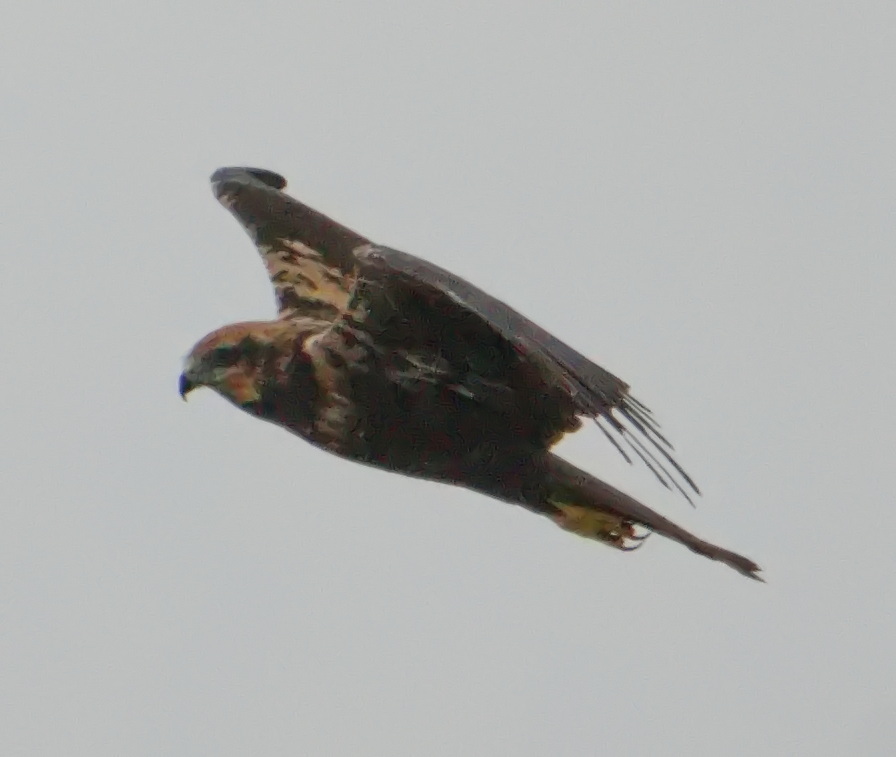
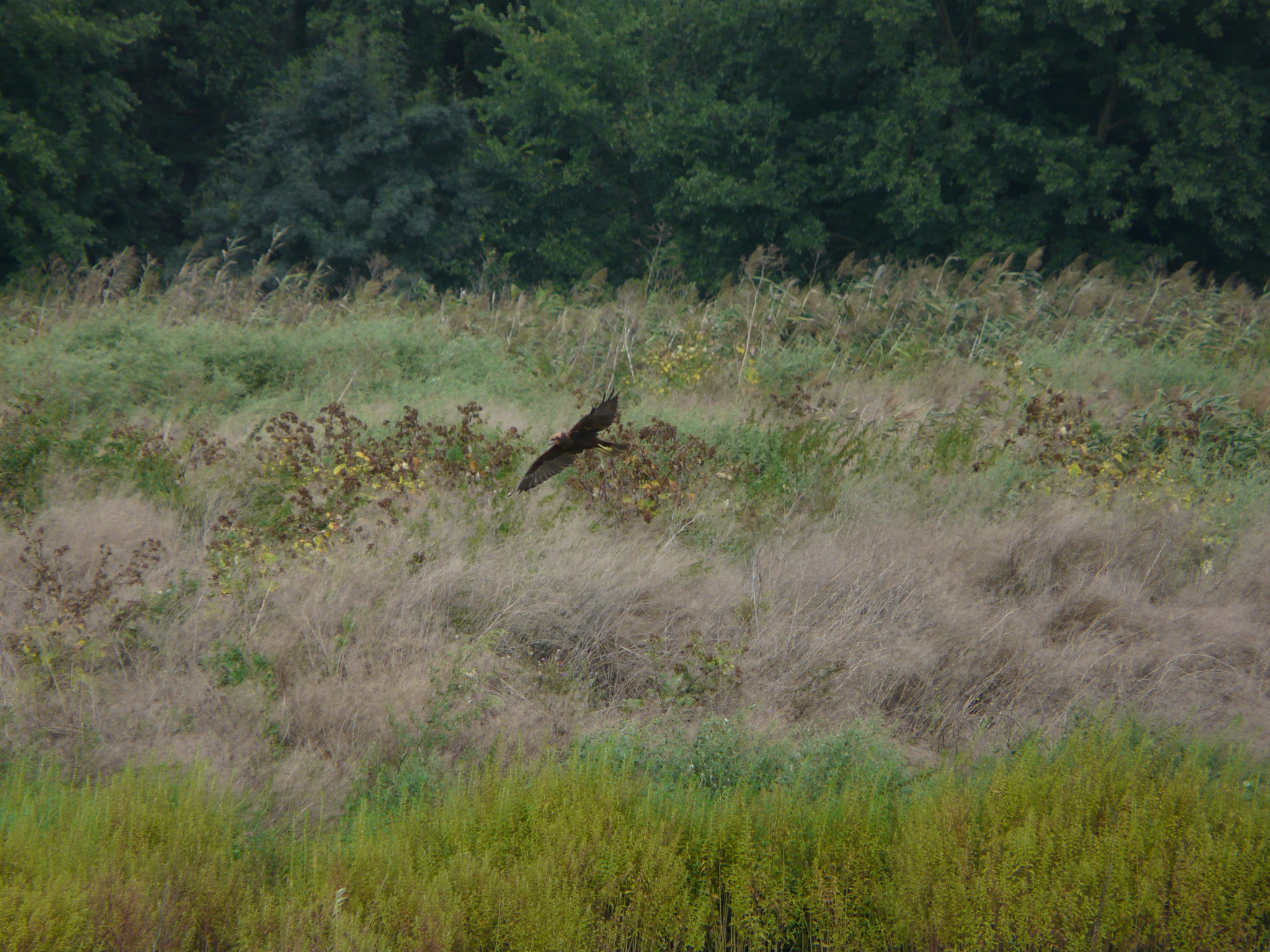
Western Marsh Harrier
Circus aeruginosus
白头鹞
Introduction
This large harrier occurs across temperate and subtropical western Eurasia and adjacent regions of Africa. It is the largest European harrier species. It inhabits extensive reedbeds and marshy wetlands. In flight, it glides low over wetlands with wings held in a shallow V-formation and often dangles its legs while hunting. The species exhibits strong sexual dimorphism: males have reddish-brown, grey, and black plumage, while females are predominantly chocolate-brown with yellowish markings on the head and shoulders. It is more territorial and less social than other harrier species, maintaining this pattern even during winter months. The species has recovered in parts of Europe following near-extinction, demonstrating the effectiveness of habitat protection measures.
Description
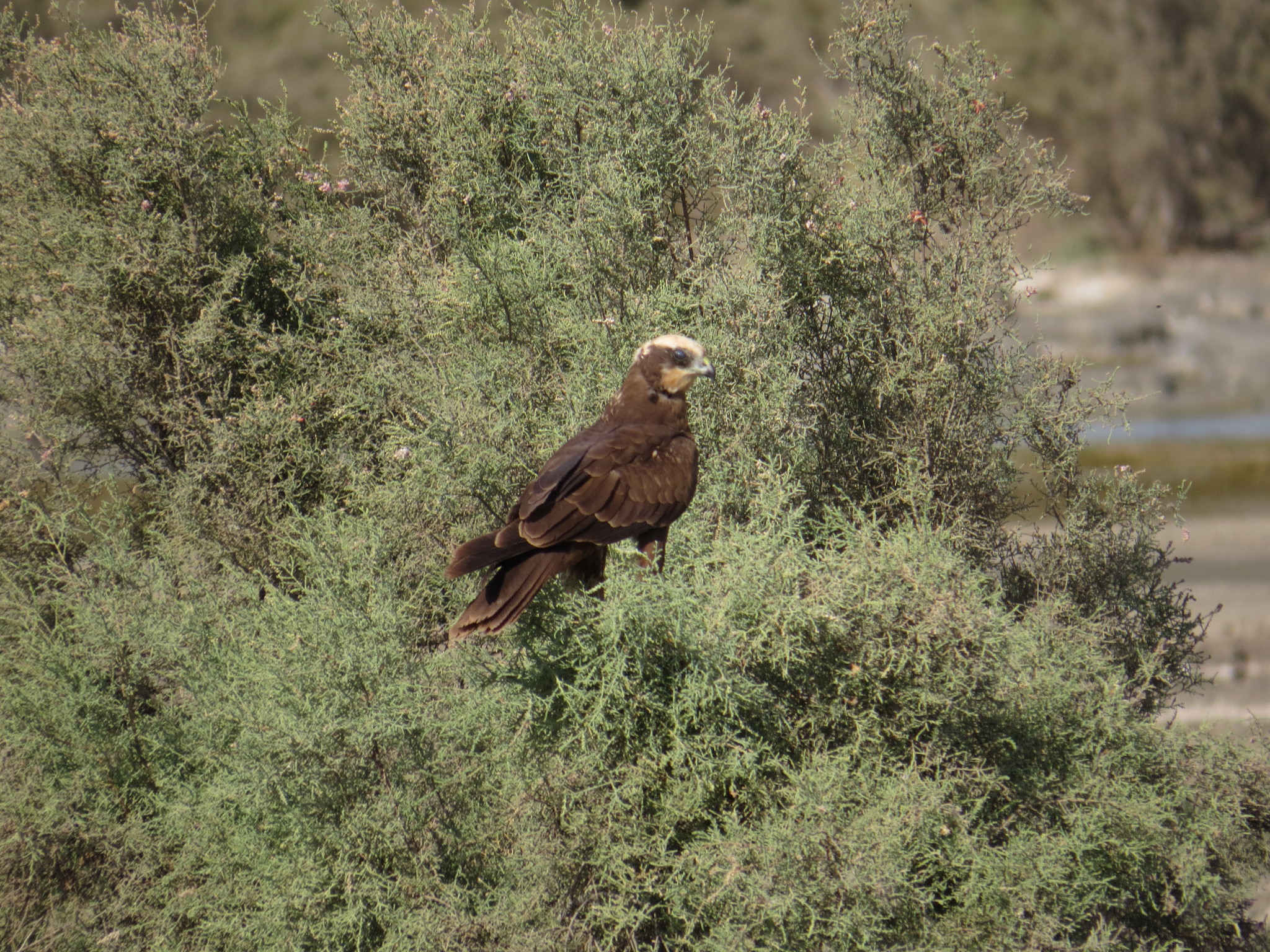
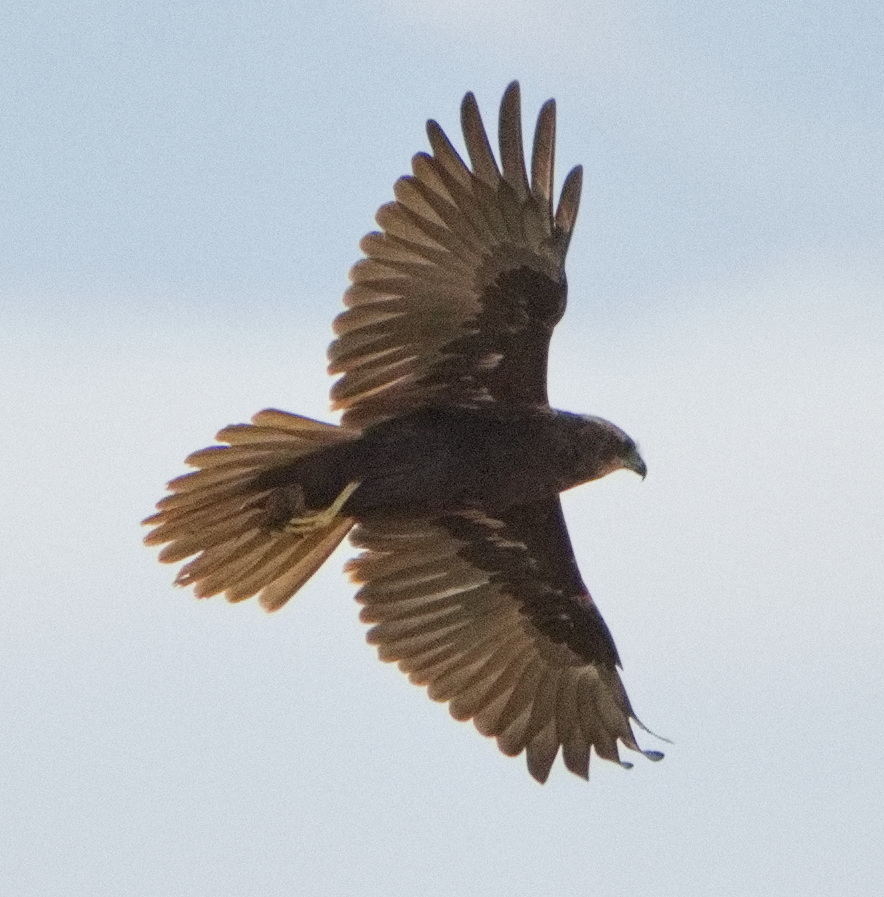
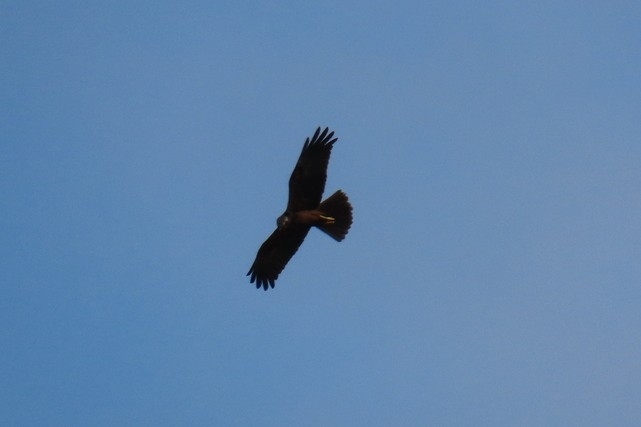
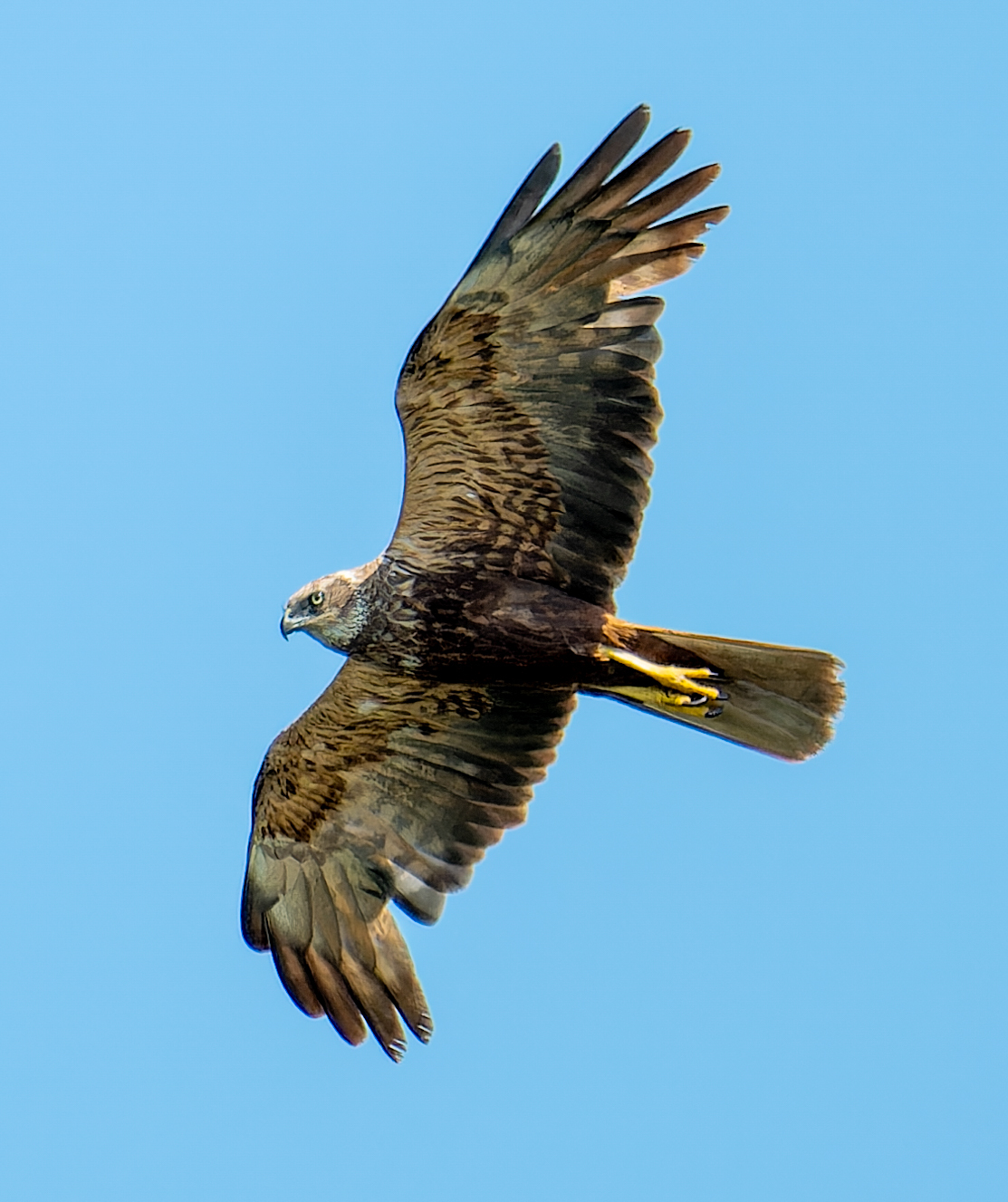
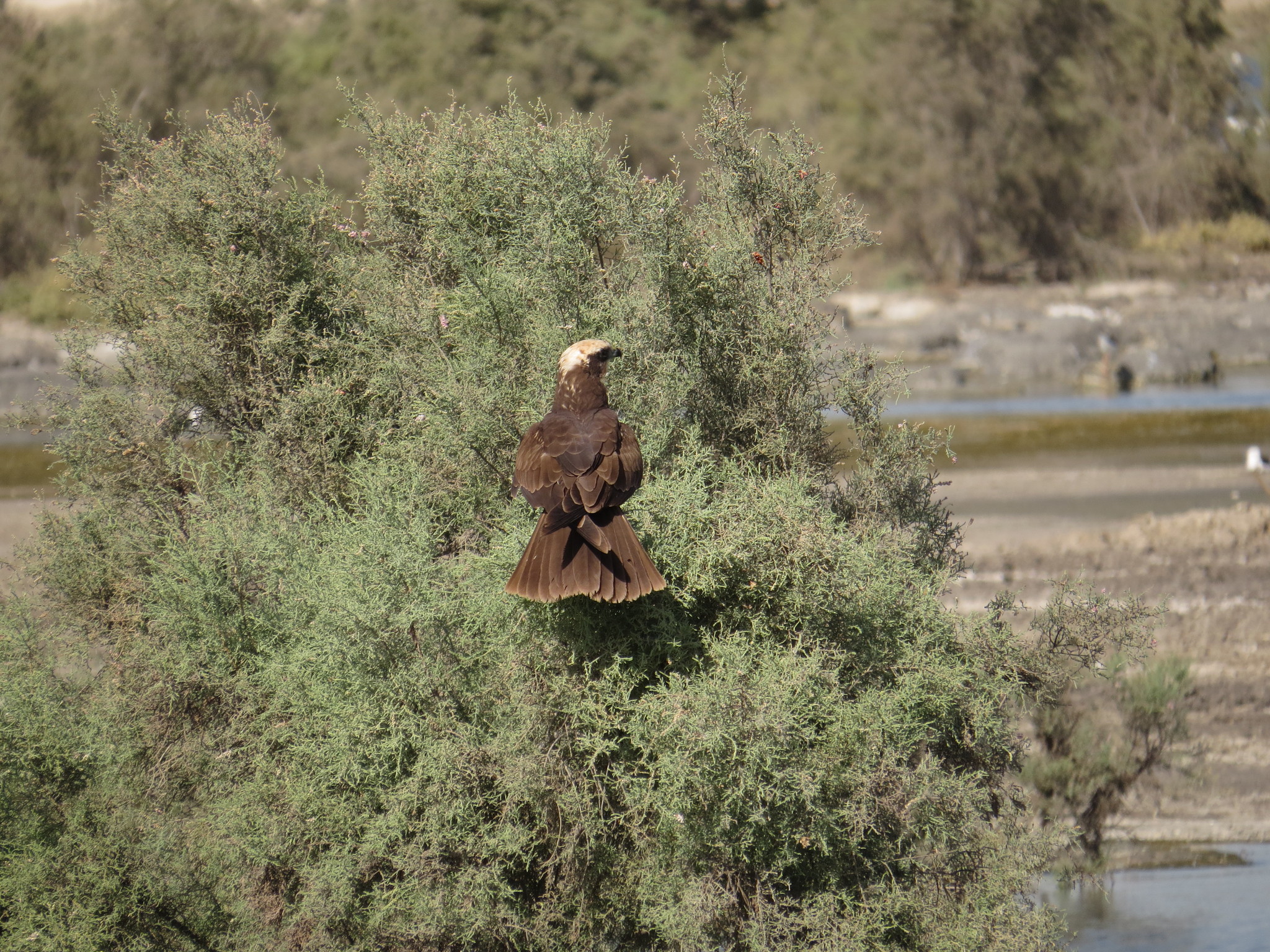
This is a large, bulky harrier measuring 48 to 56 centimeters in length with a wingspan of 115 to 130 centimeters. Males weigh 400 to 650 grams while larger females weigh 550 to 800 grams. The species exhibits pronounced sexual dimorphism. Males have cryptic reddish-brown plumage with conspicuous yellowish streaks on the breast, pale greyish-yellowish head and shoulders, pure grey tail feathers and secondary feathers, brown forewings, and black wingtips. Females are almost entirely chocolate-brown with lighter yellowish coloration on the crown, throat, and shoulders, contrasting with a darker eye area. Juveniles resemble females but have reduced yellow on the shoulders. A rare dark morph occurs, particularly in eastern populations, where birds appear largely black in flight. The legs, feet, irides, and cere are yellow.
Identification
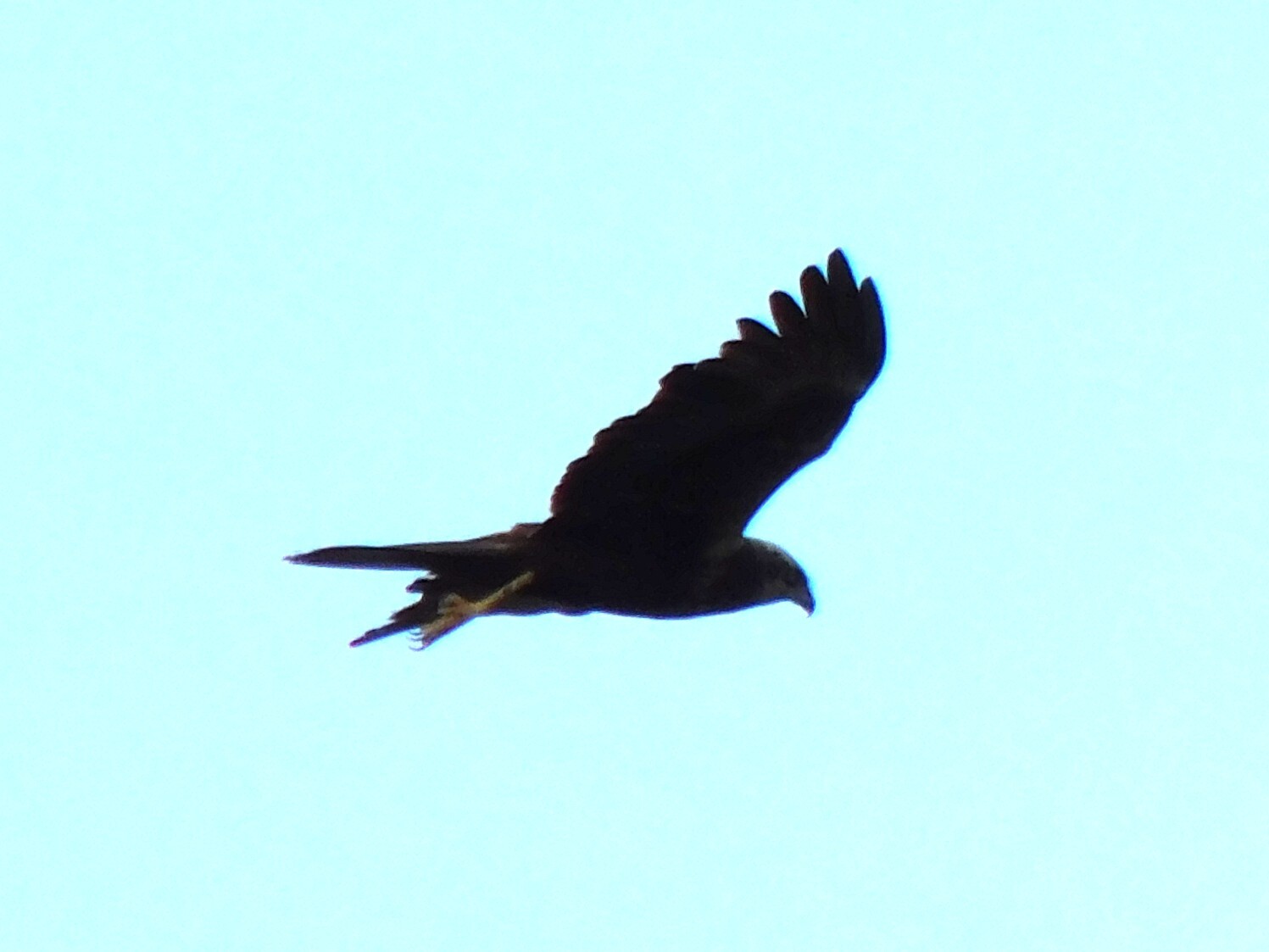
This is the largest European harrier and is easily distinguished from other harrier species by its bulkier build and broader wings. In flight, males show a unique three-colored brown-grey-black pattern visible from both above and below. The grey wing panel and tail separate males from the similar hen harrier and Montagu's harrier. Females and juveniles are chocolate-brown with yellowish crowns and shoulders, lacking the grey wing patch of males. The dark morph can appear almost entirely black, especially in juveniles. The species' low, gliding flight with dangling legs over marshland is characteristic. Unlike other harriers, this species rarely forms large winter flocks, preferring to remain territorial even outside the breeding season.
Distribution & Habitat
This species breeds across Europe and northwestern Africa eastwards through the Middle East to Central Asia, including Turkey, Iraq, Iran, northwest China, Mongolia, and Siberia's Lake Baikal region. It is absent from mountainous areas and subarctic Scandinavia, though populations are increasing in eastern Scotland. Most populations are migratory, wintering in southern and western Europe, the Sahel, Nile basin, African Great Lakes, Arabia, the Indian subcontinent, and Myanmar. The resident subspecies harterti inhabits Morocco, Algeria, and Tunisia. Vagrants have reached Iceland, the Azores, Malaysia, and Sumatra, with rare North American records from Guadeloupe, Puerto Rico, and Bermuda. The species is strongly associated with wetland habitats, particularly those dominated by common reed, but also uses farmland and grassland bordering marshes.
Behavior & Ecology
Breeding begins from mid-March to early May. Males frequently mate with two or occasionally three females, though pair bonds typically last just one season. The ground nest is constructed from sticks, reeds, and grasses in reedbeds or arable fields. Clutches contain three to eight oval, white eggs with a bluish or greenish tinge, incubated for 31 to 38 days. Fledging occurs after 30 to 40 days. Hunting involves low gliding flight over open ground with wings in a shallow V-shape and dangling legs. The diet includes small mammals, small birds, insects, reptiles, and frogs. In India's Keoladeo National Park, around 100 birds gather to roost in tall grassland during winter. The species is less social than other harriers, remaining territorial even outside the breeding season.
Conservation
The species declined significantly from the 19th to late 20th centuries due to persecution, habitat destruction, and pesticide use. It is now protected throughout its range. In Britain, the population was likely extinct by 1900 but recovered from a single breeding pair in 1911 to at least 265 females rearing 453 young by 2006. Ireland's population also recovered after extinction in 1918. Current threats include shooting during migration through the Mediterranean, breeding season disturbance, and lead shot poisoning. Conservation efforts have been largely successful, and the species is now classified as Least Concern by the IUCN.
Culture
No specific cultural information available.
Source: Wikipedia · CC BY-SA 3.0
Taxonomy
- Order
- Accipitriformes
- Family
- Accipitridae
- Genus
- Circus
- eBird Code
- wemhar1
Subspecies (2)
-
Circus aeruginosus aeruginosus
breeds western and central Palearctic; winters in sub-Saharan Africa (south to northern South Africa) and southern Asia
-
Circus aeruginosus harterti
Morocco to Tunisia
Data Sources
Species description from Wikipedia, licensed under CC BY-SA 3.0.
Bird images and sounds sourced from GBIF, contributed by citizen scientists worldwide under Creative Commons licenses.
Taxonomy data from AviList 2025.