
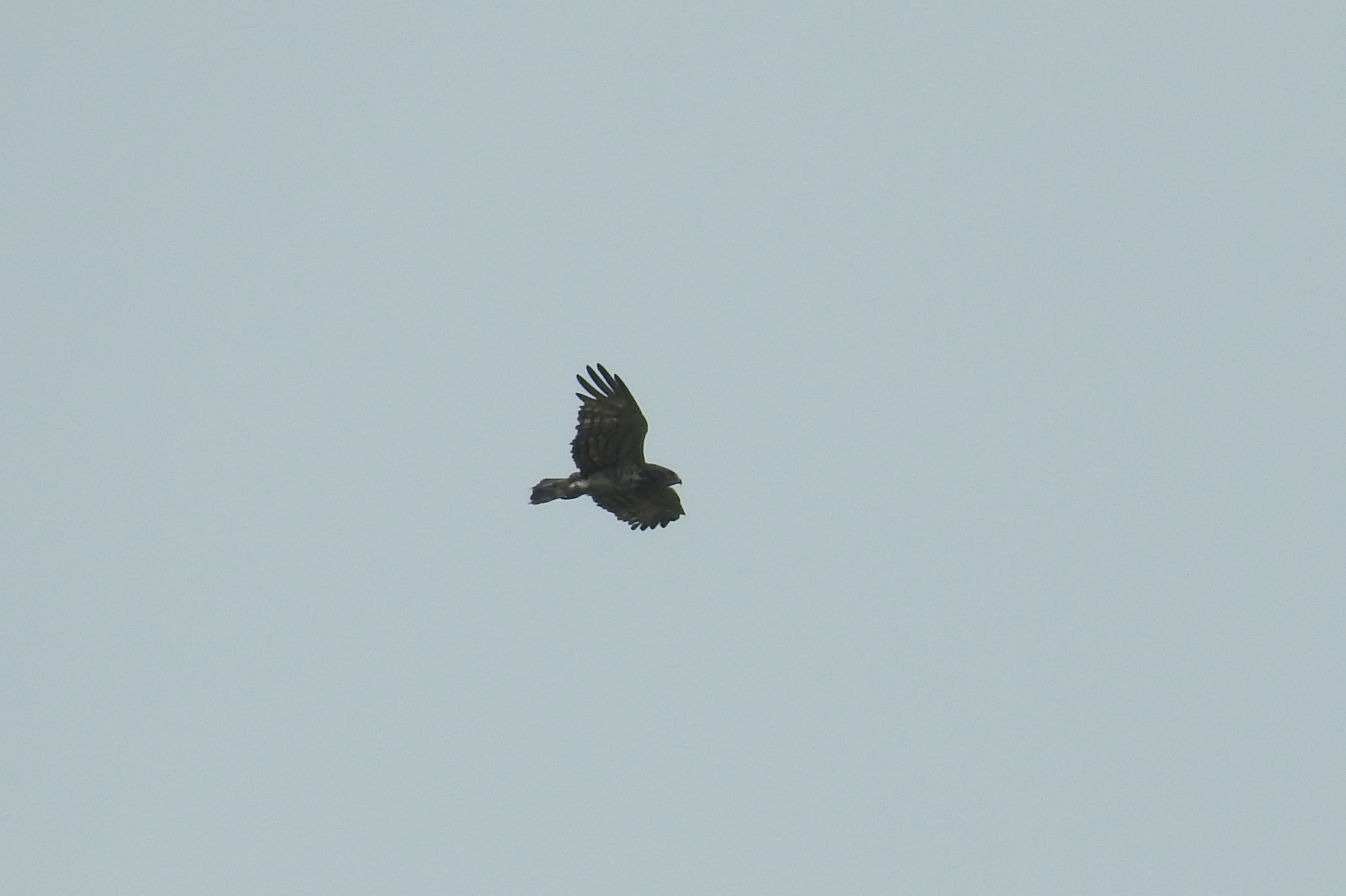
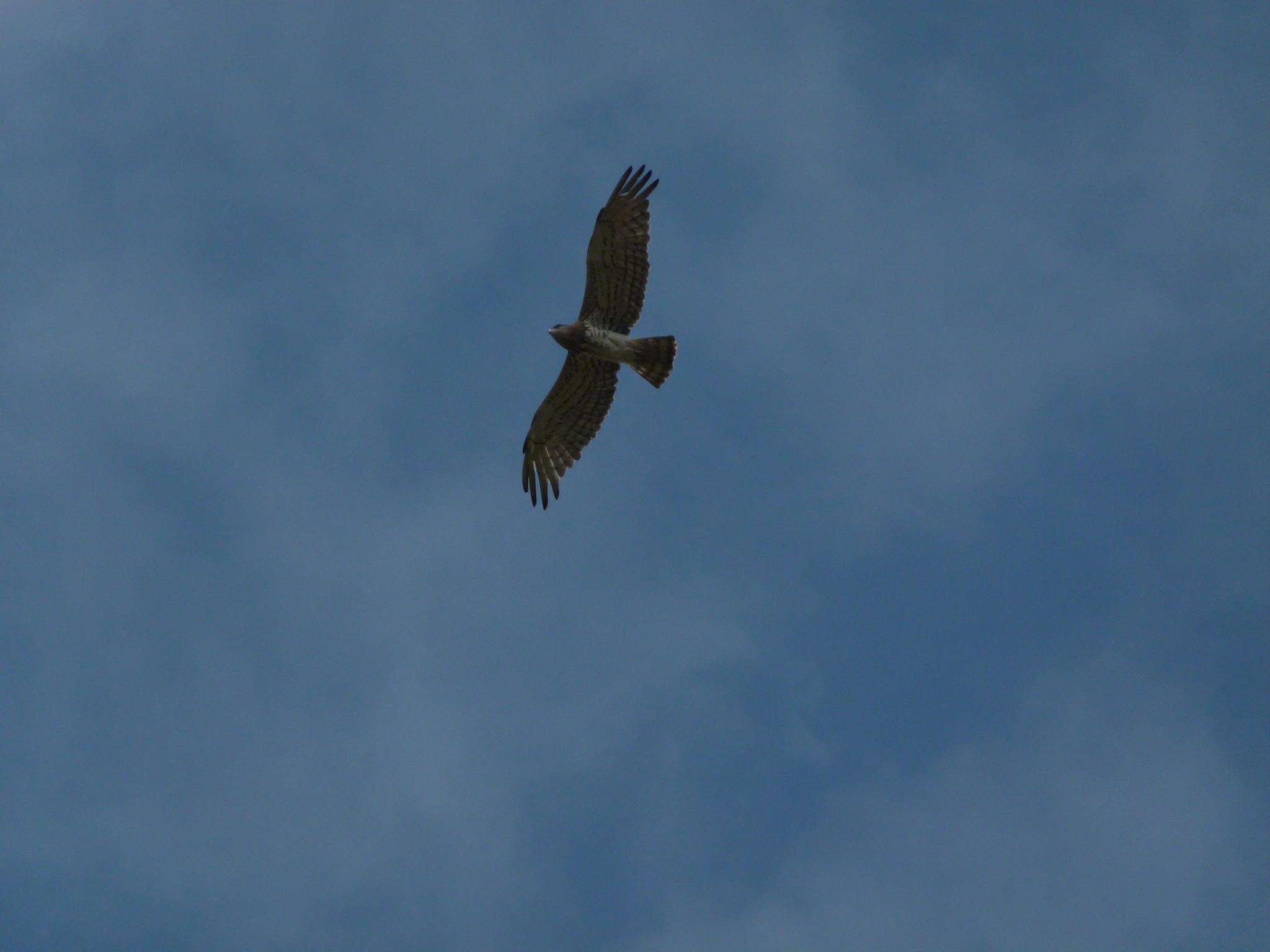



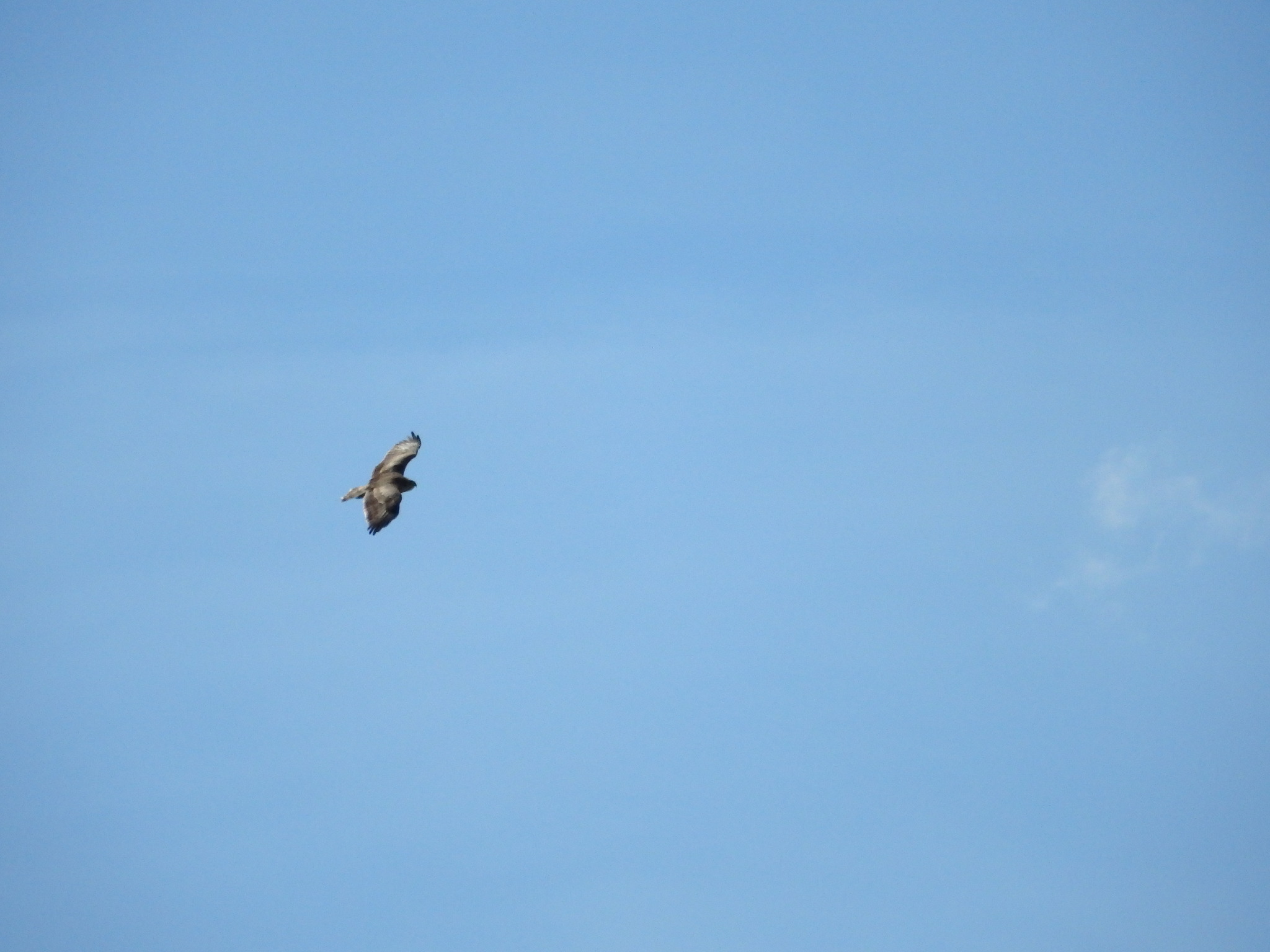

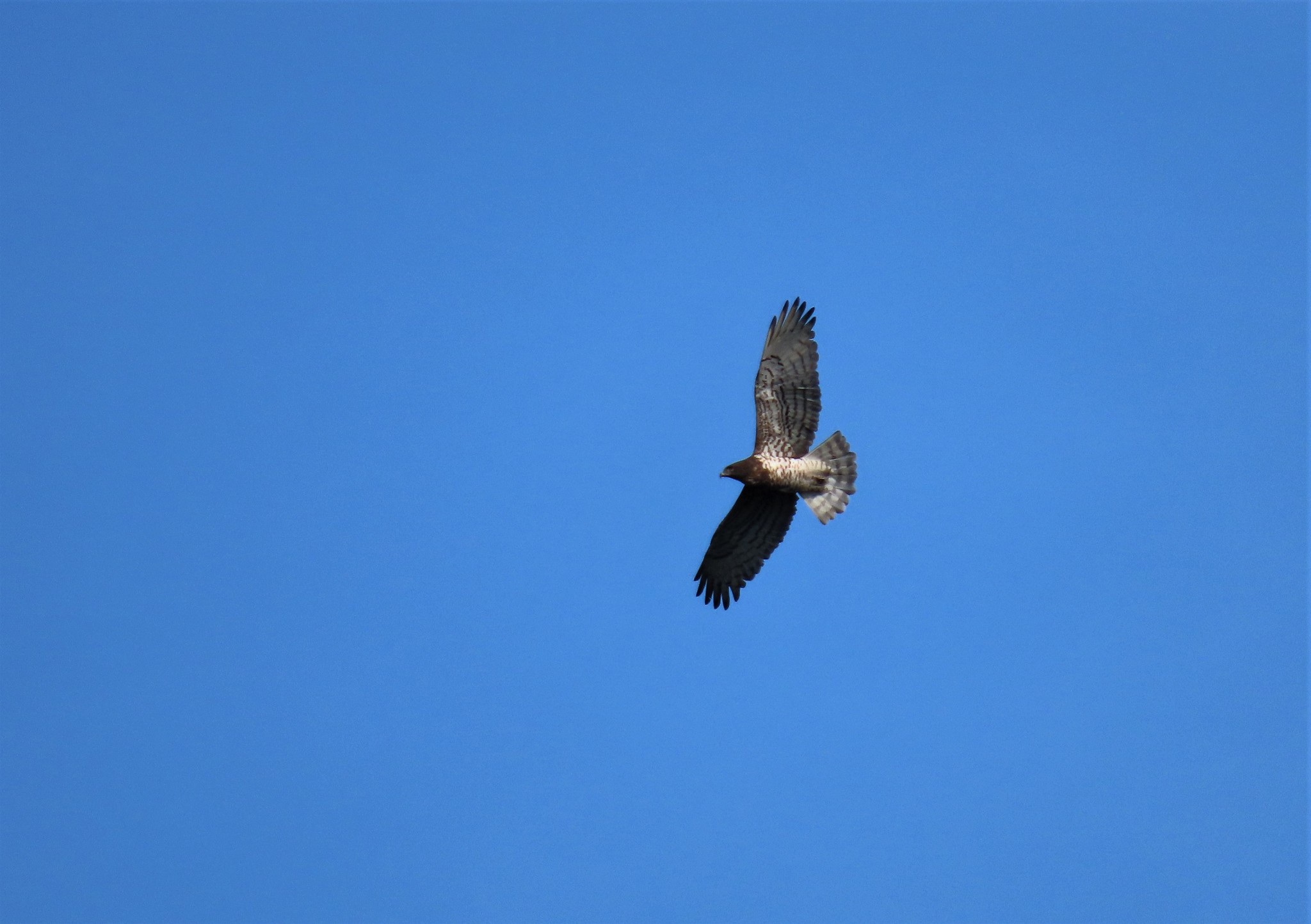

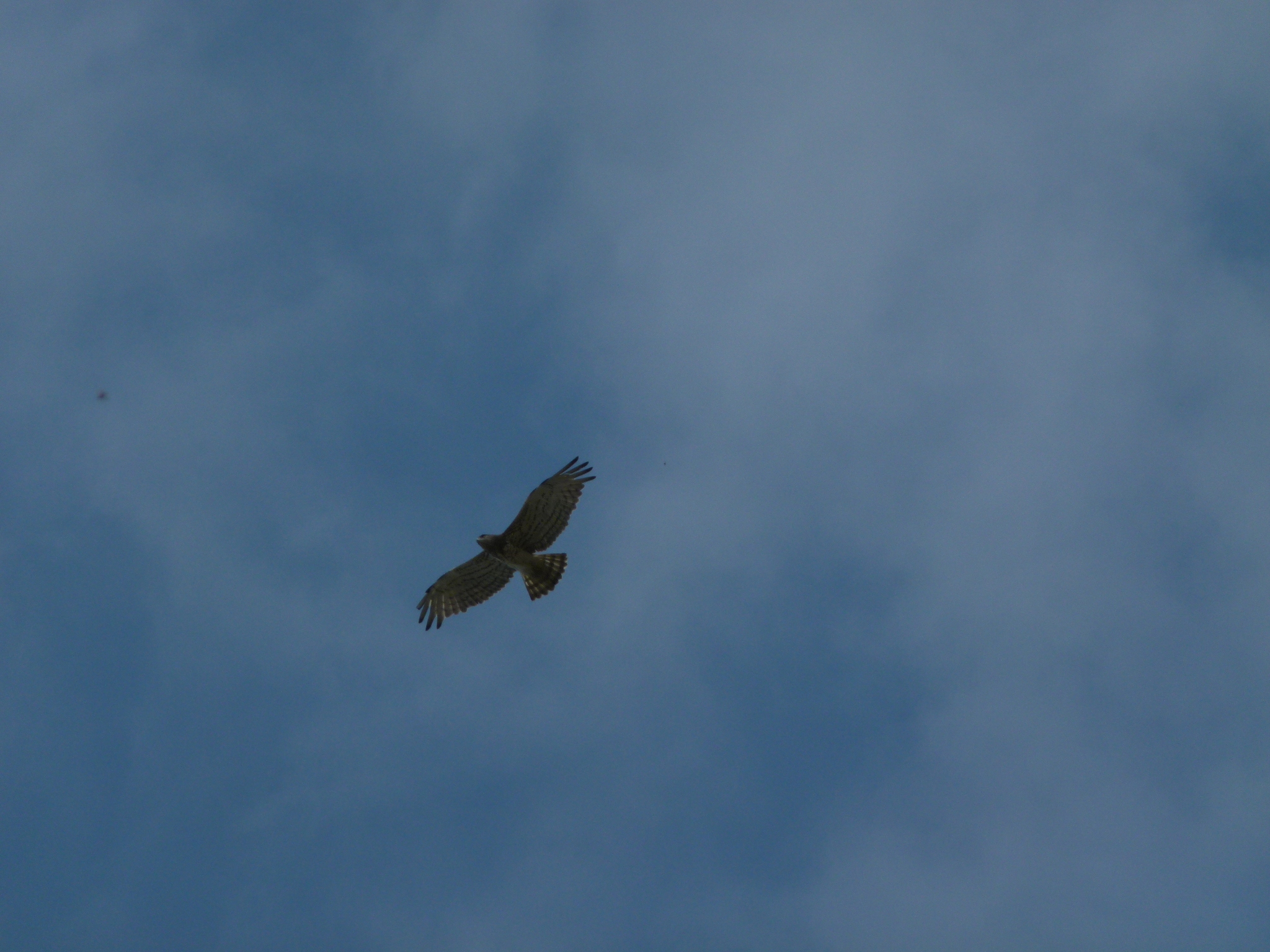
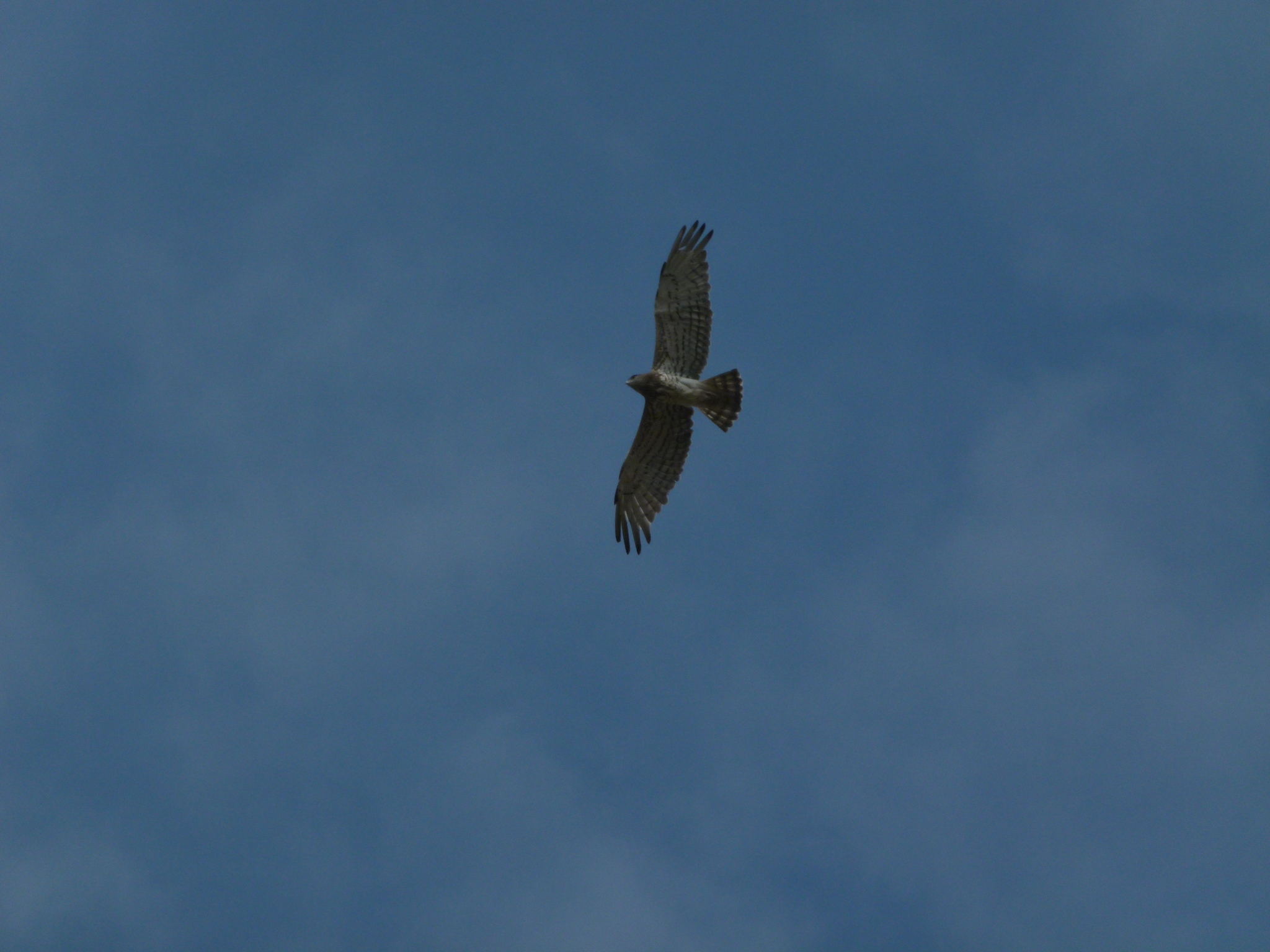
Short-toed Snake Eagle
Circaetus gallicus
短趾雕
Introduction
This medium-sized raptor (family Accipitridae) is a specialist predator of reptiles, particularly snakes. It occurs across open habitats of the Old World. Identification features include white underparts, greyish-brown upper portions, an owl-like rounded head, and yellow eyes. The species spends extensive periods in flight, soaring on flat wings and hovering while searching for prey. It is a warm-season breeder in western parts of its range, arriving in April and departing by October to winter in sub-Saharan Africa. Middle and Far Eastern populations are resident year-round. Nesting requires trees, while hunting occurs in open habitats, making the species dependent on mosaic landscapes.
Description
This is a relatively large snake eagle, with adults measuring 59 to 70 cm in length and weighing between 1.2 and 2.3 kg, averaging around 1.7 kg. The wingspan is impressive, ranging from 162 to 195 cm. The plumage is distinctive: the underparts are predominantly white, while the upperparts are greyish-brown. The chin, throat, and upper breast show a pale, earthy brown coloration. The tail features three or four distinct bars. Other identifying characteristics include an owl-like rounded head structure, bright yellow eyes, and lightly barred underwings. These features combine to give the bird a somewhat pale and ghostly appearance when seen in flight against the sky.
Identification
This species is most reliably identified by its white underparts, which contrast markedly with its darker upper surfaces when seen from below in flight. The owl-like head shape and bright yellow eyes are distinctive at close range. The tail pattern of three or four bars provides an additional identification clue. The species spends more time flying than most other snake eagles, favoring sustained soaring on flat wings over hilltops where it hunts from heights of up to 500 meters. It frequently hovers while searching for prey, reminiscent of kestrel behavior. The combination of hovering flight, pale underparts, and rounded head helps distinguish it from similar raptors in its range.
Distribution & Habitat
This species occurs throughout the Old World, with a distribution spanning the Mediterranean basin through Russia and the Middle East into parts of Western Asia, the Indian subcontinent, and several Indonesian islands. European populations, particularly those at the northern edge of the Mediterranean, are migratory, wintering primarily in sub-Saharan Africa between September/October and April/May. Eastern populations are resident year-round. The species favors open cultivated plains, arid stony scrub areas, foothills, and semi-desert environments. It requires trees for nesting alongside open habitats such as grasslands and cultivations for foraging. Spain holds the largest European population where it remains fairly common, but it is rare and local elsewhere on the continent.
Behavior & Ecology
As a specialist predator, this eagle feeds predominantly on reptiles, especially snakes, though it also consumes lizards. Occasional encounters with larger snakes result in battles on the ground. The diet is supplemented occasionally by small mammals up to rabbit size, and rarely by birds and large insects. The species is generally very silent but may emit various musical whistling notes on occasion. It is a monogamous breeder, laying a single egg during the breeding season. The species is highly aerial, hunting primarily from the wing by soaring and hovering rather than from perch or ground. Maximum recorded age is 17 years.
Conservation
The species has experienced a steep decline in both numbers and range across Europe, where it is now considered rare and continues to decrease in several countries. Agricultural intensification and changing land use patterns are the primary drivers of these declines, as they reduce the availability of suitable hunting habitats and disrupt nesting requirements. Conservation measures are needed to protect remaining populations, particularly in the fragmented landscapes of Western and Central Europe. However, populations in the middle and far eastern parts of the range remain more stable and are not currently considered threatened.
Culture
Historical accounts note that the species was familiar to French farmers, who knew it as the "Jean-de-blanc" or "white John," a name reflecting its pale underparts. The French naturalist Buffon kept one of these eagles in captivity and documented its behavior, observing that it readily consumed mice and frogs. Farmers recognized the species for its occasional raids on poultry, highlighting the bird's opportunistic predation on domestic birds when wild prey was scarce. These observations contributed to early understanding of the species' dietary flexibility and hunting behavior.
Source: Wikipedia · CC BY-SA 3.0
Taxonomy
- Order
- Accipitriformes
- Family
- Accipitridae
- Genus
- Circaetus
- eBird Code
- shteag1
Vocalizations
Subspecies (2)
-
Circaetus gallicus gallicus
breeds northwestern Africa and southern Europe, north to Estonia, southward to the Levant, and eastward to Kazakhstan, also locally Arabian Peninsula, northern China, and Mongolia; also resident in South Asia (Pakistan, Nepal, and India); western populations winter in the Sahel (Senegal and southwestern Mauritania to Ethiopia and western Kenya), eastern populations winter in South Asia
-
Circaetus gallicus sacerdotis
Lesser Sundas (Lombok to Tanimbar); reported also eastern Java and Bali, where perhaps only a nonbreeding visitor
Data Sources
Species description from Wikipedia, licensed under CC BY-SA 3.0.
Bird images and sounds sourced from GBIF, contributed by citizen scientists worldwide under Creative Commons licenses.
Taxonomy data from AviList 2025.