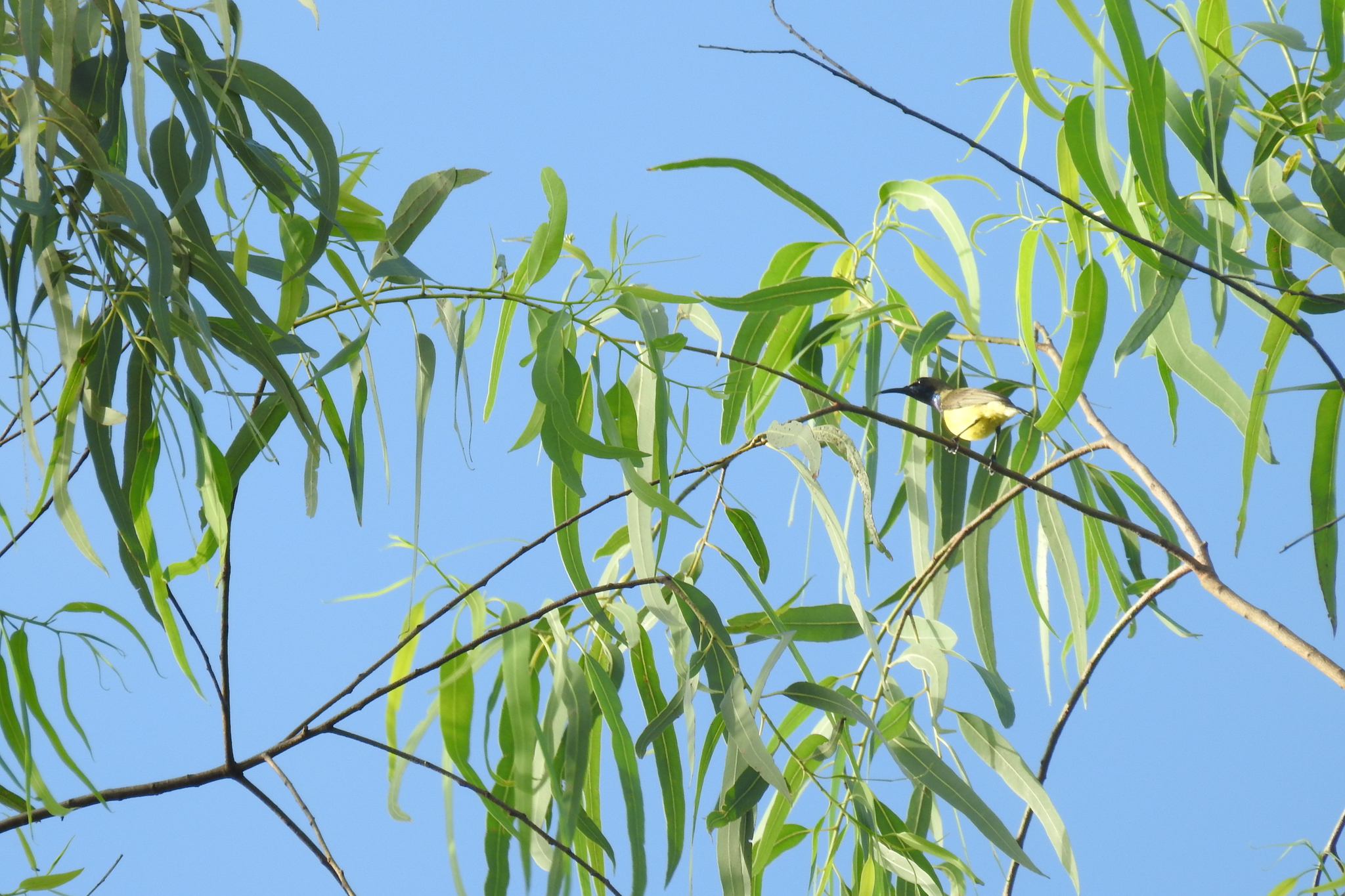
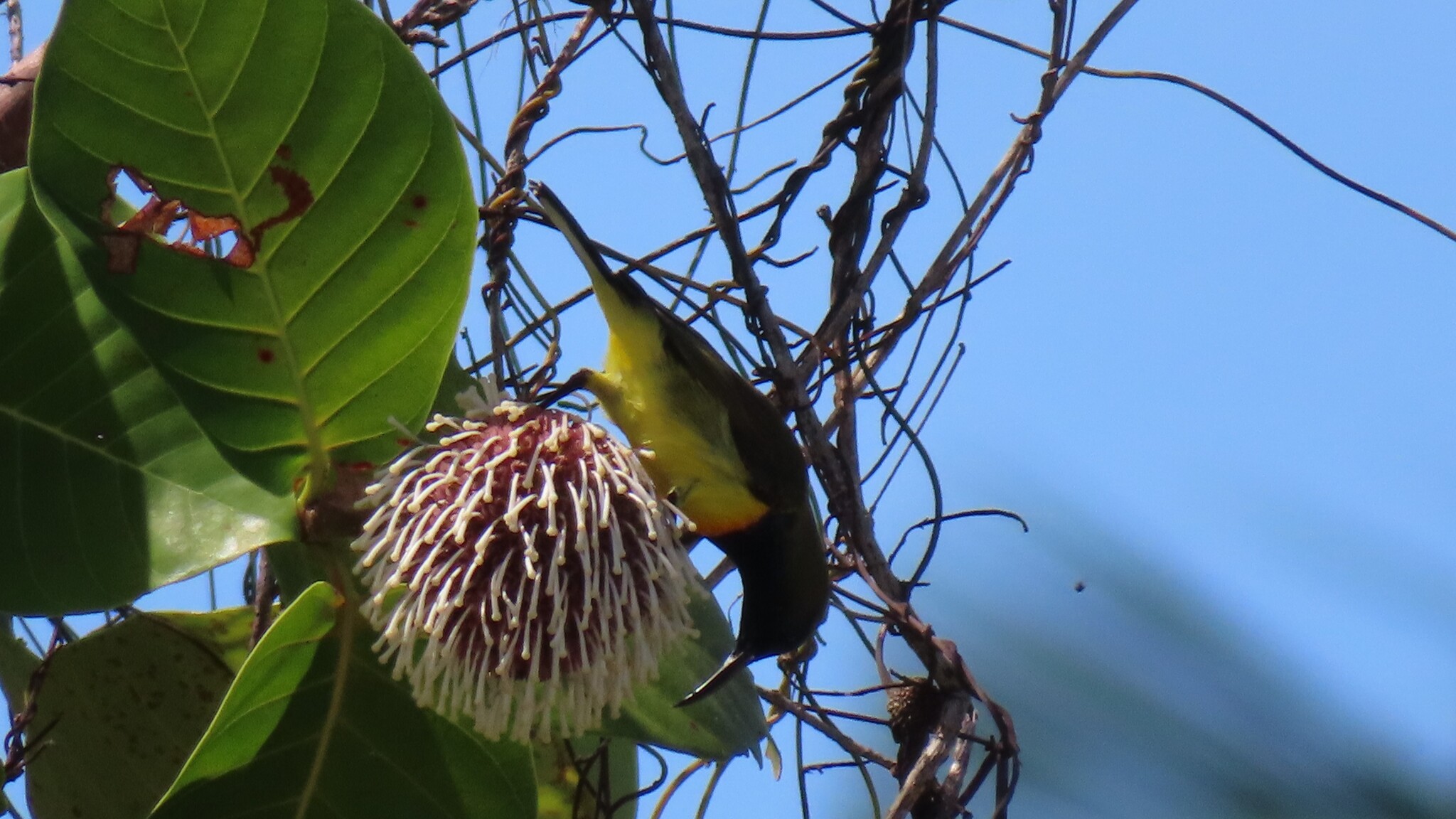
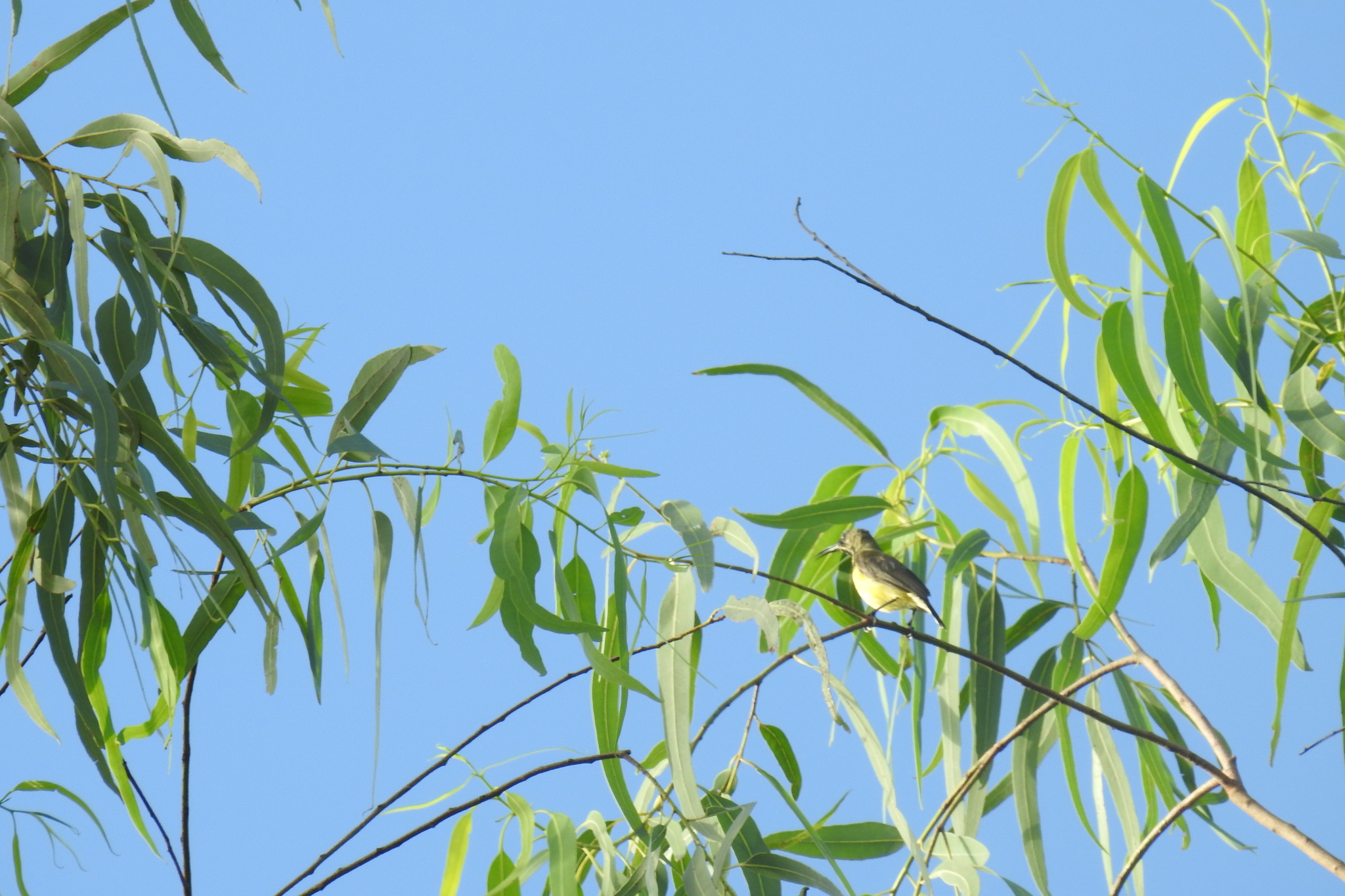
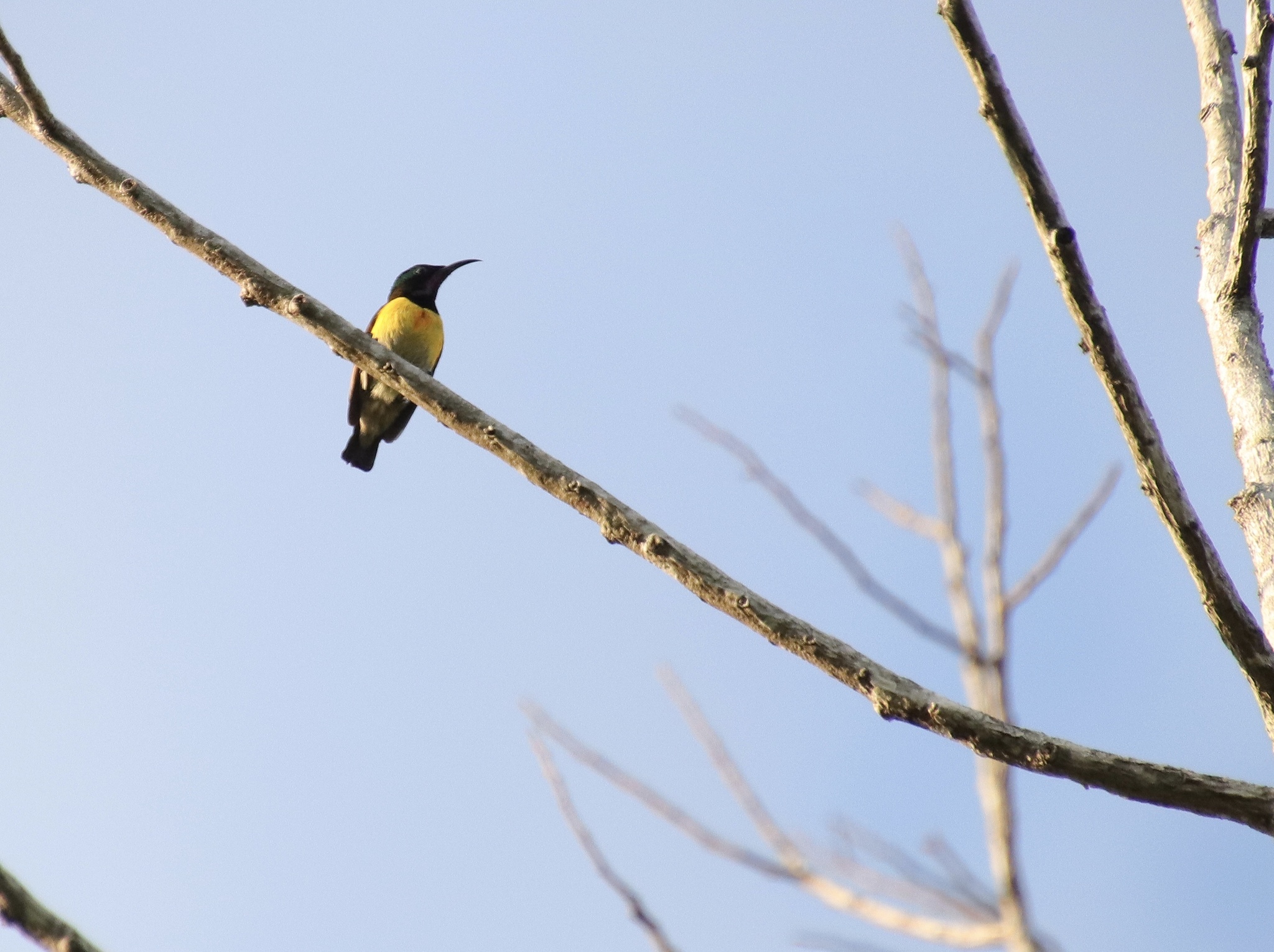
Garden Sunbird
Cinnyris jugularis
黄腹花蜜鸟
Introduction
The garden sunbird is a small passerine in the Nectariniidae family. It is endemic to the Philippine archipelago, where it inhabits gardens, parks, secondary growth, and forested areas, including human-modified environments. Formerly considered conspecific with several other sunbird species across Southeast Asia, it was split into eight distinct species based on differences in male plumage and genetic analysis. It feeds on nectar and is noted for its vocalizations. It maintains stable populations across its range.
Description
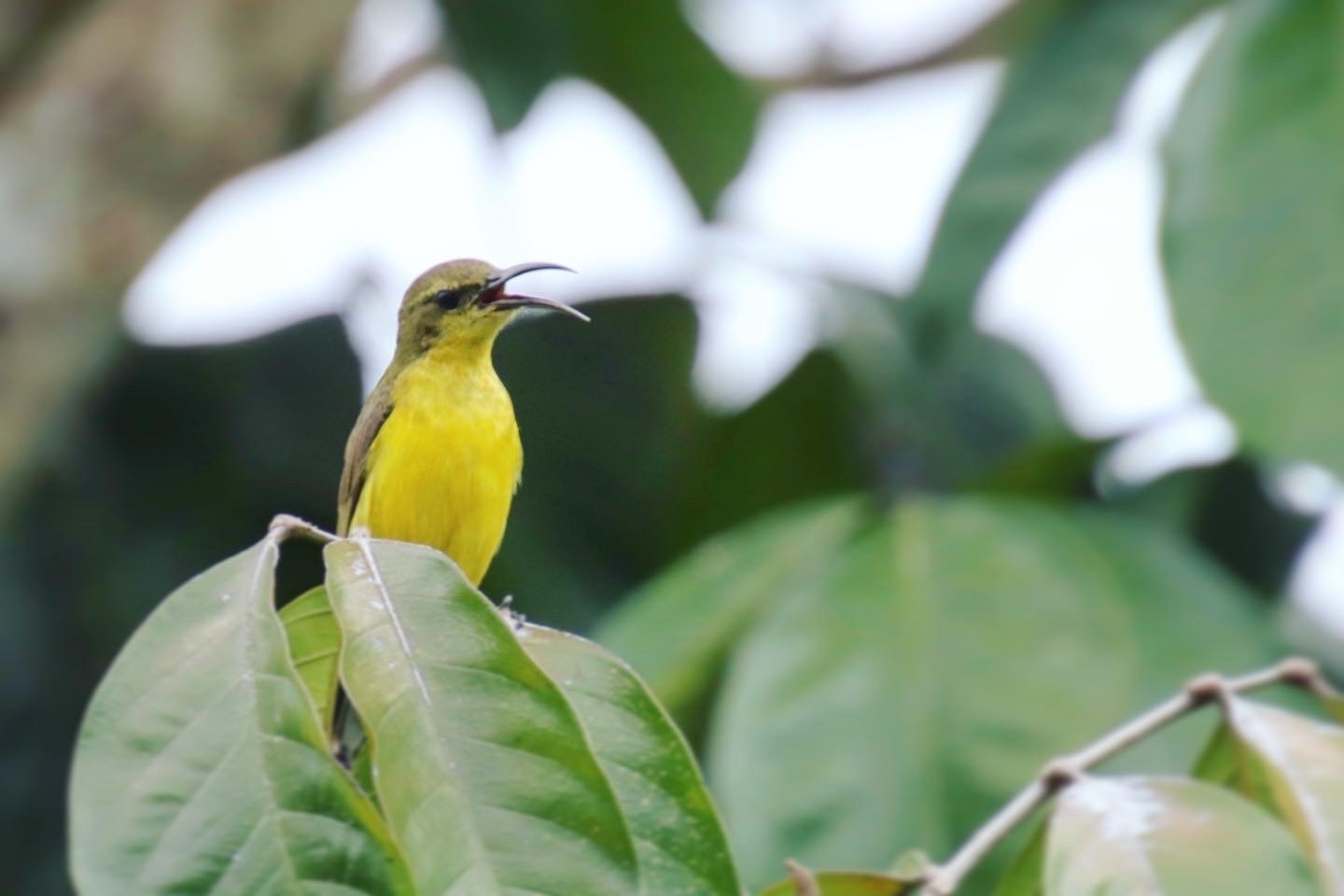
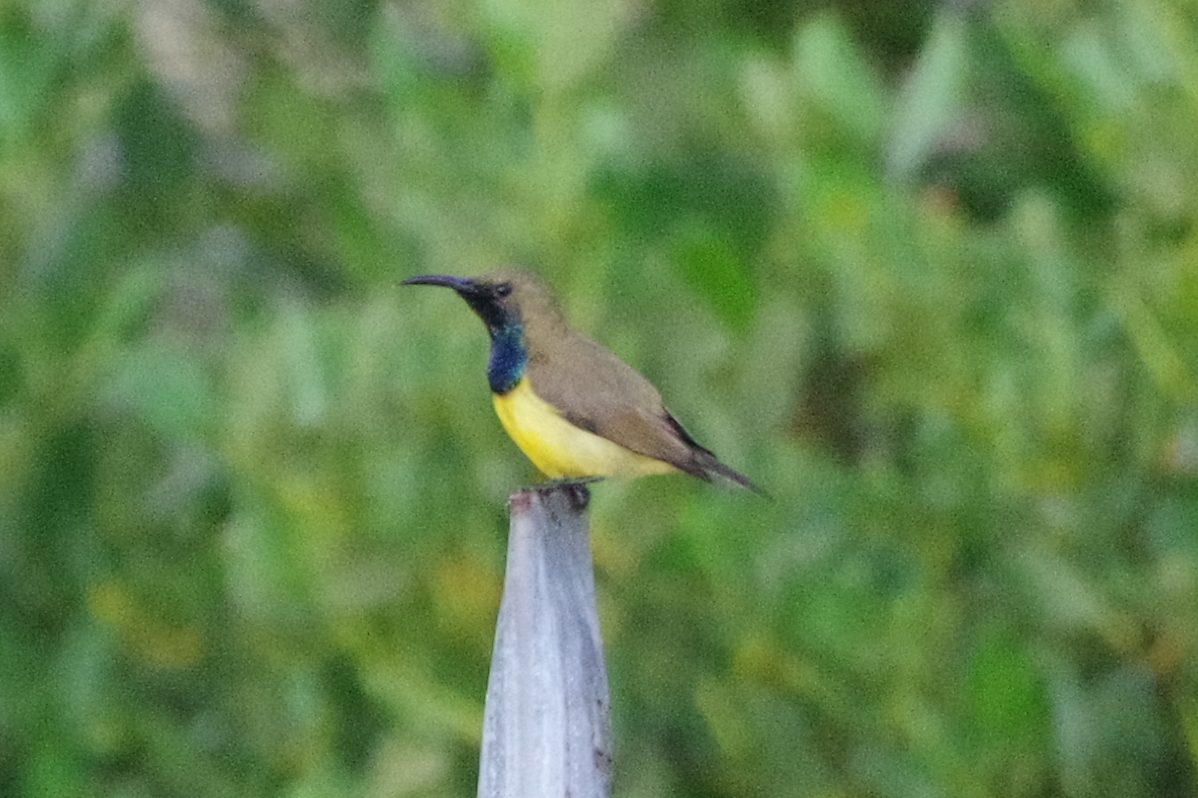
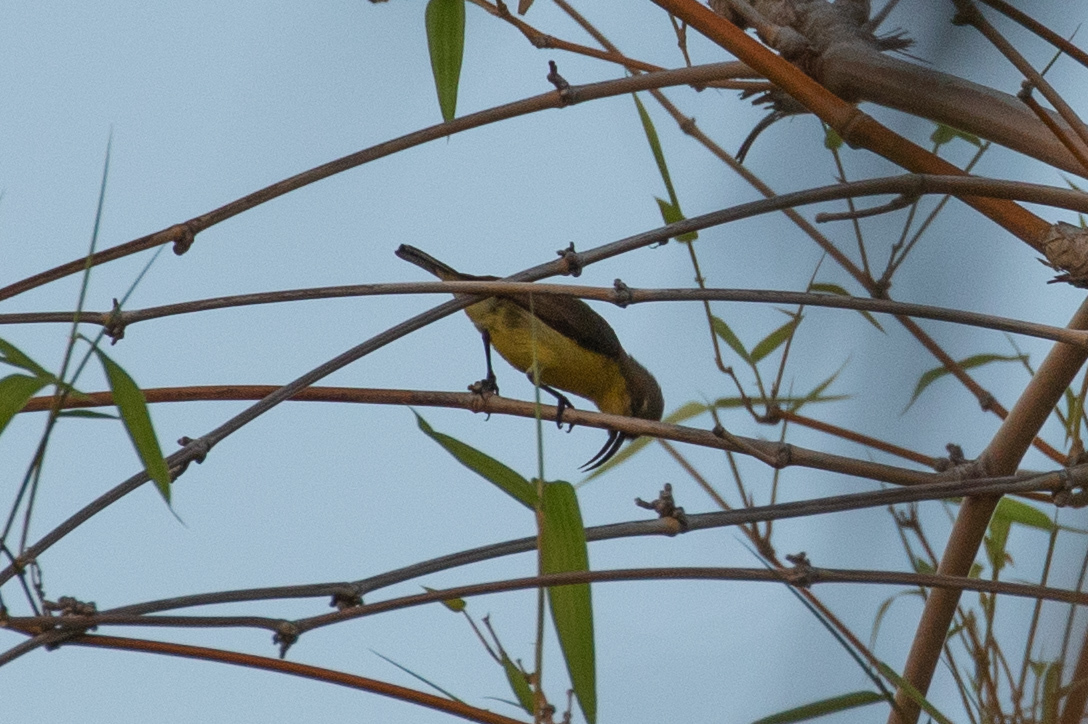
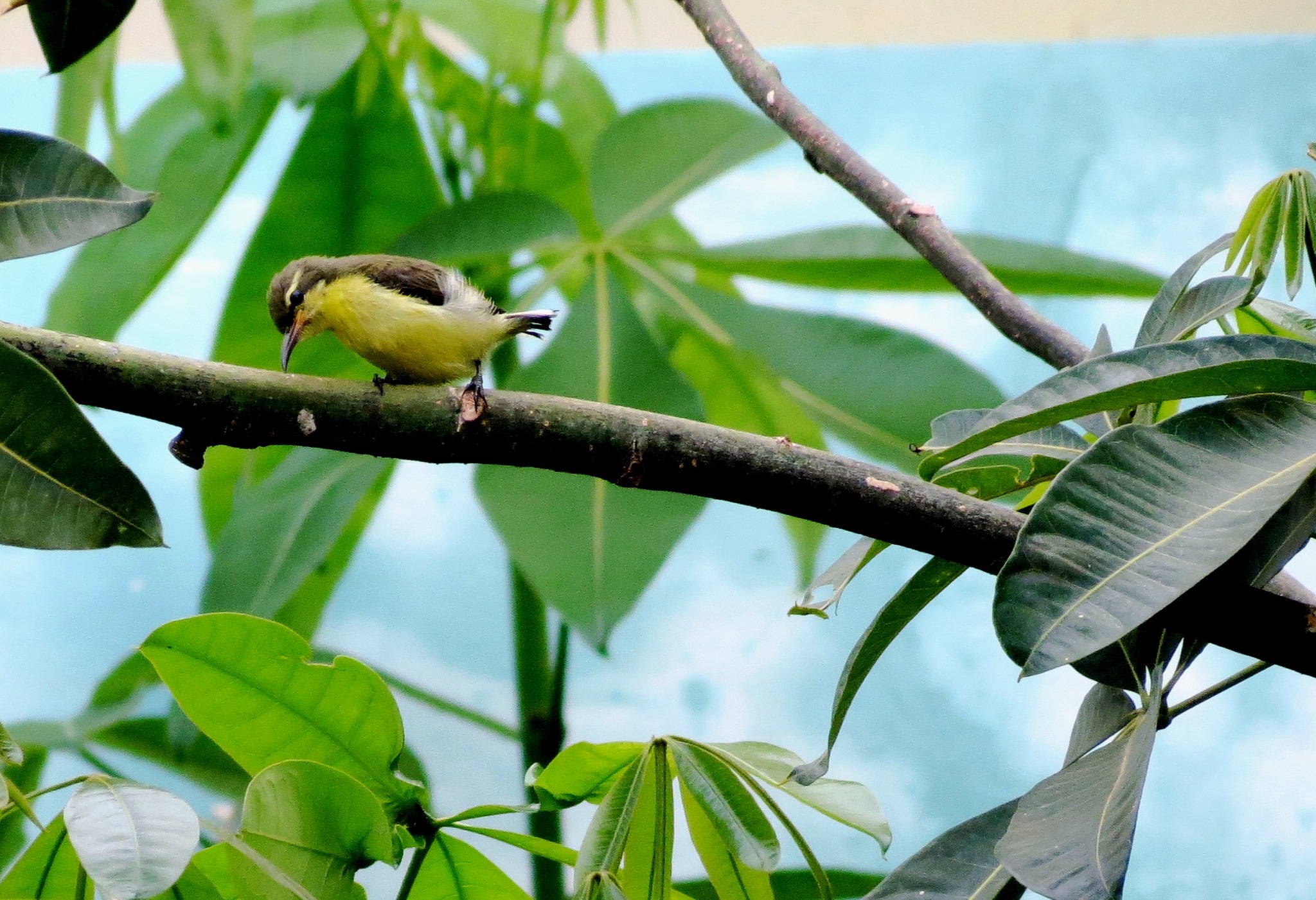
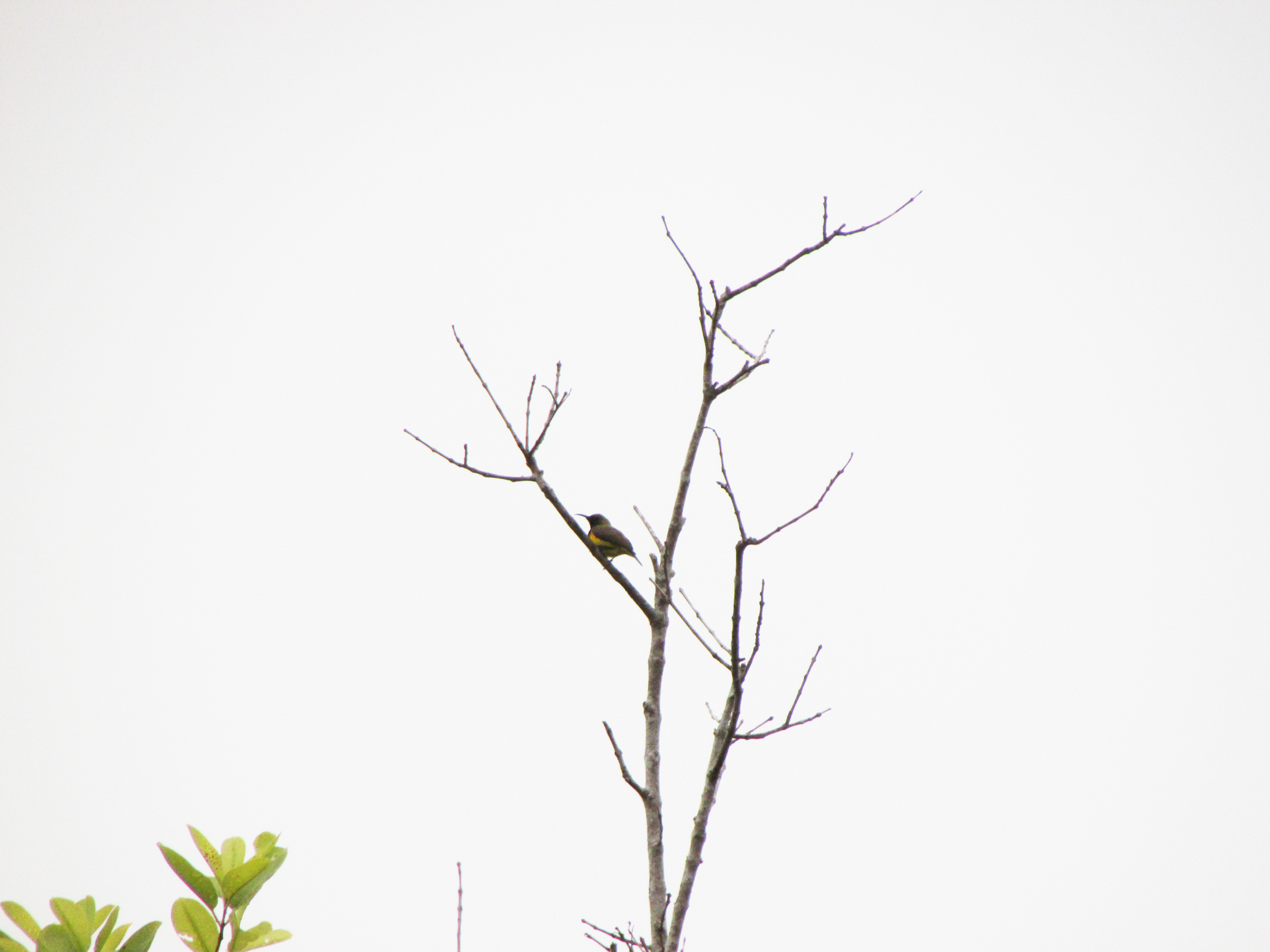
This is a tiny sunbird measuring 10-11.4 cm in length, with males weighing 6.7-11.9 g and females slightly smaller at 6-10 g. The male displays olive-green upperparts with black wing feathers edged in green, and a black tail with white tips. Its face, throat, and breast feature dark iridescent plumage, accented by bright yellow pectoral tufts. The underparts are dark yellow, occasionally showing a brown band across the gorget. The bill and legs are black, with dark brown eyes. Non-breeding males may show reduced iridescent black, limited to a central throat stripe. Females are overall greenish-olive above with a pale yellowish supercilium, yellowish-edged wing feathers, and black-and-white tail. The underparts are deep yellow, slightly paler on the undertail. Juveniles resemble females but appear paler and browner overall.
Distribution & Habitat
This species occurs throughout the Philippine islands, with the notable exception of the Palawan archipelago, which is occupied by the closely related Palawan sunbird. It occupies a variety of habitats including natural forests, shrublands, and grasslands, but has shown remarkable adaptability to human-modified landscapes. The garden sunbird is particularly common in moderately to densely populated areas, where it readily utilizes gardens, parks, and cultivated areas. It constructs nests in human settlements, taking advantage of buildings, verandas, and other structures for breeding sites.
Behavior & Ecology
As with other sunbirds, this species is primarily nectarivorous, using its specialized curved bill to extract nectar from a variety of flowering plants. It also consumes insects and spiders, which become especially important as chick food. While capable of hovering while feeding, individuals more commonly perch at flowers. The breeding season occurs during May and June. The female alone constructs the elaborate nest, which takes the form of a hanging oval pouch with a side entrance. She uses a variety of materials including grass, cotton, moss, lichens, leaf fragments, vegetable fibers, and spider webs, lining the interior with soft materials such as bark or feathers. A distinctive feature is the dangling 'beard' of material that hangs from the nest entrance.
Conservation
The garden sunbird is classified as Least Concern on the IUCN Red List. This assessment reflects its relatively common status throughout its geographic range and its ability to thrive in human-modified habitats. While specific population figures are not available, the species is not currently considered to face any major conservation threats. Its adaptability to urban and agricultural environments provides it with a degree of resilience against habitat loss that affects many other forest-dependent bird species in the region.
Culture
No specific cultural information is provided in the source material for this species.
Source: Wikipedia · CC BY-SA 3.0
Taxonomy
- Order
- Passeriformes
- Family
- Nectariniidae
- Genus
- Cinnyris
- eBird Code
- olbsun31
Vocalizations
Subspecies (3)
-
Cinnyris jugularis jugularis
southern Luzon, and central and southern Philippine Islands
-
Cinnyris jugularis obscurior
northern Philippines (montane forest of northern Luzon)
-
Cinnyris jugularis woodi
Sulu Archipelago (southern Philippines)
Data Sources
Species description from Wikipedia, licensed under CC BY-SA 3.0.
Bird images and sounds sourced from GBIF, contributed by citizen scientists worldwide under Creative Commons licenses.
Taxonomy data from AviList 2025.