
White-throated Dipper
Cinclus cinclus
河乌
Introduction
An aquatic passerine occurring across Europe, the Middle East, Central Asia, and the Indian subcontinent. Inhabits fast-flowing rivers and streams in upland and mountainous regions. One of only five species in its genus, representing the world's only truly aquatic passerines. Characterized by a bobbing motion while perched on rocks in rushing water. When disturbed, it dives and swims underwater using wings for propulsion, gripping the substrate with strong feet. Serves as an indicator species for river health, requiring clean, well-oxygenated waters with abundant invertebrate prey.
Description
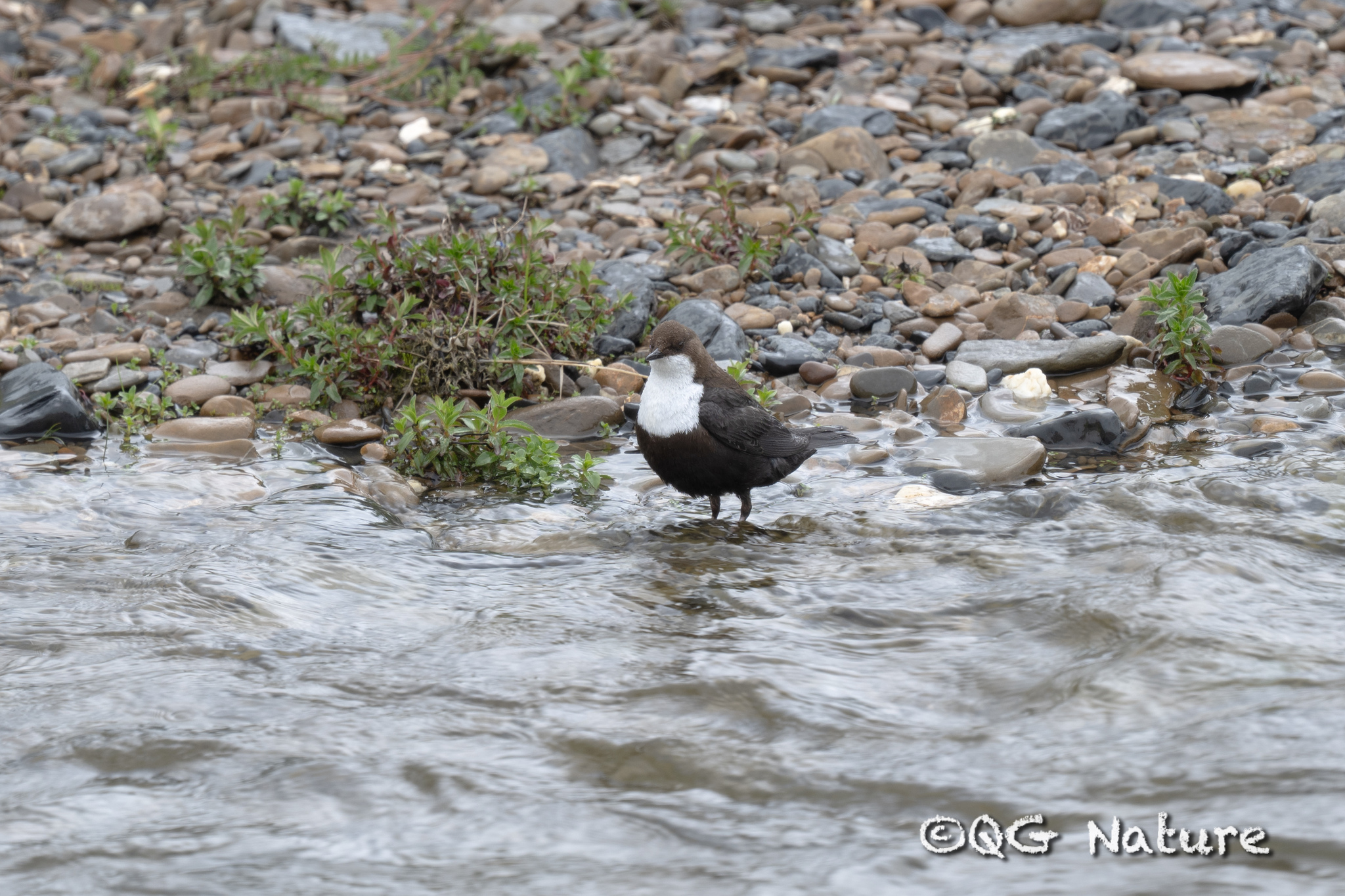
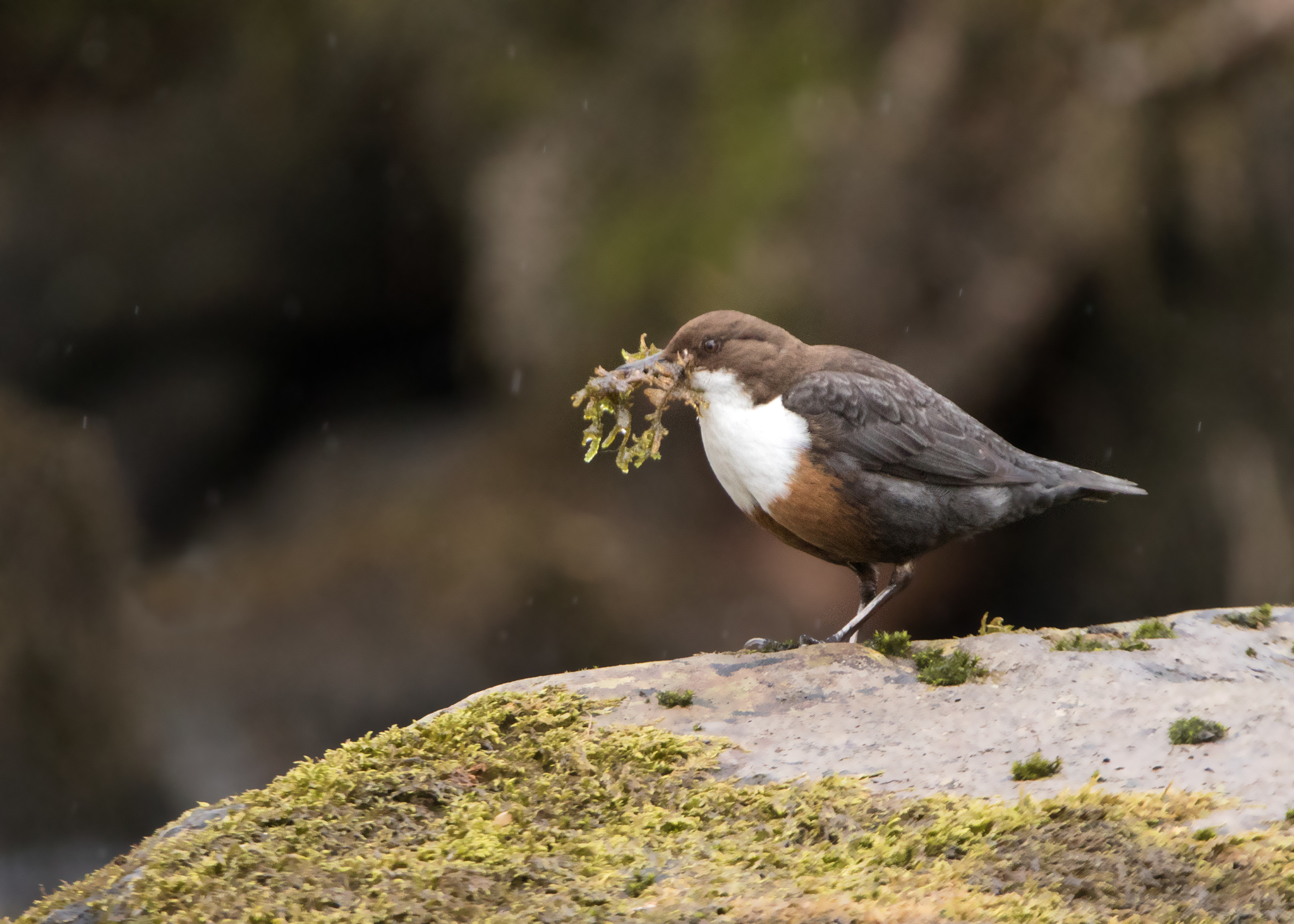
This is a compact, rotund bird approximately 18 centimeters in length with a notably short tail. The adult plumage consists of a brown head (in the gularis and aquaticus subspecies), a slate-grey back mottled with black that appears predominantly black at distance, and brown wings and tail. The diagnostic feature is the pure white throat and upper breast, followed by a band of warm chestnut coloration that transitions into black on the belly and flanks. The bill is nearly black, while the legs and irides are brown. Subspecies variation exists, with the northern cinclus subspecies displaying a black belly band rather than chestnut. Juveniles are uniformly greyish-brown and lack the distinctive chestnut breast band entirely.
Identification
In the field, this species is unmistakable within its preferred habitat of fast-flowing rivers and streams. The combination of white throat and breast, chestnut breast band, rotund body shape, and short tail creates a distinctive profile. The constant bobbing motion on waterside rocks is highly characteristic. The rapid, straight flight with whirring wingbeats and shrill 'zil' calls often reveals its presence before the bird is seen. The white-throated dipper differs from the closely related brown dipper, which occurs in parts of Asia, by having white rather than brown throat and breast plumage. No other European passerine combines aquatic habitat specialization with this particular color pattern.
Distribution & Habitat
This species breeds across a vast range extending from Ireland and Britain through most of Europe, across Turkey and the Caucasus to Iran, through Central Asia to China and the Himalayas, reaching the Indian subcontinent. Northern and central European populations are resident, though individuals may descend to lowlands and coasts when mountain streams freeze during harsh winters. The species is strongly associated with swiftly running rivers and streams, or the lakes into which they flow, requiring clean, well-oxygenated water with rocky substrates and riffles. It occurs from sea level to high elevations in mountainous regions, wherever suitable flowing water habitat exists.
Behavior & Ecology
This species is monogamous and territorial, with pairs defending stretches of river throughout the year. Breeding begins at one year of age, with dome-shaped nests constructed from moss, grass, and leaves, typically placed on rocky ledges, in cavities, or on human structures like bridges near or above water. The clutch contains four to five white eggs, incubated by the female for approximately 16 days. Both parents feed the altricial young, which fledge at around 22 days but continue receiving food for another week or more. The diet consists primarily of aquatic invertebrates including caddisfly larvae, beetles, molluscs, and amphipod shrimps, supplemented by small fish and amphibians. The male delivers a sweet wren-like song, while flight calls include sharp 'zil' and 'clink' notes.
Conservation
This species maintains a large global population and extensive range, classified as Least Concern by the IUCN. However, populations in some areas face pressure from river pollution, habitat degradation, and water quality deterioration that reduce invertebrate prey availability. River regulation, dam construction, and channel modification can negatively impact breeding habitat by altering flow patterns and reducing the swiftly running waters this species requires. Climate change affecting water cycles and river temperatures may also pose future threats. Conservation efforts focus on protecting river systems and maintaining water quality across the species' range.
Culture
Norway has designated this bird as its national symbol, reflecting its widespread recognition and cultural importance in Scandinavian countries. The first detailed written description dates to approximately 1183, provided by the cleric and historian Gerald of Wales in his Topographia Hibernica, documenting his travels through Ireland. Despite his careful observation of the bird's characteristics, Gerald erroneously classified it as an aberrant variety of the common kingfisher, believing the true kingfisher did not occur in Ireland during the 1180s. This historical record represents one of the earliest scientific descriptions of the species in European natural history.
Source: Wikipedia · CC BY-SA 3.0
Taxonomy
- Order
- Passeriformes
- Family
- Cinclidae
- Genus
- Cinclus
- eBird Code
- whtdip1
Subspecies (14)
-
Cinclus cinclus aquaticus
central and southern Europe to Balkan Peninsula
-
Cinclus cinclus baicalensis
south-central and southeastern Siberia
-
Cinclus cinclus cashmeriensis
Himalayas (western Kashmir to Sikkim)
-
Cinclus cinclus caucasicus
breeds Caucasus Mountains to northwestern Iran; winters to Iraq and Pakistan
-
Cinclus cinclus cinclus
Fenno-Scandia to southern coast of White Sea and Kaliningrad region
-
Cinclus cinclus gularis
Orkney Islands, central and eastern Scotland, western and central England, and Wales
-
Cinclus cinclus hibernicus
Ireland, Outer Hebrides, and western coast of Scotland
-
Cinclus cinclus leucogaster
south-central Russia and northwestern China southward to northwestern Afghanistan and northern Pakistan
-
Cinclus cinclus minor
mountains of Morocco, Tunisia, and Algeria
-
Cinclus cinclus olympicus
formerly Cyprus; extinct
-
Cinclus cinclus persicus
southwestern Iran (Zagros and Bakhtiari mountains)
-
Cinclus cinclus przewalskii
mountains of southern Tibet and western China
-
Cinclus cinclus rufiventris
Anti-Lebanon Mountains
-
Cinclus cinclus uralensis
Ural Mountains
Data Sources
Species description from Wikipedia, licensed under CC BY-SA 3.0.
Bird images and sounds sourced from GBIF, contributed by citizen scientists worldwide under Creative Commons licenses.
Taxonomy data from AviList 2025.