Asian Woolly-necked Stork
Ciconia episcopus
白颈鹳
Introduction
The Asian woolly-necked stork (Ciconia episcopus) is a large wading bird in the stork family Ciconiidae. It is distributed across tropical Asia from India to Indonesia, including the Philippines, Southeast Asia, and parts of China. Its habitat includes marshes in forests, agricultural areas, and various freshwater wetlands such as reservoirs, marshes, irrigation canals, and rivers. Distinctive traits include its unique downy white neck contrasting with black plumage, and its reliance on agricultural landscapes rather than protected wetlands for foraging. The species breeds singly or in small loose colonies, building large stick nests on trees, cliffs, or occasionally human-made structures. Conservation status was downlisted from Vulnerable to Near-threatened in 2019 after revised population estimates showed over 200,000 individuals in south Asia alone.
Description
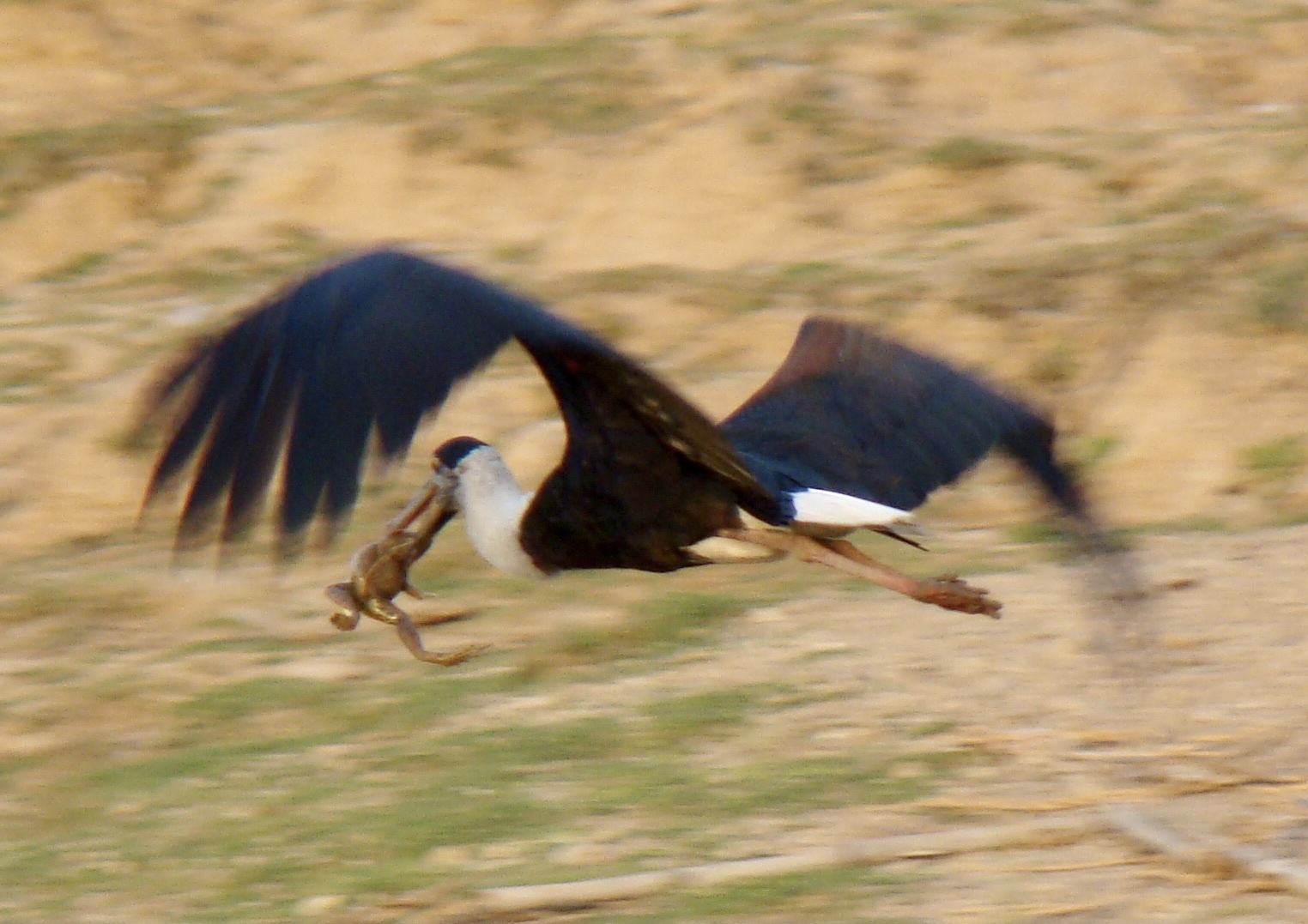
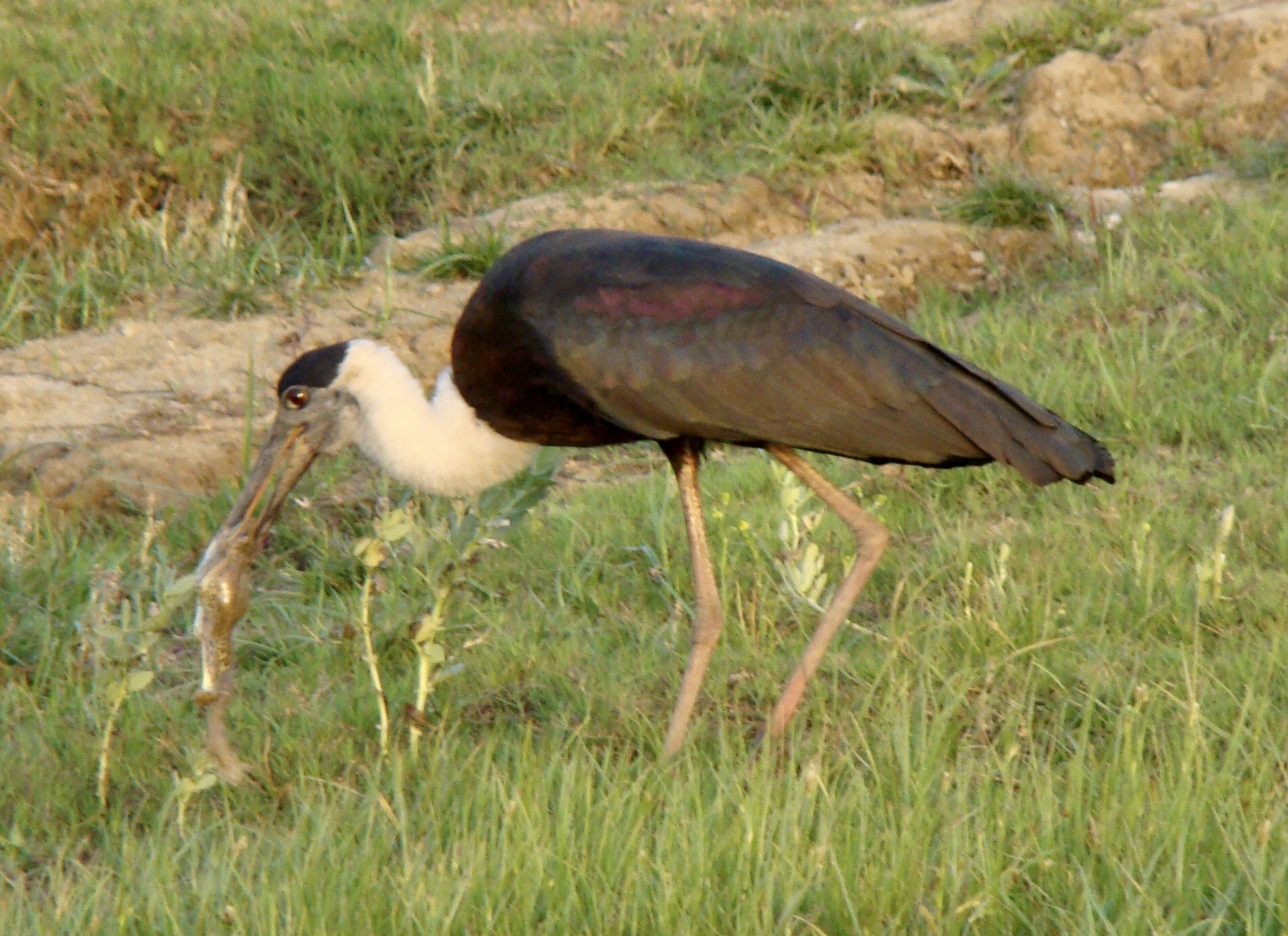
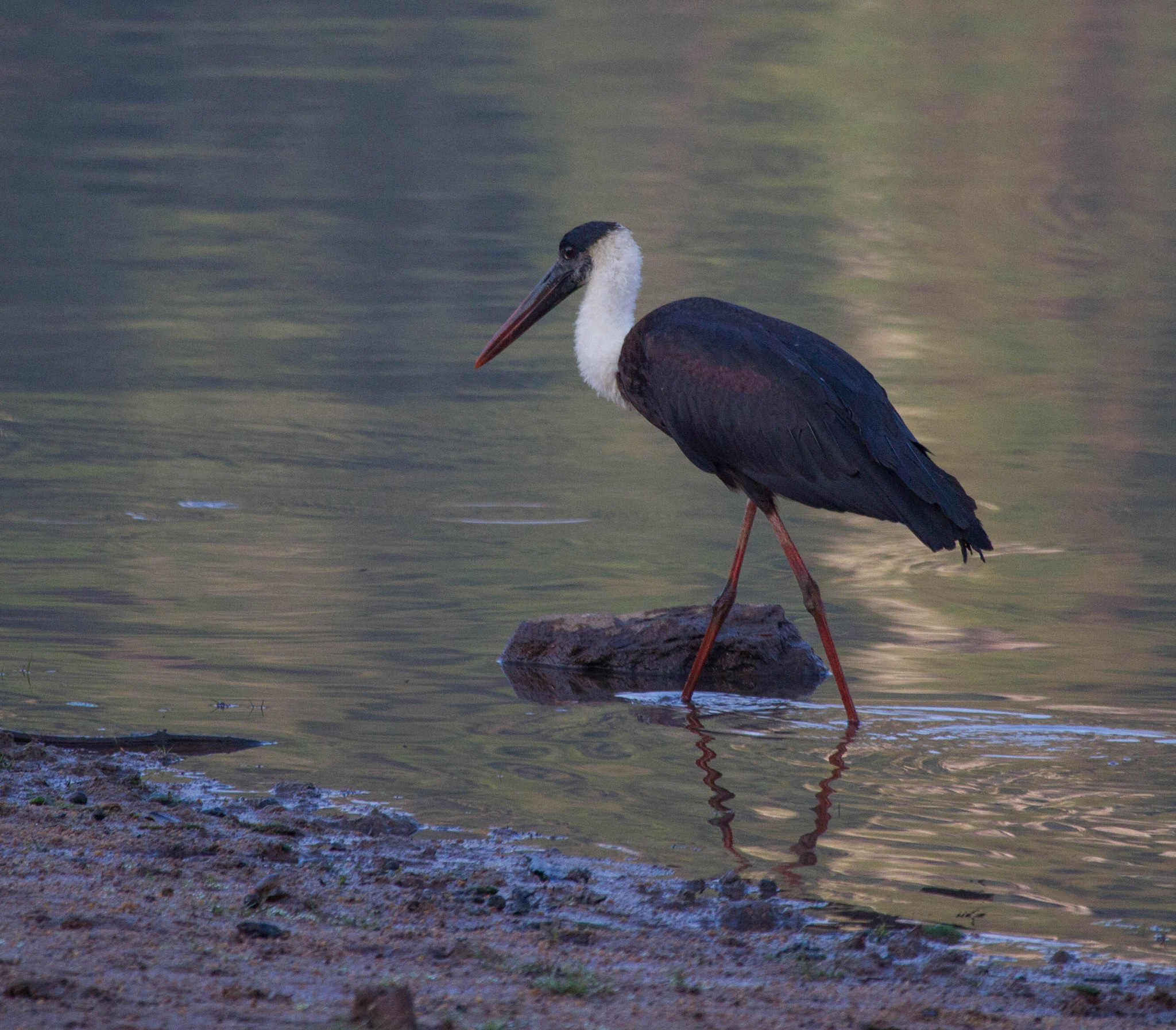
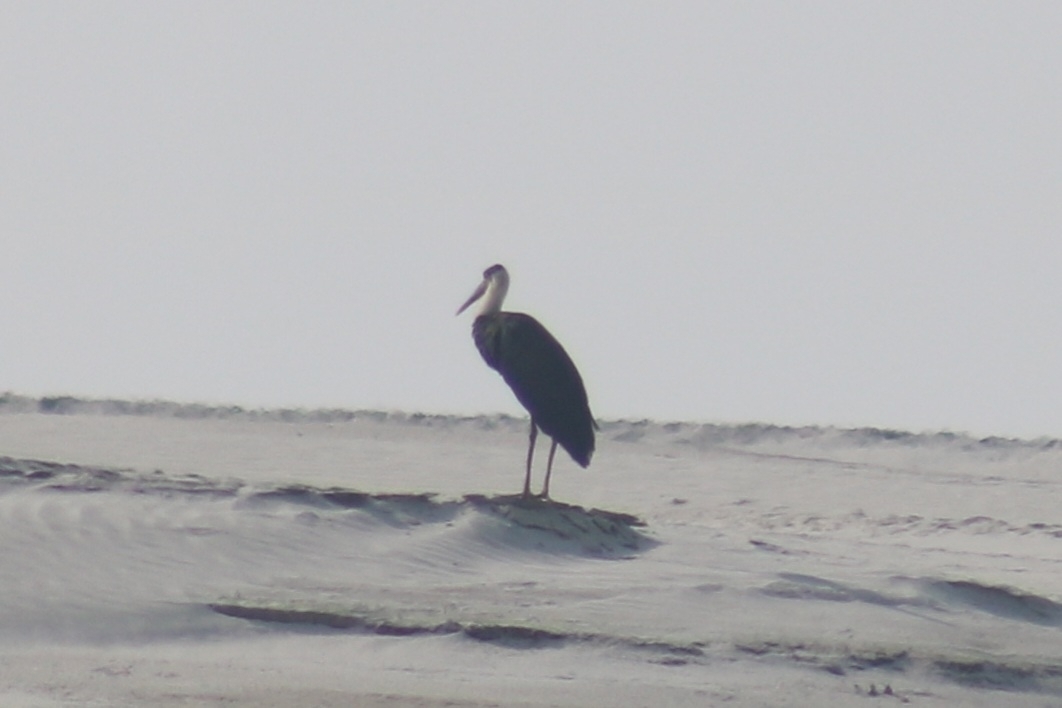
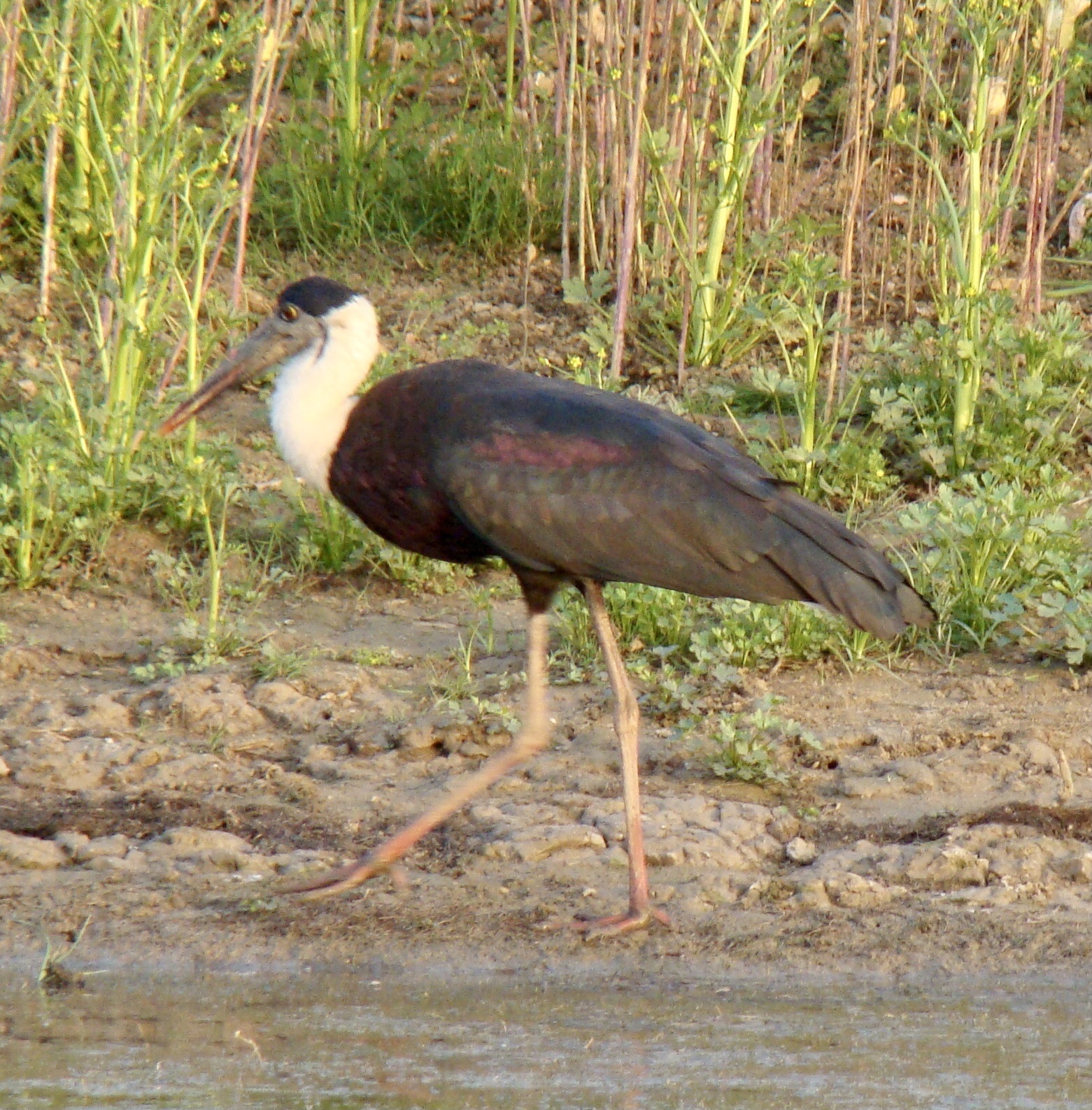
A medium-sized stork standing 75-92 cm tall. The plumage is glistening black overall with a distinctive black 'skull cap' and a downy white neck. The lower belly and under-tail coverts are white, standing out against the dark feathers. The fore-neck has iridescent, elongated feathers with a coppery-purple tinge that can be erected during displays. The tail is deeply forked and white but usually hidden by black under tail coverts. Legs are long and red, while the heavy bill is blackish, though some individuals have largely dark-red bills with only the basal third black. The iris is deep crimson or wine-red. Sexes appear identical, though males may be larger. Juveniles are duller with a streaked black-and-white feathered forehead.
Identification
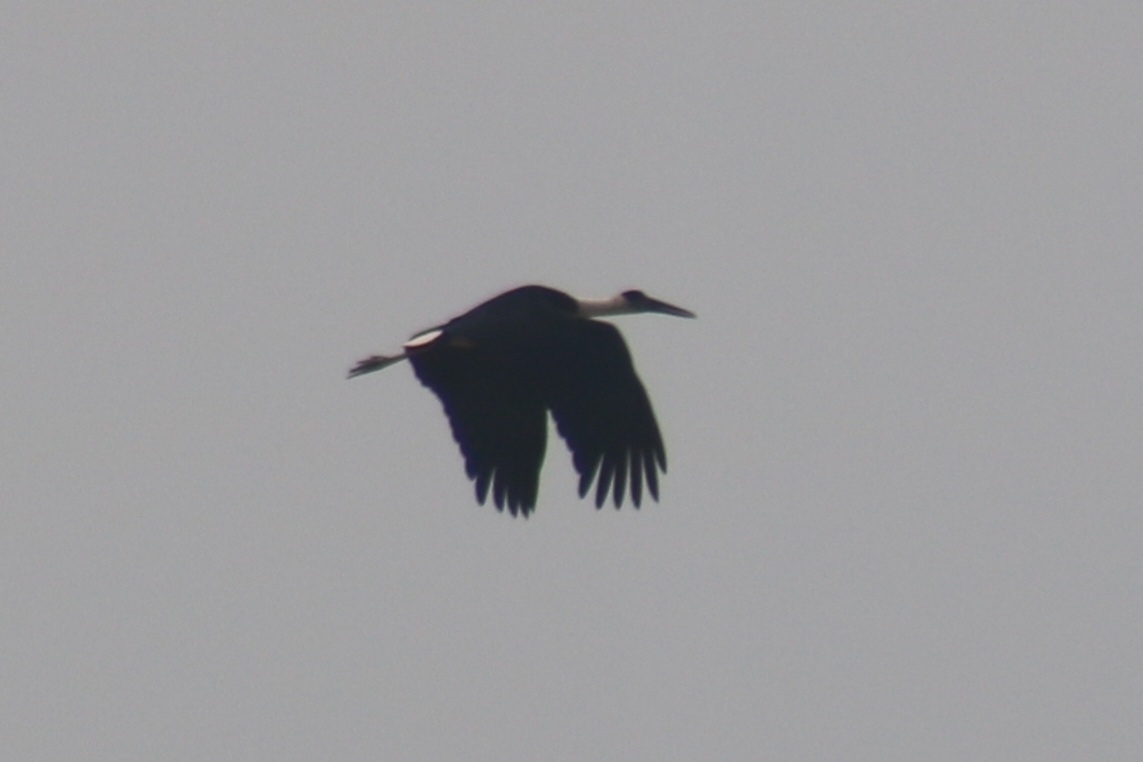
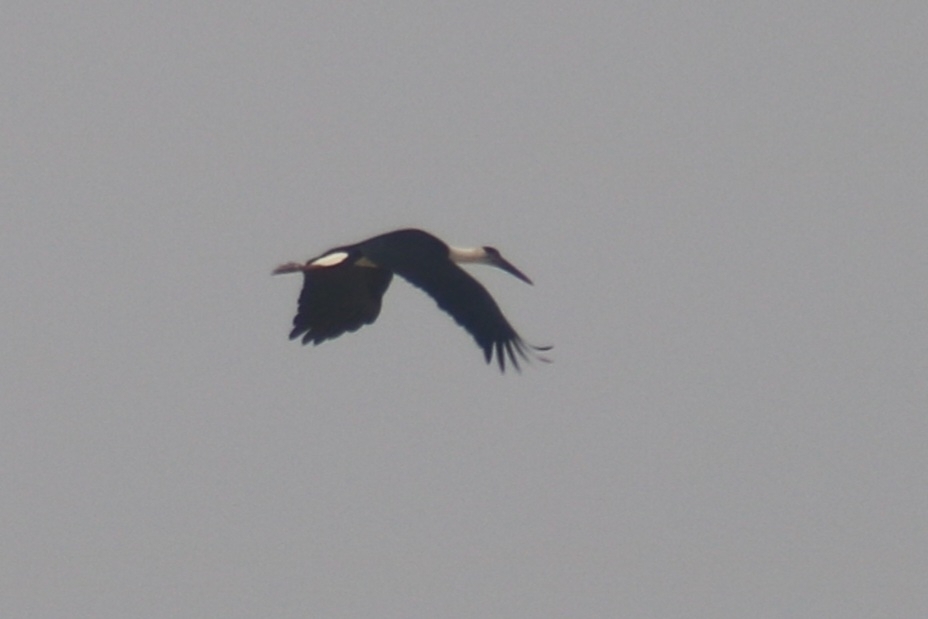
Field identification centers on the contrasting black-and-white plumage pattern. The combination of black 'skull cap,' white downy neck, black body, and white belly and under-tail coverts distinguishes it from similar storks. The African subspecies differs by having a diffused or jagged border on the black cap versus the sharp, clean border in Asian birds. In flight, the outstretched neck and the bright orange-red unfeathered skin band visible along the underside of the forearm are diagnostic. The deep crimson iris and red legs also aid identification. Juveniles can be identified by the white forehead mark and less iridescent plumage.
Distribution & Habitat
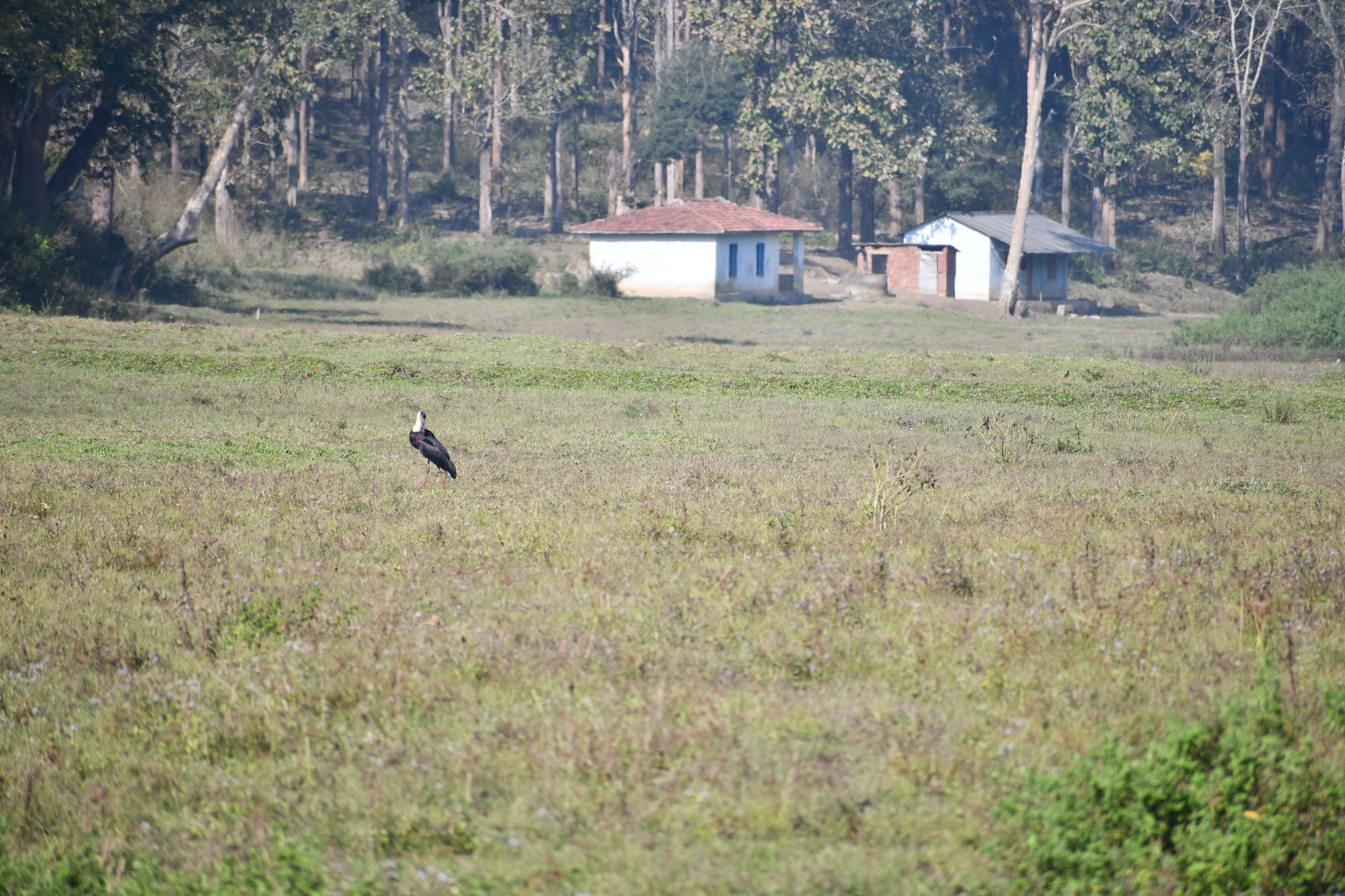
The species occurs across tropical Asia from India through Myanmar, Thailand, Cambodia, Laos, Vietnam, Malaysia, Indonesia (Sumatra, Java, Lesser Sunda Islands, Sulawesi), and the Philippines. It has been recorded at altitudes of 3,790 m in China (Napahai wetland) and 3,540 m in Nepal. The stork is a resident species using diverse habitats including agricultural fields, natural and artificial wetlands, forest clearings, and coastal areas. It nests on trees in agricultural landscapes, natural cliffs, and occasionally cell phone towers. The species is spreading to arid areas like the Thar Desert in Rajasthan, India, assisted by new irrigation canal construction.
Behavior & Ecology
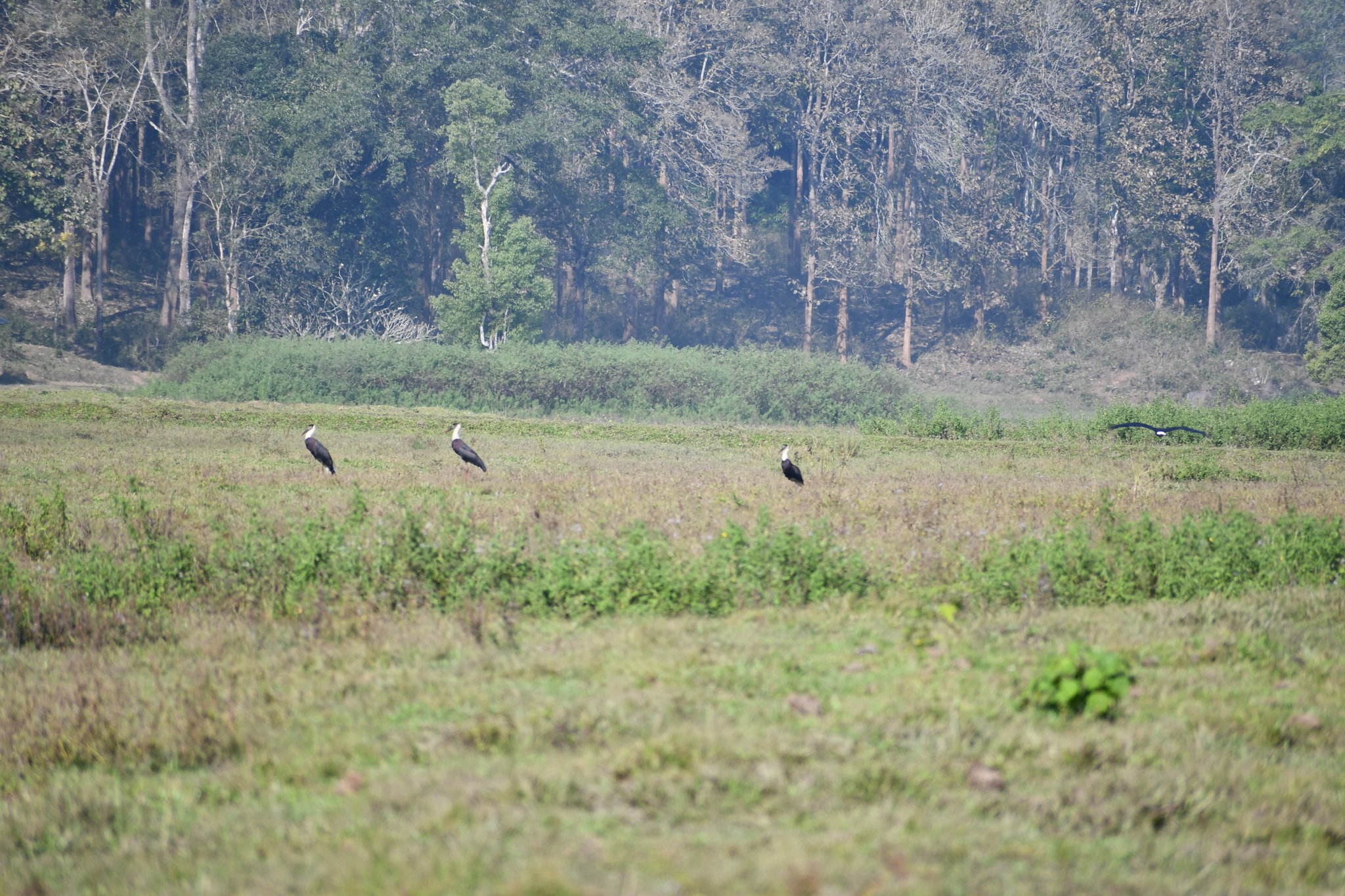
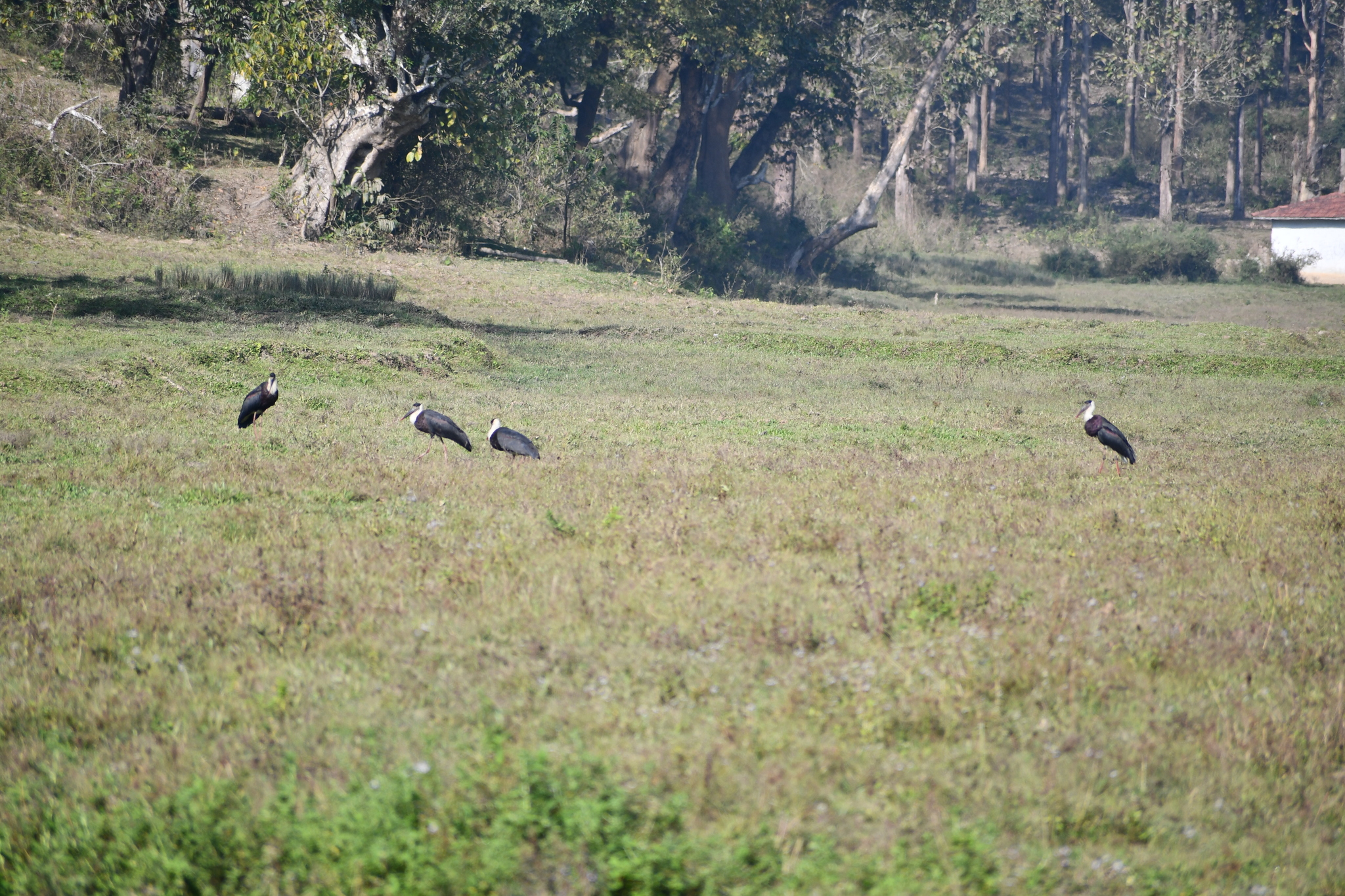
This stork walks slowly and steadily on the ground while foraging for amphibians, reptiles, and insects. It is a broad-winged soaring bird that relies on thermals for long-distance flight, flying with outstretched neck. Vocalizations include bisyllabic whistles during nest displays and fierce hissing when attacked. Social behavior varies by season and habitat: typically seen singly, in pairs, or small family groups of 4-5, though flocks occur in all seasons in agricultural areas. Flocking increases in arid areas during summer when wetlands dry, and in winter in wetter areas after fledging. It associates with wintering stork species and shows seasonal habitat shifts in agricultural landscapes, preferring dry fallow fields in summer and natural wetlands in winter.
Conservation
The Asian woolly-necked stork is classified as Near-threatened on the IUCN Red List, having been downlisted from Vulnerable in 2019. Earlier population estimates of 25,000 for south and southeast Asia were severe underestimates; current estimates exceed 200,000 birds in south Asia alone. The species is not an obligate wetland bird and benefits significantly from agricultural landscapes in south Asia, where it maintains breeding populations with large brood sizes. However, in southeast Asia, modeled distributions strongly overlap forested reserves under threat, presenting an uncertain future for that region. Deforestation in southeast Asia remains a potential threat to populations there.
Culture
English common names include white-necked stork, white-headed stork, bishop stork, and parson-bird, referencing the bird's distinctive plumage pattern resembling clerical vestments. The scientific name 'episcopus' is Latin for 'bishop,' alluding to this ecclesiastical appearance. No specific folklore or cultural significance is documented in the source material beyond these descriptive common names.
Source: Wikipedia · CC BY-SA 3.0
Taxonomy
- Order
- Ciconiiformes
- Family
- Ciconiidae
- Genus
- Ciconia
- eBird Code
- wonsto1
Subspecies (2)
-
Ciconia episcopus episcopus
India to Indochina, Philippines (where likely extirpated), Malay Peninsula, and northern Sumatra
-
Ciconia episcopus neglecta
southern Sumatra, Java, Lesser Sundas, and Sulawesi region
Data Sources
CBR Notes: 英文名由Asian Woollyneck改为Asian Woolly-necked Stork
Species description from Wikipedia, licensed under CC BY-SA 3.0.
Bird images and sounds sourced from GBIF, contributed by citizen scientists worldwide under Creative Commons licenses.
Taxonomy data from AviList 2025.