White Stork
Ciconia ciconia
白鹳
Introduction
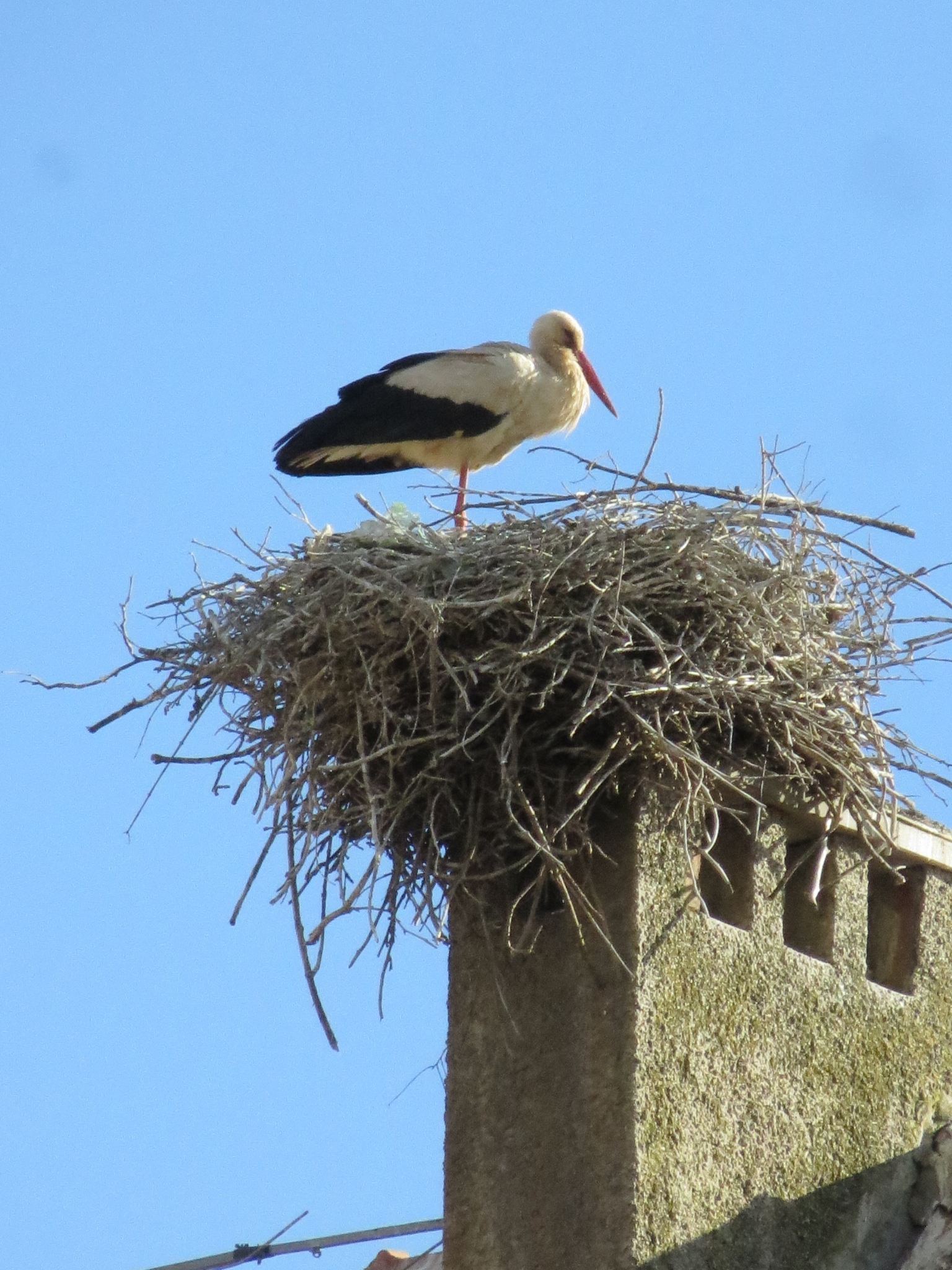
The White Stork (Ciconia ciconia) breeds across western and central Europe, with populations extending eastward to western Asia. European populations are long-distance migrants, wintering in sub-Saharan Africa. The species nests on rooftops, chimneys, and purpose-built platforms, frequently near human settlements. During breeding season, adults perform bill-clattering displays at nesting sites. Conservation and reintroduction programs have facilitated population recovery in several countries where the species had declined, though agricultural intensification continues to threaten populations in some regions.
Description
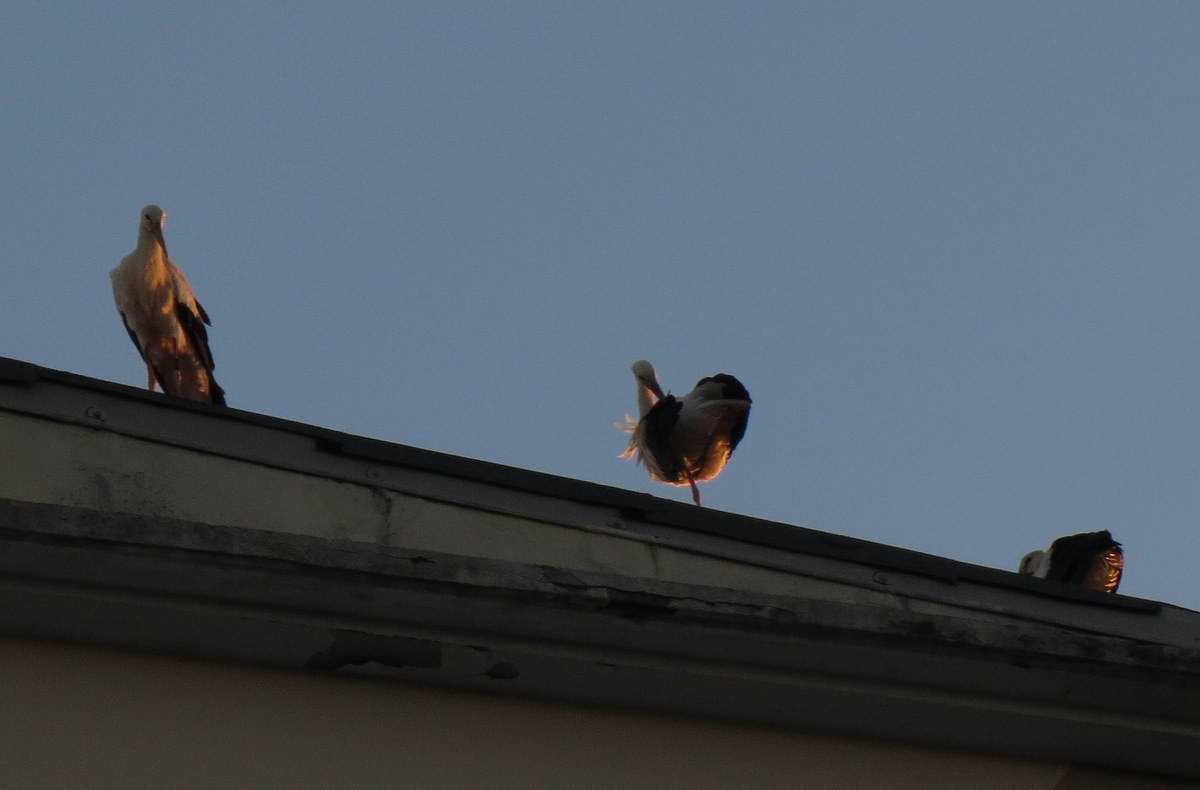
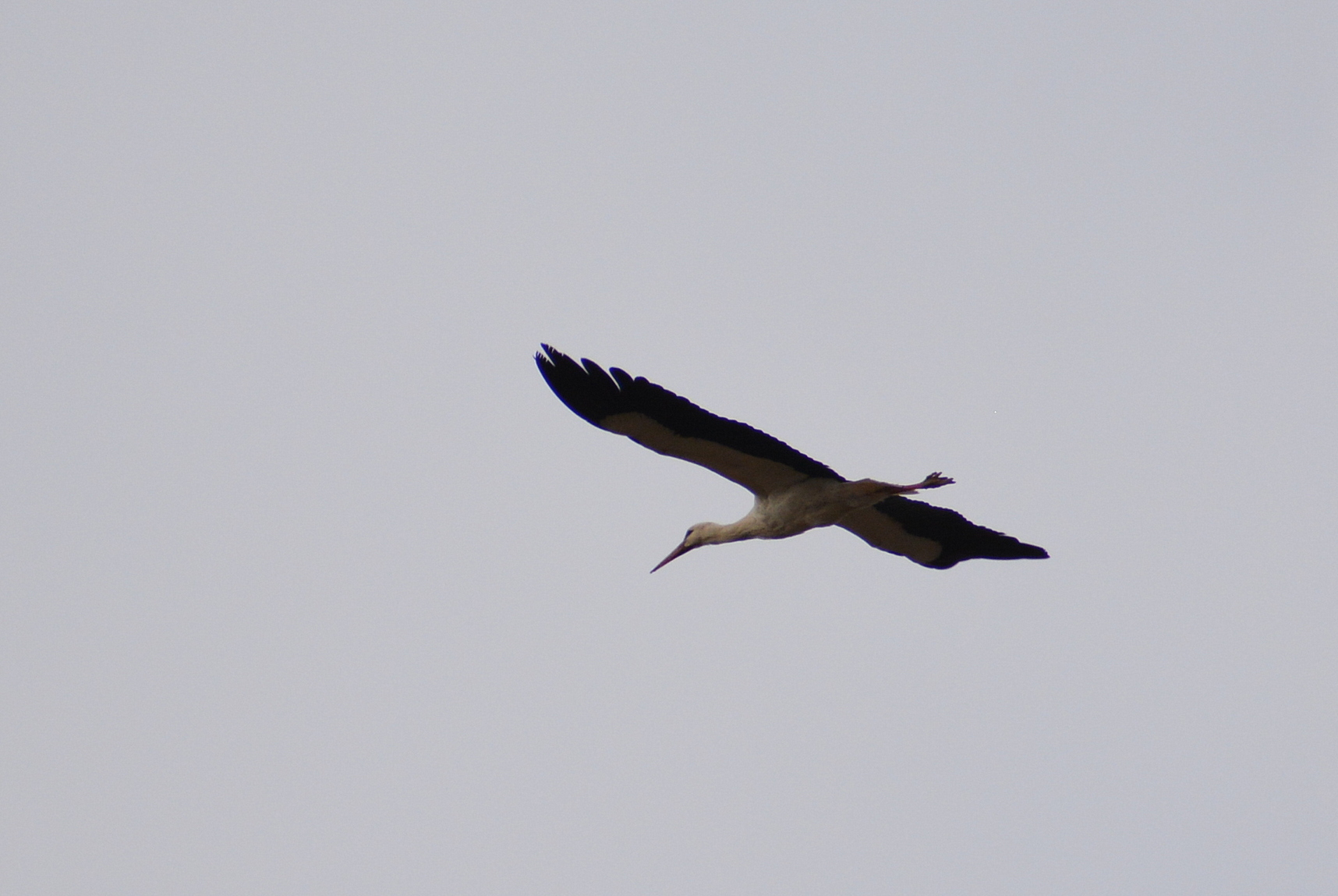
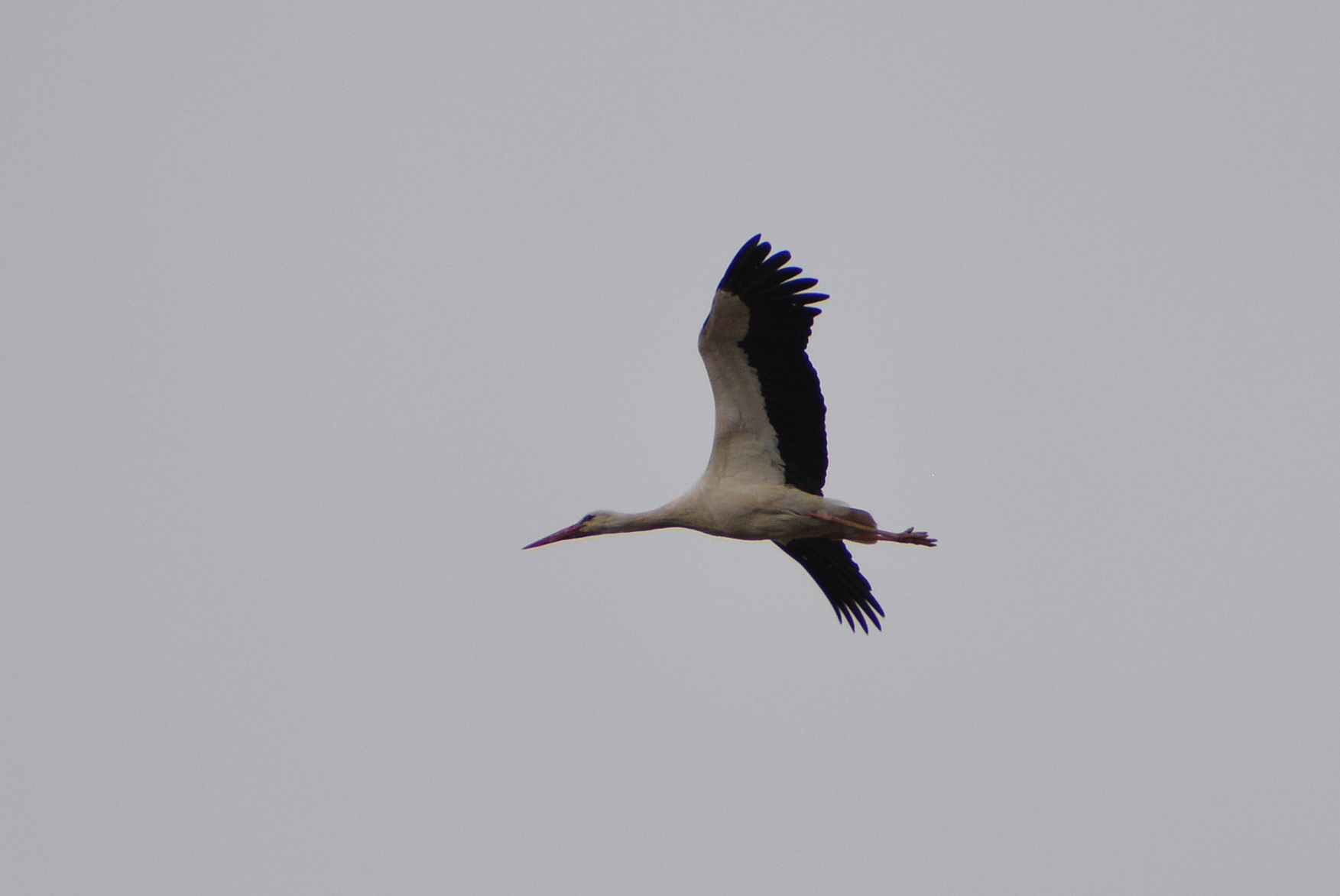
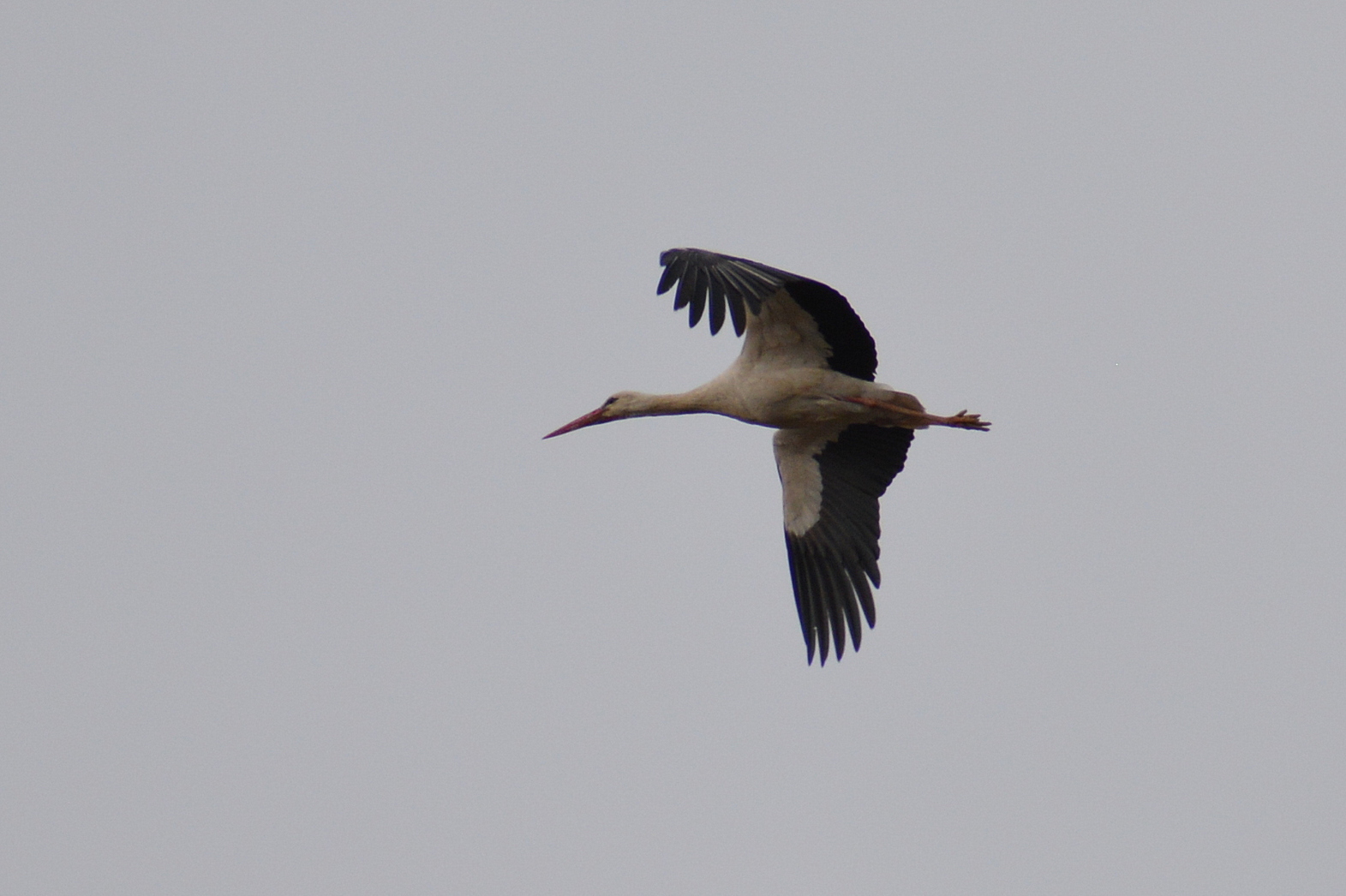
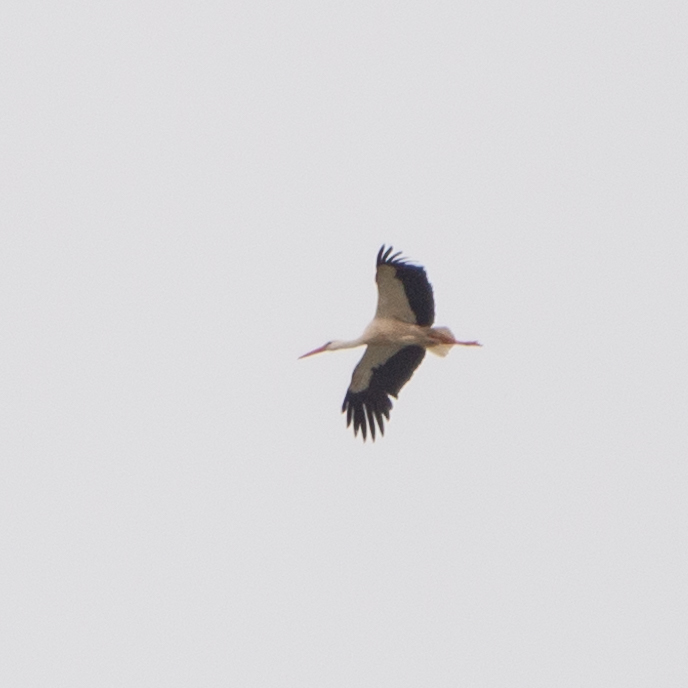
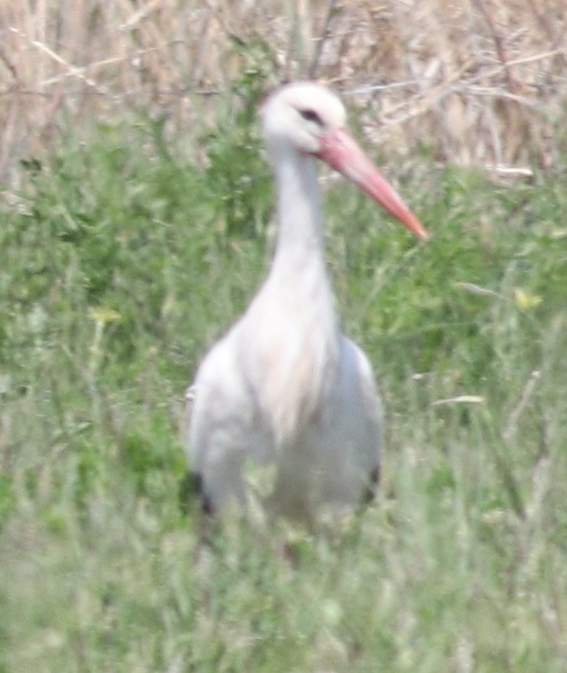
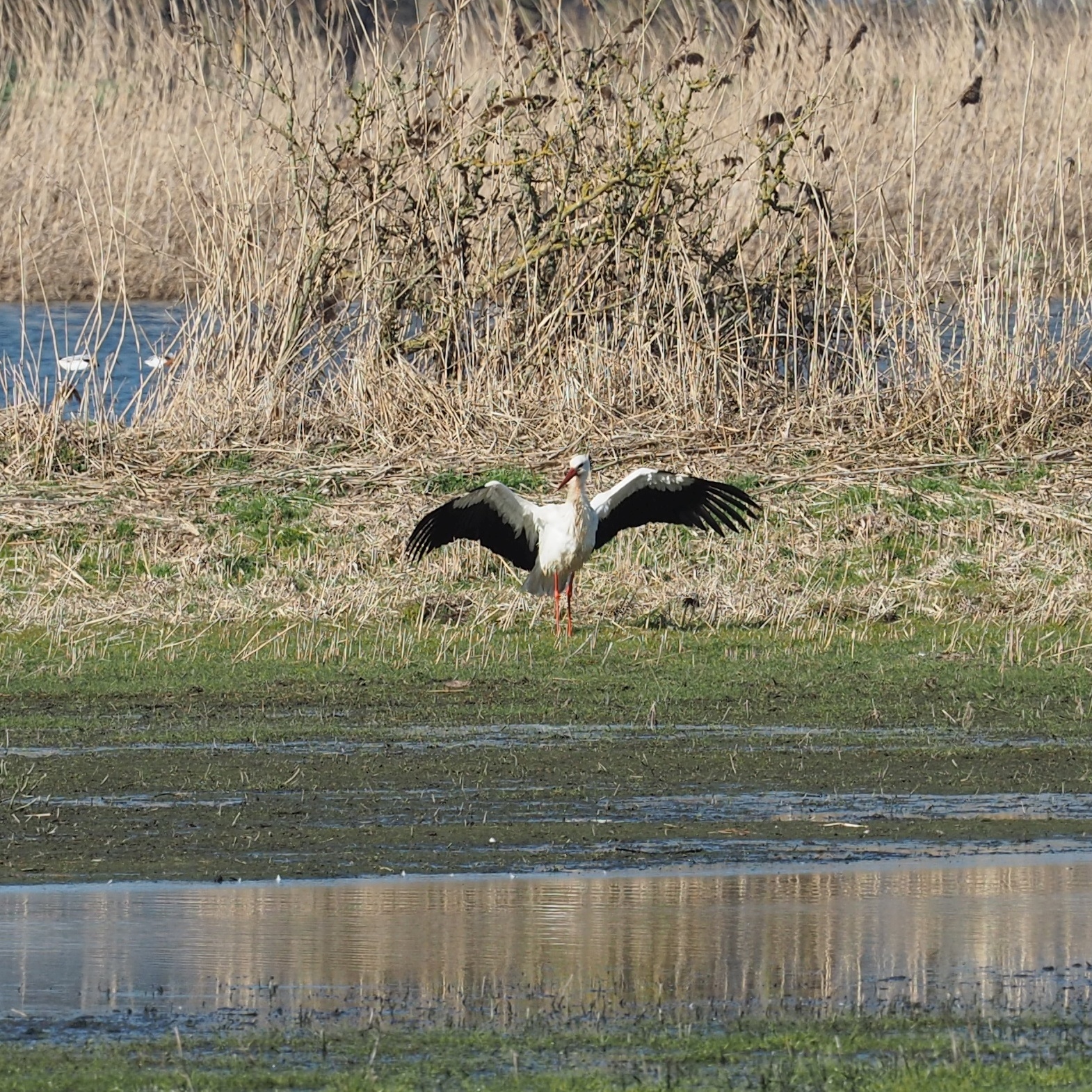
A large wading bird standing 100-125 cm tall with a body length of 100-115 cm and impressive wingspan of 155-215 cm. Adults weigh 2.3-4.5 kg. The plumage is predominantly white with black flight feathers and wing coverts, the black coloration produced by melanin pigment. Long legs and neck support a straight, pointed red beak. Sexes appear identical, though males average larger. The breast feathers are notably long and shaggy, forming a ruff used in courtship displays. Irises are dull brown or grey, with black skin around the eyes. In parts of Spain, red beak coloration comes from astaxanthin in introduced crayfish. Juveniles have pinkish legs that darken with age, brown-tipped black beaks, and black feathers often tinged with brown. Adults gain full red beak coloration by their second summer.
Identification
Within its range, this species is distinctive on the ground with its black and white plumage, long red legs, and red beak. In flight, confusion is possible with several species: the yellow-billed stork has a longer, slightly curved yellow beak, black tail, and is smaller overall. The great white pelican flies with a retracted neck and short legs that do not extend beyond the tail, moving in orderly synchronized flocks unlike the disorganized groups of this species. The Egyptian vulture is much smaller with a wedge-shaped tail and shorter legs. The common crane, which can appear black and white in strong light, shows distinctly longer legs and neck in flight. The Asian openbill shares similar plumage but has a distinctly different bill shape where their ranges overlap in winter.
Distribution & Habitat
The nominate subspecies breeds across much of Europe, with concentrations in Poland, Ukraine, and Germany, extending through western Asia to northwestern Africa. About 25% of the global population breeds in Poland. A smaller central Asian population of around 1,450 birds breeds between the Aral Sea and western China, though the Xinjiang population is now likely extinct. This species is a long-distance migrant wintering in sub-Saharan Africa from Kenya and Uganda south to South Africa, with smaller numbers wintering in India. It avoids Mediterranean Sea crossings by migrating via the Levant in the east or Strait of Gibraltar in the west. Preferred habitats include grassy meadows, farmland, and shallow wetlands, avoiding areas with tall vegetation. Northern populations are expanding into new areas including Finland and western Russia.
Behavior & Ecology
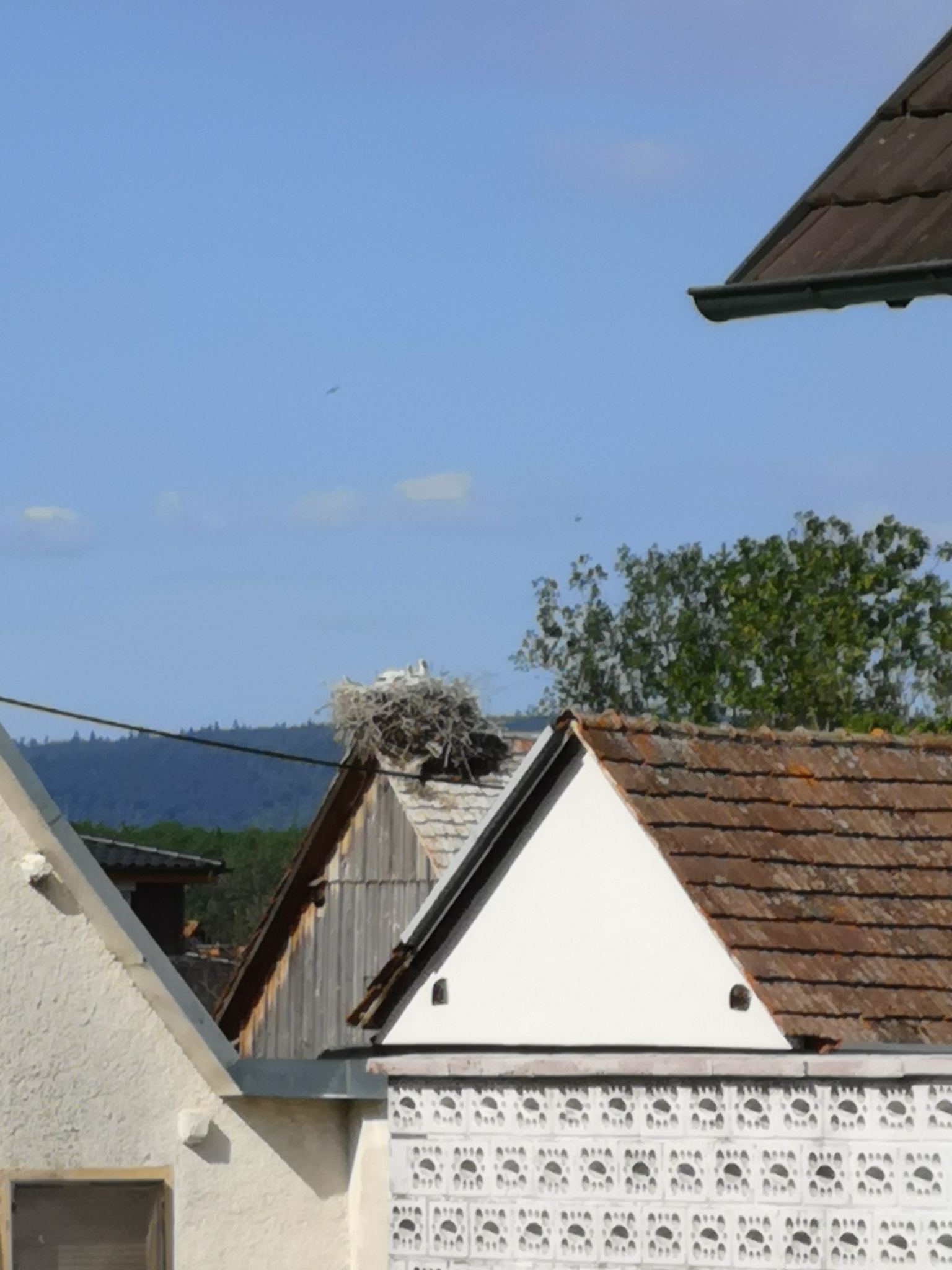
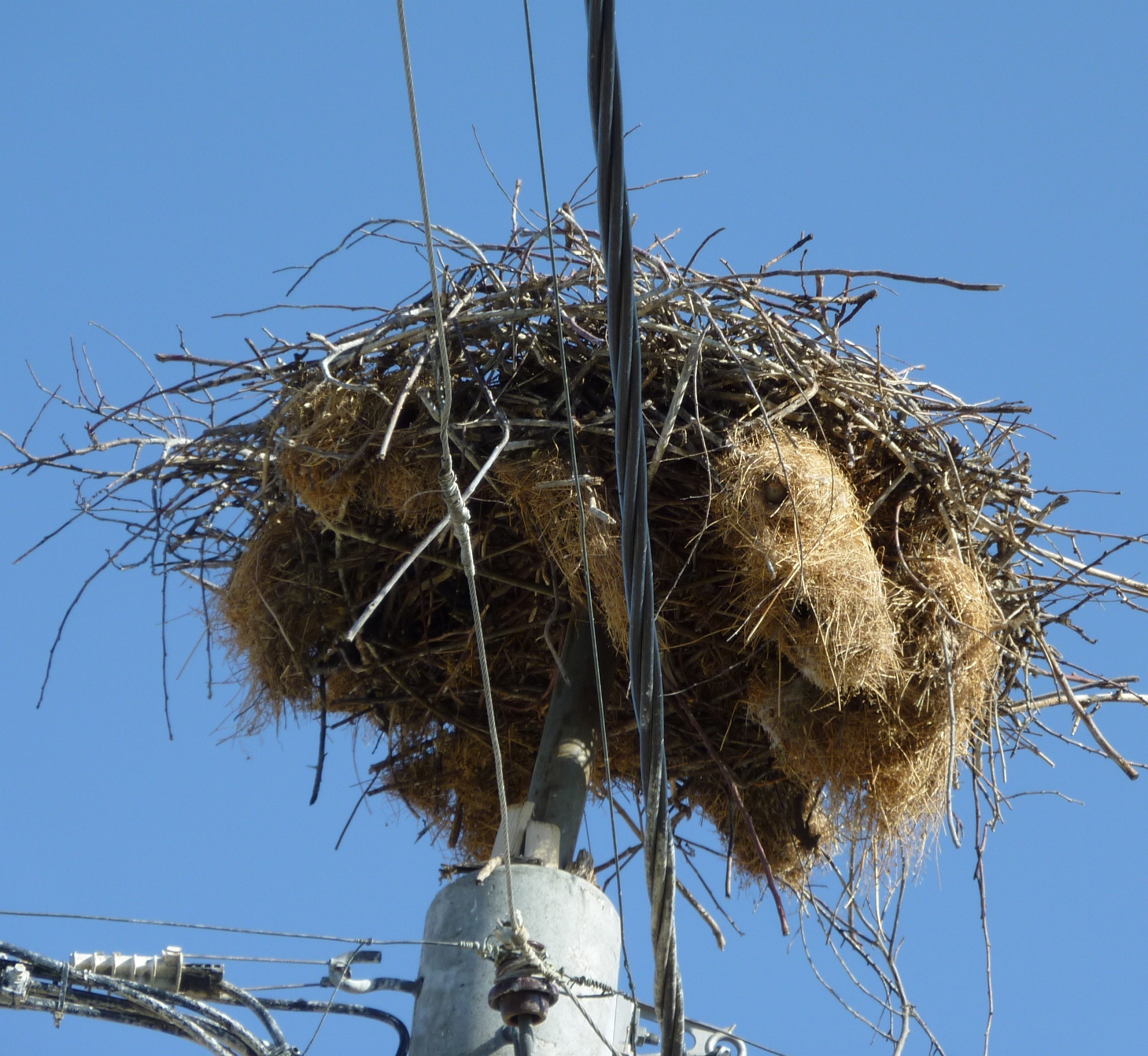
This gregarious species gathers in flocks of thousands during migration and at African wintering grounds. Non-breeding birds form groups of 40-50 during breeding season. Pairs are territorial and use an up-down display with head-throwing as greeting, threat, and post-copulation behavior. The diet is varied, including insects, earthworms, fish, amphibians, reptiles, small mammals, and occasionally birds and eggs. Prey is taken from ground, low vegetation, and shallow water. Breeding pairs build large stick nests 1-2 m deep in trees or on buildings, reusing nests across years. The female lays typically four eggs, incubated asynchronously for 33-34 days. Both parents share incubation and feeding duties. Chicks fledge at 58-64 days and may be fed for another 7-20 days. The main vocalization is a loud bill-clattering sound used in various social contexts, amplified by the throat pouch. Adults rarely make vocal sounds beyond a faint hiss.
Conservation
Rated as Least Concern by the IUCN since 1994 after being Near Threatened in 1988. Populations declined significantly from the 19th century due to agricultural industrialization and wetland drainage, disappearing from Belgium, Sweden, Switzerland, and the Netherlands. However, reintroduction programs have successfully restored breeding in the Netherlands, Belgium, Switzerland, Sweden, and the United Kingdom. Key threats include continued wetland loss, collisions with overhead power lines, persistent pesticide use, and illegal hunting on migration routes. The species is protected under the African-Eurasian Migratory Waterbird Agreement. Current strongholds include Poland with 52,500 pairs, Ukraine with 30,000, and Spain with over 33,000 pairs. Conservation measures include modified electric poles with nesting platforms, supplementary feeding programs, and habitat protection initiatives.
Culture
This bird has featured prominently in human culture across its range. In Greek and Roman mythology, it symbolized parental devotion, and ancient Greeks considered killing one punishable by death. The famous legend of babies being delivered by storks became widely known through Hans Christian Andersen's 19th-century story. German, Dutch, and Polish households historically encouraged nesting on houses to bring good luck, and in Central and Eastern Europe, a nest on a property was believed to bring family harmony. The species is the national bird of Lithuania, Belarus, and Poland. Slavic mythology held that storks carried unborn souls from the realm of the gods to Earth. In some regions, the bird represents good fortune, while others associate it with adultery or misfortune. Its traditional link with newborns persists in modern advertising. Early understanding of bird migration came from studying individuals found with African arrows embedded in them, proving they traveled to distant continents.
Source: Wikipedia · CC BY-SA 3.0
Taxonomy
- Order
- Ciconiiformes
- Family
- Ciconiidae
- Genus
- Ciconia
- eBird Code
- whisto1
Vocalizations
Subspecies (2)
-
Ciconia ciconia asiatica
central Asia; winters to Iran and India
-
Ciconia ciconia ciconia
Western Palearctic and western Asia; winters to tropical and South Africa
Data Sources
Species description from Wikipedia, licensed under CC BY-SA 3.0.
Bird images and sounds sourced from GBIF, contributed by citizen scientists worldwide under Creative Commons licenses.
Taxonomy data from AviList 2025.