









Oriental Stork
Ciconia boyciana
东方白鹳
Introduction
The Oriental stork is a large wading bird occurring across East Asia. It is larger than the European white stork and inhabits marshes, pond edges, coastal beaches, and other wetland environments. The species has white plumage, black wings, red facial skin, and a black bill. It functions as an apex predator in wetland ecosystems. Once common throughout its range, the species suffered dramatic population declines. Breeding has recently resumed in Japan after a period of absence. It is considered a flagship species for wetland conservation.
Description
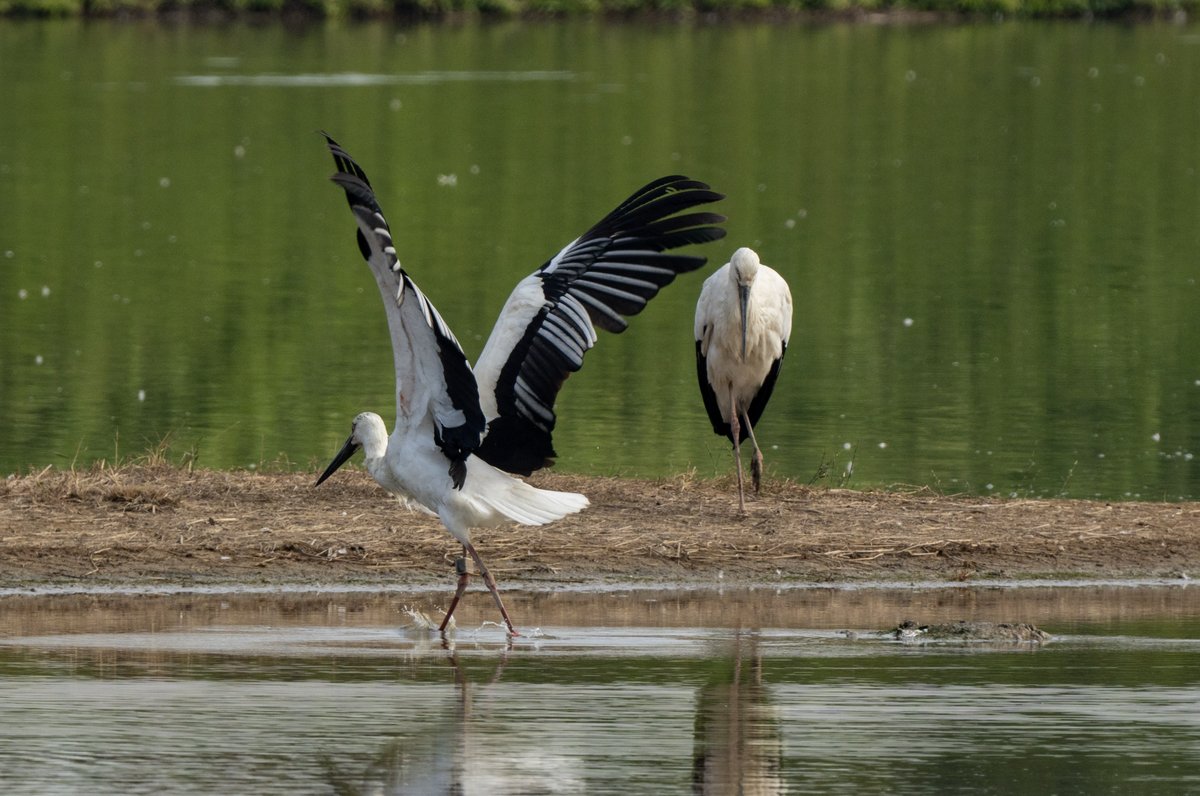
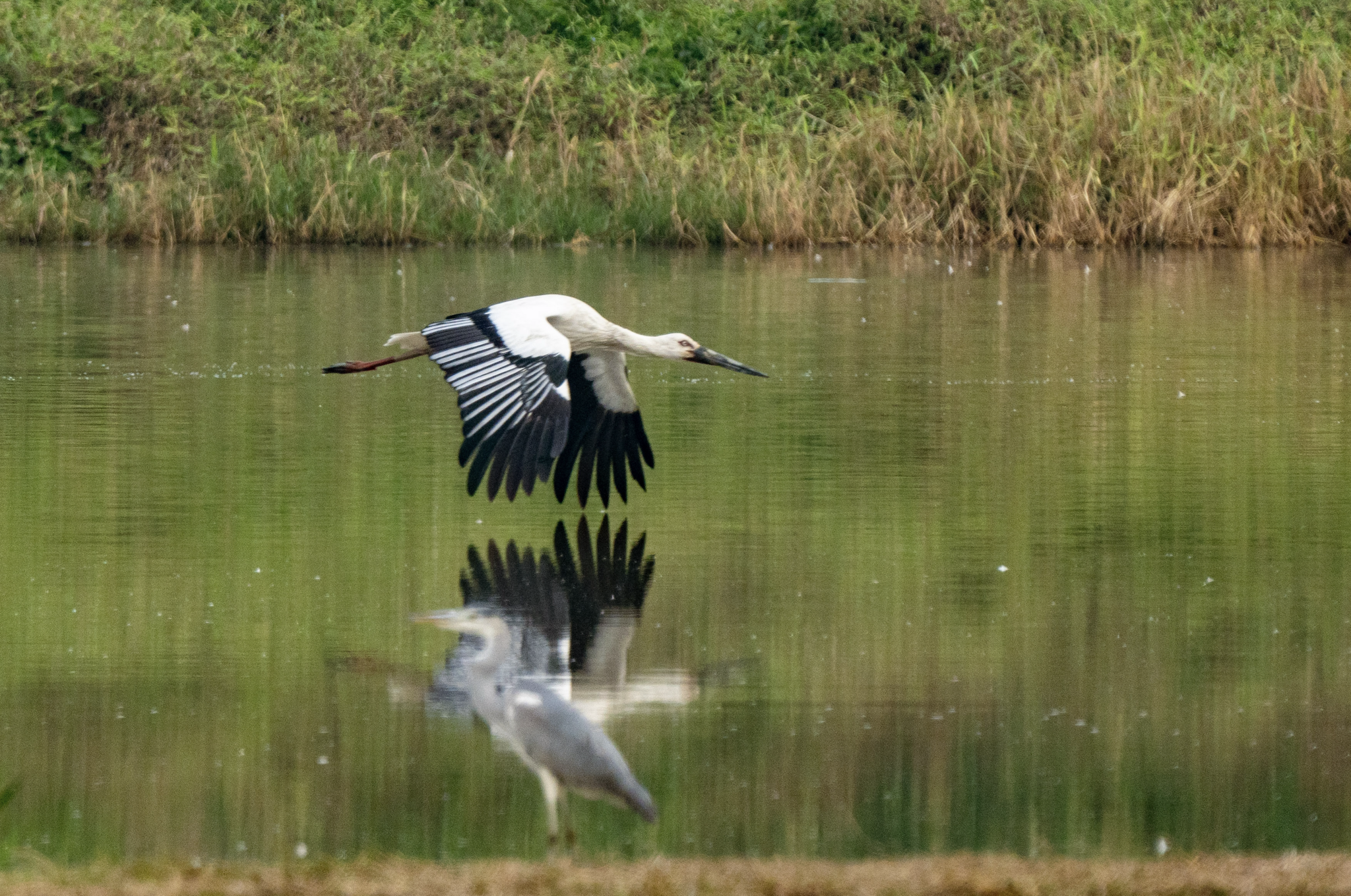
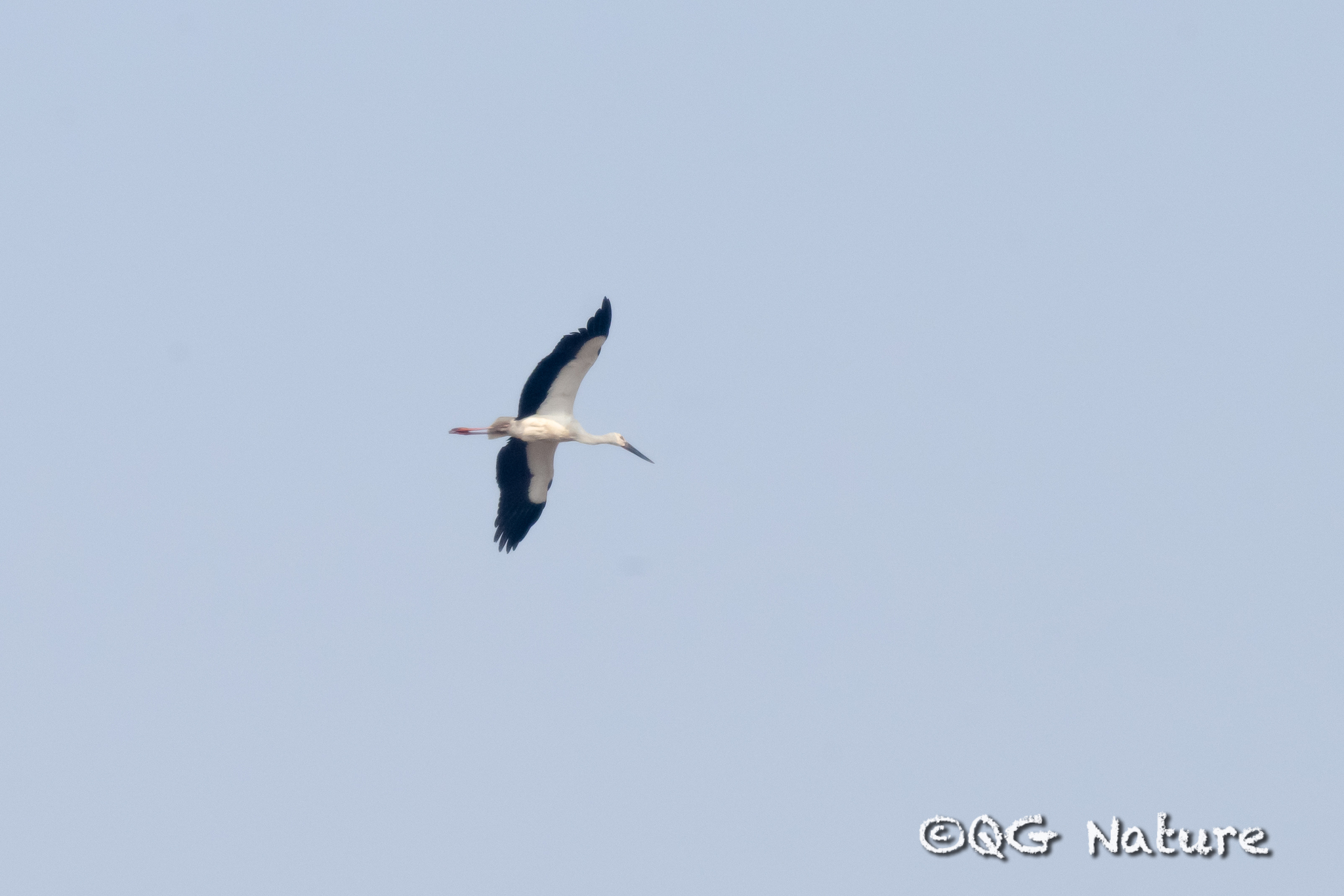
This large stork stands between 110-150 cm tall and measures 100-129 cm in length, with a substantial wingspan of 2.22 meters. Adults weigh between 2.8-5.9 kg, making them heavier than their European cousin. The plumage is predominantly white, with black feathers on the wings creating a dramatic two-tone effect. The most distinctive feature is the red skin surrounding the eye, paired with a whitish iris and entirely black bill. Both sexes appear similar, though females are noticeably smaller. Juveniles differ from adults, being white overall with distinctive orange bills rather than the black of mature birds.
Identification
The Oriental stork closely resembles the European white stork but can be distinguished by several key features. The most reliable field mark is the red skin around the eye, which the European species lacks. Additionally, this species has a black bill compared to the reddish-orange bill of its European counterpart. The Oriental stork is also larger overall, though size can be difficult to judge in the field without direct comparison. The white body with black wing patches creates a similar silhouette to the white stork, so observers should focus on head and bill coloration for positive identification.
Distribution & Habitat
This species inhabits Japan, China, Korea, and Siberia across its historic range. Once extirpated from Japan and the Korean Peninsula due to population declines, conservation efforts have begun to restore populations. In May 2007, a significant milestone occurred when a hatchling was documented in Japan for the first time in forty years, the offspring of captive-bred parents. The species is migratory, breeding in northern areas before moving to eastern China in September and returning in March. It favors wetland habitats including marshes, pond edges, coastal beaches, and other freshwater environments.
Behavior & Ecology
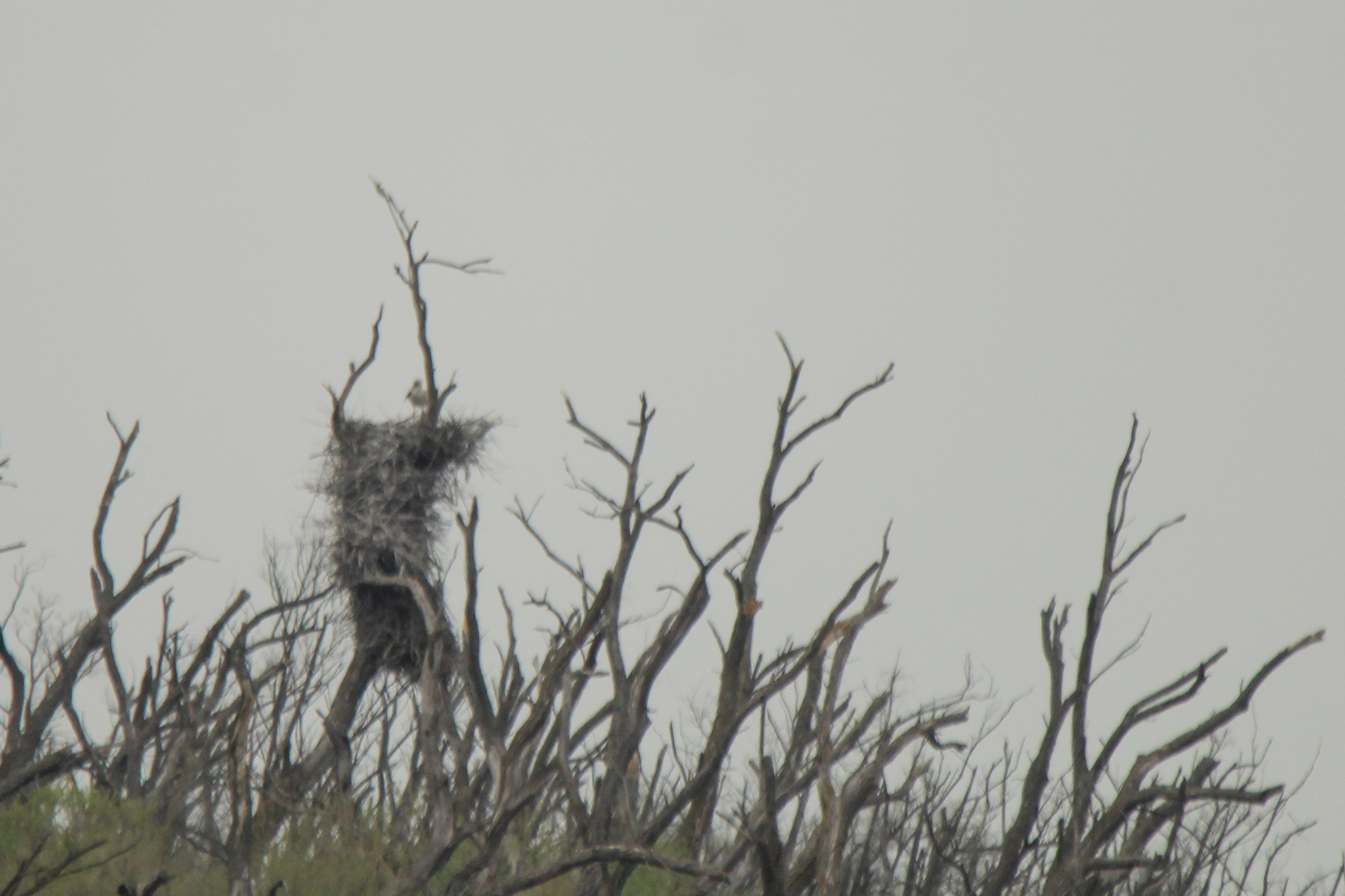
Outside the breeding season, this stork leads a predominantly solitary existence, though it becomes more social during courtship and chick-rearing. It is an apex predator within its wetland ecosystem, hunting by wading through shallow waters. The diet is varied and opportunistic, consisting primarily of fish, frogs, insects, small birds, reptiles, and rodents. During breeding, females typically lay between two and six eggs in platform nests constructed in trees or on elevated structures. The species is generally silent but may produce some vocalizations during courtship displays.
Conservation
The Oriental stork is classified as Endangered on the IUCN Red List due to severe population declines from habitat loss and overhunting. It is listed on Appendix I of CITES, prohibiting international trade. Agricultural expansion, particularly the growth of rice cultivation combined with heavy pesticide use, has been devastating to populations. Conservation programs focus on reintroducing captive-bred birds to the wild, though success depends on improving habitat quality. A recent chromosome-scale reference genome study revealed relatively high genetic diversity, suggesting the population retains strong capacity for recovery if threats are addressed. There is growing advocacy for organic rice farming to create safer breeding environments.
Culture
In Japan, this species is known as Konotori and holds cultural significance, being featured in various aspects of local heritage. While specific folklore traditions are not detailed in available sources, the stork's prominent role in East Asian cultures often connects to symbols of longevity, fidelity, and good fortune. Conservation efforts have generated public interest and support, with the successful nesting in Japan in 2007 receiving significant media coverage that raised awareness about wetland protection and pesticide reduction in agriculture.
Source: Wikipedia · CC BY-SA 3.0
Taxonomy
- Order
- Ciconiiformes
- Family
- Ciconiidae
- Genus
- Ciconia
- eBird Code
- oristo1
Distribution
Siberia, Manchuria, and Korea; winters to southern China and northern India
Data Sources
Species description from Wikipedia, licensed under CC BY-SA 3.0.
Bird images and sounds sourced from GBIF, contributed by citizen scientists worldwide under Creative Commons licenses.
Taxonomy data from AviList 2025.