Yellow-eyed Babbler
Chrysomma sinense
金眼鹛雀
Introduction
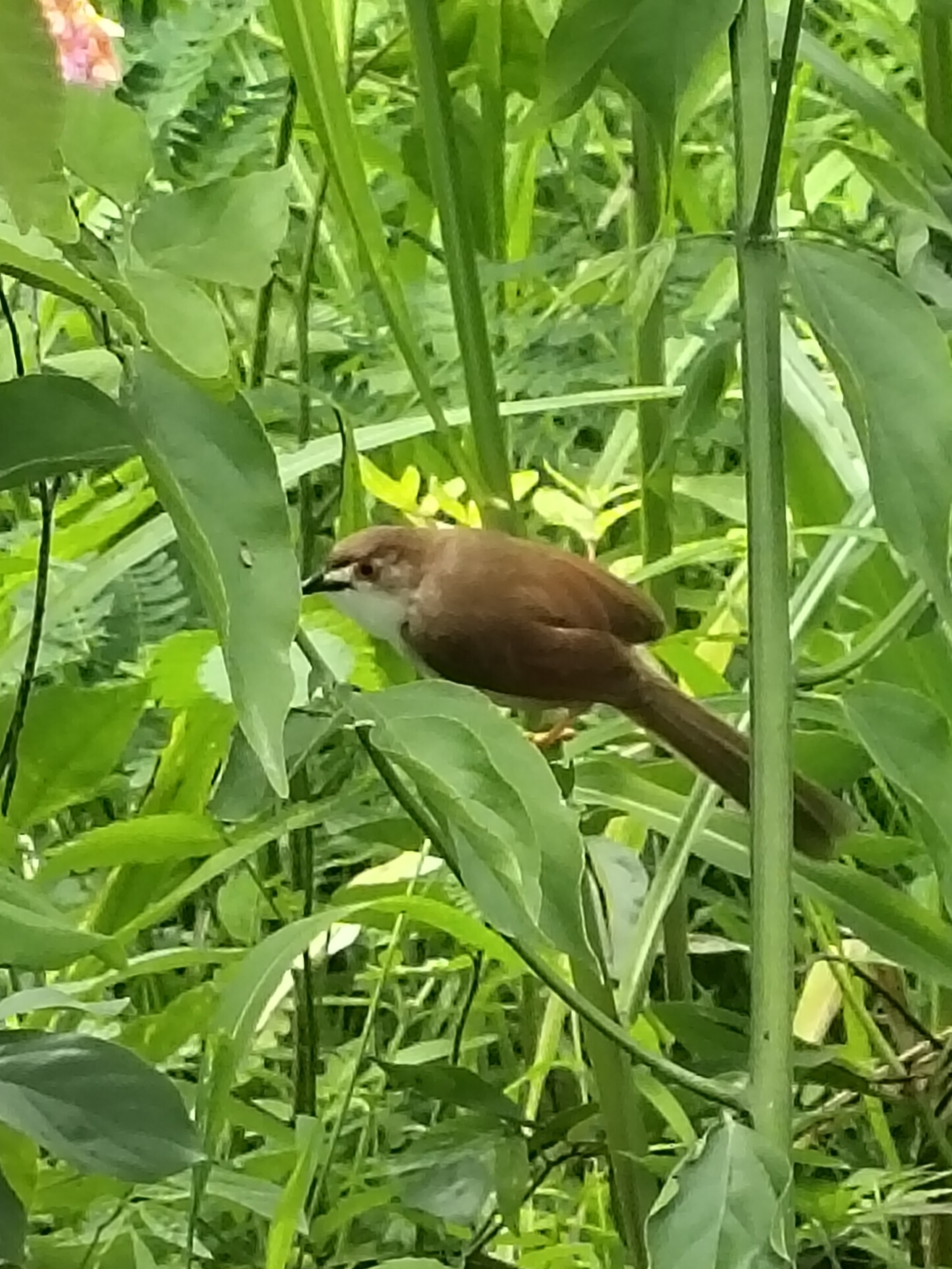
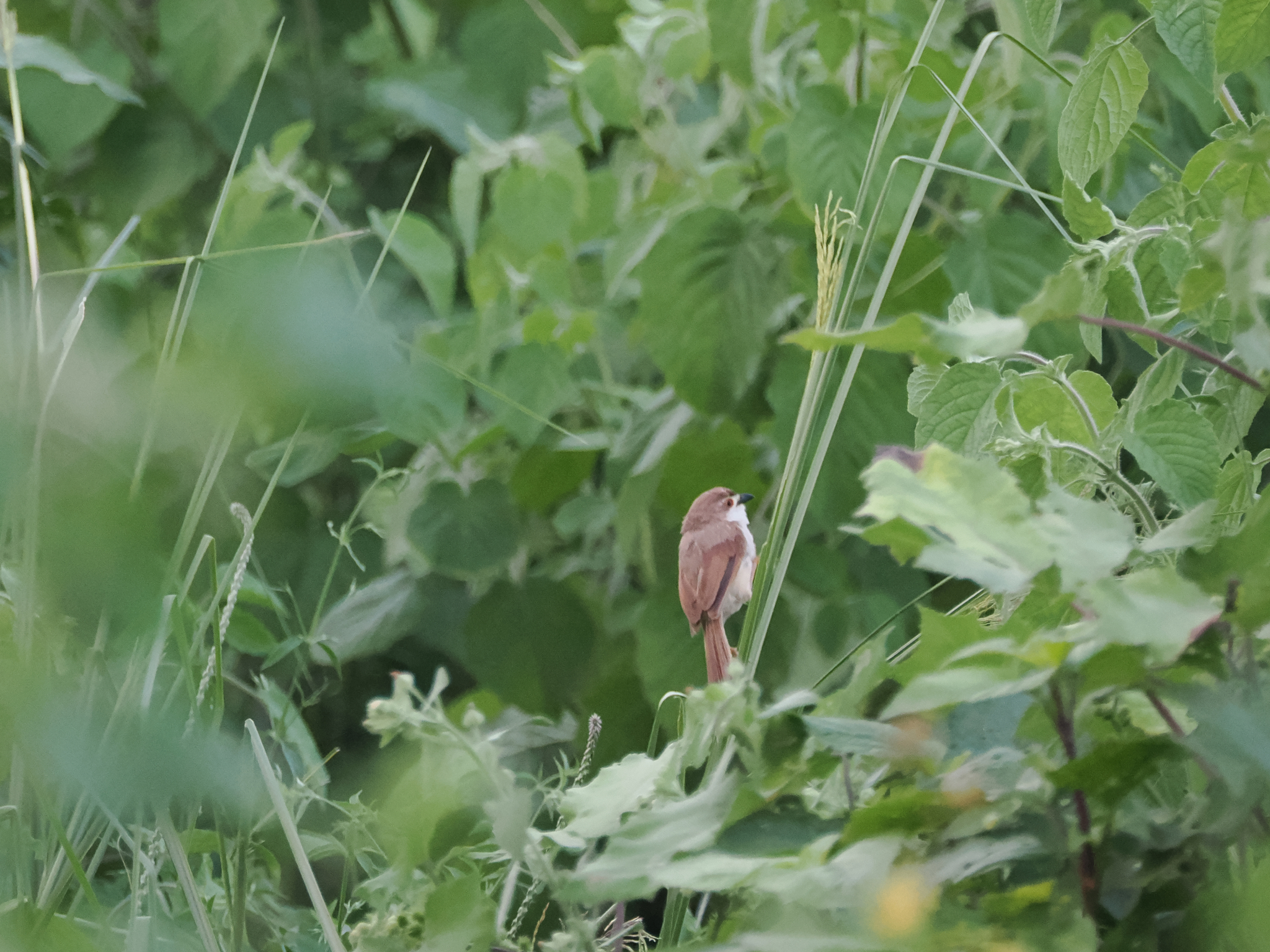
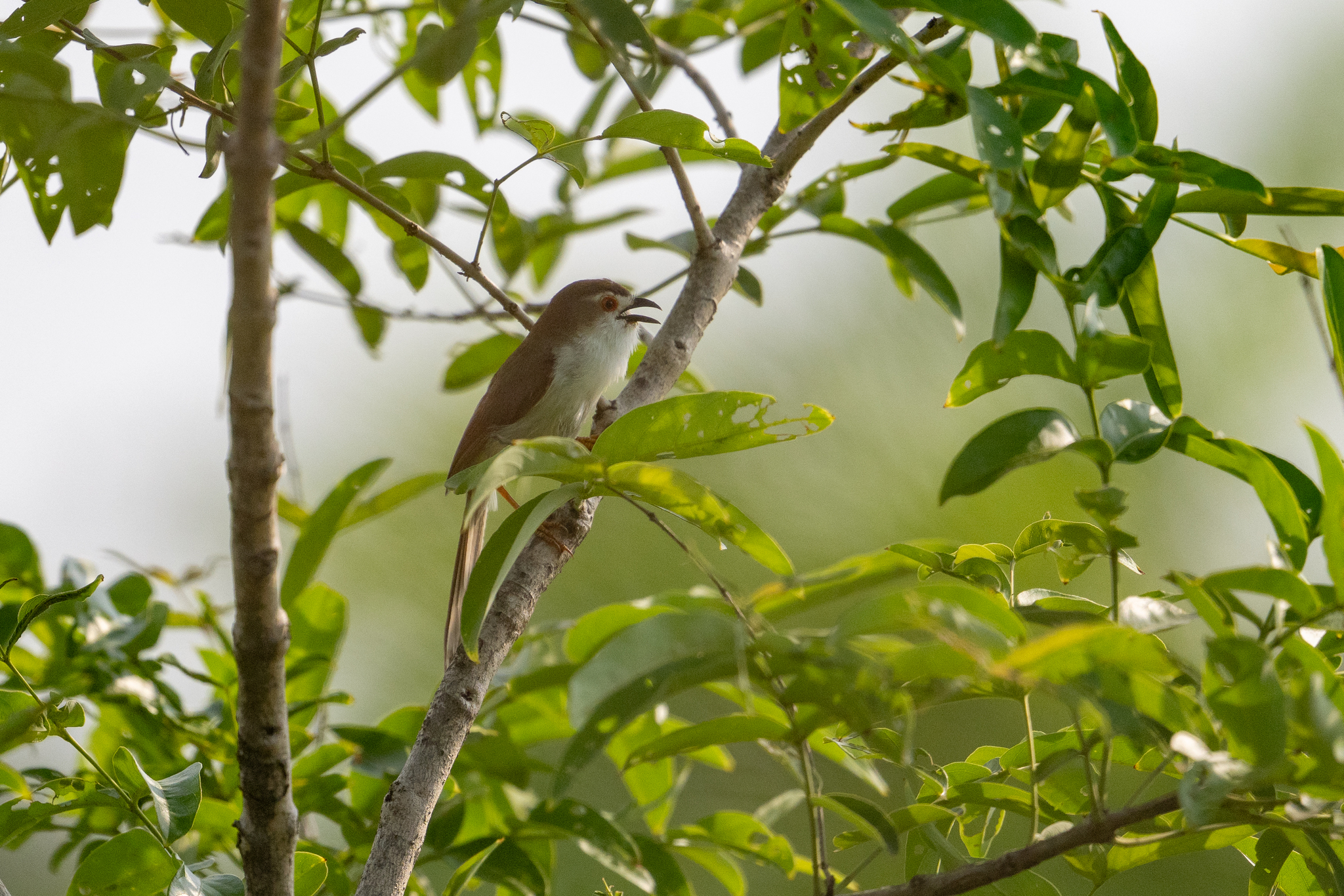
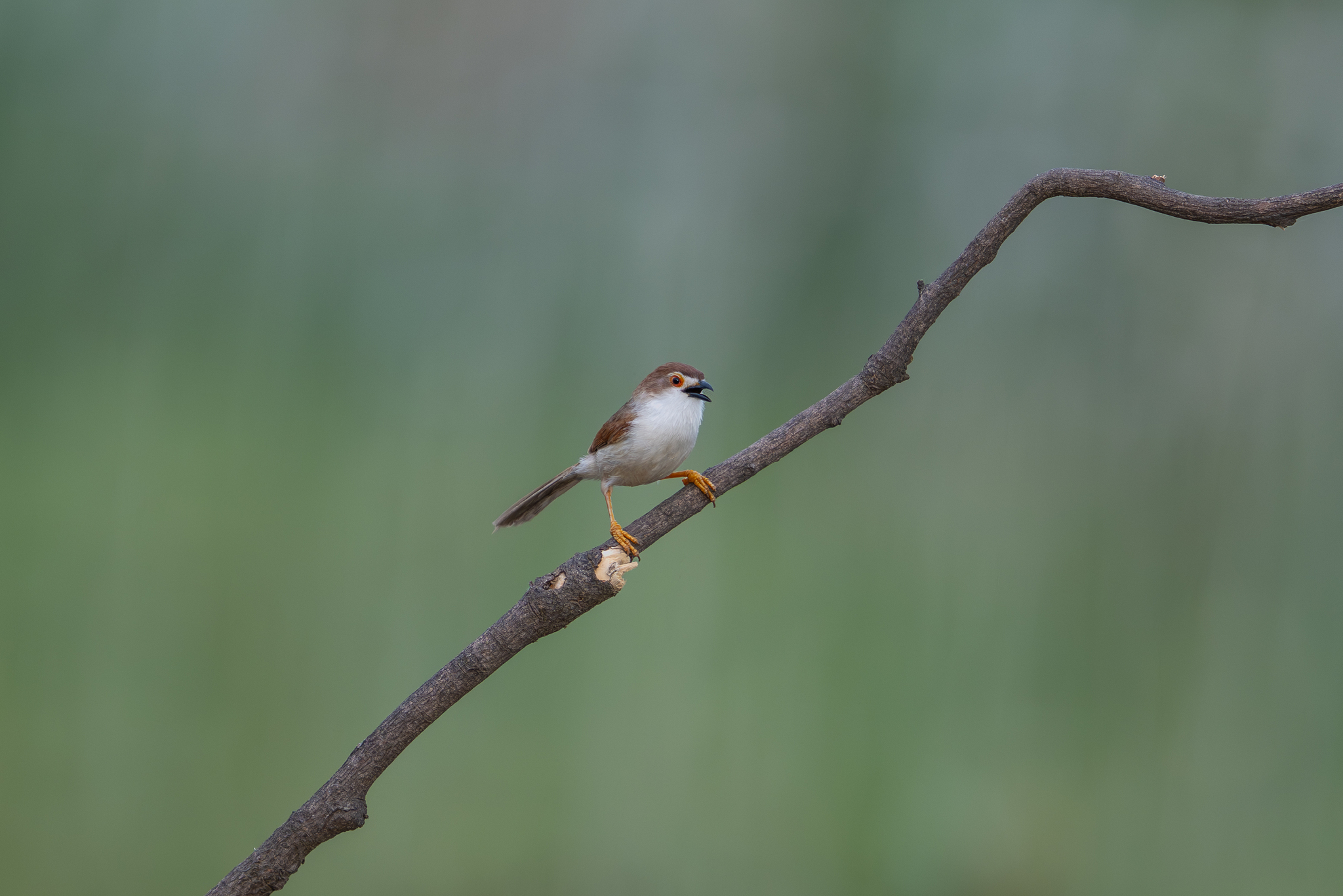
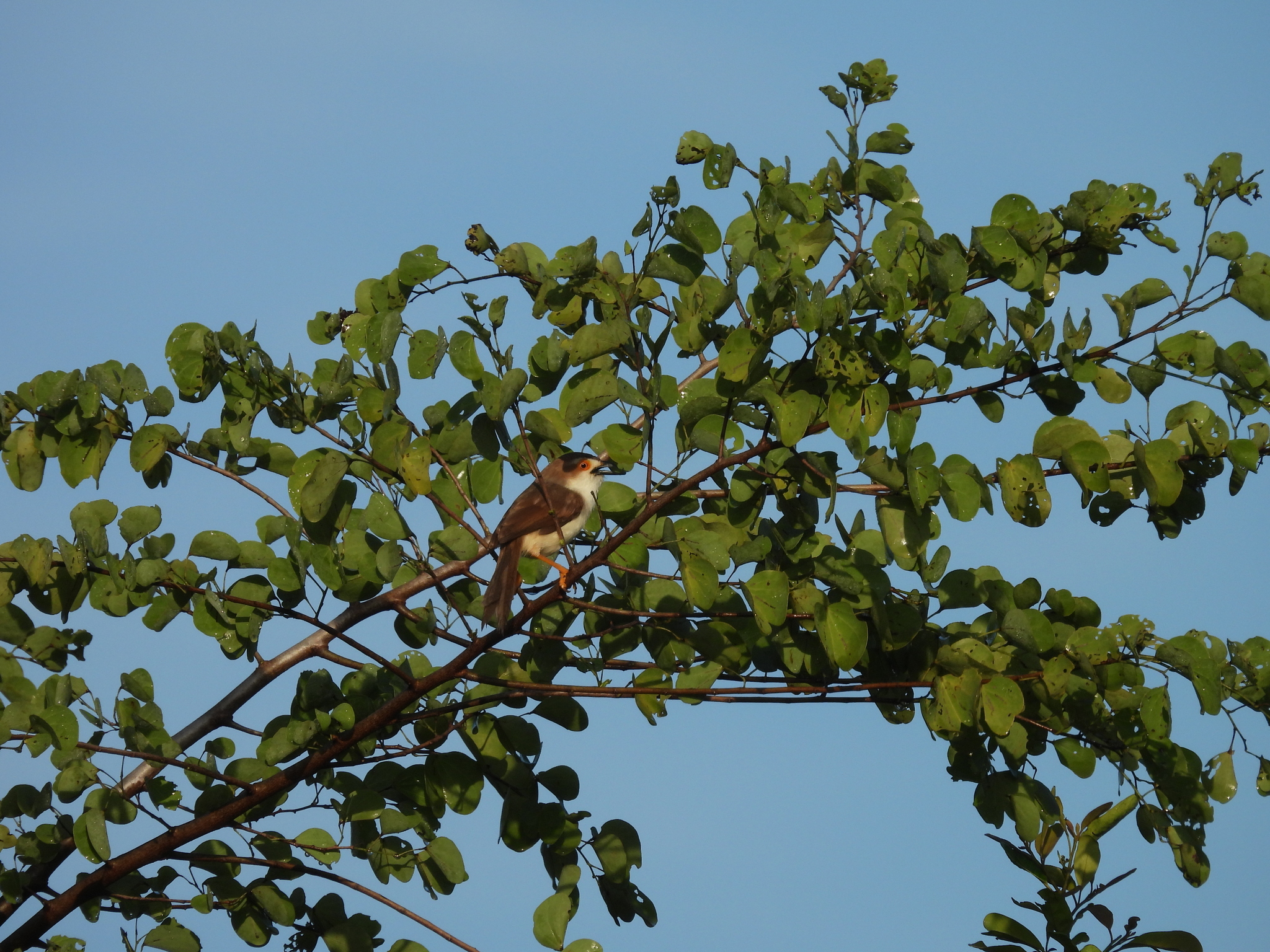
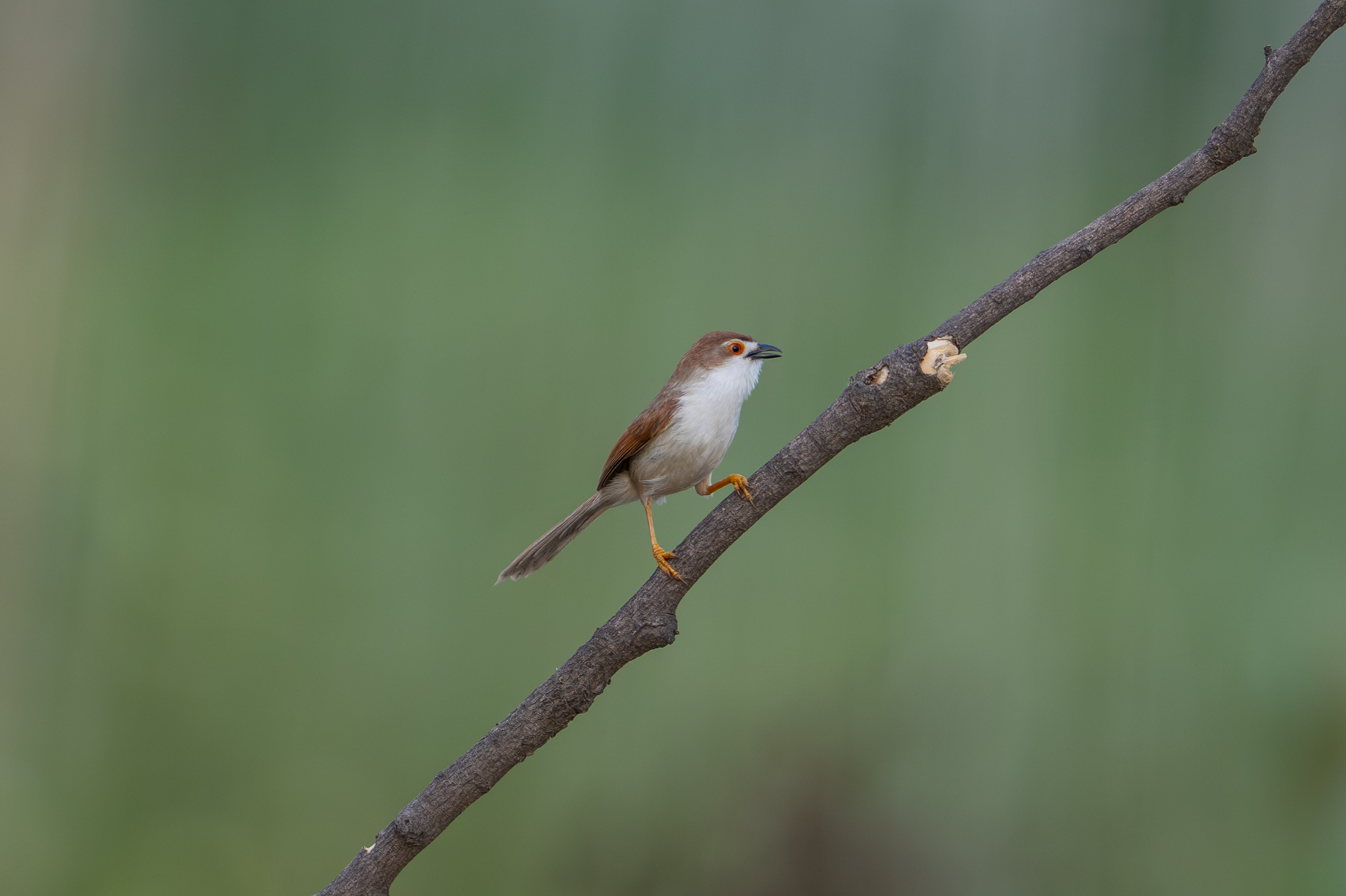
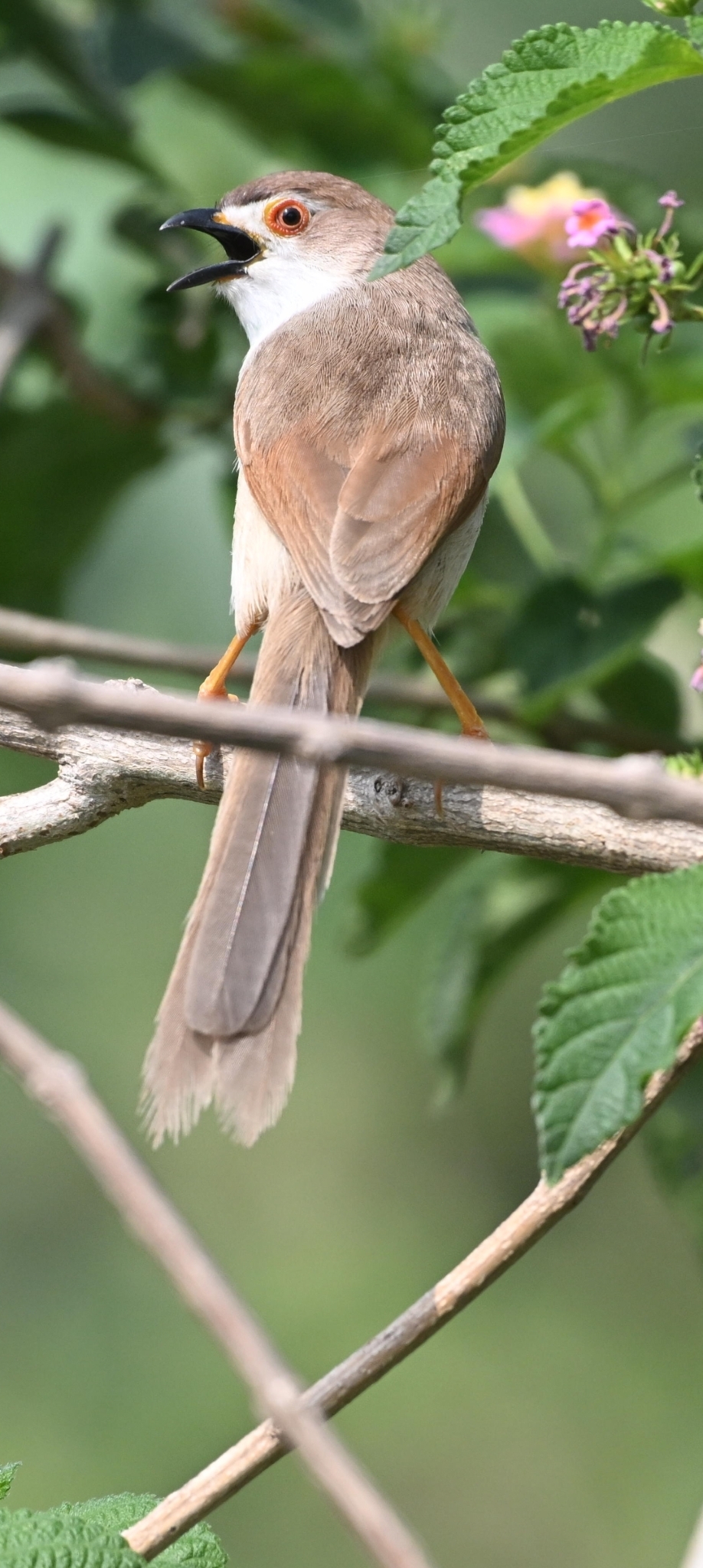
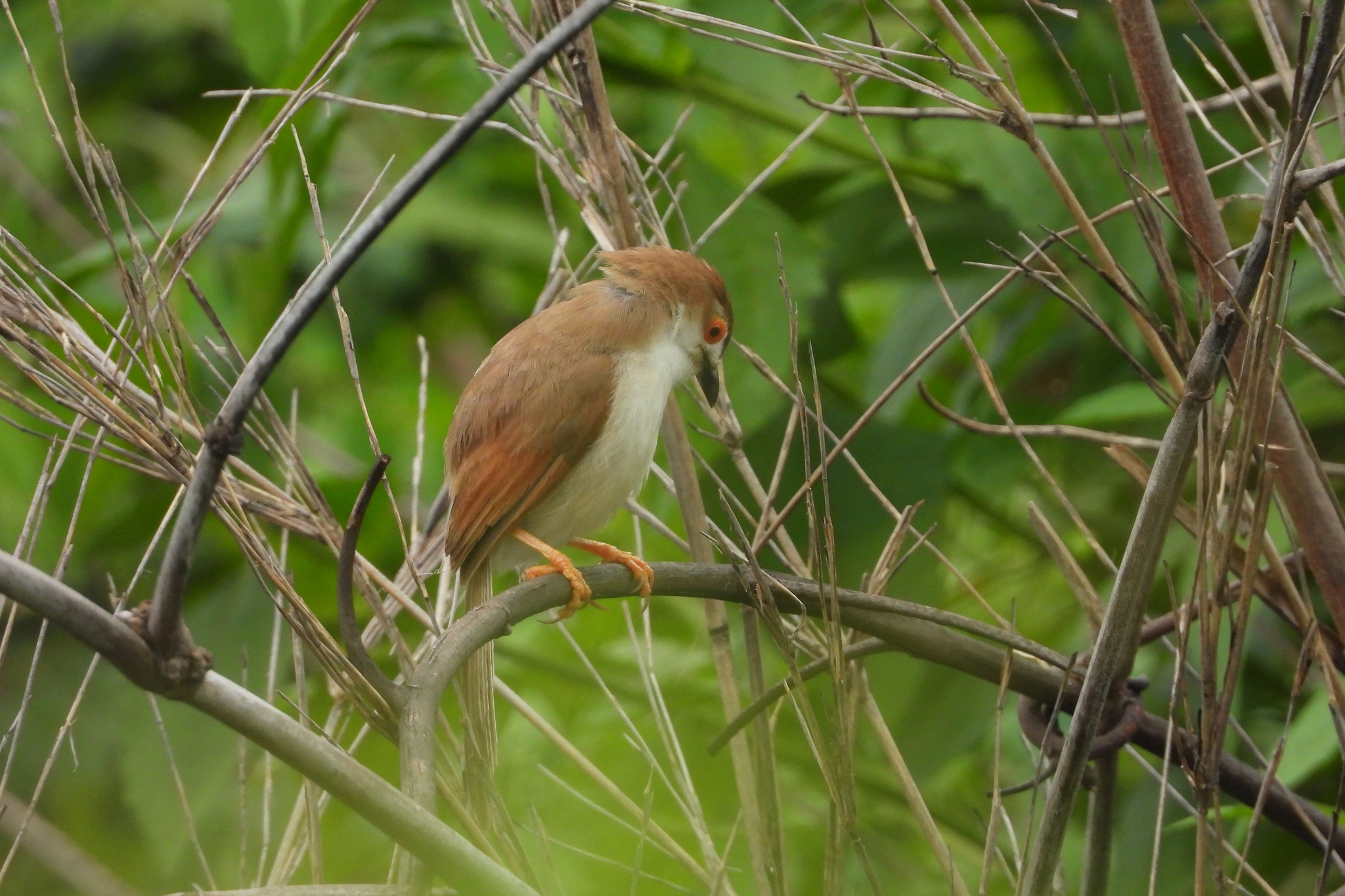
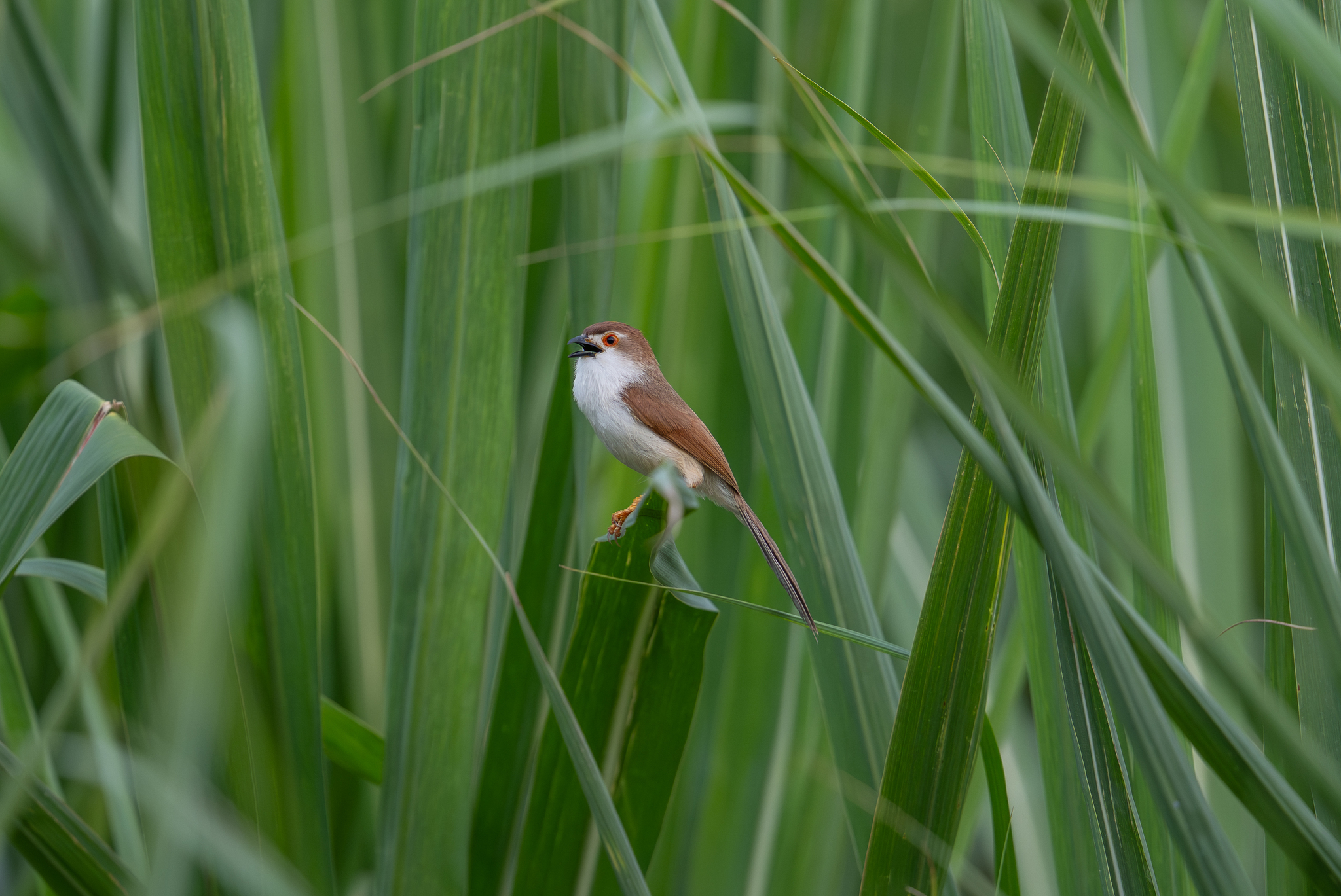
This small passerine occurs in South and Southeast Asia. It inhabits grassy and thorny scrub habitats, including both dry and wet regions, as well as farmlands and open country. During the non-breeding season, it travels in family groups of five to fifteen individuals, moving through thickets and perching briefly atop grass stems. In the breeding season, it perches prominently to deliver its whistling song. The species maintains group cohesion through constant cheeping contact calls. It has brown and cinnamon plumage with an orange-yellow eye rim, white supercilium, and a long graduated tail.
Description
A compact bird measuring approximately 18 centimeters in length with a short, black bill and notably long, graduated tail feathers that are about twice as long as the outermost feathers. The upperparts are brown while the wings display warm cinnamon coloring. The face features a white lores and supercilium contrasting with the orange-yellow rim around the eye. The underparts are whitish buff. Sexes appear identical in the field with no external distinguishing characteristics. Subspecies show subtle variation: Sri Lankan populations have black nostrils and stouter bills while Indian populations have yellow nostrils and generally paler plumage. The northeast Indian population tends toward a slaty crown and darker wings.
Identification
The long graduated tail and orange-yellow eye rim provide the most reliable field marks. In good light, the cinnamon wing panels and white supercilium become visible. The combination of brown upperparts and whitish underparts distinguishes it from similarly sized warblers and babblers in its range. The short black bill helps separate it from longer-billed species. When foraging, watch for its characteristic movement pattern of climbing to the top of grass stems or bush tops before dropping back into cover.
Distribution & Habitat
This species ranges widely from Pakistan through India and Nepal to Sri Lanka, Bangladesh, Myanmar, Thailand, Laos, Vietnam and southern China. It occupies grassy and thorny scrub habitats across both dry and wet regions, including farmland, from lowland plains up to approximately 1200 meters elevation. The species is notably absent from the dense forest regions of the Western Ghats, occurring only on the eastern edges or in gaps such as the Palghat region.
Behavior & Ecology
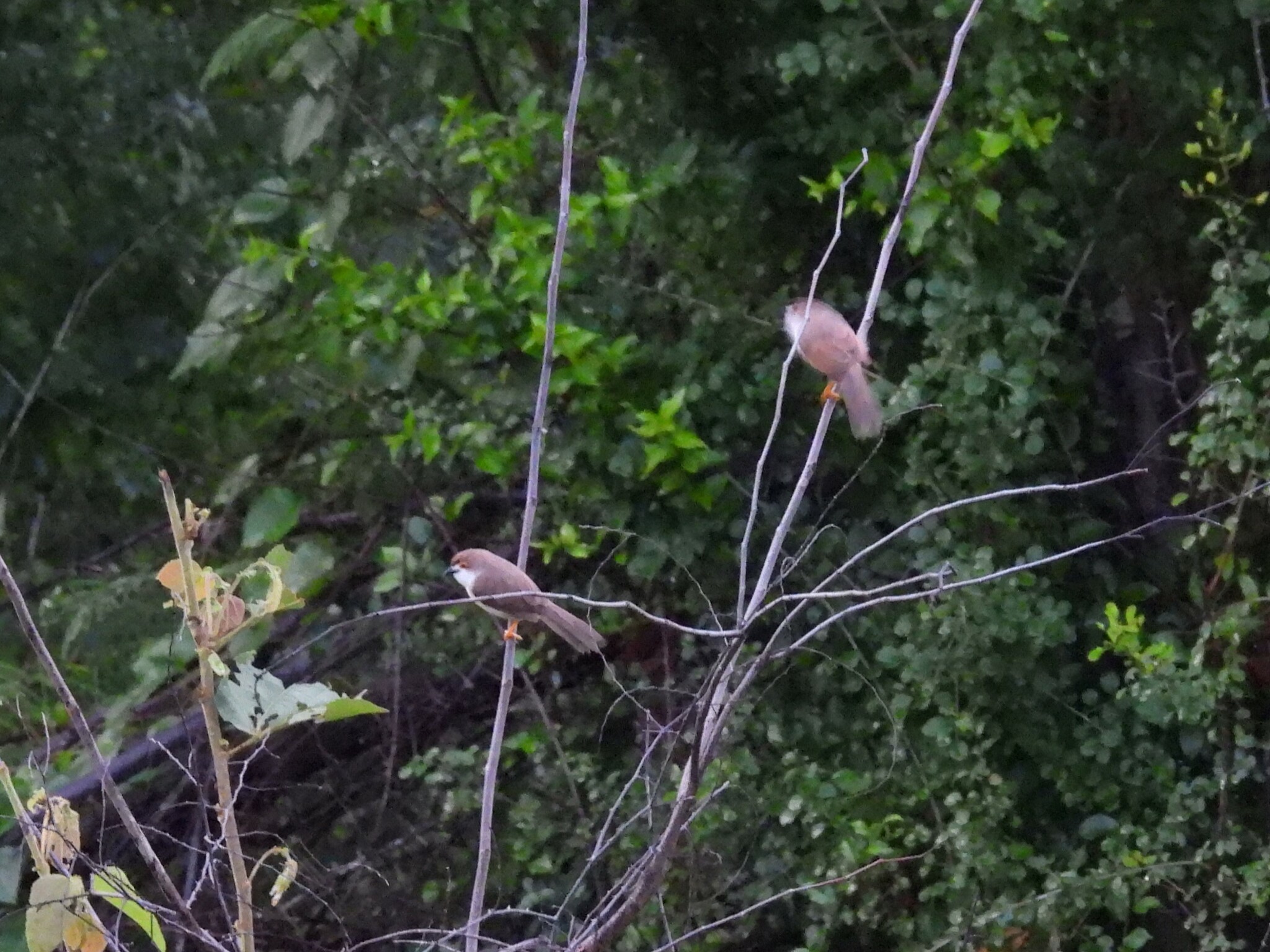
Highly social outside the breeding season, these birds form small groups that maintain constant contact through cheeping and churring calls. They forage primarily on insects but also consume berries from Lantana and Salvadora plants as well as nectar. When capturing prey, they sometimes hold insects down with their feet. The breeding season coincides mainly with the southwest monsoon from June to August, when males deliver a distinctive whistling song from prominent perches. Nesting appears cooperative, with parents sharing incubation and feeding duties. The deep cup-shaped nest of grass and fiber is wedged between upright stems and camouflaged with cobwebs. Both parents and possibly helpers care for young that fledge after approximately 13 days. Groups roost communally in bush centers, all facing the same direction and preening each other.
Conservation
Classified as Least Concern on the IUCN Red List due to its extensive range and apparently stable population. The species benefits from its tolerance of human-modified landscapes including farmland, though dense forest conversion likely reduces suitable habitat in portions of its range. No specific conservation measures are currently in place for this common and widespread species.
Culture
Known locally in parts of northern India as 'gulab chashm' meaning 'yellow spectacles,' a reference to the distinctive eye coloration. This name reflects the bird's prominent and noticeable facial feature. Historical records indicate the species was sometimes captured and kept as a cagebird, though the extent of this practice is not well documented in modern times.
Source: Wikipedia · CC BY-SA 3.0
Taxonomy
- Order
- Passeriformes
- Family
- Paradoxornithidae
- Genus
- Chrysomma
- eBird Code
- yeebab1
Vocalizations
Subspecies (3)
-
Chrysomma sinense hypoleucum
eastern Pakistan to peninsular India, Bangladesh, and western Myanmar
-
Chrysomma sinense nasale
Sri Lanka
-
Chrysomma sinense sinense
northeastern India to southern China and Vietnam
Data Sources
Species description from Wikipedia, licensed under CC BY-SA 3.0.
Bird images and sounds sourced from GBIF, contributed by citizen scientists worldwide under Creative Commons licenses.
Taxonomy data from AviList 2025.