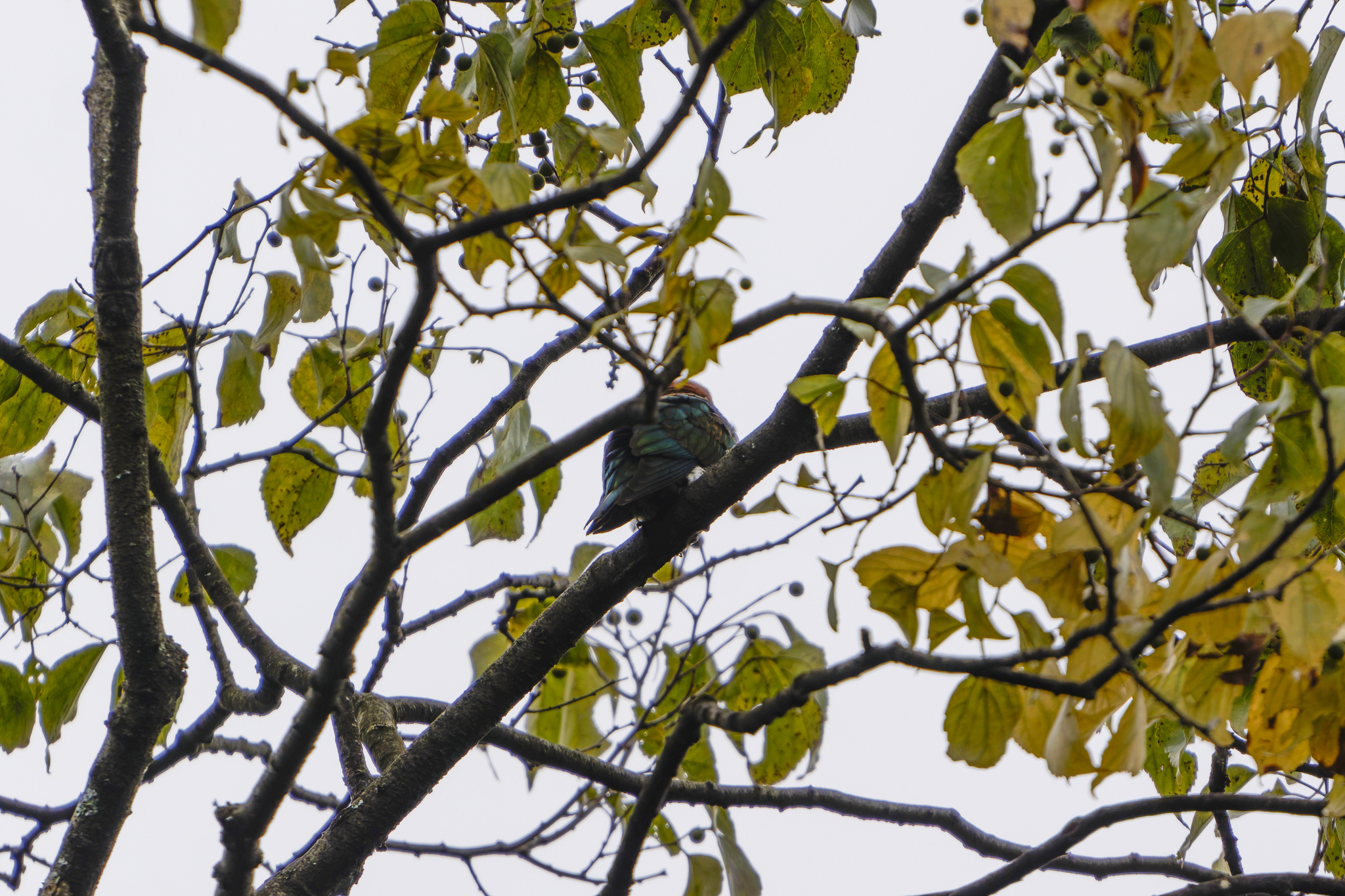
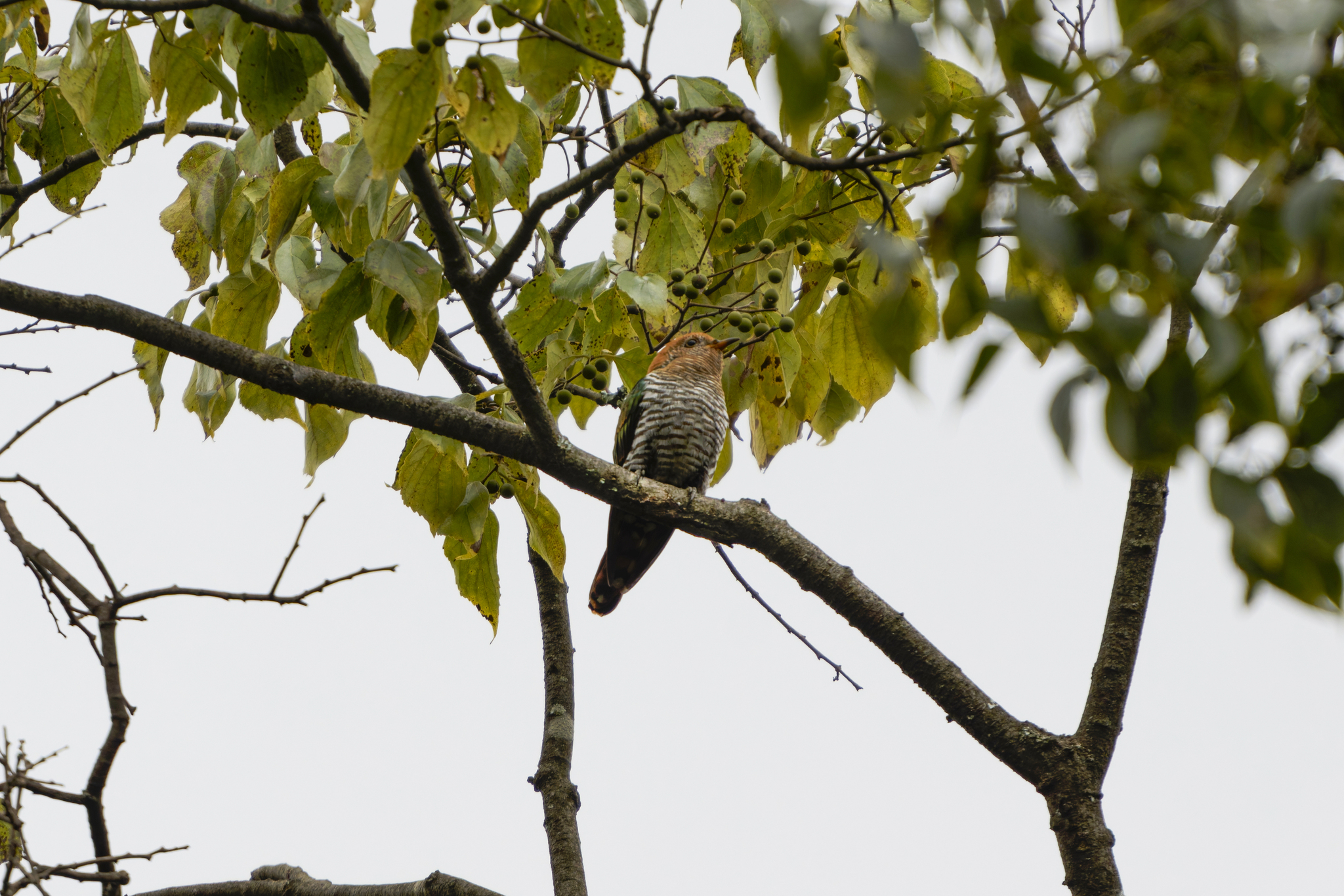
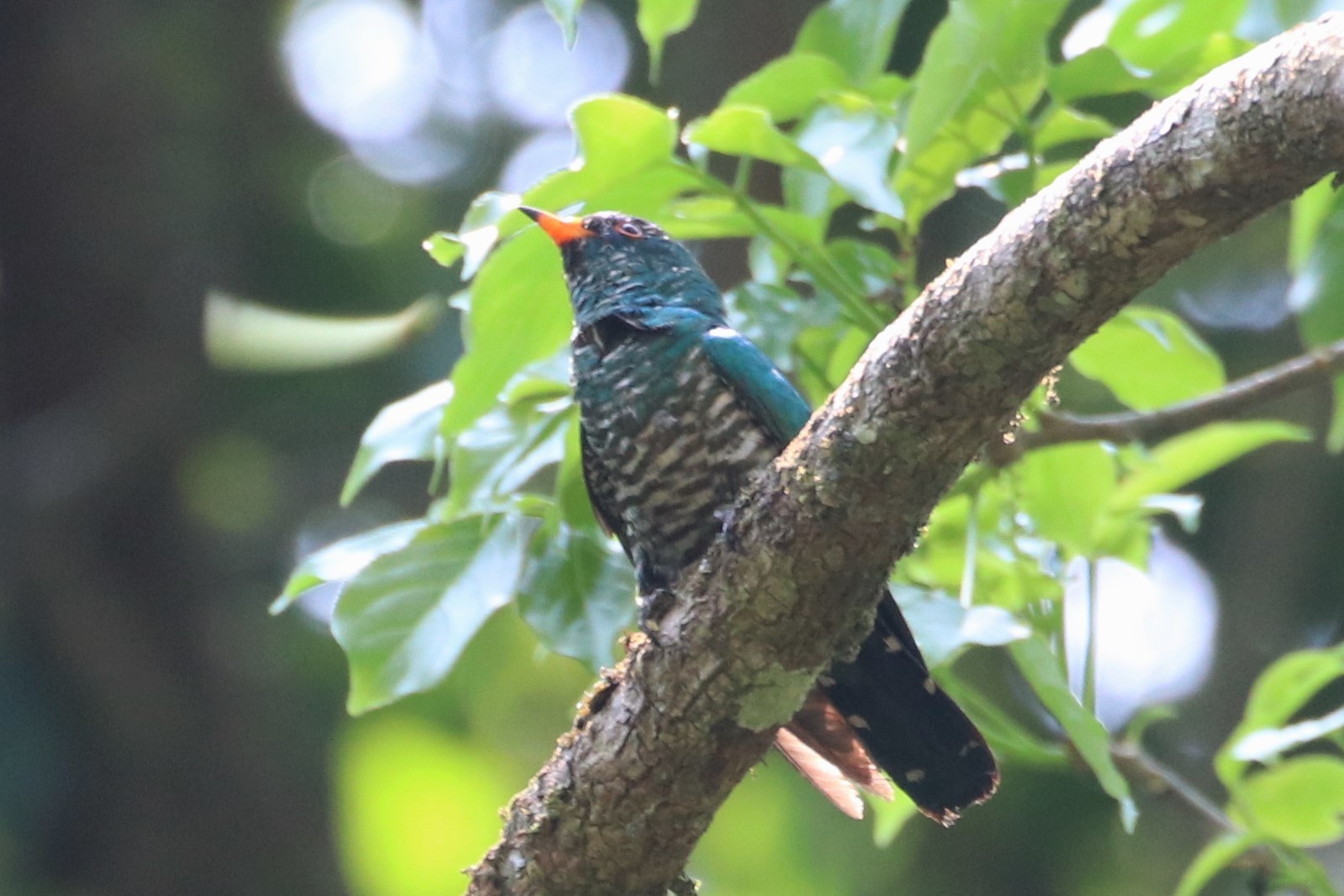
Asian Emerald Cuckoo
Chrysococcyx maculatus
翠金鹃
Introduction
A cuckoo species in the family Cuculidae. It occurs across South and Southeast Asia, from Bangladesh and Nepal through Myanmar, China, and Thailand to Indonesia. Its natural habitats include subtropical and tropical moist lowland forests and moist montane forests. This species is a brood parasite, laying eggs in the nests of other bird species. The International Union for Conservation of Nature lists it as Least Concern due to its wide range, though it remains generally uncommon.
Description
A small cuckoo reaching approximately 18 cm (7 inches) in length. The adult male displays an iridescent dark green head, upper parts, and upper breast, contrasting with a white lower breast and green-barred belly. Bare skin around the eye is orange, and the beak is orange or yellow with a black tip. The adult female has coppery-green upper parts with a rusty brown crown and nape, plus green-barred underparts. Both sexes show a white band on the underwing during flight. Juvenile males lack the white lower breast and exhibit heavier barring on the underparts.
Identification
The distinctive bright green iridescent plumage of the male helps distinguish this species from other cuckoos in its range. The combination of green upperparts, white lower breast, and barred green belly in males is characteristic. Females can be identified by their coppery-green upperparts and rusty brown crown. The white underwing band is visible in flight. No information on differentiation from similar species is provided.
Distribution & Habitat
The breeding range extends from the Himalayas eastward through Myanmar and China to northern Thailand. It occurs as a vagrant or non-breeding migrant in northern India, Sri Lanka, Malaysia, and Sumatra. The species frequents forest environments and woodland margins throughout its range.
Behavior & Ecology
This cuckoo forages primarily in the upper canopy levels, feeding on insects and other small invertebrates including ants, caterpillars, and bugs. It is an obligate brood parasite, with females laying eggs in the nests of other birds. Documented host species include the crimson sunbird and the little spiderhunter. Vocalizations include a 'chweek' call given in flight and various whistled twitters.
Conservation
The species has a very wide geographic range but is generally uncommon throughout. No specific threats have been identified, and the population is believed to be stable. The International Union for Conservation of Nature has assessed its conservation status as Least Concern.
Culture
No information on cultural significance or folklore is provided in the source article.
Source: Wikipedia · CC BY-SA 3.0
Taxonomy
- Order
- Cuculiformes
- Family
- Cuculidae
- Genus
- Chrysococcyx
- eBird Code
- asecuc1
Distribution
India to southern China, southeastern Asia, Sumatra, and Andaman and Nicobar islands
Data Sources
Species description from Wikipedia, licensed under CC BY-SA 3.0.
Bird images and sounds sourced from GBIF, contributed by citizen scientists worldwide under Creative Commons licenses.
Taxonomy data from AviList 2025.