Blue-winged Leafbird
Chloropsis moluccensis
蓝翅叶鹎
Introduction
A member of the leafbird family, this species inhabits the middle and upper canopy layers of Southeast Asian evergreen and semi-evergreen forests. It occurs in primary, secondary, and logged forest habitats. The diet consists of insects and nectar, obtained using a slender, slightly curved bill. It joins mixed-species foraging flocks. Vocalizations are varied and may include mimicked sounds from other species.
Description
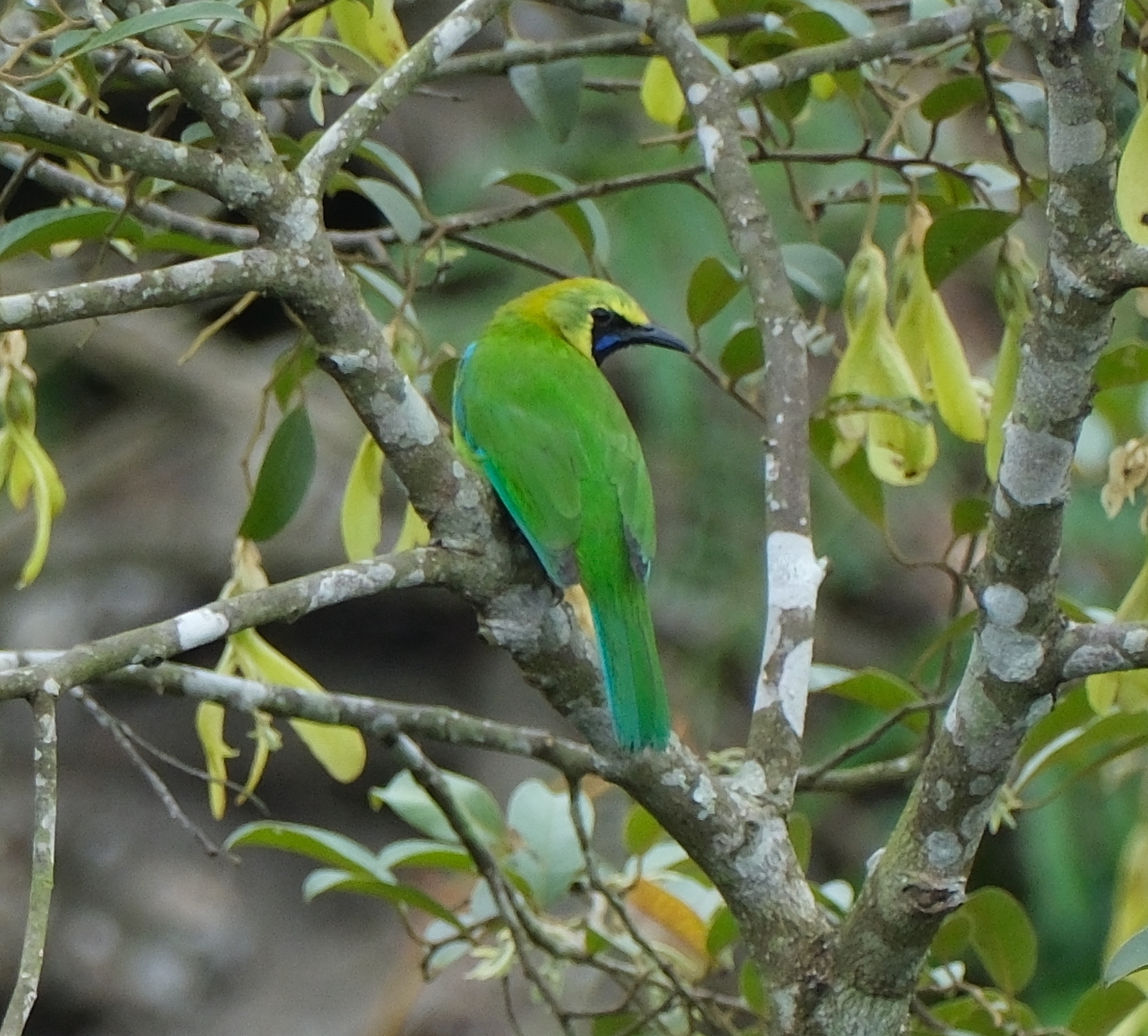
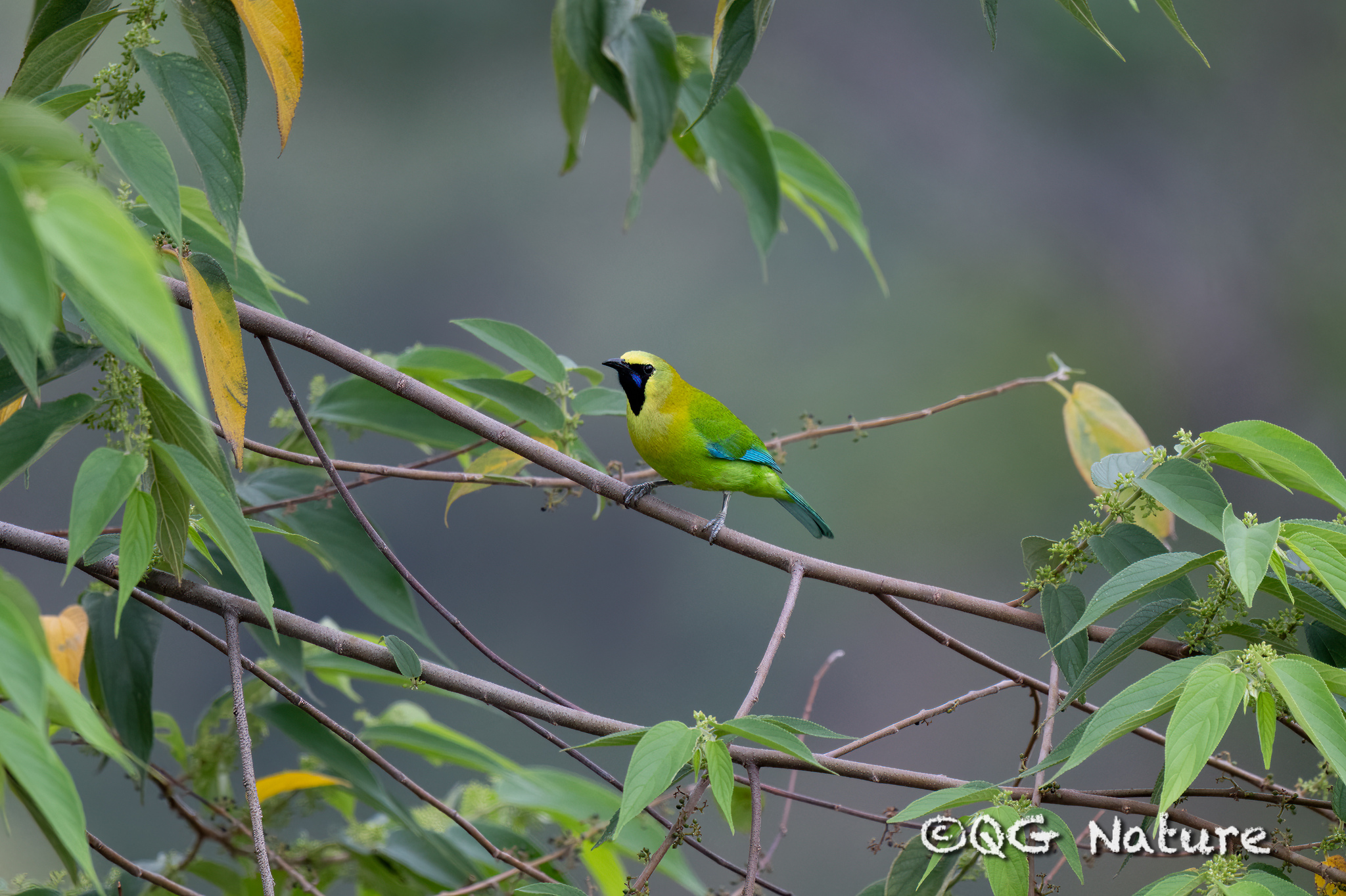
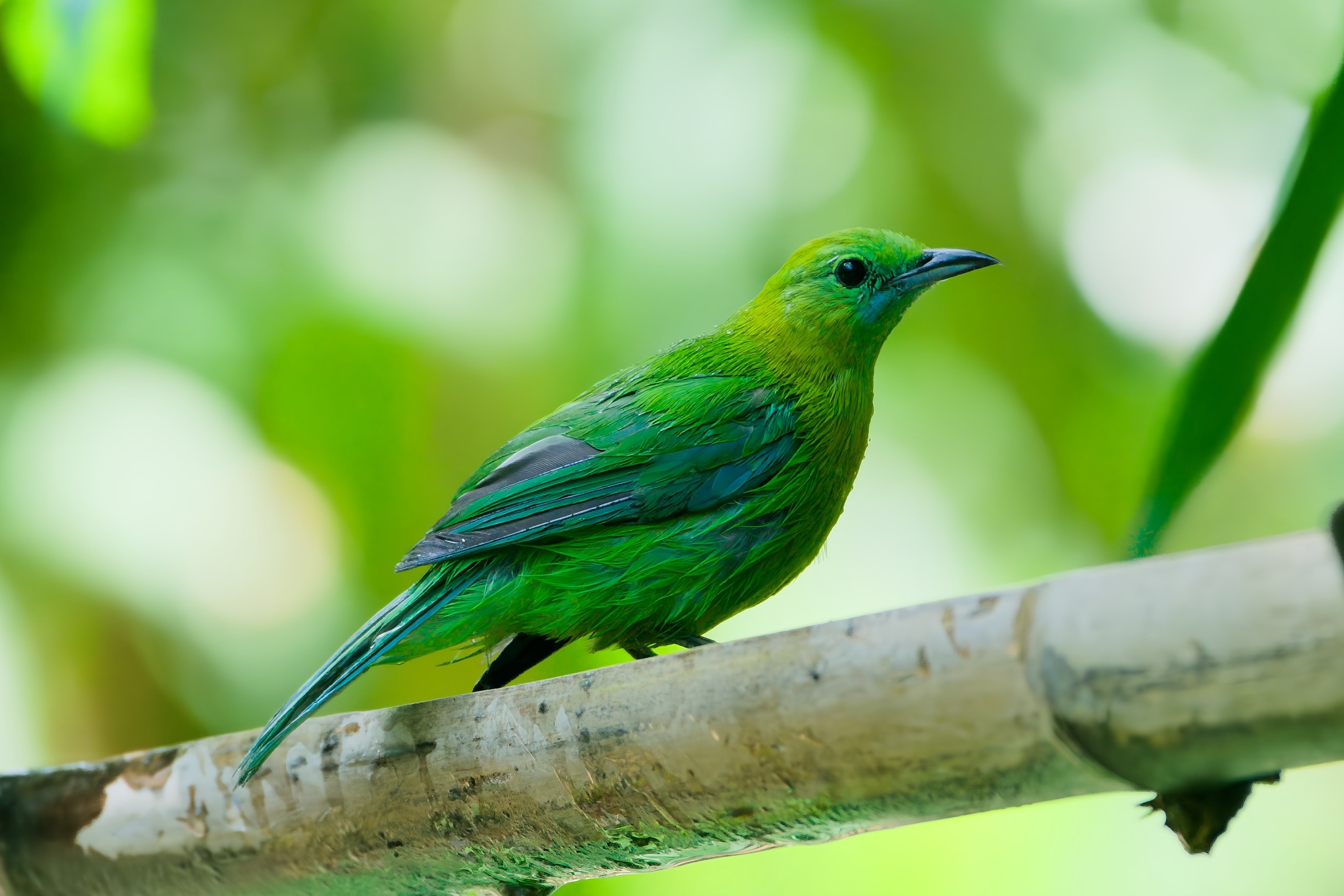
This medium-sized songbird measures approximately 17-18 centimeters in length. The male wears a brilliant green body with a yellow-tinged head and nape, contrasting sharply with a black face and throat. A distinctive blue moustachial line runs from the base of the bill, while the flight feathers display patches of electric blue. The female presents a different look with a greener head and blue throat rather than black. Juveniles resemble females but lack the blue throat patch entirely. The iridescent blue coloration in the wings results from gyroid nanocrystals within the feather barbs, creating structural color rather than pigment.
Identification
The combination of green body, black throat, and blue moustache and flight feathers distinguishes this species. It overlaps with the golden-fronted leafbird, which lacks blue in the wings and tail and displays a golden forehead instead. Males differ from Jerdon's leafbird by having blue visible in the flight feathers, a feature Jerdon's completely lacks. Female Bornean leafbirds show male-like plumage, unlike the distinctly marked females of this species. The blue throat of females separates them from other female leafbirds in range.
Distribution & Habitat
This species inhabits forest and secondary growth across Southeast Asia, ranging from southern Sumatra through the Malay Peninsula to Borneo. It occupies evergreen and semi-evergreen forest canopies, including disturbed areas and regenerating woodlands. While generally resident, some local movements may occur in response to fruiting patterns. It shares its range with related leafbird species, though specific habitat preferences and slight range separations reduce direct competition.
Behavior & Ecology
Primarily insectivorous, this species also consumes fruits and nectar, foraging actively through the canopy. Its vocal repertoire is remarkably varied, featuring an elaborate mix of imitations mimicking numerous other bird species. These complex songs serve territorial defense and mate attraction during breeding season. Pairs maintain territories during breeding periods but may form small flocks outside the breeding season, sometimes joining mixed-species foraging groups. Courtship involves displays with spread wings and tail feathers.
Conservation
Classified as Least Concern by BirdLife International, this species remains common to fairly common throughout most of its range. Its tolerance of secondary forest and disturbed habitats provides it with a relatively secure future compared to primary-forest specialists. No significant population declines have been documented, though localized pressures from habitat degradation may affect some populations. Monitoring of numbers in specific regions continues as a precaution.
Culture
No specific cultural significance or folklore is documented for this species.
Source: Wikipedia · CC BY-SA 3.0
Taxonomy
- Order
- Passeriformes
- Family
- Chloropseidae
- Genus
- Chloropsis
- eBird Code
- blwlea1
Vocalizations
Subspecies (6)
-
Chloropsis moluccensis auropectus
southeastern Thailand and southern Indochina
-
Chloropsis moluccensis chlorocephala
far eastern Bangladesh and northeastern India eastward to western Thailand
-
Chloropsis moluccensis kinneari
southwestern China (southern Yunnan) to eastern Thailand and northern Indochina
-
Chloropsis moluccensis moluccensis
southern Thai-Malay Peninsula, Sumatra and associated islands Bangka and Belitung, and the Natuna Islands
-
Chloropsis moluccensis serithai
peninsular Thailand southward to Isthmus of Kra
-
Chloropsis moluccensis viridinucha
Borneo
Data Sources
Species description from Wikipedia, licensed under CC BY-SA 3.0.
Bird images and sounds sourced from GBIF, contributed by citizen scientists worldwide under Creative Commons licenses.
Taxonomy data from AviList 2025.