Orange-bellied Leafbird
Chloropsis hardwickii
西南橙腹叶鹎
Introduction
A passerine leafbird inhabiting montane forests of the central and eastern Himalayas, extending through Yunnan into northern Southeast Asia. Occurs in humid evergreen and mixed forests at elevations between 600 and 2,400 meters. Resident species, maintaining territories year-round. The species was formerly considered to include the Hainan subspecies, now recognized as the greyish-crowned leafbird. Locally common within suitable habitat, though populations may face pressure from habitat loss in some areas of its range. Forages in the mid to upper canopy for insects and nectar.
Description
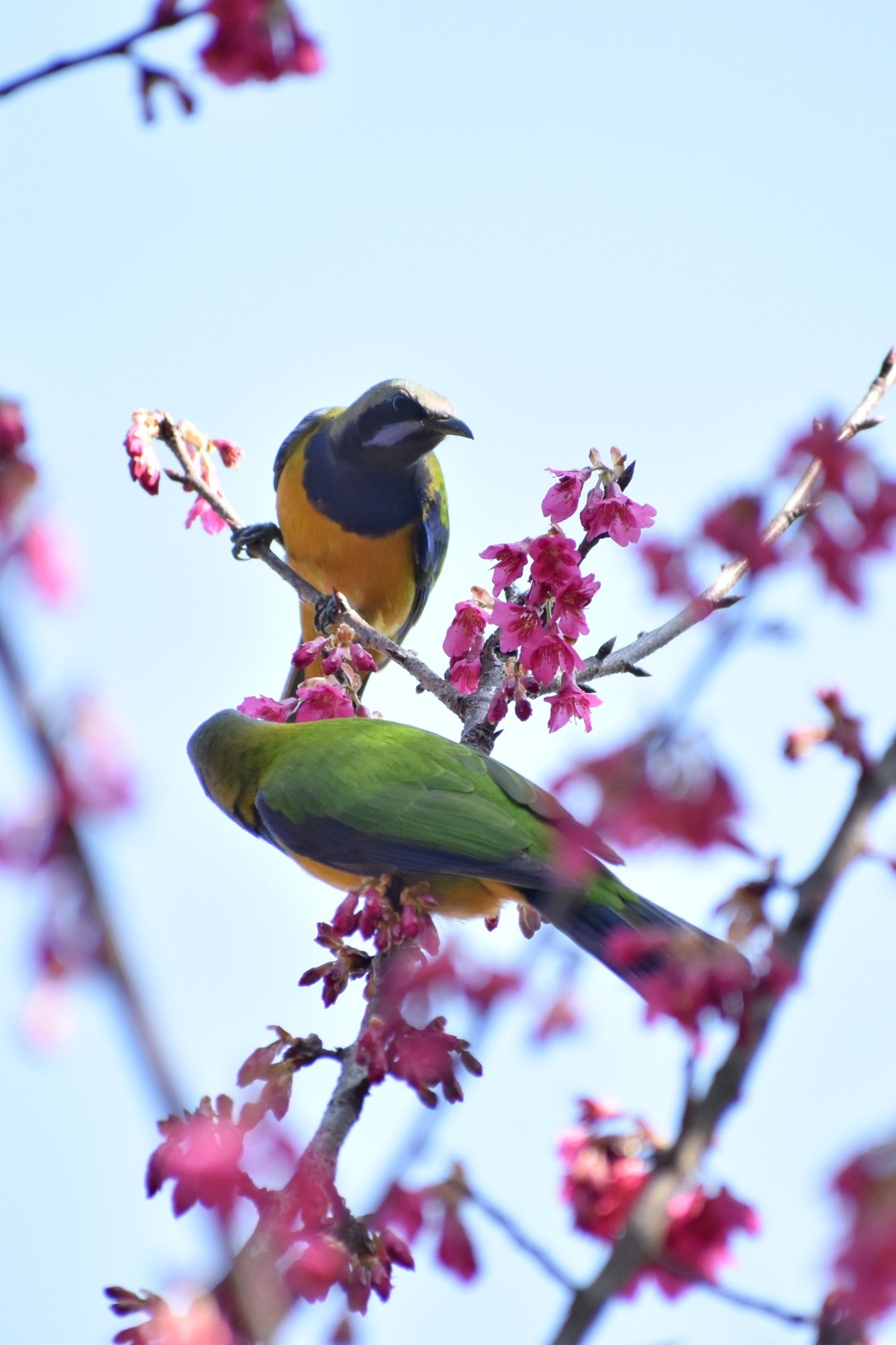
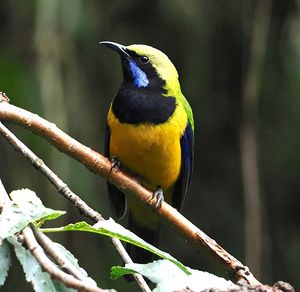
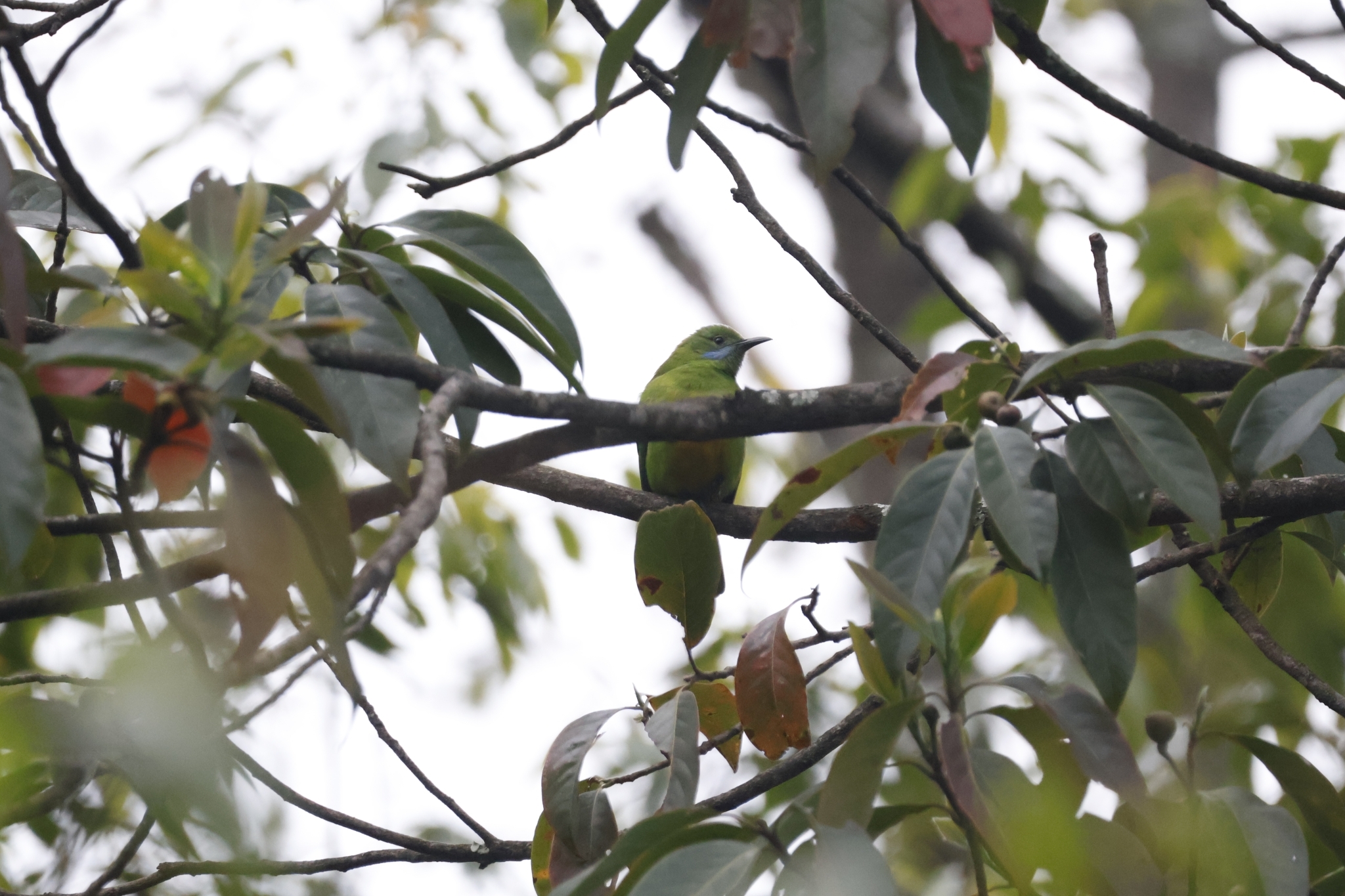
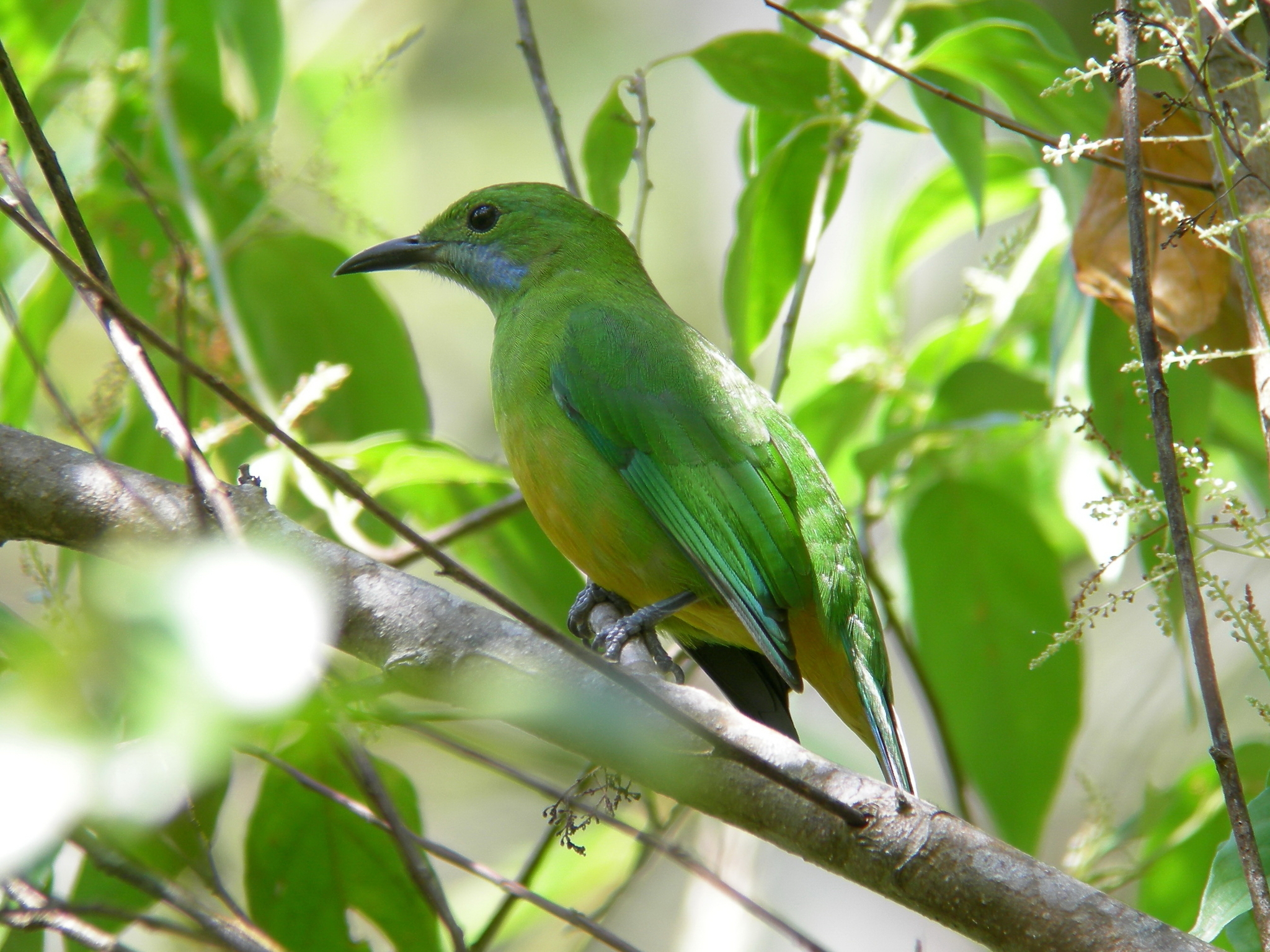
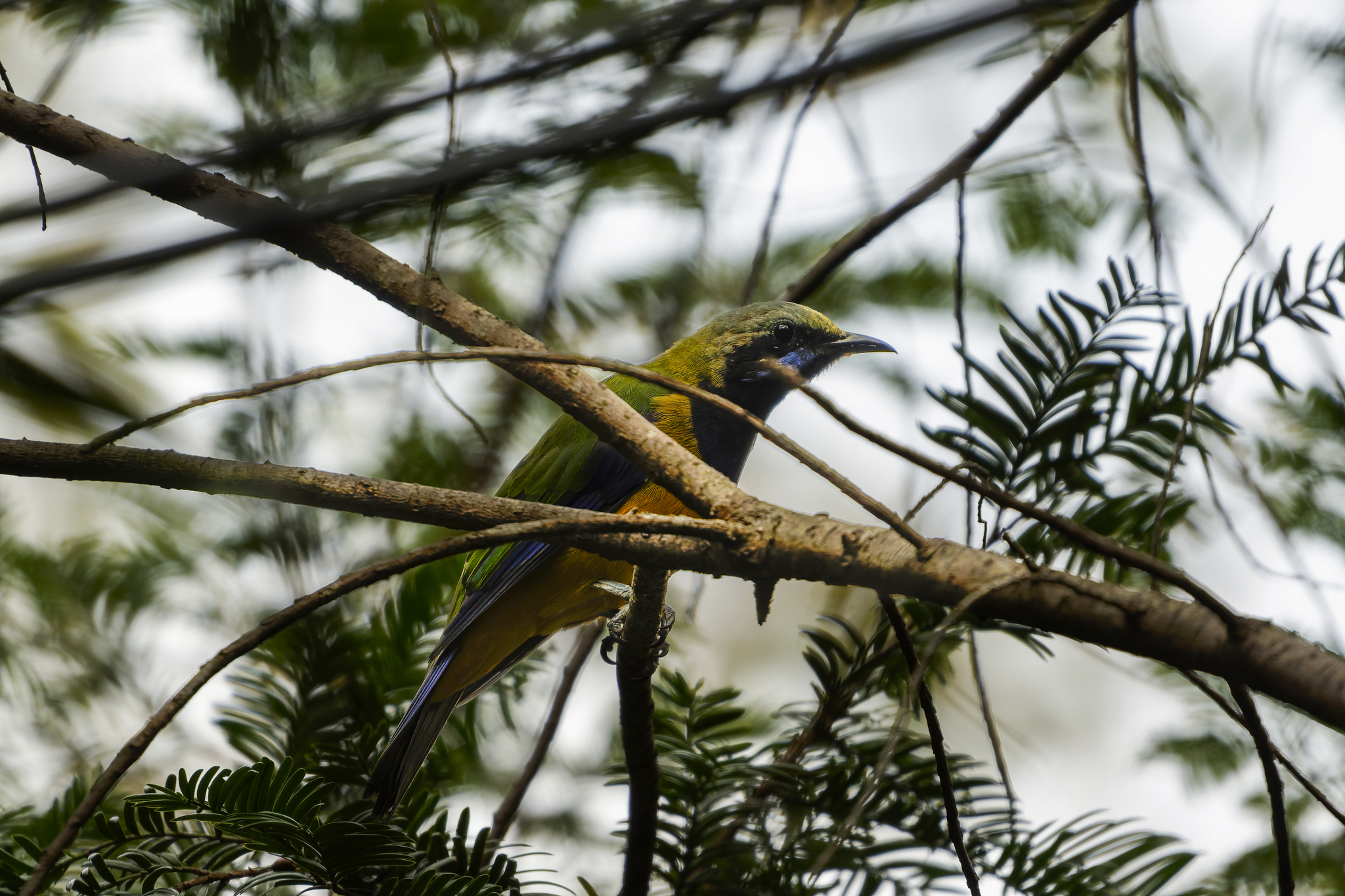
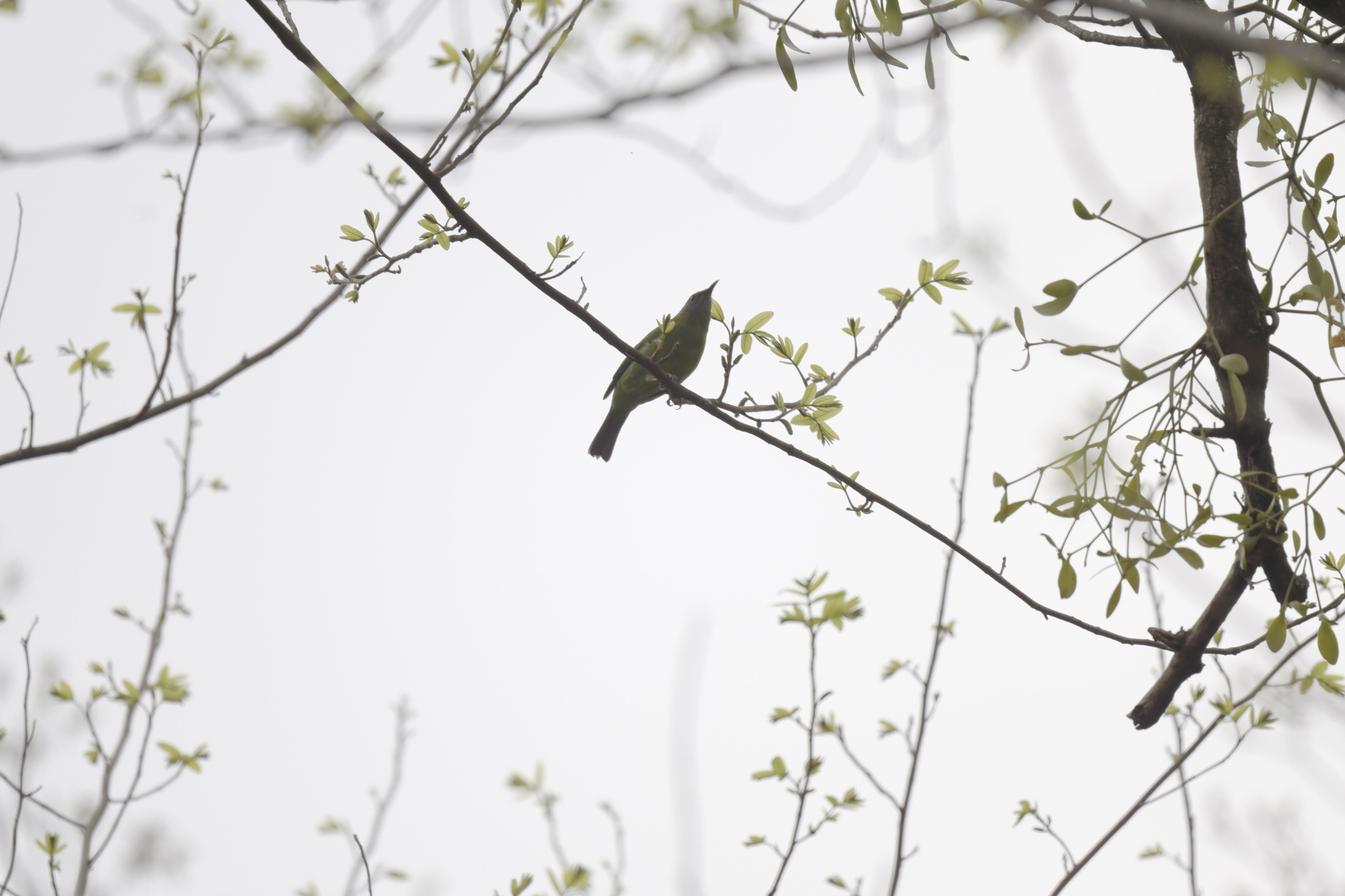
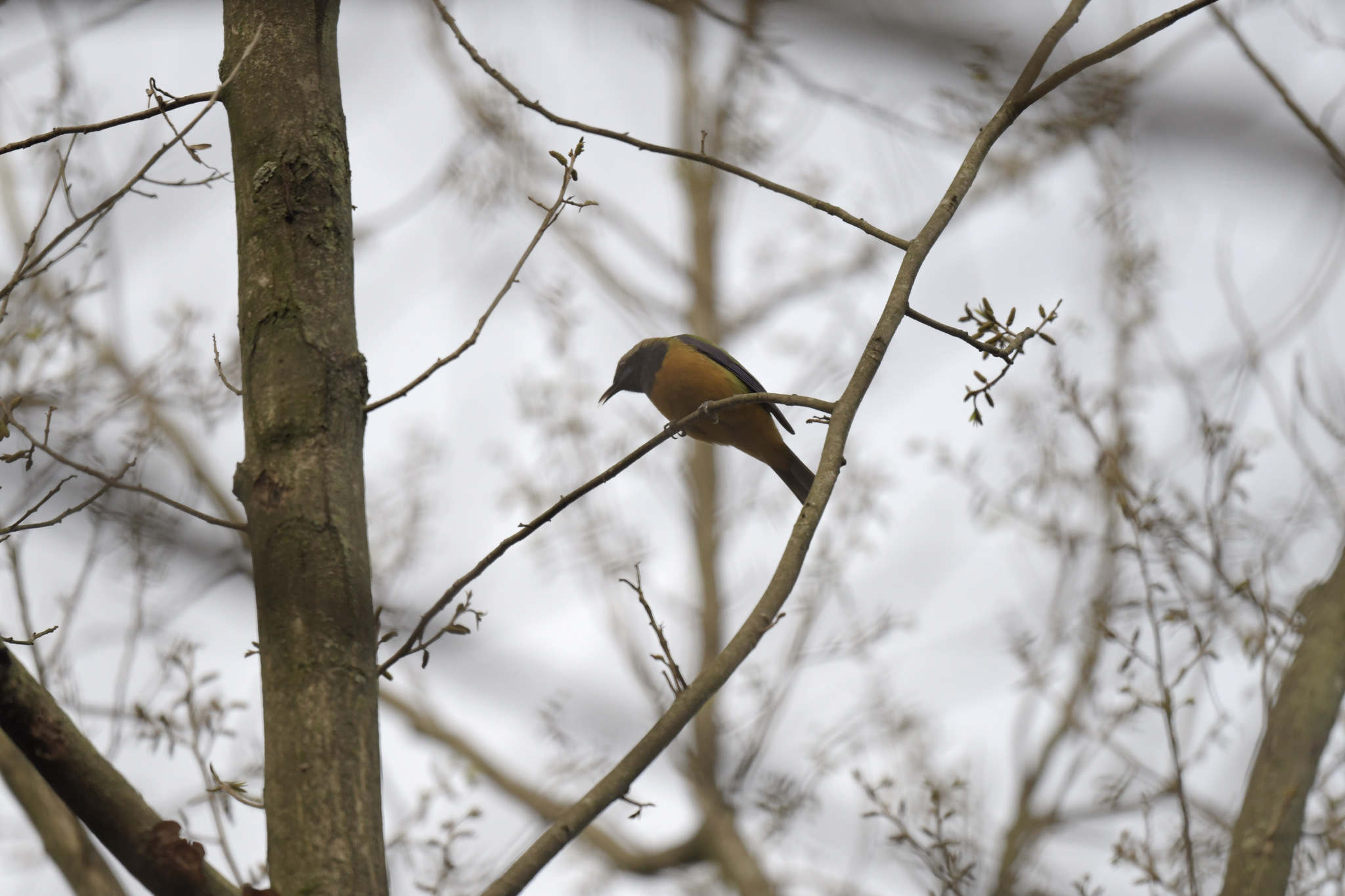
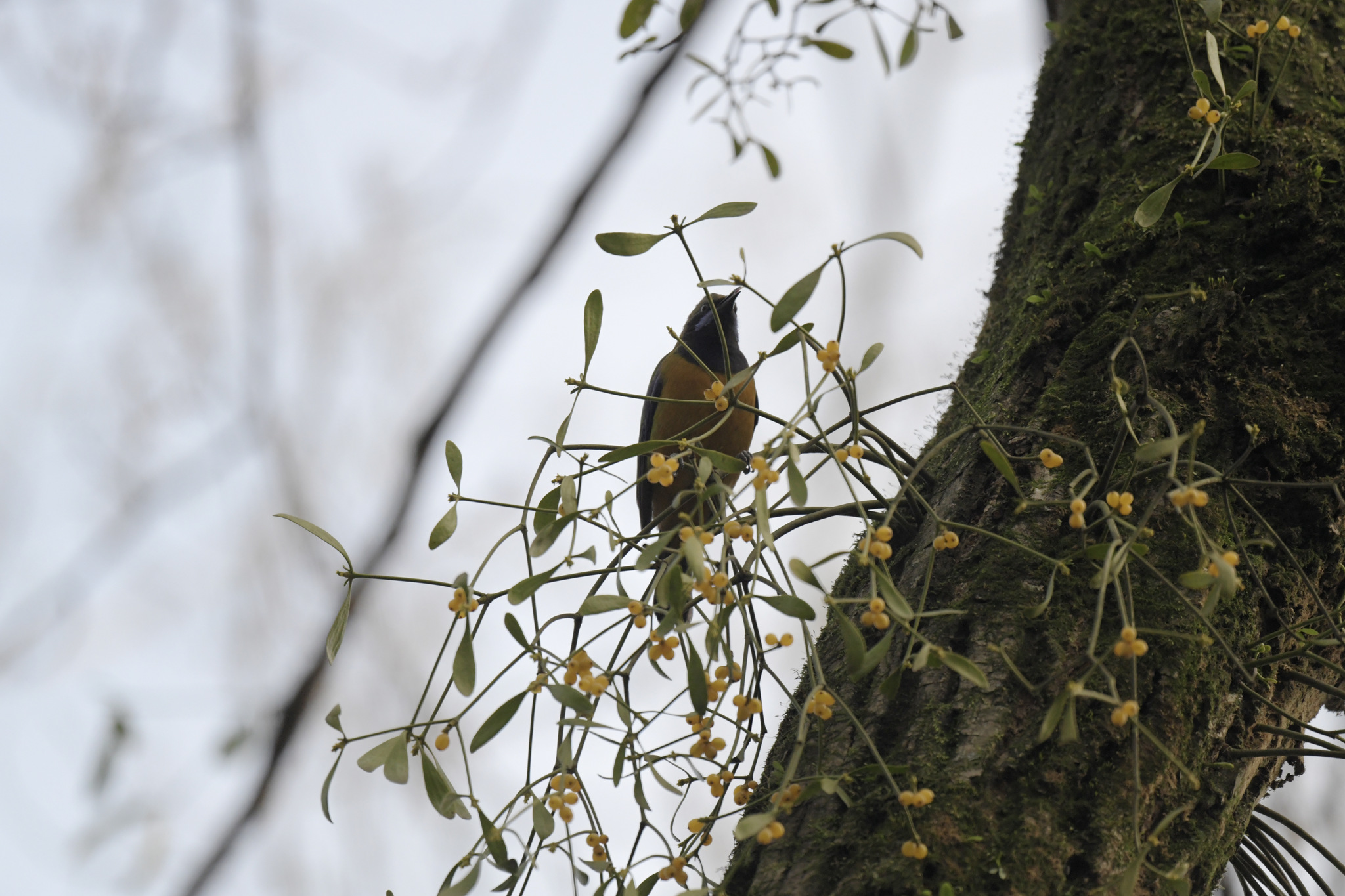
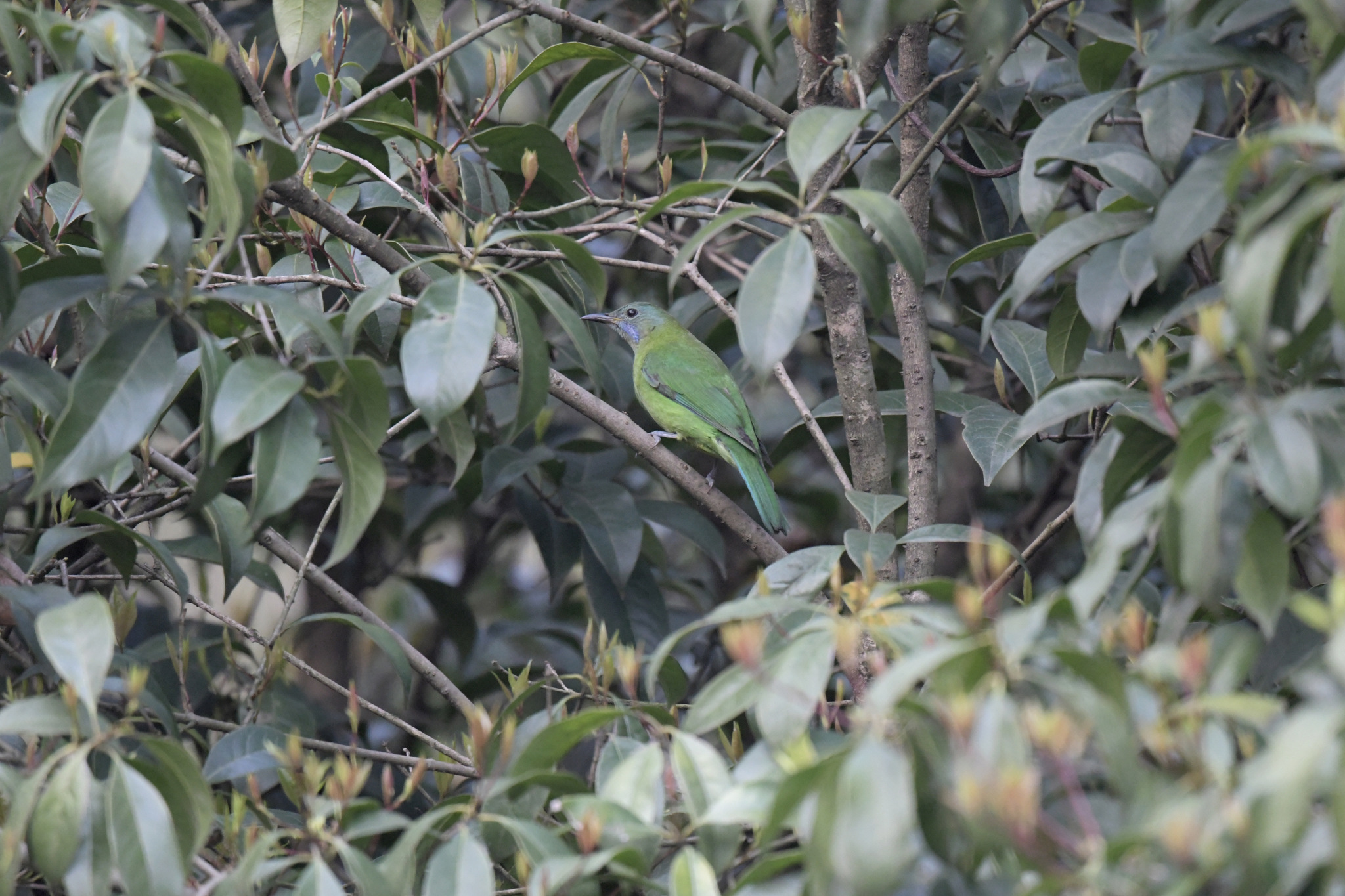
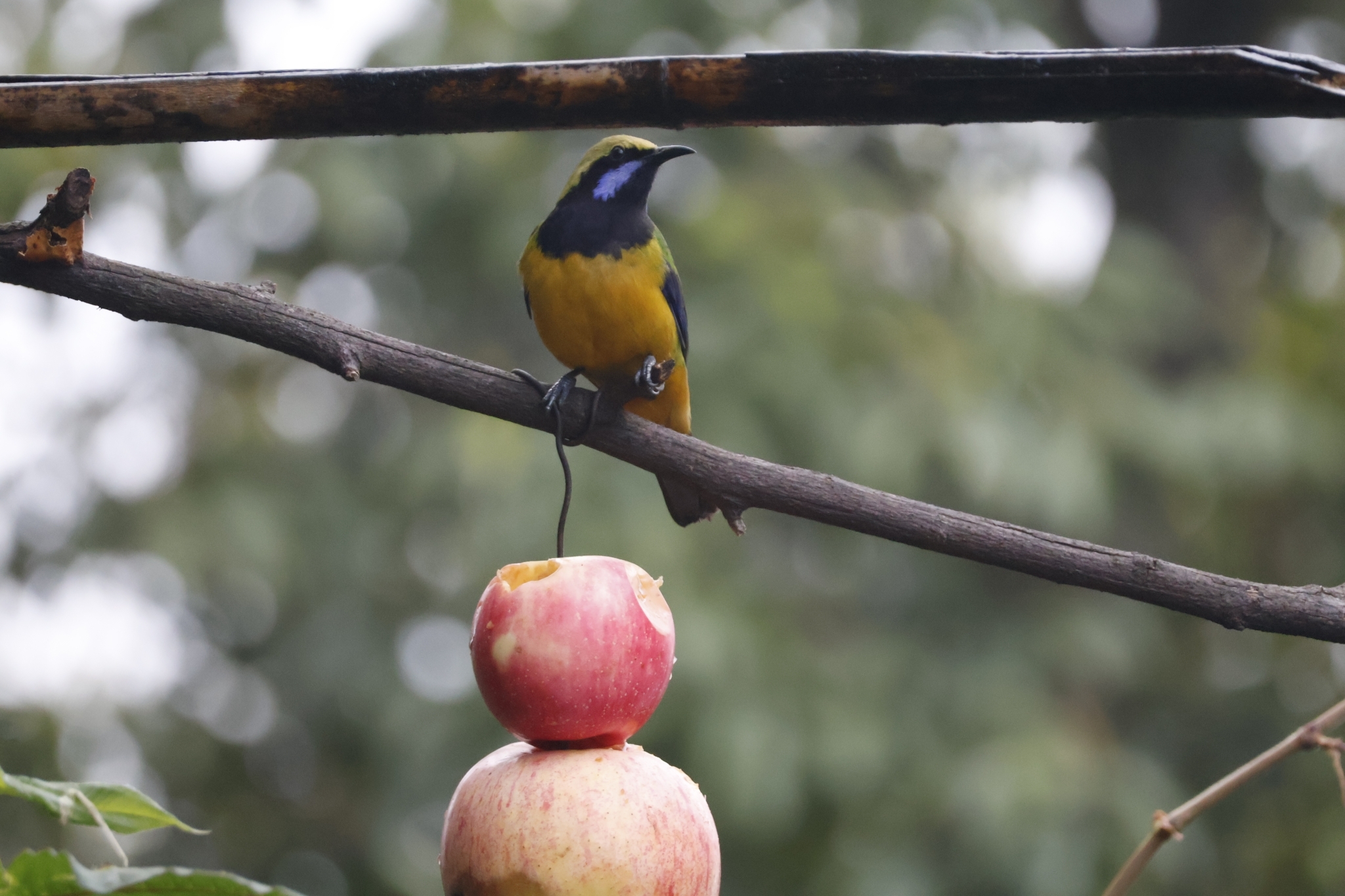
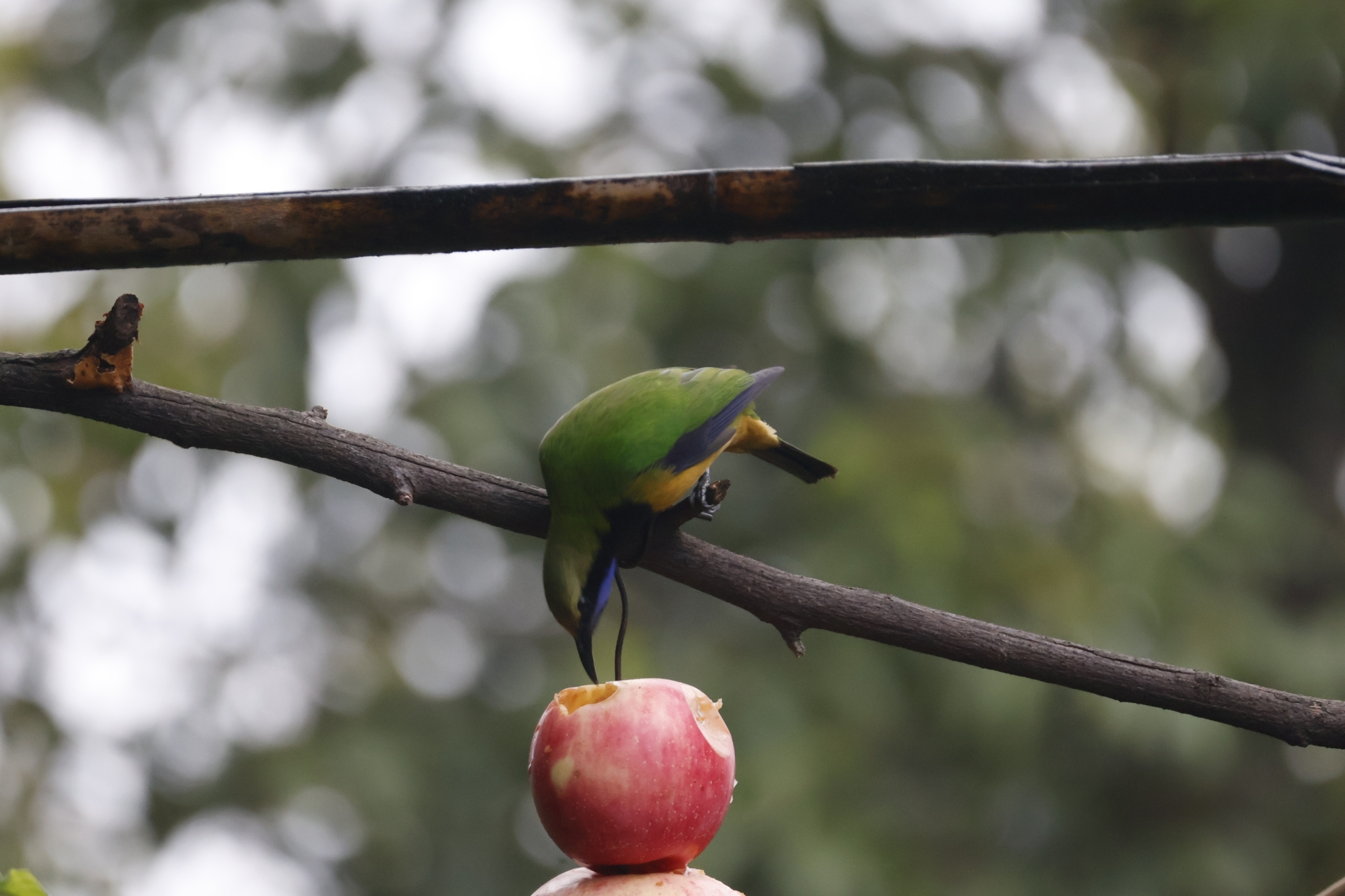
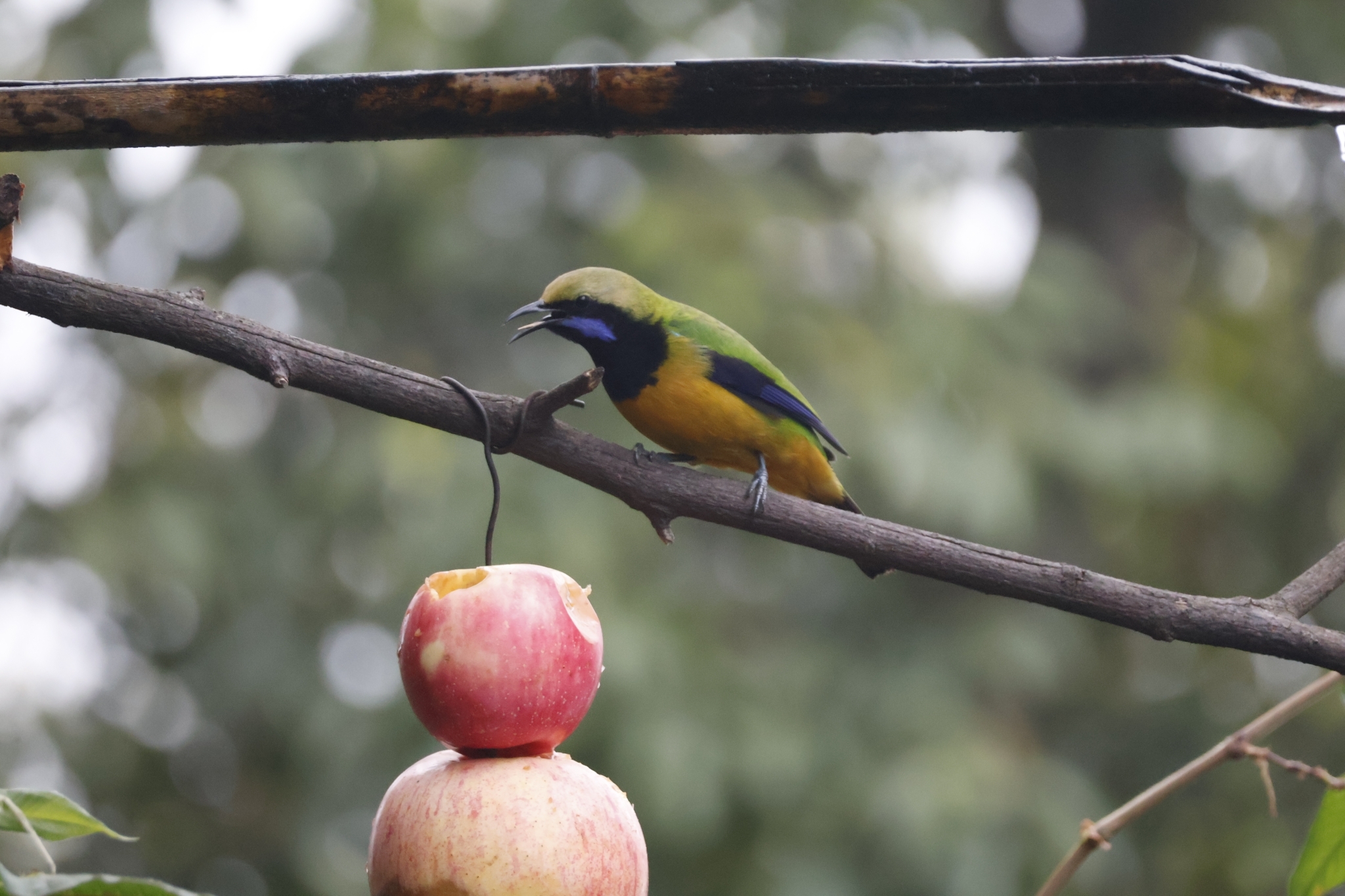
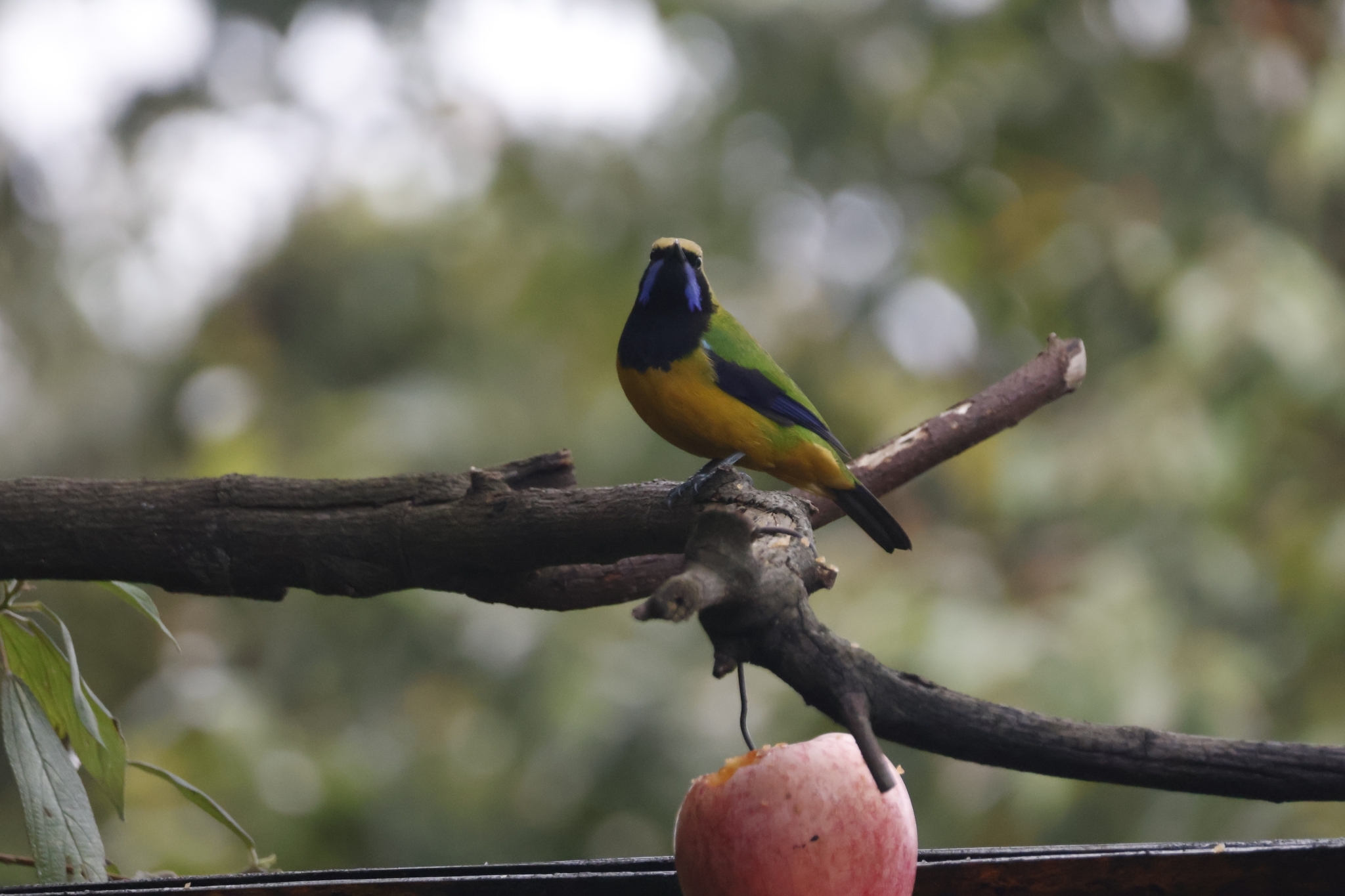
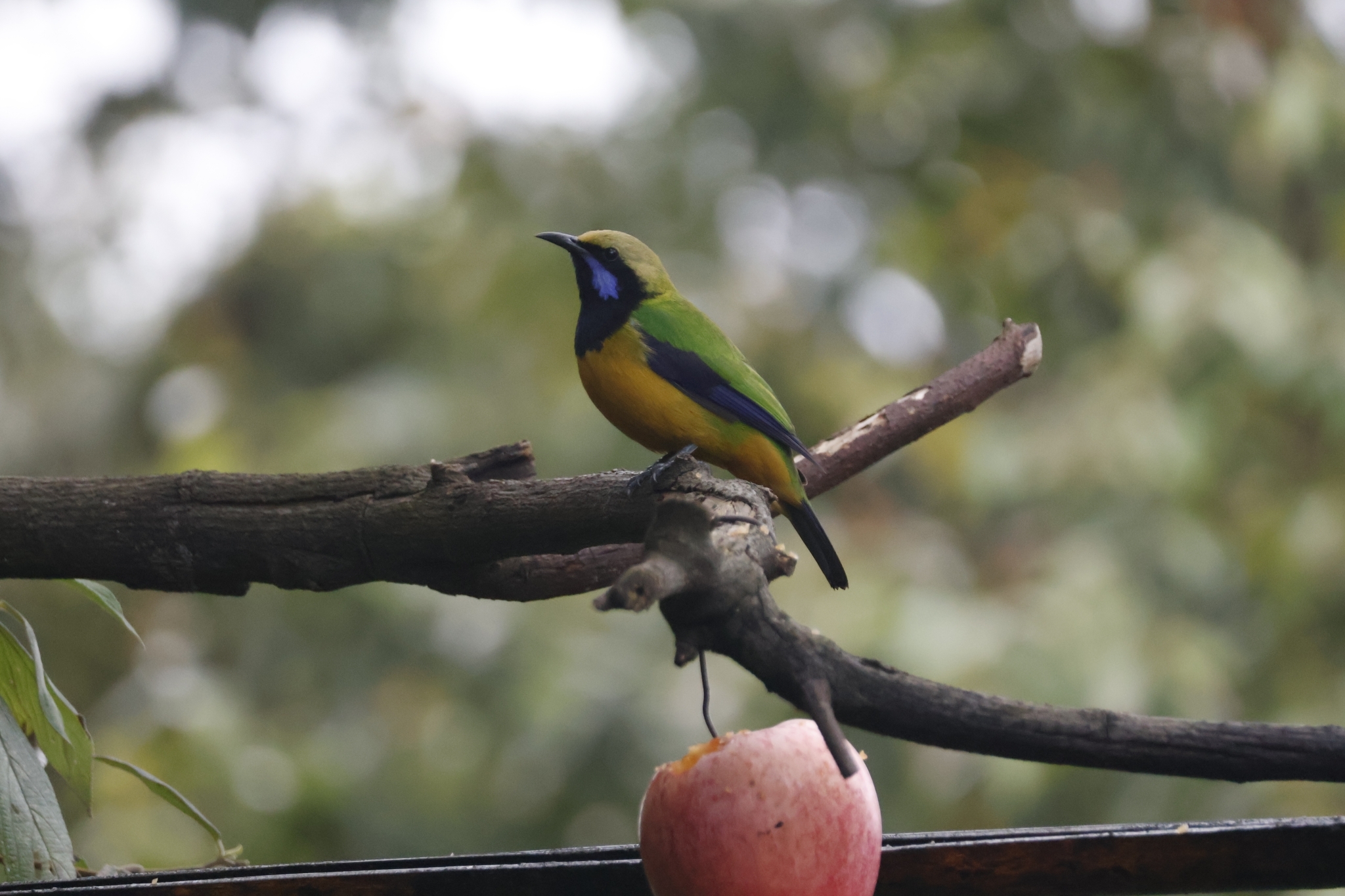
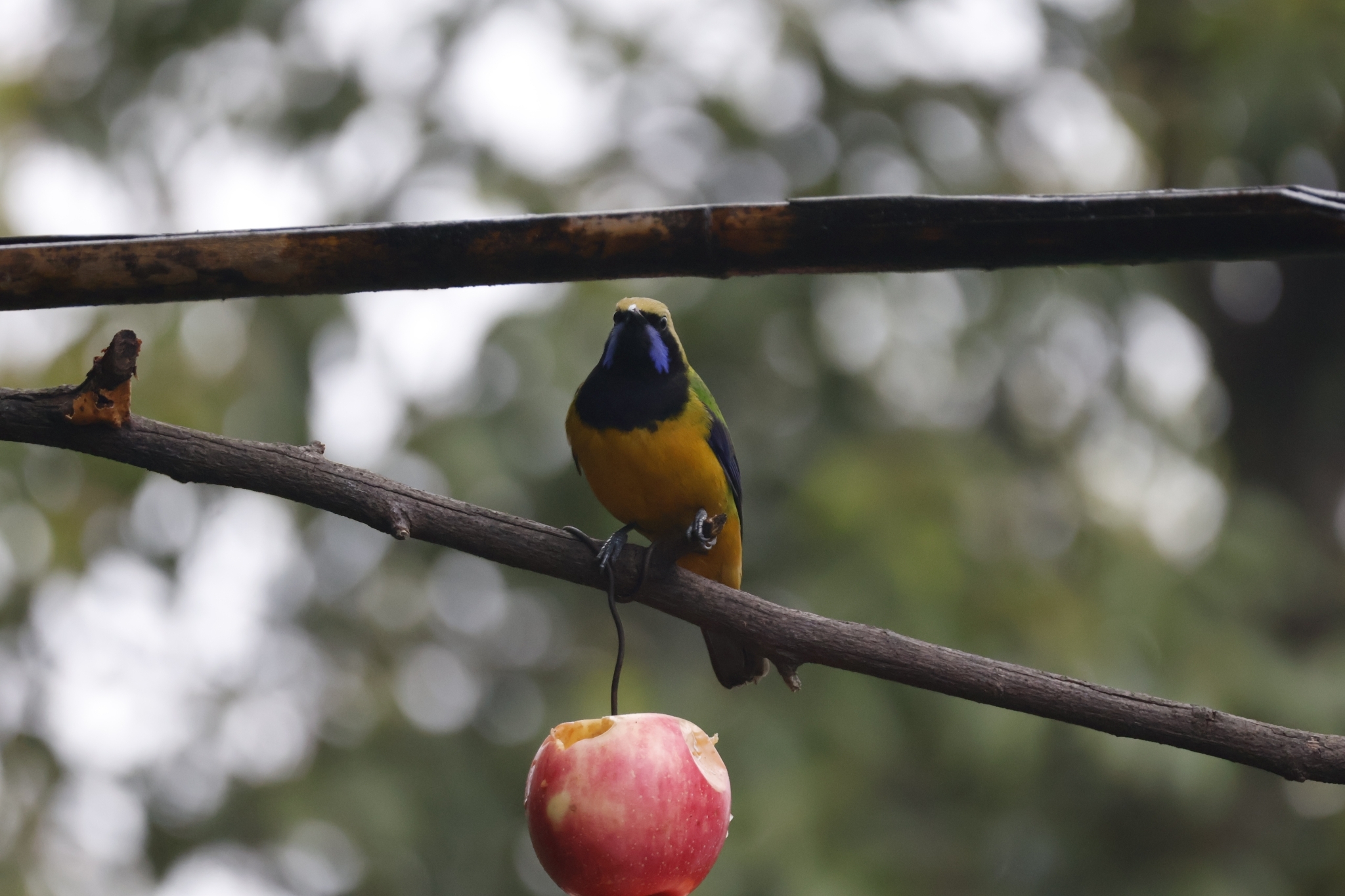
This medium-sized leafbird displays a brilliant combination of colours that makes it unmistakable within its range. The underparts feature a conspicuous orange patch on the belly, while the upperparts are cloaked in vivid green. The tail and wing feathers are washed in deep blue, creating a striking contrast. The most distinctive feature is the boldly patterned throat and chest, where black and blue intersect in an eye-catching patch. The species possesses a notably long, curved beak adapted for its primarily insectivorous diet, though the curved shape also aids in nectar extraction from flowers. No specific measurements for body length or wingspan are provided in available sources.
Distribution & Habitat
The species occurs across the central and eastern portions of the Himalayan region, extending eastward through the Chinese province of Yunnan and into the northern territories of Southeast Asia. It inhabits humid evergreen forests, mixed deciduous-coniferous woodlands, and forest edge habitats. Within this range, it typically occupies elevations from 600 to 2,400 meters, though local populations may adjust their altitudinal range seasonally. Unlike many bird species in the region, this leafbird is non-migratory, with individuals maintaining territories throughout the year. The Hainan population, formerly classified as the same species, is now treated as a separate species known as the greyish-crowned leafbird.
Behavior & Ecology
The diet consists primarily of insects and spiders, supplemented by nectar from various flowering plants. Foraging occurs actively in the canopy, where the bird gleaning technique is employed to capture prey from leaves and branches. The curved beak proves particularly effective at extracting spiders from their retreats and sipping nectar. Breeding takes place during the spring and early summer months. The nest is a delicate structure constructed from plant roots and fibers, typically suspended from the outer edges of twigs at the end of a tree branch, positioned several meters above ground. The species is generally observed alone or in pairs, though family groups may remain together briefly after fledging. Vocalizations include a variety of musical calls used to maintain contact and declare territory.
Source: Wikipedia · CC BY-SA 3.0
Taxonomy
- Order
- Passeriformes
- Family
- Chloropseidae
- Genus
- Chloropsis
- eBird Code
- orblea1
Vocalizations
Subspecies (4)
-
Chloropsis hardwickii hardwickii
eastern Himalayas to southeastern Tibet and southwestern China (Yunnan), Myanmar, northwestern Thailand, and northern Laos
-
Chloropsis hardwickii lazulina
Hainan (southern China)
-
Chloropsis hardwickii malayana
Malay Peninsula
-
Chloropsis hardwickii melliana
southeastern China (Guizhou and Guangxi eastward to Zheijang) to central Laos and central Vietnam
Data Sources
Species description from Wikipedia, licensed under CC BY-SA 3.0.
Bird images and sounds sourced from GBIF, contributed by citizen scientists worldwide under Creative Commons licenses.
Taxonomy data from AviList 2025.