Black Tern
Chlidonias niger
黑浮鸥
Introduction
Small tern in genus Chlidonias (one of four species). Breeds across freshwater marshes in Canada, northern United States, Europe, and western Asia. Winters on coastal areas of northern South America and Africa. Distinguished by predominantly dark plumage and foraging behavior: unlike 'white' Sterna terns, does not dive for fish but catches prey on the wing at or near water surface. North American population has declined due to habitat loss. Protected under AEWA (Agreement on the Conservation of African-Eurasian Migratory Waterbirds).
Description
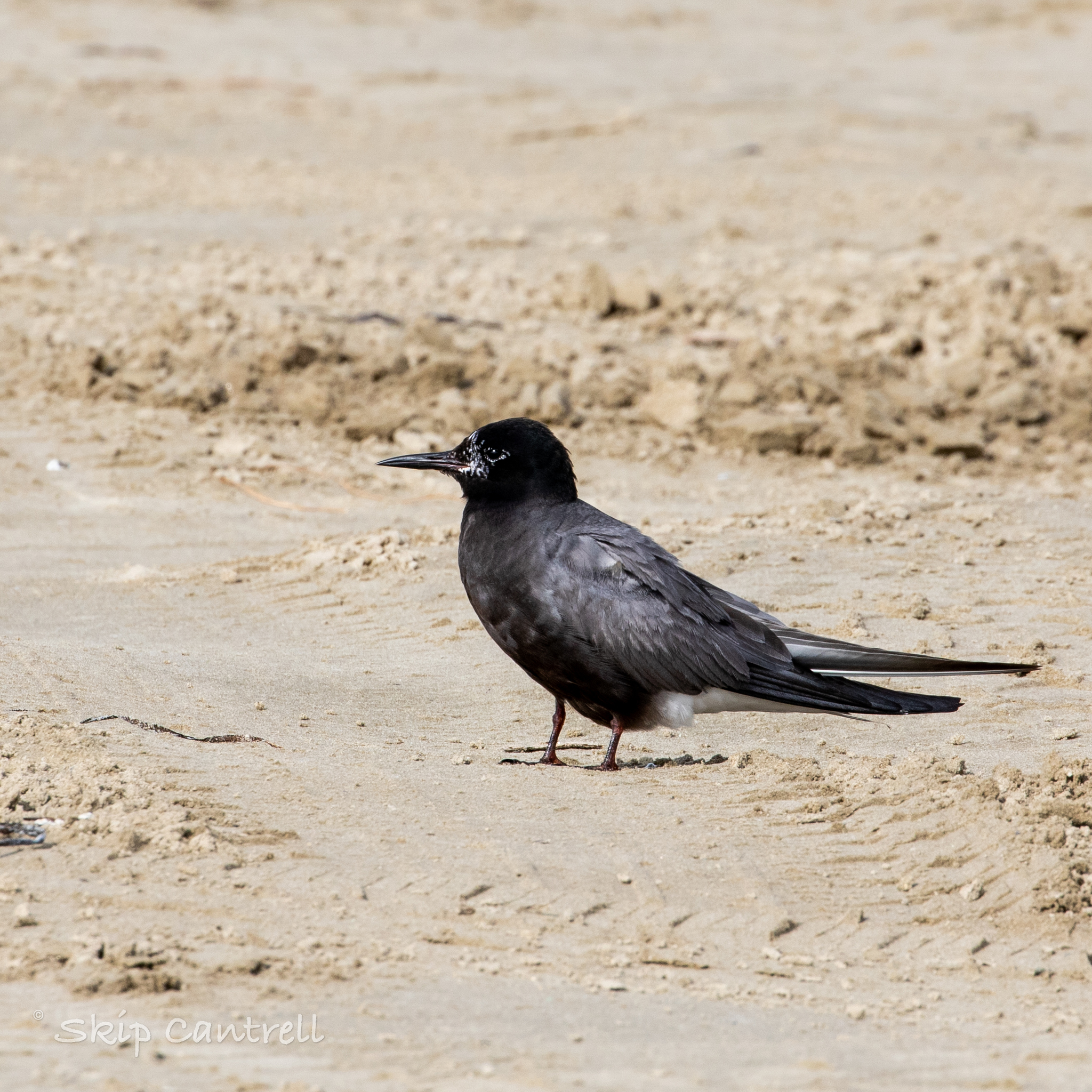
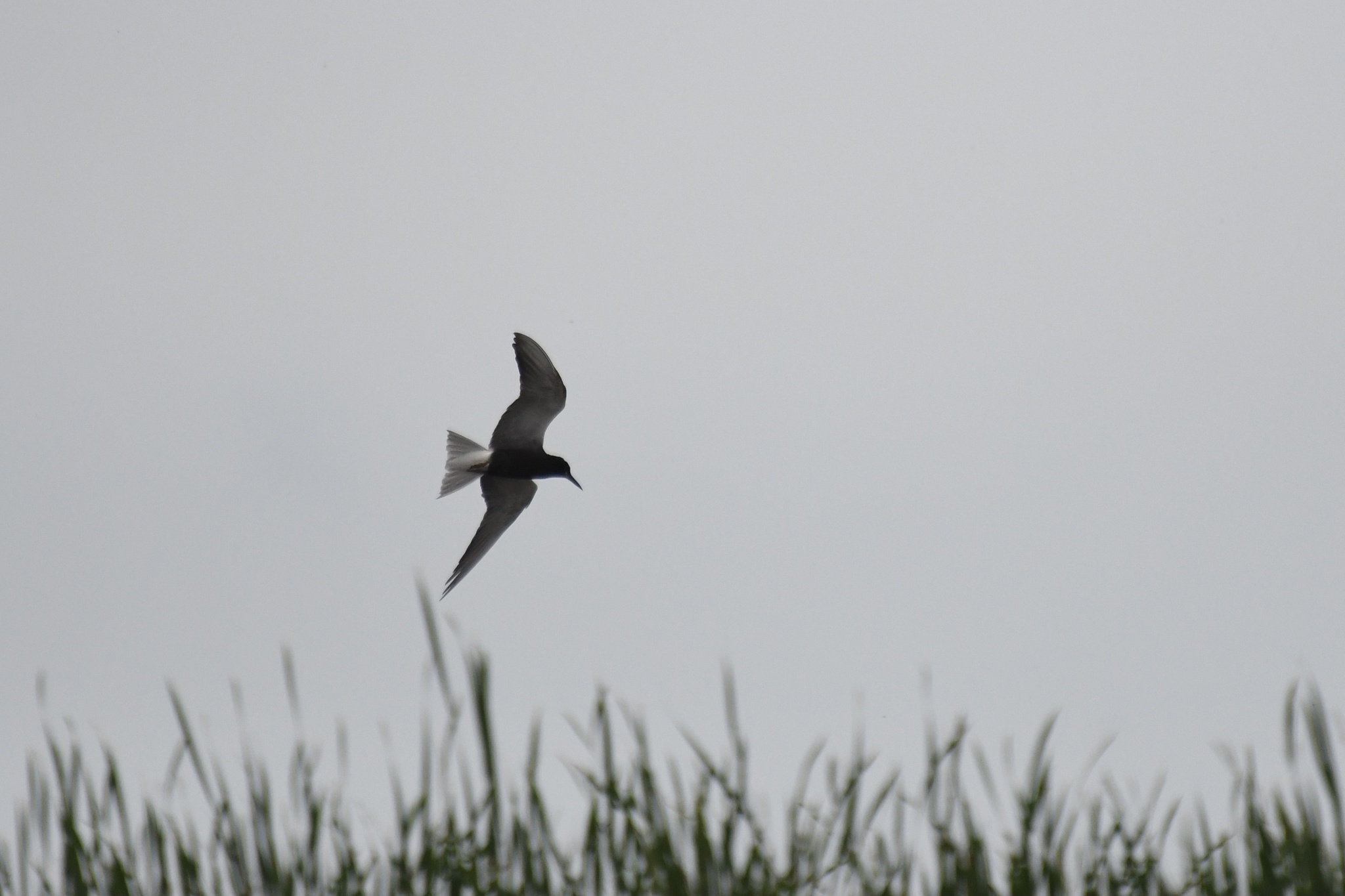
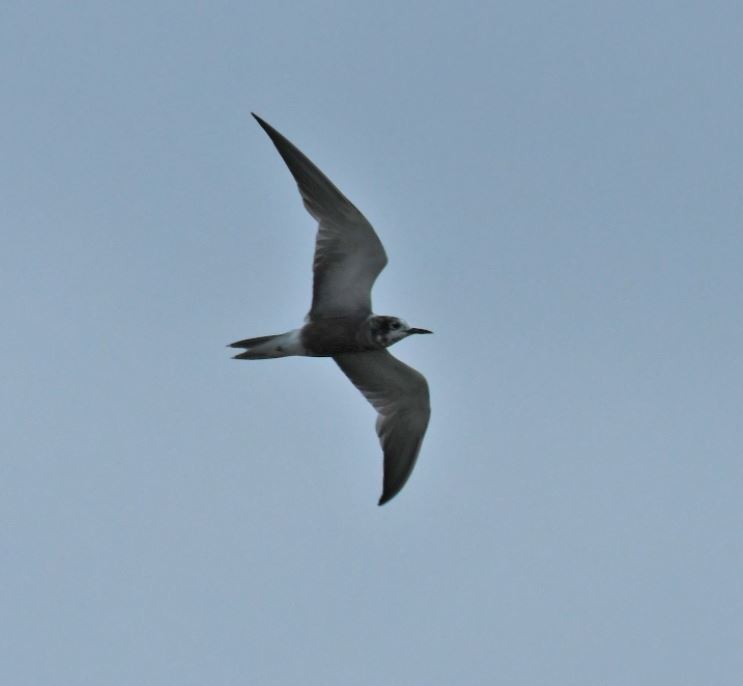
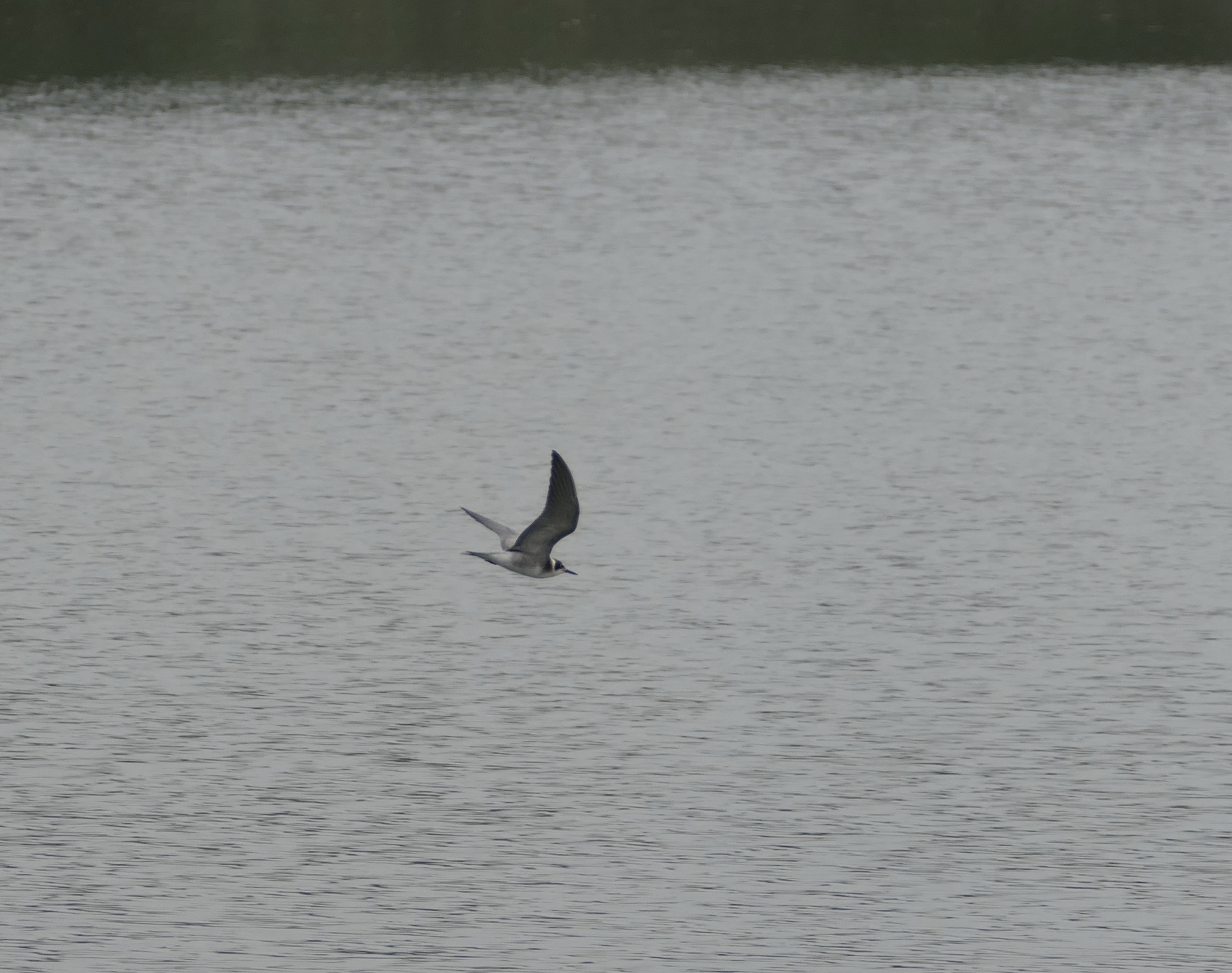
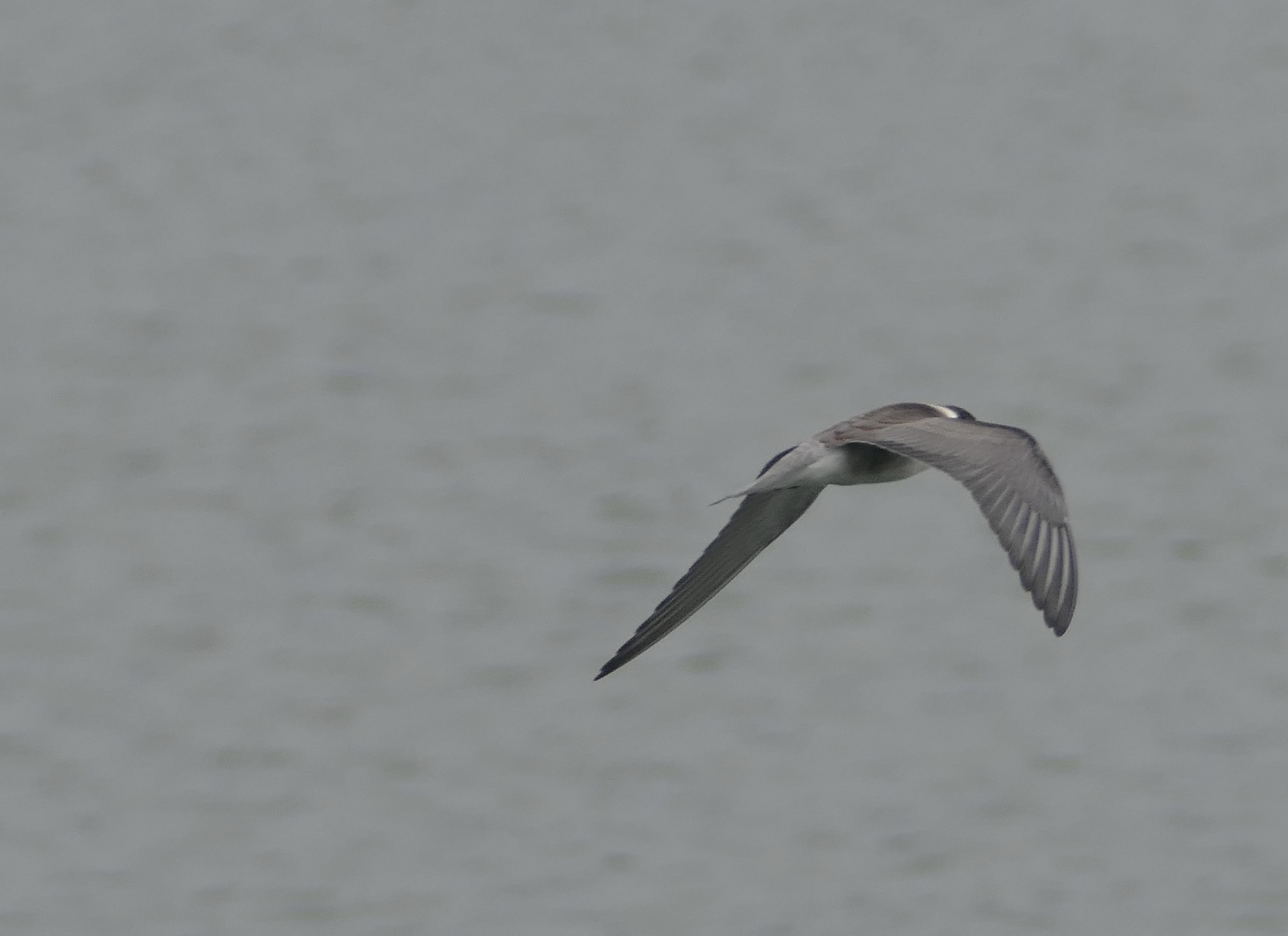
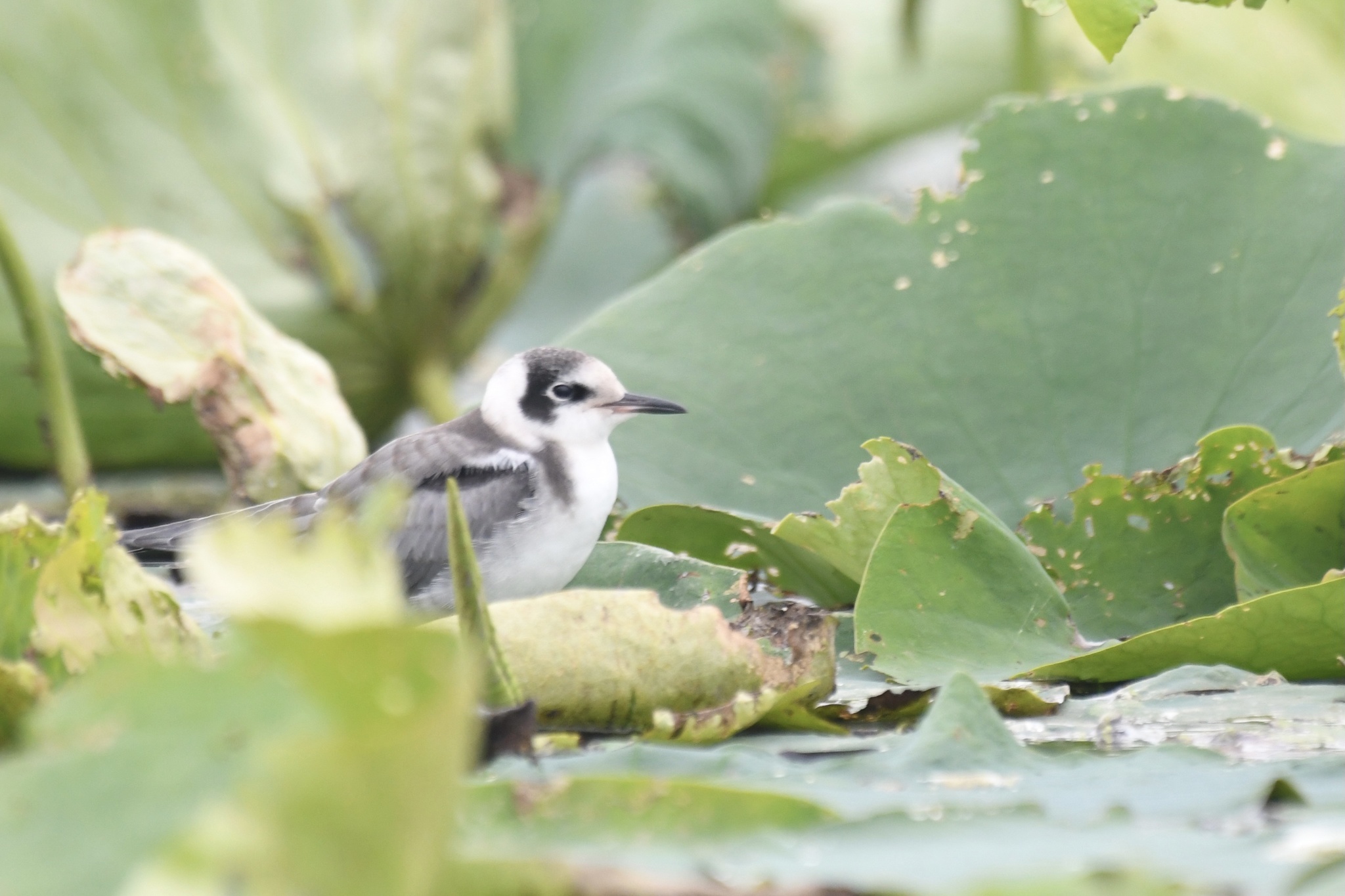
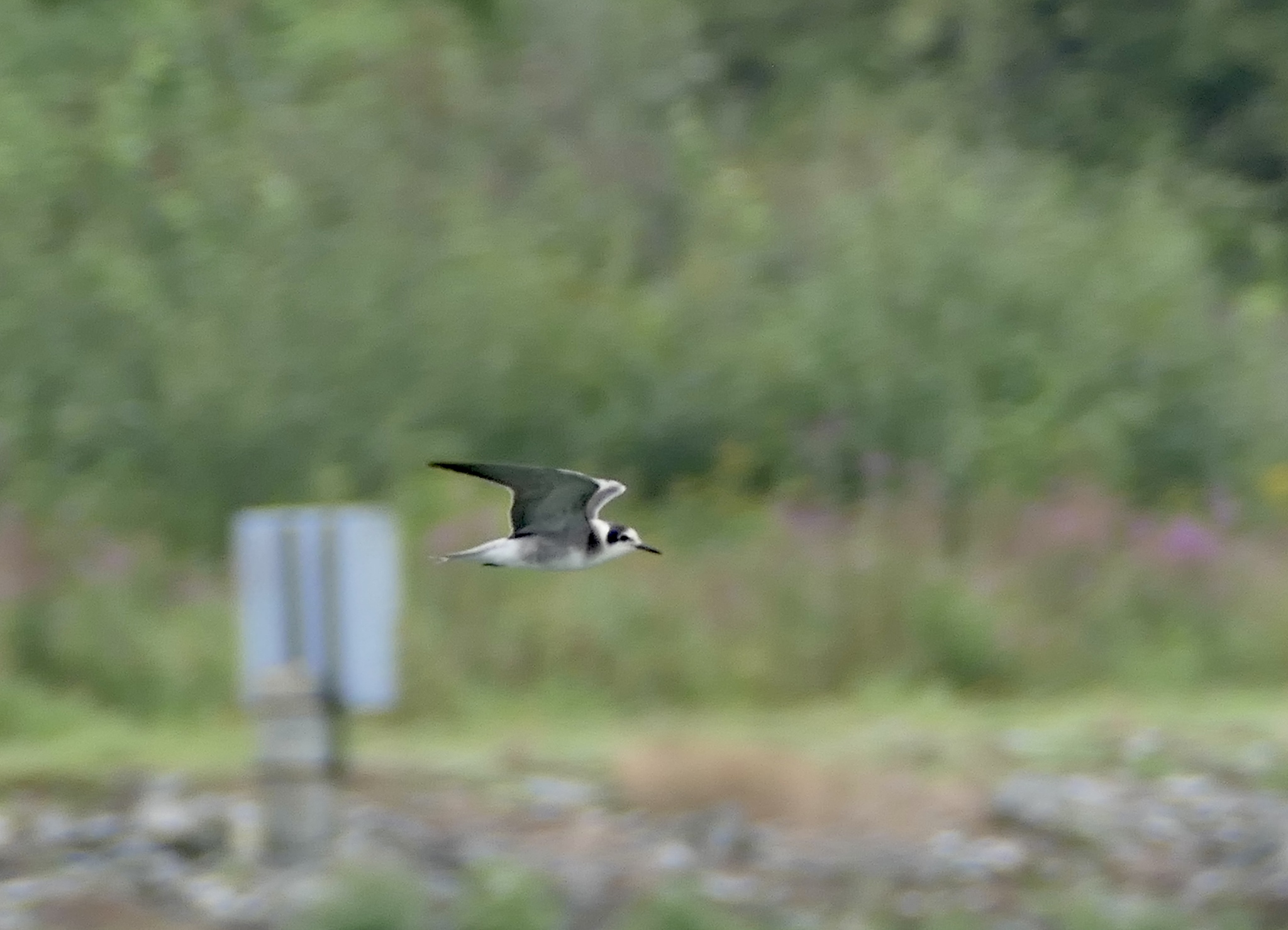
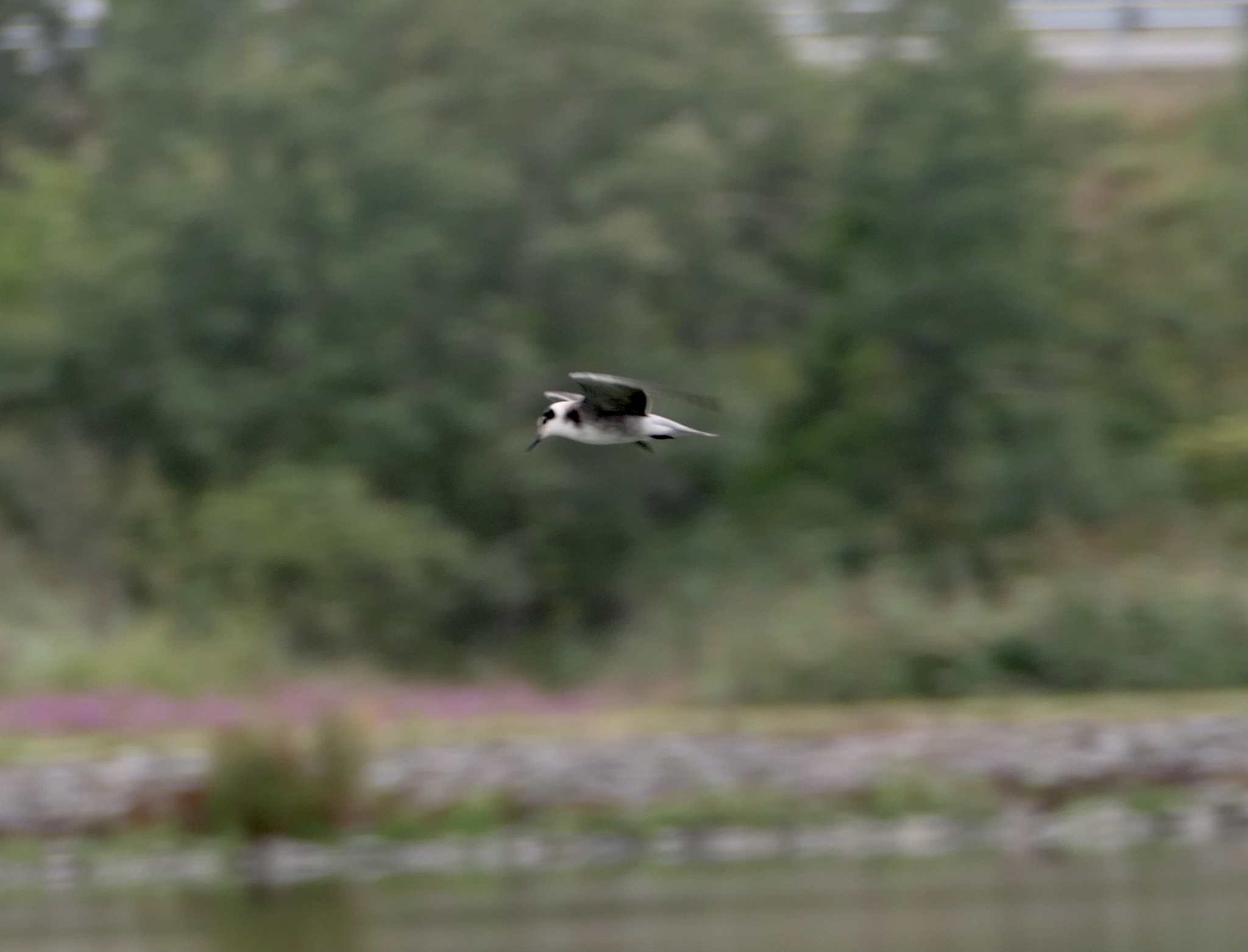
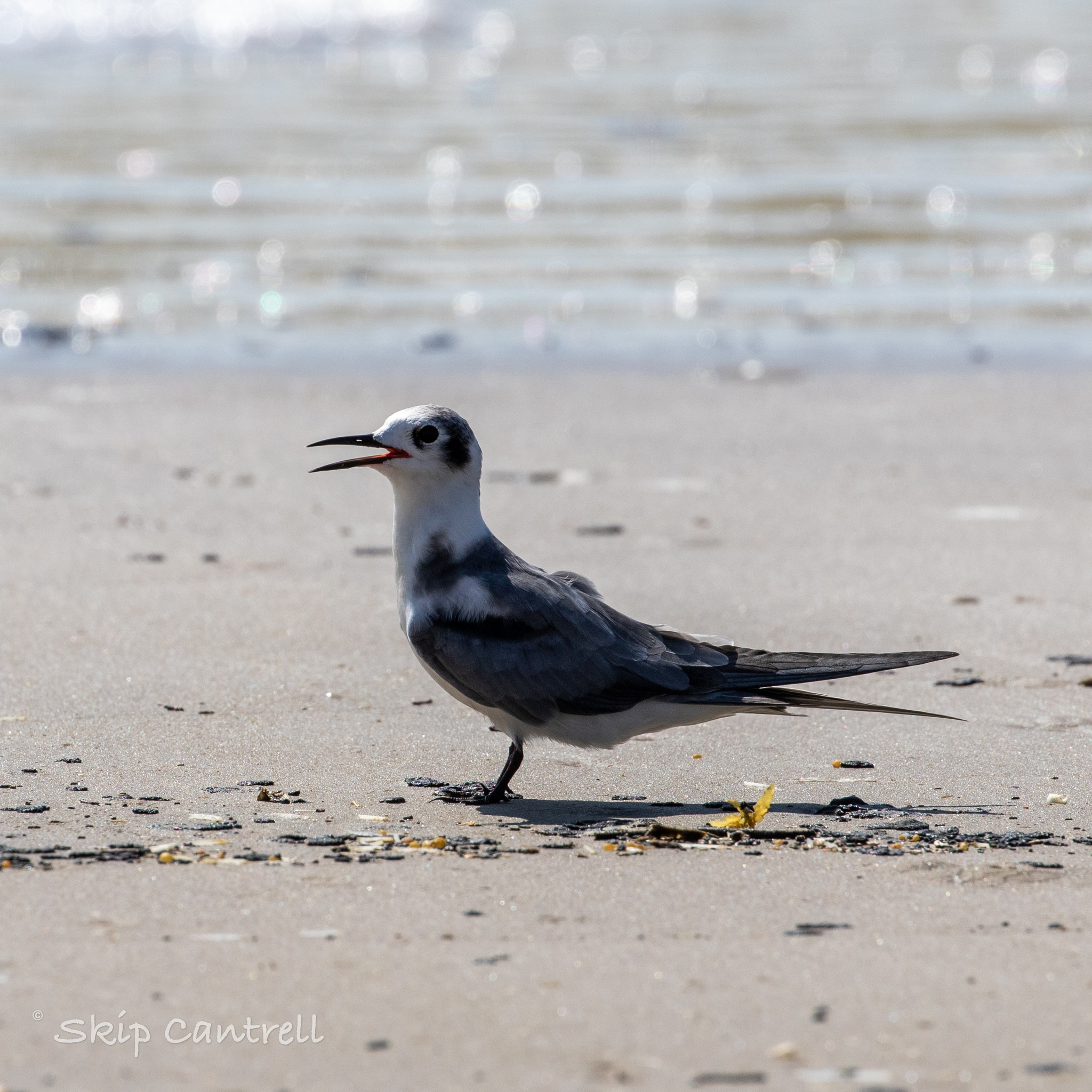
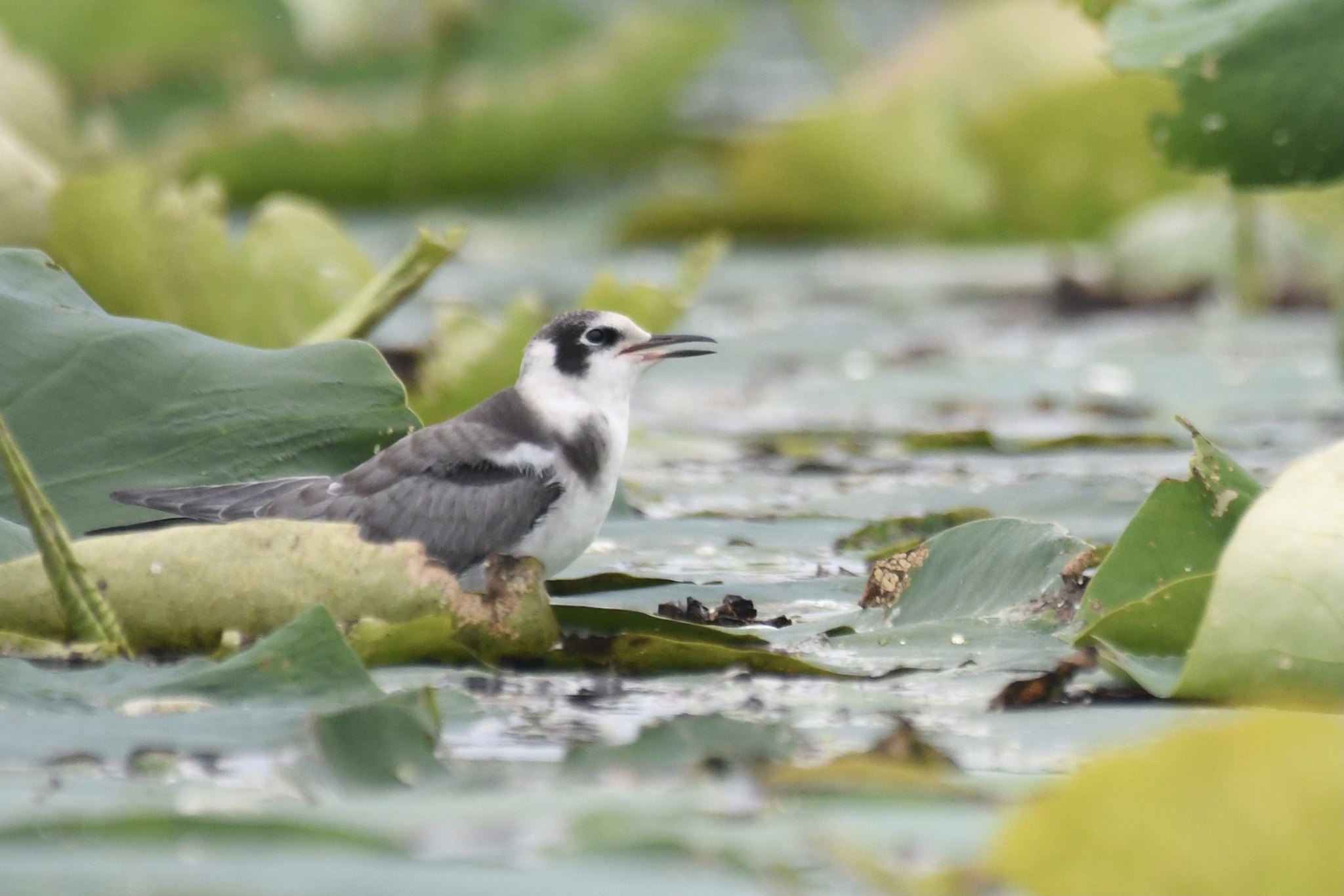
Small compact tern measuring 25 cm in length with 61 cm wingspan and weighing 62 g. Features short dark legs and a short, slender black bill measuring 27 mm. Breeding plumage shows dark grey back, white forewing, black head, neck and belly forming almost complete hood with black or blackish-brown cap. Face is white with distinctive dark triangular patch in front of eye. Tail is light brownish-grey and square-shaped. In non-breeding plumage, most black is replaced by grey except for the cap. Flight is slim with full, dynamic wing-beats.
Identification
North American race (C. n. surinamensis) differs from European form in all plumages, leading some authorities to consider it a separate species. Confusion possible with white-winged tern; hybridization has been recorded in Sweden, Netherlands, and England. Hybrids show mixed characteristics including dark mantle combined with dark breast-side patches typical of black tern.
Distribution & Habitat
Breeds across freshwater marshes throughout most of Canada, northern United States, and much of Europe and western Asia. Nests on floating material or ground very close to water, laying 2-4 eggs. In England, was once abundant in eastern Fens until drainage eliminated the population by about 1840; recolonization attempts since have largely failed. North American populations migrate to coasts of northern South America, some to open ocean. Old World birds winter in Africa.
Behavior & Ecology
Forages on the wing, picking items from water surface or catching insects in flight rather than diving. Diet consists mainly of insects, fish, and amphibians. Call is a high-pitched 'kik'; large flocks described as deafening. Nests on floating vegetation or ground near water. Shows erratic flight when diving to surface for food.
Conservation
North American population has declined in recent decades due to habitat loss. Species is protected under AEWA (Agreement on the Conservation of African-Eurasian Migratory Waterbirds). English population was extirpated by agricultural drainage in the 19th century; intermittent recolonization attempts have been largely unsuccessful.
Culture
Historical English names include 'carr swallow' (referring to lake habitat and swallow-like appearance) and 'blue darr' (describing the bluish sheen of breeding plumage in certain lights). Thomas Pennant in 1769 described vast flocks in Lincolnshire that 'almost deafen one with their clamors', illustrating the species' former abundance before wetland drainage eliminated English populations.
Source: Wikipedia · CC BY-SA 3.0
Taxonomy
- Order
- Charadriiformes
- Family
- Laridae
- Genus
- Chlidonias
- eBird Code
- blkter
Subspecies (2)
-
Chlidonias niger niger
breeds inland Europe (except British Isles and northern Scandinavia) to south-central Russia and northwestern Mongolia; winters to coastal Senegal and northern Namibia
-
Chlidonias niger surinamensis
breeds inland west-central Northwest Territories eastward to Maritime Provinces (northwestern to southeastern Canada) southward to central California and Maine; winters coastal Mexico to Venezuela
Data Sources
Species description from Wikipedia, licensed under CC BY-SA 3.0.
Bird images and sounds sourced from GBIF, contributed by citizen scientists worldwide under Creative Commons licenses.
Taxonomy data from AviList 2025.