White-winged Tern
Chlidonias leucopterus
白翅浮鸥
Introduction
A small marsh tern found throughout the Old World. It breeds in freshwater wetlands, nesting among emergent vegetation. During winter, it disperses to warmer regions including East Africa and southern Asia. It forages by gliding slowly over shallow water and picking prey from the surface or hawking insects in the air. Migration concentrations occur at key wetland stopover sites. Key identification features include white wing panels and buoyant, leisurely flight with shallow wingbeats.
Description
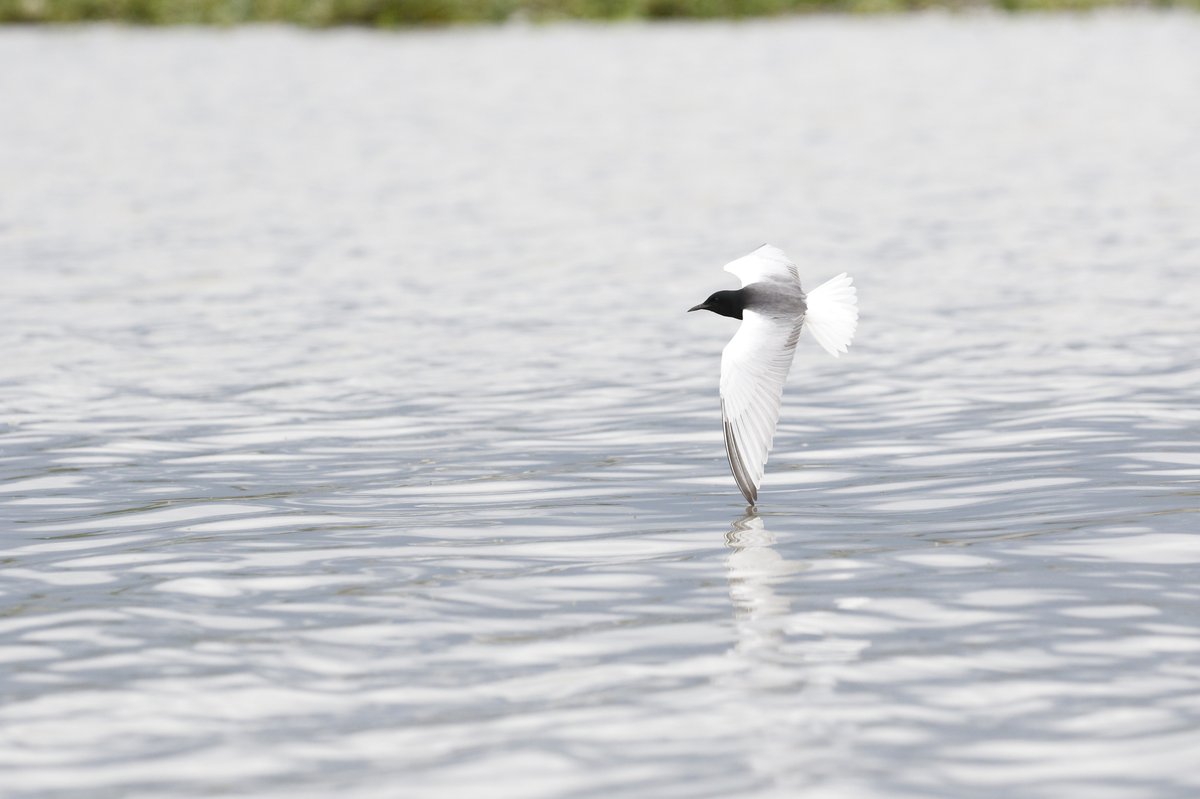
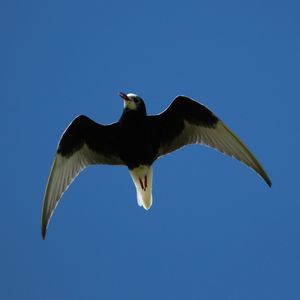
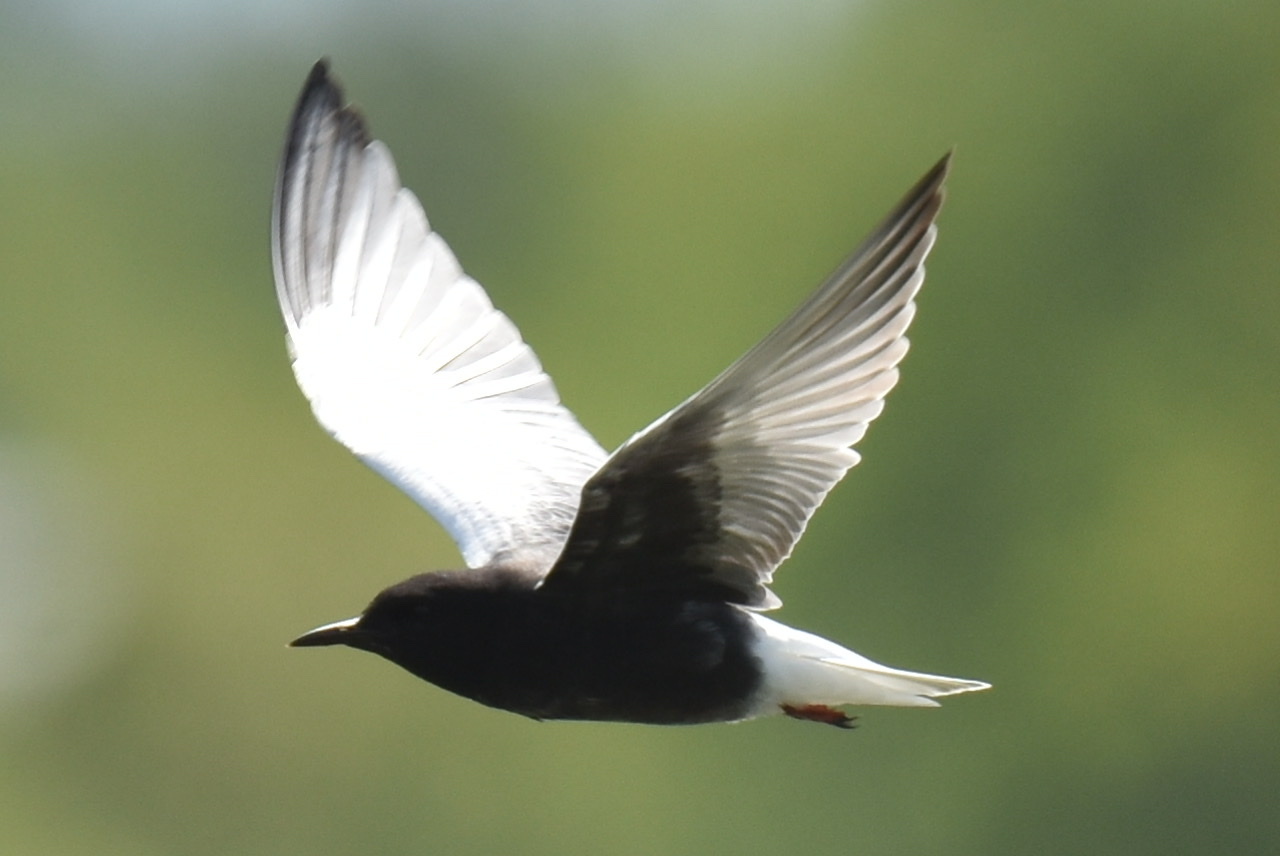
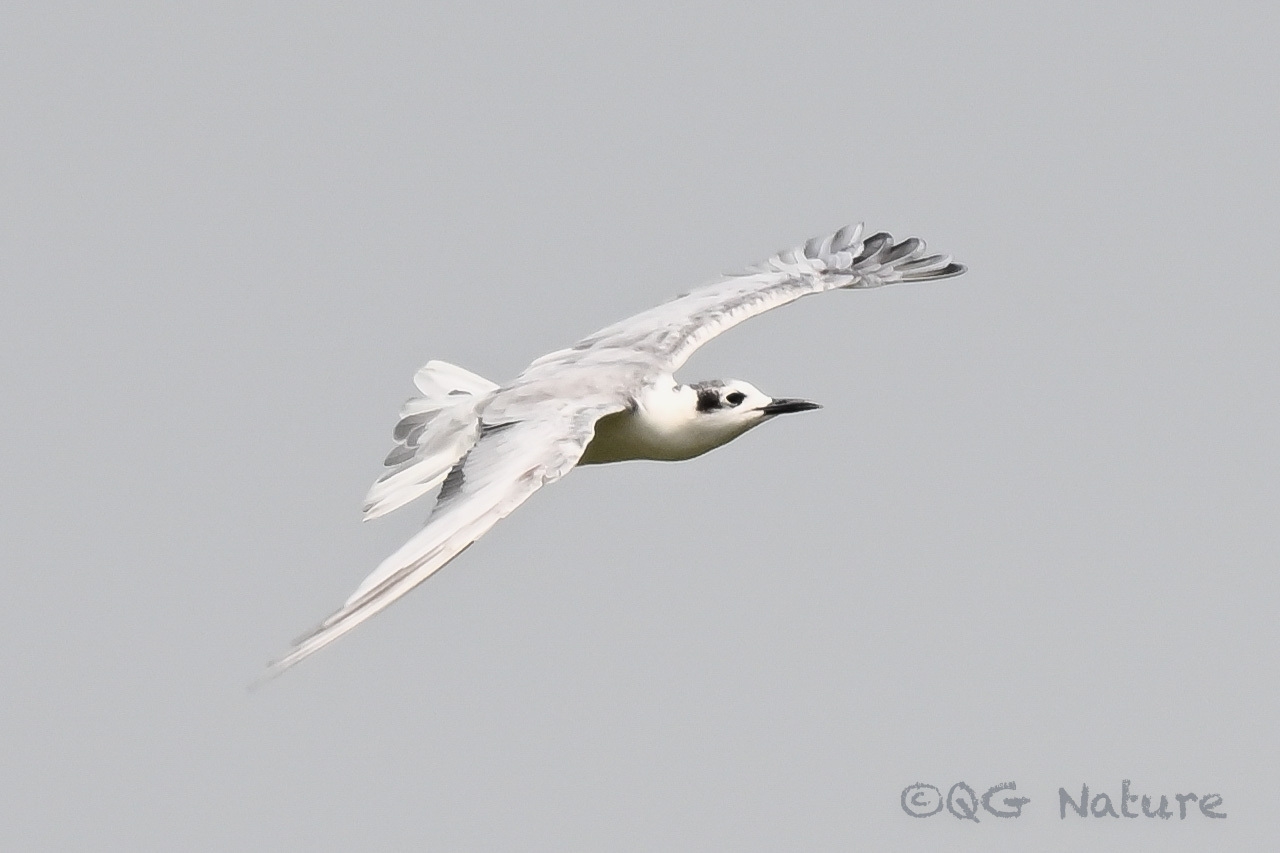
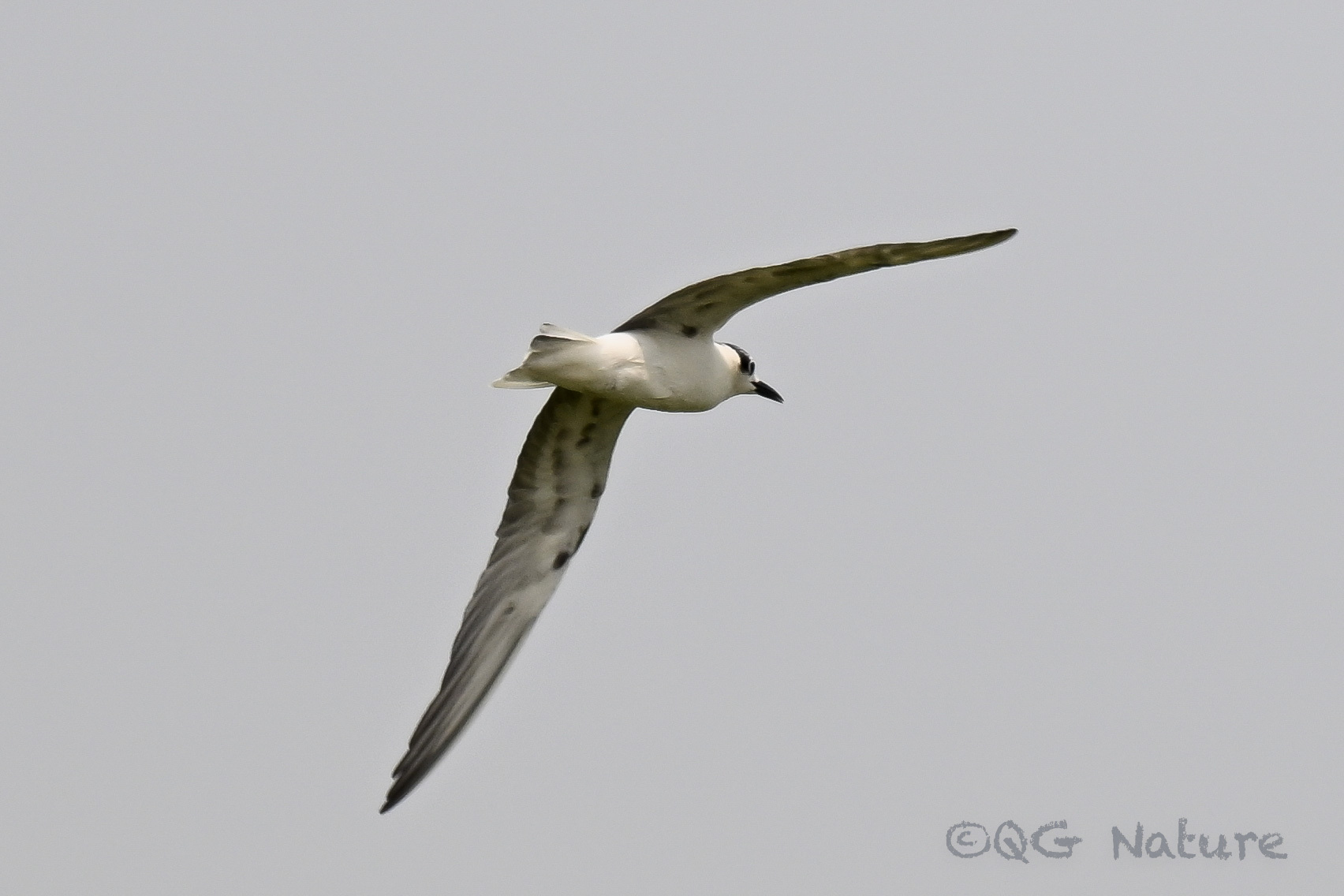
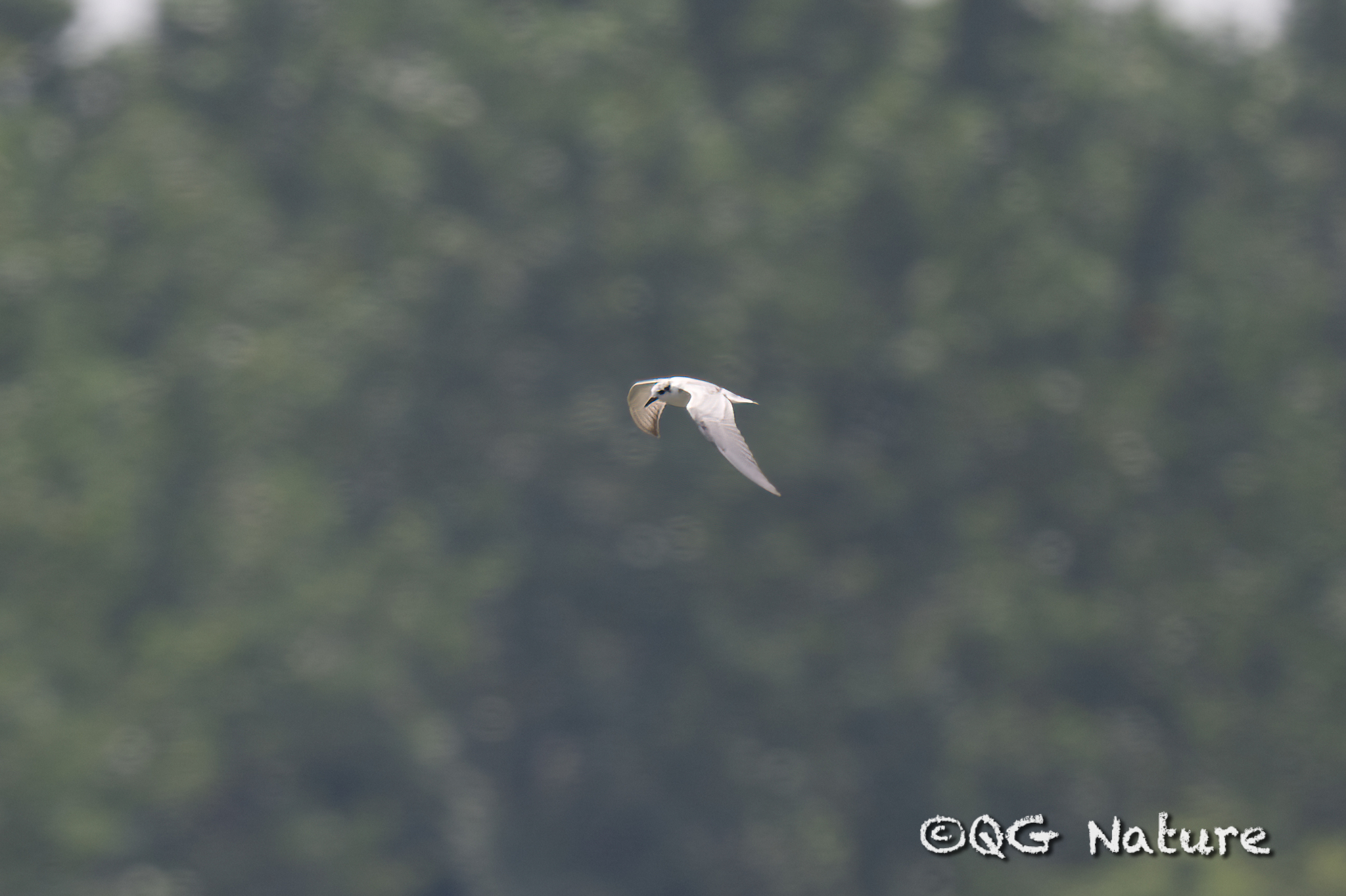
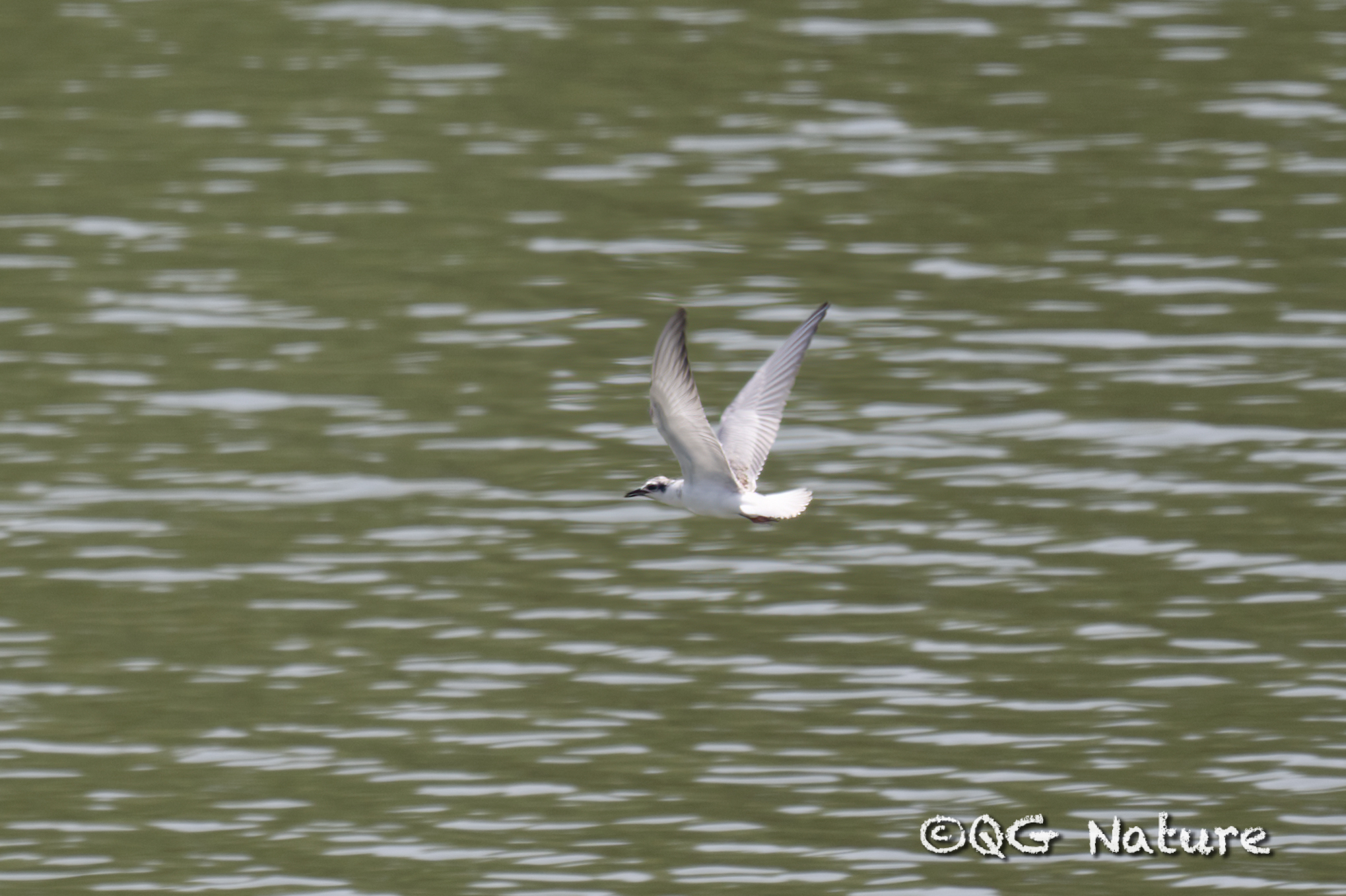
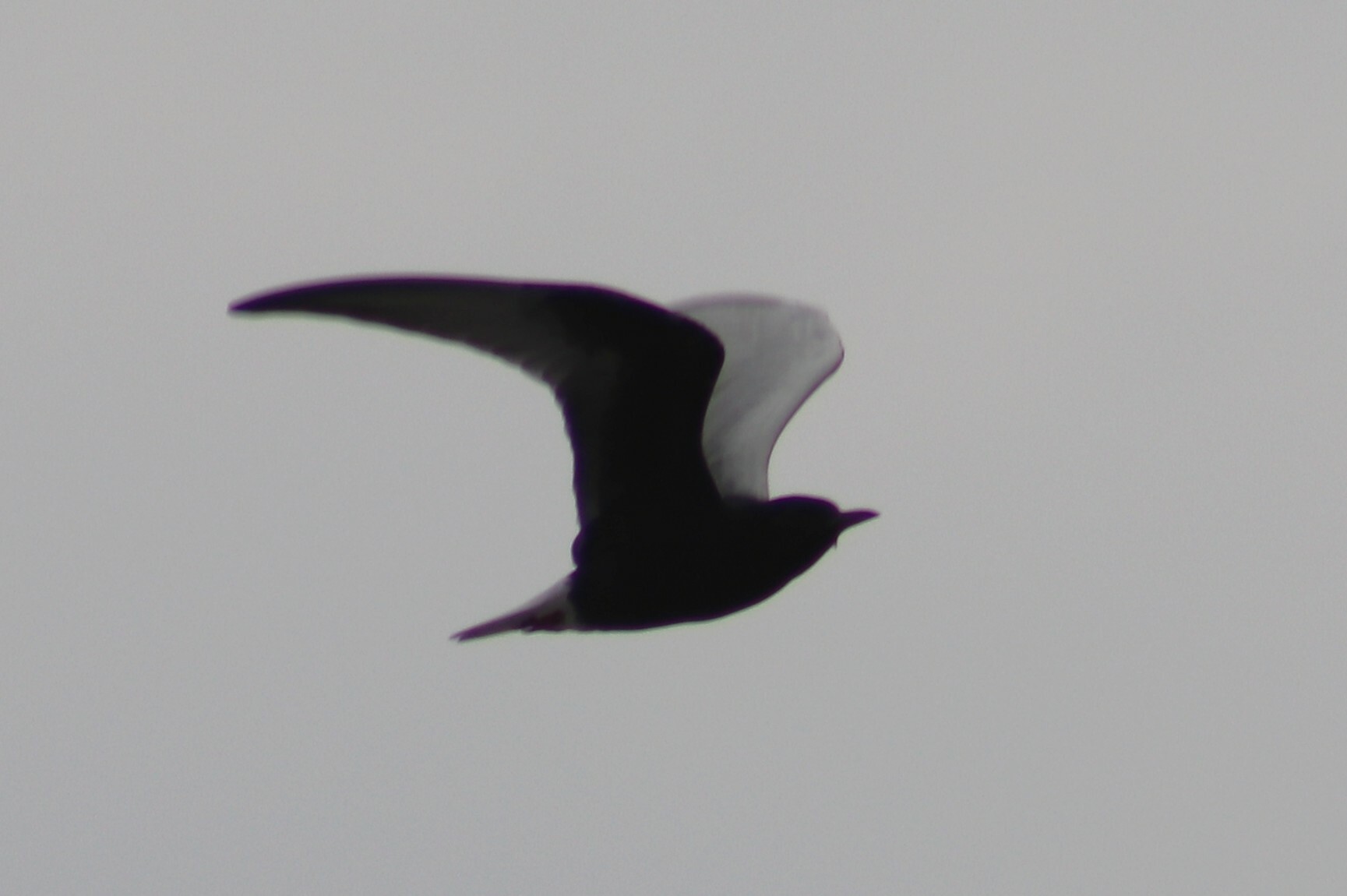
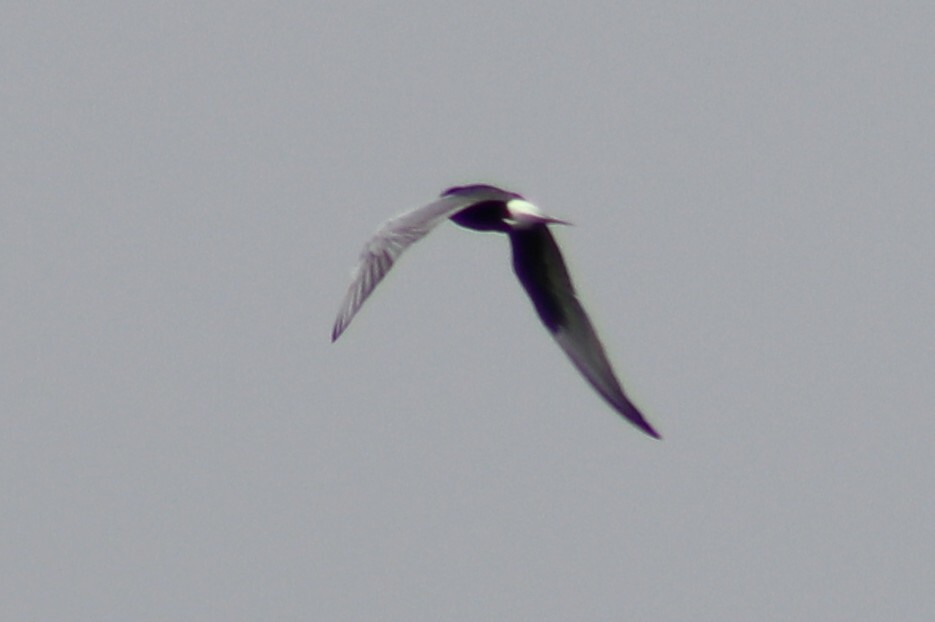
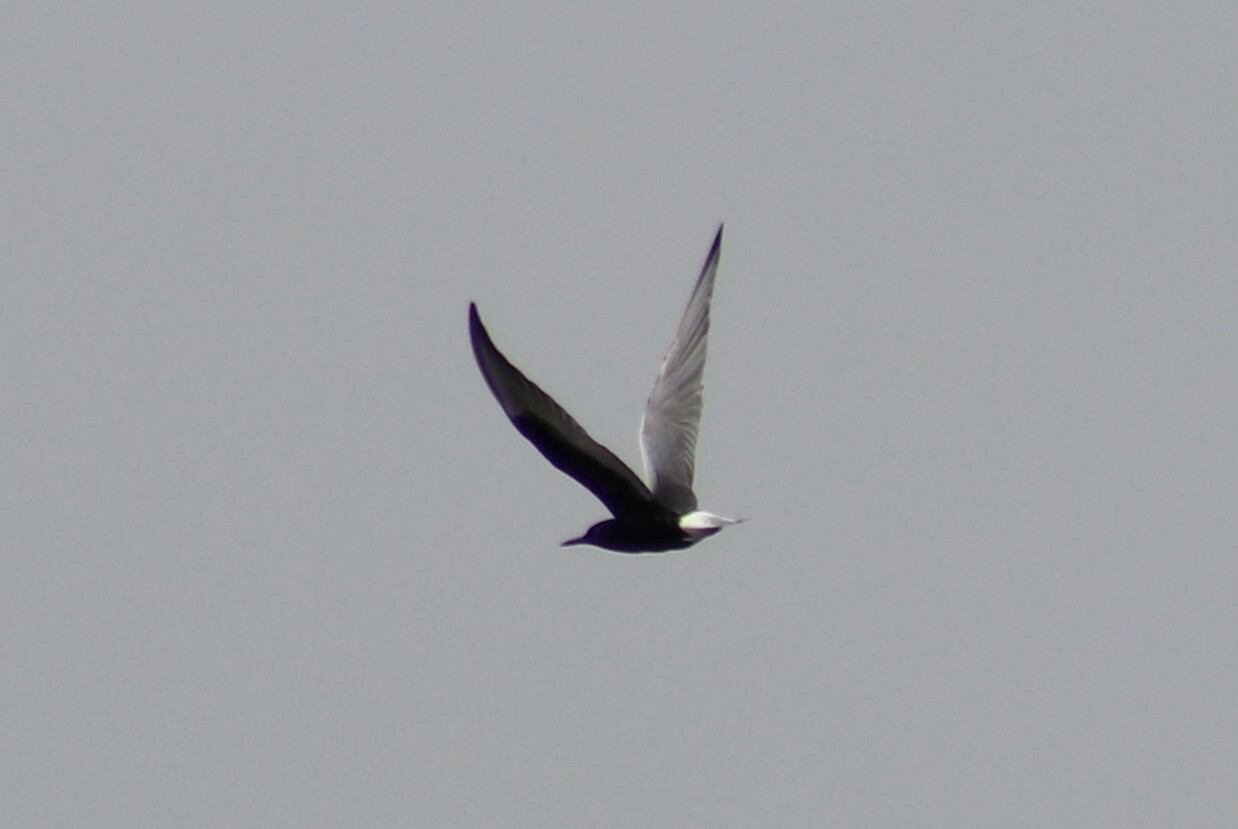
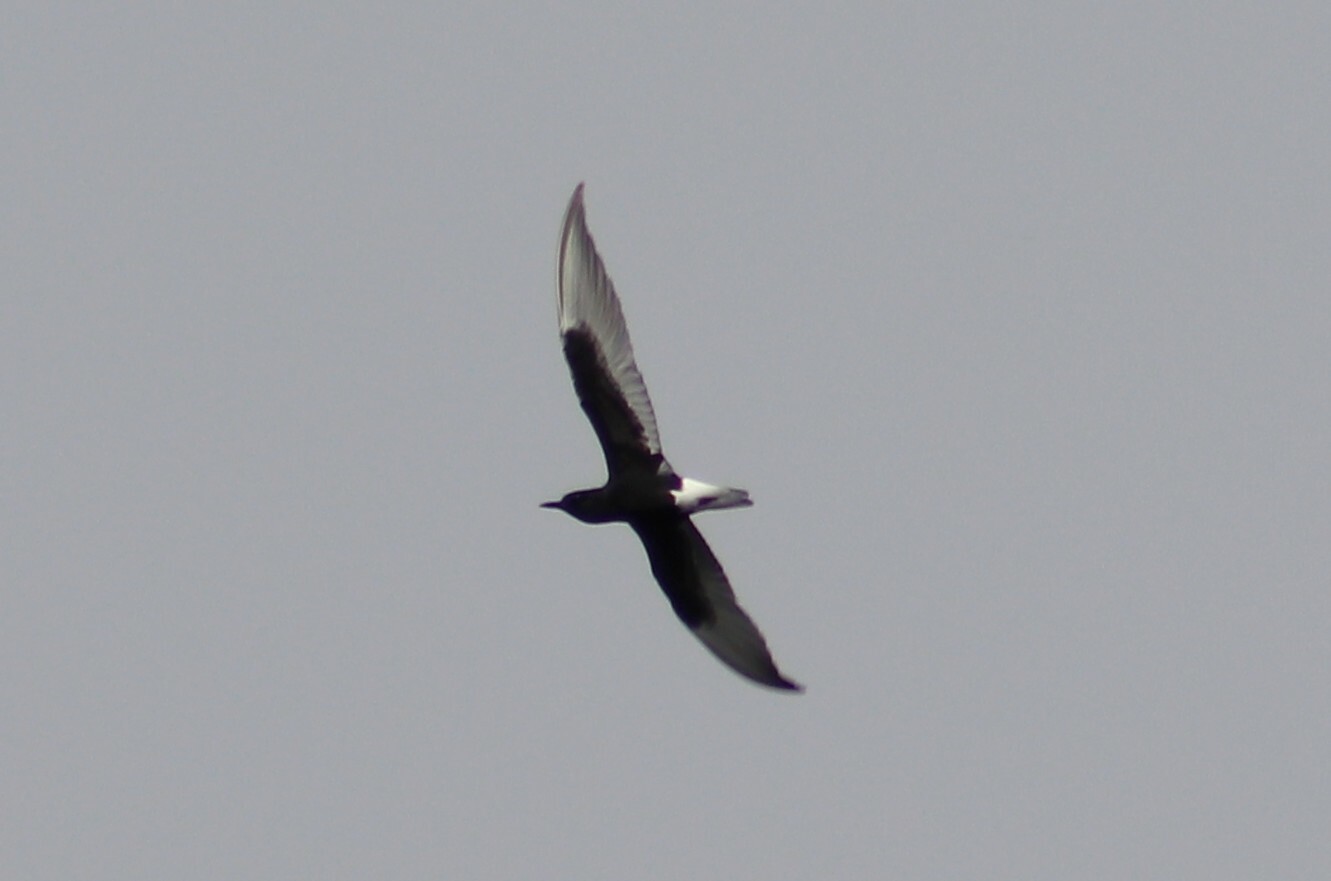
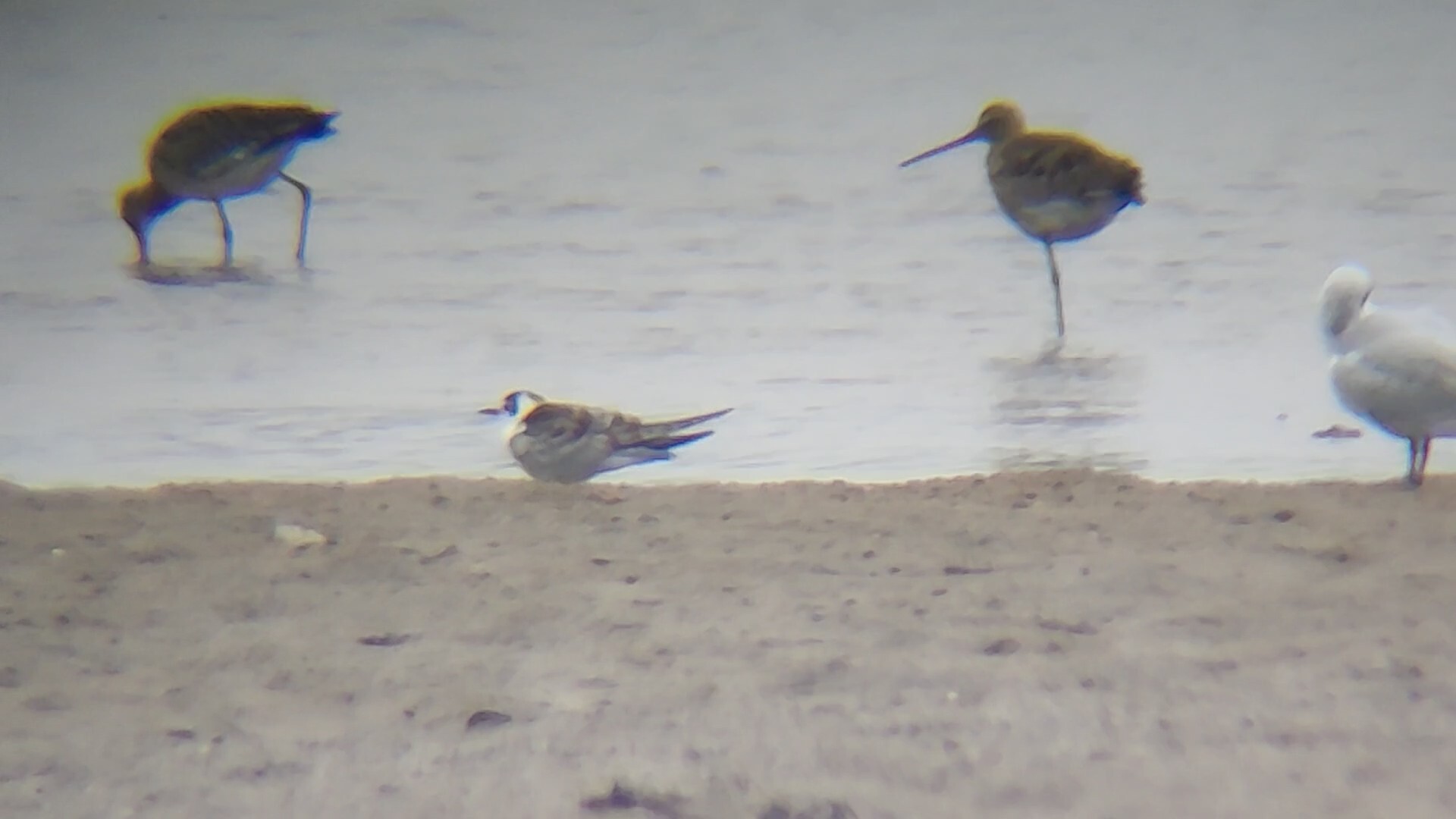
A compact tern measuring approximately 20-25 cm in length with a wingspan of 56-66 cm. Adults in breeding plumage display a striking pattern: deep black head and neck, very dark grey upperparts, and characteristically white wings with grayish inner panels bearing brown-tipped coverts. The legs are short and red, while the bill is black and notably stubby at 22-25 mm. The white rump and light grey tail create a contrasting lower profile. Non-breeding birds lose most of their black plumage, becoming white and pale grey overall with a dark brown saddle on the mantle. The face shows a yellowish tinge, and a distinctive dark triangular patch sits forward of the eye. Juveniles display a pale gray rump and dark brown mantle with narrow pale brown tips to the feathers.
Identification
The extensive white in the wings immediately distinguishes this species from the black tern, which shows dark wings in all plumages. In flight, the white underwing-coverts contrast sharply with dark flight feathers. The square-tailed appearance and pale gray rump separate it from other marsh terns. Hybrid individuals with black tern have been recorded, showing mixed characters such as a dark mantle combined with dark breast-side patches. The broad white collar and white forehead in non-breeding plumage are distinctive field marks. Compared to the whiskered tern, this species is smaller and shows less extensive black in basic plumage.
Distribution & Habitat
Breeds across freshwater marshes from southeastern Europe through Central Asia to the Russian Far East. Habitat consists of shallow lakes, flooded grasslands, and marsh edges where it nests on floating vegetation or the ground near water. The winter range extends across sub-Saharan Africa, southern Asia, and Australia, with birds dispersing widely depending on water conditions. It is a scarce but regular vagrant to North America, primarily along the Atlantic coast with fewer records from the Pacific coast and Great Lakes region. South American records exist from Argentina, Brazil, Uruguay, and Colombia, representing extreme vagrancy events.
Behavior & Ecology
Feeds primarily on insects and small fish, typically foraging by gliding slowly over water surfaces to pick prey or by catching flying insects in the air. Unlike diving terns, it rarely enters the water. The wingbeats are shallow and relaxed, giving a characteristic floating appearance. Nests colonially in marshes, constructing simple platforms of reed stems and vegetation on floating mats or exposed ground. Clutch size is 2-4 eggs. During migration, birds gather in loose flocks at productive wetlands before dispersing to wintering areas. The species is not particularly vocal, but gives typical tern-like calls including harsh notes when disturbed from the nest.
Conservation
The species is protected under the Agreement on the Conservation of African-Eurasian Migratory Waterbirds (AEWA). While the global population appears stable, wetland degradation and drainage for agriculture pose ongoing threats across its range. Conservation efforts focus on protecting key breeding and stopover sites throughout the migration corridor. Climate change effects on freshwater habitats in both breeding and wintering areas represent emerging concerns for long-term population trends.
Culture
The species has no significant cultural or folklore traditions documented. Its alternative name 'white-winged black tern' remains in popular use in the United Kingdom alongside the formal 'white-winged tern' designation. The scientific genus name derives from Ancient Greek, meaning 'swallow-like,' referring to the graceful flight characteristics typical of marsh terns.
Source: Wikipedia · CC BY-SA 3.0
Taxonomy
- Order
- Charadriiformes
- Family
- Laridae
- Genus
- Chlidonias
- eBird Code
- whwter
Distribution
breeds inland south-central and eastern Europe eastward to north-central Siberia and northeastern China; winters Africa eastward to Philippines, Australia (except western deserts and Tasmania), and New Zealand
Vocalizations
Data Sources
Species description from Wikipedia, licensed under CC BY-SA 3.0.
Bird images and sounds sourced from GBIF, contributed by citizen scientists worldwide under Creative Commons licenses.
Taxonomy data from AviList 2025.