Common Ringed Plover
Charadrius hiaticula
剑鸻
Introduction
The common ringed plover (Charadrius hiaticula) is a medium-sized shorebird with a widespread distribution across the Northern Hemisphere. During the breeding season, it occupies coastal and arctic habitats including open beaches, tundra, and gravel flats across northern Eurosiberia and Arctic Canada. In winter, it occurs on mudflats, sandy beaches, and coastal grasslands from western Europe south to Africa. During migration, the species utilizes both coastal and inland freshwater habitats. When disturbed, it flies with stiff, fast wingbeats. Some populations have declined due to habitat loss and disturbance at breeding sites.
Description
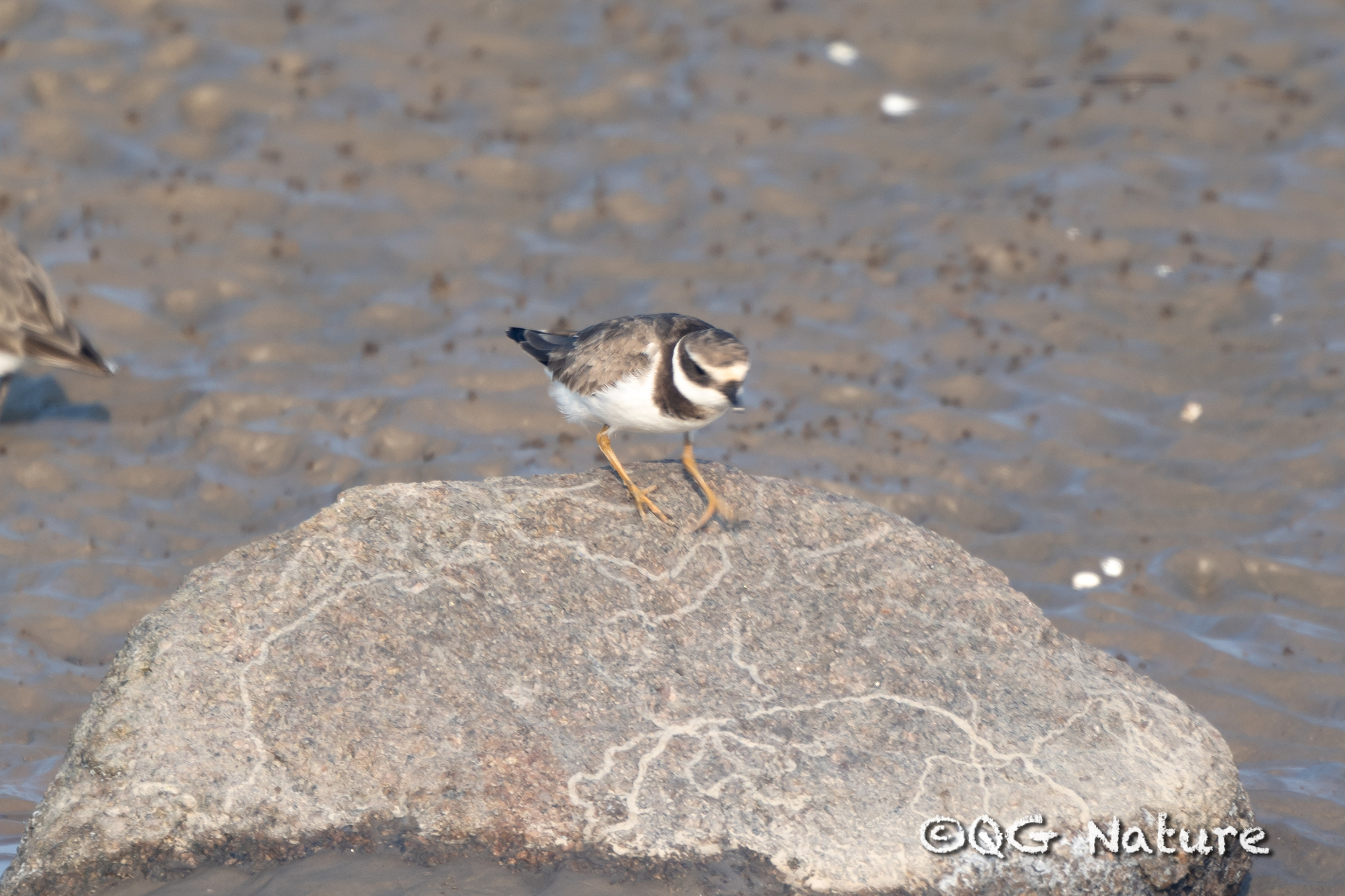
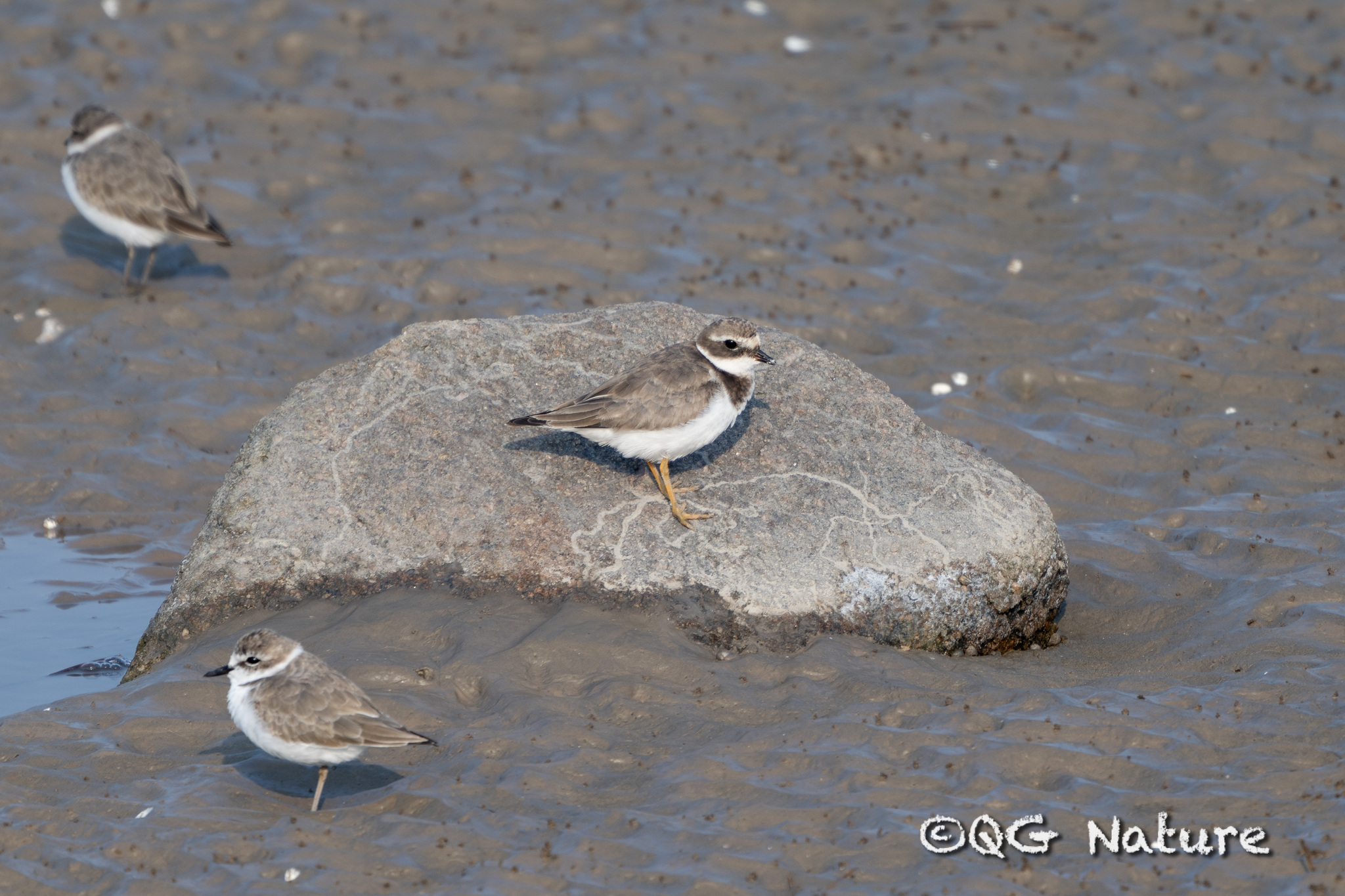
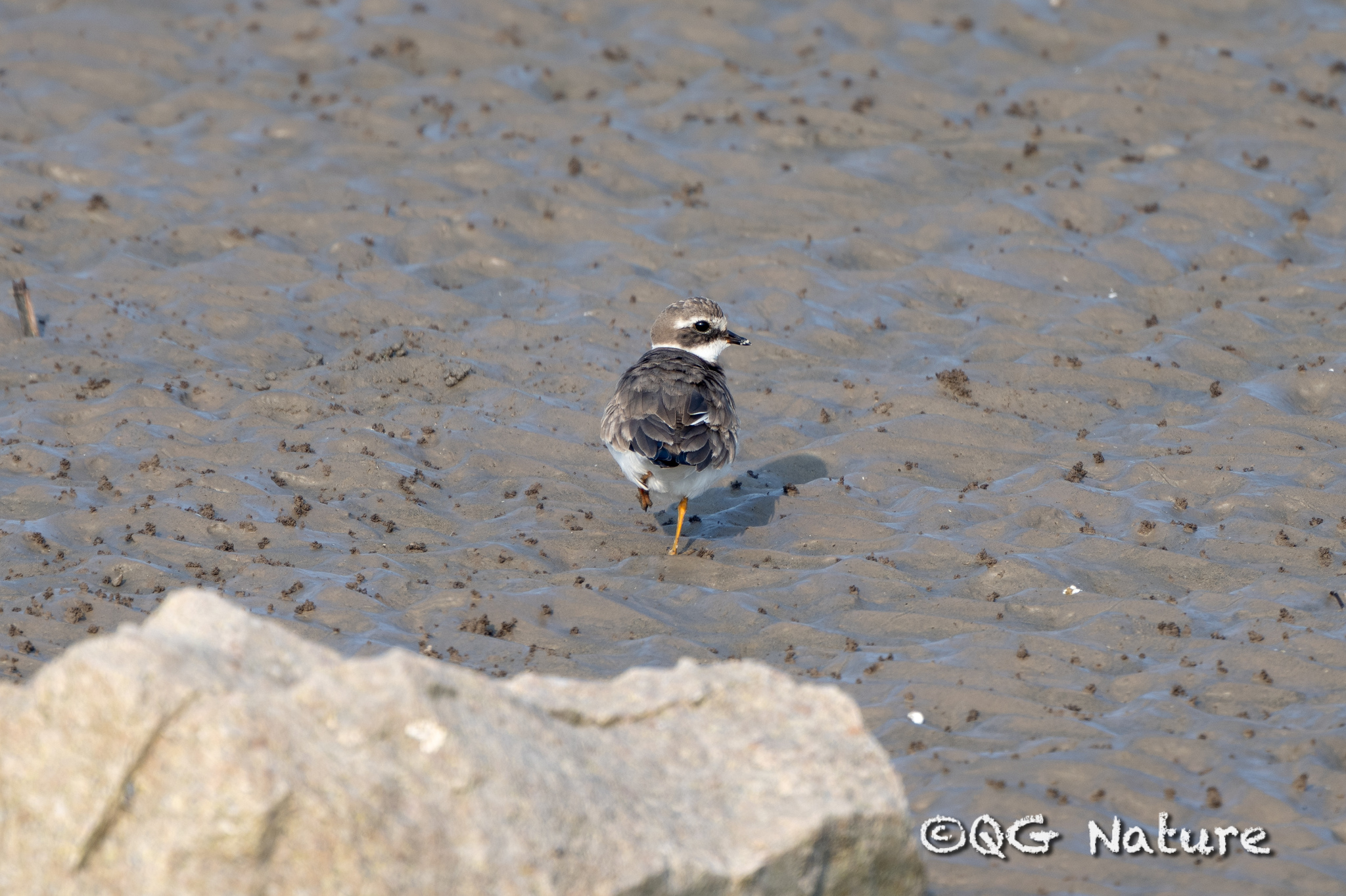
This is a compact plover measuring 17-19.5 cm in length with a wingspan of 35-41 cm. The upperparts are grey-brown, contrasting with a clean white belly and breast. The most striking feature is the single black breast band across the white breast. The head pattern is distinctive: a brown cap, white forehead, and bold black mask extending through the eye area. The bill is short and bicolored, orange at the base with a black tip. Legs are bright orange. In flight, the wings show a faint wingbar. Juveniles are noticeably duller overall, often with an incomplete breast band, a darker bill, and yellowish-grey legs that lack the bright orange of adults.
Identification
The most reliable identification features are the black breast band combined with the orange legs and the black eye mask. It closely resembles the semipalmated plover, but that species is slightly smaller with all three toes webbed rather than just the outer two, and it has a narrower breast band. The little ringed plover is smaller and differs in having yellow legs, a different head pattern, and a prominent yellow eye-ring that the common ringed plover lacks. The combination of orange legs, single breast band, and black face mask through the eye is diagnostic among similar plovers in the field.
Distribution & Habitat
This species breeds across northern Eurosiberia from Iceland and Britain east to Siberia, as well as in Arctic northeast Canada and Greenland. Northern populations migrate south to winter along coasts from western Europe through Africa to South Africa, while some British and northern French populations are resident year-round. Breeding habitat consists of open ground on beaches, coastal flats, and cold uplands with sparse vegetation, typically in areas with little plant cover where nests can be placed on the ground in shallow scrapes.
Behavior & Ecology
Common ringed plovers become sexually mature at one year and breed in seasonal monogamous pairs, sometimes maintaining bonds across years. They are solitary nesters, highly territorial during the breeding season. The nest is a simple scrape lined with pebbles and vegetation, containing clutches of 3-4 eggs laid at 1-3 day intervals. Both parents share incubation for 21-27 days, and both care for the precocial chicks, which can feed themselves but remain under parental protection until fledging at about 24 days. When predators threaten the nest, adults perform broken-wing displays to draw intruders away. Foraging occurs on beaches and tidal flats by sight, feeding on insects, crustaceans, and worms both day and night, sometimes using foot-trembling to flush prey from substrate.
Conservation
The common ringed plover is classified as Least Concern due to its extremely large range and substantial global population. The species is listed under the Agreement on the Conservation of African-Eurasian Migratory Waterbirds, which provides protection across its migratory range. While overall populations appear stable, local declines have occurred in areas experiencing habitat degradation, increased human disturbance at nesting sites, and coastal development. Conservation efforts focus on protecting key breeding and wintering habitats from human encroachment and managing predator populations at sensitive sites.
Culture
The common ringed plover holds limited documented cultural significance in folklore or tradition, as it is primarily valued in modern contexts by birdwatchers and conservationists rather than in cultural or mythological narratives. Its scientific name, Charadrius hiaticula, derives from late Medieval Latin for plover, reflecting historical interest in these coastal birds among European scholars.
Source: Wikipedia · CC BY-SA 3.0
Taxonomy
- Order
- Charadriiformes
- Family
- Charadriidae
- Genus
- Charadrius
- eBird Code
- corplo
Vocalizations
Subspecies (3)
-
Charadrius hiaticula hiaticula
breeds British Isles and western France to southern Norway, southern Sweden, and the Baltic States; winters to western Europe and northwestern Africa
-
Charadrius hiaticula psammodromus
breeds high arctic of Ellesmere and Baffin islands, northeastern Canada, Greenland, Iceland, Faroe Islands and Svalbard; winters to southern Europe and western Africa
-
Charadrius hiaticula tundrae
breeds Arctic Ocean coasts from northern Scandinavia to Chukotskiy Peninsula and St. Lawrence Island (northern Bering Sea; erratic); winters southern Europe, Africa, and southwestern Asia
Data Sources
Species description from Wikipedia, licensed under CC BY-SA 3.0.
Bird images and sounds sourced from GBIF, contributed by citizen scientists worldwide under Creative Commons licenses.
Taxonomy data from AviList 2025.