Common Emerald Dove
Chalcophaps indica
绿翅金鸠
Introduction
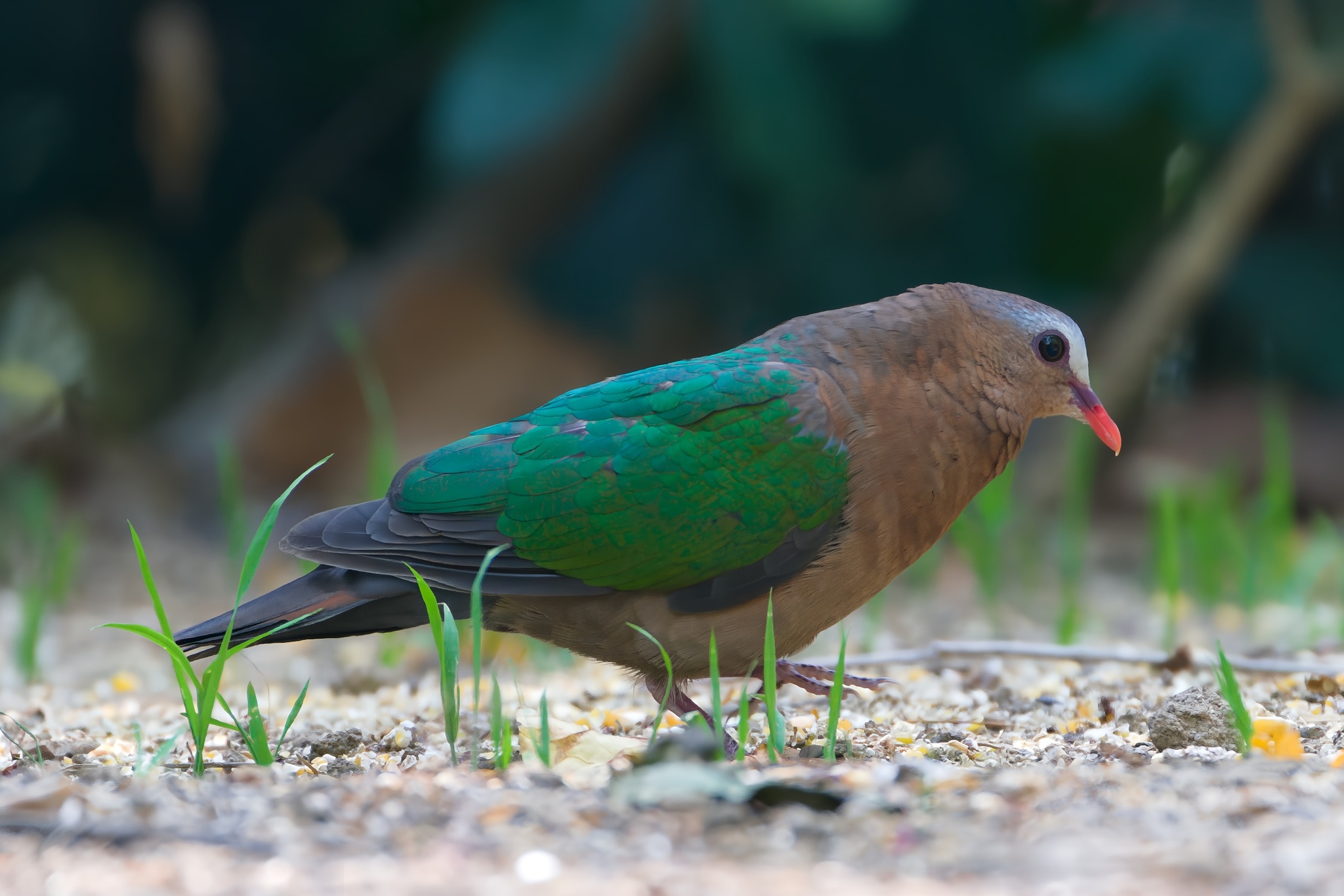
The common emerald dove (Chalcophaps indica) is a ground-dwelling pigeon found across South and Southeast Asia, from the Indian subcontinent to Southeast Asia. It inhabits dense forest understorey and forest floors throughout its range as a resident species. It is characterized by emerald-green wings and back, vinous-pink underparts, and black-and-white barring on the lower back. It has terrestrial habits, foraging on the forest floor and taking low, swift, twisting flight through the undergrowth when disturbed. Its call is a soft cooing.
Description
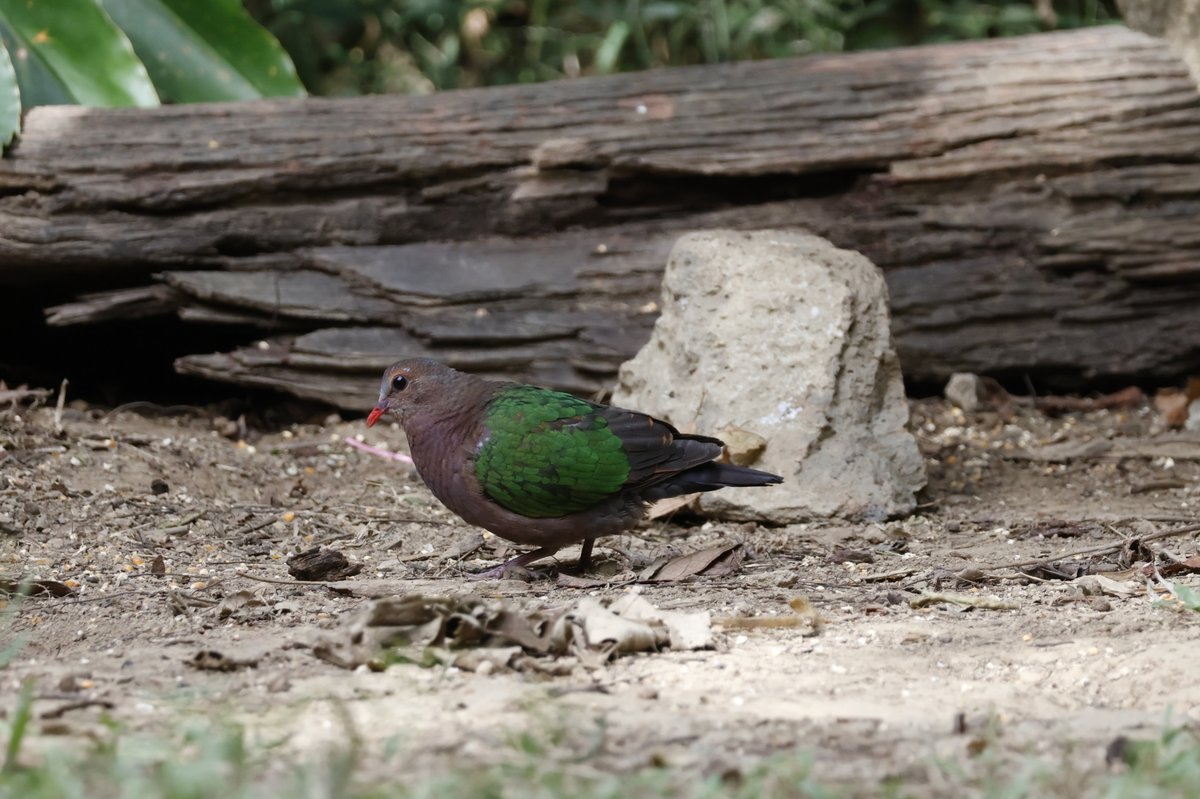
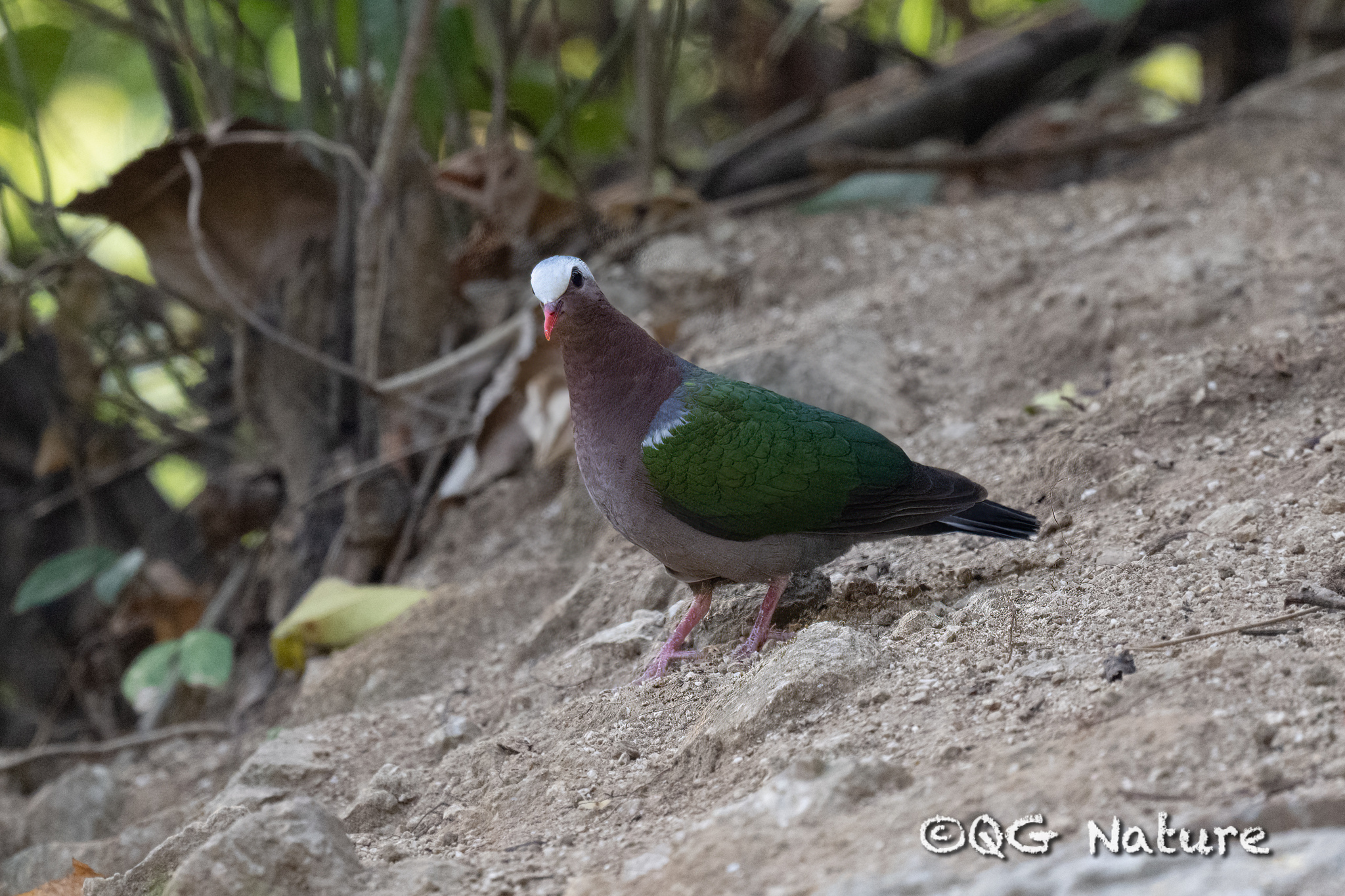
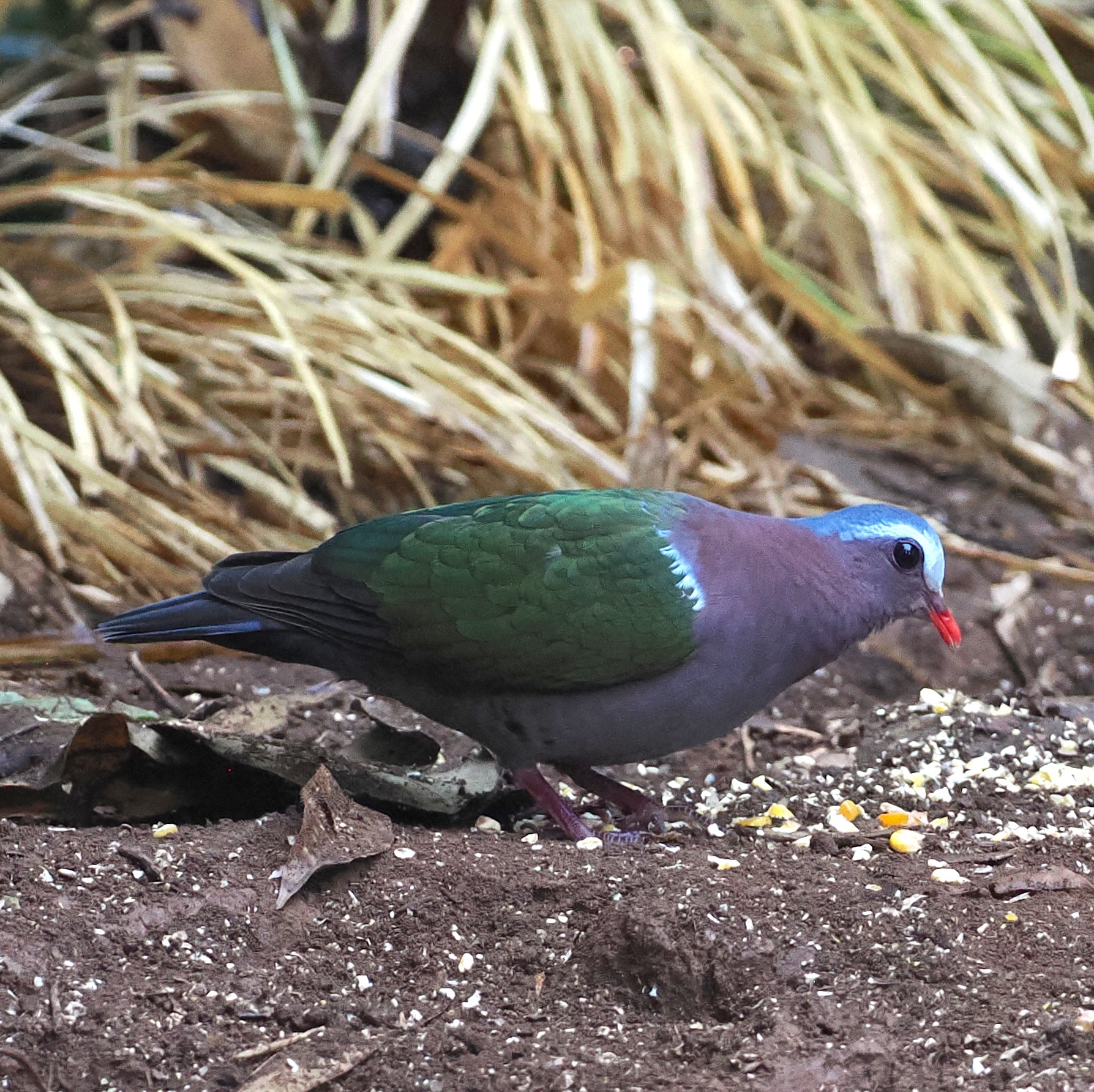
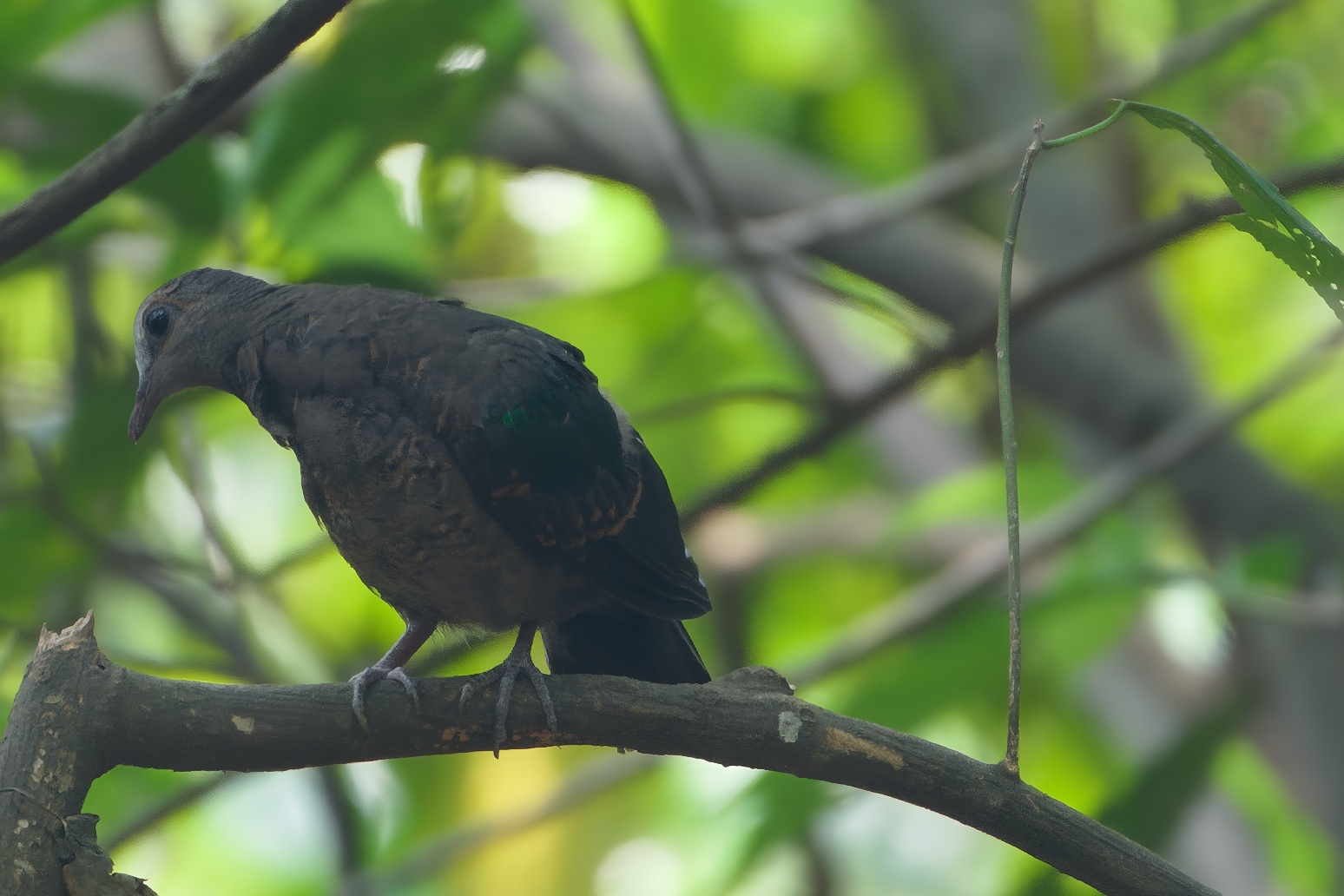
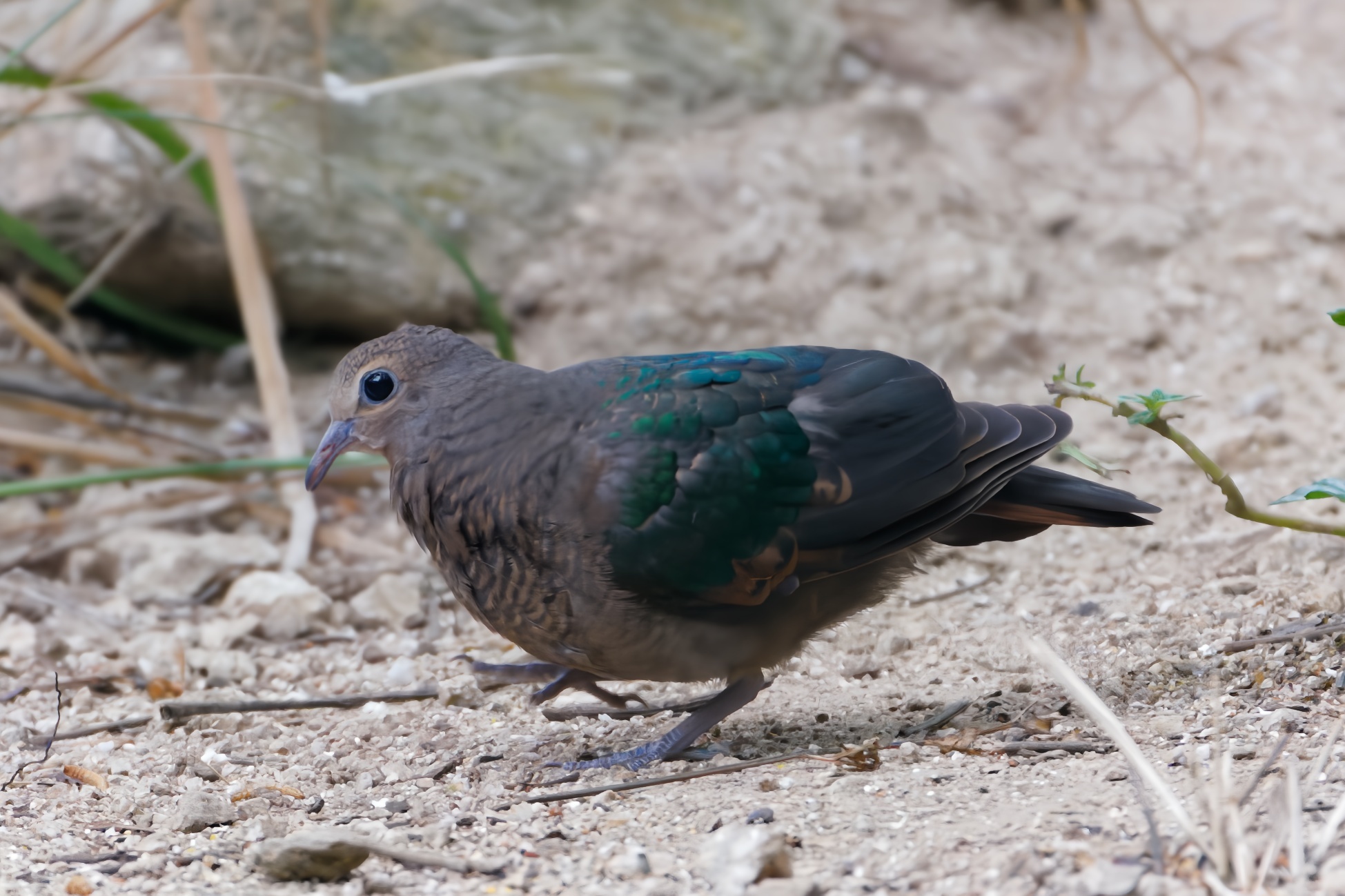
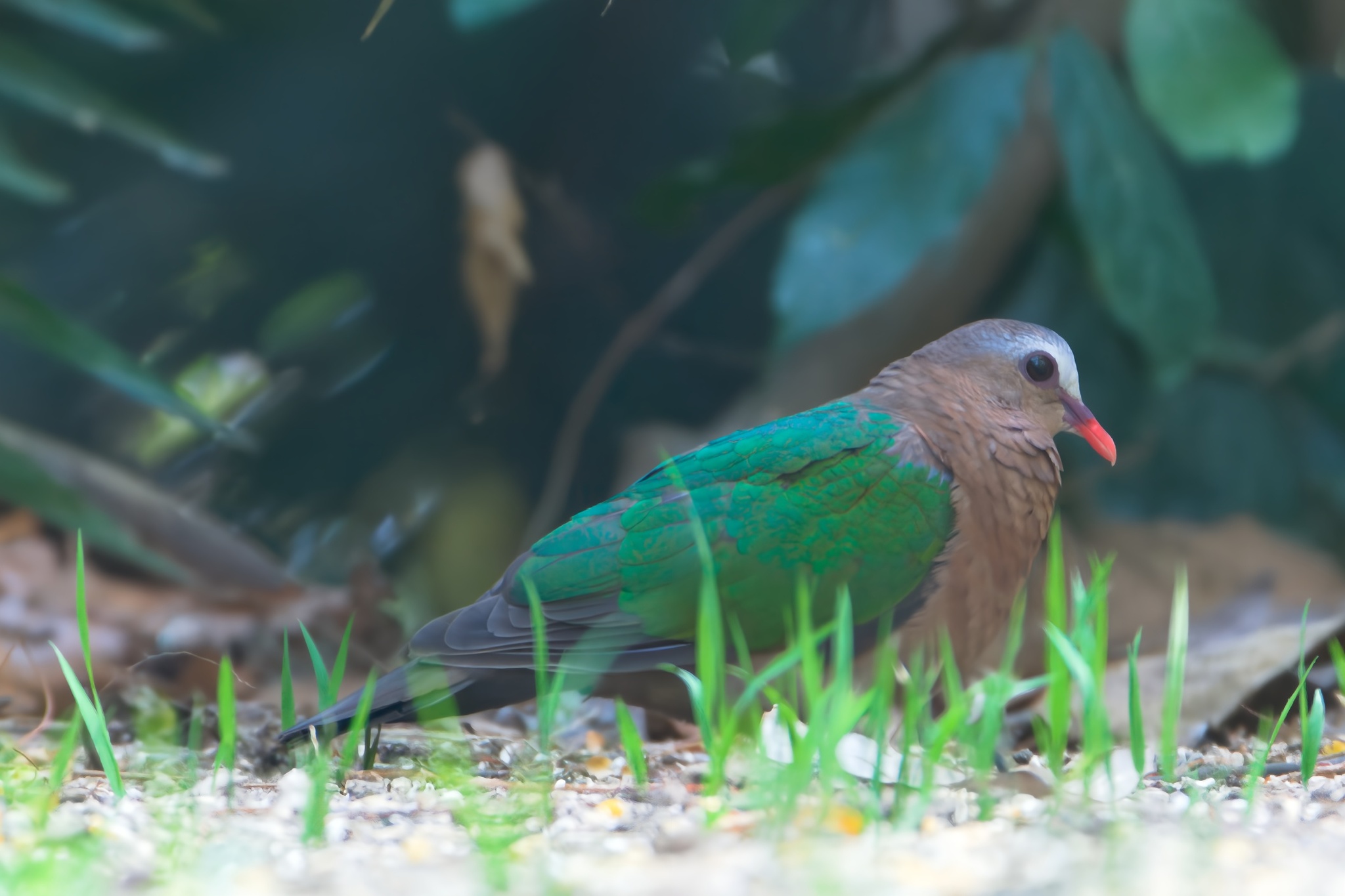
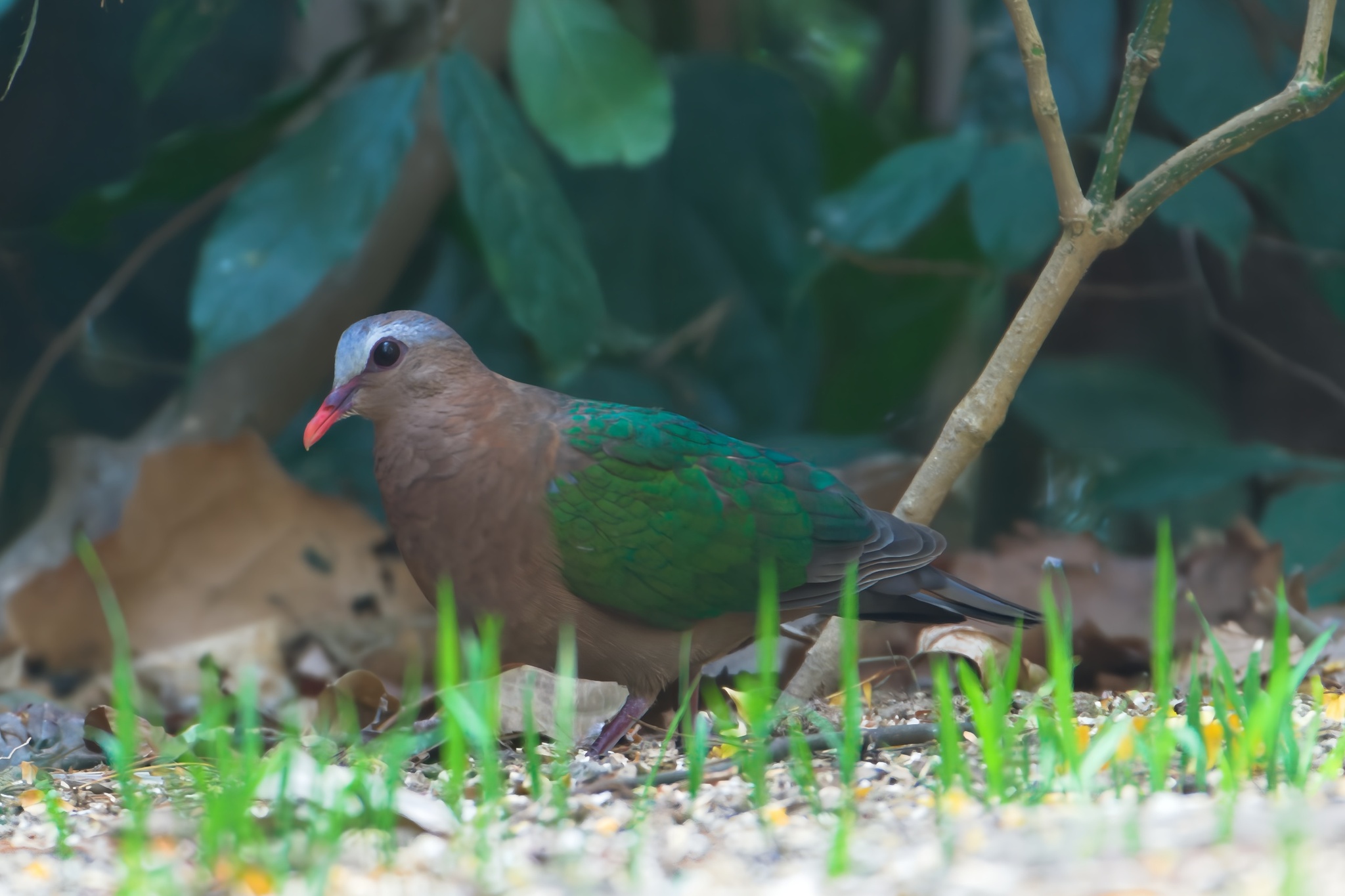
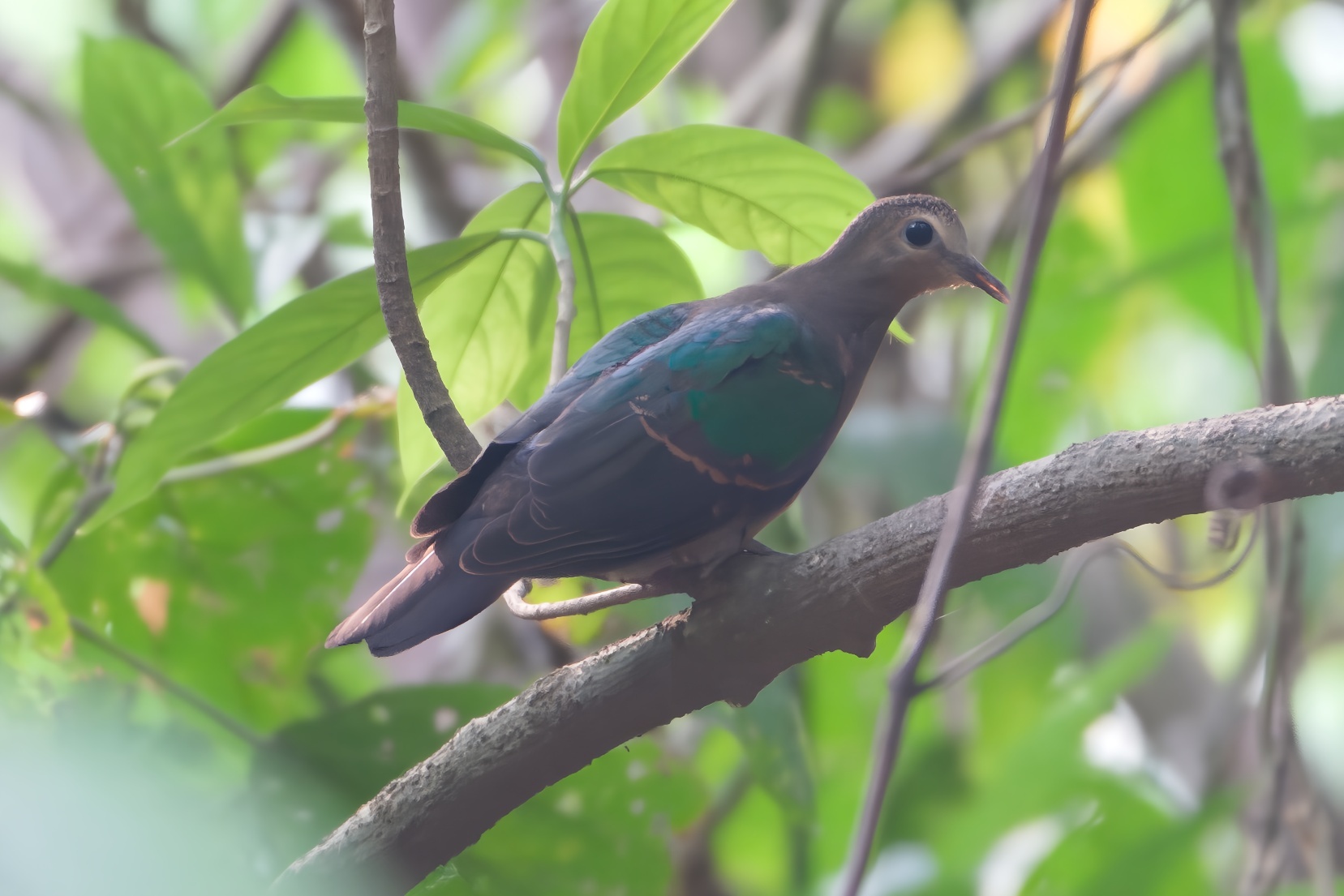
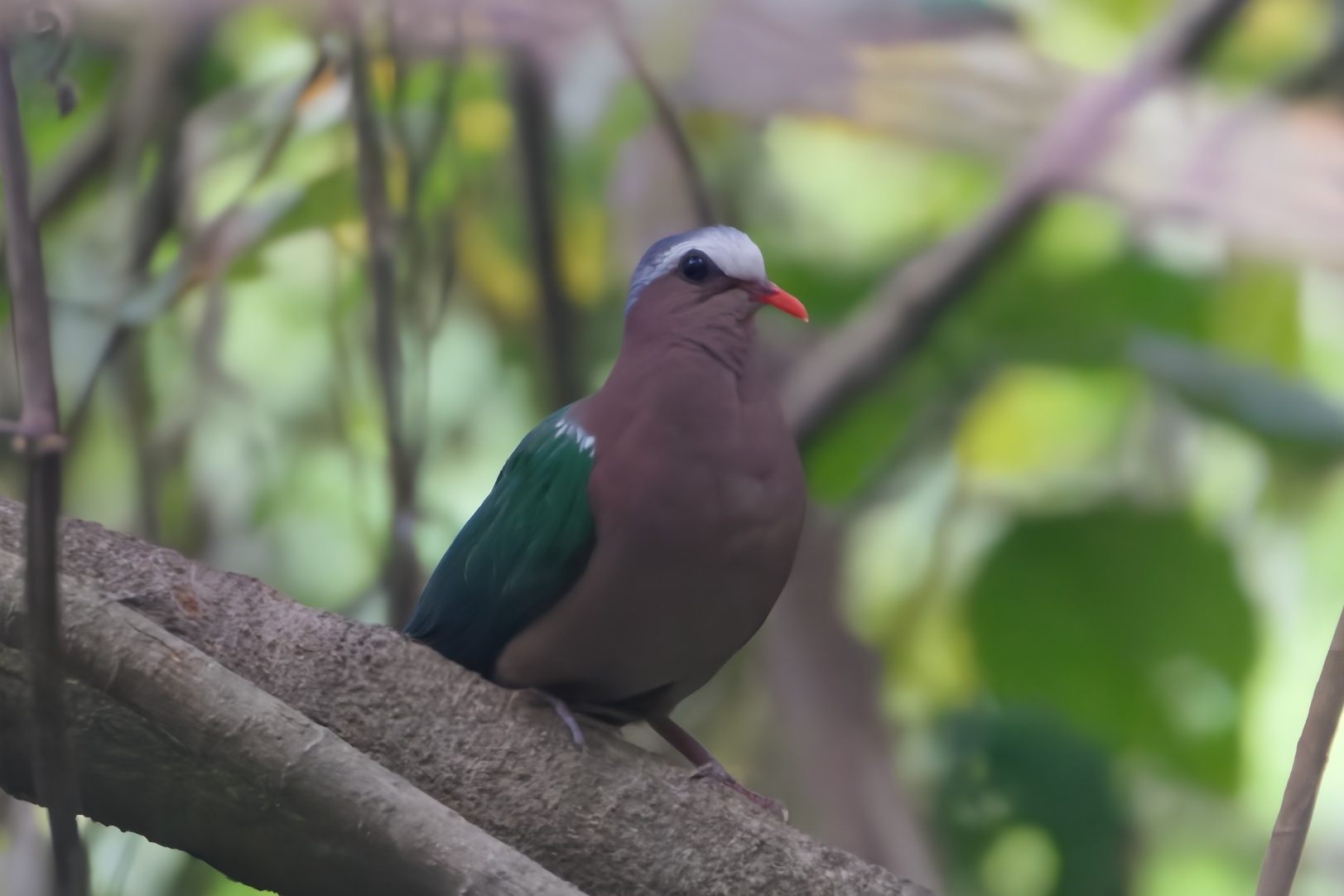
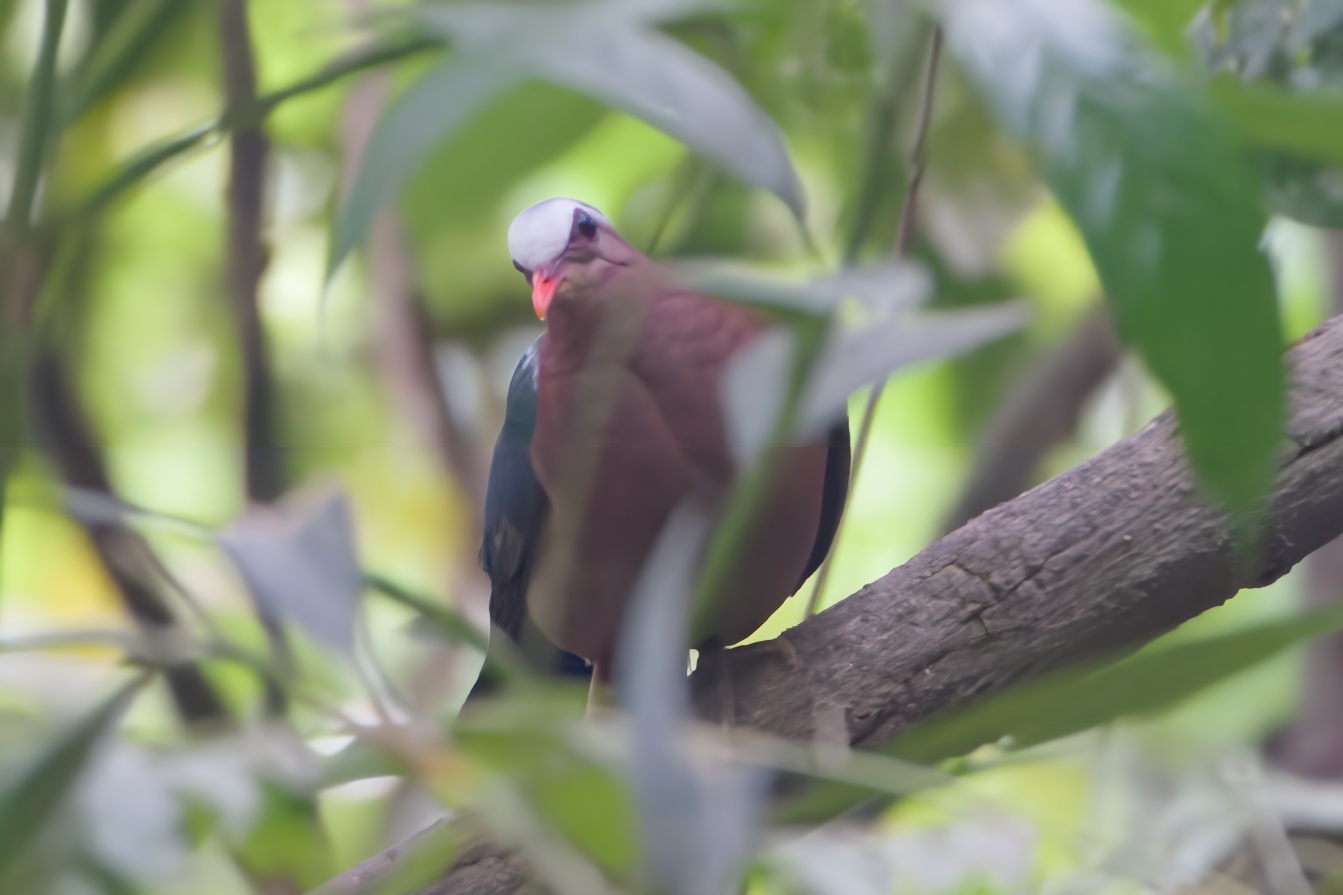
A compact, stocky pigeon measuring 23-27 cm in length, this species is immediately distinguished by its remarkably vivid upperparts. The mantle, back, and wing coverts display a brilliant emerald green that gleams in sunlight. The flight feathers and square-tipped tail are blackish, while the lower back features broad black and white bars visible in flight. The underparts show dark vinous pink on the head and breast, fading to greyish on the lower belly. The bill is a striking bright red, legs and feet are rufous, and eyes are dark brown. Sexual dimorphism is pronounced: males possess a grey crown and white patch on the shoulder edge, while females show a browner overall complexion with a grey shoulder marking. Immature birds resemble females but display brown scalloping on their plumage.
Identification
The combination of emerald-green upperparts, vinous-pink underparts, and bright red bill makes this species virtually unmistakable within its range. The broad black and white bars on the lower back are visible only in flight, providing a key identifier when the bird takes to the air. The contrasting grey crown of the male distinguishes it from the browner female. In dense habitat, the species is often detected first by its call before being seen. The slow, low flight with quick wingbeats and the habit of walking rather than flying when disturbed help distinguish it from similar doves in the same habitat.
Distribution & Habitat
This species has an extensive range across the tropical and subtropical regions of the Indian subcontinent and Southeast Asia, from India and Sri Lanka through mainland Southeast Asia to the Philippines and Indonesian archipelago. It occurs as far north as southern China and extends east to include islands off northern New Guinea. Six subspecies are recognized with geographic variations in size and plumage tone. As a resident species, it does not undertake long migrations but may make local movements in response to food availability. The species is common throughout most of its range and occurs across a variety of woodland habitats including tropical evergreen forests, mangroves, farmlands, and degraded forest edges.
Behavior & Ecology
Primarily terrestrial, this dove spends most of its time on the forest floor searching for fallen seeds and fruits, only ascending to trees for roosting and nesting. It occurs singly, in pairs, or small groups, with several birds maintaining territories around resource-rich areas. The flight is fast and direct, with characteristic pigeon wingbeats, and the bird excels at weaving through dense forest at low level. When disturbed, it typically walks away rather than immediately flying. The voice consists of a low, soft moaning cooing of six to seven notes that begins quietly and rises in volume, plus a nasal three-syllable hoo-hoo-hoon. During courtship, males perform a distinctive bobbing display while calling. The flimsy stick nest is constructed in a tree up to five meters high, where two cream-colored eggs are laid.
Conservation
IUCN Red List assessment not provided in source material.
Culture
This species holds official recognition as the state bird of Tamil Nadu in India, lending it cultural significance within that region. Throughout its extensive range, it is known by various vernacular names including green dove and green-winged pigeon, reflecting its distinctive plumage. The species has historical relevance in ornithological literature, having been described by George Edwards in the 18th century from a bird kept in England that originated in the East Indies. Carl Linnaeus later formally described the species, assigning it the binomial Columba indica, with the specific epithet indicating its connection to the Indian region as understood at the time.
Source: Wikipedia · CC BY-SA 3.0
Taxonomy
- Order
- Columbiformes
- Family
- Columbidae
- Genus
- Chalcophaps
- eBird Code
- emedov2
Vocalizations
Subspecies (6)
-
Chalcophaps indica augusta
Nicobar Islands
-
Chalcophaps indica indica
India to southeastern China, southward to Philippines, Indonesia, and Raja Ampat Islands (off western New Guinea)
-
Chalcophaps indica maxima
Andaman Islands
-
Chalcophaps indica minima
Numfor, Biak, and Mios Num (Cenderawasih Bay, off northwestern New Guinea)
-
Chalcophaps indica natalis
Christmas Island (east-central Indian Ocean)
-
Chalcophaps indica robinsoni
Sri Lanka
Data Sources
Species description from Wikipedia, licensed under CC BY-SA 3.0.
Bird images and sounds sourced from GBIF, contributed by citizen scientists worldwide under Creative Commons licenses.
Taxonomy data from AviList 2025.