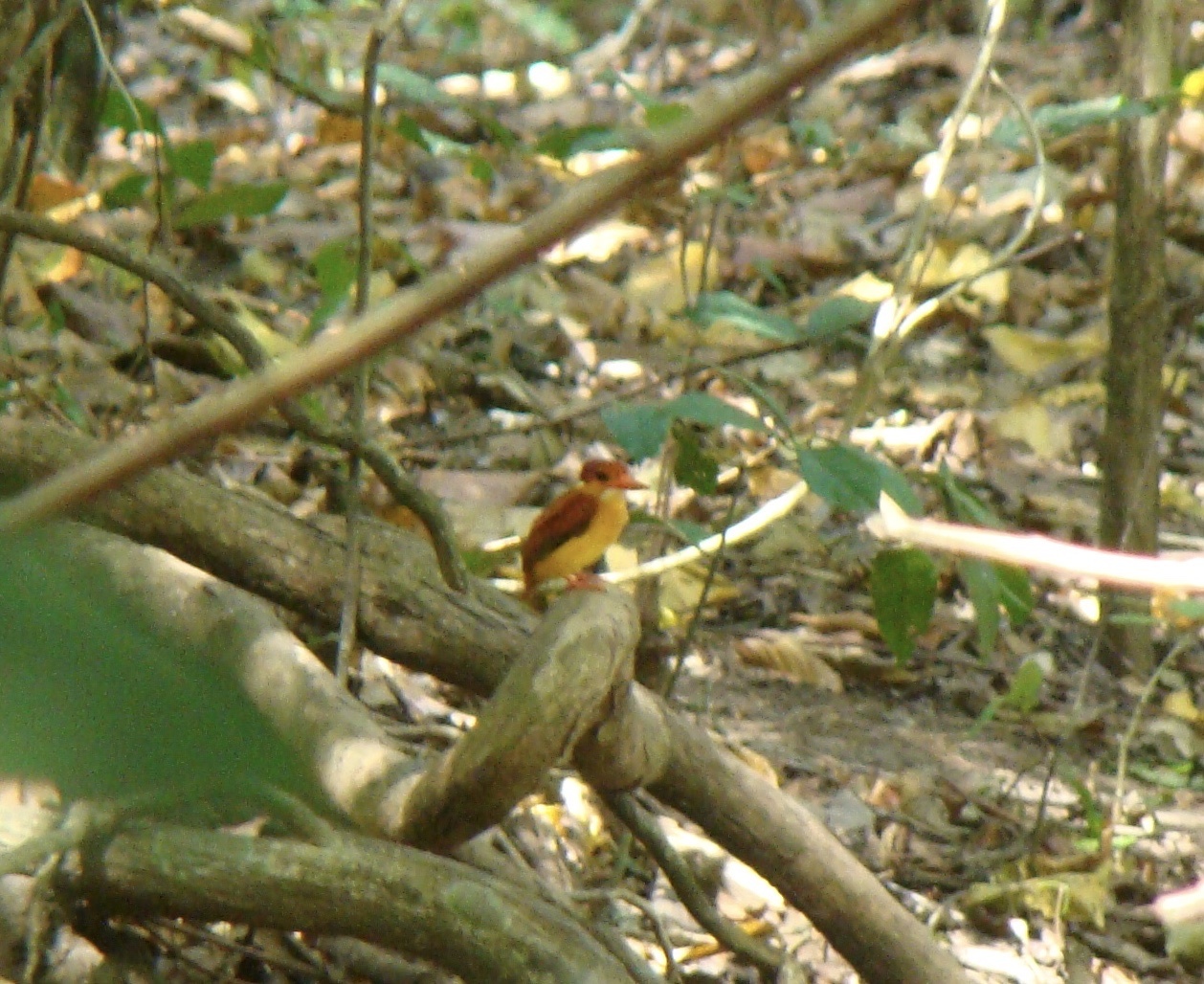
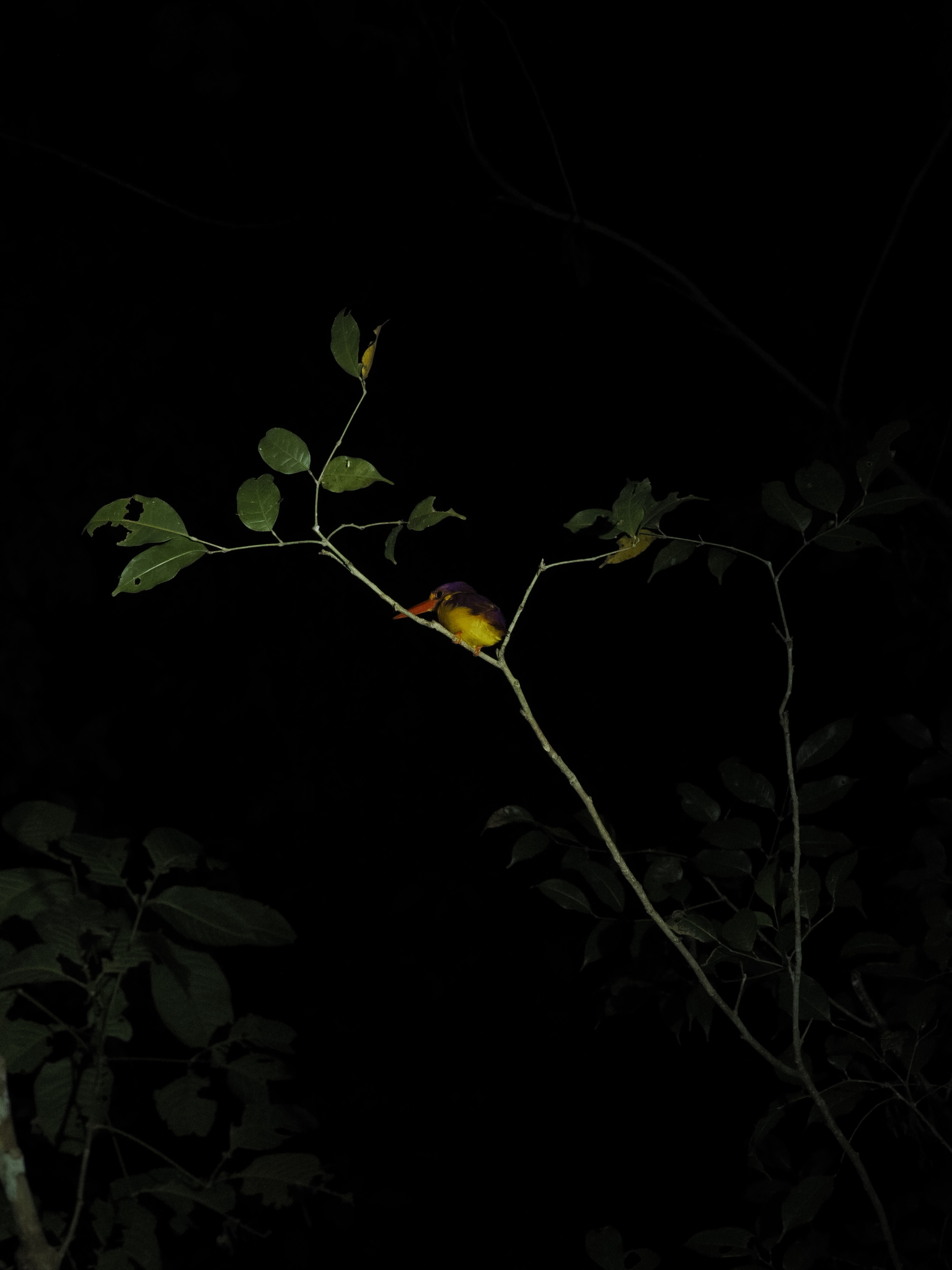
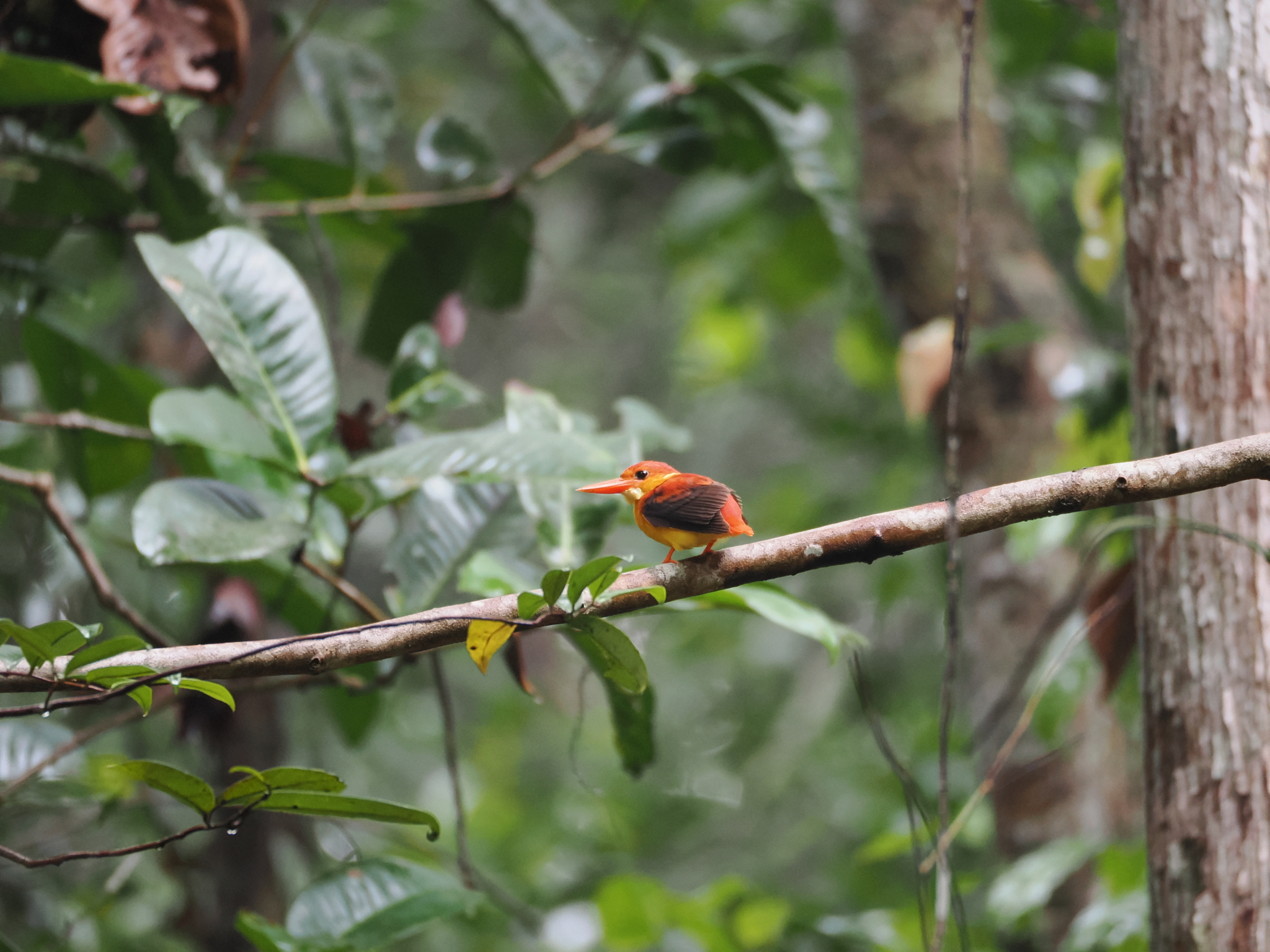
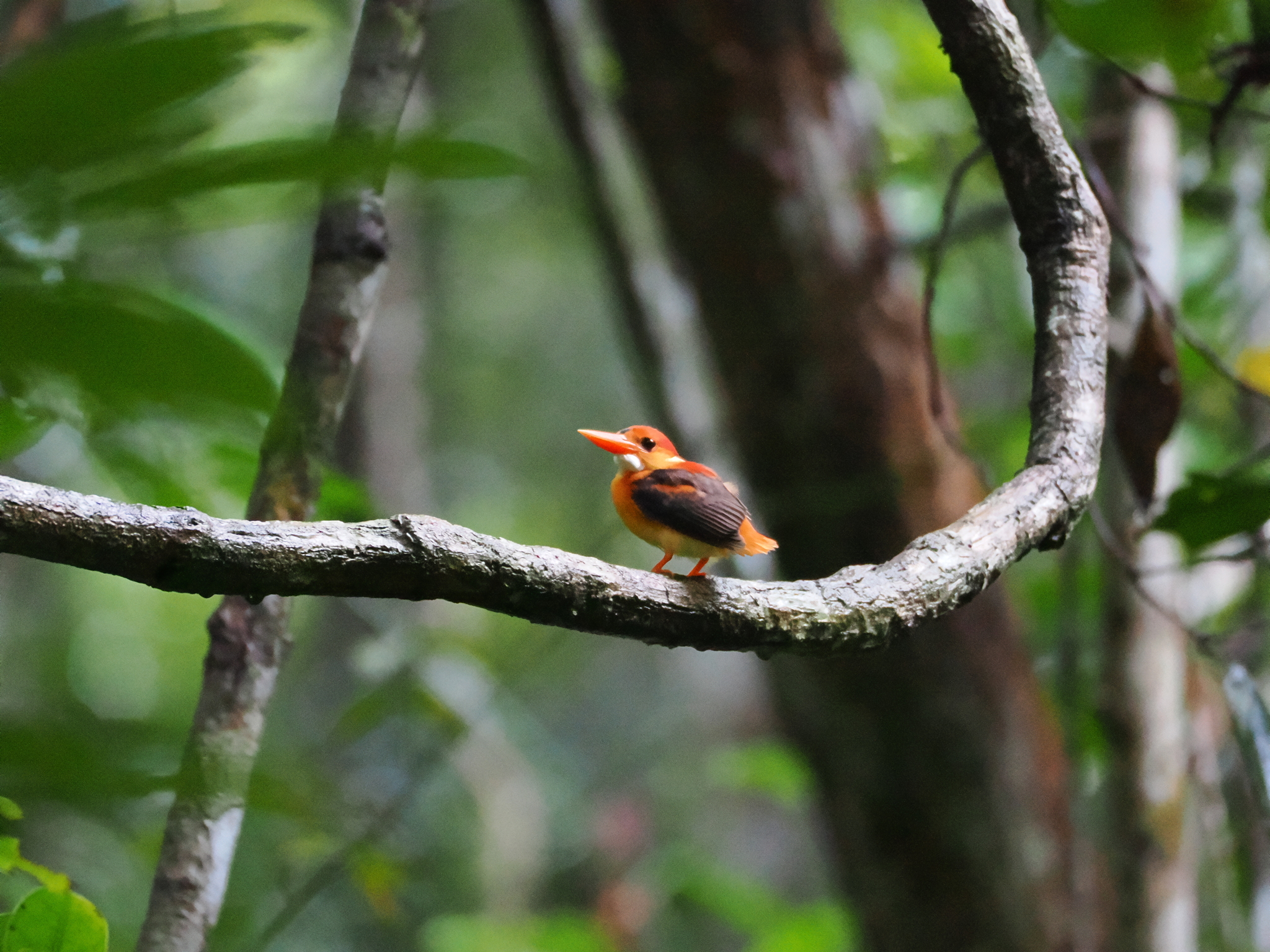
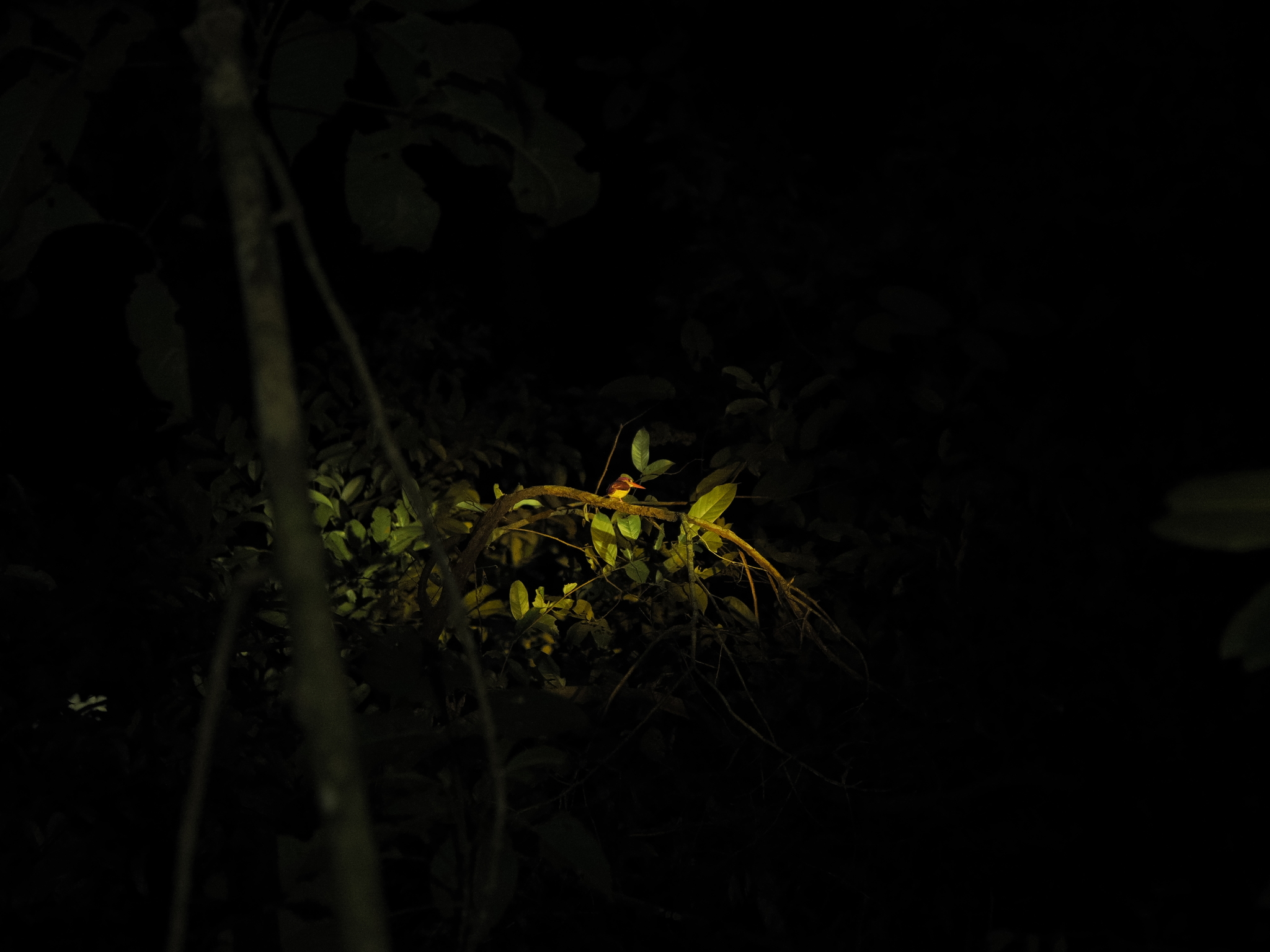
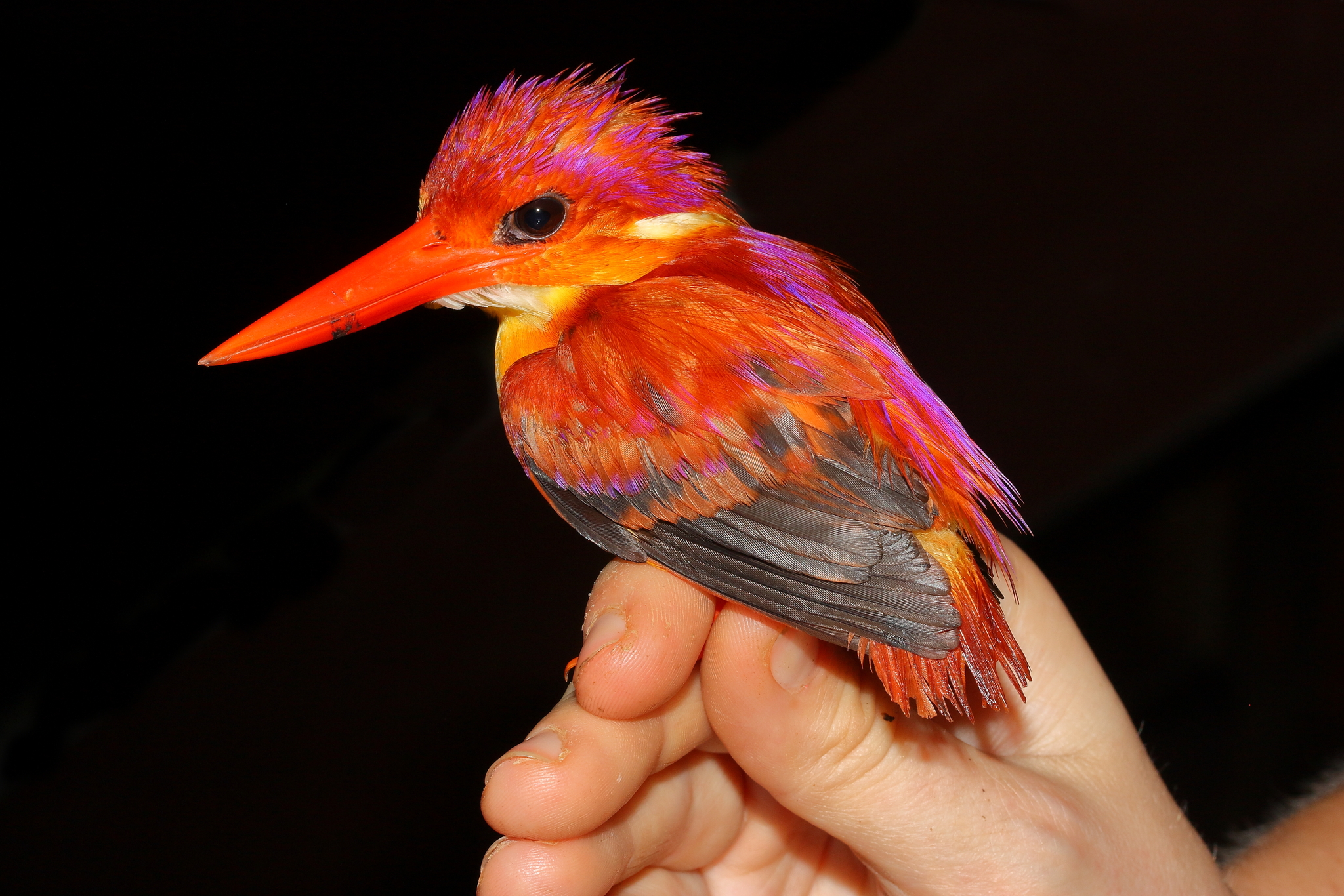
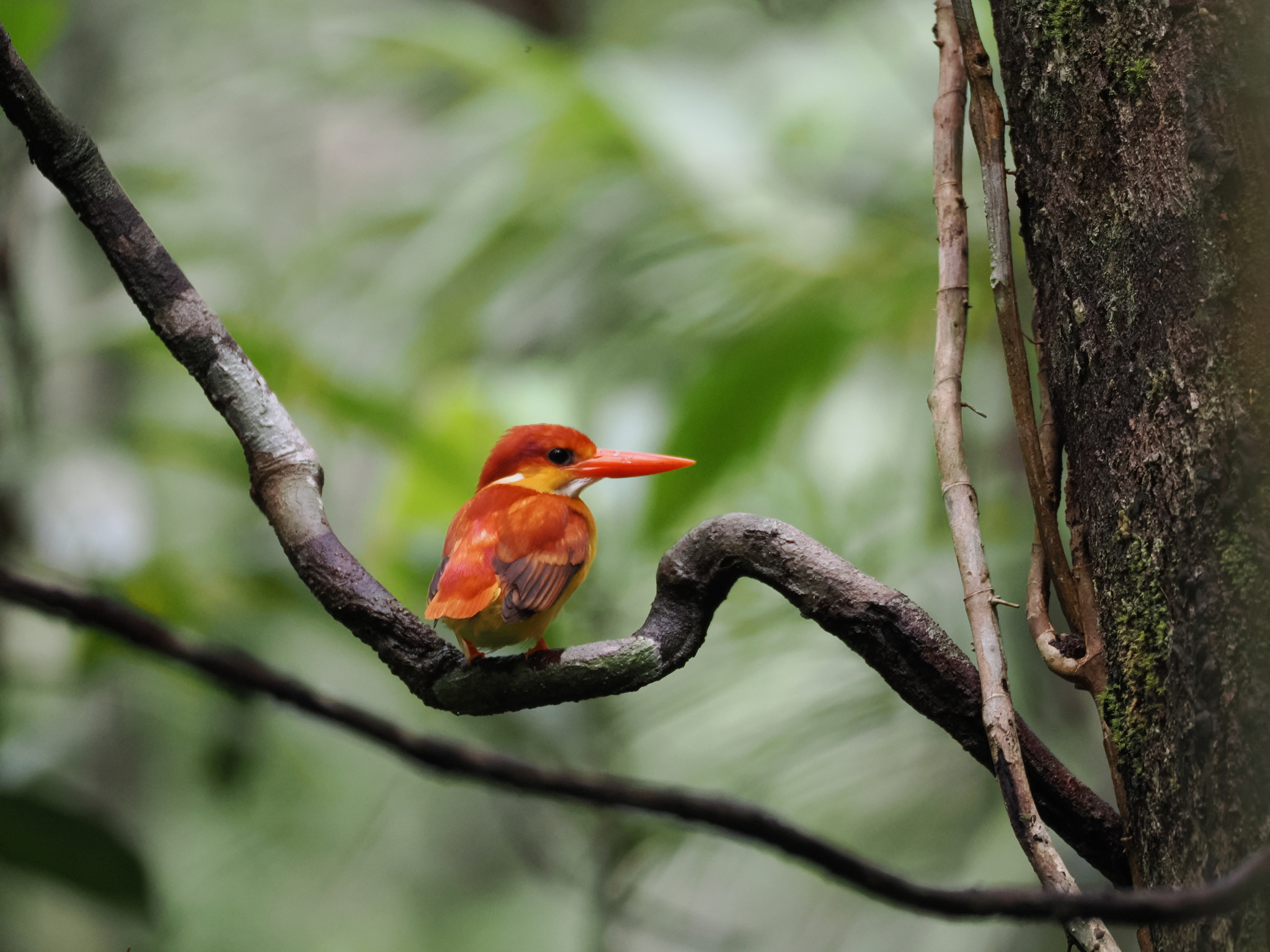
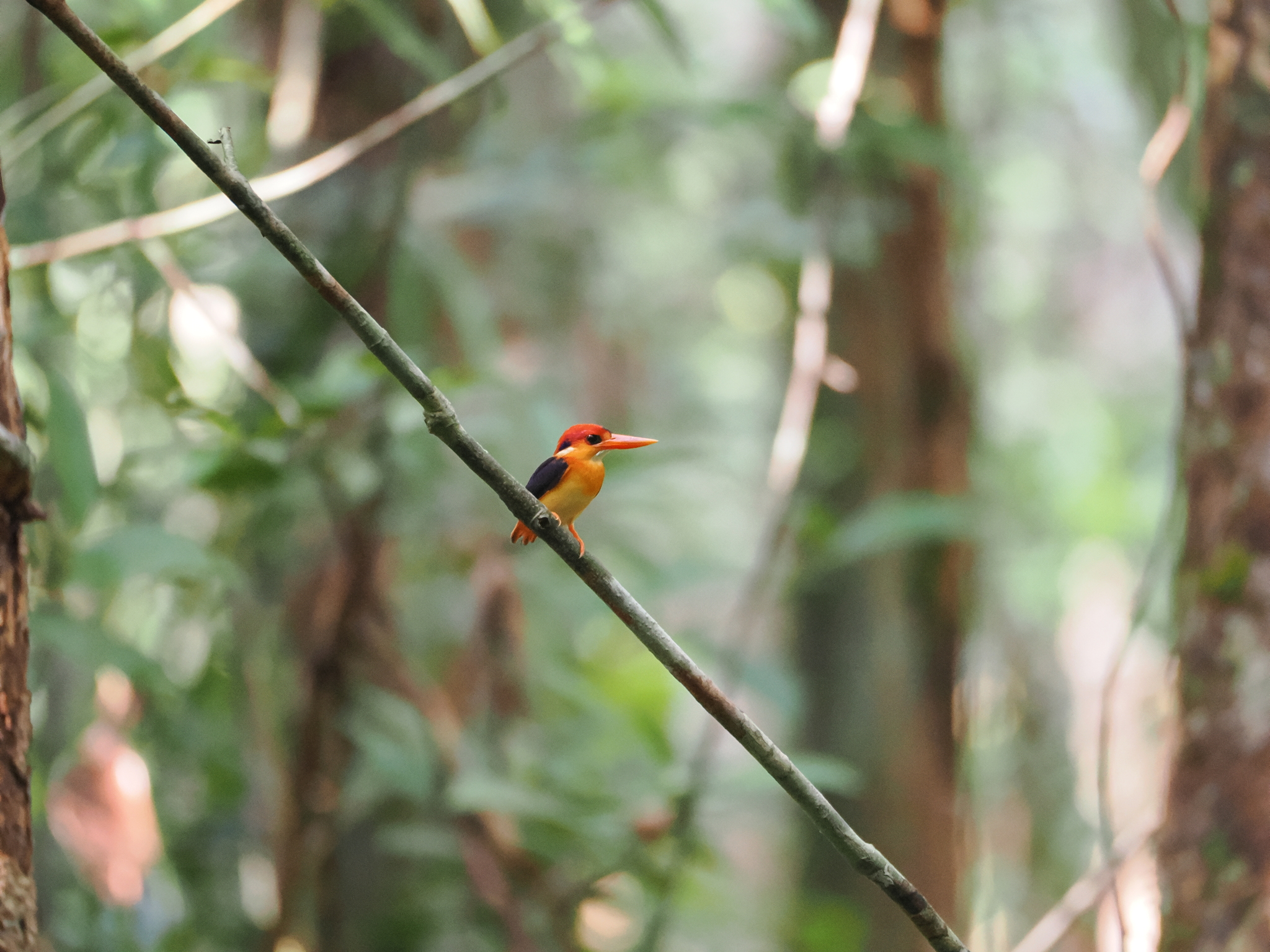
Black-backed Dwarf Kingfisher
Ceyx erithaca
三趾翠鸟
Introduction
The oriental dwarf kingfisher (Ceyx erithaca) is one of the smallest kingfisher species, with a body length of 12-14 cm. A partial migrant endemic to the Indian Subcontinent and Mainland Southeast Asia, it inhabits lowland forests up to 1,500 m elevation, typically occurring near streams, ponds, and slow-moving water. It feeds primarily on insects, spiders, worms, crabs, small fish, frogs, and lizards. It forages solitarily, perching 1-2 m above the ground and dropping to capture prey on the forest floor or in foliage. The species was once considered conspecific with the rufous-backed dwarf kingfisher (Ceyx rufidorsa), and together they were known as the oriental dwarf kingfisher.
Description
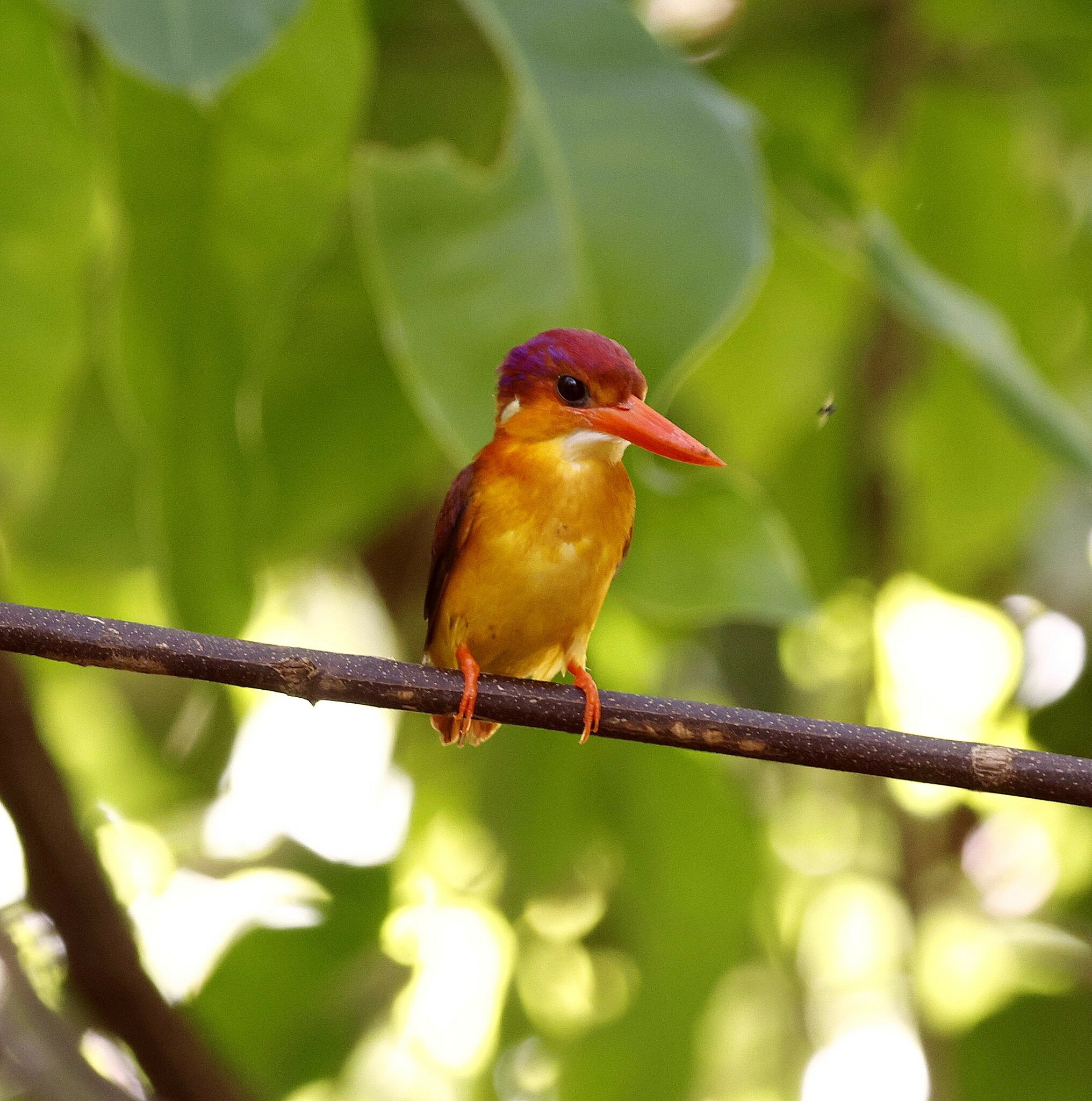
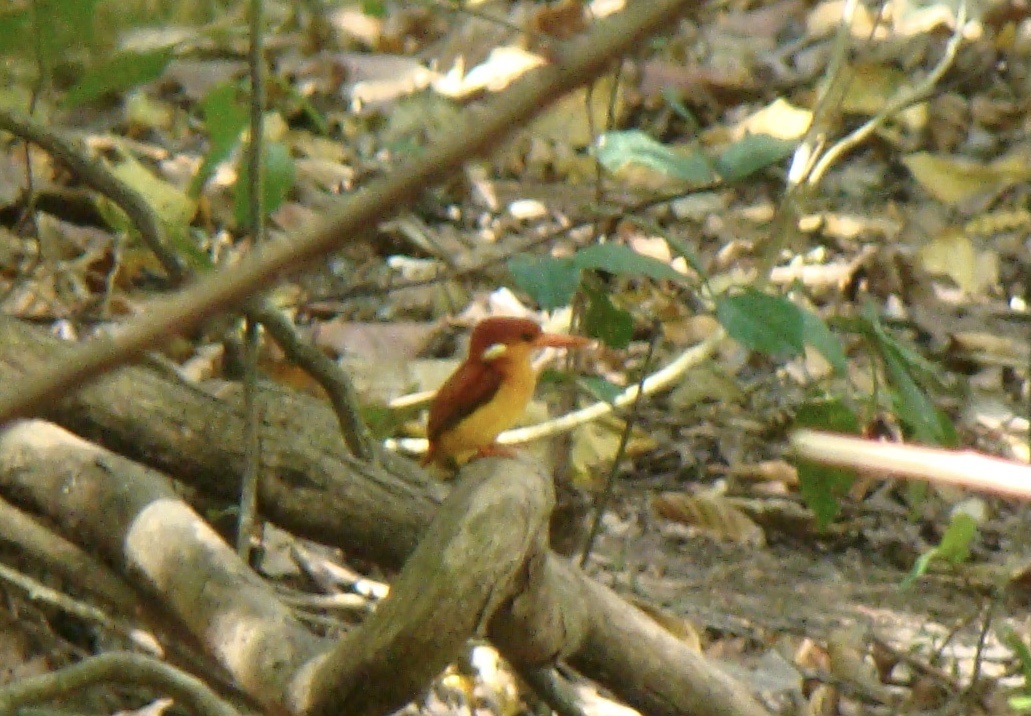
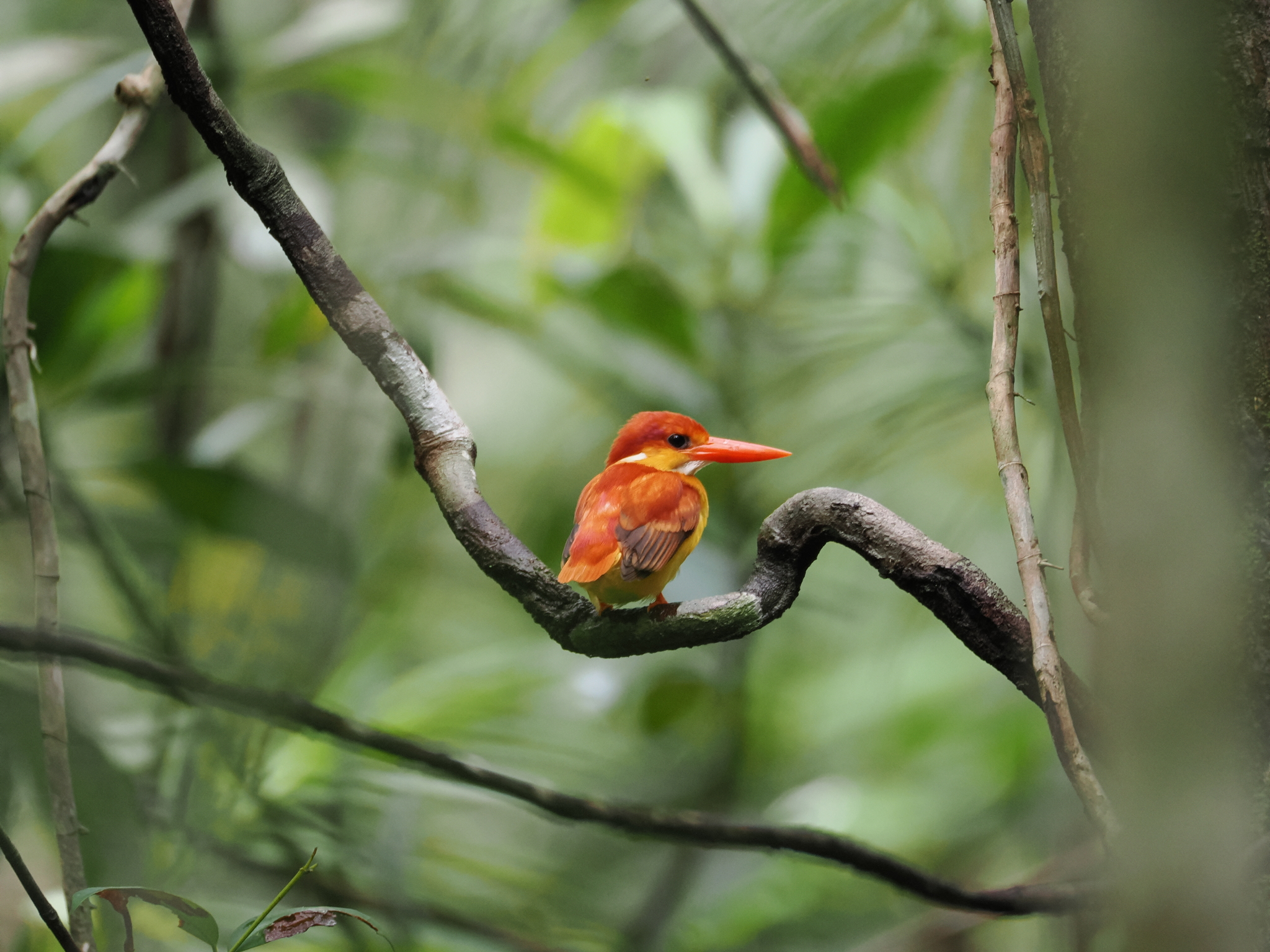
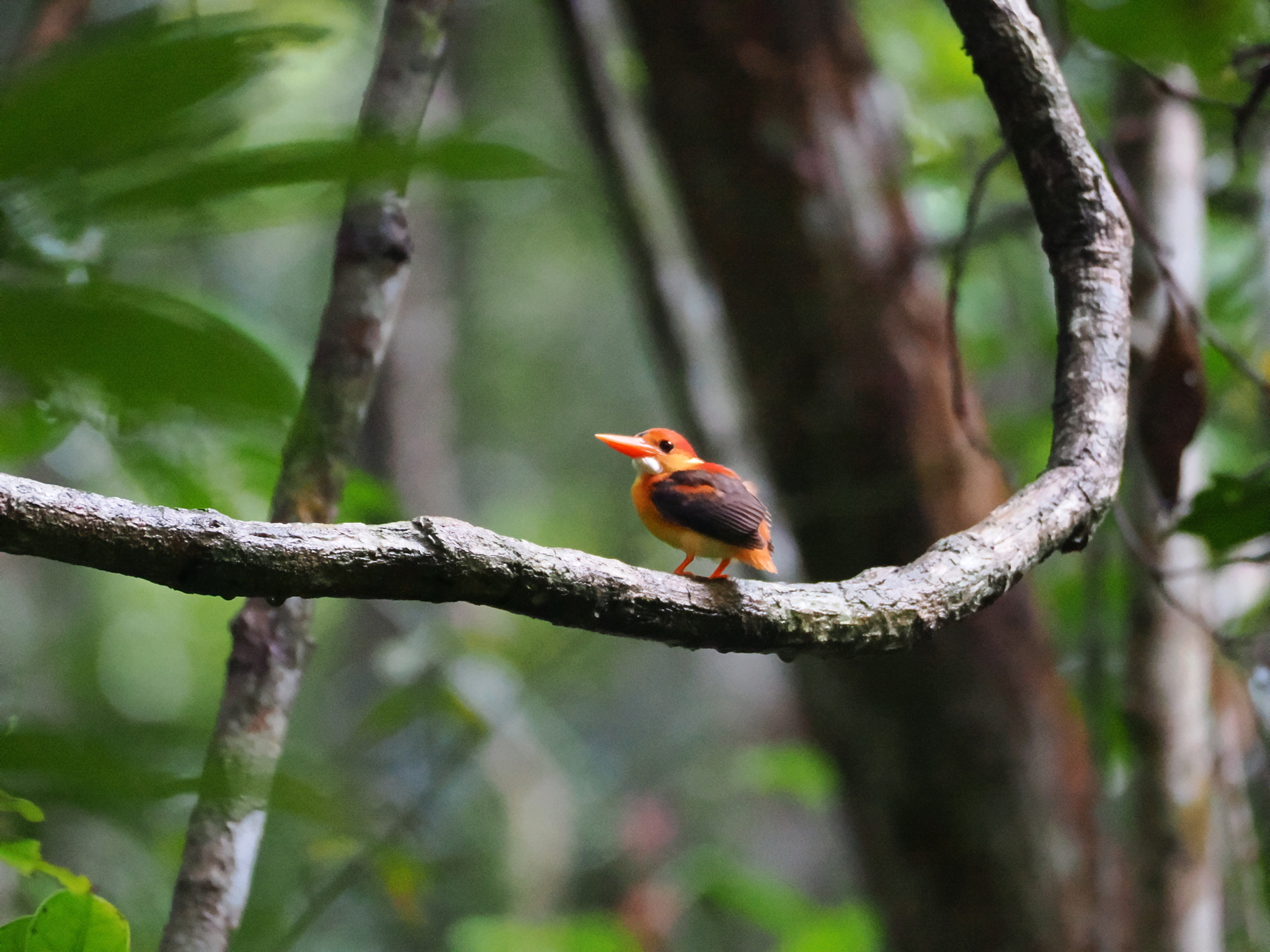
This is one of the world's smallest kingfishers, measuring a mere 12.5–14 cm in length. Adults weigh between 14-21.5 grams, with males slightly larger than females, though no other sexual dimorphism exists. The plumage is striking: a black forehead spot, blue and white neck patches, a lilac-rufous crown, rump, and tail contrasting with dark blue back and wings. The underparts are pale yellow-orange, while the chin and throat are white. The legs, feet, and bill are distinctive red. Juveniles appear duller overall with reduced lilac coloring, a white chin, throat, and belly, a yellow-orange bill with a pale tip, and blue scapulars and wing-coverts. As the name suggests, this species has three toes, though this characteristic is not unique among kingfishers.
Identification
The combination of red legs, feet, and bill with yellow-orange underparts and a blue-black back makes this species unmistakable within its range. The lilac-rufous upperparts, particularly on the crown and tail, further distinguish it from similar species. The closely related rufous-backed dwarf kingfisher was formerly considered the same species but shows rufous coloring on the back rather than blue-black. This bird's tiny size, three toes, and preference for low, shaded forest understory help separate it from larger, more aquatic kingfisher species in the region. Its high-pitched, shrill 'tsriet-tsriet' or soft 'tjie-tjie-tjie' call is often heard in flight.
Distribution & Habitat
The breeding range encompasses eastern Bangladesh, northeastern India, Myanmar, southern China, Laos, Cambodia, and Thailand, with disjunct populations in the Western Ghats of western India and Sri Lanka. Northern populations migrate south to the Malay Peninsula and Sumatra from August to September, returning in March. Large numbers of night-flying migrants are recorded at locations like Maxwell's Hill and Fraser's Hill in Malaysia, and at offshore island light stations up to 60 km from coast. The species inhabits deciduous and evergreen primary and secondary forests, alluvial forests, mangroves, and overgrown areas with dense palms, bamboos, or shrubs. It keeps near forest streams and ponds at elevations up to 1000-1300m.
Behavior & Ecology
This species forages solitarily by perching low in vegetation or on rocks, then dropping to capture prey from the ground or foliage. It can take spiders from webs, catch insects in flight, and even dive shallowly for aquatic prey. Larger prey are taken to perches and beaten repeatedly before swallowing. Breeding occurs at varying times across its range: July-September in southwest India, February-July in Sri Lanka, April-May in northeast India, March-July in peninsular Malaysia, and December-May in Java. Nests are horizontal tunnels 15-100 cm long excavated in stream banks, road cuttings, or soil near fallen tree roots, often far from water. The unlined egg chamber measures 10-15 cm wide. Clutches contain 3-7 eggs, incubated for 17-18 days by both parents, with fledging after 18-20 days. The high-pitched 'tsriet-tsriet' or soft 'tjie-tjie-tjie' call is delivered in flight.
Conservation
Classified as Near Threatened on the IUCN Red List, the population is decreasing though the total number of mature individuals remains unknown. While the species is widely distributed, it is often reported as scarce in northern parts of its range, possibly due to its elusive nature and movement patterns. The primary threat is deforestation and clearing of forest habitats, which continues to reduce available breeding areas. Additional threats include pollution, drying of water sources, illegal human persecution, collisions with buildings and other artificial structures during migration, erosion of stream banks, and climate-induced changes to migration and breeding timing. Conservation sites have been identified throughout the species' range.
Source: Wikipedia · CC BY-SA 3.0
Taxonomy
- Order
- Coraciiformes
- Family
- Alcedinidae
- Genus
- Ceyx
- eBird Code
- bkbkin1
Vocalizations
Subspecies (2)
-
Ceyx erithaca erithaca
resident in southwestern India and Sri Lanka; breeds from Bhutan and northeastern India to southeastern China, Indochina, and the northern Thai-Malay Peninsula (south to the Isthmus of Kra), this population partially migratory, wintering to the southern Thai-Malay Peninsula and Sumatra
-
Ceyx erithaca macrocarus
southern Andaman Islands and Nicobar Islands
Data Sources
CBR Notes: IUCN红色名录等级由LC升为NT 英文名由Oriental Dwarf Kingfisher修改为Black-backed Dwarf Kingfisher
Species description from Wikipedia, licensed under CC BY-SA 3.0.
Bird images and sounds sourced from GBIF, contributed by citizen scientists worldwide under Creative Commons licenses.
Taxonomy data from AviList 2025.