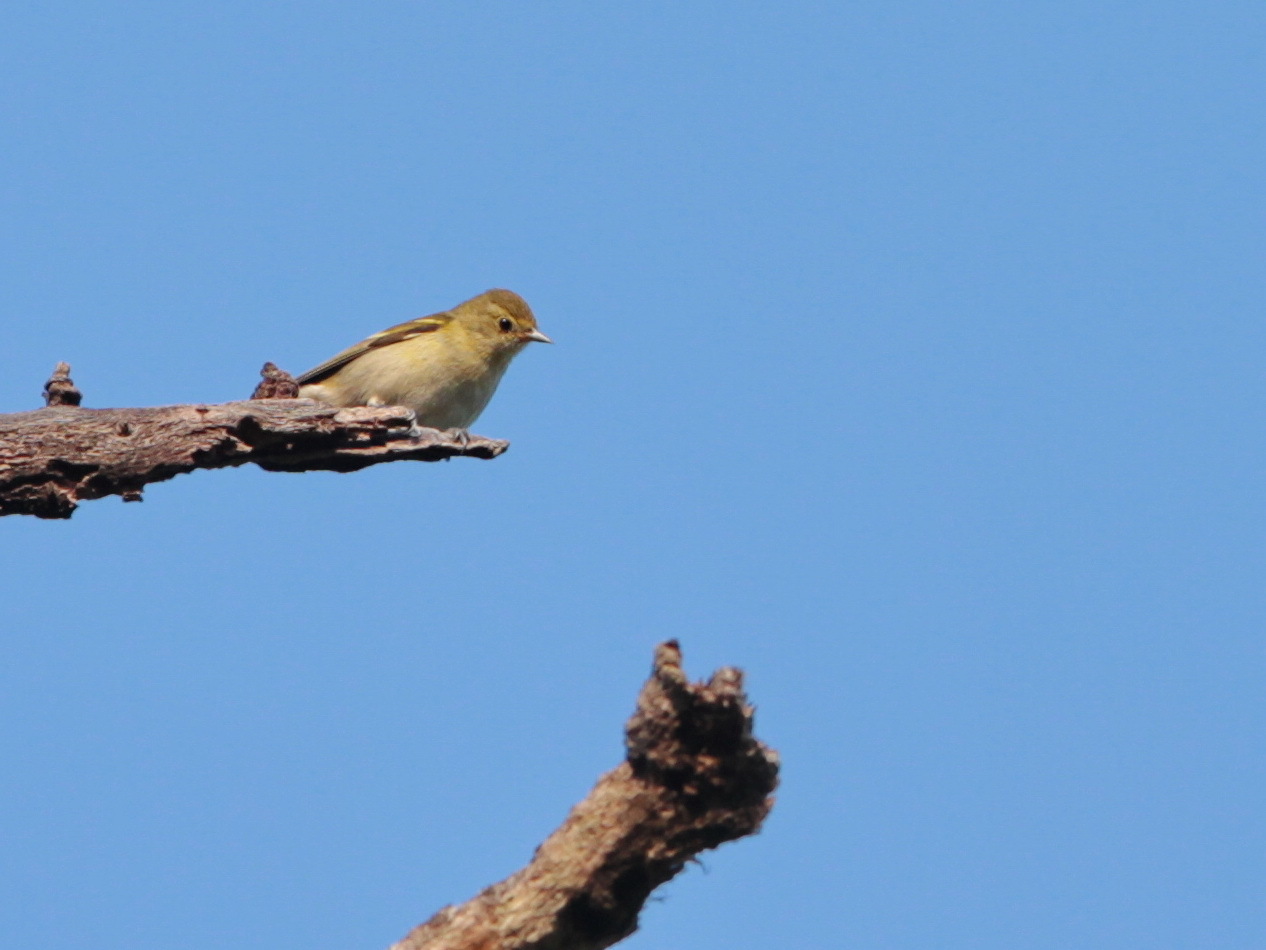
Fire-capped Tit
Cephalopyrus flammiceps
火冠雀
Introduction
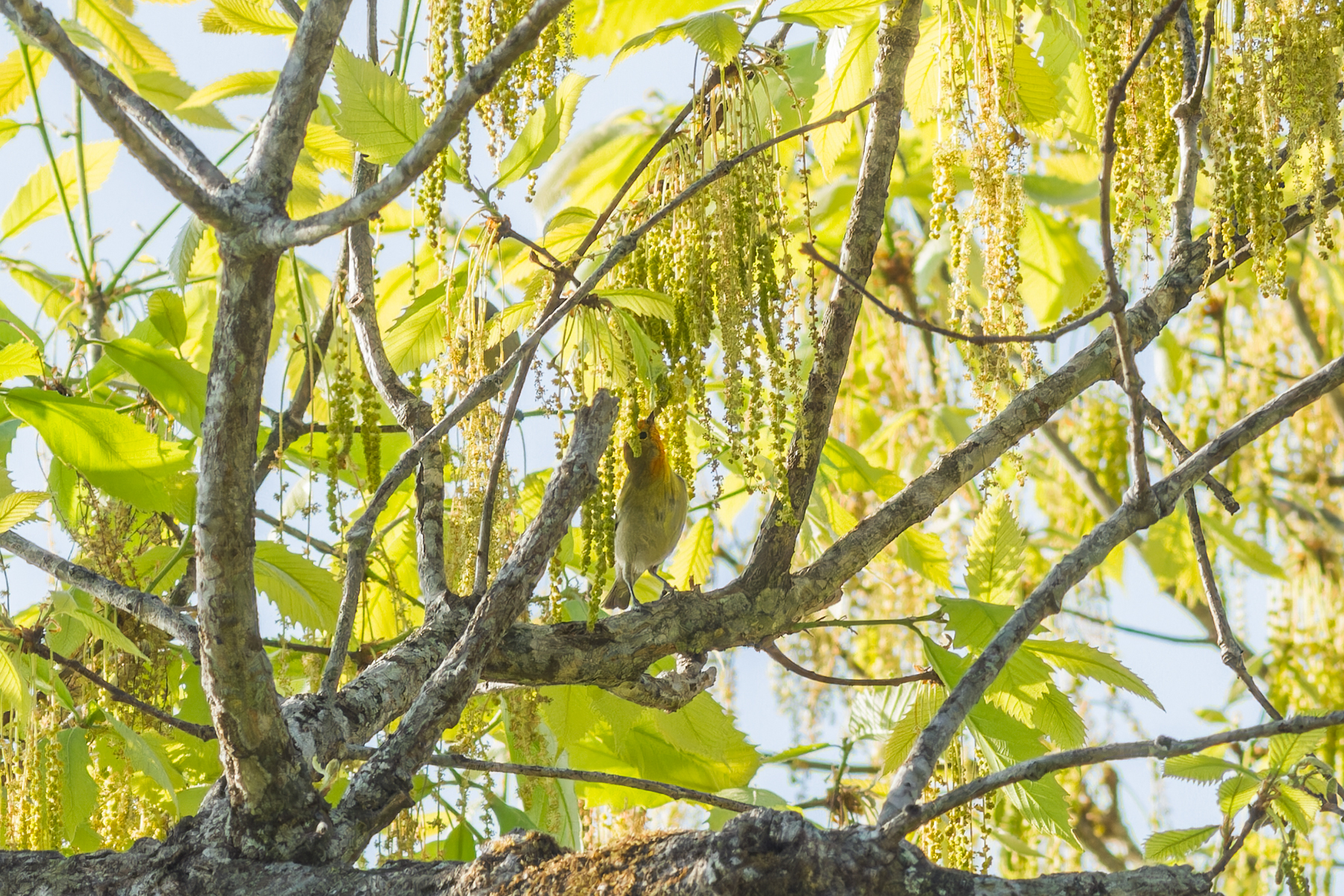
Small passerine bird (10 cm, 7 g) in the family Paridae. Formerly classified as a kinglet and previously placed in family Remizidae before being reassigned to Paridae based on nesting behavior in tree hollows. Monotypic genus Cephalopyrus. Breeds in temperate forest bordering the Himalayas, including Hengduan Shan and Nujiang Shan on Myanmar-China border, and Micah Shan and Daba Shan on Northern Sichuan border. Distinguished by small cone-shaped bill, acrobatic foraging behavior including ability to open rolled leaves with beak, and breeding males displaying orange-scarlet crest. Western populations show clinal variation with smaller size and darker plumage eastward. winters downhill and further south across South Asia.
Description
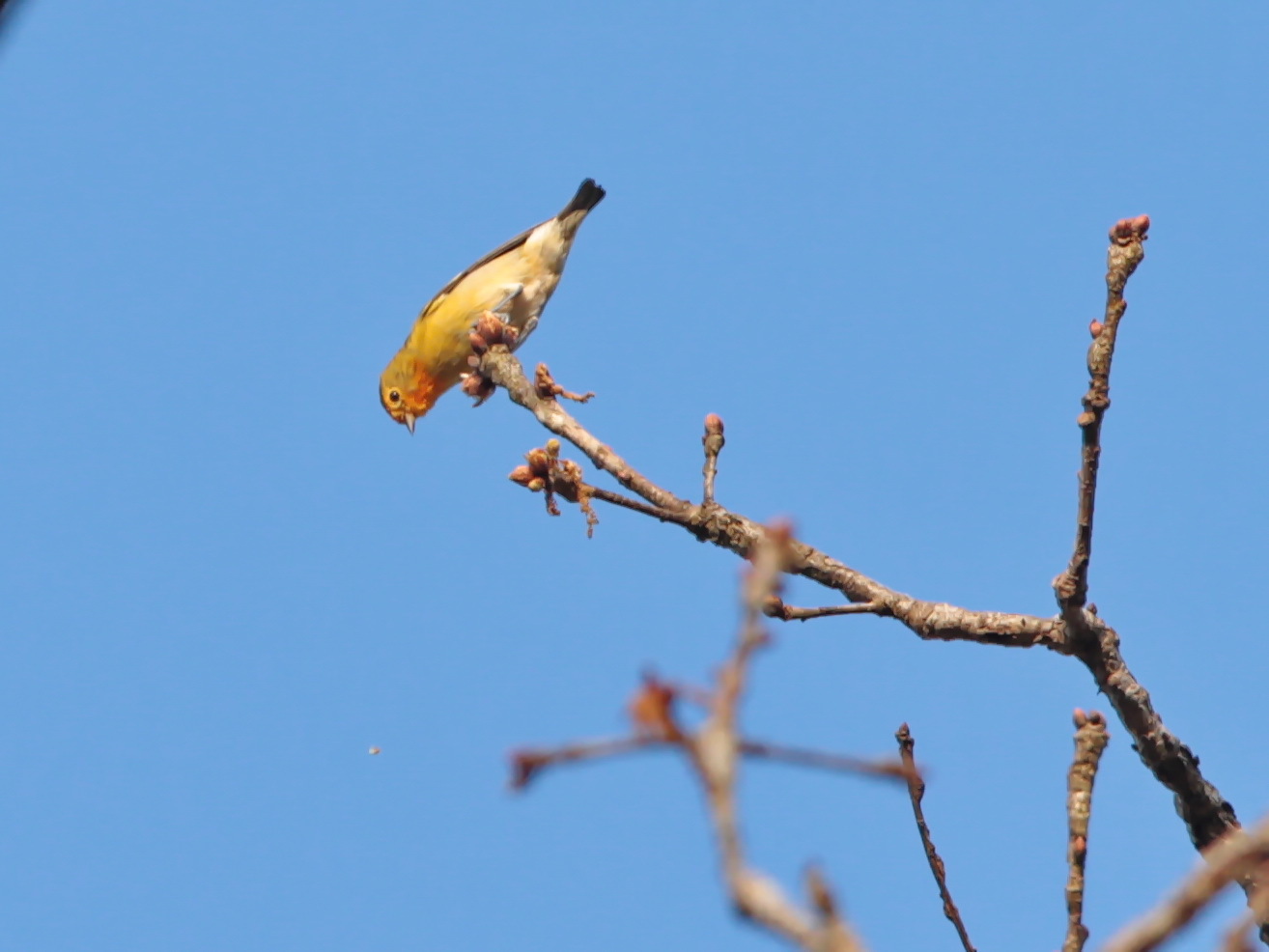
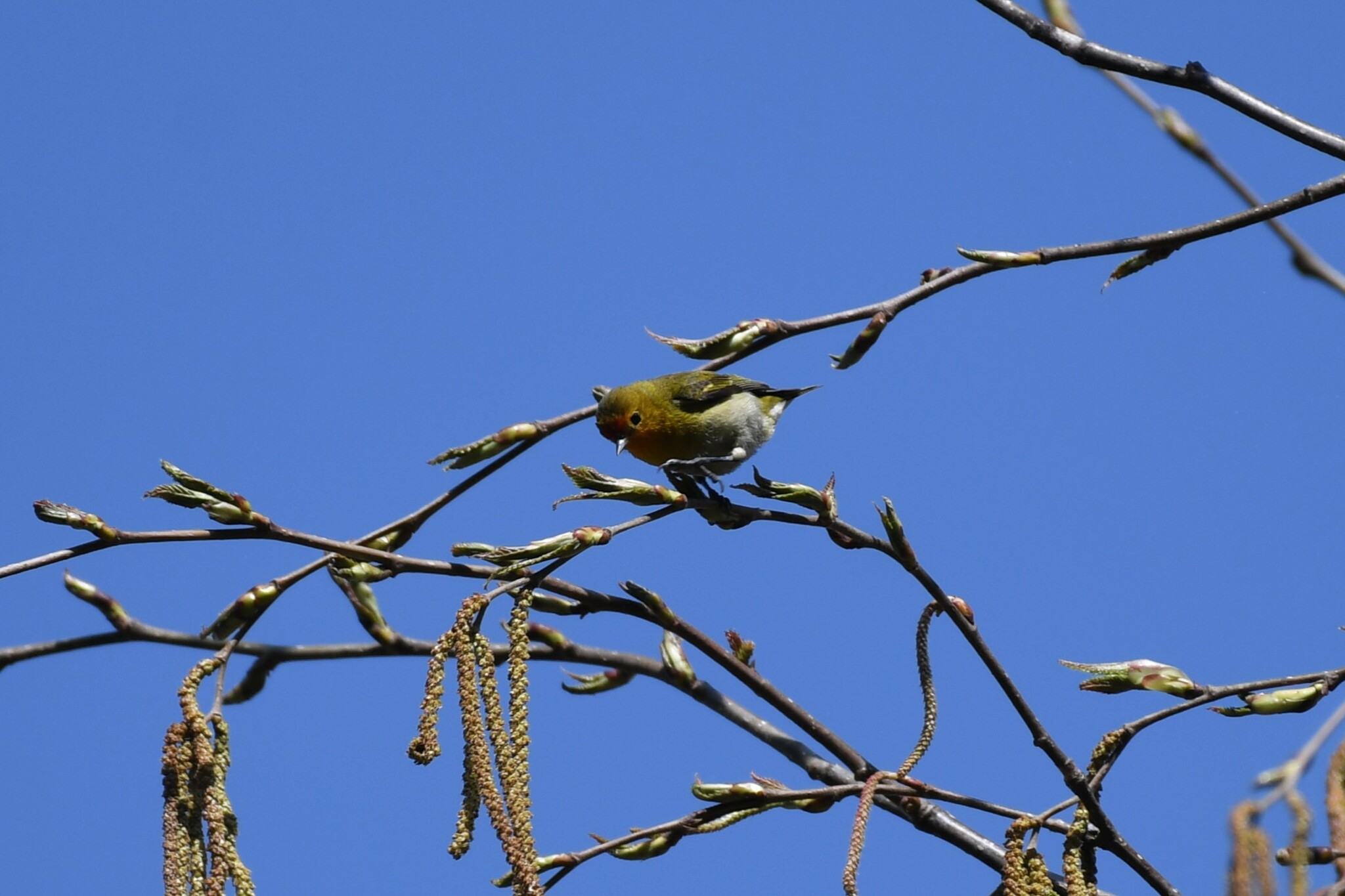
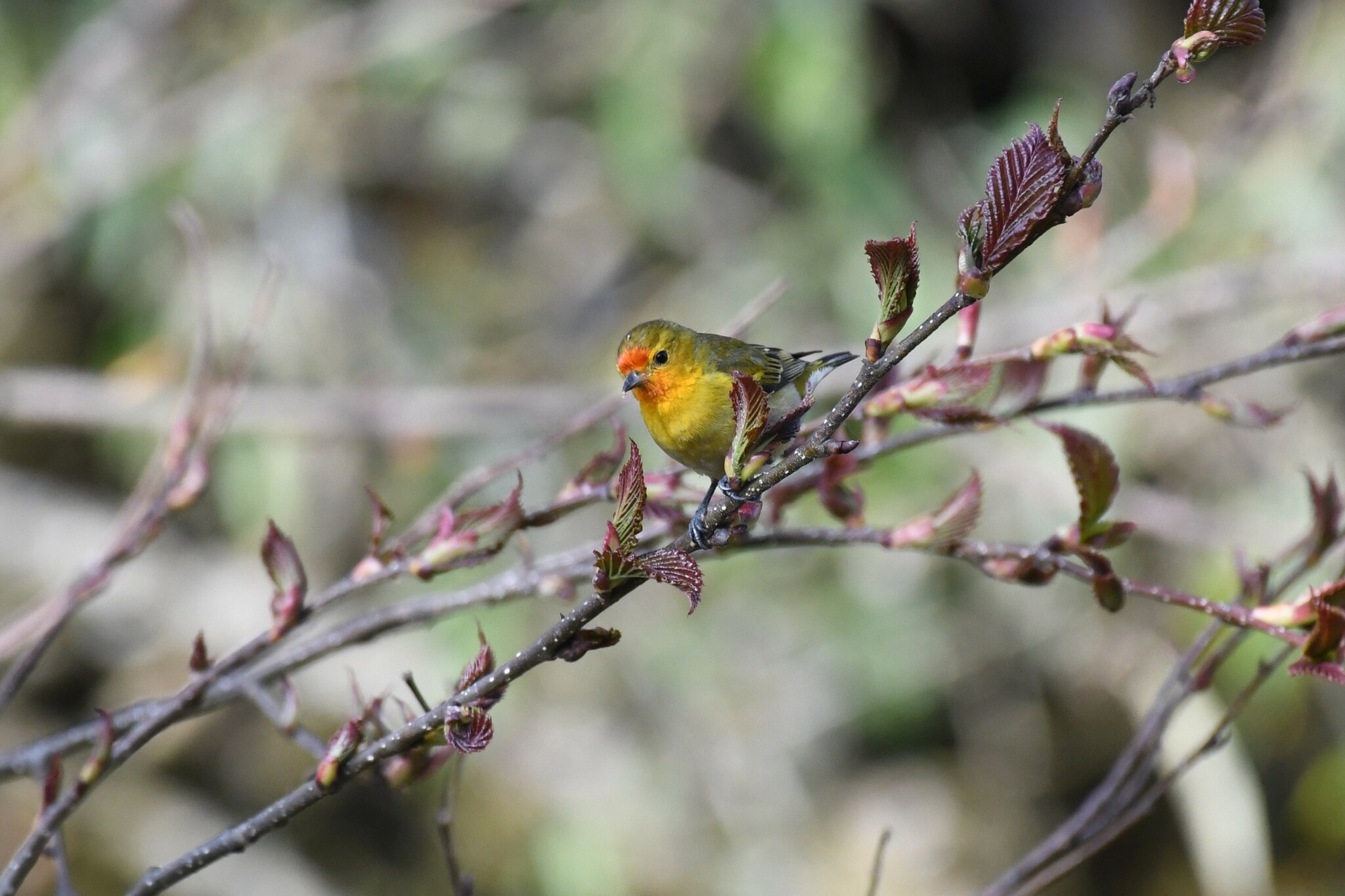
A tiny passerine measuring 10 cm in length and weighing approximately 7 g. Male in non-breeding plumage (September-January) has dark olive-brown crown with yellowish olive-green border, yellowish to olive-green upperparts, olive-golden yellow rump, and dark olive-brown tail with white-tipped feathers. Underparts show white throat contrasting with lemon-yellow chest, belly and flanks, while thighs, anal area and tail underside are gray. In breeding plumage (February-July), male develops orange-scarlet crest with golden yellow eyebrow tinged red, olive-yellow cheeks and ear coverts, orange-chrome chin and upper throat transitioning to golden yellow chest. Female similar but duller overall with olive-green gray upperparts, whitish gray chin and throat, and dull gray underparts with yellow-tinged olive chest. Bill is dark blue-gray with darker tip; legs and feet dark blue-gray. Eggs are dull blue-green.
Identification
Small size and cone-shaped bill distinguish this species from most other tits. The male's orange-scarlet breeding crest is diagnostic. Acrobatic foraging behavior, including hanging upside down and opening rolled leaves, helps separate it from similar species. The combination of yellow underparts and olive-green upperparts distinguishes it from kinglets. Rapid, high-pitched song consisting of repeated pit'su notes is characteristic.
Distribution & Habitat
Breeds from Northern Pakistan (Gilgit) and Kashmir west to Bhutan and northeastern India, through southern China (Yunnan, Sichuan, Xizang, Guizhou, Shaanxi, Gansu, Ningxia). Occurs in foothills and adjacent mountains. Winters across North-Central India plains and in Thailand's evergreen broad-leaved forests. Eastern Himalayan populations winter in southern Sikkim at 300-1,400 m. Populations in Sichuan and Burma remain at higher altitudes (~1,800 m) year-round with less pronounced migration. Breeds at 1,800-2,600 m in Pakistan, 1,800-3,500 m in northwestern India, and 2,135-3,000 m in Nepal.
Behavior & Ecology
Active and bold, moving with swift wing strokes reminiscent of warblers. Forages acrobatically in tree canopy, hanging upside down and sliding along vertical branches like parrots. Can open rolled leaves with beak similar to starlings. Feeds mainly on insects but also leaves, flowers, buds, pollen and sap. Captures prey with feet and empties contents, discarding empty carapaces unlike other tits. Nests April-mid-June in tree hollows 6-12 m high, using natural cavities or abandoned woodpecker nests. Nest is grass bowl lined with finer grasses and feathers, usually containing four dull blue-green eggs. Both parents feed young; female maintains nest. Found in small flocks in winter, occasionally groups up to 100, sometimes joining mixed flocks. Song is series of rapid high pit'su notes; calls include high-pitched tsit-tsit-tsit and soft whitoo-whitoo.
Conservation
IUCN status, population trends, and specific threats not documented in source material.
Culture
Cultural significance and folklore not documented in source material.
Source: Wikipedia · CC BY-SA 3.0
Taxonomy
- Order
- Passeriformes
- Family
- Paridae
- Genus
- Cephalopyrus
- eBird Code
- fictit1
Subspecies (2)
-
Cephalopyrus flammiceps flammiceps
western Himalayas (Pakistan to Garhwal and western Nepal)
-
Cephalopyrus flammiceps olivaceus
eastern Himalayas (eastern Nepal to southeastern Tibet and central China)
Data Sources
Species description from Wikipedia, licensed under CC BY-SA 3.0.
Bird images and sounds sourced from GBIF, contributed by citizen scientists worldwide under Creative Commons licenses.
Taxonomy data from AviList 2025.