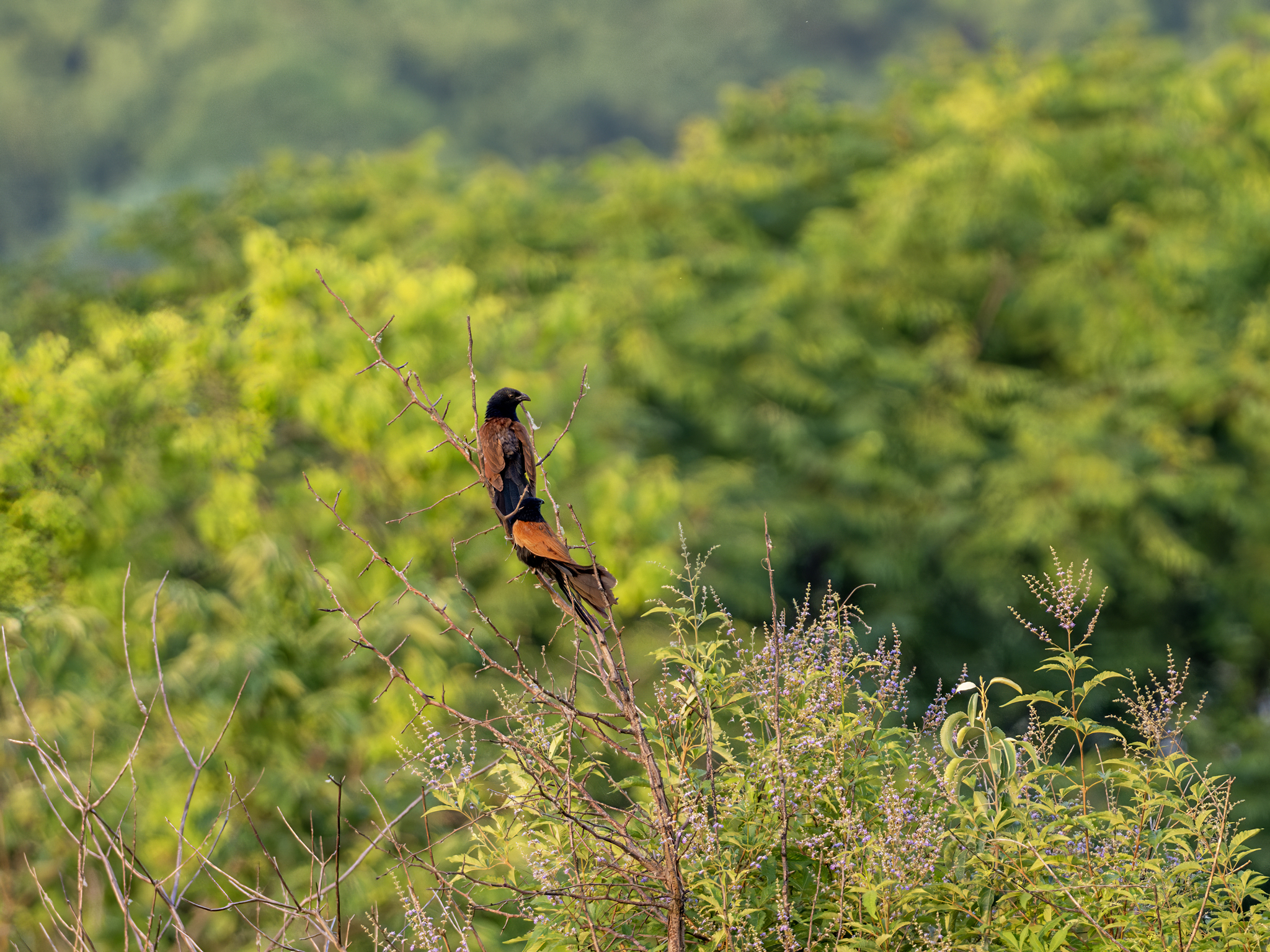
Lesser Coucal
Centropus bengalensis
小鸦鹃
Introduction
The lesser coucal occupies a vast range across South and Southeast Asia, from the Indian subcontinent to the Philippines and Indonesia. It inhabits marshy grasslands, wet woodlands, and grassy areas bordering forests, where it forages low in the undergrowth. Unlike most cuckoos, this species is not brood-parasitic; it raises its own young and builds dome-shaped nests in low vegetation. Breeding adults display dark plumage, while non-breeding birds show pale streaks on the head and back. The species is locally common throughout much of its range, though populations in some areas may be patchy.
Description
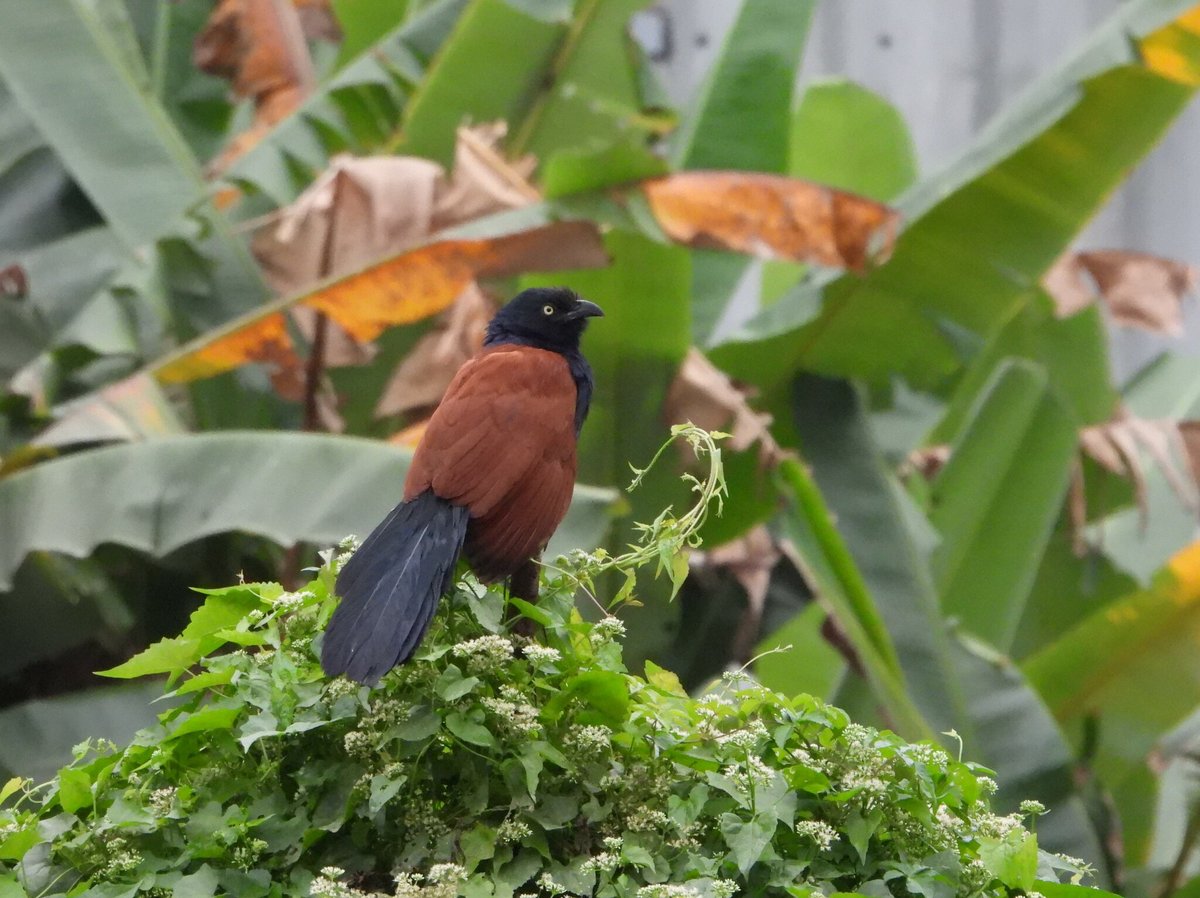
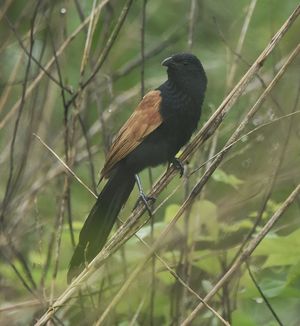
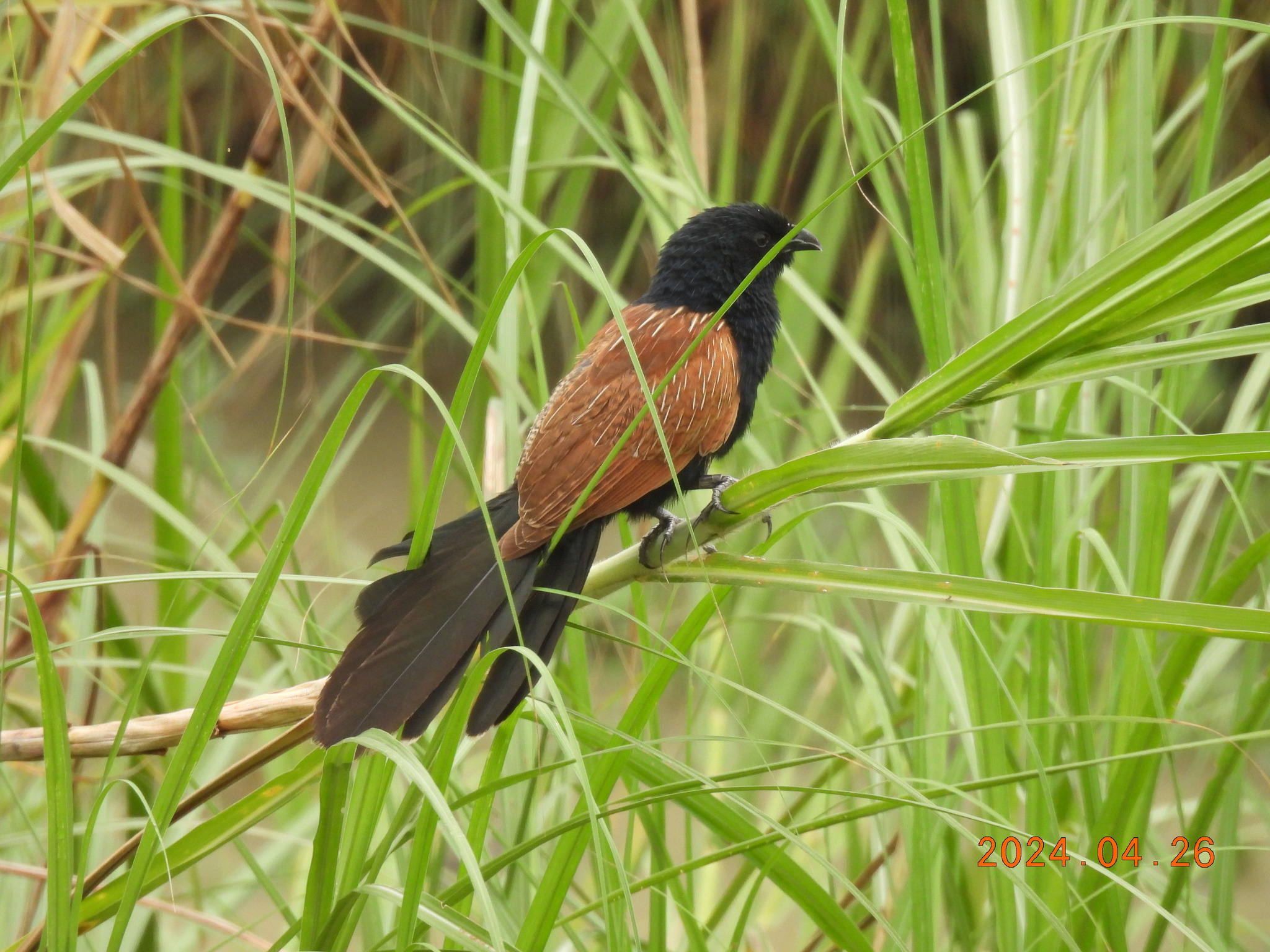
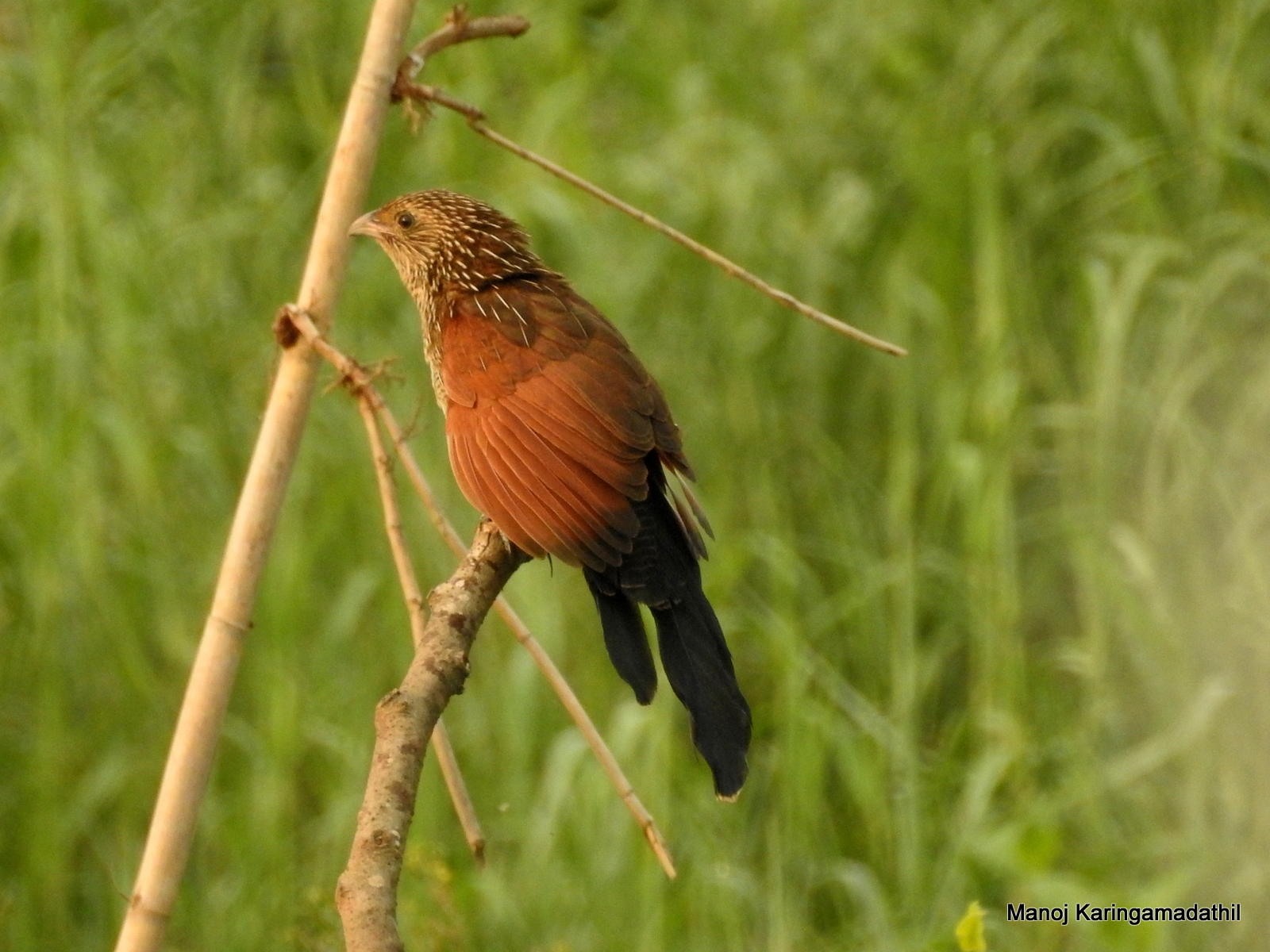
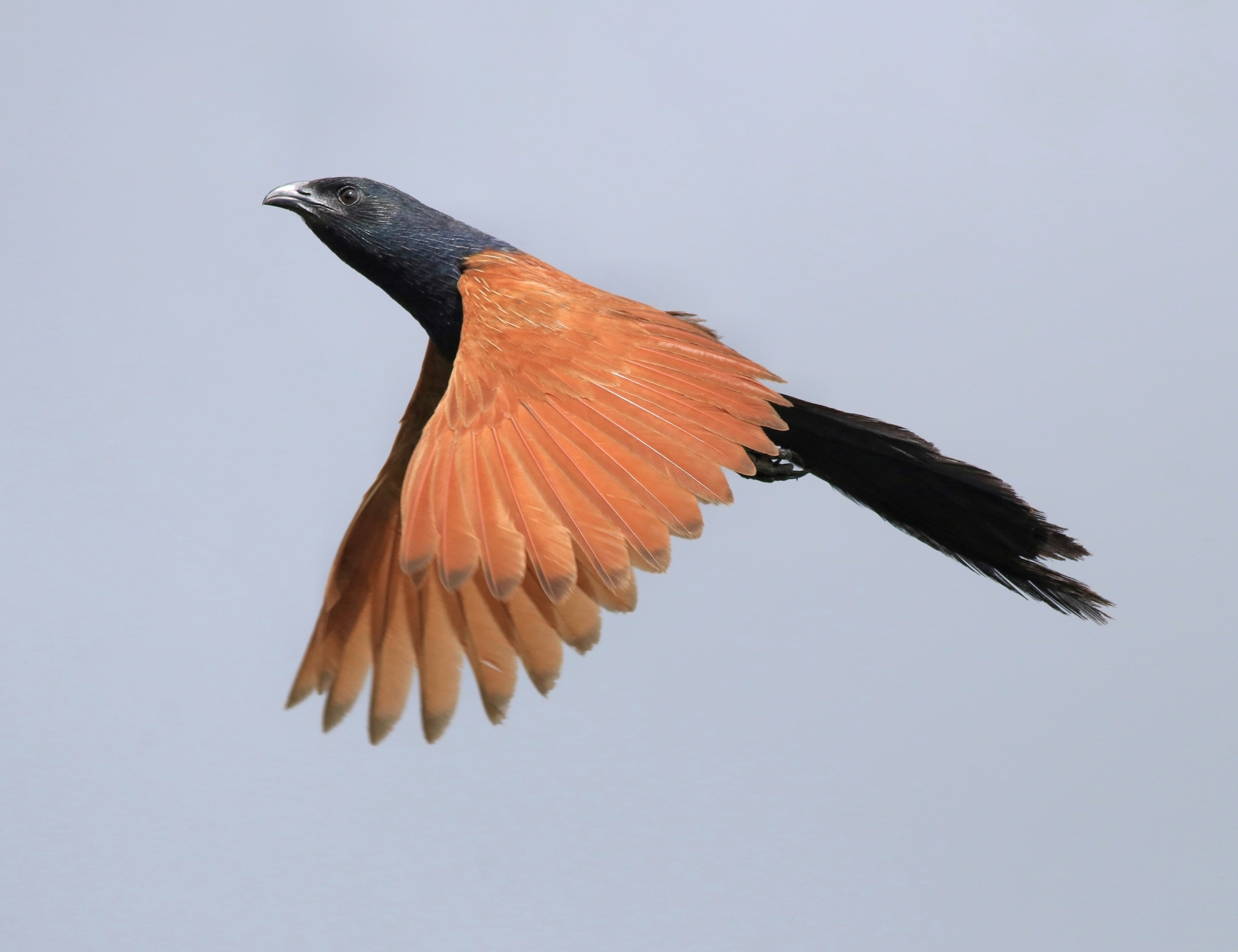
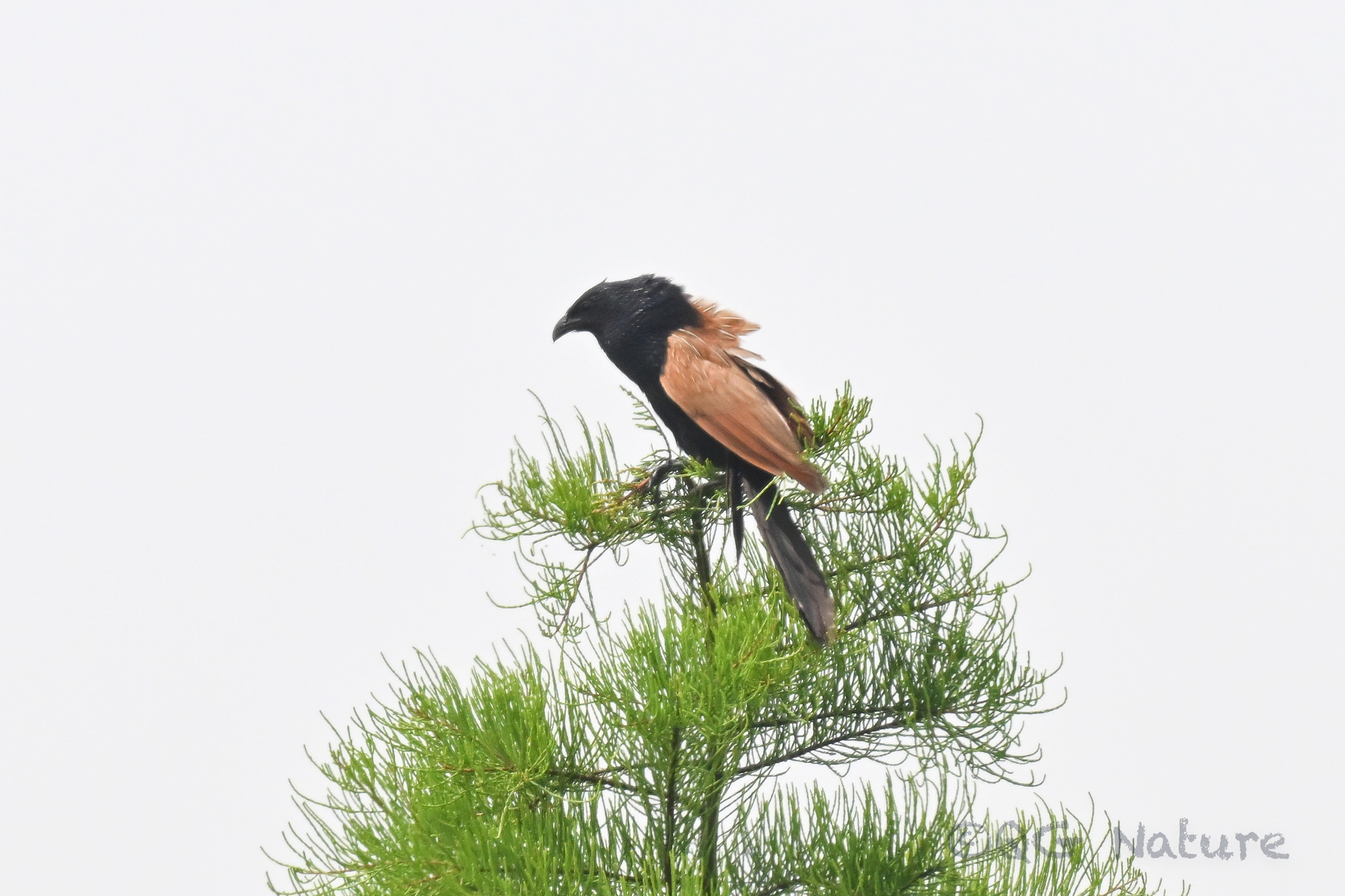
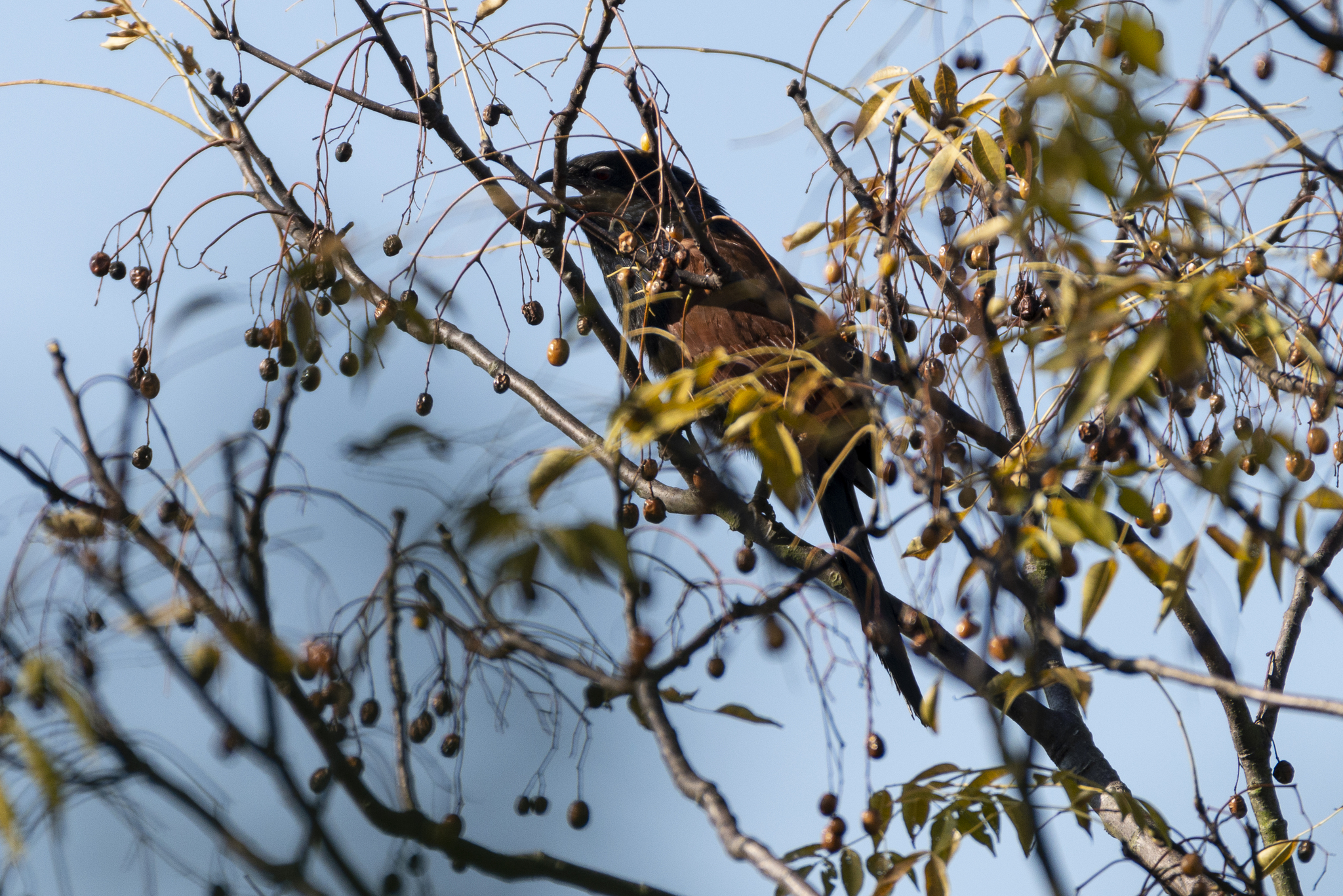
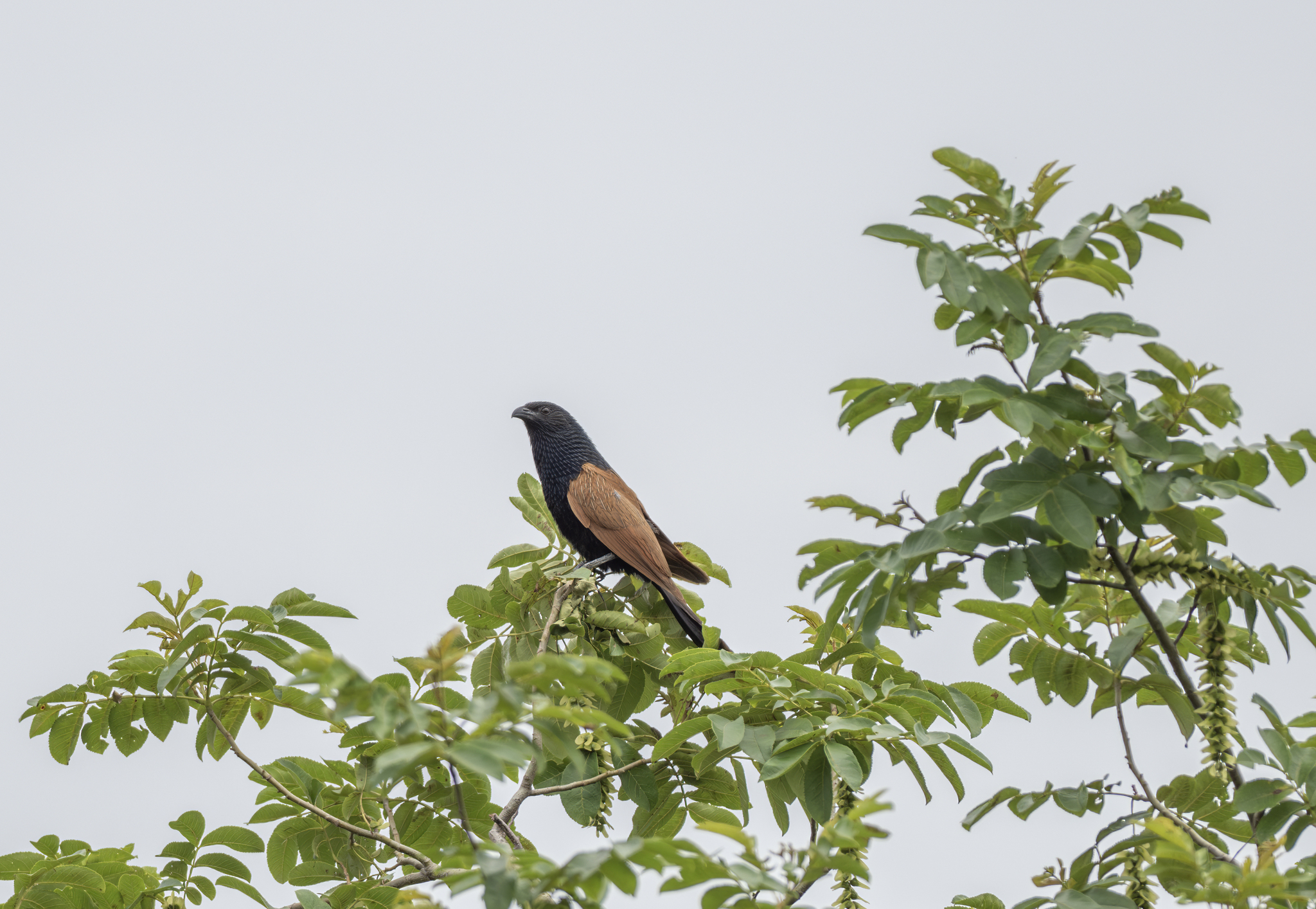
This is a relatively small coucal with a compact build and notably short bill. Its most distinctive feature is the exceptionally long hind claw, the longest of any species in the genus. The plumage is predominantly blackish overall with striking rufous wings and a long, graduated tail. Adults have dark brown eyes, lacking the crimson iris of the greater coucal. The species exhibits two distinct plumages: a glossy breeding plumage with dark feather shafts on the head and upper back, and a duller non-breeding plumage with whitish shaft streaks visible on the brown feathers. Central tail coverts are barred and notably elongated. Juveniles are browner with black spotting and barring throughout their plumage.
Identification
This species is best distinguished from other coucals by its smaller overall size and more modest bill. The pale shaft streaks on the head and back feathers are visible in non-breeding plumage and serve as a key field mark. The extraordinarily long hind claw on the rear toe is visible when the bird is perched and helps separate it from the greater coucal and other similar species. The call—a series of accelerating low double notes described as 'whoot-woot' or 'kurook'—is distinct from the calls of sympatric coucals. Sexes appear identical in the field and cannot be distinguished visually.
Distribution & Habitat
This species has an extensive range stretching from the Indian subcontinent eastward through Southeast Asia to the Philippines and Indonesia. It occurs across India and Nepal through Myanmar, Thailand, and Indochina, with populations extending into southern China, Hainan, and Taiwan. The species occupies the Malay Peninsula, Sumatra, Borneo, Java, and extends to the Sulawesi region, Moluccas, and Lesser Sunda Islands. It inhabits marshy grasslands, wet savannas, and grassy clearings within forests, typically in lowland areas. Some regional populations show size and plumage variations that have been described as subspecies.
Behavior & Ecology
This species is typically encountered alone or in pairs, staying concealed in low vegetation within marshy or grassy habitats adjacent to forests. It forages on the ground and in low understory, taking insects, small vertebrates, and other prey. The breeding season varies by region but generally spans May to September, with most nesting in India occurring after monsoon rains begin. Unlike most cuckoos, this species is not brood-parasitic. Both parents share nest-building duties, constructing a grass dome in a low tree or shrub. Clutch size varies geographically: three eggs in India, two in Southeast Asia, and four in Taiwan. Both sexes incubate the eggs and jointly care for the young.
Conservation
The lesser coucal is currently listed as Least Concern by the IUCN, reflecting its extensive range and presumed large population. However, specific population trends have not been well-quantified across its entire distribution. Localized threats may include habitat loss from wetland drainage and agricultural expansion, though the species appears to persist in degraded habitats where suitable grassy wetlands remain.
Culture
The Indonesian common name 'dudut' is derived from the species' distinctive vocalizations, mimicking the sound of its call. This onomatopoeic name reflects how local communities have incorporated bird vocalizations into everyday language and species recognition.
Source: Wikipedia · CC BY-SA 3.0
Taxonomy
- Order
- Cuculiformes
- Family
- Cuculidae
- Genus
- Centropus
- eBird Code
- lescou1
Vocalizations
Subspecies (6)
-
Centropus bengalensis bengalensis
India and Nepal to Bangladesh, Myanmar, and Indochina
-
Centropus bengalensis javanensis
Malay Peninsula to Sumatra and its southeastern satellite islands, Java, and Borneo, and Palawan and Sulu Islands (southwestern Philippines)
-
Centropus bengalensis lignator
southern and southeastern China, Hainan, and Taiwan
-
Centropus bengalensis medius
Moluccas (Indonesia)
-
Centropus bengalensis philippinensis
Philippines (except Palawan and Sulu Islands)
-
Centropus bengalensis sarasinorum
Sulawesi and Lesser Sundas
Data Sources
Species description from Wikipedia, licensed under CC BY-SA 3.0.
Bird images and sounds sourced from GBIF, contributed by citizen scientists worldwide under Creative Commons licenses.
Taxonomy data from AviList 2025.