
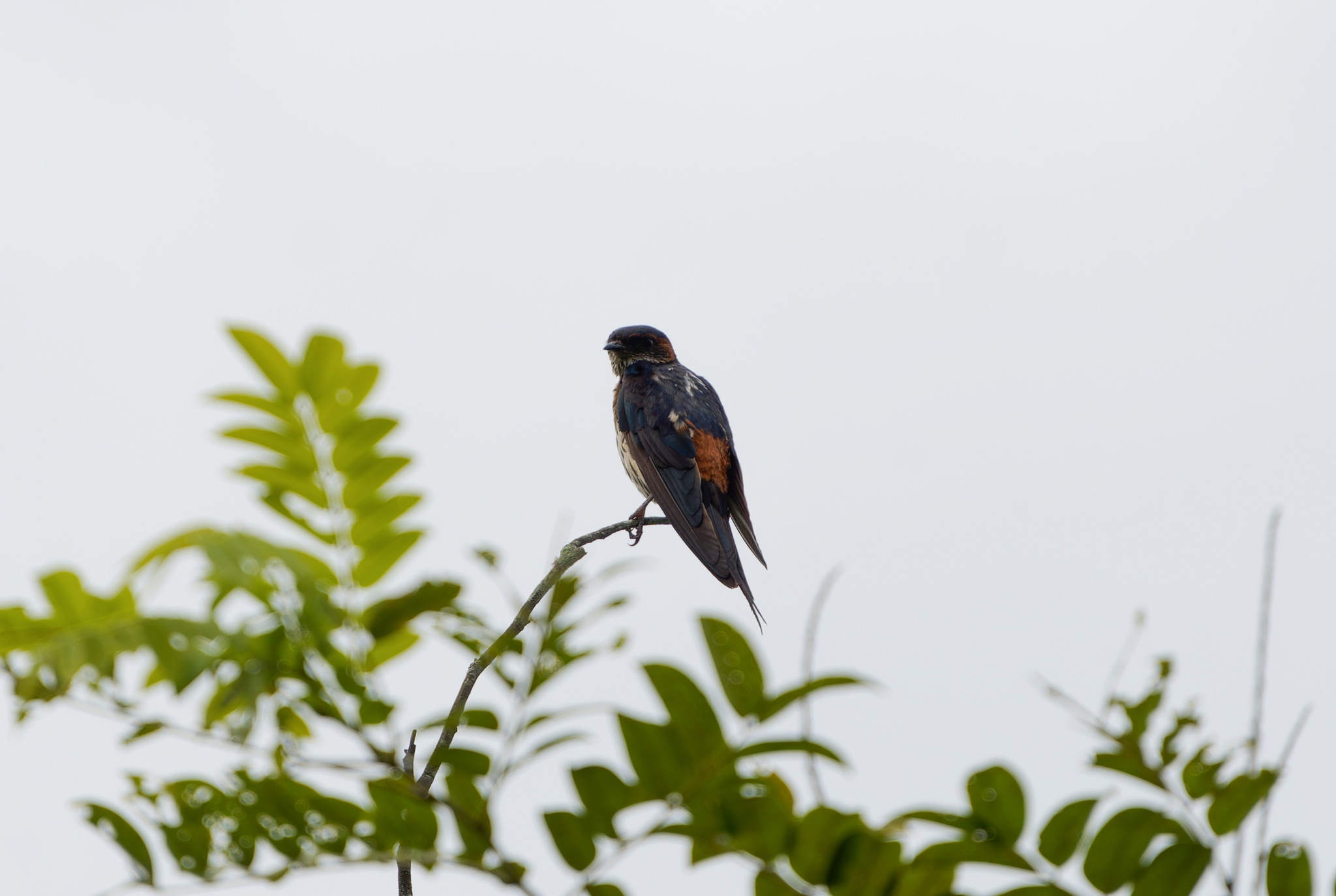
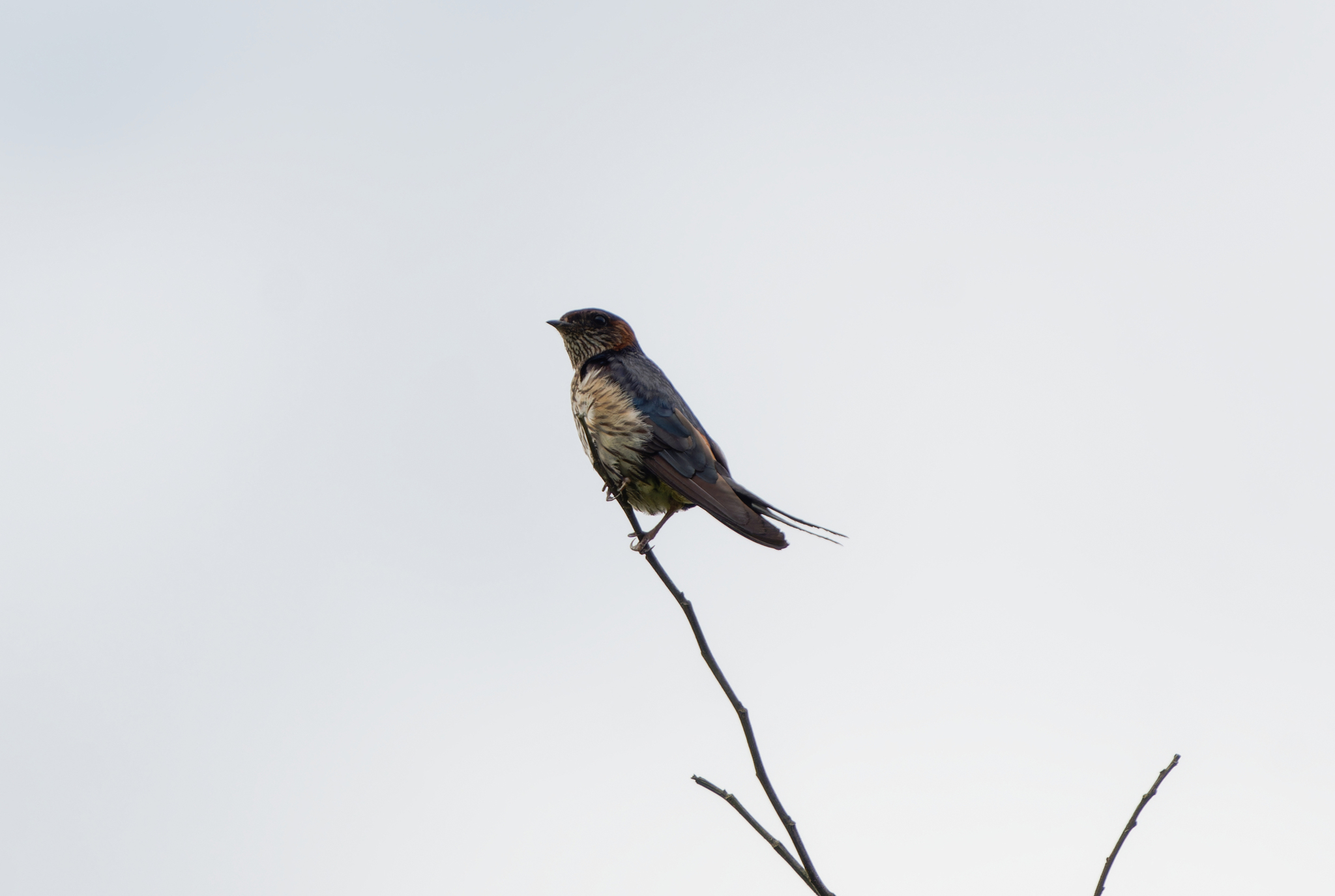
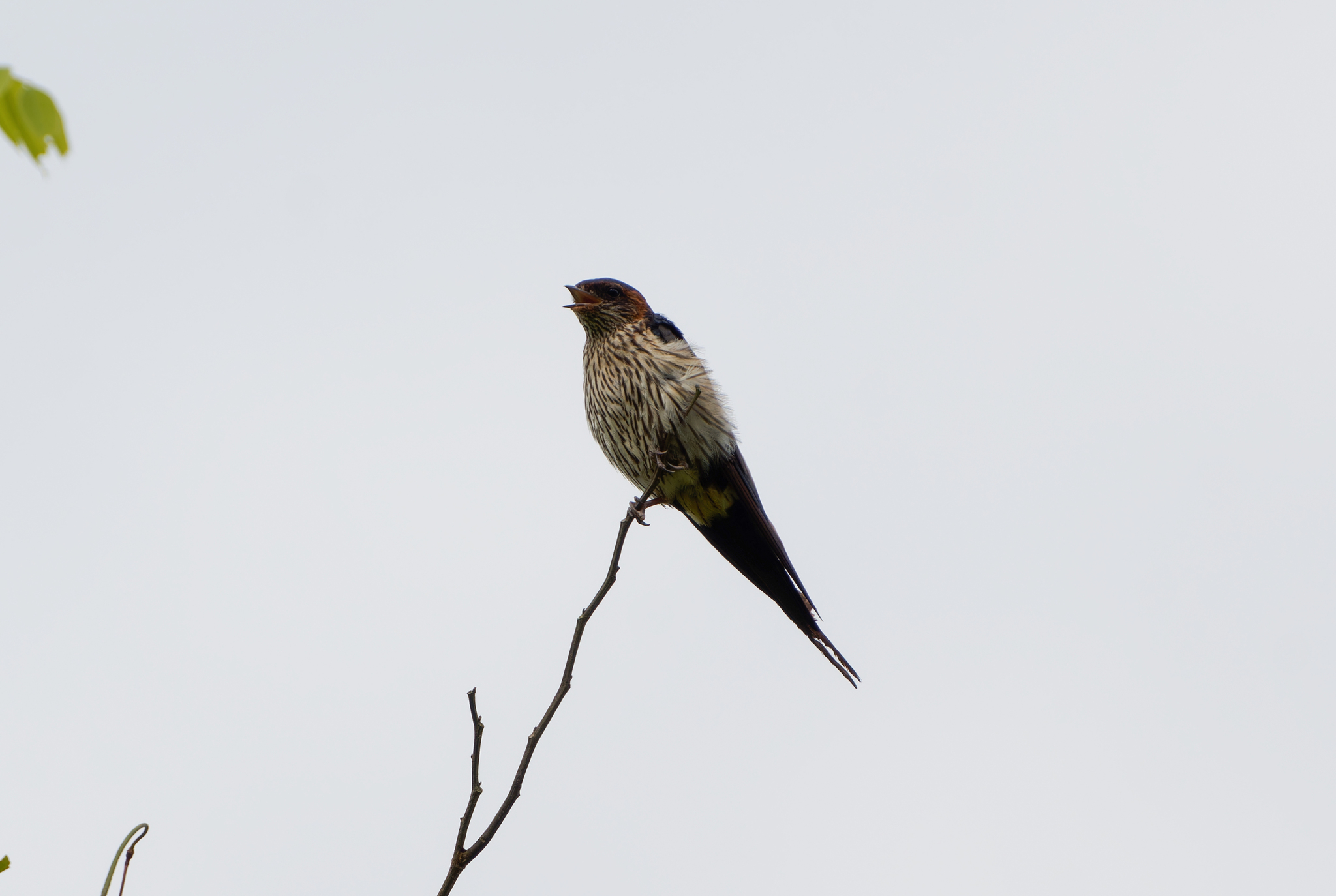
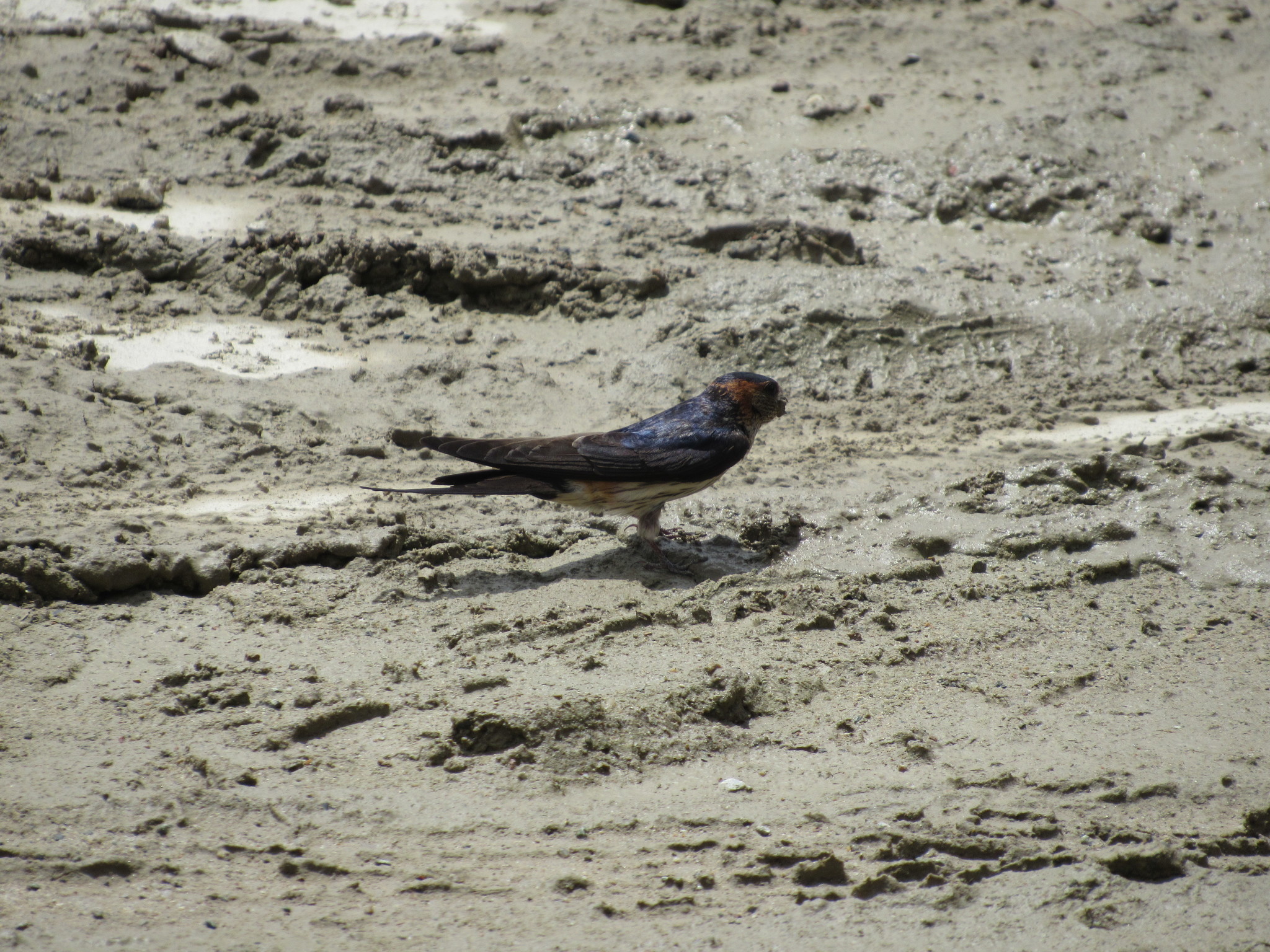
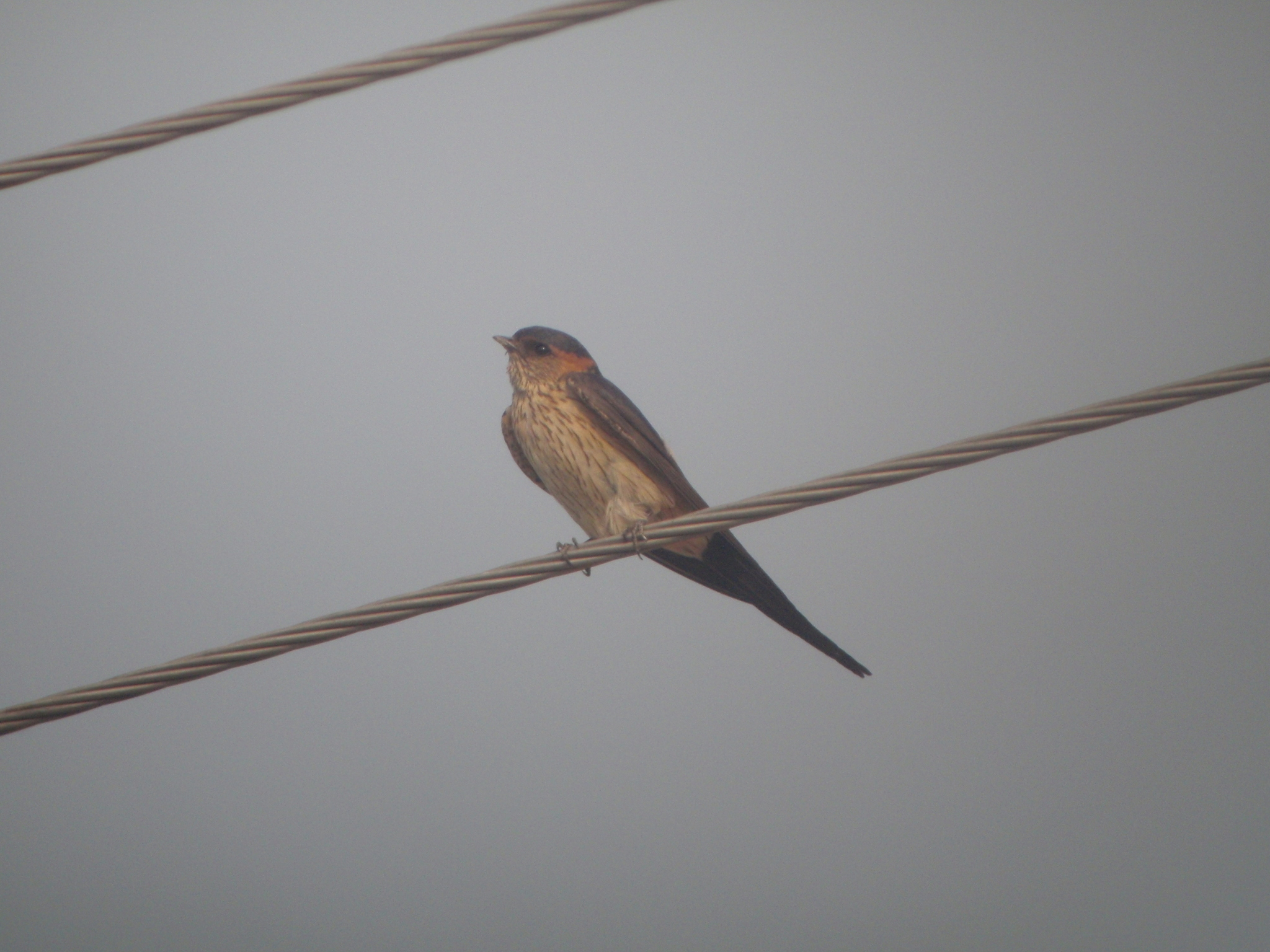
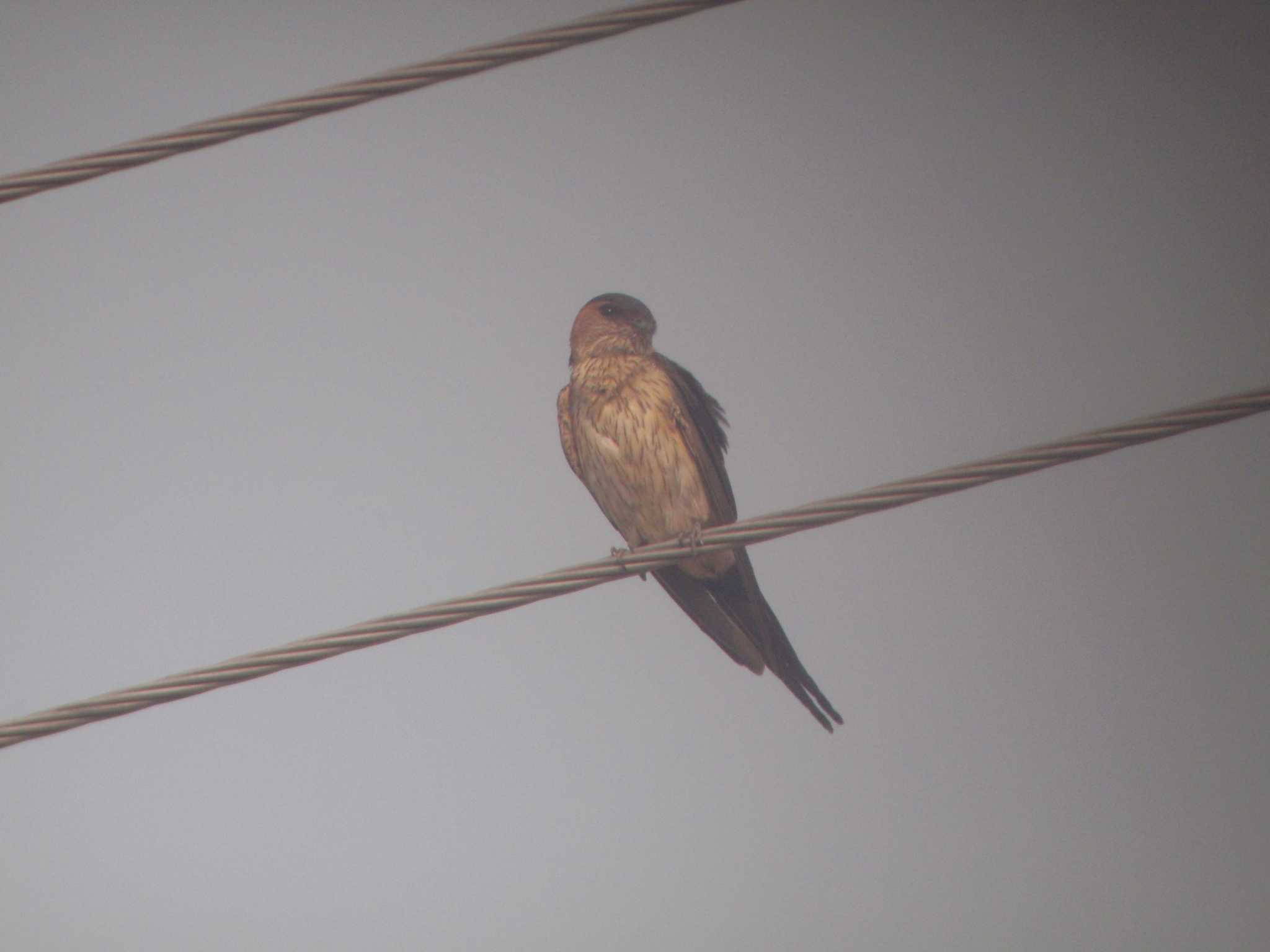
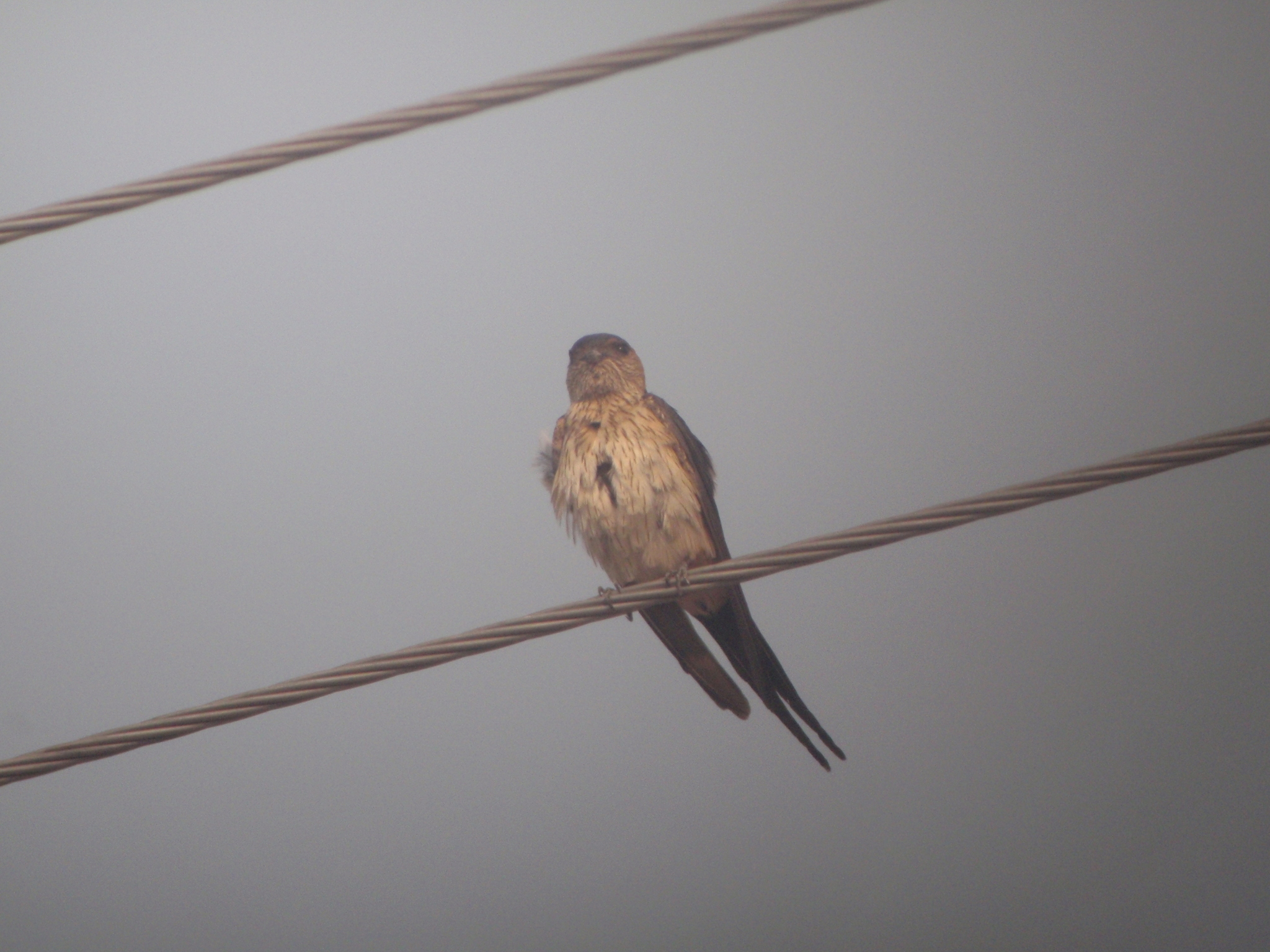
Eastern Red-rumped Swallow
Cecropis daurica
金腰燕
Introduction
This swallow species occurs across Southeast Asia, extending into northeastern India and Taiwan. It inhabits open, often hilly landscapes with clearings, agricultural land, meadows, and scrubland in warm temperate to tropical regions. The species feeds on insects captured in flight. It constructs mud nests under bridges, in culverts, and on building ledges, showing a preference for sites near water sources that provide nest material. Some populations are resident while others are migratory. It associates with other swallow species while feeding and has a slower, more buoyant flight compared to the barn swallow.
Description
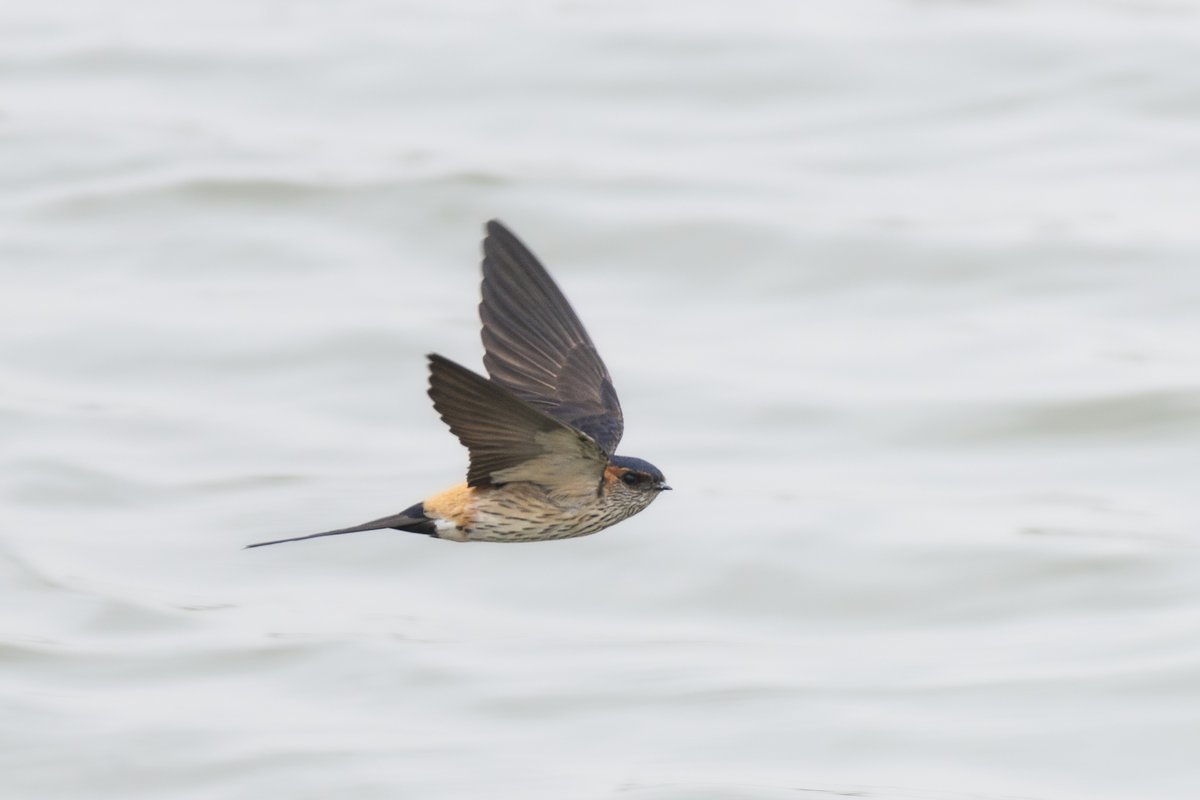
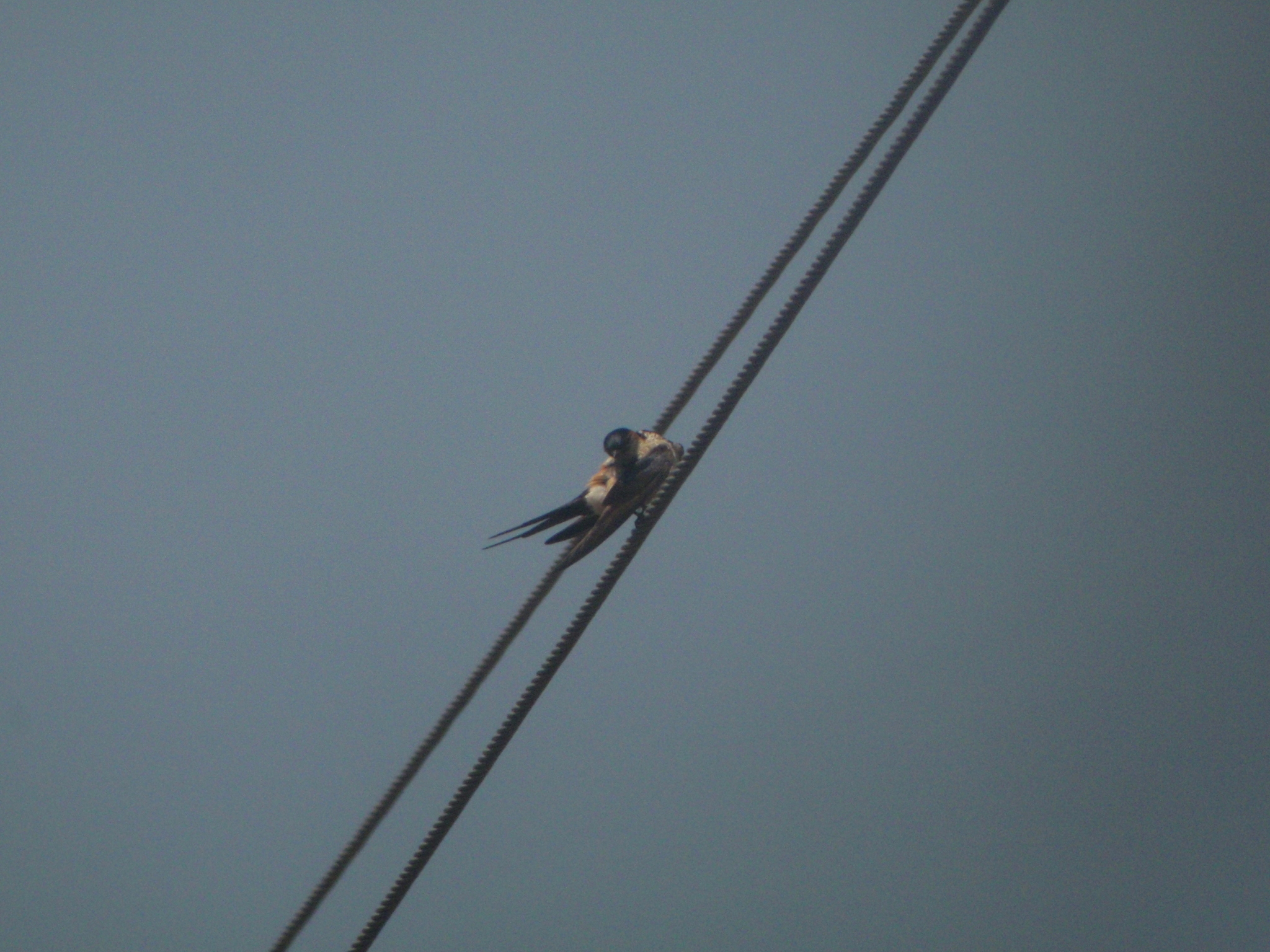
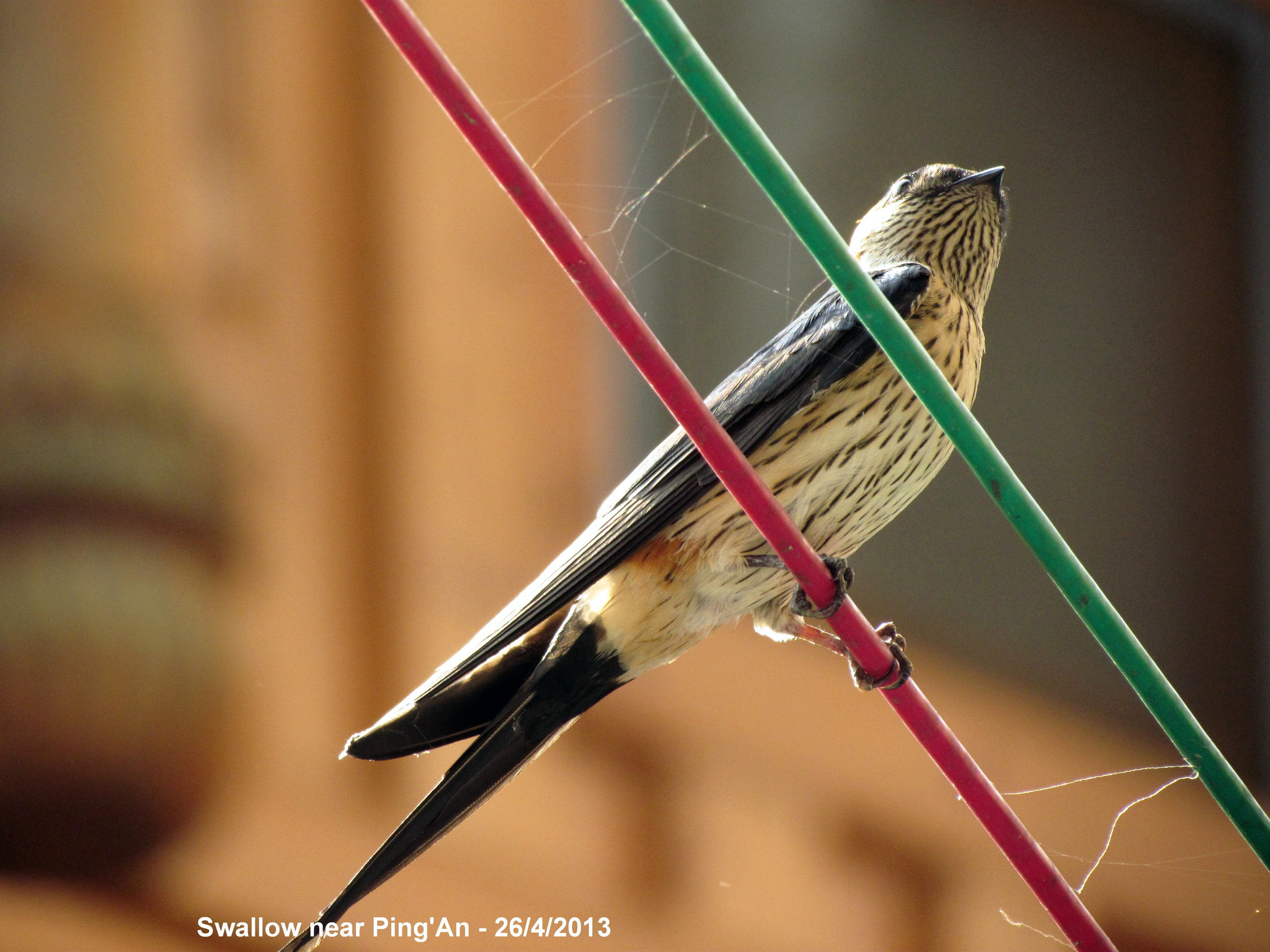
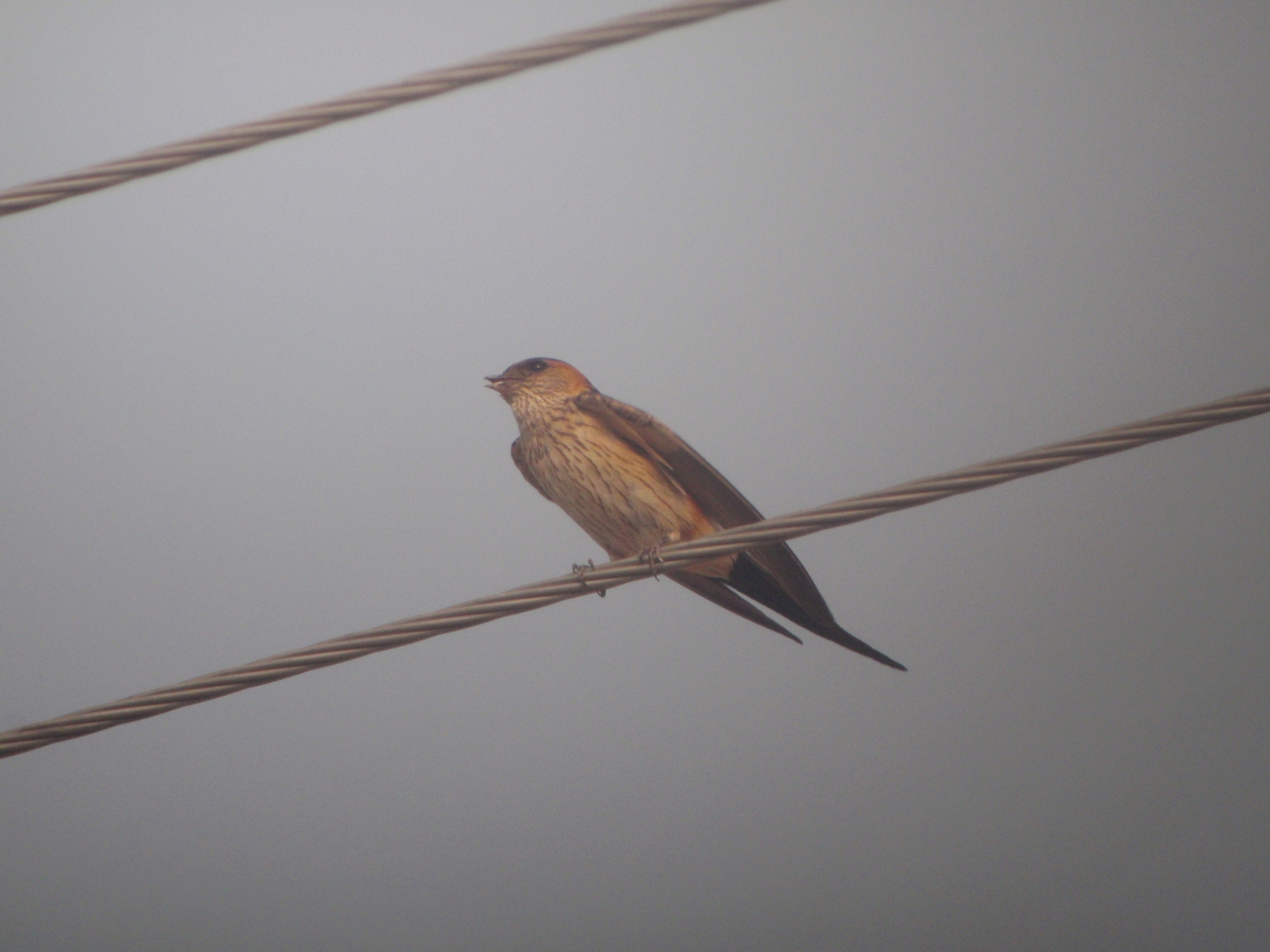
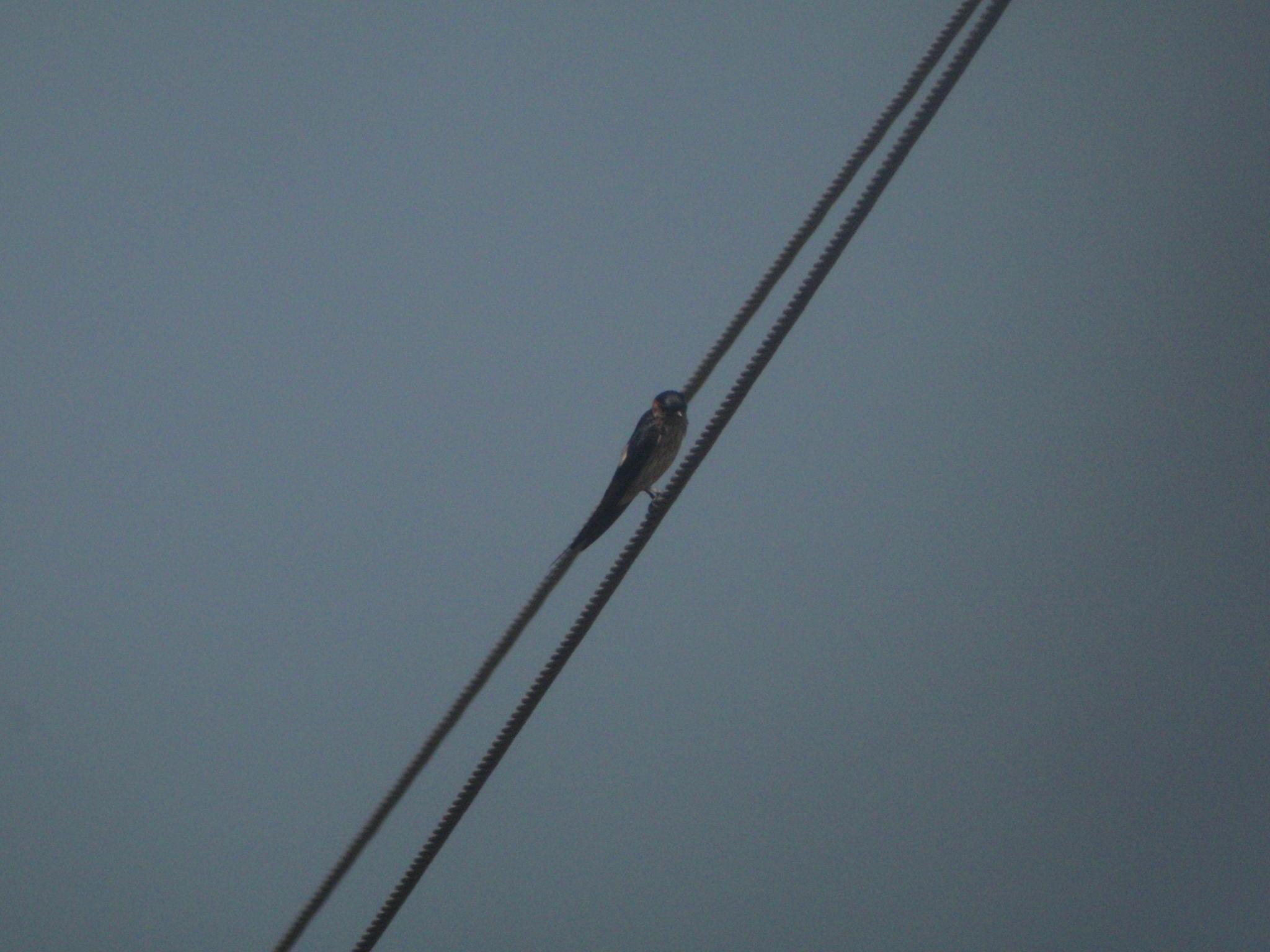
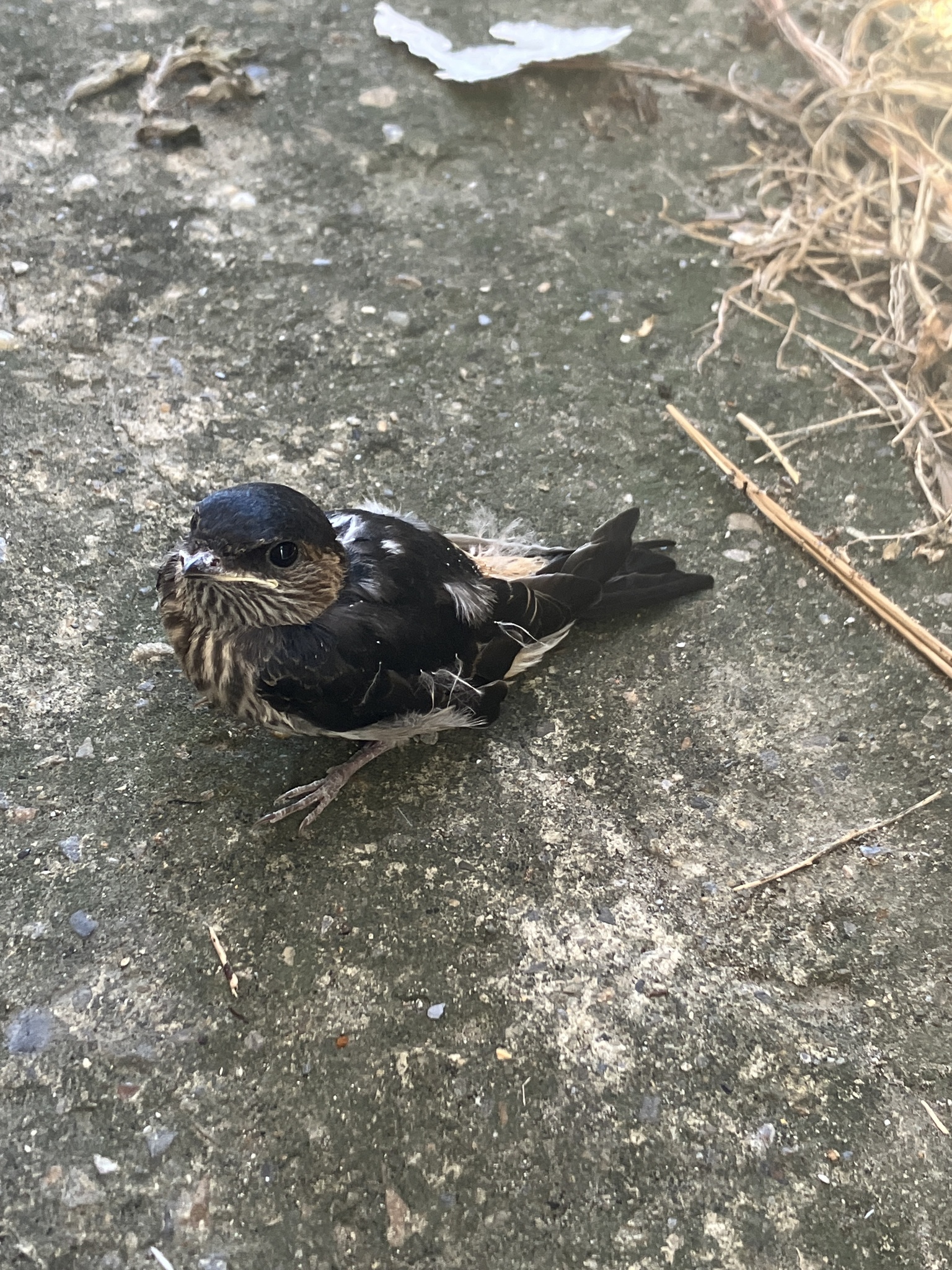
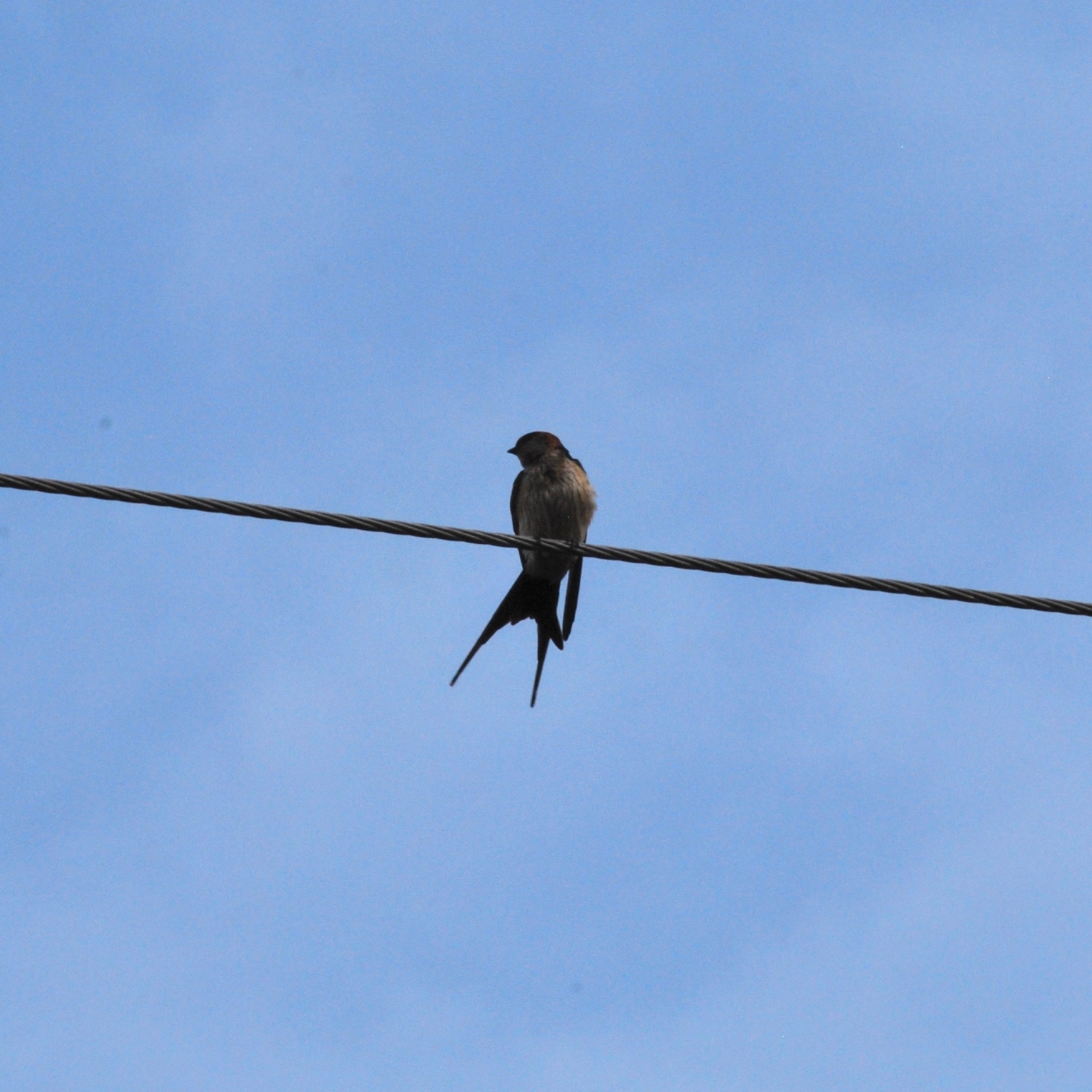
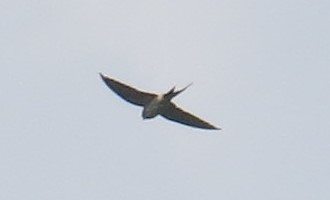
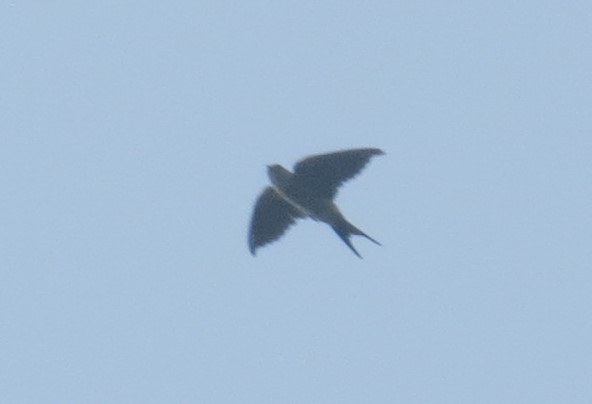
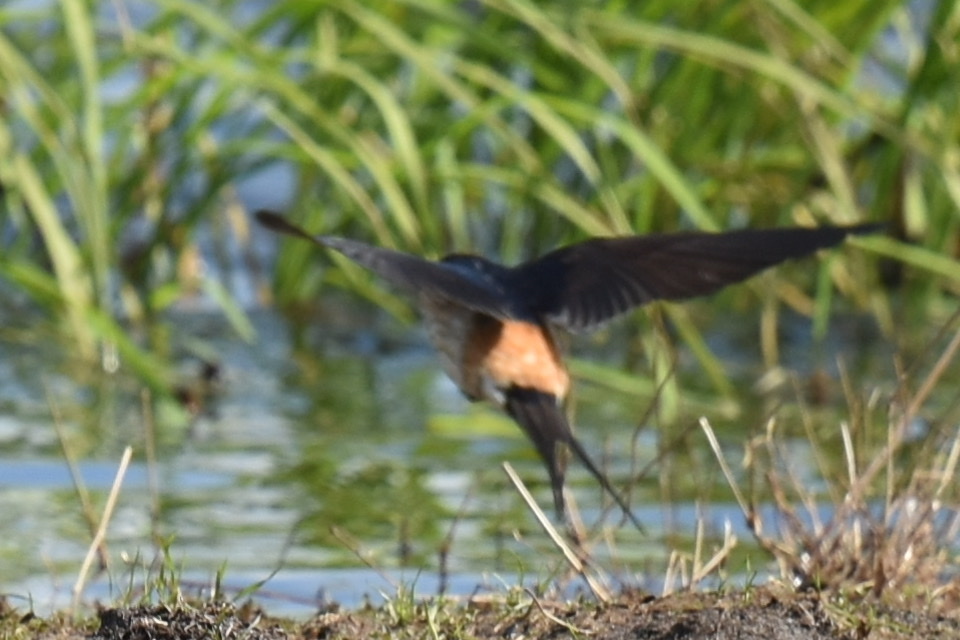
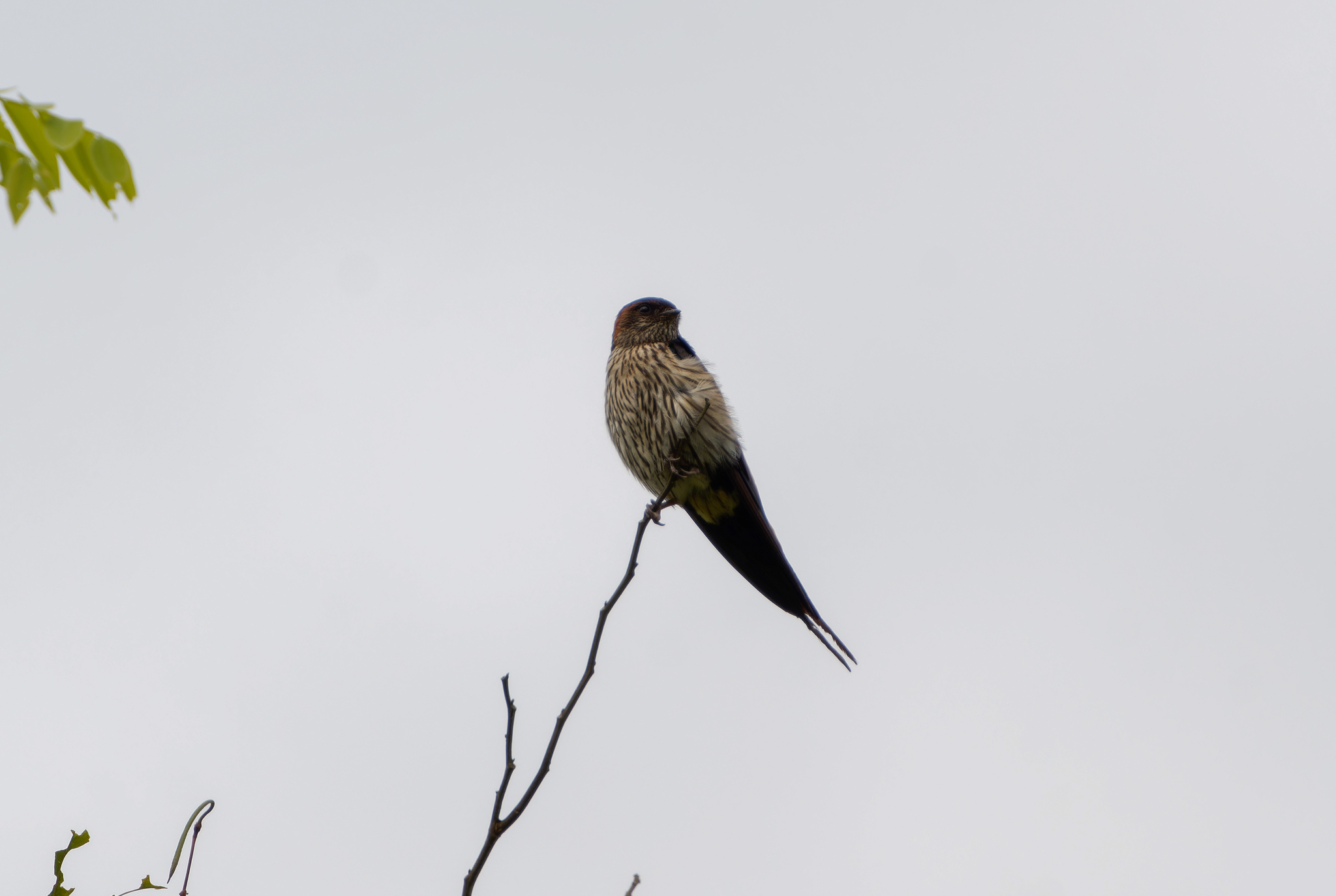
A small swallow measuring 19 centimeters in length with a deeply forked tail. The upperparts are primarily deep blue, occasionally showing a reddish collar that may be absent in some individuals. The rump is chestnut with dark streaking, creating a distinctive band across the lower back. The face and underparts appear white with heavy dark streaking throughout. The wings are brown in coloration. Sexes are similar in appearance, though juveniles display duller overall coloration with browner tones, a paler rump, and shorter outer tail feathers. The tail fork depth and rump streaking patterns vary somewhat among the different subspecies found across its range.
Identification
This species can be identified by its combination of blue upperparts, streaked chestnut rump, and heavily streaked white underparts. The deeply forked tail is a key characteristic. It differs from the barn swallow in its slower, more buoyant flight and the prominent rump patch. The streaked underparts help distinguish it from unstreaked swallow species in its range. Subspecies show variation in rump coloration and streaking intensity, with some populations having uniform chestnut rumps while others display more pronounced streaking. The shallow tail fork and indistinct white outer-tail patch help identify the Indian population C. d. erythropygia.
Distribution & Habitat
This species ranges across Southeast Asia, northeastern India, and Taiwan, with habitat extending through Myanmar, Thailand, and Indochina. It occupies open, often hilly terrain with clearings, cultivation, and scattered human settlements. The subspecies show geographic partitioning, with some forms occupying the Himalayas while others are found in peninsular India, eastern Asia, and island chains. While island populations are largely resident, continental populations such as mayri and stanfordi are partial migrants that move southward during winter months. The eastern Asian population japonica migrates to Thailand, Burma, India, and northern Australia for the winter.
Behavior & Ecology
The contact call is a sharp 'pin', while the alarm consists of 'chi-chi-chi' notes. The song is described as a soft twittering. This species feeds on flying insects captured in slow, buoyant flight close to the ground or along cliff faces. It often feeds alongside other swallow species. Breeding occurs from April through July, either as solitary pairs or in small colonies with scattered nests. The nest is a retort or bottle-shaped structure constructed from mud pellets and lined with dried grasses and feathers. Both parents share nest-building duties, incubation, and caring for the young. Clutches typically contain four or five white eggs. Nests are placed in natural caves but frequently utilize artificial structures including bridges, culverts, and building eaves.
Conservation
Information about population status, trends, and specific threats was not provided in the source article.
Culture
This species appears in the context of human-modified landscapes, as it frequently utilizes artificial structures for nesting. The species has been photographed collecting mud for nest construction near human settlements in India, indicating some level of tolerance for human presence. No specific cultural significance, folklore, or traditional associations were documented in the source article.
Source: Wikipedia · CC BY-SA 3.0
Taxonomy
- Order
- Passeriformes
- Family
- Hirundinidae
- Genus
- Cecropis
Subspecies (8)
-
Cecropis daurica daurica
breeds southern Siberia to Amur River, northern Mongolia, western China, and Transbaikalia; winters southern and southeastern Asia
-
Cecropis daurica erythropygia
northern and peninsular India (base of Himalayas to Nilgiris)
-
Cecropis daurica japonica
Korean Peninsula, eastern and central China, and Japan; migrant to coastal northern Australia
-
Cecropis daurica mayri
northeastern India to northern Myanmar and northwestern Thailand
-
Cecropis daurica nipalensis
central Himalayas to southwestern China (Yunnan), northern India, and northern Myanmar
-
Cecropis daurica stanfordi
northeastern Myanmar to southwestern China (southern Yunnan), northern Thailand, and northern Laos
-
Cecropis daurica striolata
Greater and Lesser Sundas to Philippines and Taiwan
-
Cecropis daurica vernayi
Thailand/Tenasserim border and western Thailand
Data Sources
Species description from Wikipedia, licensed under CC BY-SA 3.0.
Bird images and sounds sourced from GBIF, contributed by citizen scientists worldwide under Creative Commons licenses.
Taxonomy data from AviList 2025.