
Crimson-browed Finch
Carpodacus subhimachalus
红眉松雀
Introduction
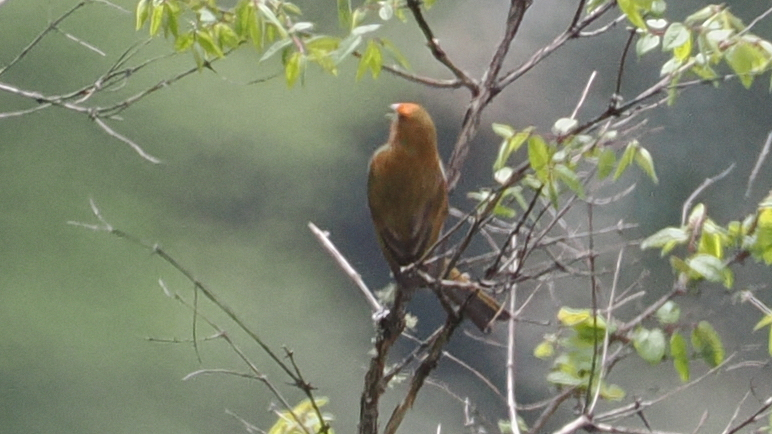
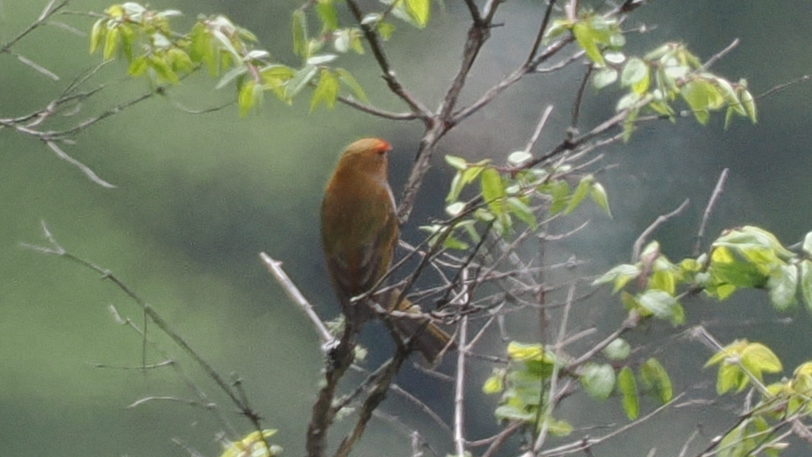
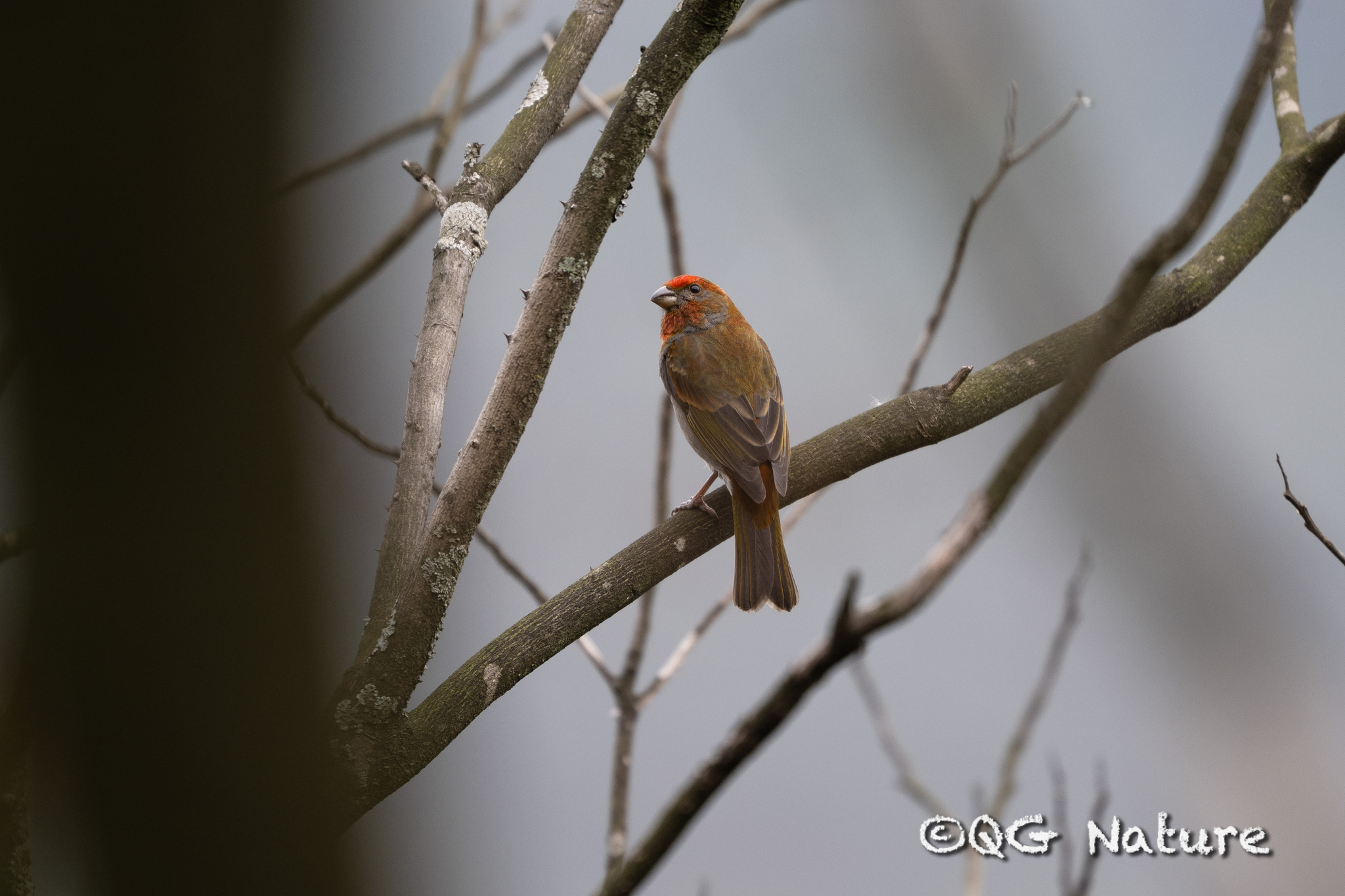
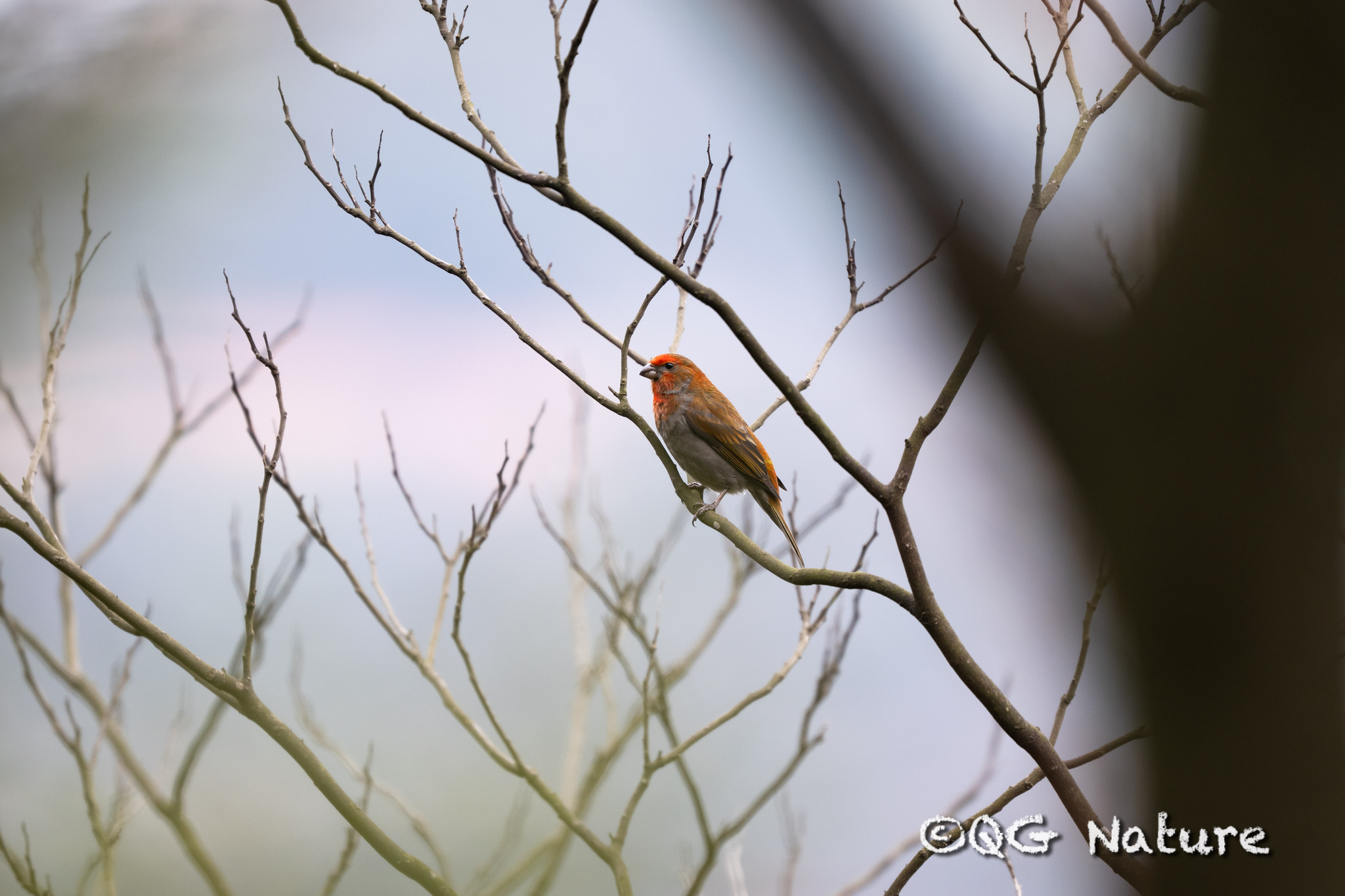
A medium-sized passerine bird in the Fringillidae family. It inhabits temperate forests and shrublands across Bhutan, China, India, Myanmar, and Nepal, occurring at high elevations. Males have crimson red coloration on the head and throat; females show yellow coloring in the same areas. The species has a robust build and a large, conical bill. It is locally common throughout its range.
Description
This is a notably large finch with a distinctive robust, short bill adapted to its feeding strategy. The species exhibits strong sexual dimorphism in plumage coloration. Adult males display a brilliant crimson red coloration on the head and throat, creating a striking and easily recognizable appearance. Females present a contrasting yellow coloration on the head and throat, with more subdued overall plumage. The combination of large body size, substantial bill structure, and sex-specific head and throat coloring makes this species distinctive within its genus.
Distribution & Habitat
The species occurs across the Himalayan region including Bhutan, China, India, Myanmar, and Nepal. Its range spans the temperate forest zones and temperate shrubland habitats of these countries. It is typically found in mountainous terrain within the broadleaf and mixed forest elevations of the Himalayas, preferring undisturbed woodland areas with sufficient understory vegetation.
Behavior & Ecology
The species was described by British naturalist Brian Houghton Hodgson in 1836, initially under the binomial name Corythus subhimachalus. Phylogenetic analyses of mitochondrial and nuclear DNA sequences led to its transfer from the genus Pinicola to the rosefinch genus Carpodacus, reflecting closer evolutionary relationships with rosefinches than previously understood.
Conservation
The species is classified as Least Concern by the IUCN, indicating it is not currently at significant risk of extinction. While specific population numbers are not well documented, it is considered locally common within its range and maintains stable populations in suitable habitat.
Culture
The species name subhimachalus combines the Latin 'sub' meaning 'beneath' with the Hindi word 'himachal' meaning snow, referencing its habitat below the snowline in the Himalayas.
Source: Wikipedia · CC BY-SA 3.0
Taxonomy
- Order
- Passeriformes
- Family
- Fringillidae
- Genus
- Carpodacus
- eBird Code
- crbfin3
Distribution
mountains of Nepal to southeastern Tibet, southwestern China, and northeastern Myanmar
Data Sources
Species description from Wikipedia, licensed under CC BY-SA 3.0.
Bird images and sounds sourced from GBIF, contributed by citizen scientists worldwide under Creative Commons licenses.
Taxonomy data from AviList 2025.