European Goldfinch
Carduelis carduelis
红额金翅雀
Introduction
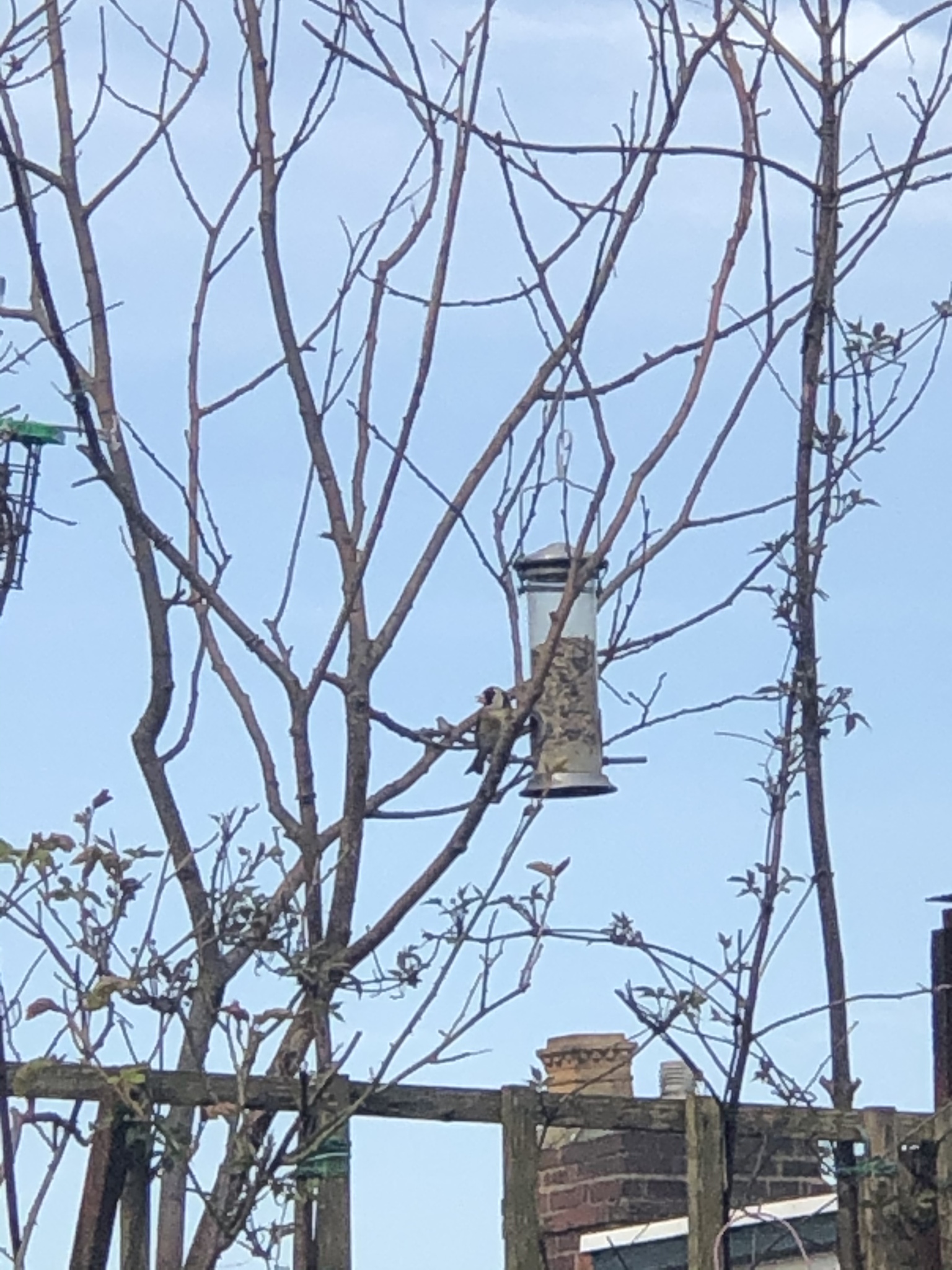
The Common Chaffinch (Fringilla coelebs) occupies much of the Palearctic region. Its native range extends across Europe, North Africa, and western and central Asia. Introduced populations now occur in Australia, New Zealand, Uruguay, and parts of the United States. The species inhabits gardens, woodland edges, and open countryside, and frequently visits backyard bird feeders offering niger seed. In western regions of its range, populations are resident year-round, while birds from colder areas migrate south for winter. Resident populations also make local movements during harsh weather. In winter, flocks of up to 40 or more individuals gather to feed.
Description
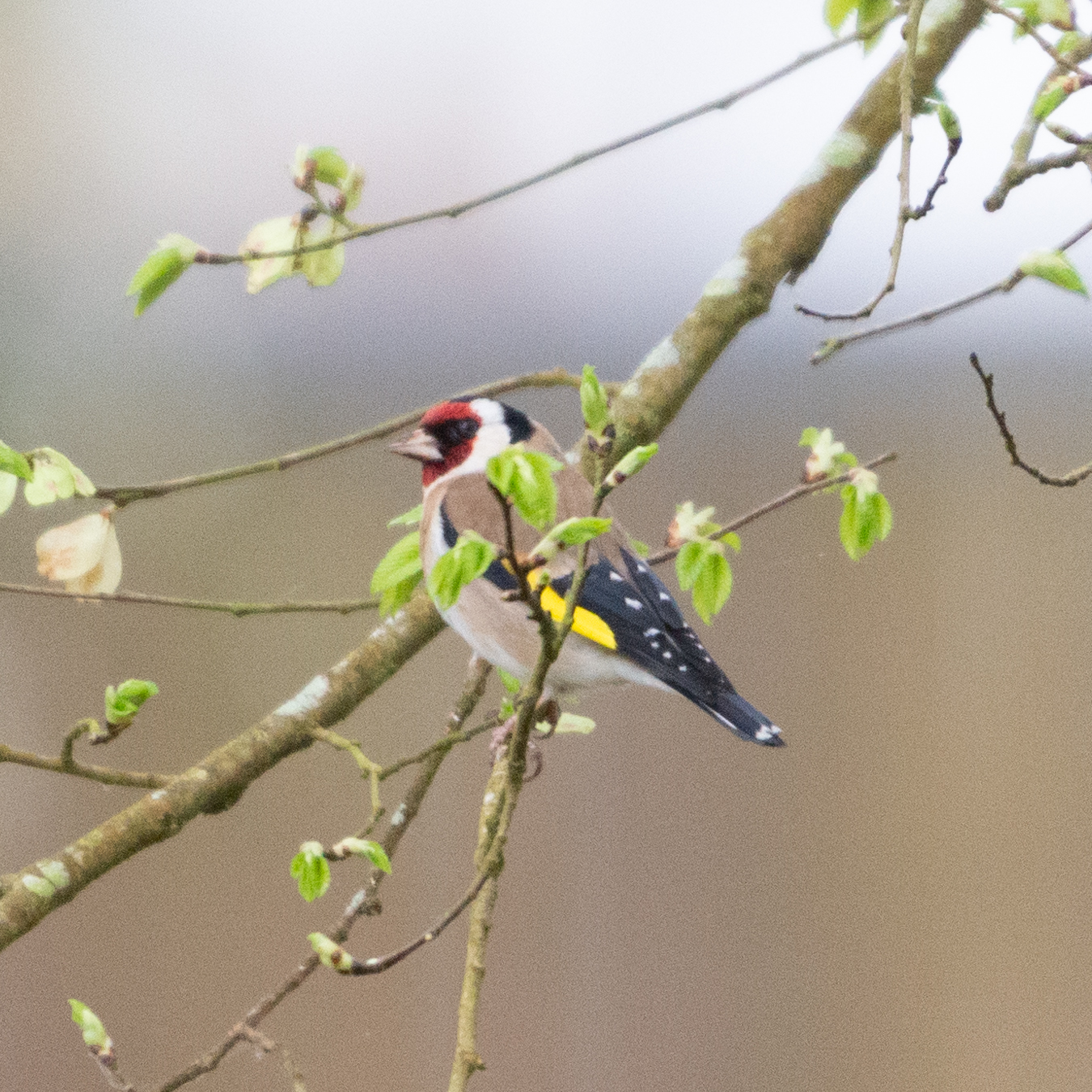
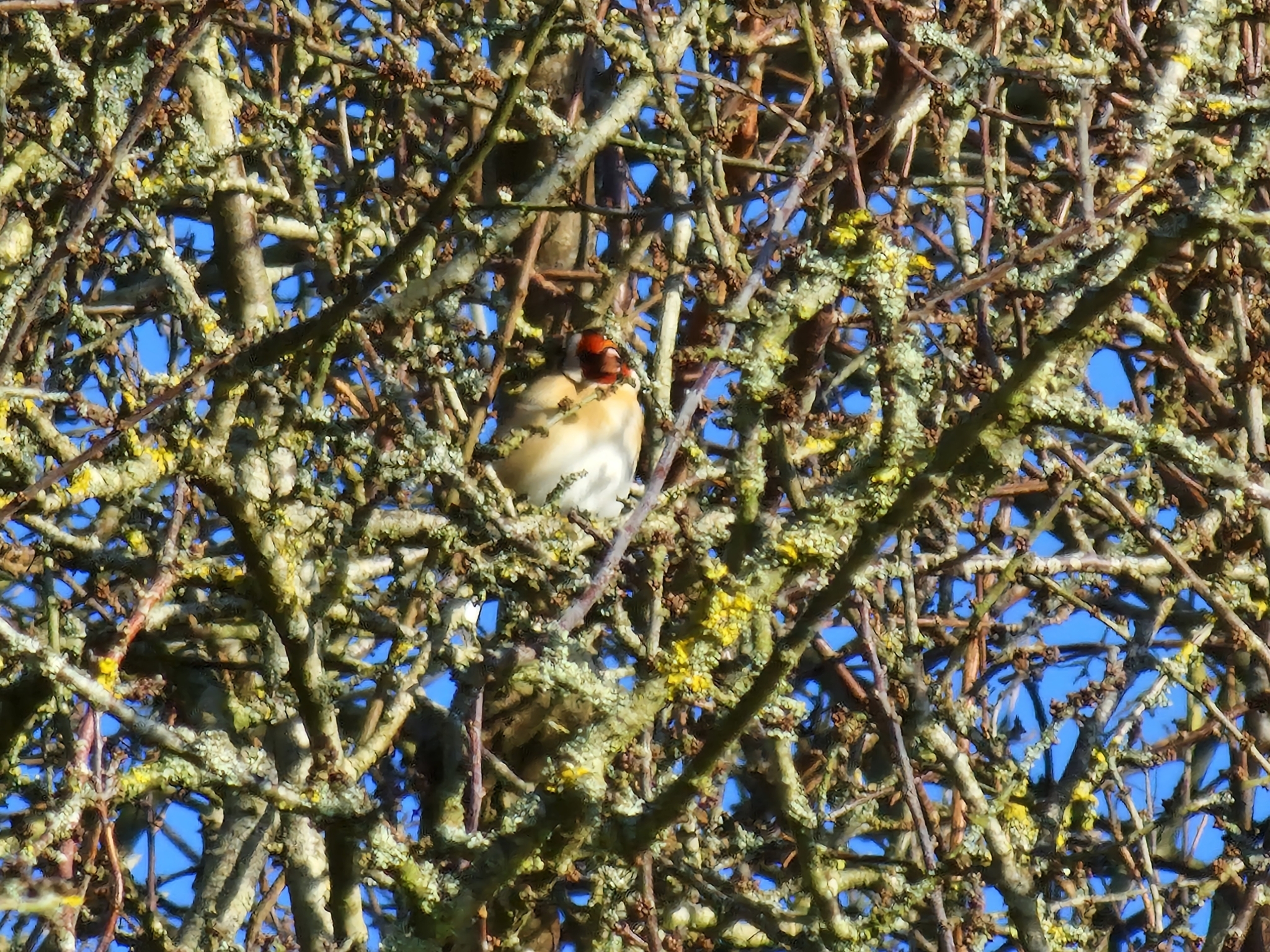
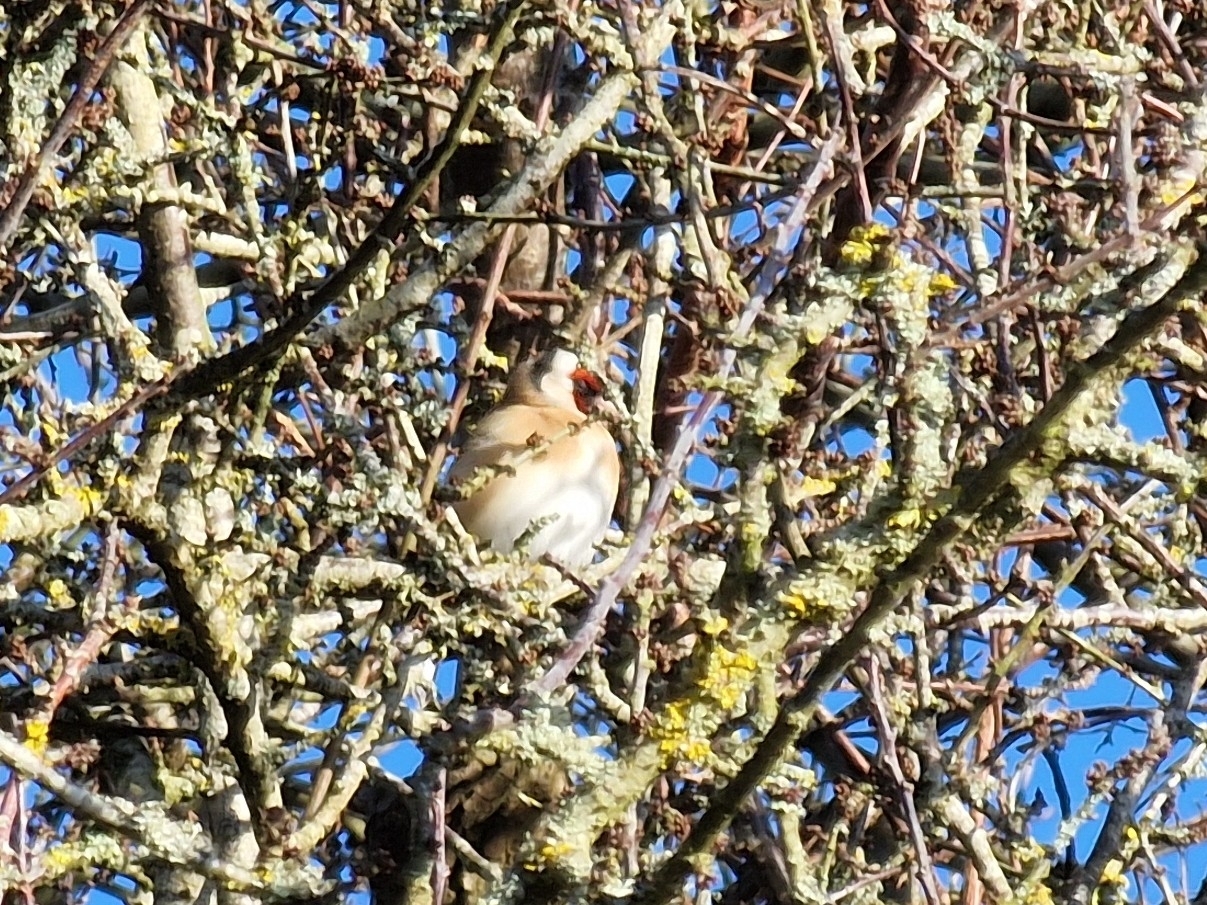
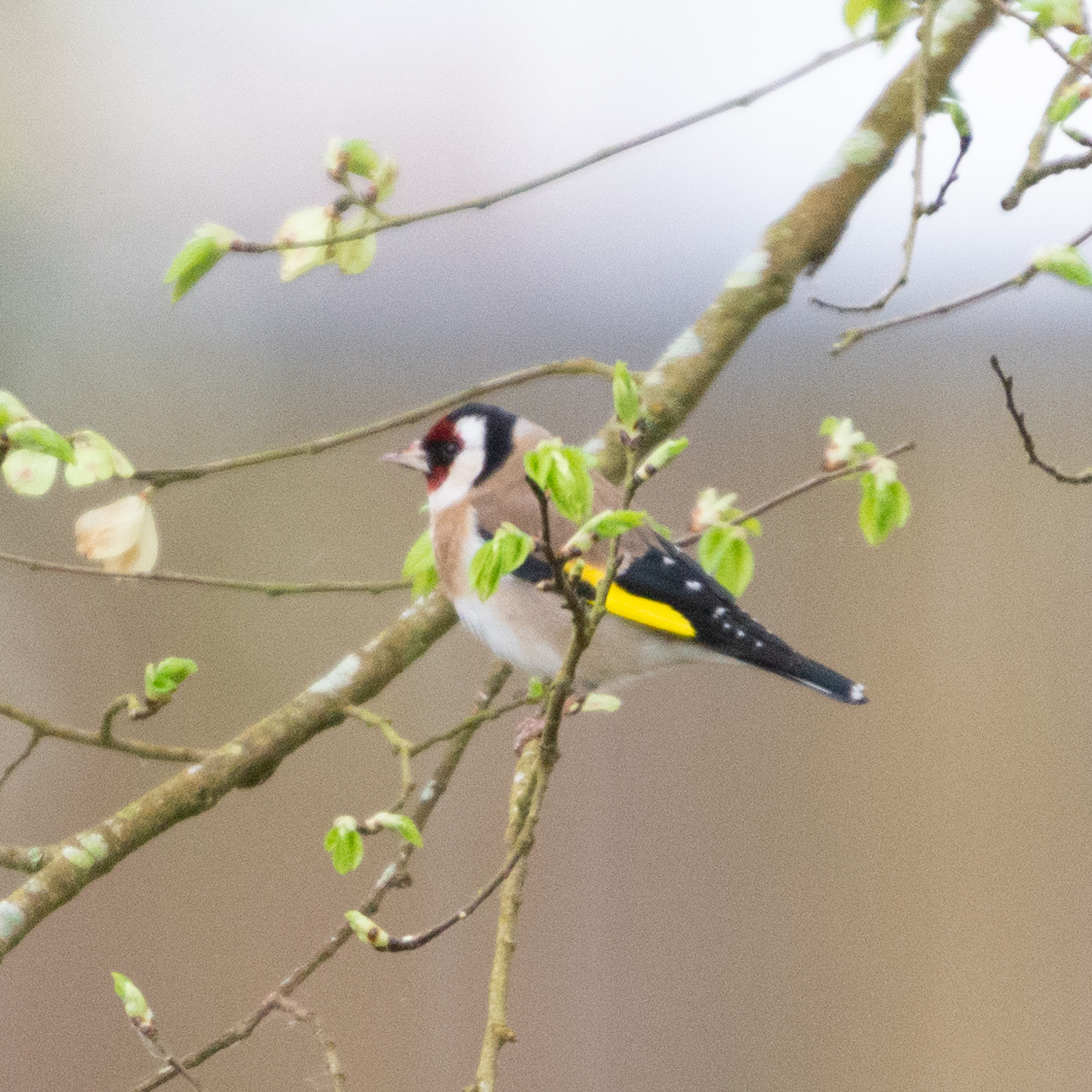
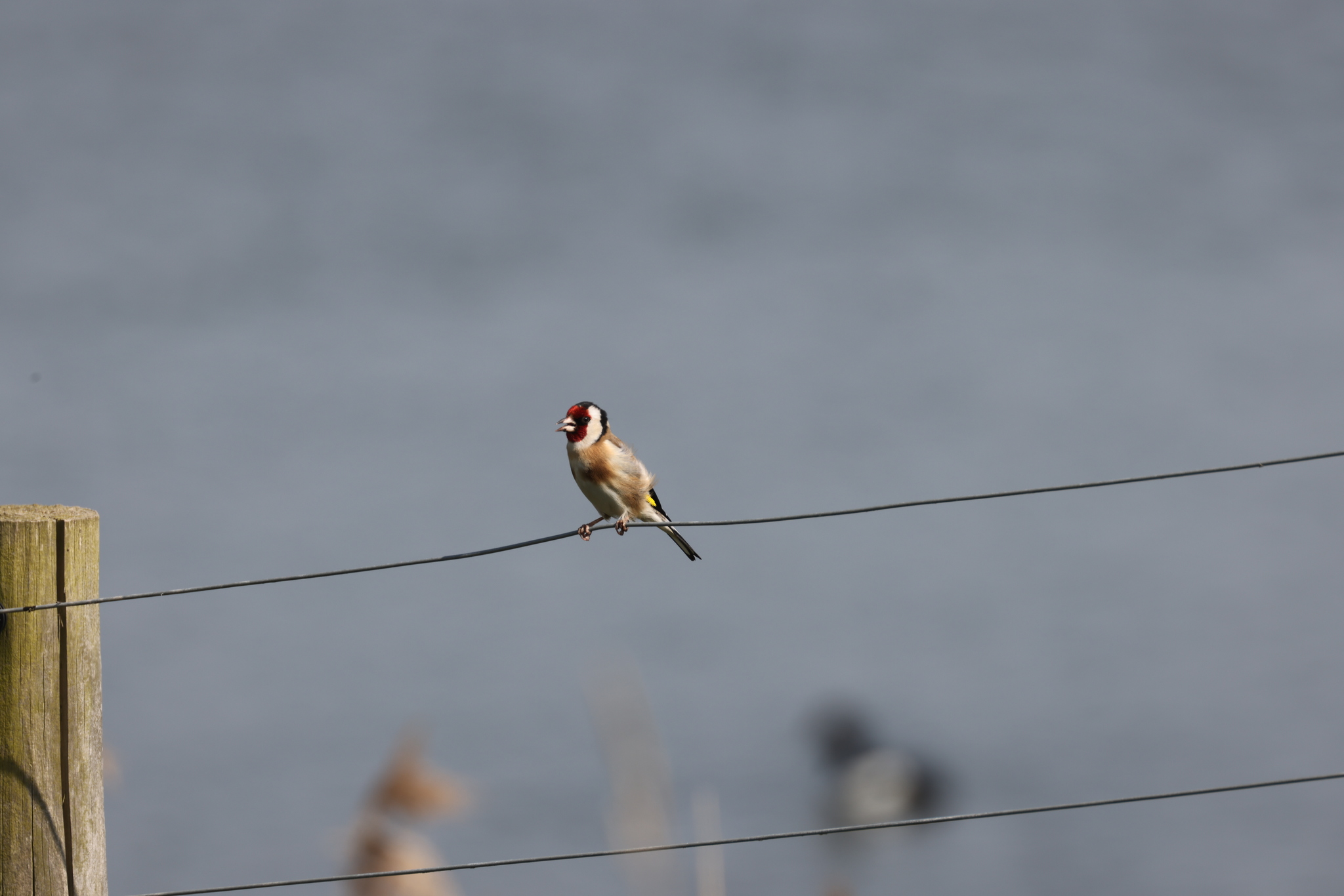
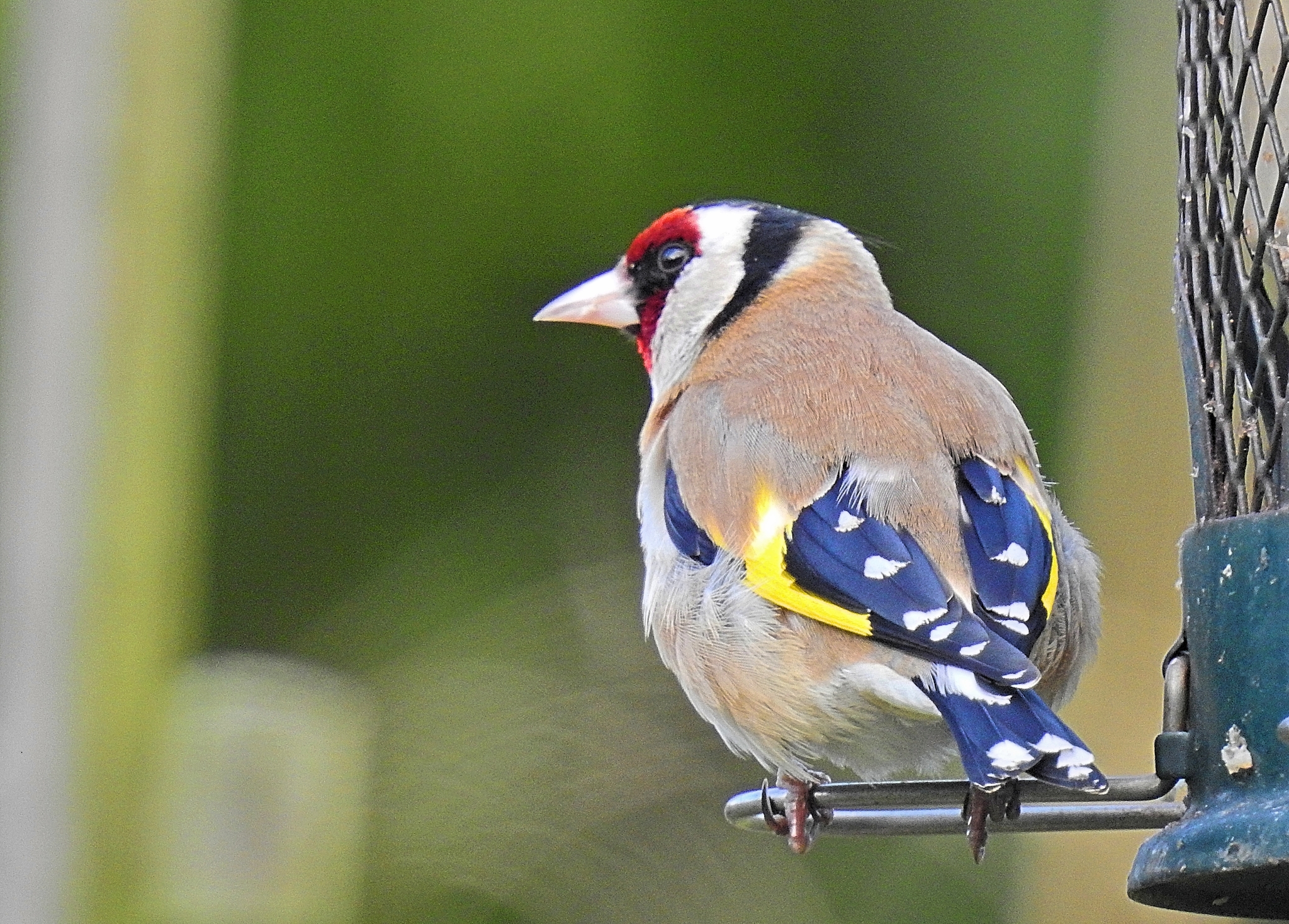
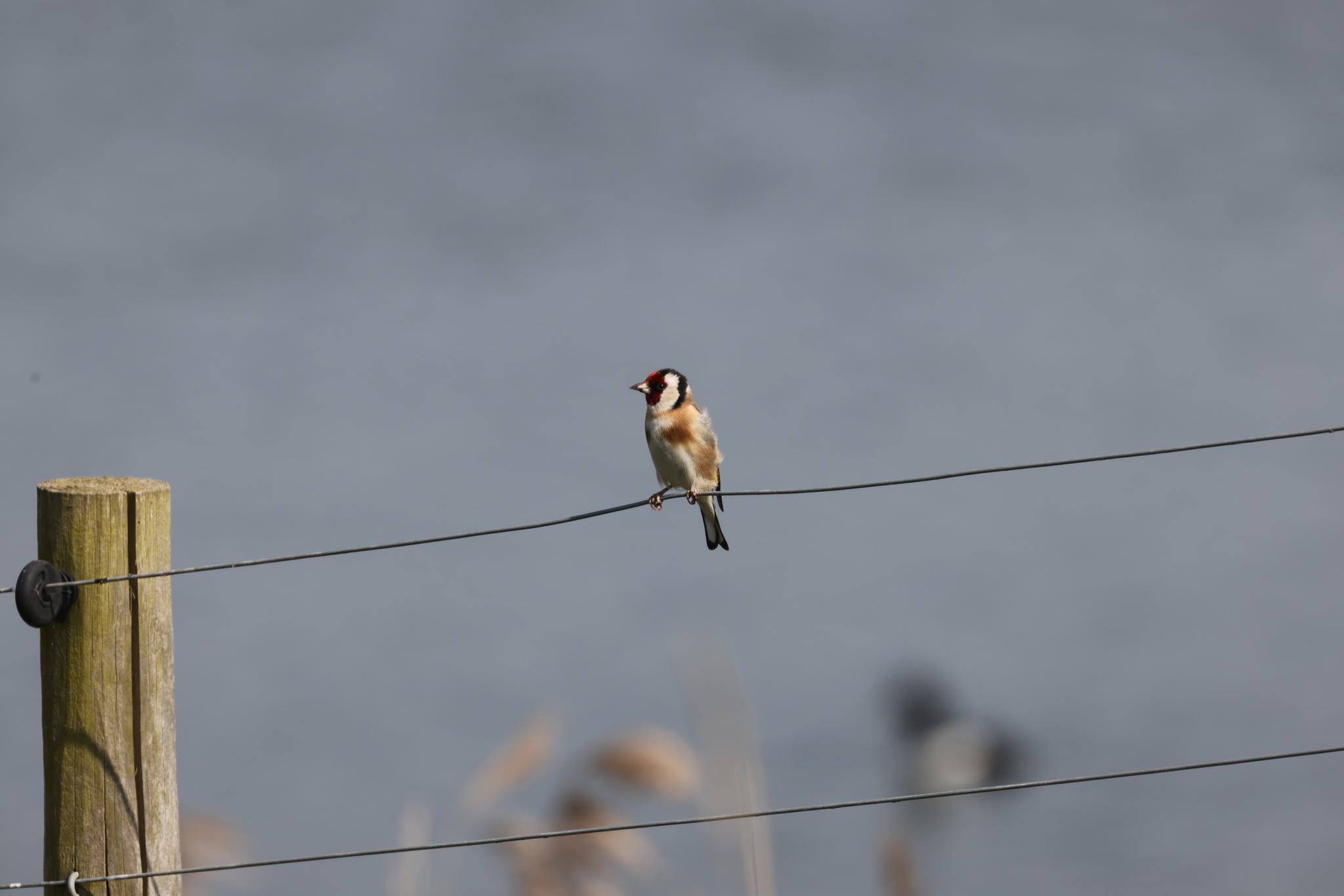
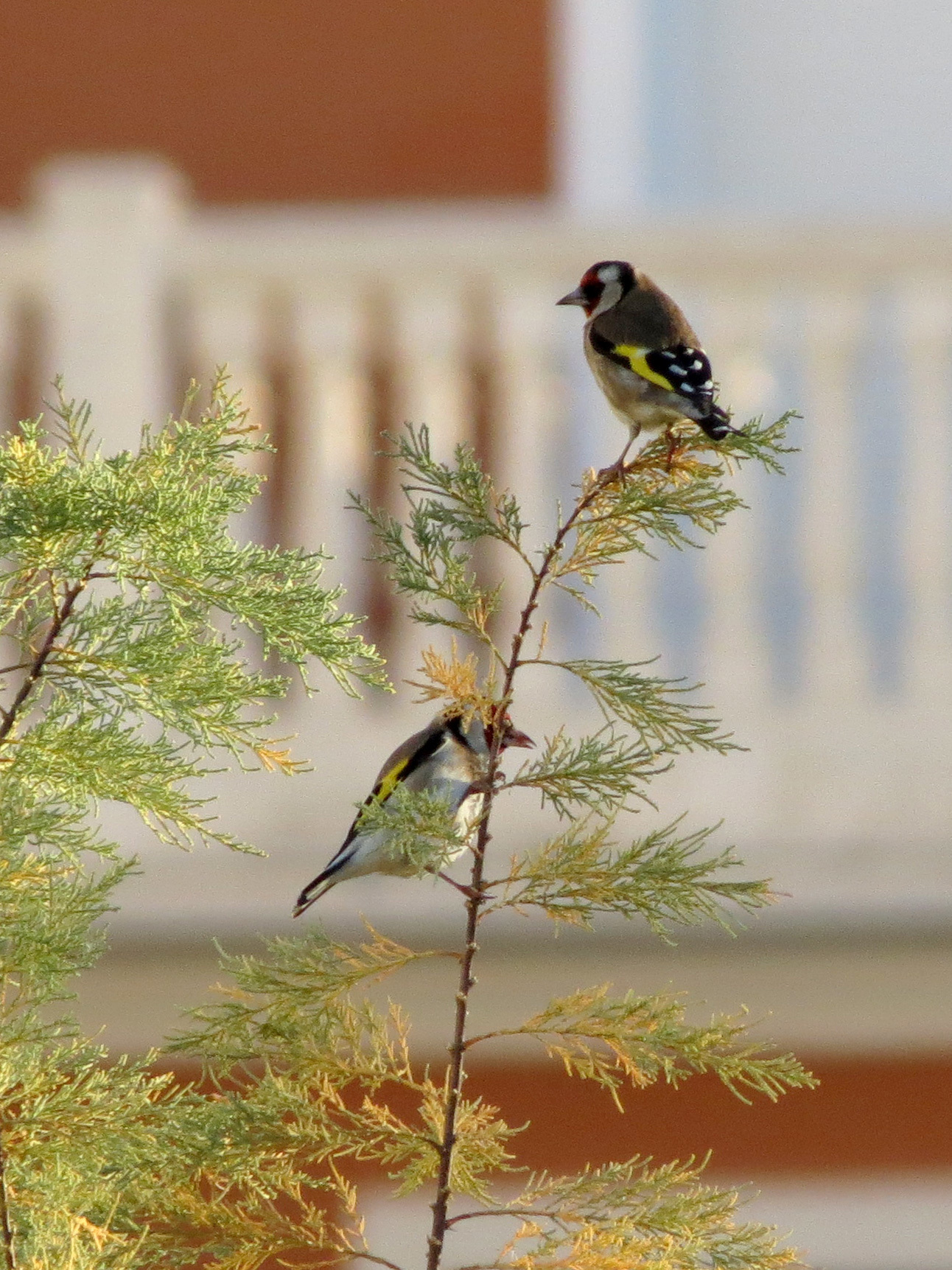
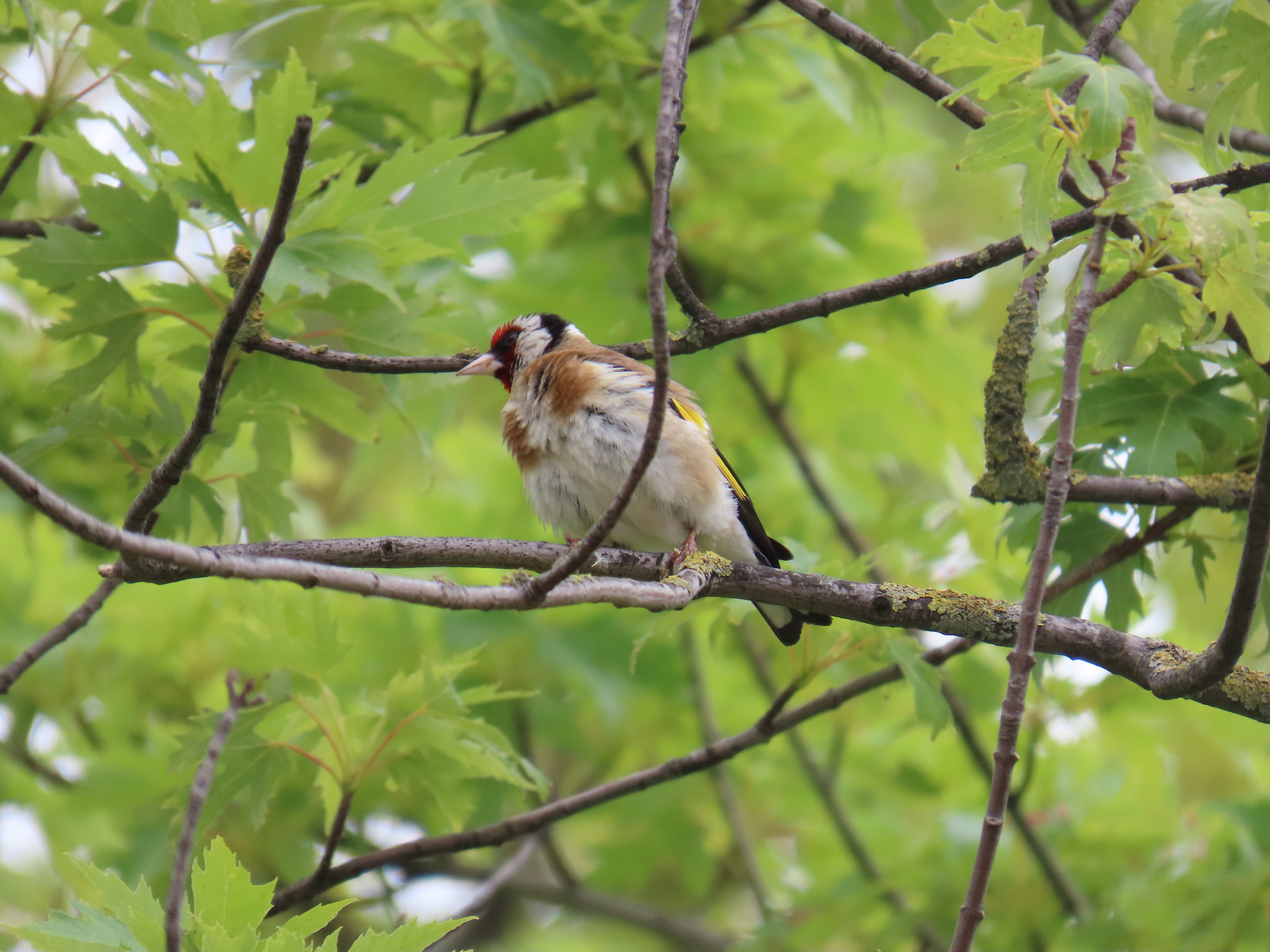
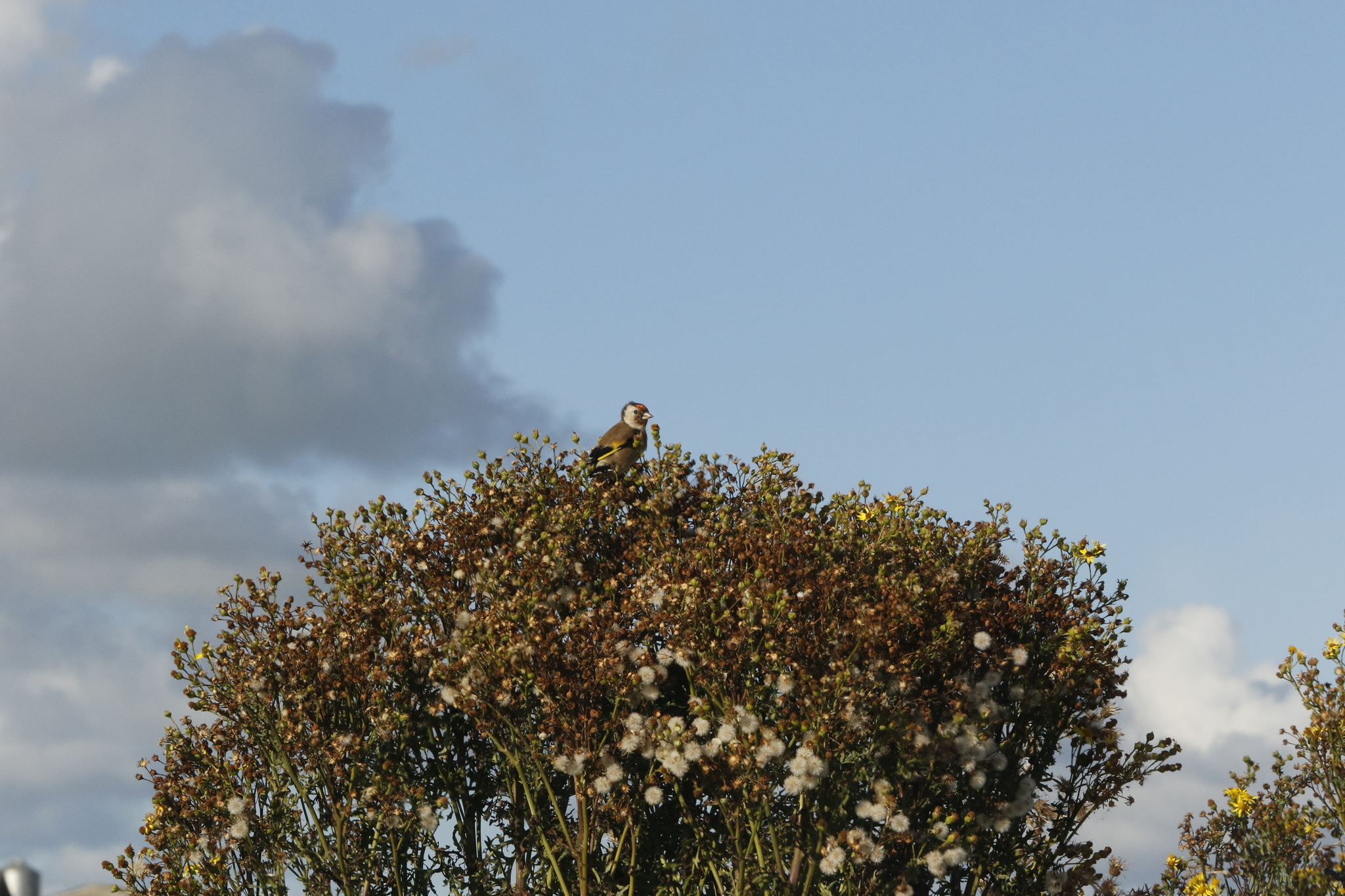
A small, compact finch measuring 12-13 cm in length with a wingspan of 21-25 cm and weighing 14-19 grams. The adult has a vivid red face with black markings around the eyes and a striking black-and-white striped head. The upperparts are warm brown, while the underparts are white with buff-colored flanks and breast patches. The most diagnostic features are the black wings with their broad yellow bar and the black tail with white rump. The bill is long, pointed, and ivory-colored, adapted for extracting seeds from plants. The tail is distinctly forked. During breeding season, the bill appears pale with a dark mark at the tip, while non-breeding birds have darker bills. Sexes are similar, but males can be distinguished by their larger, darker red face mask that extends behind the eye and their black shoulder feathers, whereas females have smaller red face patches that do not extend past the eye and brown shoulder feathers. Juveniles lack the red face, having plain heads and greyer backs, but are still identifiable by their yellow wing stripe.
Distribution & Habitat
Native to Europe, North Africa, and western and central Asia, this species inhabits open, partially wooded lowlands throughout its range. In the milder western portions of its territory, populations are resident year-round, though they may make local movements to escape adverse weather. Birds from colder regions migrate south for the winter. The species has been widely introduced beyond its native range, establishing self-sustaining populations in Bermuda, Canada, the United States, Mexico, Peru, Argentina, Chile, the Falkland Islands, Uruguay, Brazil, South Africa, Australia, and New Zealand. In Australia, populations now stretch from Brisbane to the Eyre Peninsula, while in the United States, the species has become established in the western Great Lakes region.
Behavior & Ecology
The breeding season begins with the female constructing a neat, compact nest made of moss and lichen, lined with plant down from thistles. Located several meters above ground at the end of a swaying branch and hidden by leaves, the nest is attached with spider silk and designed as a deep cup to prevent egg loss in wind. The clutch consists of 4-6 whitish eggs with reddish-brown speckles, measuring about 17.3 mm × 13.0 mm. The female incubates for 11-13 days while being fed by the male, and both parents share feeding duties. The young fledge after 13-18 days, with parents typically raising two or three broods annually. The diet consists primarily of small seeds from thistles, cornflowers, and teasels, with insects added when feeding young. In winter, these birds form flocks of up to 40 individuals or more, frequently visiting bird feeders. The call is a melodic 'tickeLIT,' while the song is a pleasant tinkling medley of trills and twitters, often including a tri-syllabic phrase.
Conservation
This species is currently listed as Least Concern by the IUCN, indicating it is not considered at immediate risk of population decline. However, wildlife conservation efforts continue to focus on limiting bird trapping and protecting the open-space habitats this species requires. Historically, the species faced significant pressure from trapping for the cage bird trade—in 19th century Britain, thousands were captured annually for sale. This practice was so widespread that one of the earliest campaigns of the Royal Society for the Protection of Birds was directed specifically against this trade. While legal protection and reduced demand have eased this pressure, habitat loss and degradation remain ongoing concerns in some regions.
Culture
This bird holds significant cultural and religious symbolism, particularly in Christian tradition where it represents Christ's Passion and the crown of thorns due to its preference for thistle seeds. It frequently appears in Renaissance paintings of the Madonna and Child, most famously in Raphael's 'Madonna del cardellino' (Madonna of the Goldfinch), where John the Baptist offers the bird to the Christ Child as a foreshadowing of the Crucifixion. The species also symbolizes endurance, fruitfulness, and persistence, and is associated with Saint Jerome in religious art. In literature, it appears in works by John Keats and Patrick Kavanagh, while Antonio Vivaldi composed a flute concerto, 'Il Gardellino,' imitating its song. The borough of Steglitz in Berlin takes its name from this bird, and 'Goldspink' is a Scots surname derived from the local name for the species. Donna Tartt's novel 'The Goldfinch,' which won the 2014 Pulitzer Prize for Fiction, further cemented the bird's place in contemporary culture.
Source: Wikipedia · CC BY-SA 3.0
Taxonomy
- Order
- Passeriformes
- Family
- Fringillidae
- Genus
- Carduelis
- eBird Code
- eurgol1
Subspecies (10)
-
Carduelis carduelis balcanica
the Balkans and Crete
-
Carduelis carduelis brevirostris
eastern Türkiye eastward to northern Iran
-
Carduelis carduelis britannica
British Isles, Channel Islands, and northwestern France eastward to western Netherlands; introduced southeastern Australia, Norfolk Island (east of Australia), New Zealand (and self-introduced to Chatham and subantarctic islands), Bermuda, Uruguay, and east-central Argentina (Buenos Aires)
-
Carduelis carduelis carduelis
breeds southern Scandinavian Peninsula eastward to central Urals, southward to eastern Netherlands, central France, Italy, northwestern Romania, Moldova, and northern Ukraine; partially migratory, wintering from central and southern Europe eastward to western Kazakhstan
-
Carduelis carduelis colchica
Crimean Peninsula to Caucasus and northeastern Türkiye
-
Carduelis carduelis frigoris
southwestern Siberia (Ural Mountains to Yenisey River)
-
Carduelis carduelis niediecki
Rhodes, Karpathos, and Cyprus; Egypt to Türkiye, northern Iraq, and southwestern Iran
-
Carduelis carduelis parva
Azores, Madeira, Canary Islands, and western Mediterranean region
-
Carduelis carduelis tschusii
Corsica, Sardinia, and Sicily
-
Carduelis carduelis volgensis
southern Ukraine, southeastern European Russia, and far northwestern Kazakhstan
Data Sources
Species description from Wikipedia, licensed under CC BY-SA 3.0.
Bird images and sounds sourced from GBIF, contributed by citizen scientists worldwide under Creative Commons licenses.
Taxonomy data from AviList 2025.