
Large-tailed Nightjar
Caprimulgus macrurus
长尾夜鹰
Introduction
The large-tailed nightjar is a medium-sized nocturnal bird species occurring in South and Southeast Asia and northern Australia. It is largely resident throughout its range, though some local movements occur in response to weather patterns. The species occupies forested habitats including lowland tropical forests, montane slopes, secondary growth, forest edges, plantations, and parks. It produces territorial calls at dusk and dawn. The tail is long and broad with prominent white patches visible in flight, distinguishing it from other nightjars. Its diet includes insects, providing pest control benefits in agricultural areas.
Description
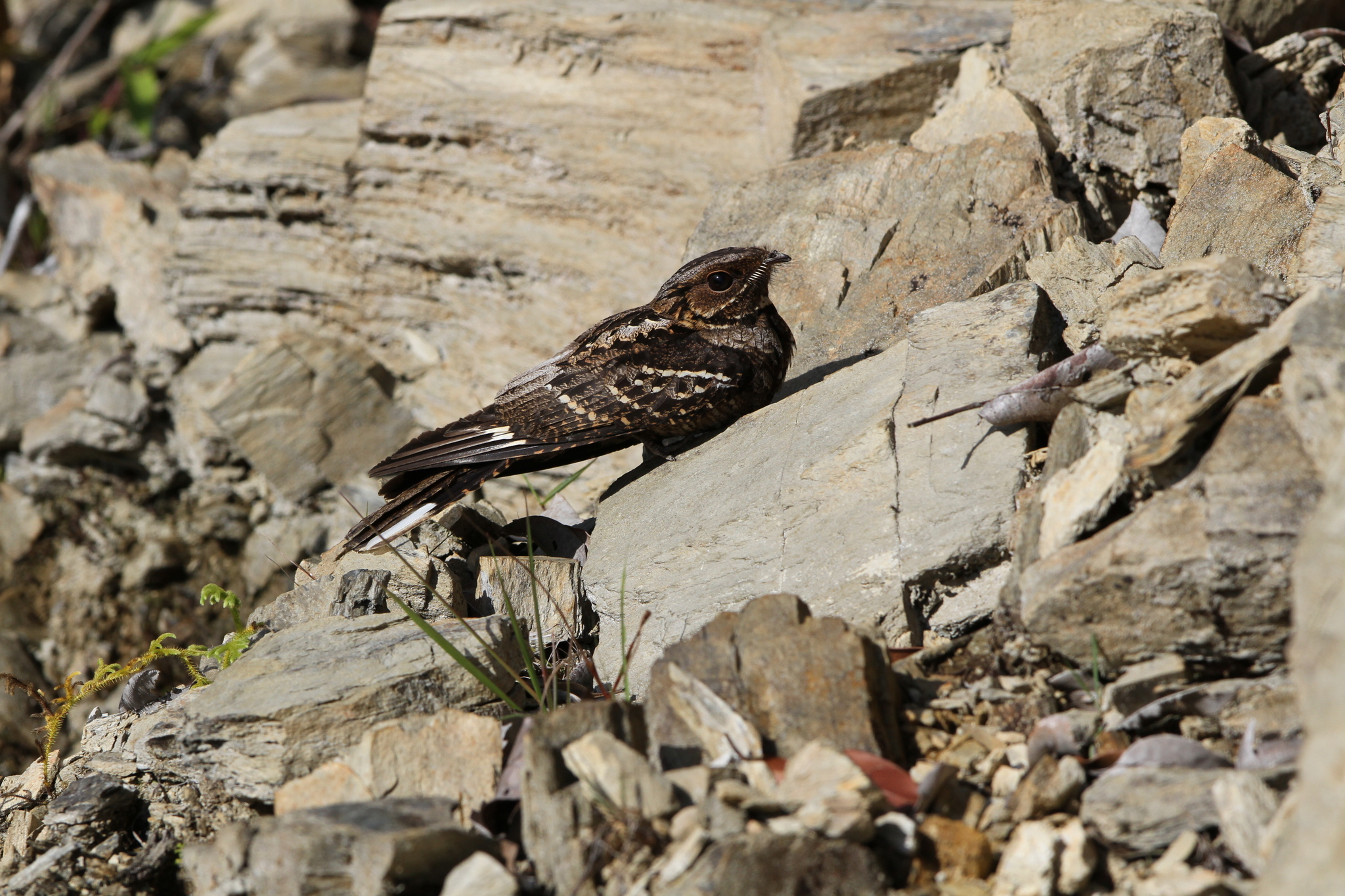
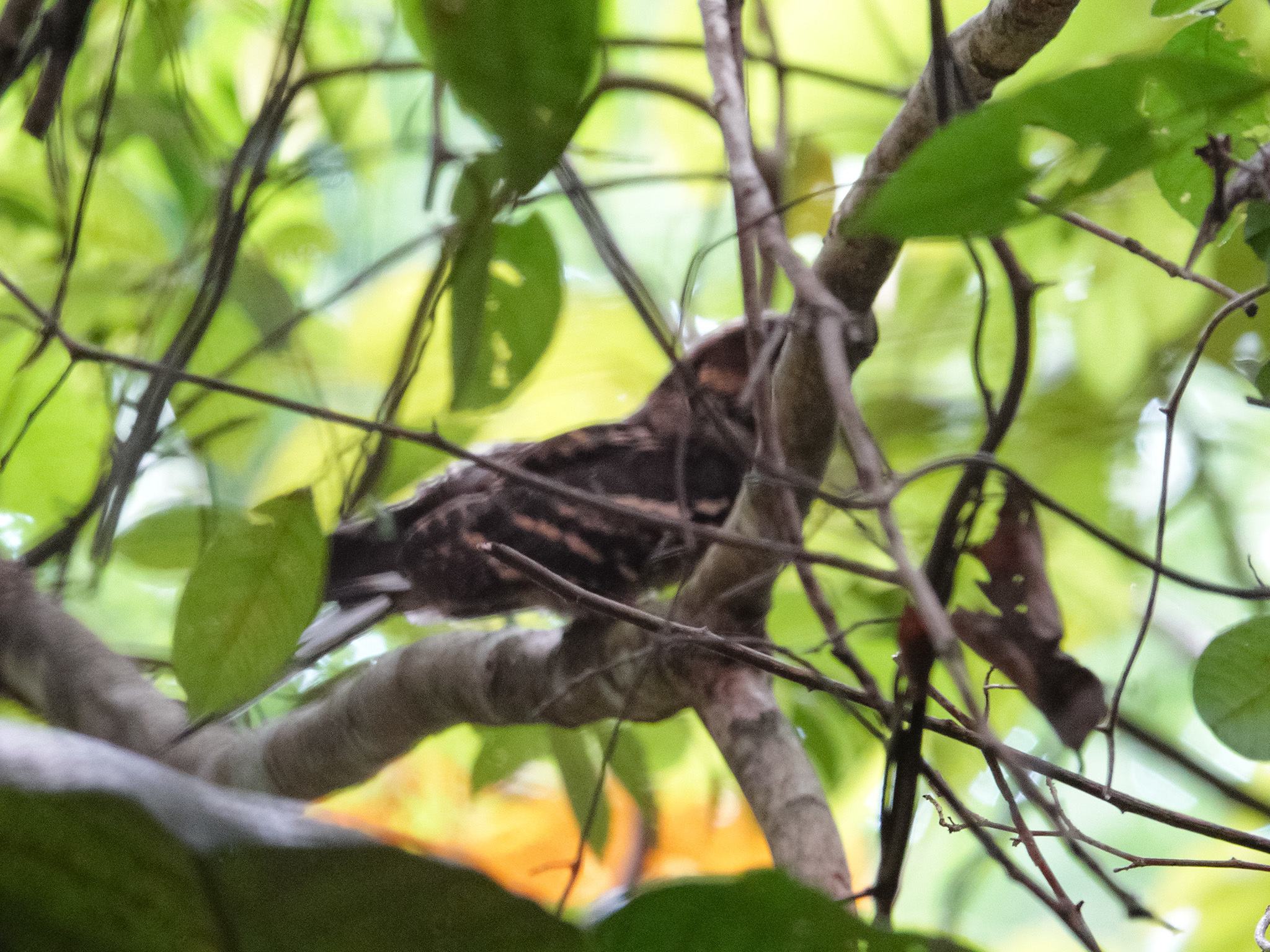
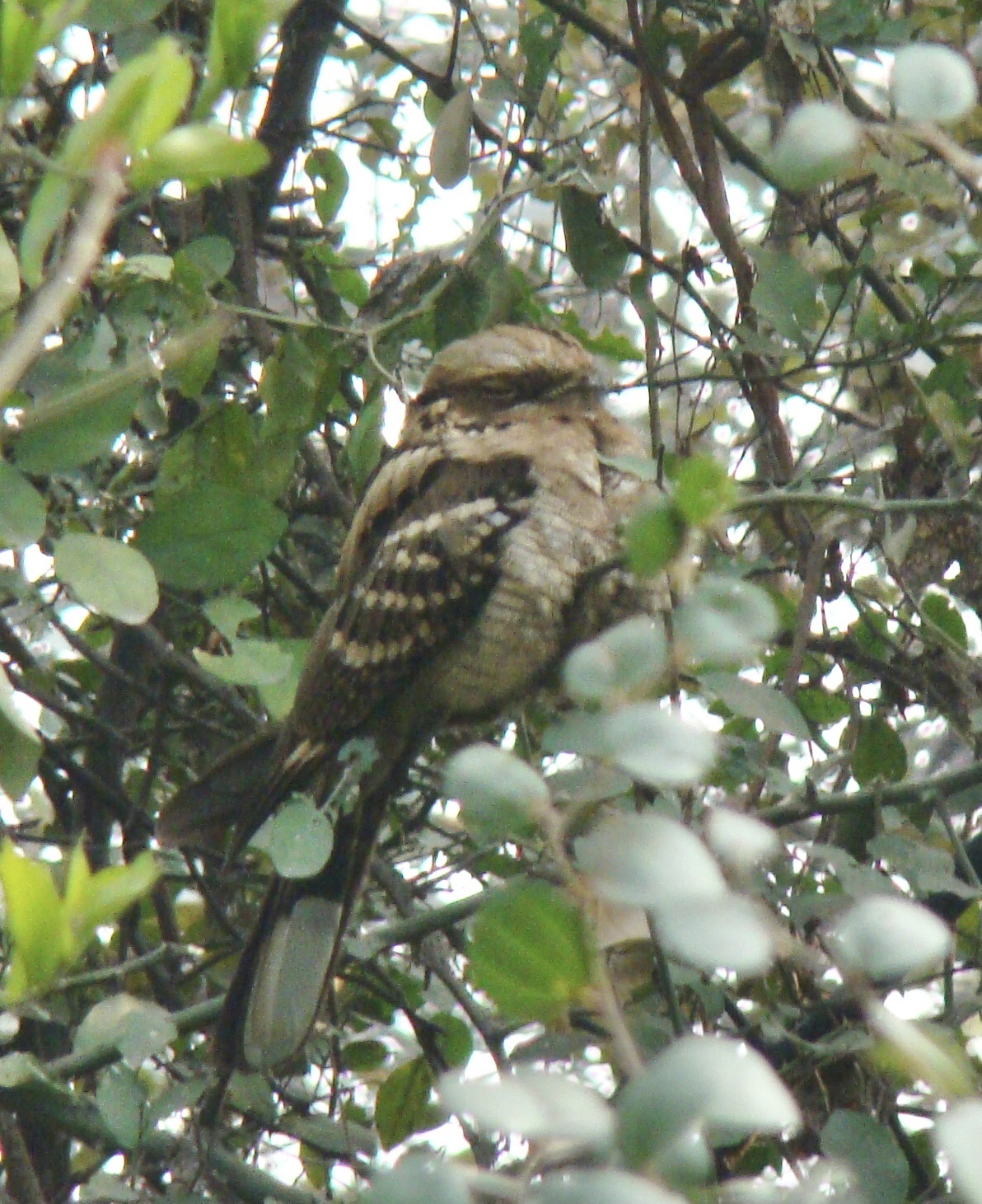
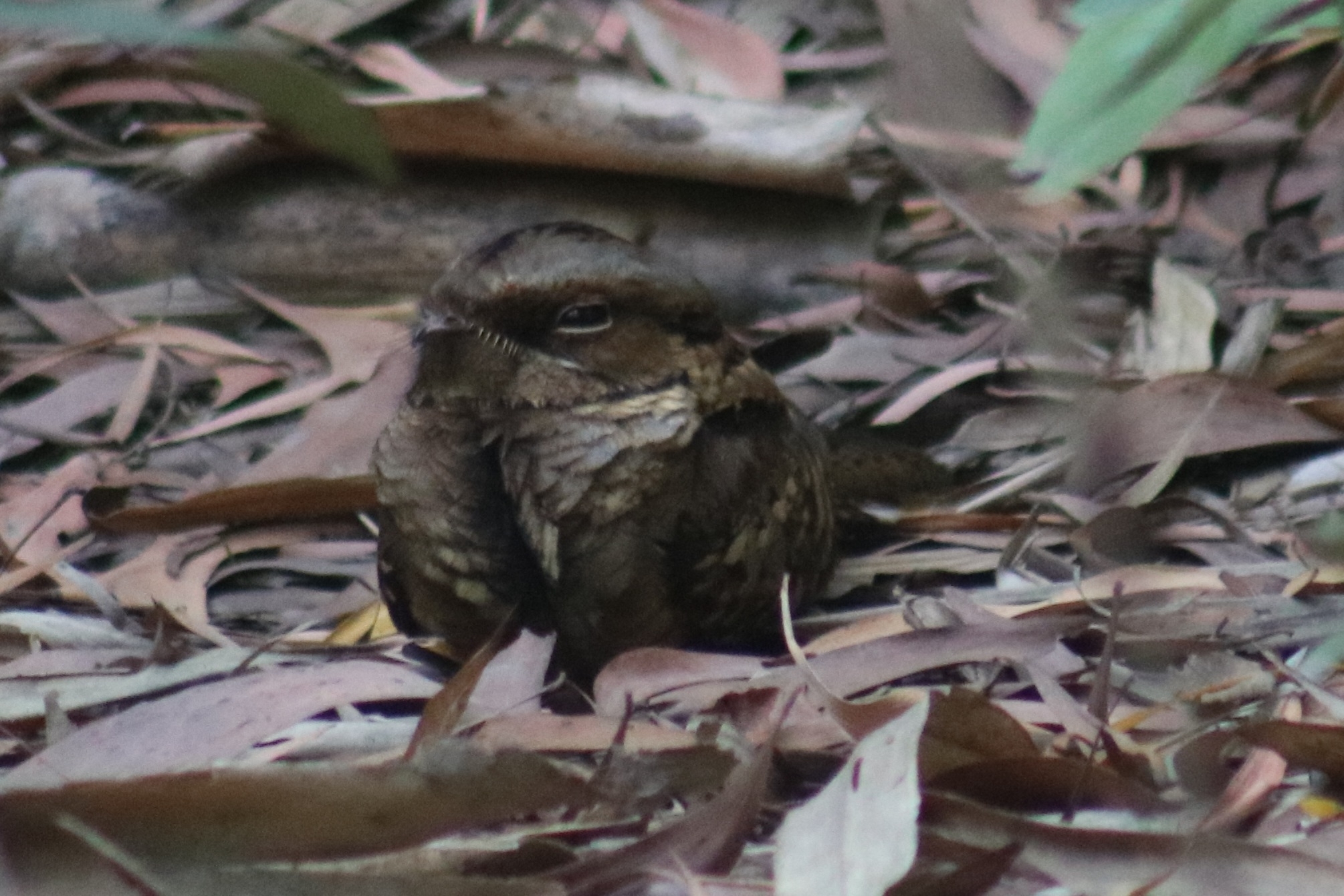
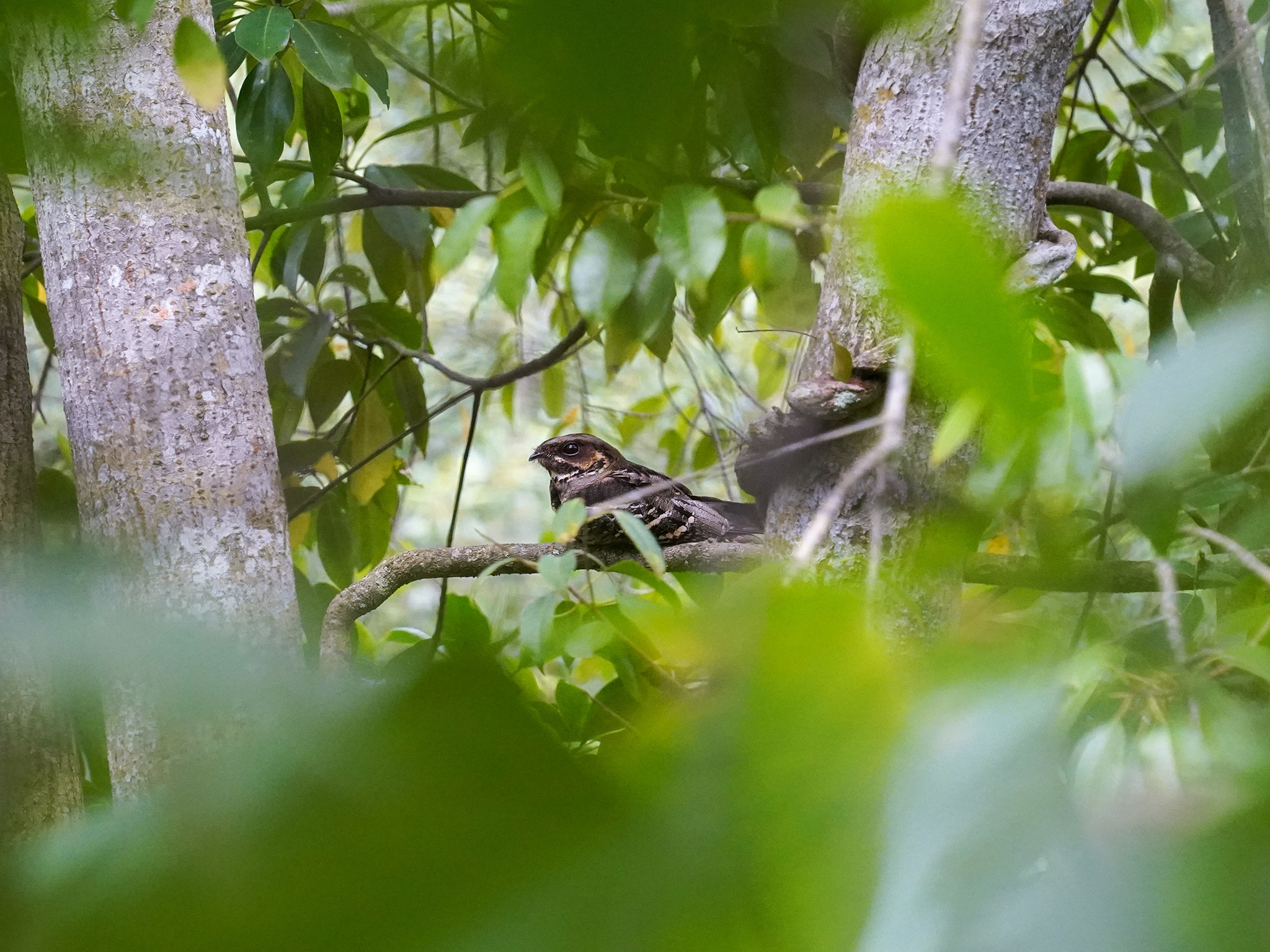
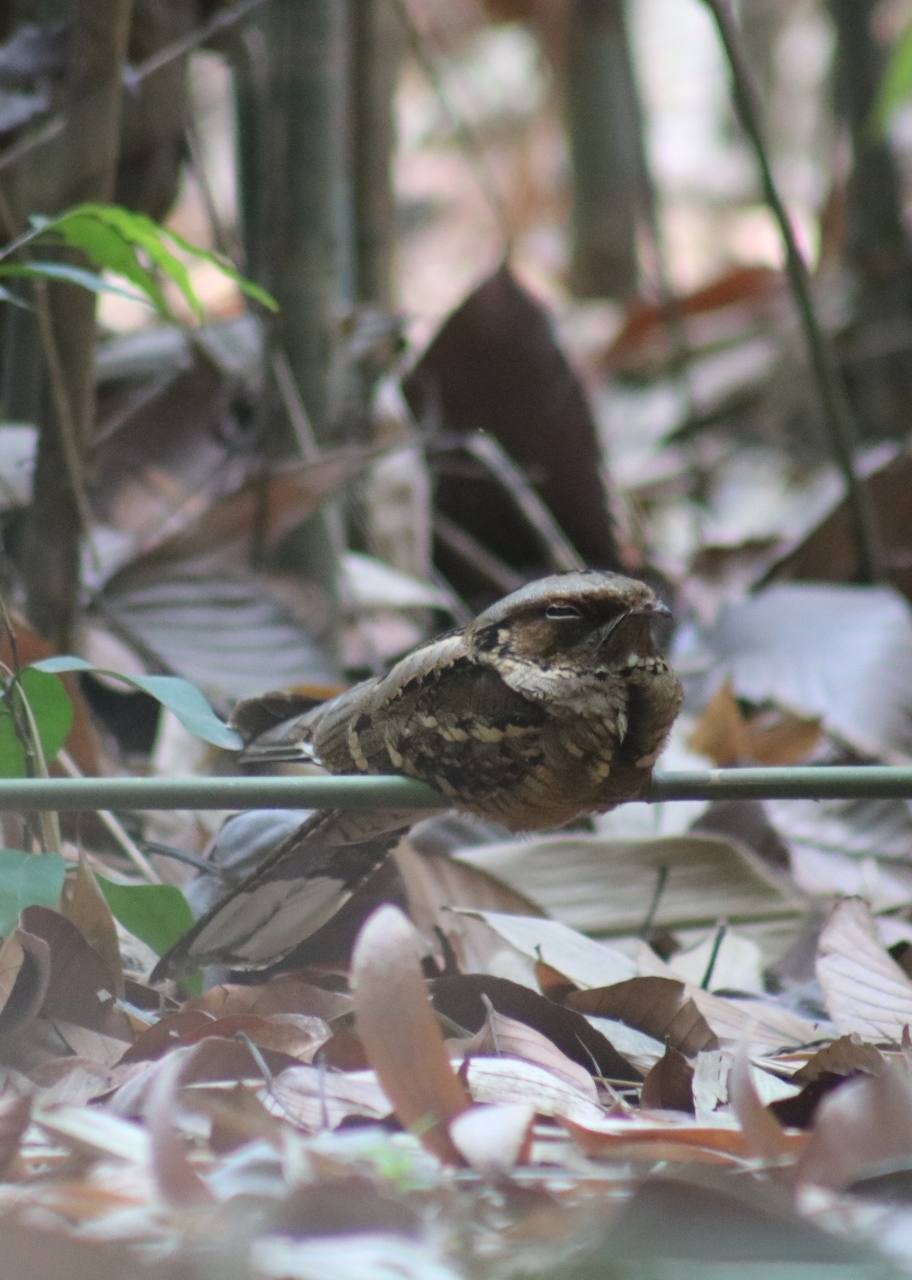
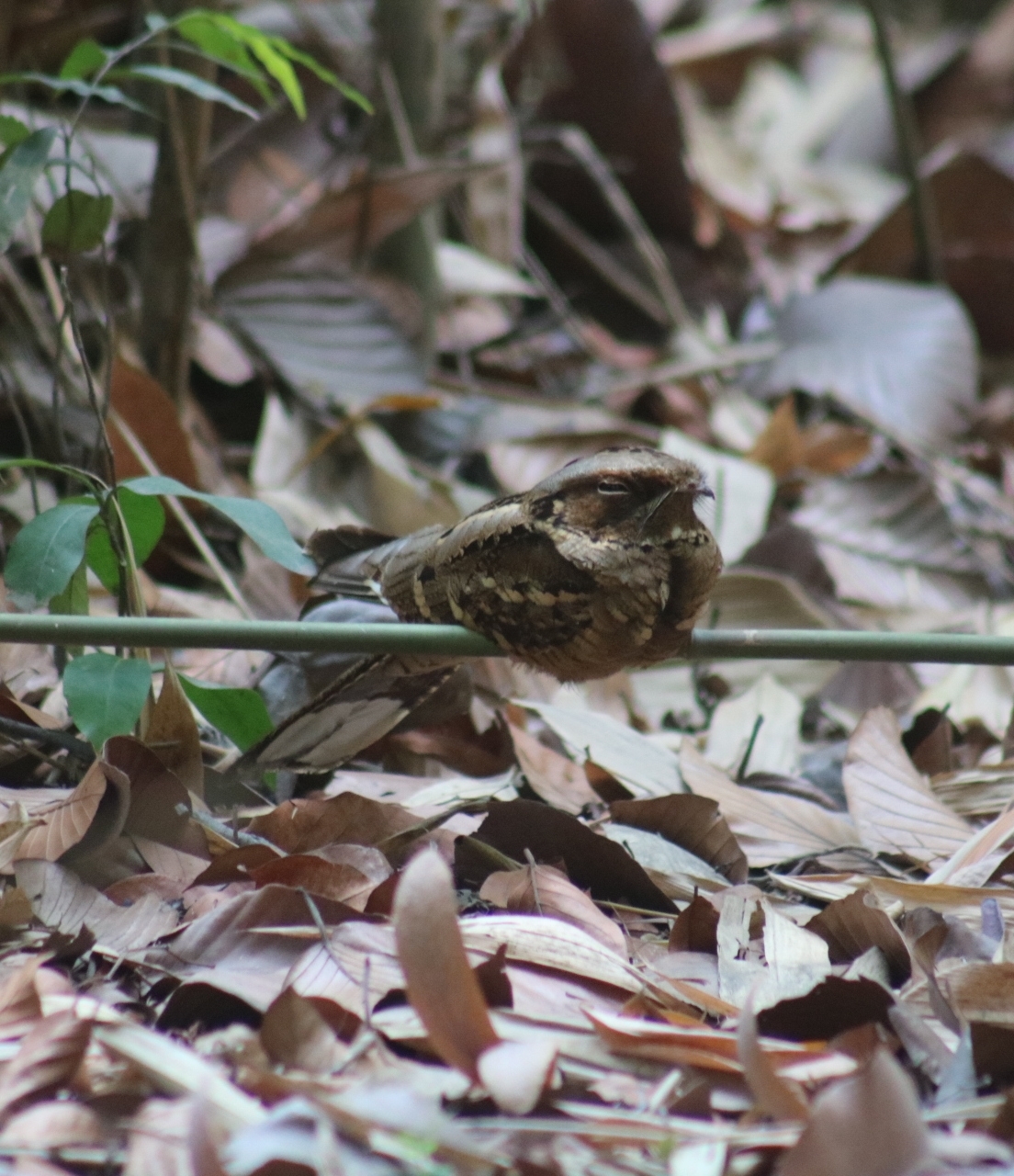
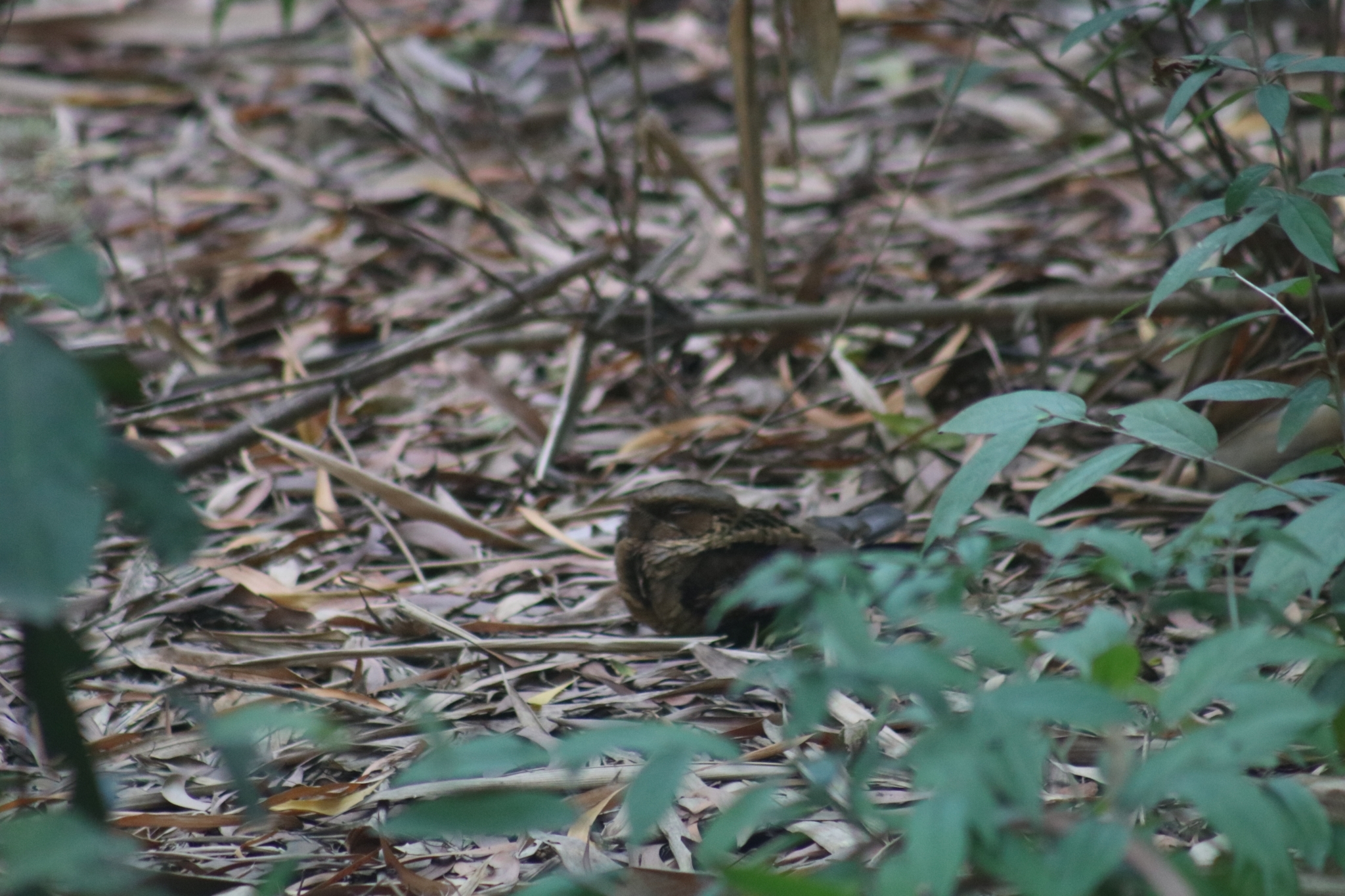
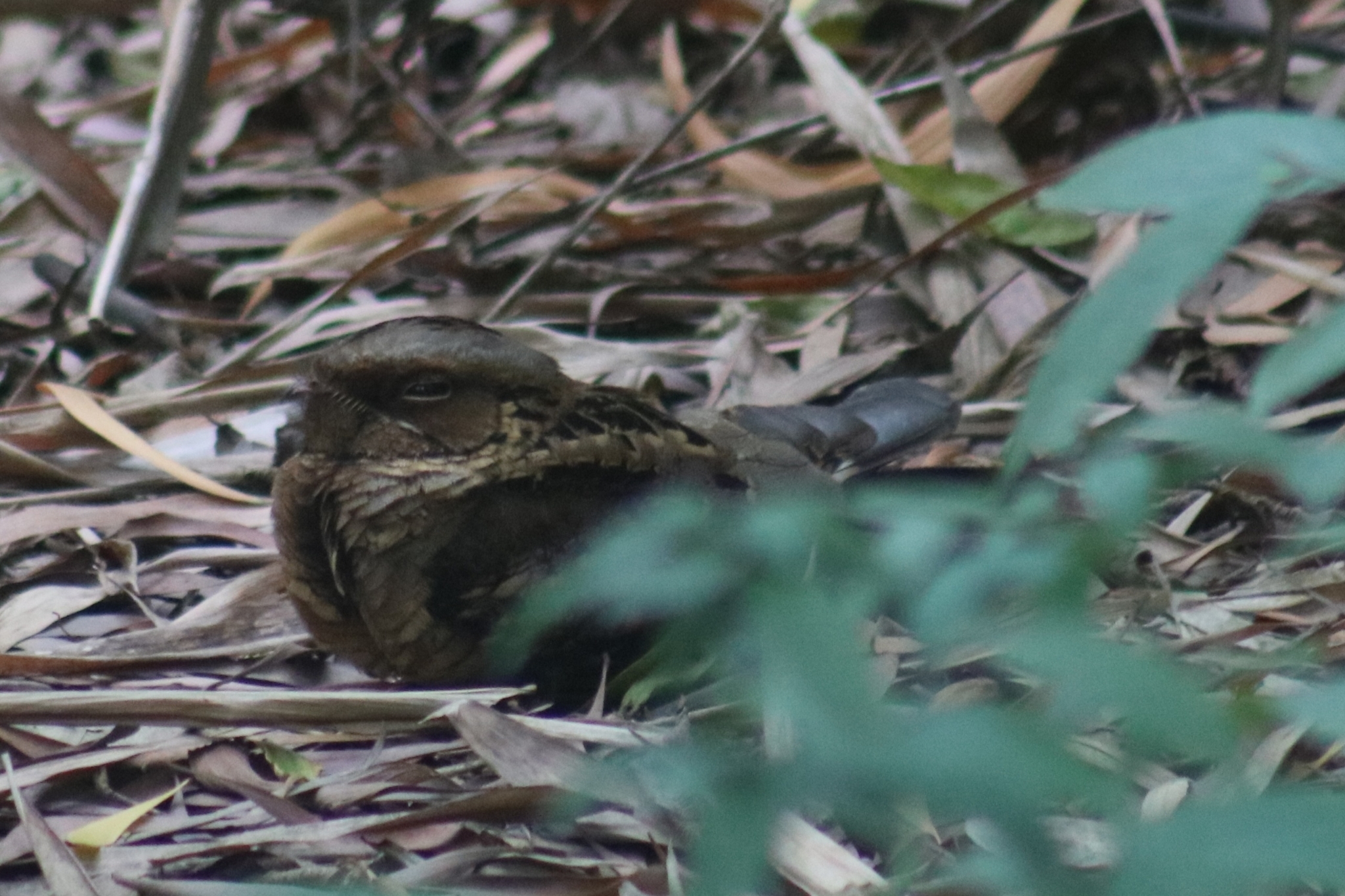
This nightjar measures 31.5 to 33 centimeters in length, exhibiting the typical compact body and long wings of its family. The plumage is extraordinarily cryptic, featuring intricate patterns of brown, buff, and gray that closely resemble dead leaves and forest litter. Males display a pale crown marked by a dark median stripe, with a striking row of black scapular feathers bordered by broad buff or whitish-buff fringes along the shoulders. They possess a conspicuous white throat patch and a long, broad brown tail marked with uneven dark bars. Large white patches on the primaries and outer tail feathers create a distinctive flash pattern in flight. Females are considerably paler and grayer overall, with smaller buff-colored wing patches and less vibrant tail markings, presenting a notably drabber appearance than males.
Identification
The most reliable field marks are the white throat patch in males and the prominent white patches visible on the wings and tail during flight. The species is most easily separated from similar nightjars by voice—its monotonous territorial song differs significantly from related species. Females can be challenging to distinguish from other nightjar species but are generally paler and grayer than many congeners. The large white wing and tail patches are diagnostic when visible. Birdwatchers should note that the similar long-tailed nightjar is a separate species with different vocalizations and a more restricted distribution.
Distribution & Habitat
This species occurs across an enormous range extending from the southern Himalayan foothills through eastern South Asia and Southeast Asia to northern Australia. Its distribution encompasses Bangladesh, Bhutan, Brunei, Cambodia, China, India, Indonesia, Laos, Malaysia, Myanmar, Nepal, Pakistan, Papua New Guinea, the Philippines, Singapore, Thailand, Timor-Leste, and Vietnam. It inhabits subtropical and tropical moist lowland forests, mangrove forests, and moist montane forests, as well as secondary forests, forest edges, plantations, and wooded parks. It also occurs in agricultural landscapes where forested habitats remain.
Behavior & Ecology
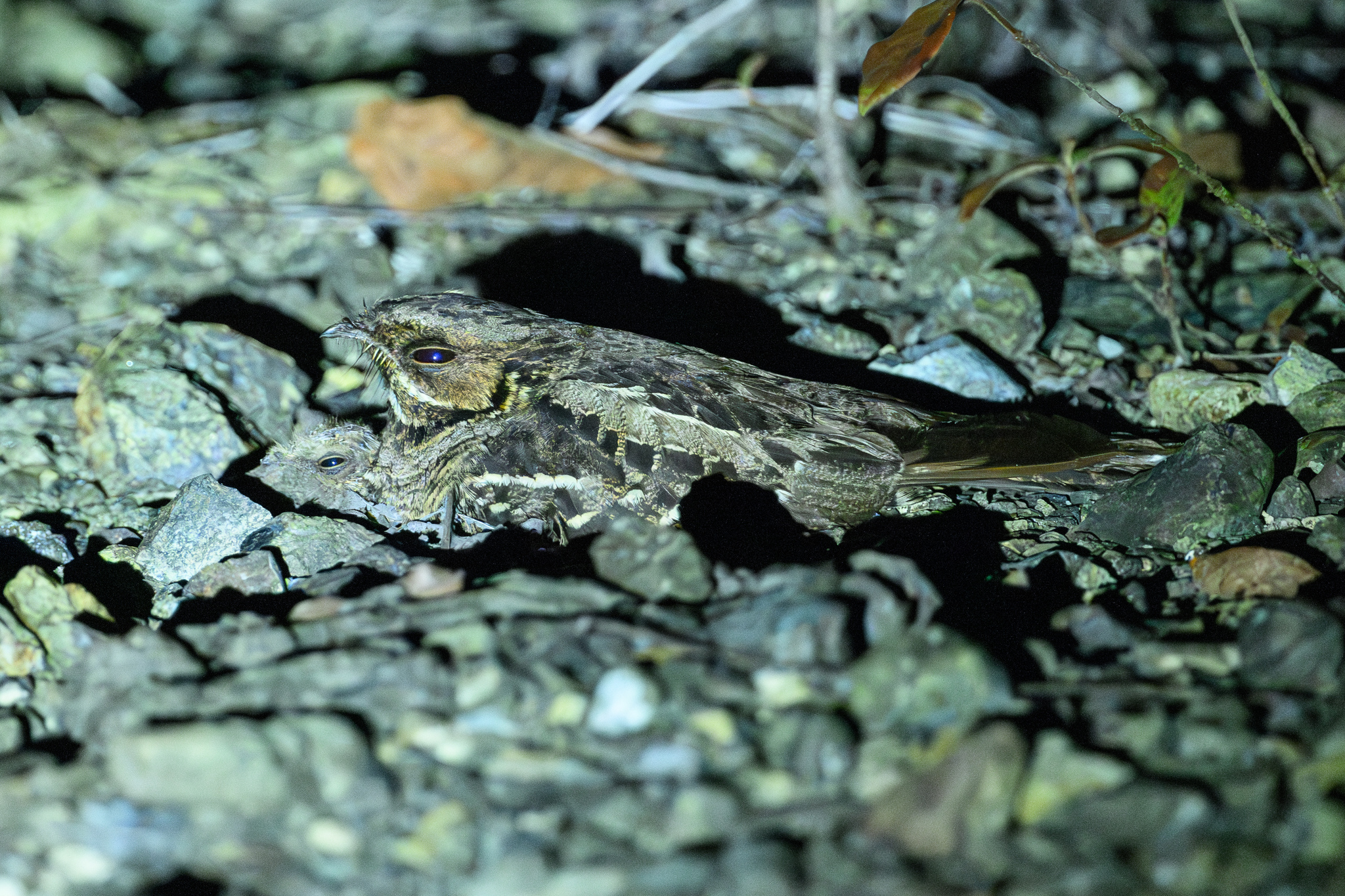
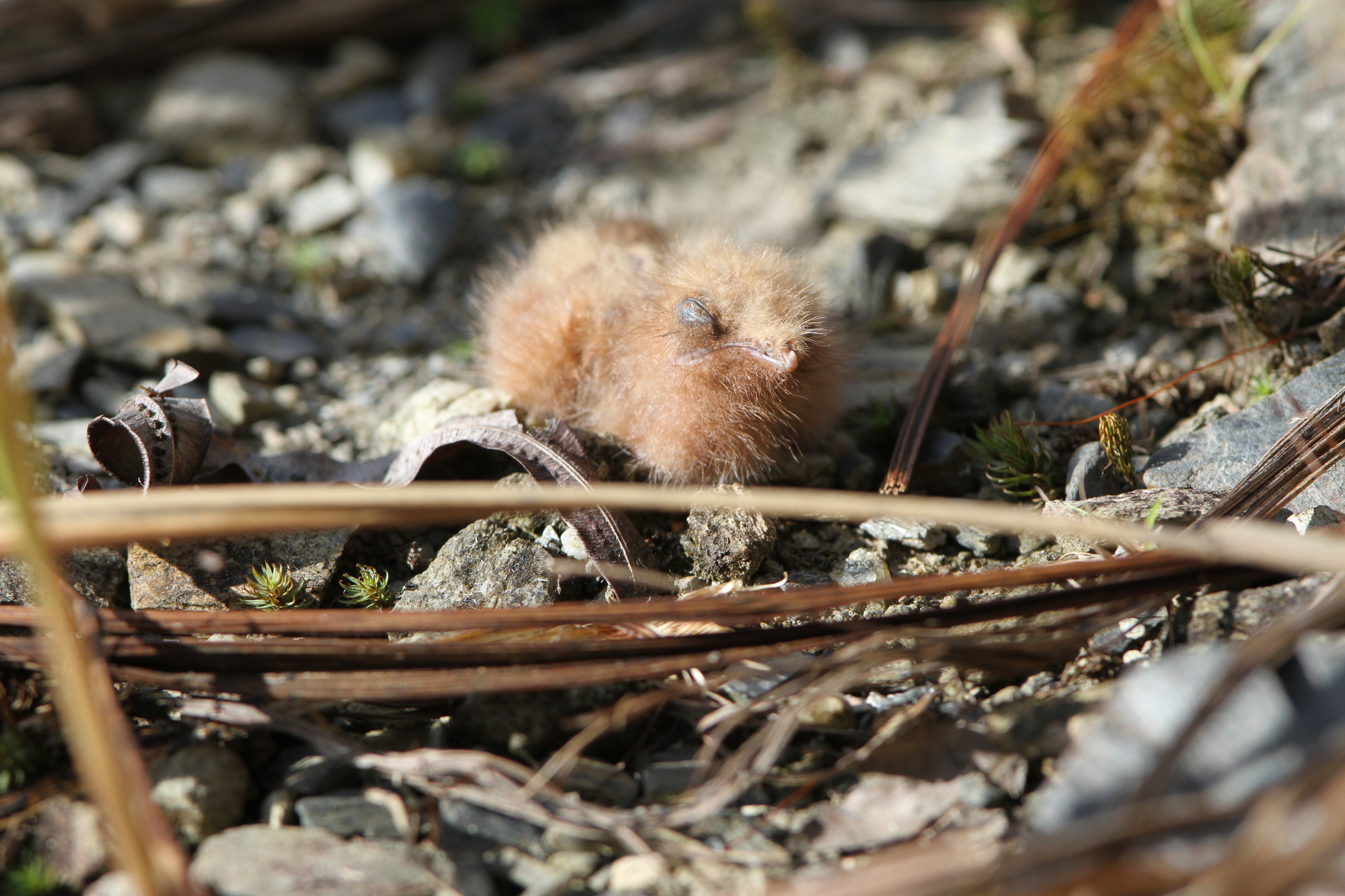
As a strictly nocturnal species, this nightjar emerges at dusk to hunt flying insects over forest gaps and edges. Its diet consists primarily of beetles and moths, captured in aerial pursuits, though it occasionally forages on the ground for terrestrial ants. The species relies heavily on acoustic communication, with vocalizations varying by season and context. The monotonous territorial song is given year-round, though intensity peaks during courtship and early breeding. Males are the primary singers, typically from elevated perches or during pursuit flights, though females occasionally sing. Grunting calls, described as deep 'wroww' notes or faster 'wrrrog' and 'grrrog' sequences, serve different communicative purposes. The breeding season spans mid-March to late September. Females lay one to two pinkish-buff to pale yellow eggs directly on leaf litter in a shallow ground depression without building a nest. Chicks have mealy brown downy feathers for camouflage and leave the nest one to two days after hatching, moving to new locations nightly.
Conservation
The large-tailed nightjar is currently listed as Least Concern by the IUCN, reflecting its extensive range and presumed large population. However, detailed population data is lacking due to the species' cryptic nature and nocturnal habits. Habitat loss through deforestation and forest degradation represents the primary potential threat, though the species' adaptability to secondary forests and human-modified landscapes provides some resilience. Its role in controlling insect pests may generate local goodwill and contribute to its persistence in agricultural landscapes.
Culture
No specific cultural traditions, folklore, or significant historical references pertaining to this species were documented in available sources.
Source: Wikipedia · CC BY-SA 3.0
Taxonomy
- Order
- Caprimulgiformes
- Family
- Caprimulgidae
- Genus
- Caprimulgus
- eBird Code
- latnig2
Vocalizations
Subspecies (6)
-
Caprimulgus macrurus albonotatus
northeastern Pakistan and northern India to Bhutan and Bangladesh
-
Caprimulgus macrurus bimaculatus
northeastern India to southern China, Sumatra, and Riau Archipelago
-
Caprimulgus macrurus johnsoni
southern Philippines (Palawan group)
-
Caprimulgus macrurus macrurus
Java and Bali
-
Caprimulgus macrurus salvadorii
northern Borneo including Labuan and Banggi islands (off northeastern Borneo), and southern Sulu Islands
-
Caprimulgus macrurus schlegelii
Wallacea, New Guinea, coastal northeastern Australia (northern Northern Territory to southeastern Queensland), and New Britain (southeastern Bismarck Archipelago)
Data Sources
Species description from Wikipedia, licensed under CC BY-SA 3.0.
Bird images and sounds sourced from GBIF, contributed by citizen scientists worldwide under Creative Commons licenses.
Taxonomy data from AviList 2025.