European Nightjar
Caprimulgus europaeus
欧夜鹰
Introduction
A nocturnal bird in the nightjar family (Caprimulgidae) that breeds across most of Europe and the Palearctic east to Mongolia and northwestern China. Inhabits dry, open country with trees and bushes including heaths, forest clearings, and newly planted woodland. Distinguished by exceptionally cryptic grey-brown plumage making daytime detection difficult, and the male's sustained churring territorial song delivered from perch. All populations are migratory, wintering in sub-Saharan Africa. Classified as Least Concern by IUCN due to large population and extensive breeding range despite regional declines.
Description
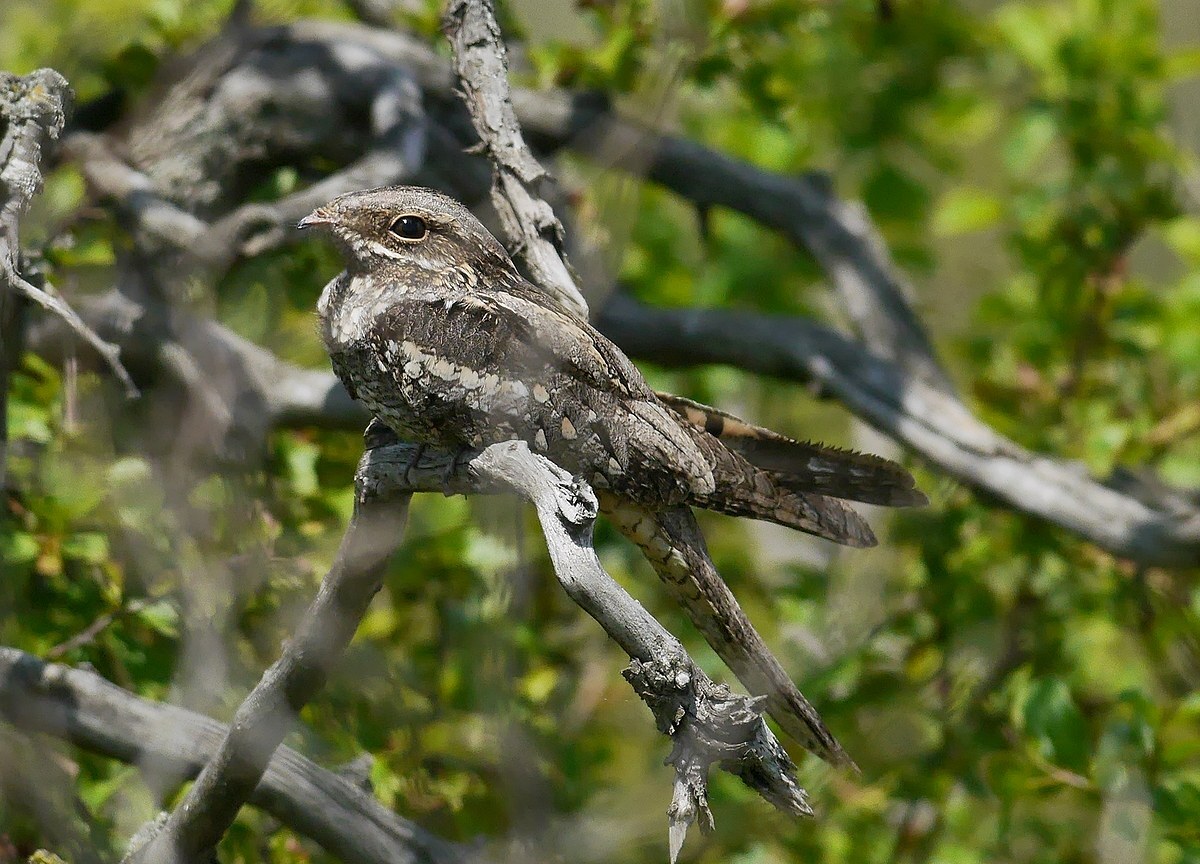
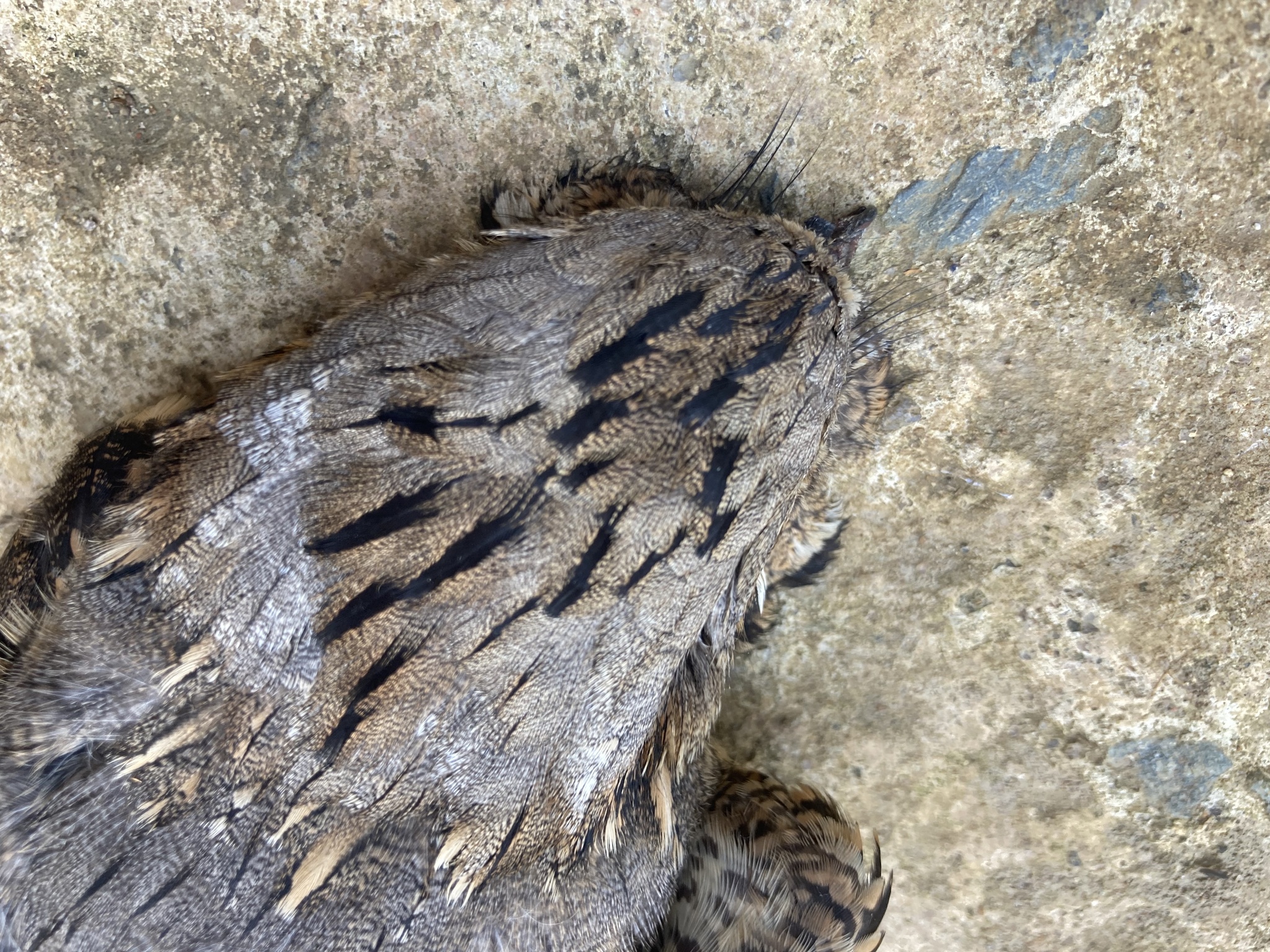
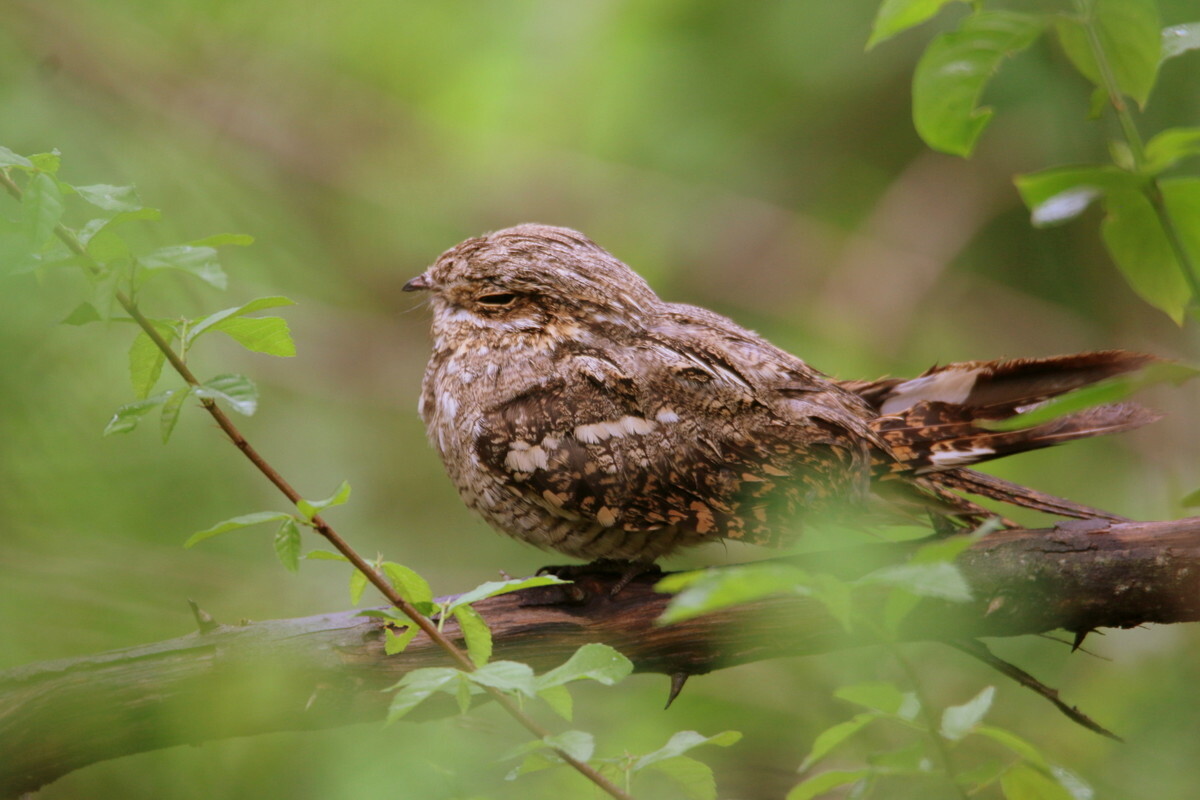
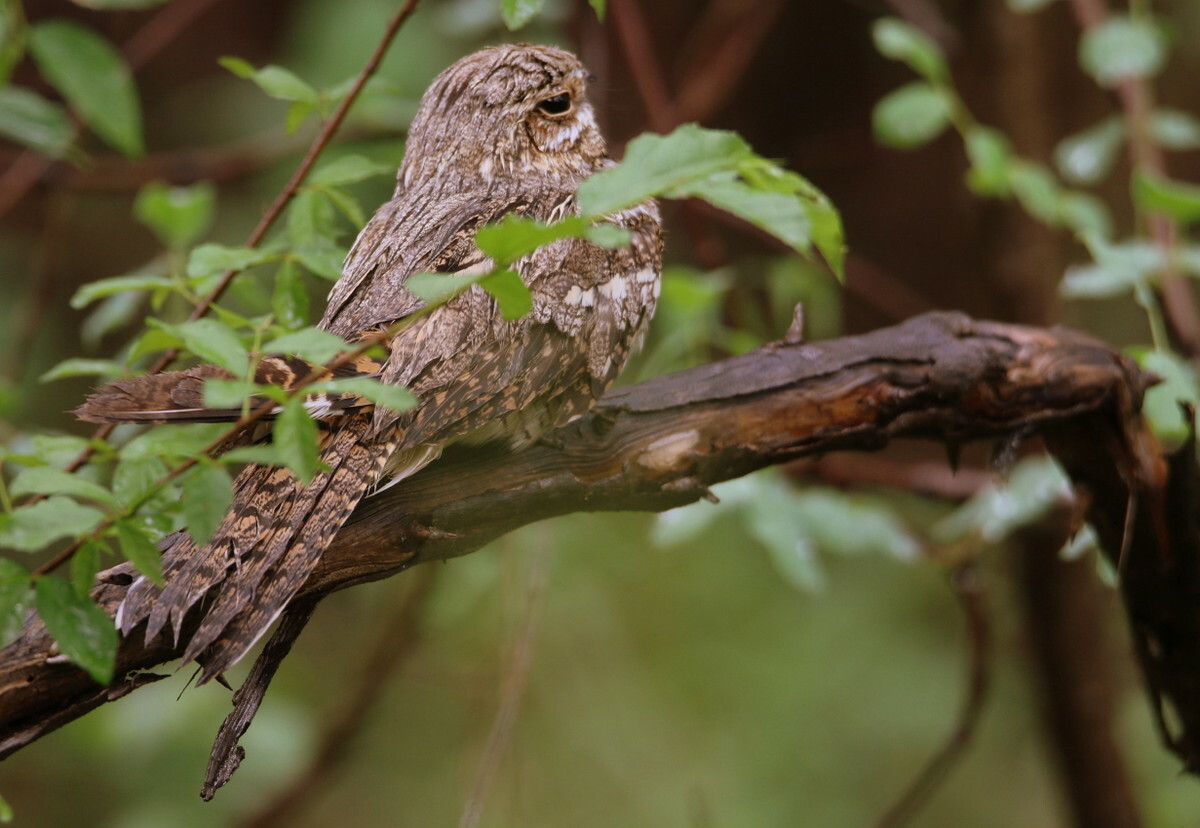
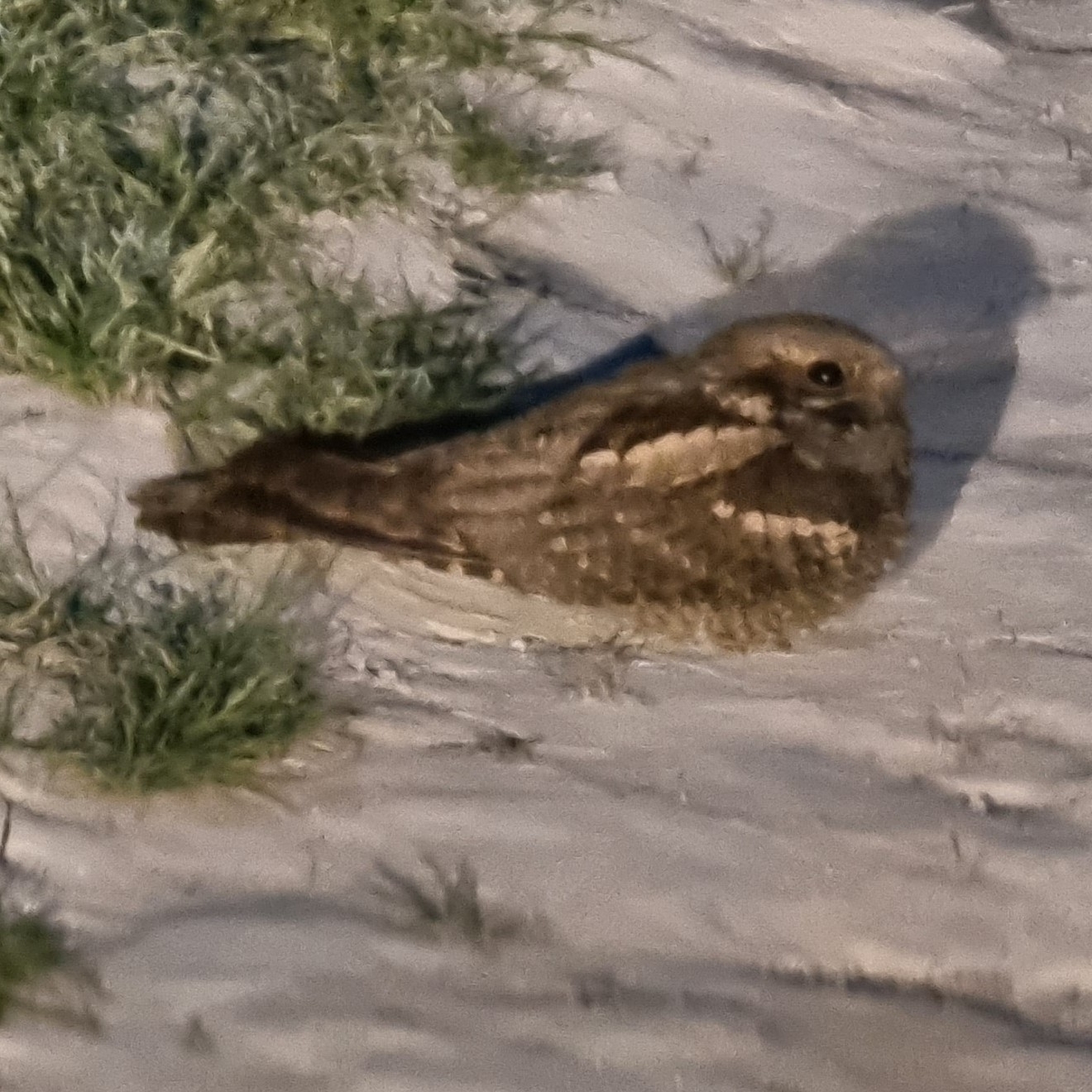
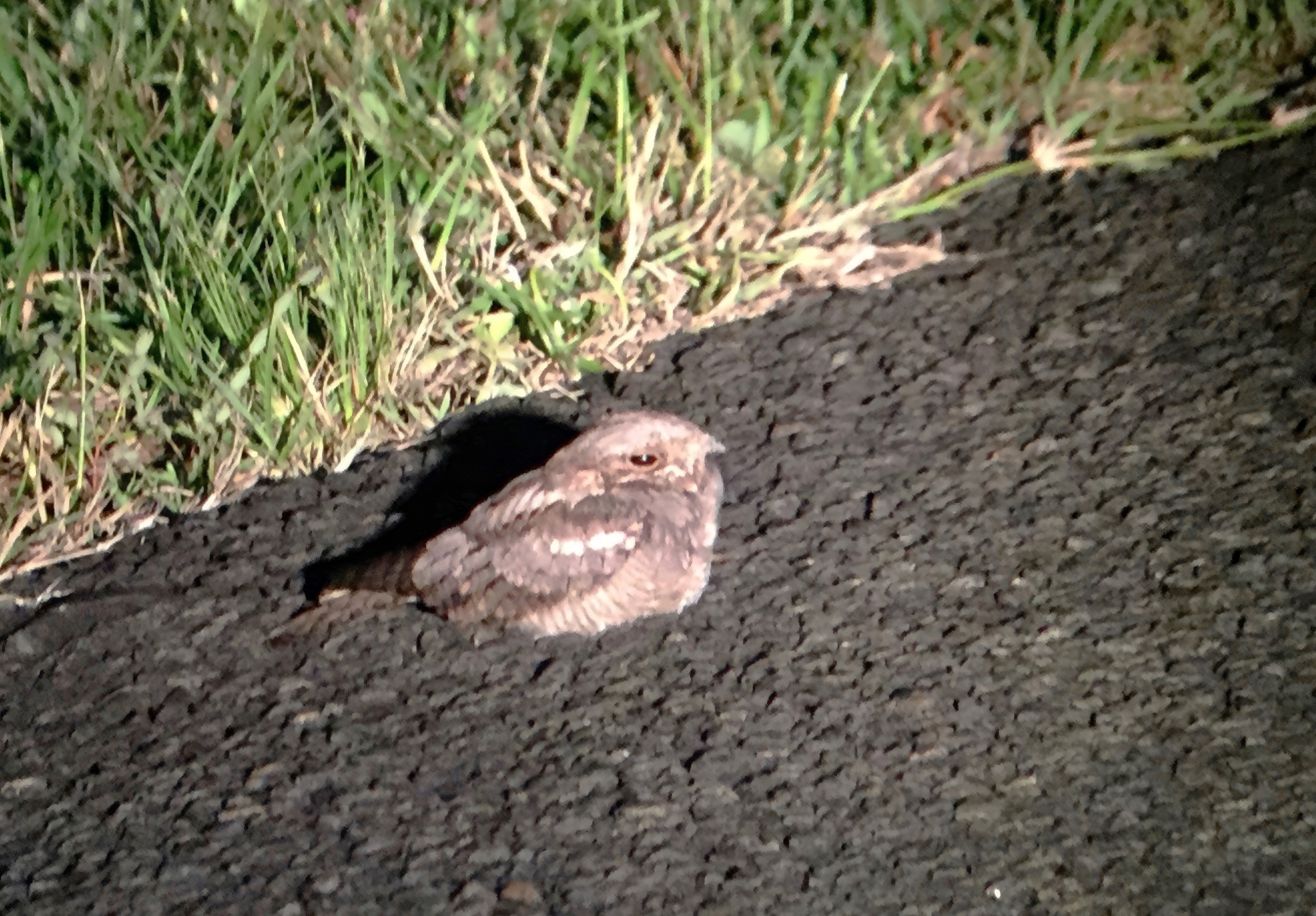
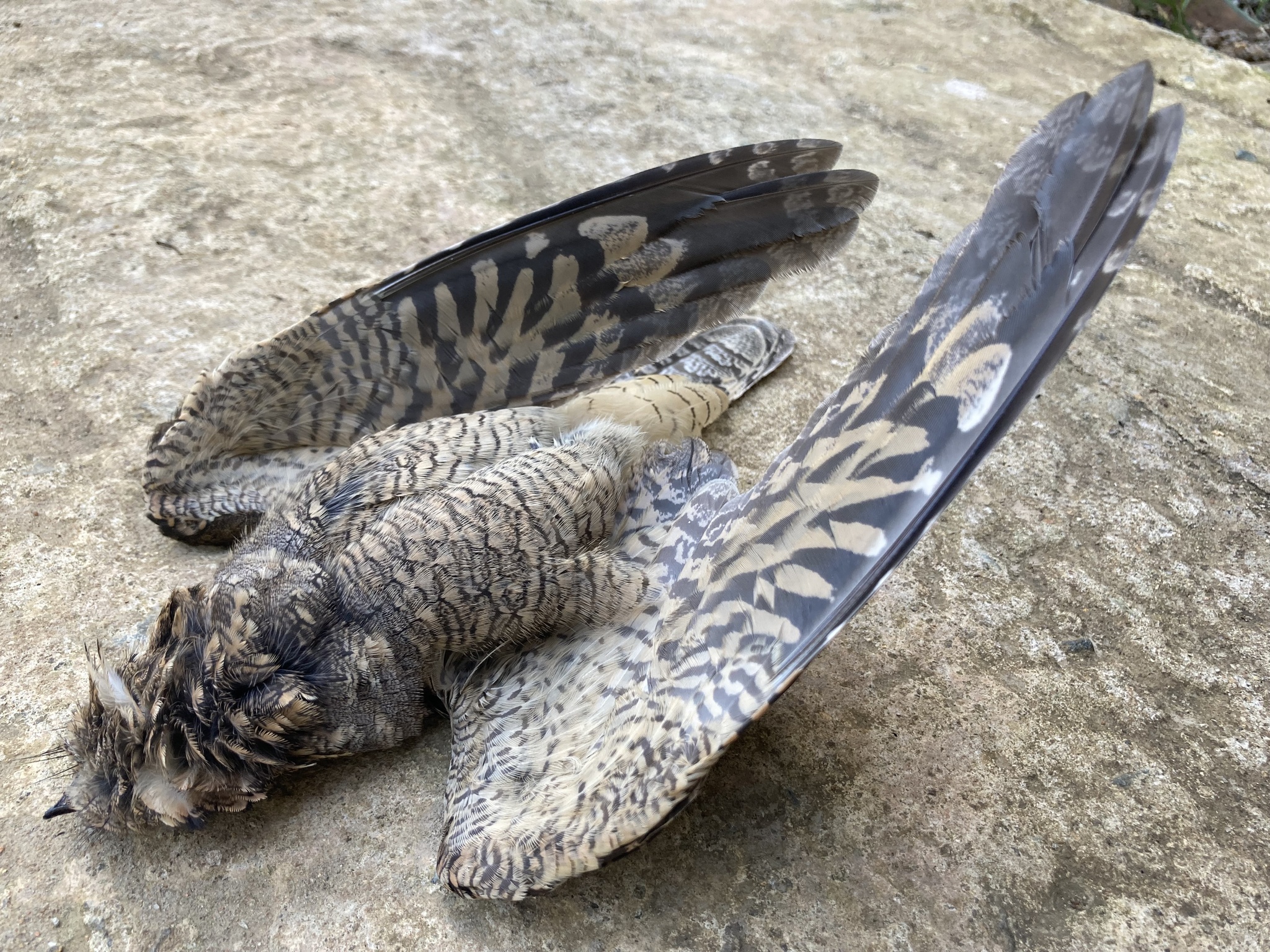
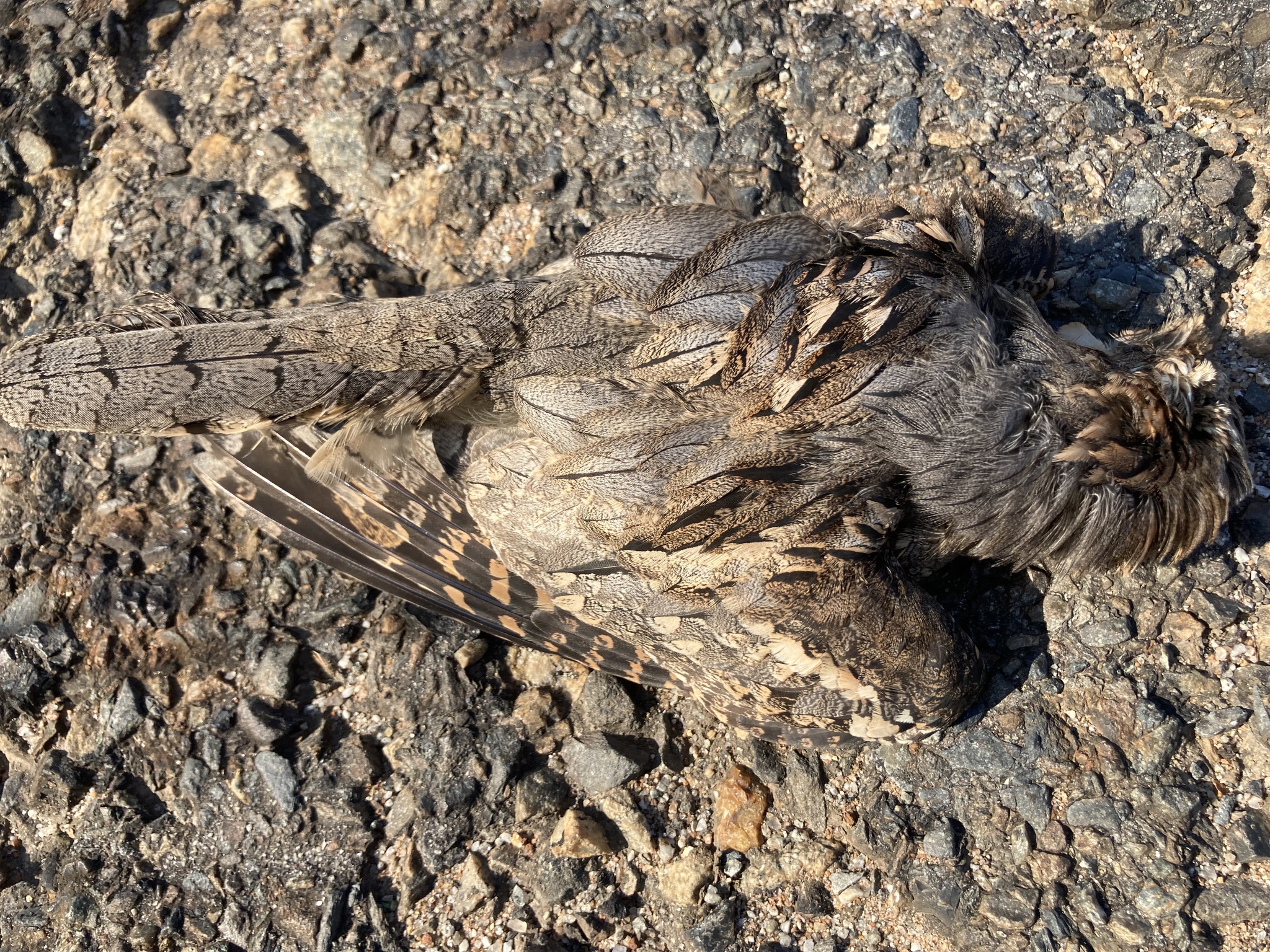
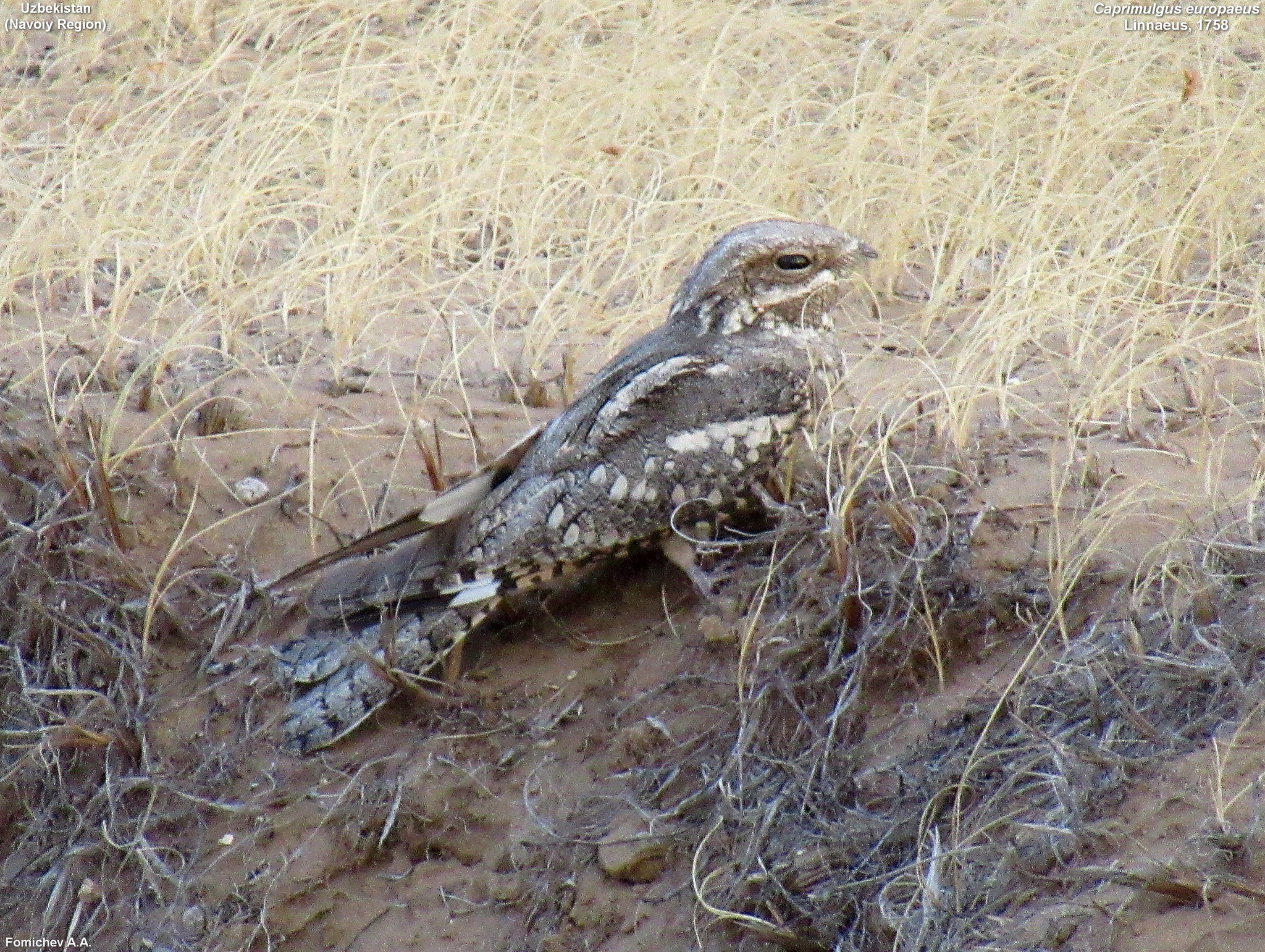
A medium-sized nightjar measuring 24.5–28 cm in length with a 52–59 cm wingspan. Males weigh 51–101 g, females 67–95 g. The plumage is densely patterned greyish-brown with dark streaking on upperparts and a pale buff hindneck collar. Underparts show brown barring and buff spotting. The bill is blackish, iris dark brown, and legs and feet brown. Males display a white wing patch across three primary feathers and white tips to the two outer tail feathers, absent in females. The flight is noiseless due to soft plumage and characteristically buoyant. Body feathers moult from June onwards after breeding, with tail and flight feathers replaced on wintering grounds.
Identification
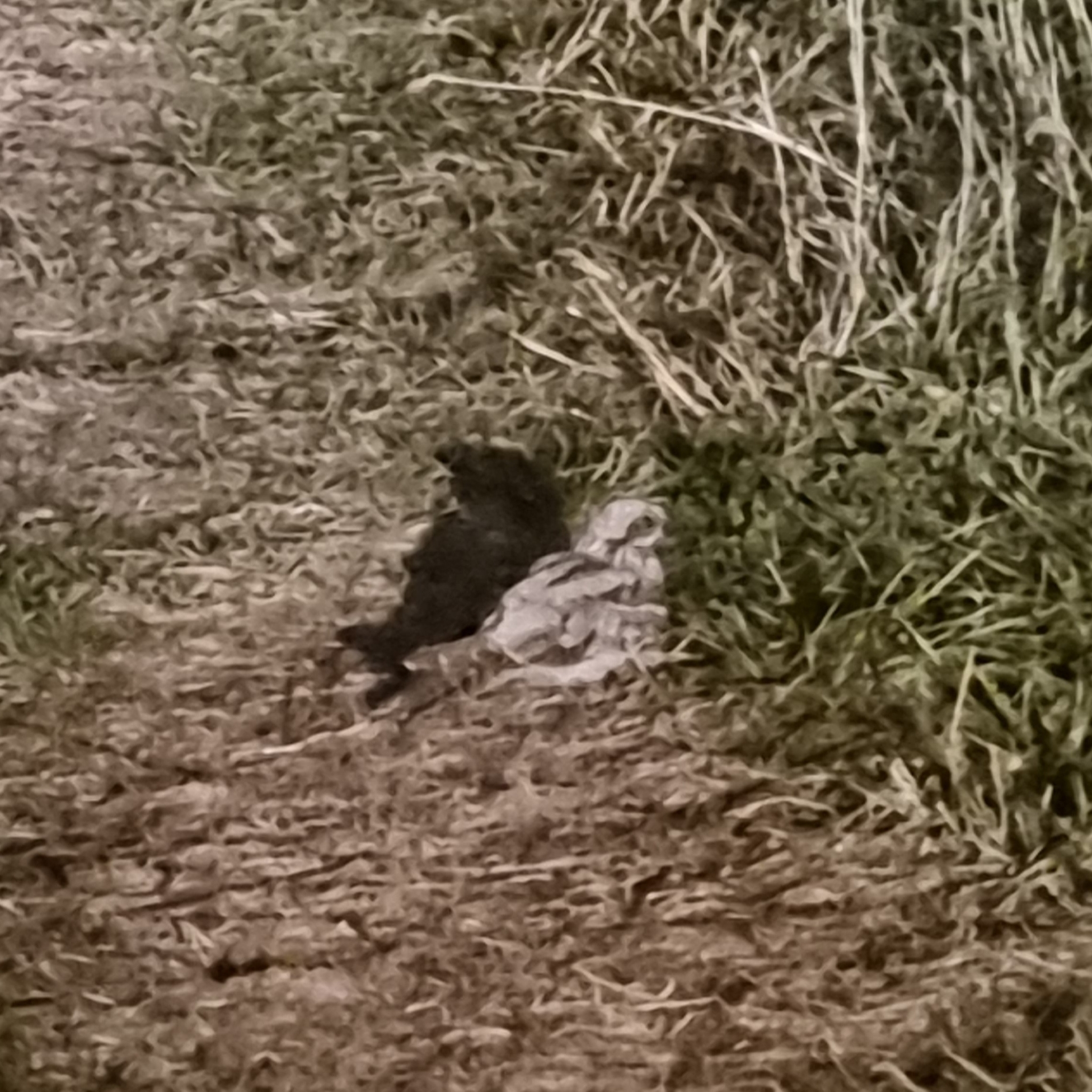
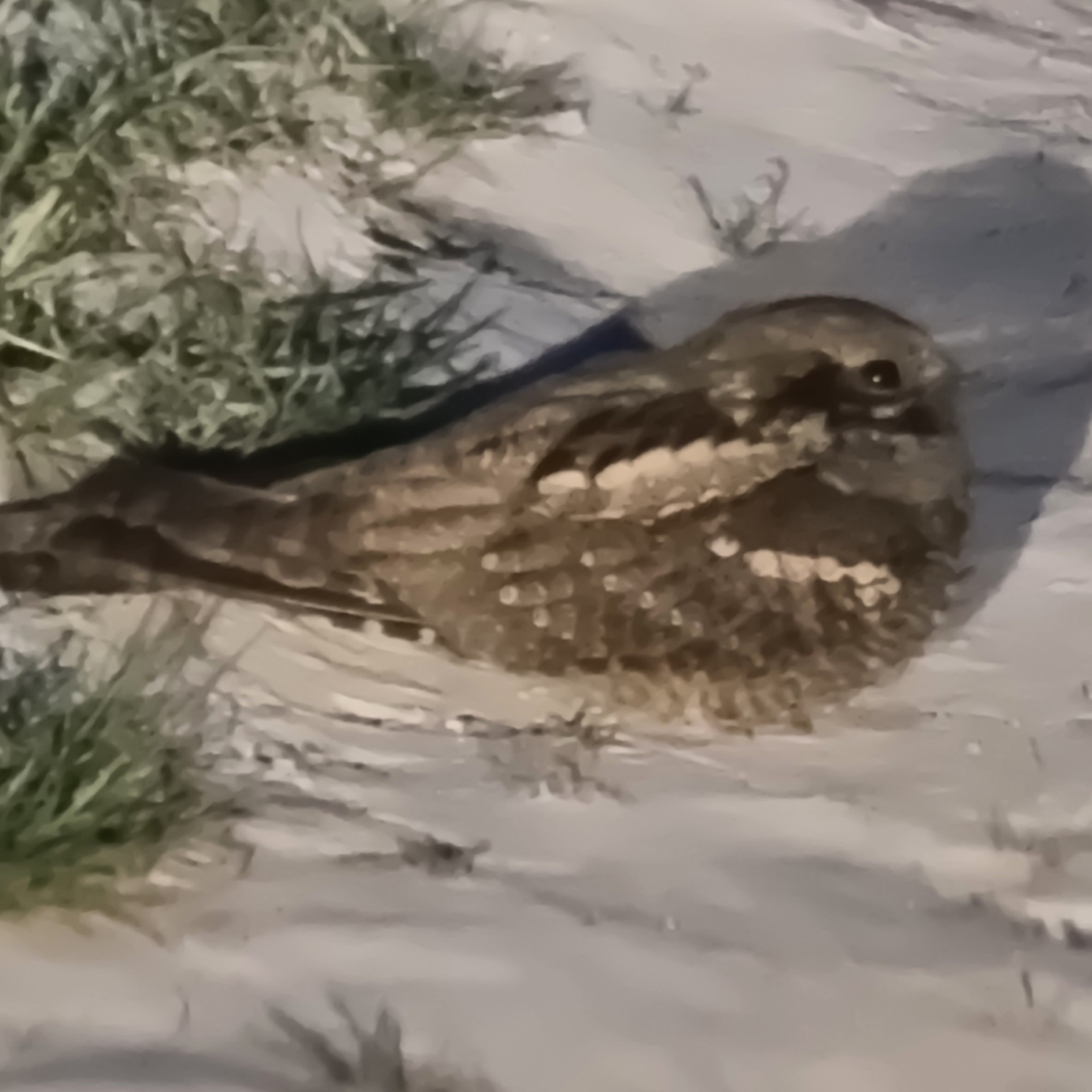
Virtually invisible when resting on ground or perched lengthwise along branches due to extraordinary camouflage. In flight, sexing is straightforward: males show conspicuous white wing patches and white outer tail tips; females lack white markings entirely. Overlaps with red-necked nightjar in Iberian Peninsula, which is larger, greyer, longer-winged with a broad buff collar and more white markings. Wintering birds in Africa may encounter rufous-cheeked and sombre nightjars, both having more prominent buff hind-neck collars and greater wing covert spotting; the sombre nightjar is notably darker overall.
Distribution & Habitat
Breeds across Europe north to approximately 64°N and Asia north to about 60°N, east to Lake Baikal and eastern Mongolia. Southern limits extend to northwestern Africa, Iraq, Iran, and northwestern Himalayas. All populations are migratory, wintering primarily in sub-Saharan Africa, with some records from Pakistan, Morocco, and Israel. Western populations cross the Mediterranean and North Africa; eastern populations migrate through the Middle East and East Africa. Some birds travel across 100° of longitude. Breeding habitat consists of dry open country with scattered trees and bushes including heaths, moorland, and forest clearings. Recorded at elevations of 2,800 m on breeding grounds and 5,000 m in wintering areas.
Behavior & Ecology
Strictly crepuscular and nocturnal, resting on ground or lengthwise on branches during daytime. Feeds on diverse flying insects including moths, beetles, mantises, dragonflies, cockroaches, and flies, hawking prey in flight or flycatching from perches. Hunting occurs by sight, silhouetting prey against the night sky; activity more than doubles on moonlit nights. Birds travel an average of 3.1 km from nests to feed. Breeding occurs late May to August; males establish territories with sustained churring songs audible up to 600 m. No nest is built; two eggs are laid directly on ground, incubated mainly by female for 17–21 days. Chicks fledge in 16–17 days and become independent around 32 days. Both adults feed young with regurgitated insect balls. Vocalizations include male churring trill, short 'cuick' calls from both sexes, and alarm calls.
Conservation
IUCN Least Concern with global population estimated at 3–6 million birds (2020). European population ranges from 290,000 to 830,000 individuals. Largest breeding populations occur in Russia (up to 500,000 pairs), Spain (112,000 pairs), and Belarus (60,000 pairs). Despite large range and population, significant declines have occurred throughout northwestern Europe. Primary threats include habitat loss, pesticide use reducing insect prey, human disturbance, vehicle collisions, and domestic dogs destroying ground nests. Breeding success improves significantly in areas with restricted public access. Commercial forestry initially creates suitable habitat but becomes unsuitable as woodland matures. Red-listed in the United Kingdom and nearly extinct in Ireland as of 2012.
Culture
Featured in poetry as symbol of warm summer nights, referenced by George Meredith, William Wordsworth, Dylan Thomas, and Thomas Hardy. The generic name Caprimulgus and common name 'goatsucker' derive from an ancient myth, dating to Aristotle, that nightjars sucked milk from nanny goats causing them to cease lactating or go blind. This belief is reflected in European language names including German Ziegenmelker, Polish kozodój, and Italian succiacapre. The nightjar's attraction to insects around livestock led to blame for any misfortunes befalling animals. Old names include 'puckeridge' (referring to both bird and a botfly disease of cattle) and 'lich fowl' or 'gabble ratchet,' reflecting superstitions linking the bird to wandering souls of unbaptised children and the Wild Hunt tradition.
Source: Wikipedia · CC BY-SA 3.0
Taxonomy
- Order
- Caprimulgiformes
- Family
- Caprimulgidae
- Genus
- Caprimulgus
- eBird Code
- eurnig1
Subspecies (6)
-
Caprimulgus europaeus dementievi
northeastern Mongolia and southern Transbaikalia
-
Caprimulgus europaeus europaeus
breeds northern and central Europe to northern Asia and Lake Baikal area; winters to Africa
-
Caprimulgus europaeus meridionalis
Mediterranean basin to northwestern Iran and Caspian Sea
-
Caprimulgus europaeus plumipes
northwestern China to western Mongolia
-
Caprimulgus europaeus sarudnyi
eastern side of Caspian Sea (Kazakhstan) to Altai Mountains
-
Caprimulgus europaeus unwini
Iraq and Iran to western Tien Shan, Turkmenistan, and Uzbekistan
Data Sources
Species description from Wikipedia, licensed under CC BY-SA 3.0.
Bird images and sounds sourced from GBIF, contributed by citizen scientists worldwide under Creative Commons licenses.
Taxonomy data from AviList 2025.