


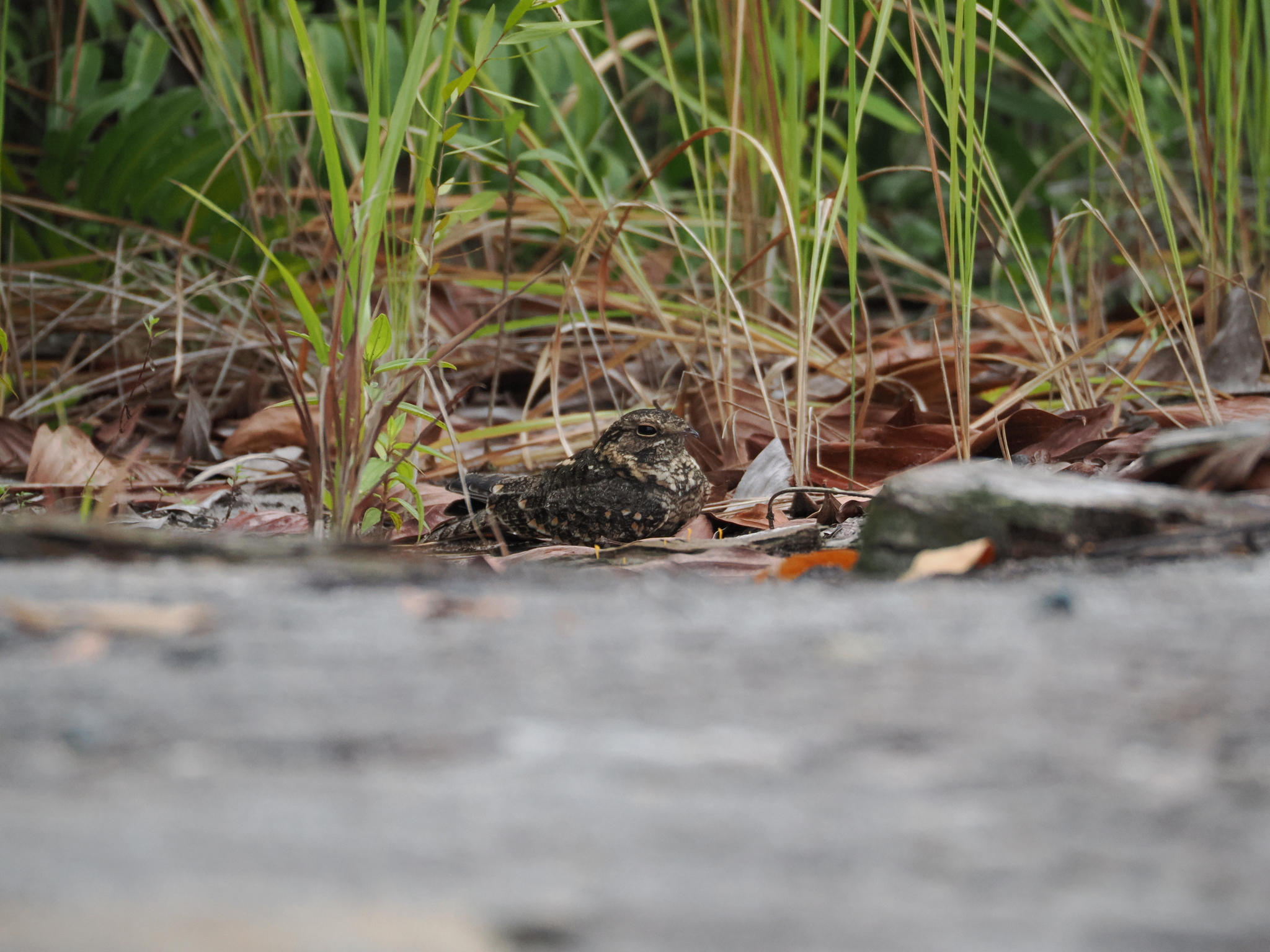
Savanna Nightjar
Caprimulgus affinis
林夜鹰
Introduction
This medium-sized nightjar inhabits tropical and subtropical landscapes of South and Southeast Asia, ranging from Pakistan through India and China to Indonesia and Taiwan. As a nocturnal species, it emerges at dusk to hunt insects throughout the day, remaining concealed against rocky ground and sparse vegetation. It has increasingly adopted flat building roofs as nesting sites in urban areas of Indonesia and Taiwan. The species comprises eight recognized subspecies, with recent research indicating significant vocal differences between northern, southern, and Philippine populations that may warrant species-level separation. The characteristic 'chwip' call is delivered from rooftops and vegetation during the breeding season. The species faces ongoing habitat modification as natural grasslands are converted for agriculture and development.
Description
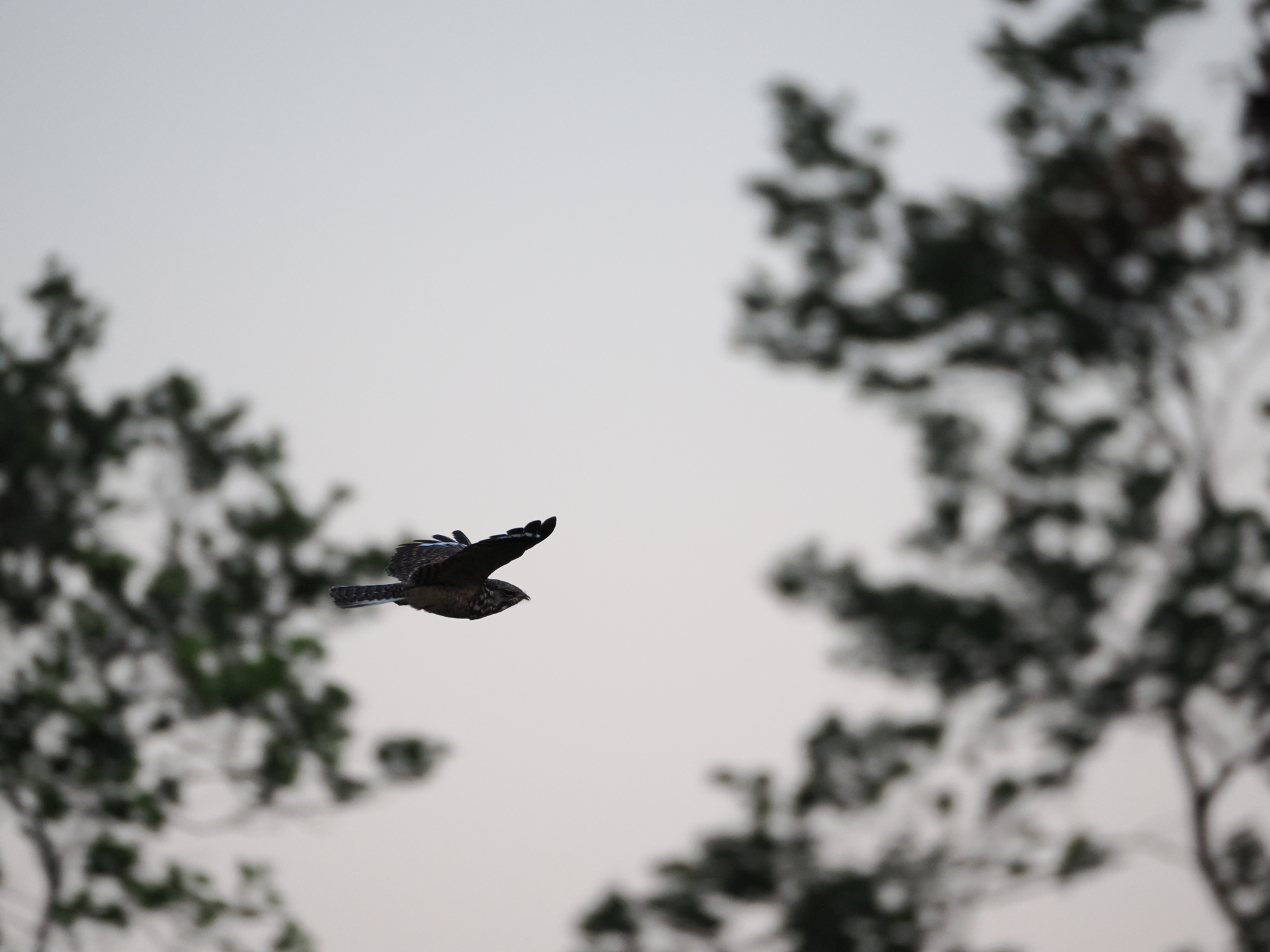
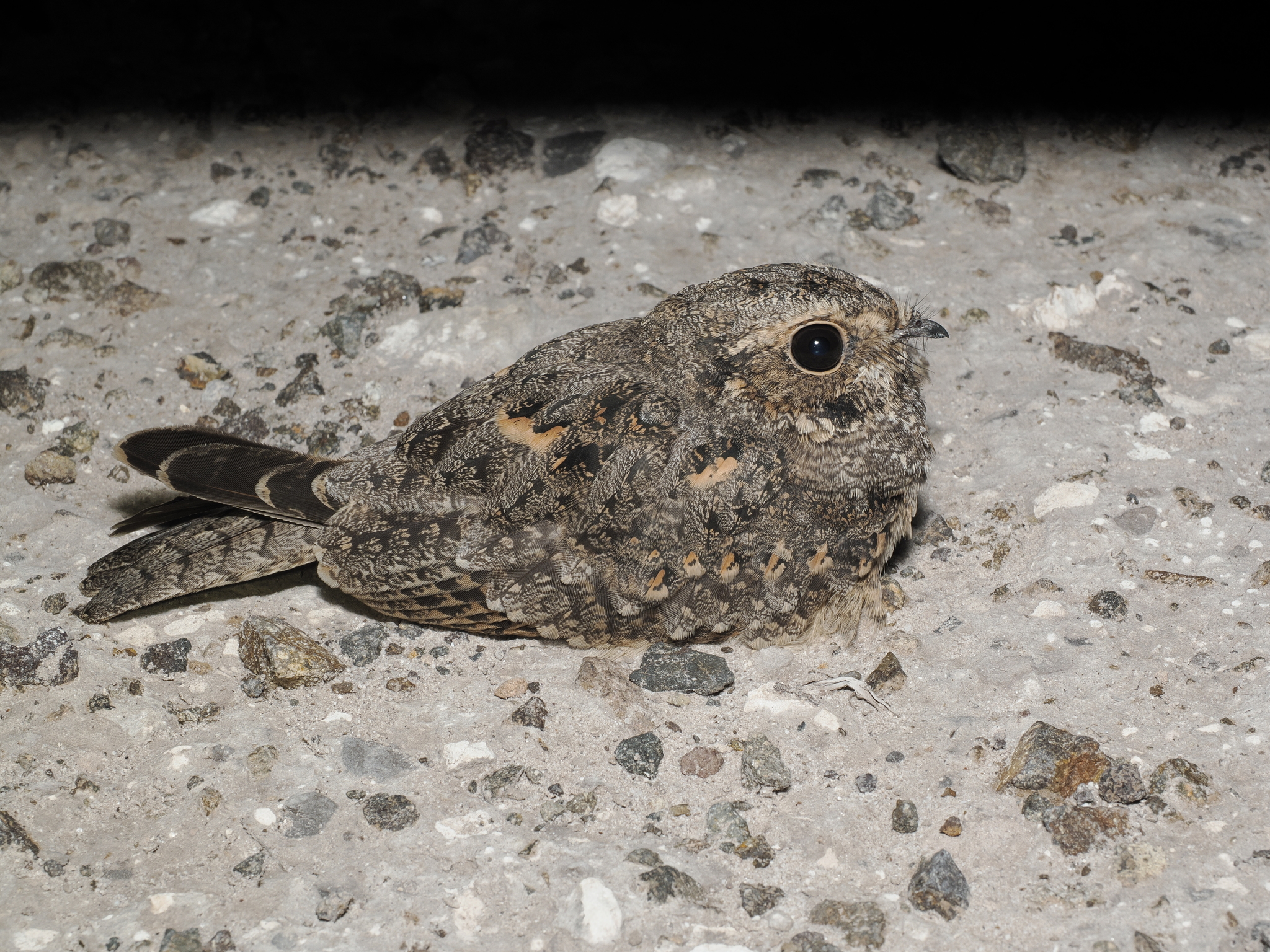
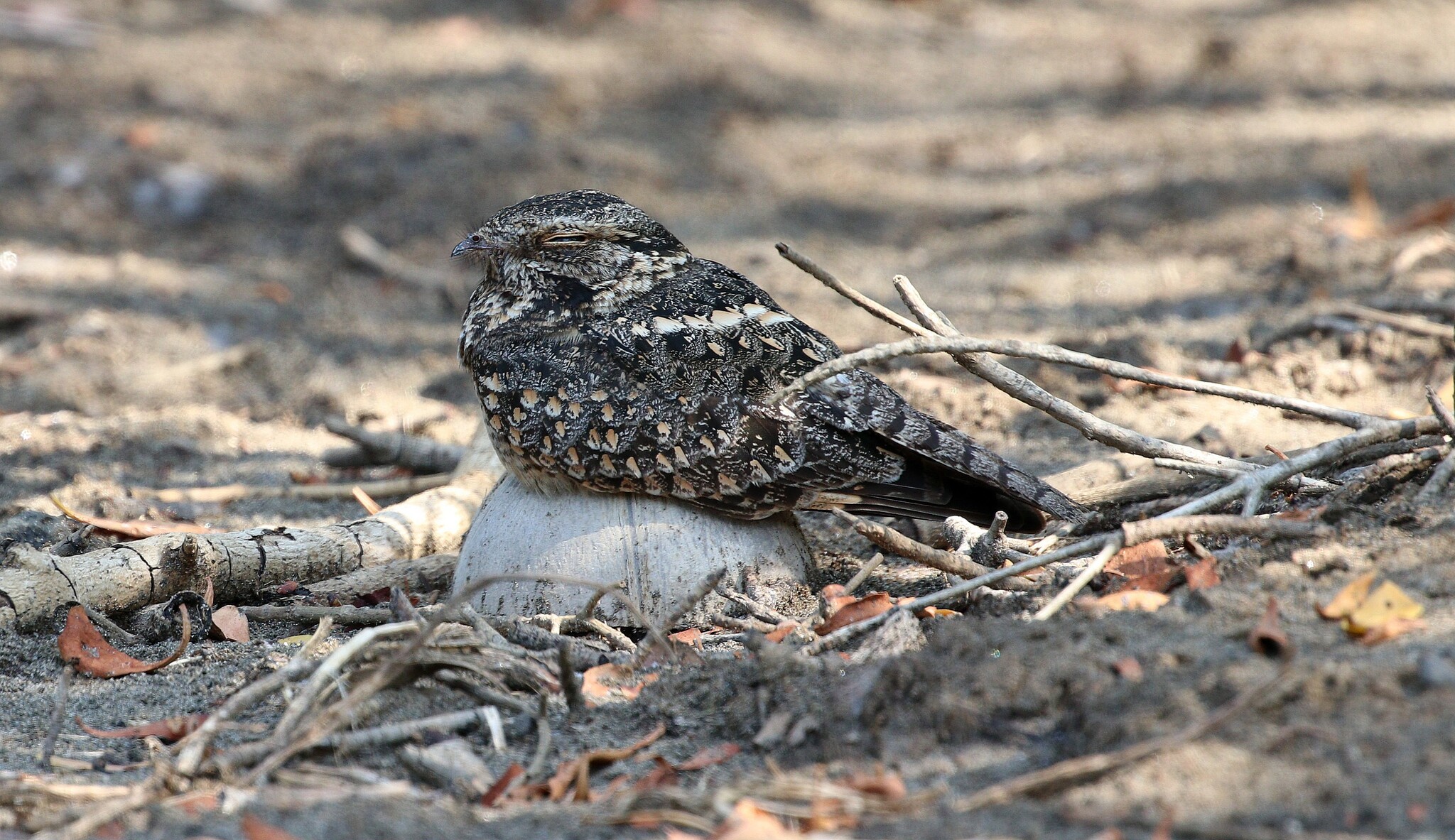
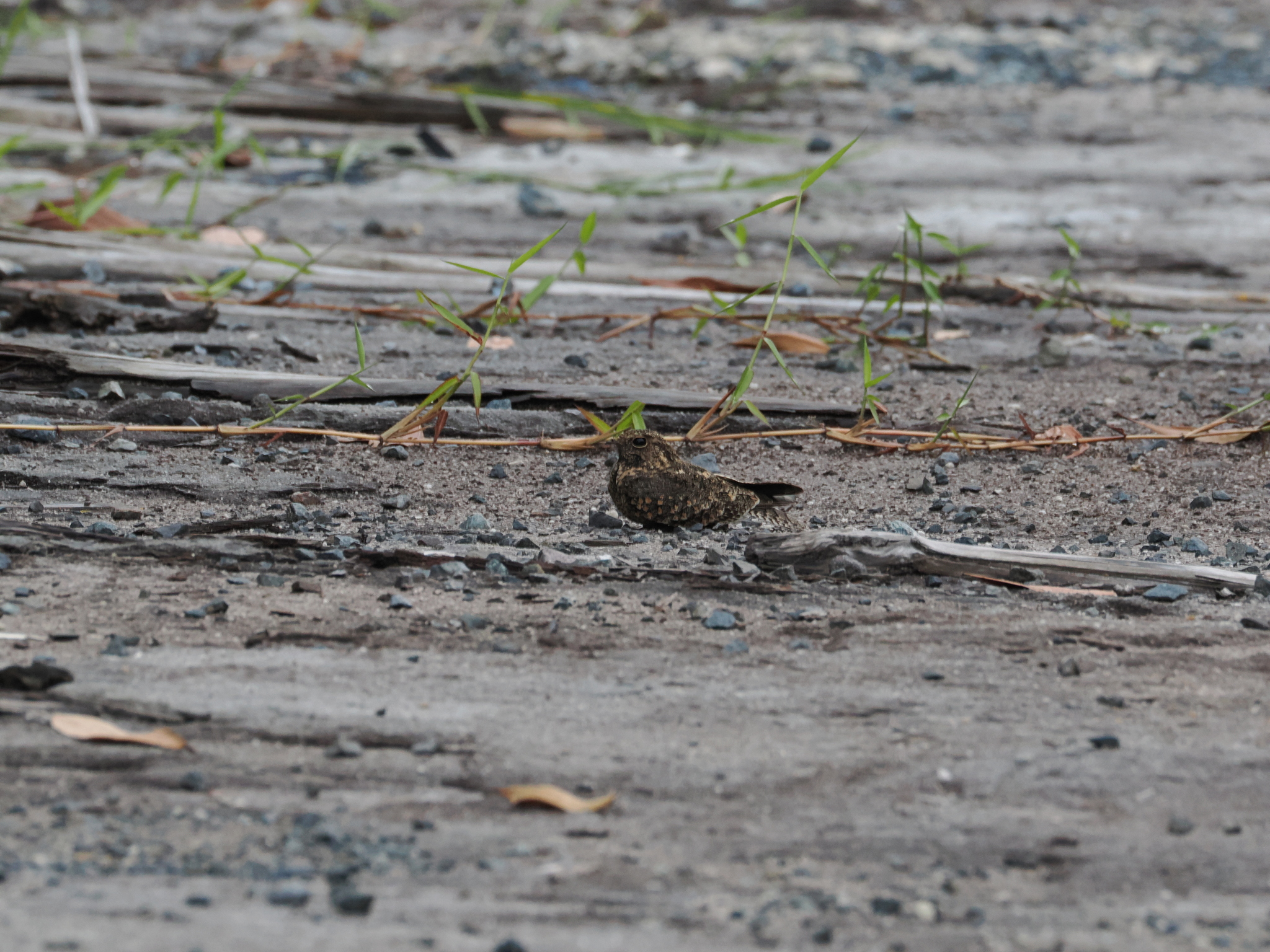
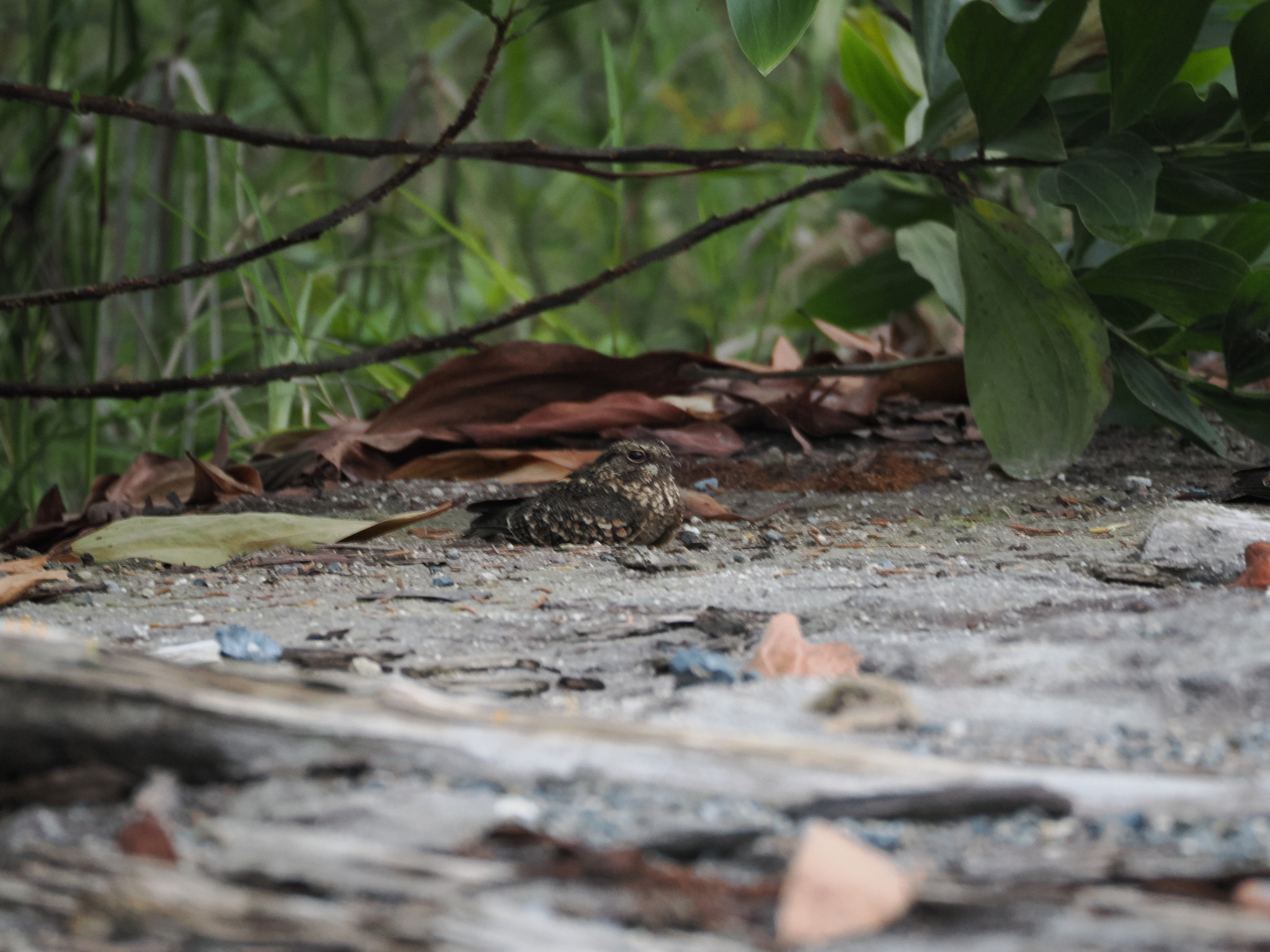
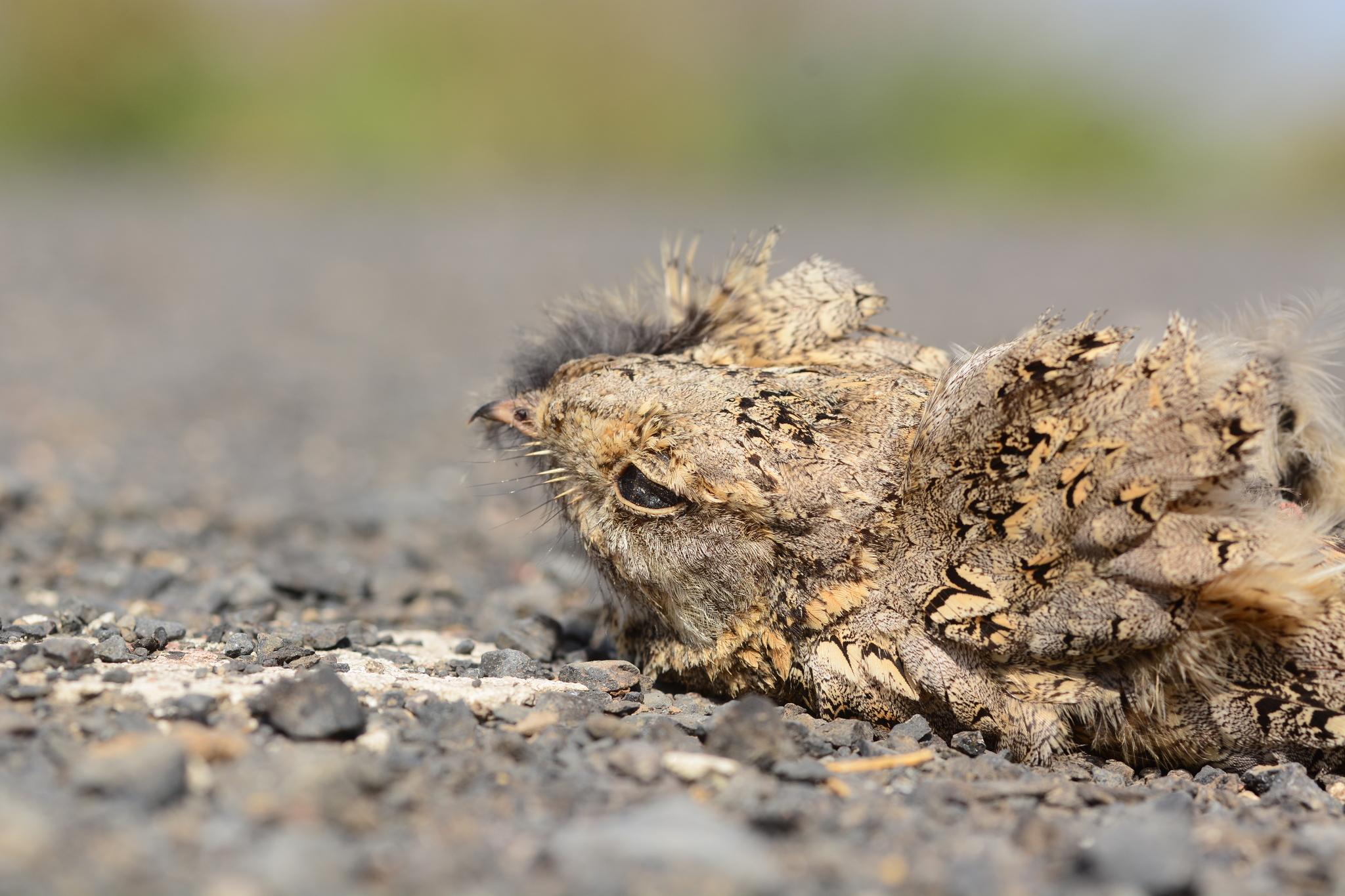
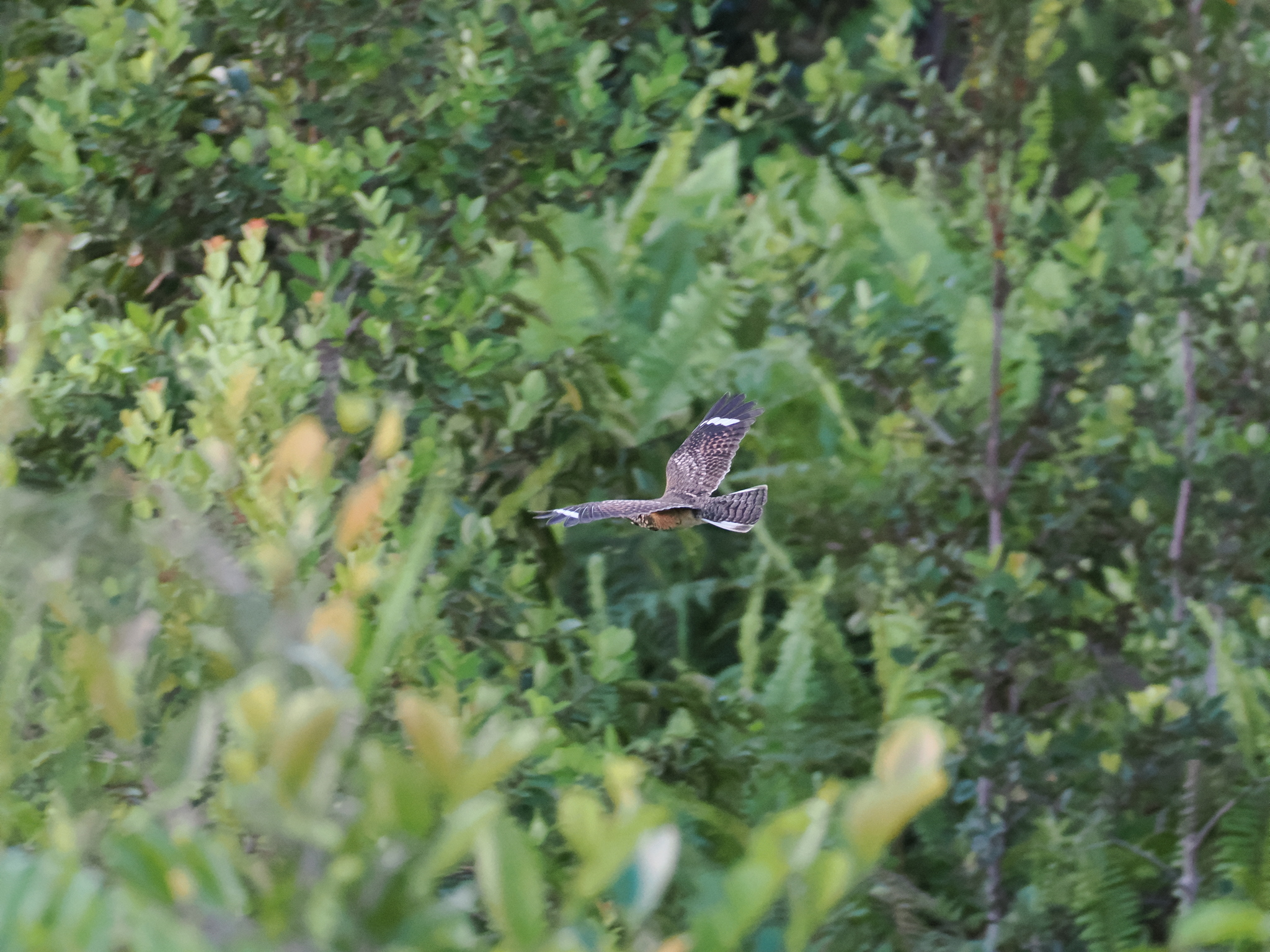
This nightjar measures 20-26 centimeters in length with a wingspan of 64 centimeters, weighing between 54-110 grams. Size varies noticeably among subspecies. Like other nightjars, it possesses long pointed wings, very small legs and feet, and a remarkably wide bill that opens into a massive gape when hunting. The bill is fringed with prominent rictal bristles. The overall plumage is vermiculated grey-brown, providing exceptional camouflage against rocky ground and leaf litter. Sexual dimorphism is pronounced: males display bold white patches on the throat, tail, and wings, while females show only subtle throat markings, a reddish tint to their plumage, and lack white tail patches. Juveniles resemble adult females, appearing mottled without white markings.
Identification
The primary field mark distinguishing this species from other South Asian nightjars, particularly the similar chirruping nightjar, is its unique vocalization—a sharp 'chwip' call used for territory defense and attracting mates. In the Philippines, individuals produce a raspier call compared to northern and southern subspecies. Males are readily identified by their prominent white throat, wing, and tail patches, while females show reduced throat markings and reddish-brown plumage tones. The combination of call type, geographic location, and plumage pattern provides the most reliable identification clues, as the overall grey-brown cryptic plumage closely resembles other nightjar species.
Distribution & Habitat
This species occupies a vast range stretching from northern Pakistan through India, southern China, and Southeast Asia to Indonesia, Taiwan, and the Philippines. Different subspecies occupy distinct portions of this extensive area. Preferred habitats include lowland open grasslands, sugar cane plantations, wheat fields, and rocky soils near rivers and streams. An interesting adaptation to urbanization has emerged, with populations increasingly nesting on flat building roofs in cities across Indonesia and Taiwan, likely due to reduced predator presence. Migration patterns vary by subspecies, ranging from completely sedentary to locally migratory; northern populations migrate to Punjab plains and northeastern Pakistan for summer breeding.
Behavior & Ecology
This nocturnal insectivore feeds actively from dusk through dawn, hunting by sight using its enormous eyes and wide gape. The hunting technique involves sallying—spotting prey from a perch, diving with wings spread, and capturing insects in midair before returning to the perch. Moths comprise 80-85% of the diet, with beetles, ants, grasshoppers, crickets, wasps, and bees also taken. Breeding seasons vary geographically, occurring from March-August in western populations and March-January in eastern ones. No nest is constructed; instead, 1-2 pink blotched eggs are laid directly on bare ground or rocky soil. The female incubates while the male guards. Chicks are precocial, becoming mobile within four days. Parents defend eggs and young through dramatic broken-wing displays to lure predators away from the nest.
Conservation
The IUCN Red List has assessed this species as Least Concern due to its extremely large range and apparently stable population trend. While no immediate major threats have been identified, ongoing habitat modification across South and Southeast Asia continues to alter natural grassland environments. However, the species' adaptability to urban environments, including rooftop nesting, may provide some compensation for natural habitat loss. The northern subspecies that migrates to Punjab plains may face localized pressures, but overall population trends remain stable across the species' extensive range.
Culture
In urban Taiwan, expanding populations have created significant human-wildlife conflict. The species' booming nocturnal calls, reaching up to 90 decibels during breeding season, have disturbed residents' sleep and reportedly caused nightmares. Citizens have resorted to using firecrackers and flashlights in attempts to drive birds away from residential areas. As natural habitats continue to be altered by dams, flooding, and dredging, these urban-adapted populations are expected to expand further into major cities. This situation exemplifies the complex challenges of sharing urban spaces with wildlife and the need for conflict mitigation strategies that balance human needs with species conservation.
Source: Wikipedia · CC BY-SA 3.0
Taxonomy
- Order
- Caprimulgiformes
- Family
- Caprimulgidae
- Genus
- Caprimulgus
- eBird Code
- savnig1
Vocalizations
Subspecies (6)
-
Caprimulgus affinis affinis
southern Thai-Malay Peninsula and Greater Sundas to central Lesser Sundas
-
Caprimulgus affinis amoyensis
southeastern China and northern Vietnam
-
Caprimulgus affinis monticolus
northeastern Pakistan to India and southeastern Asia including far northern Malay Peninsula, to Vietnam (except northern)
-
Caprimulgus affinis propinquus
north-central and southern Sulawesi
-
Caprimulgus affinis stictomus
Taiwan
-
Caprimulgus affinis timorensis
eastern Lesser Sundas (Alor, Timor, Rote, and Kisar)
Data Sources
Species description from Wikipedia, licensed under CC BY-SA 3.0.
Bird images and sounds sourced from GBIF, contributed by citizen scientists worldwide under Creative Commons licenses.
Taxonomy data from AviList 2025.