Great Knot
Calidris tenuirostris
大滨鹬
Introduction
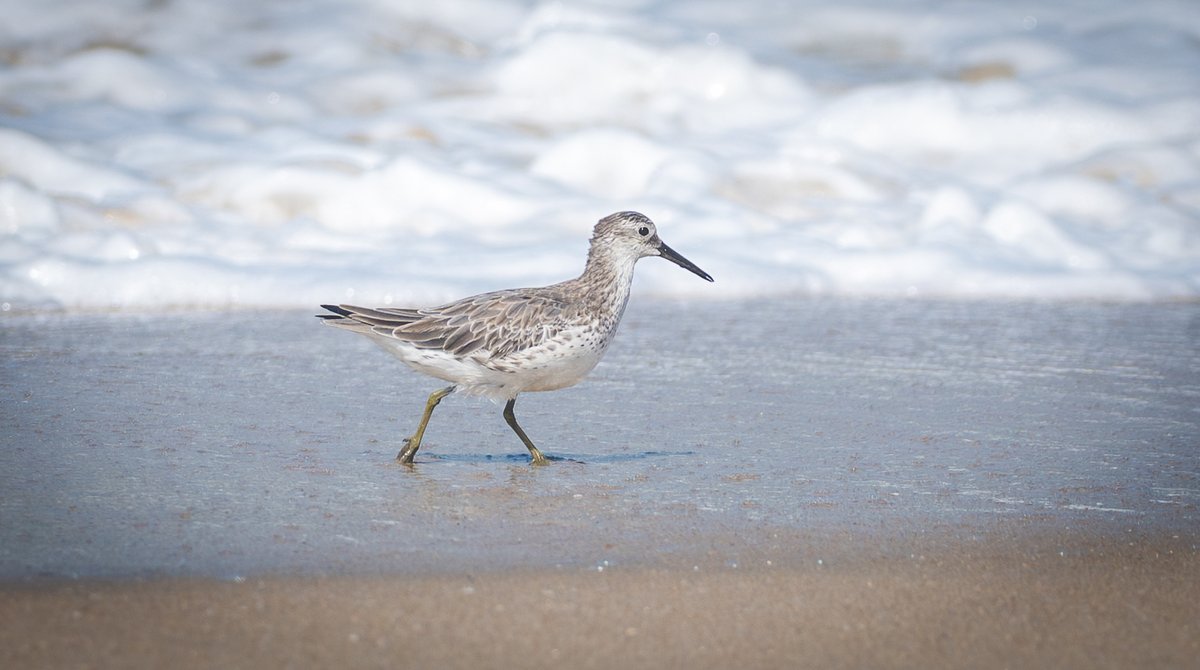
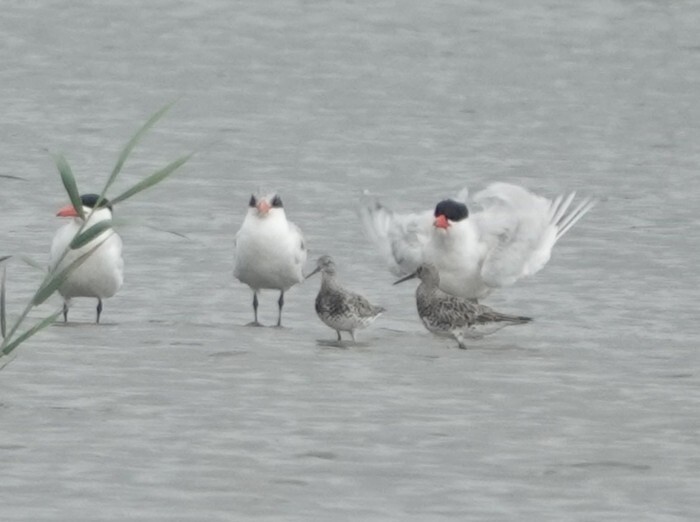
A large sandpiper, it is among the biggest members of the Scolopacidae family. It breeds on the tundra of northeastern Siberia and winters along the coasts of southern Asia and Australia, where it forms large flocks. It inhabits mudflats and sandy beaches. Populations have declined significantly in recent decades, and the species has been recorded as a vagrant in North America and Britain.
Description
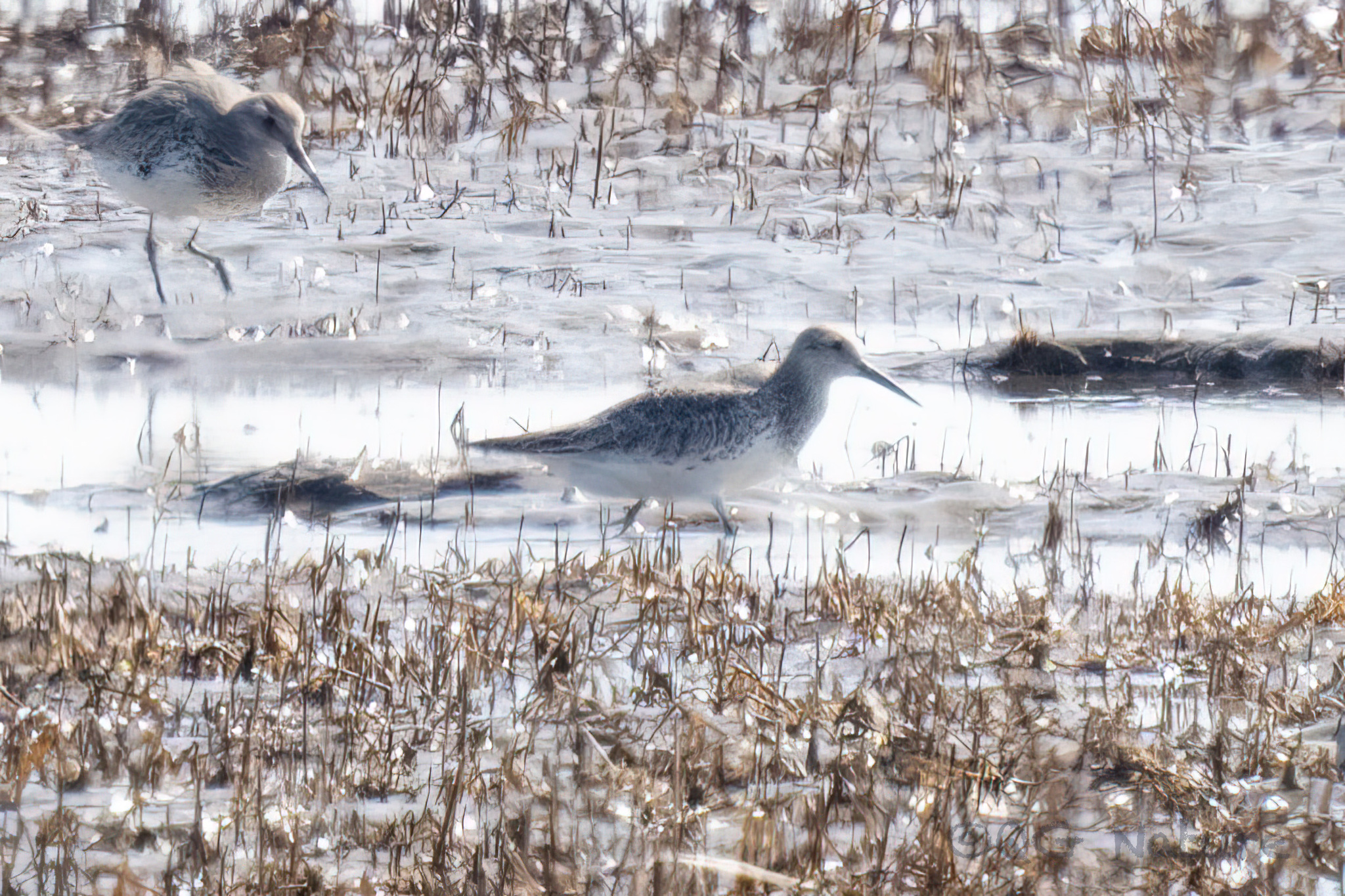
This substantial sandpiper measures 26 to 30 centimeters in length with a wingspan of 56 to 66 centimeters, weighing between 115 and 261 grams. It possesses short dark legs and a relatively long, thin dark bill. Breeding plumage is striking: the upperparts show mottled grey with a distinctive rufous band across the scapulars, while the face, throat, and breast are heavily marked with black spots and the rear belly carries dark streaks. Non-breeding birds appear more subdued, wearing uniformly pale grey upperparts. The overall impression is of a robust, thick-chested shorebird with a purposeful feeding action.
Identification
The most reliable distinguishing feature involves comparison with the similar red knot. In breeding plumage, this species lacks the red face, throat, and breast that characterize the red knot. In all plumages, birdwatchers should note the larger overall size, proportionately longer bill, deeper chest, and more heavily streaked upperparts. The rufous scapular band in breeding dress is also diagnostic. Its size approaches that of a ruff, though it lacks the dramatic size dimorphism seen in that species.
Distribution & Habitat
Breeding occurs on the tundra of northeastern Siberia, Russia, where nests are constructed as ground scrapes. The species is strongly migratory, wintering along coasts from southern Asia through Australia. Small numbers summer regularly in western Alaska, and winter records extend west to Pakistan, Oman, and the United Arabian Emirates. Vagrant records include Great Britain, Morocco, New Zealand, British Columbia, Oregon, West Virginia, and Maine. In winter, enormous flocks gather at key coastal sites throughout its range.
Behavior & Ecology
These birds feed actively on mudflats and sandy beaches, using both visual observation and probing to locate prey. Molluscs form the bulk of the diet, supplemented by insects. They are highly social, particularly outside the breeding season, forming massive flocks that wheel and feed together. Breeding begins on the tundra with eggs laid in simple ground scrapes, typically four per clutch.
Conservation
The species is covered by the Agreement on the Conservation of African-Eurasian Migratory Waterbirds. In Australia, it is listed as critically endangered under federal legislation since May 2016, though a 2023 review suggested populations may now be stable or declining more slowly than previously estimated. State-level listings vary: vulnerable in New South Wales and the Northern Territory, endangered in South Australia, and critically endangered in Queensland, Victoria, and Western Australia. Habitat loss and degradation at migratory stopover sites remain significant concerns.
Source: Wikipedia · CC BY-SA 3.0
Taxonomy
- Order
- Charadriiformes
- Family
- Scolopacidae
- Genus
- Calidris
- eBird Code
- grekno
Distribution
breeds montane tundra of northeastern Siberia from Yakutsk eastward to Anadyr Peninsula; winters coasts from northeastern Arabian Peninsula eastward to Taiwan, Phillipines, and Australia
Data Sources
Species description from Wikipedia, licensed under CC BY-SA 3.0.
Bird images and sounds sourced from GBIF, contributed by citizen scientists worldwide under Creative Commons licenses.
Taxonomy data from AviList 2025.