Buff-breasted Sandpiper
Calidris subruficollis
黄胸滨鹬
Introduction
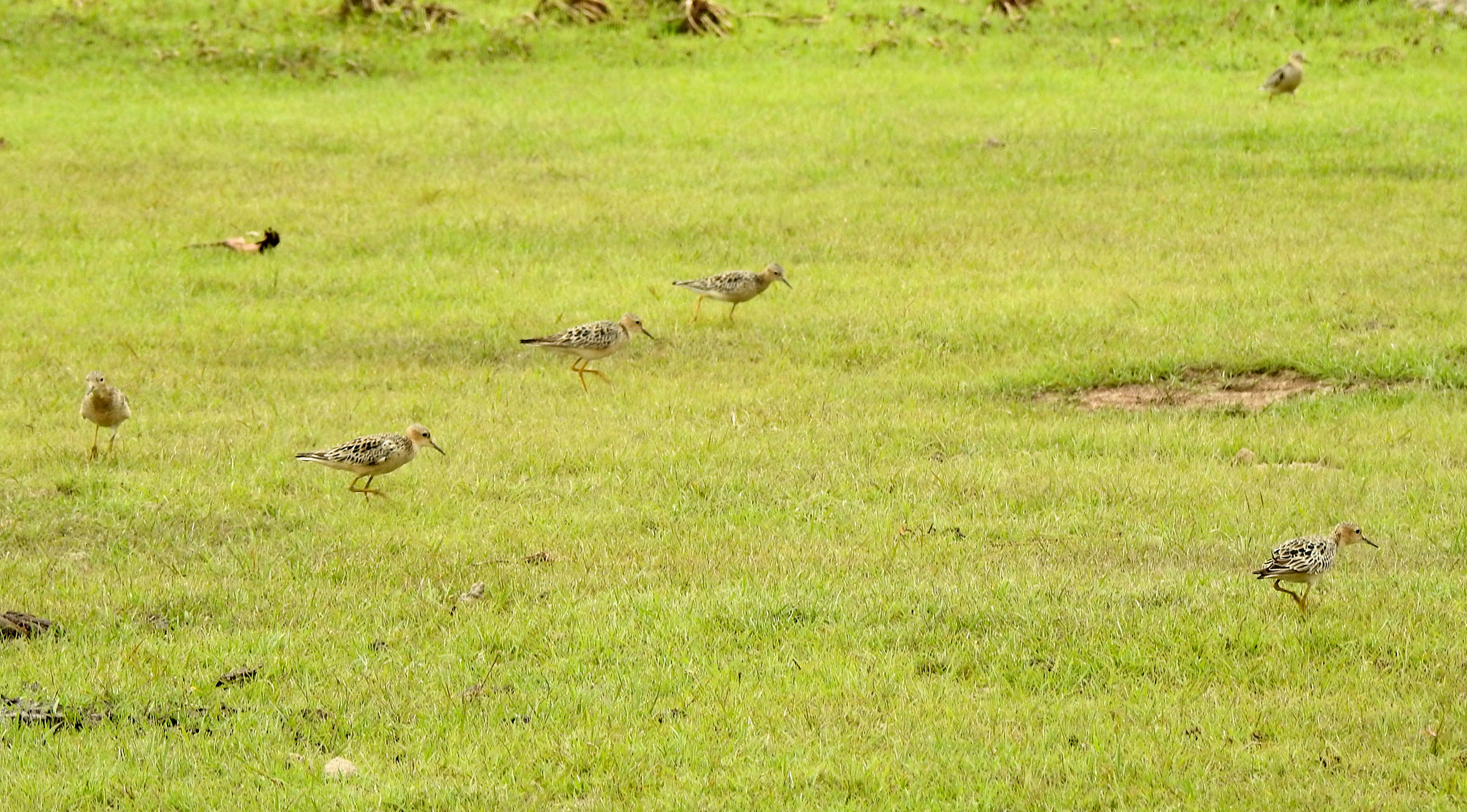
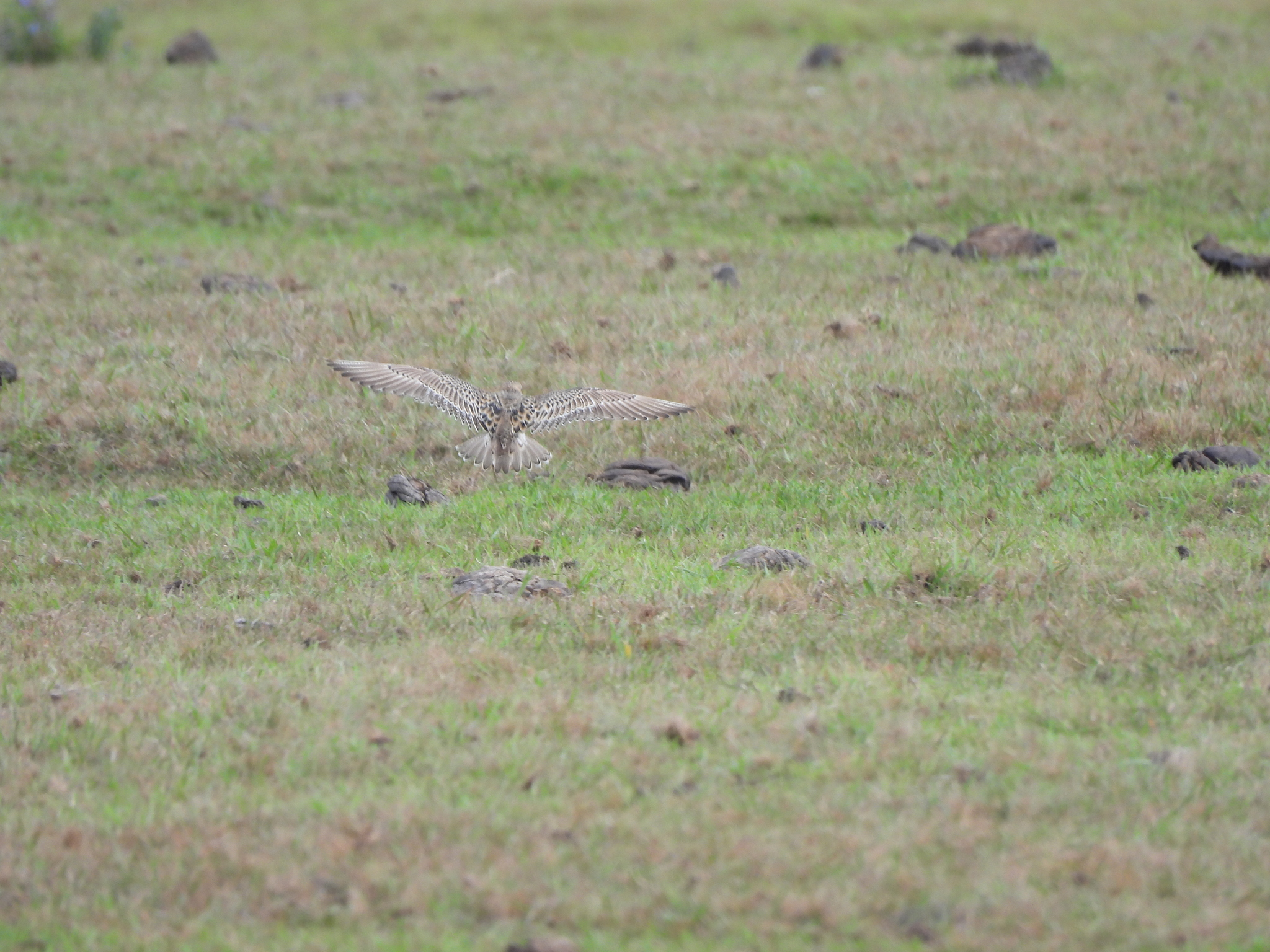
This calidrid sandpiper breeds on the remote arctic tundra of North America. During non-breeding periods, it occupies unusual terrestrial habitats including airfields, golf courses, and short-grass fields, rather than typical shoreline environments. It migrates long distances from Arctic breeding grounds to South American wintering areas, principally Samborombón Bay in Argentina. Vagrant individuals occasionally reach South Asia and Australia. Males perform a wing-display courtship ritual, raising their wings to expose white undersides.
Description
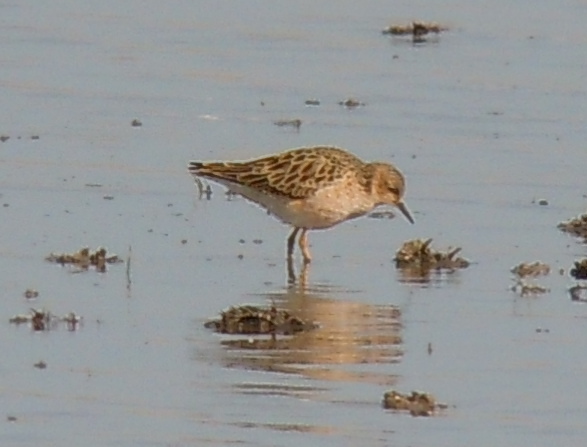
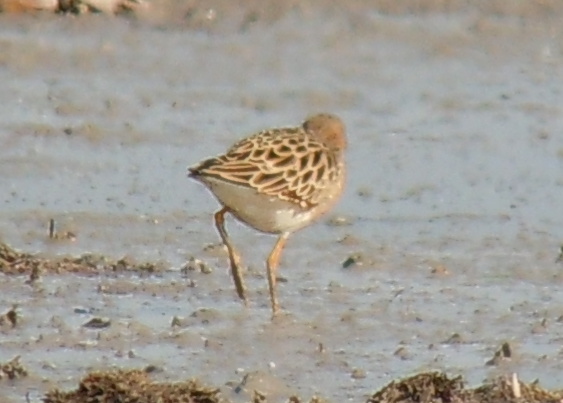
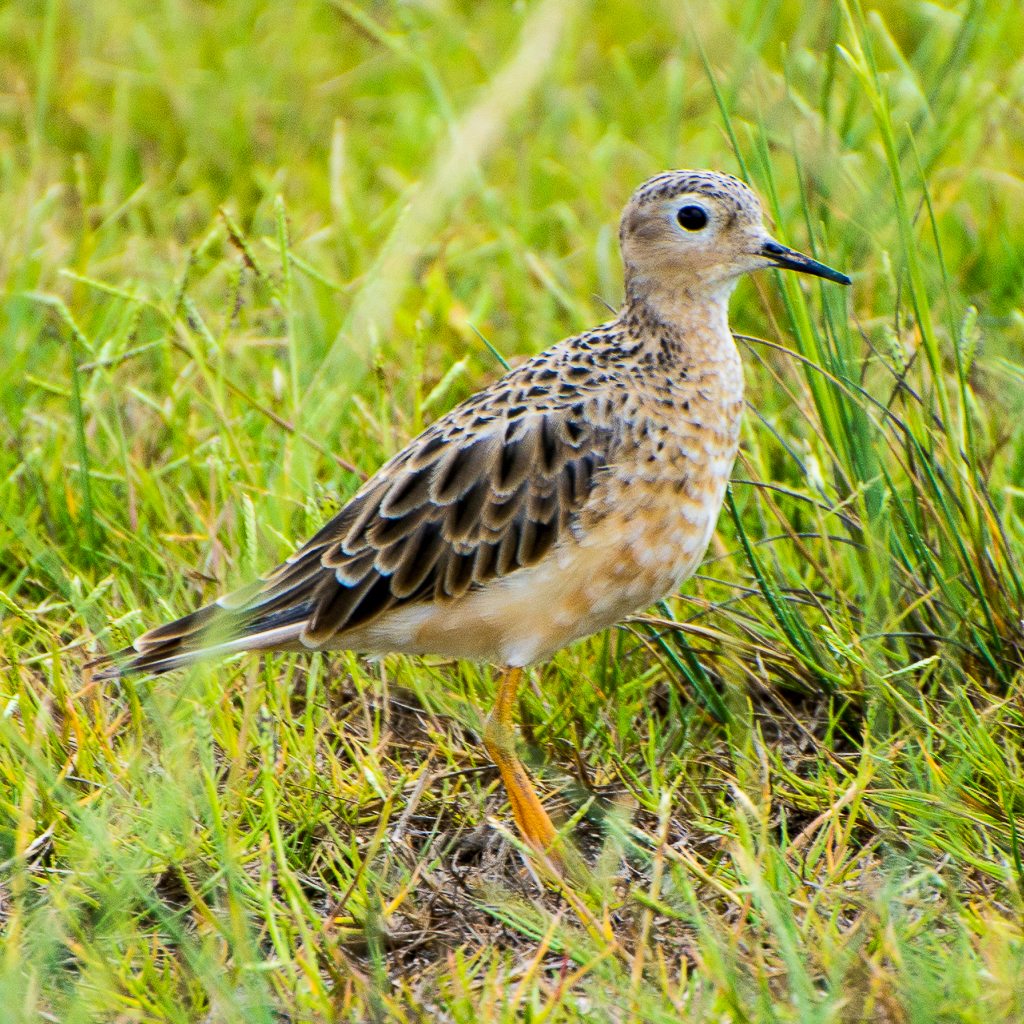
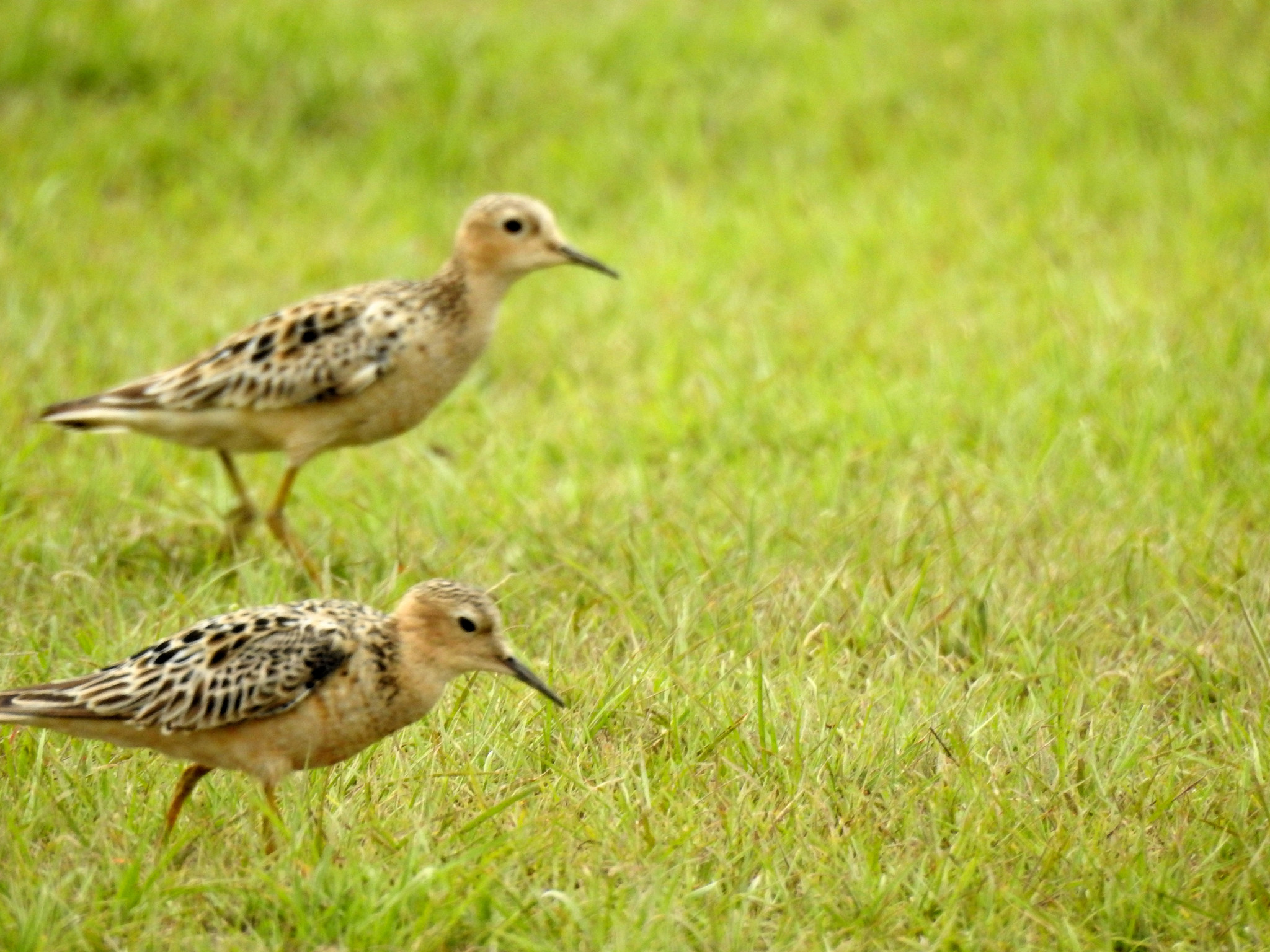
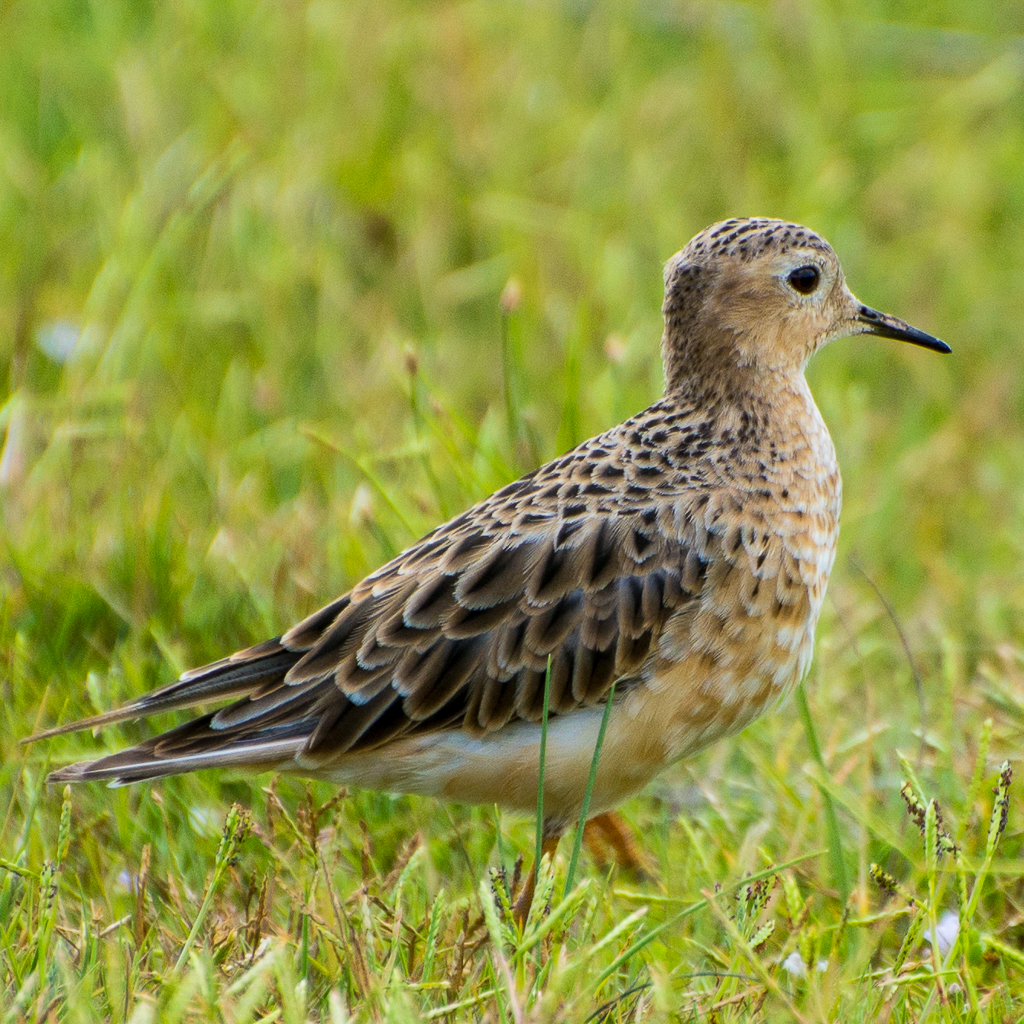
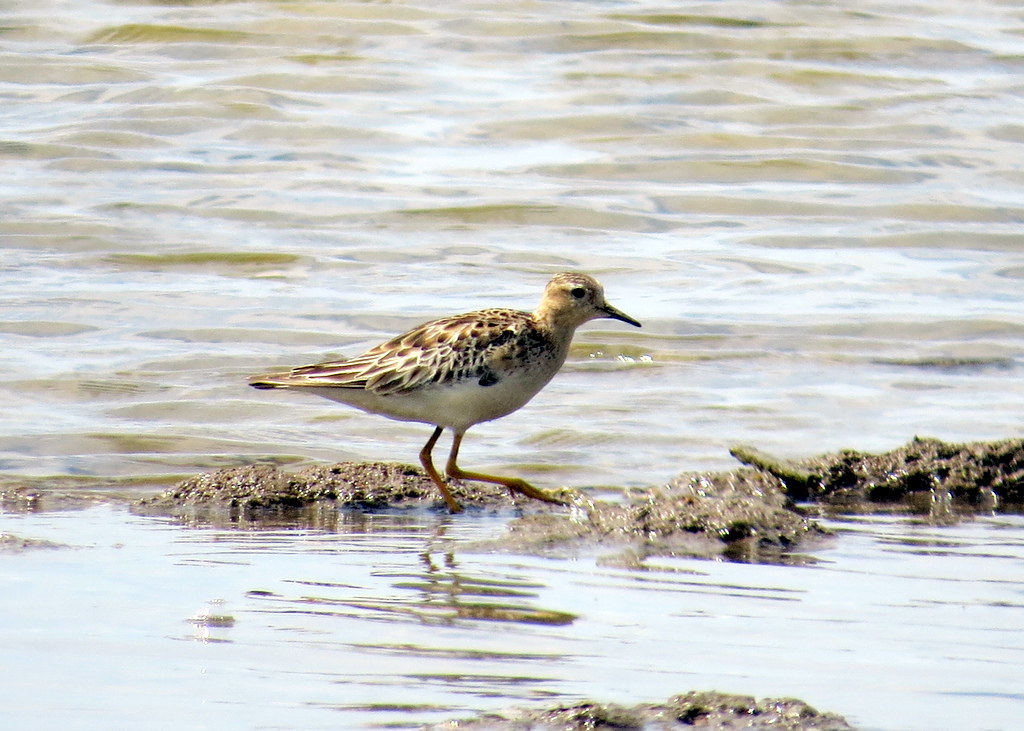
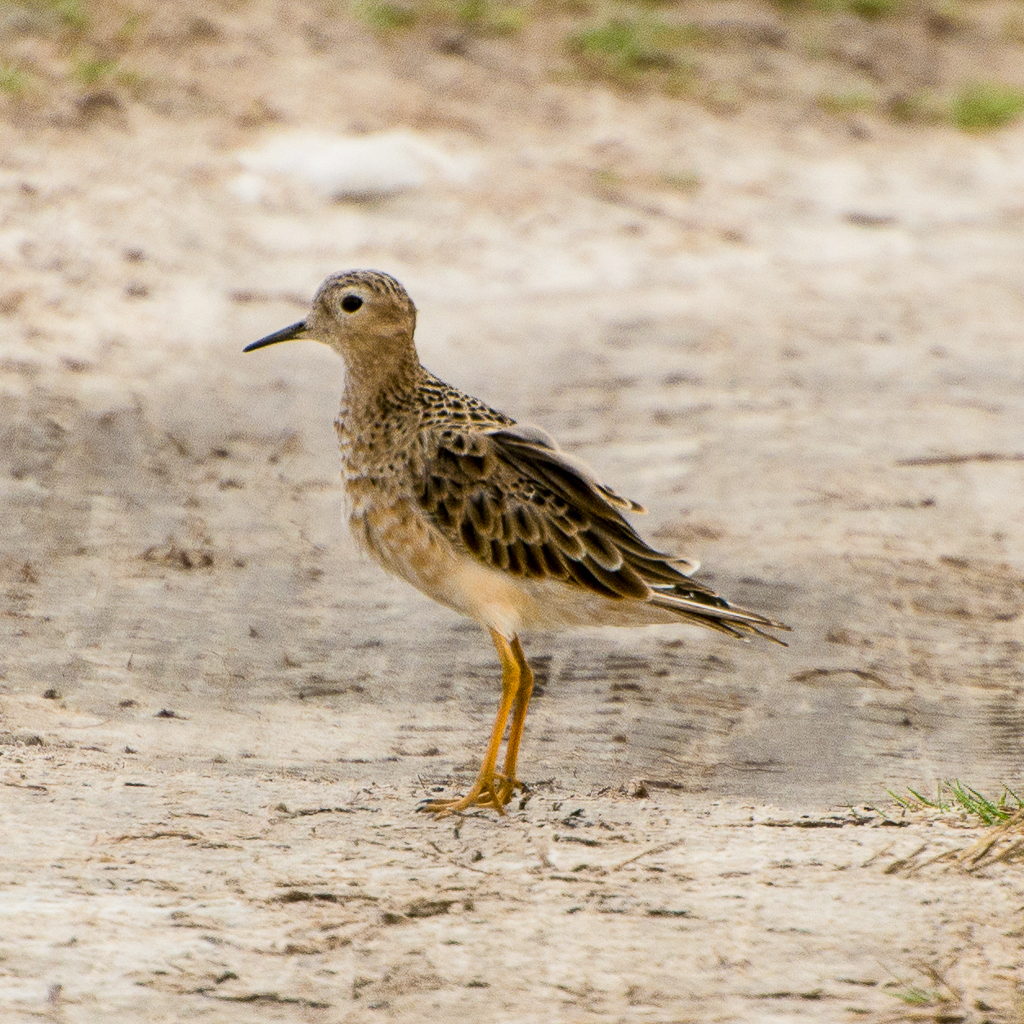
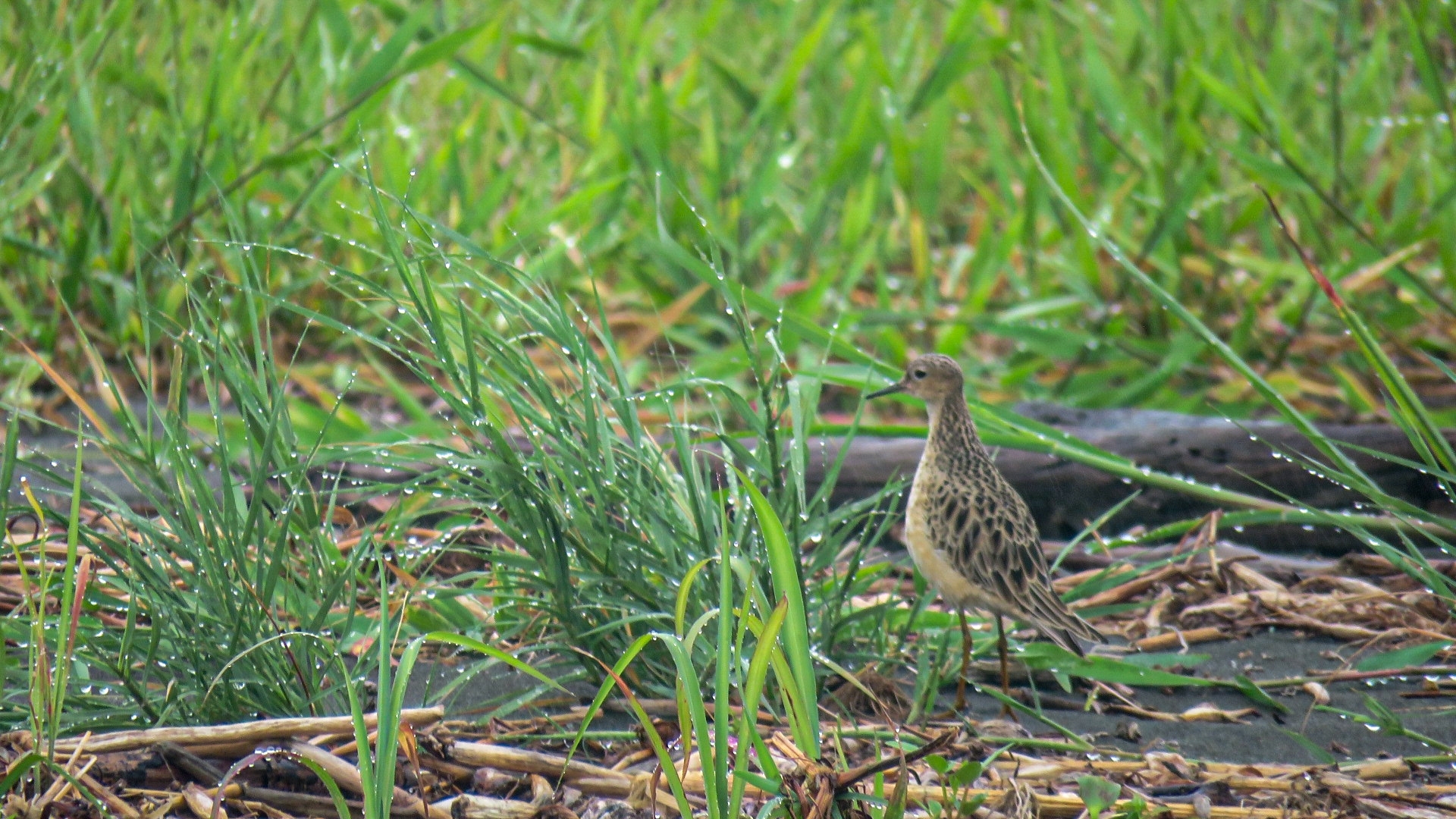
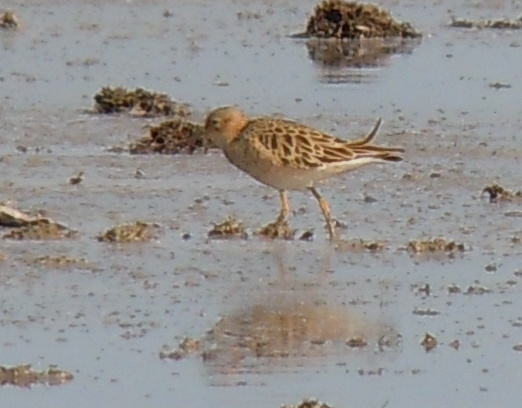
This small shorebird appears brown above with uniform buff coloring on the face and underparts across all plumages. The short, straight bill and yellow legs are distinctive field marks. The species shows sexual dimorphism with males being notably larger than females. Juveniles closely resemble adults but may show paler coloration on the rear underparts. The overall impression is of a compact, uniformly warm-toned sandpiper lacking the bold streaking or contrasting patterns seen in many related species.
Identification
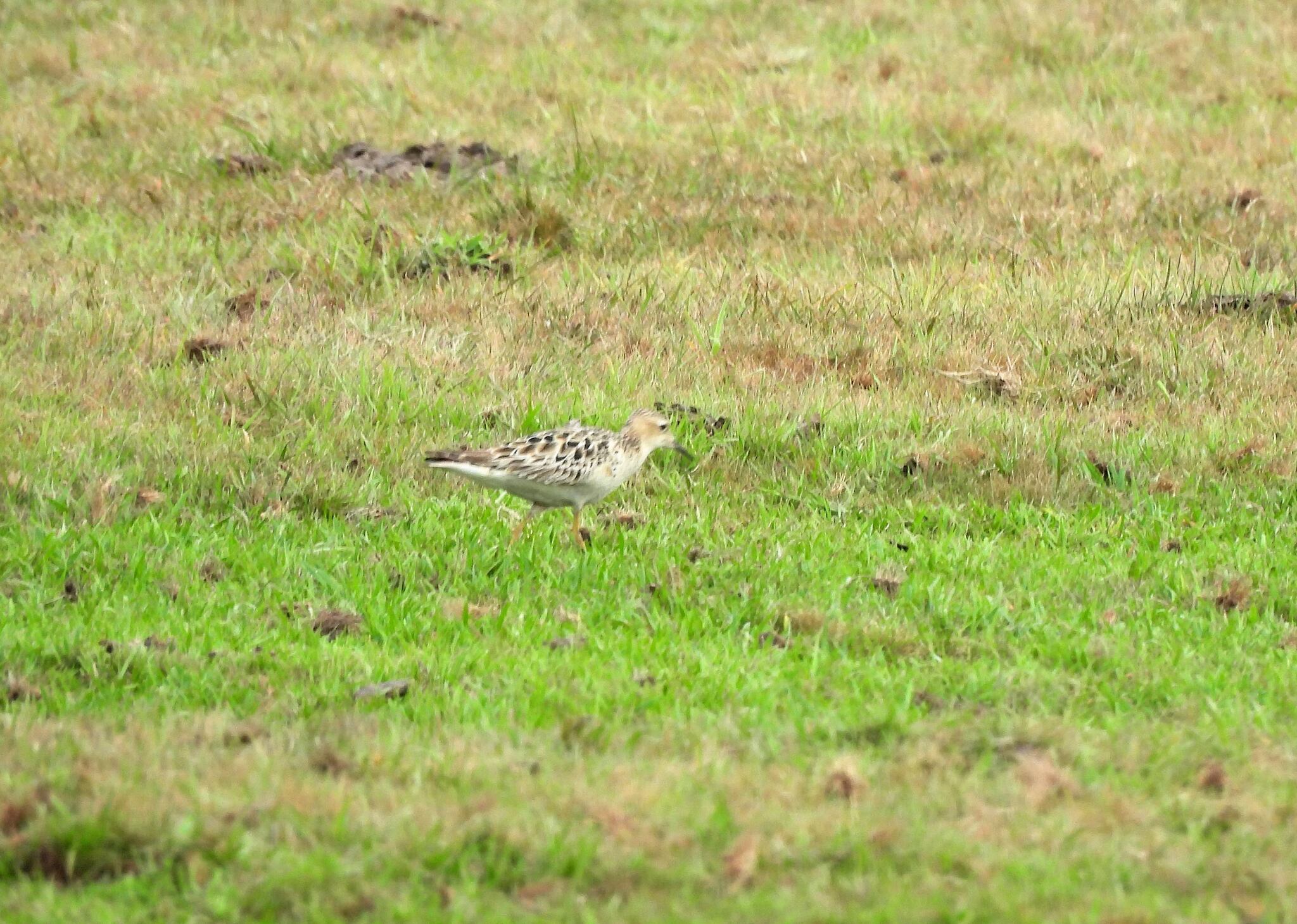
The combination of entirely buff underparts, short yellow legs, and brown upperparts distinguishes this species from most other sandpipers. It lacks the white rump visible in white-rumped sandpiper and the streaked breast characteristic of pectoral sandpiper. The uniformly colored underparts help separate it from Baird's sandpiper, which shows more contrast. The species' preference for short-grass habitats away from water, rather than typical shorebird mudflats, is a helpful behavioral clue. When flushed, it often runs rather than flies, and its wing display may be visible even outside the breeding season.
Distribution & Habitat
Breeds in open arctic tundra regions across North America, including Alaska and northern Canada. This long-distance migrant winters primarily in South America, especially Samborombón Bay in Argentina. Migration routes concentrate through central North America, with coastal occurrences being unusual. The species is a regular wanderer to Western Europe, particularly Great Britain and Ireland, where small flocks occur annually and it ranks as the second most common American shorebird visitor after the pectoral sandpiper. Vagrants have reached South Asia, Australia, and southern Africa, with documented sightings in Kerala, Sri Lanka, and South Africa.
Behavior & Ecology
Outside the breeding season, this bird frequents dry, short-grass habitats such as airfields and golf courses rather than wetland edges. It forages by sight, picking up insects and other invertebrates from the ground. Notably, it preys on the Arctic bumblebee species Bombus polaris, consuming bees directly or feeding them to young. The male performs an elaborate courtship display raising the wings to expose white undersides, a behavior occasionally seen during migration even when no conspecifics are present. The species is notably tame, allowing close approach. Four eggs are laid on the ground in a simple nest. Hybridization with white-rumped and Baird's sandpipers has been suspected.
Conservation
This species is classified as Near Threatened by the IUCN, reflecting concerns about its population status. While specific population figures are not provided in available sources, the species is suspected to be in decline. Its extremely limited breeding range makes it vulnerable to environmental changes. Conservation concerns focus on protecting key wintering and migration habitats, particularly in South America where habitat loss could impact survival rates.
Culture
No significant cultural or folklore associations are documented for this species in available sources.
Source: Wikipedia · CC BY-SA 3.0
Taxonomy
- Order
- Charadriiformes
- Family
- Scolopacidae
- Genus
- Calidris
- eBird Code
- bubsan
Distribution
breeds high Arctic dry coastal tundra from Wrangel Island (northeastern Siberia) eastward through Alaskan North Slope to northeastern Canada, including Arctic islands from Banks to Devon; migrates to grassland of southeastern Brazil and Uruguay to central Argentina; prone to extreme vagrancy worldwide
Data Sources
CBR Notes: 中文名由饰胸鹬改为黄胸滨鹬IUCN红色名录等级由NT升为VU
Species description from Wikipedia, licensed under CC BY-SA 3.0.
Bird images and sounds sourced from GBIF, contributed by citizen scientists worldwide under Creative Commons licenses.
Taxonomy data from AviList 2025.