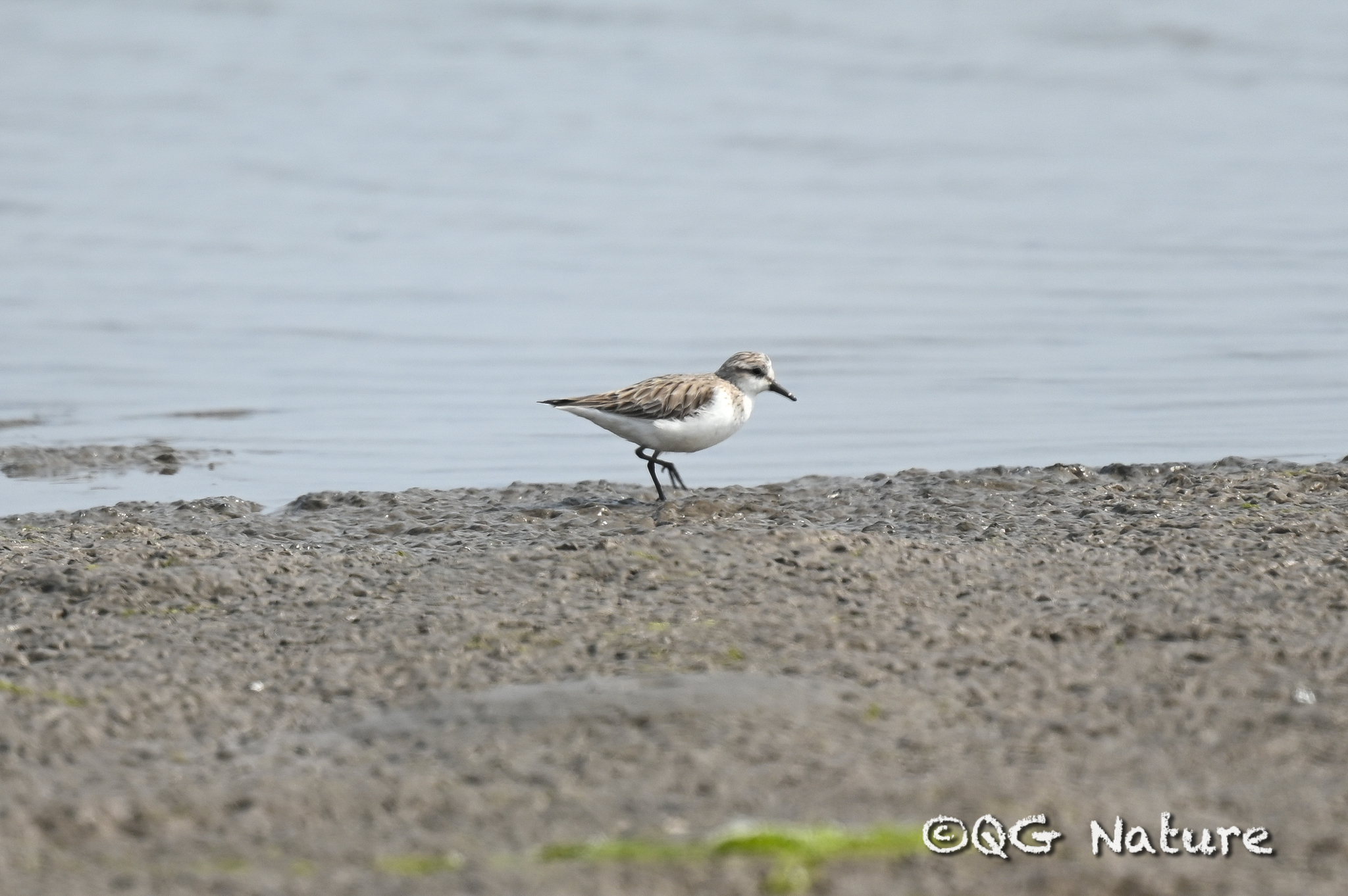
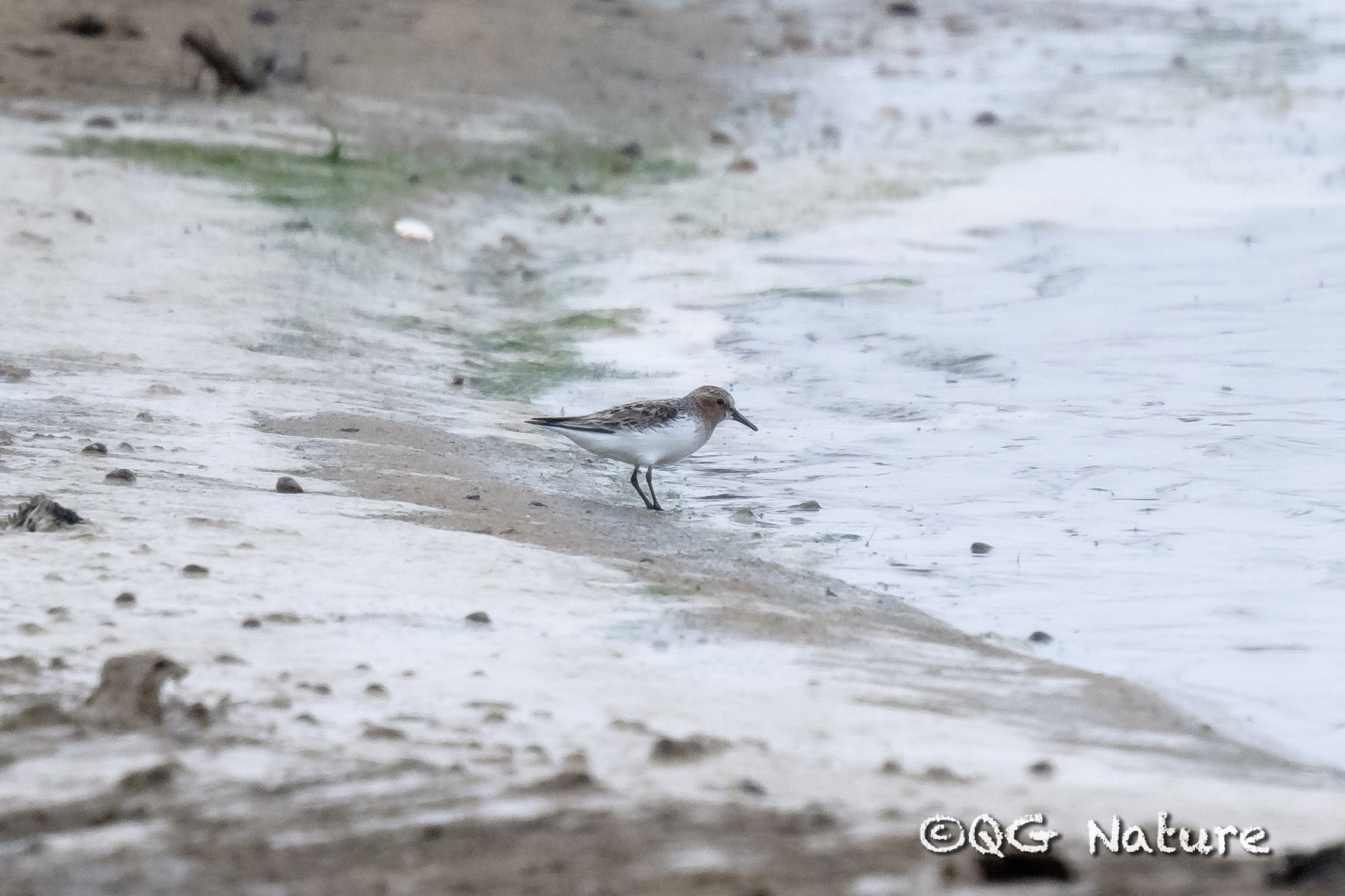
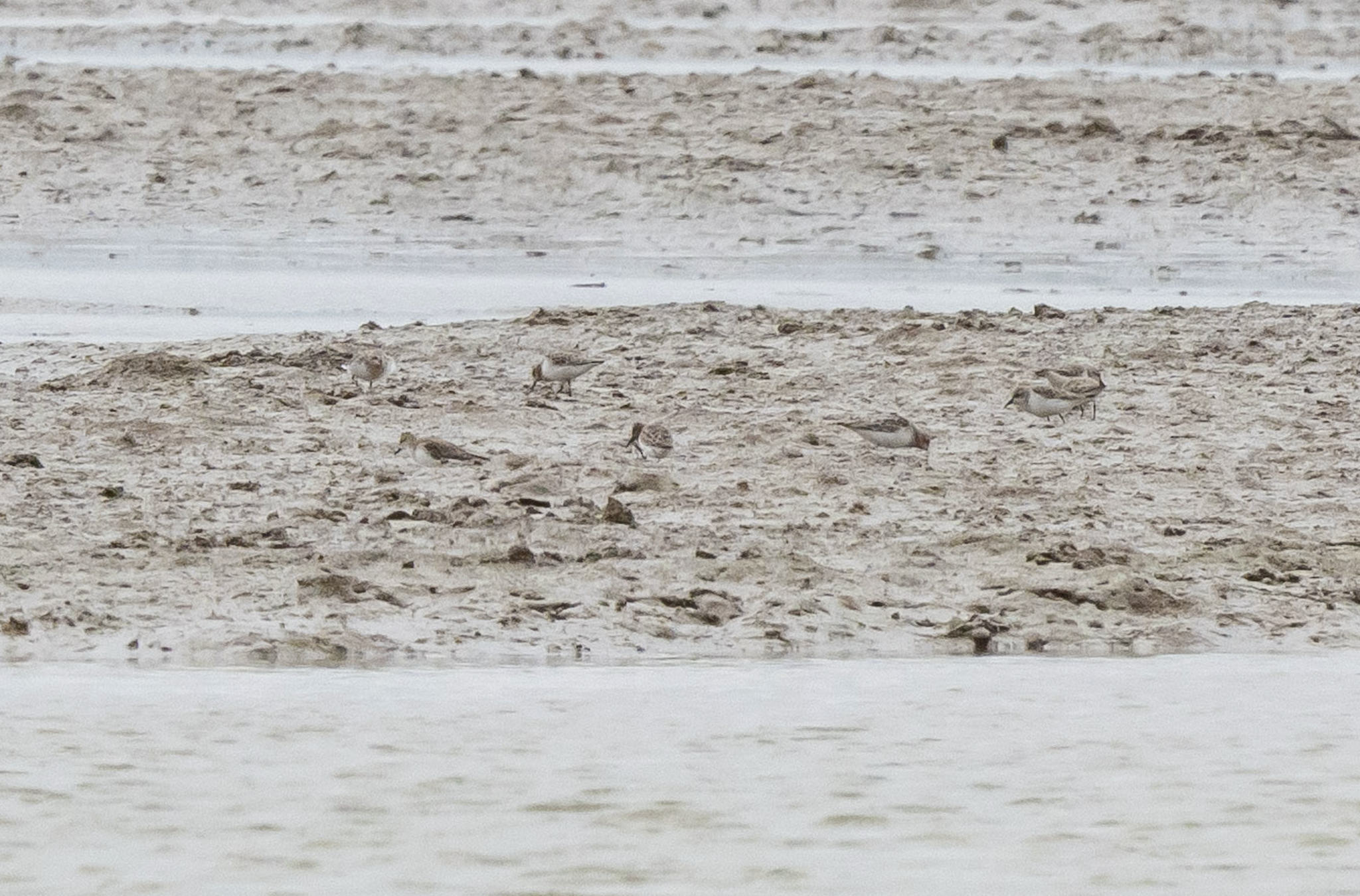
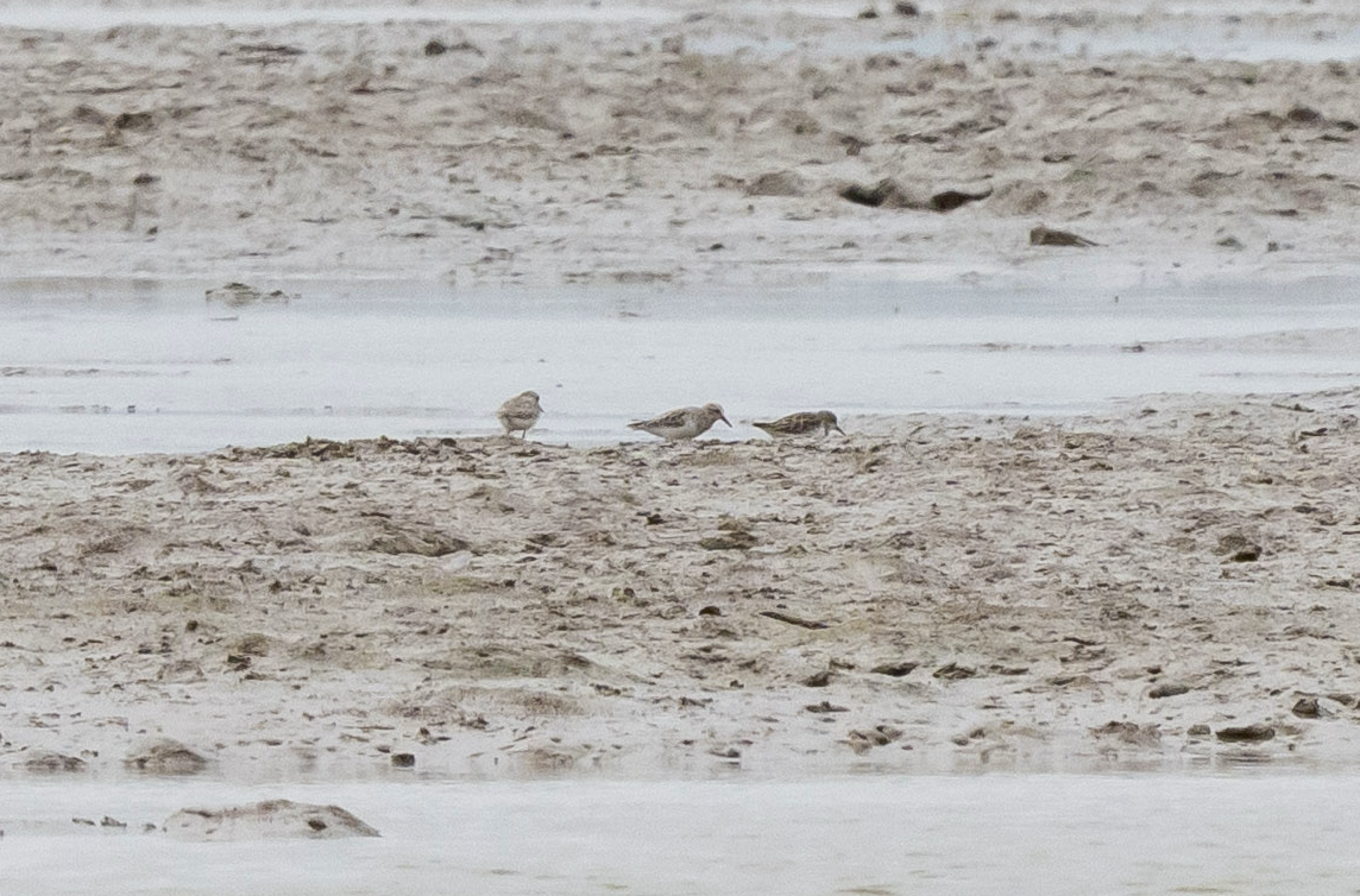
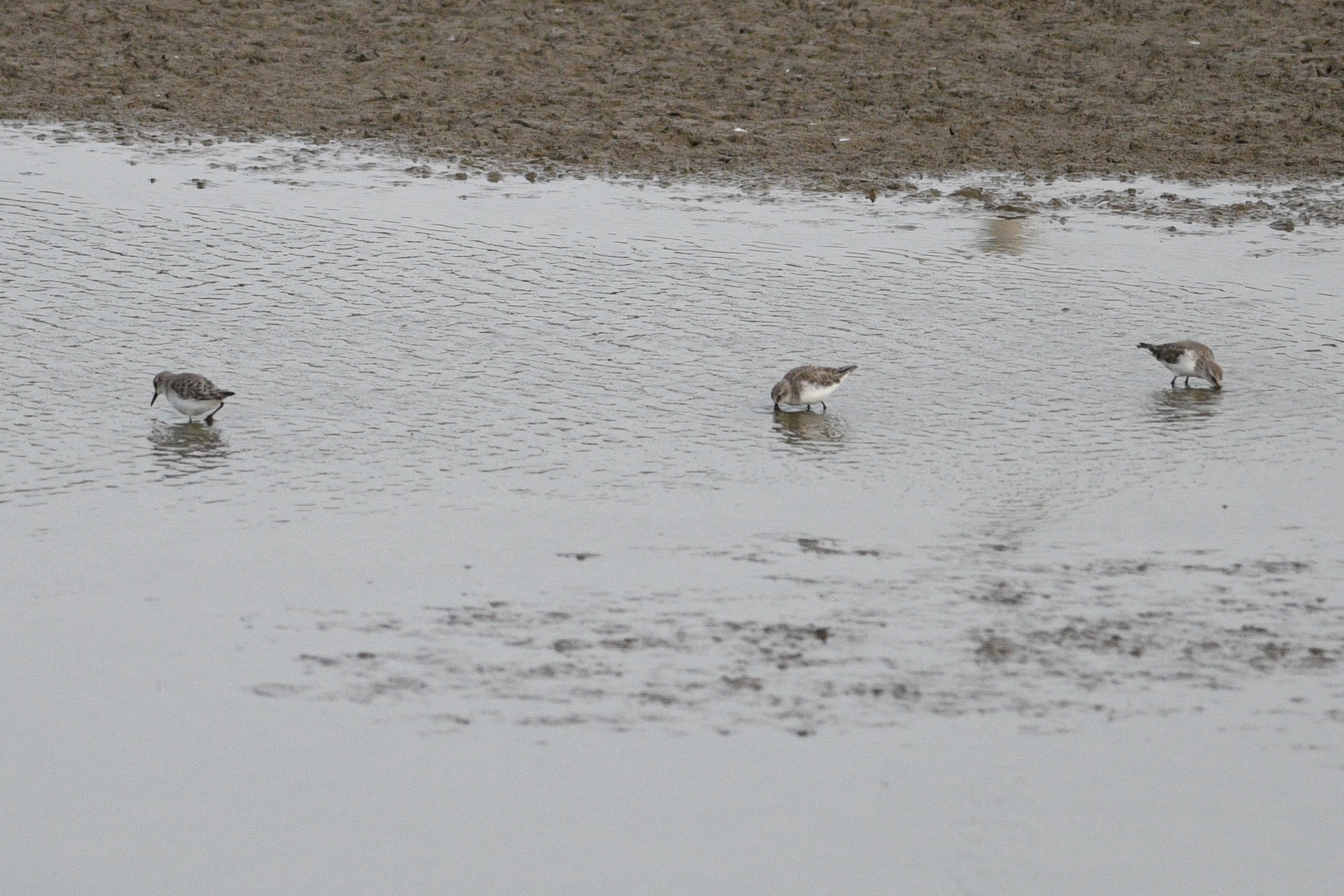
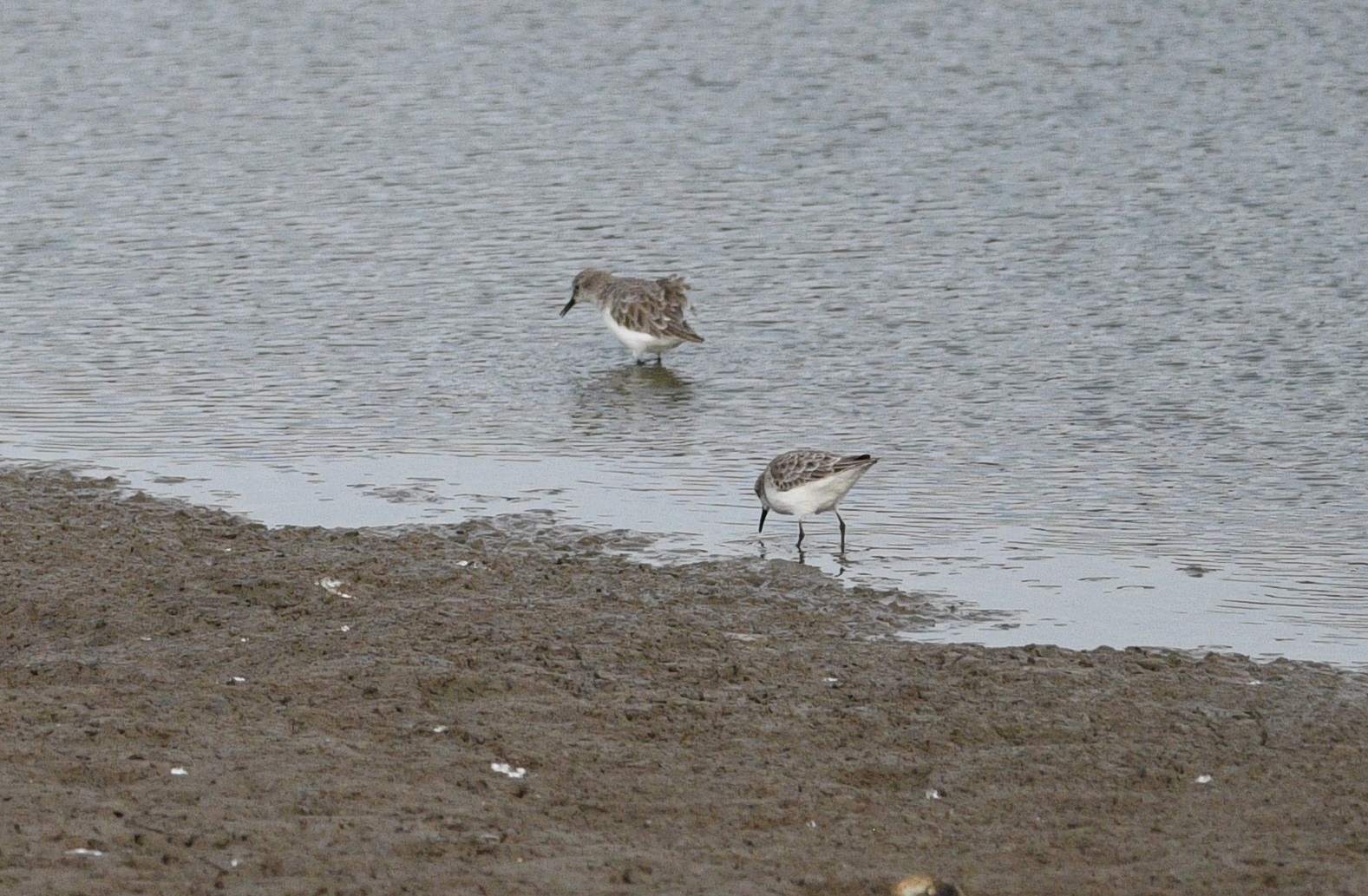
Red-necked Stint
Calidris ruficollis
红颈滨鹬
Introduction
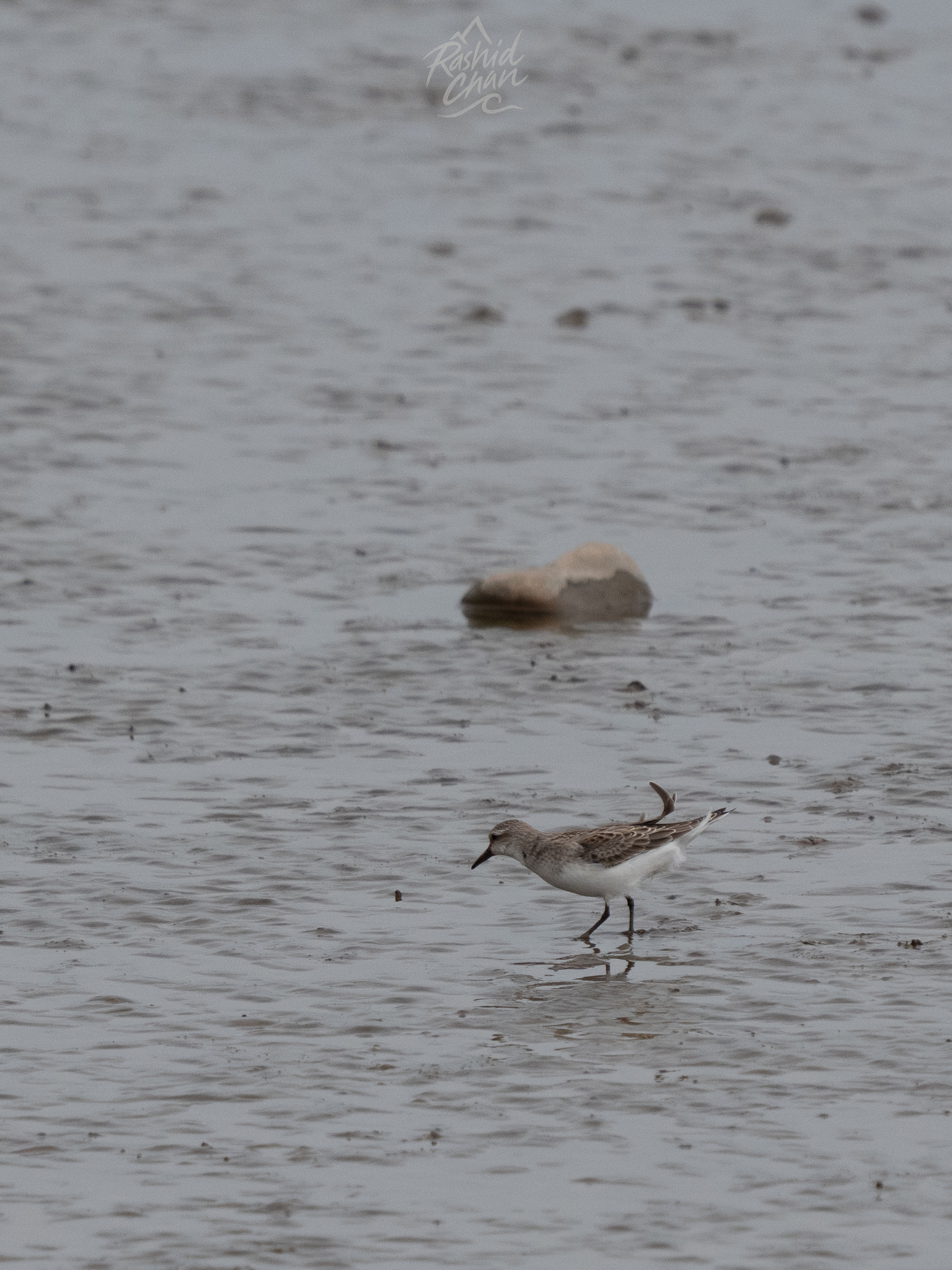
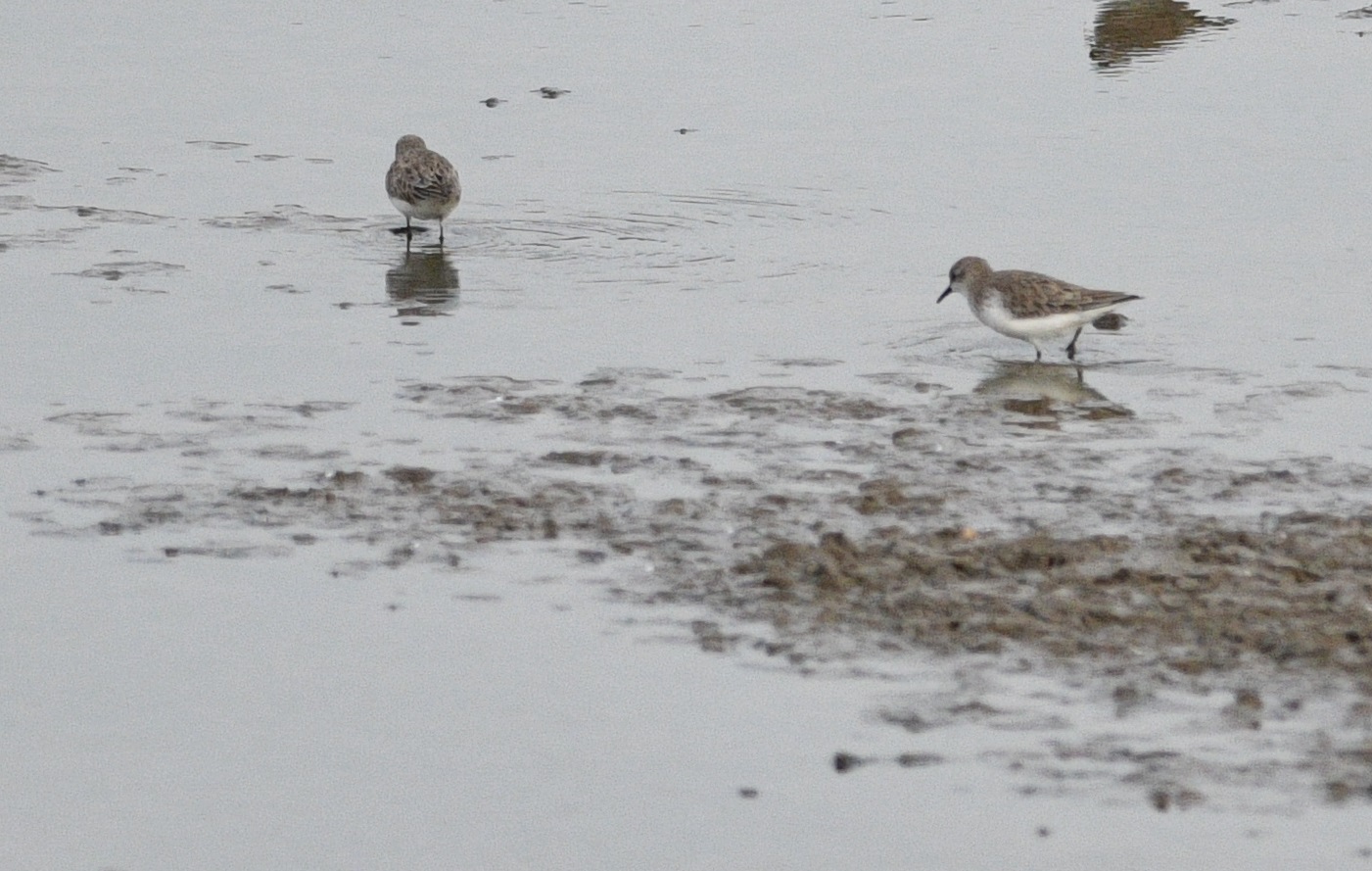
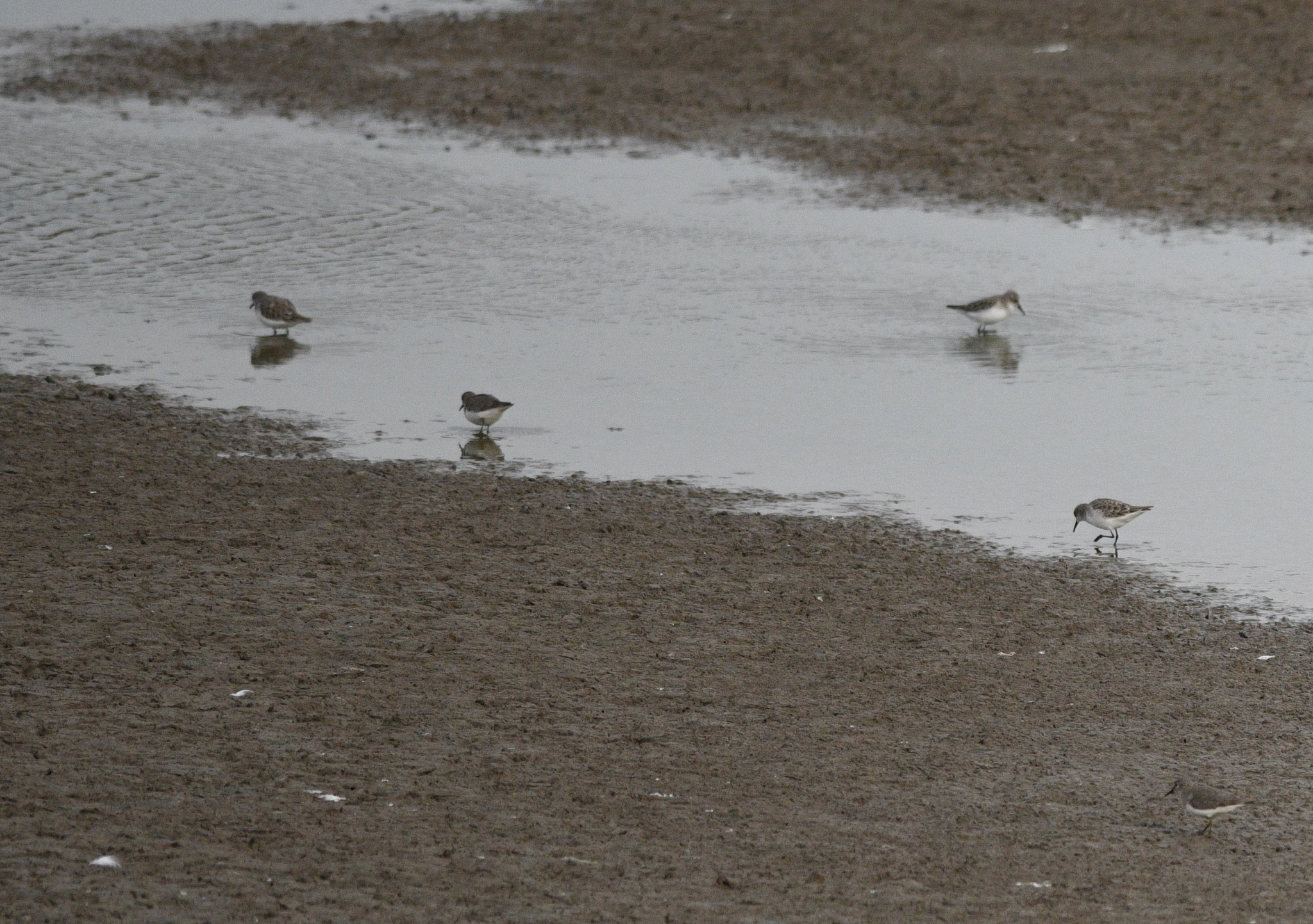
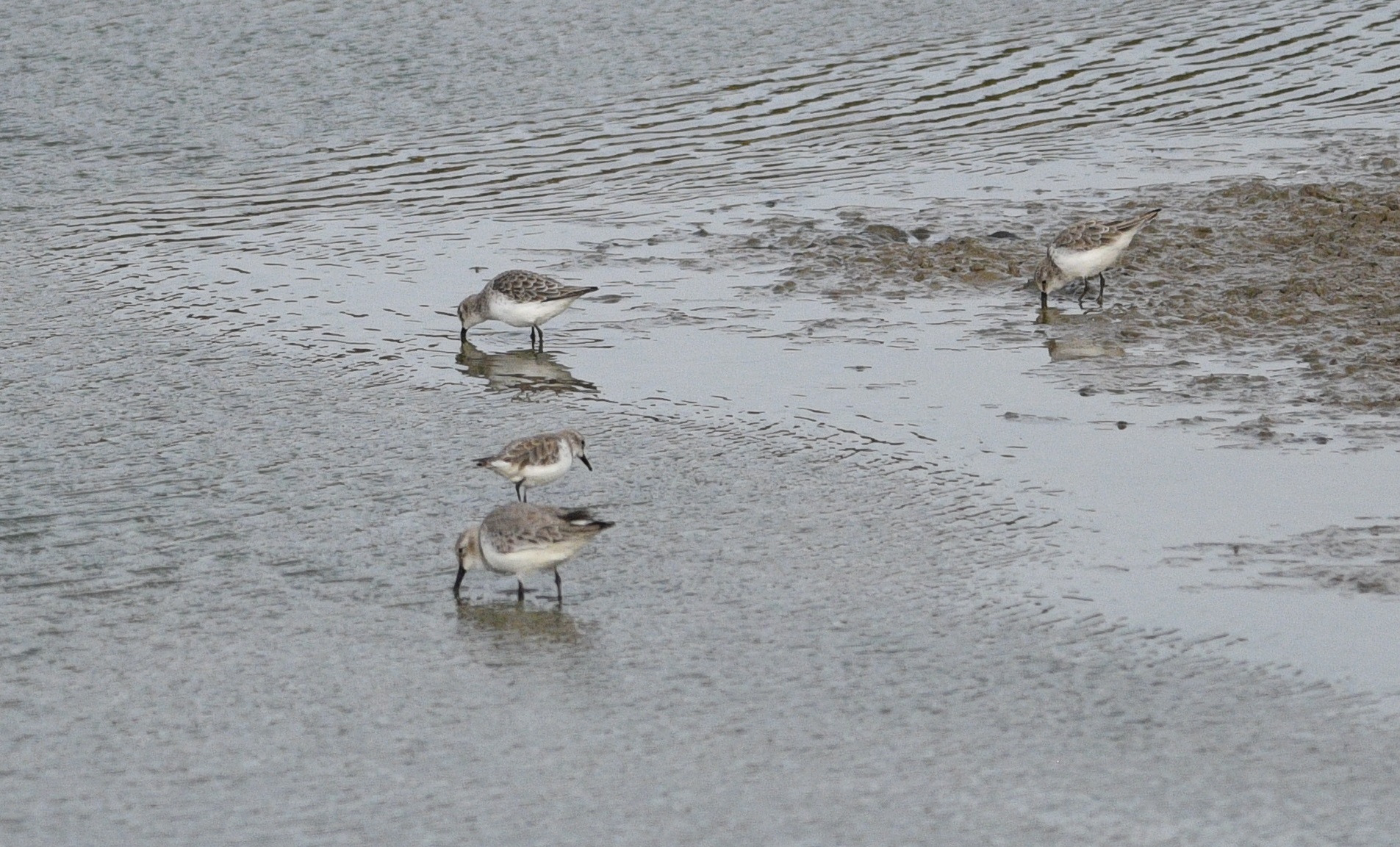
This small shorebird is among the smallest wader species in the Eastern Hemisphere, measuring 13-16 cm in length with a wingspan of 27-35 cm. It breeds in the tundra of northeast Russia and migrates to coastal areas across Southeast Asia and Australasia for the non-breeding season. During migration and in wintering areas, it occurs in loose flocks with other Calidris species on mudflats and shallow waters, where it forages by probing in substrate. It is similar in appearance to the little stint.
Description
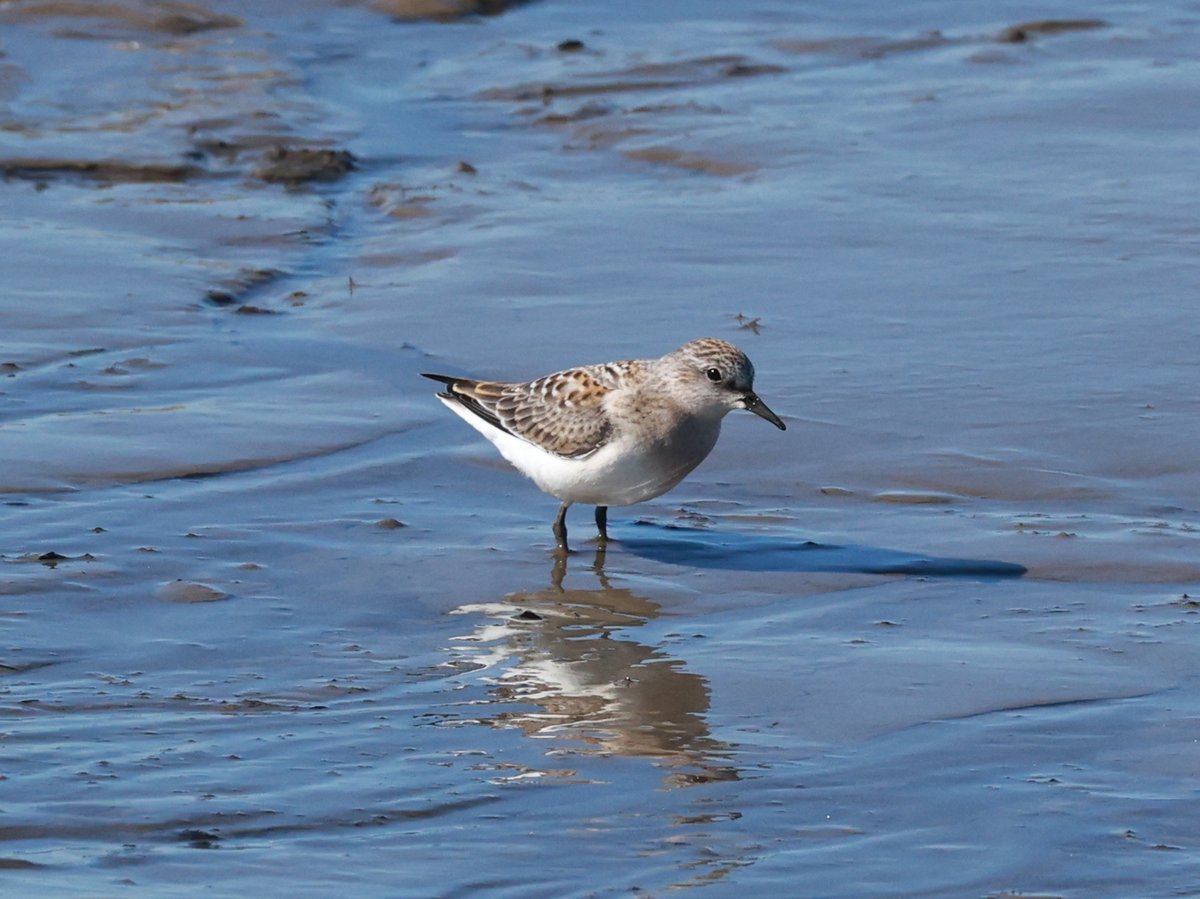
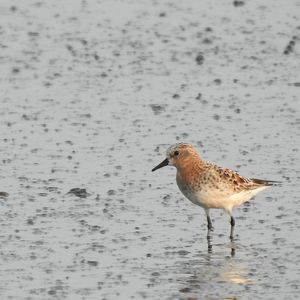
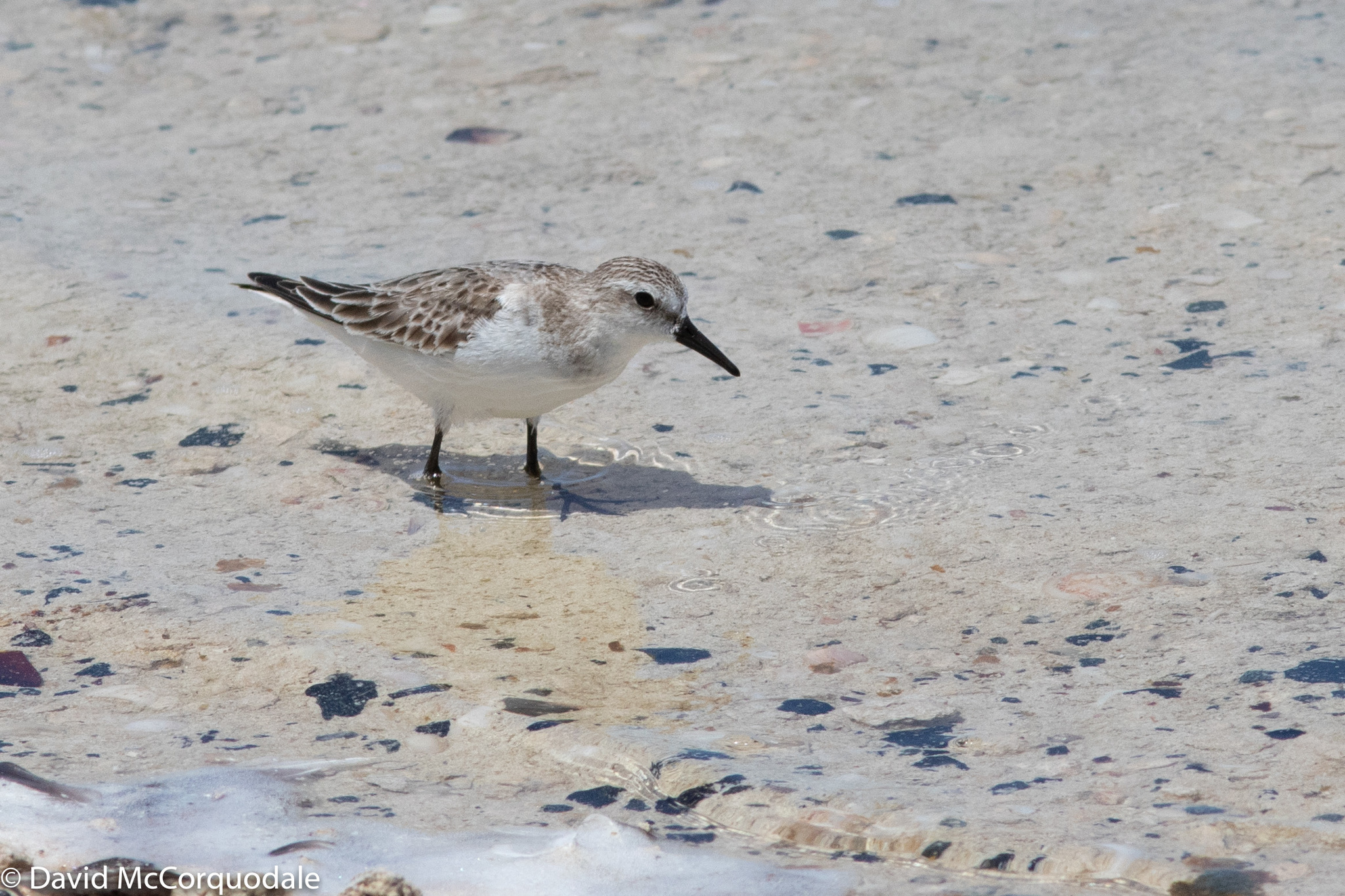
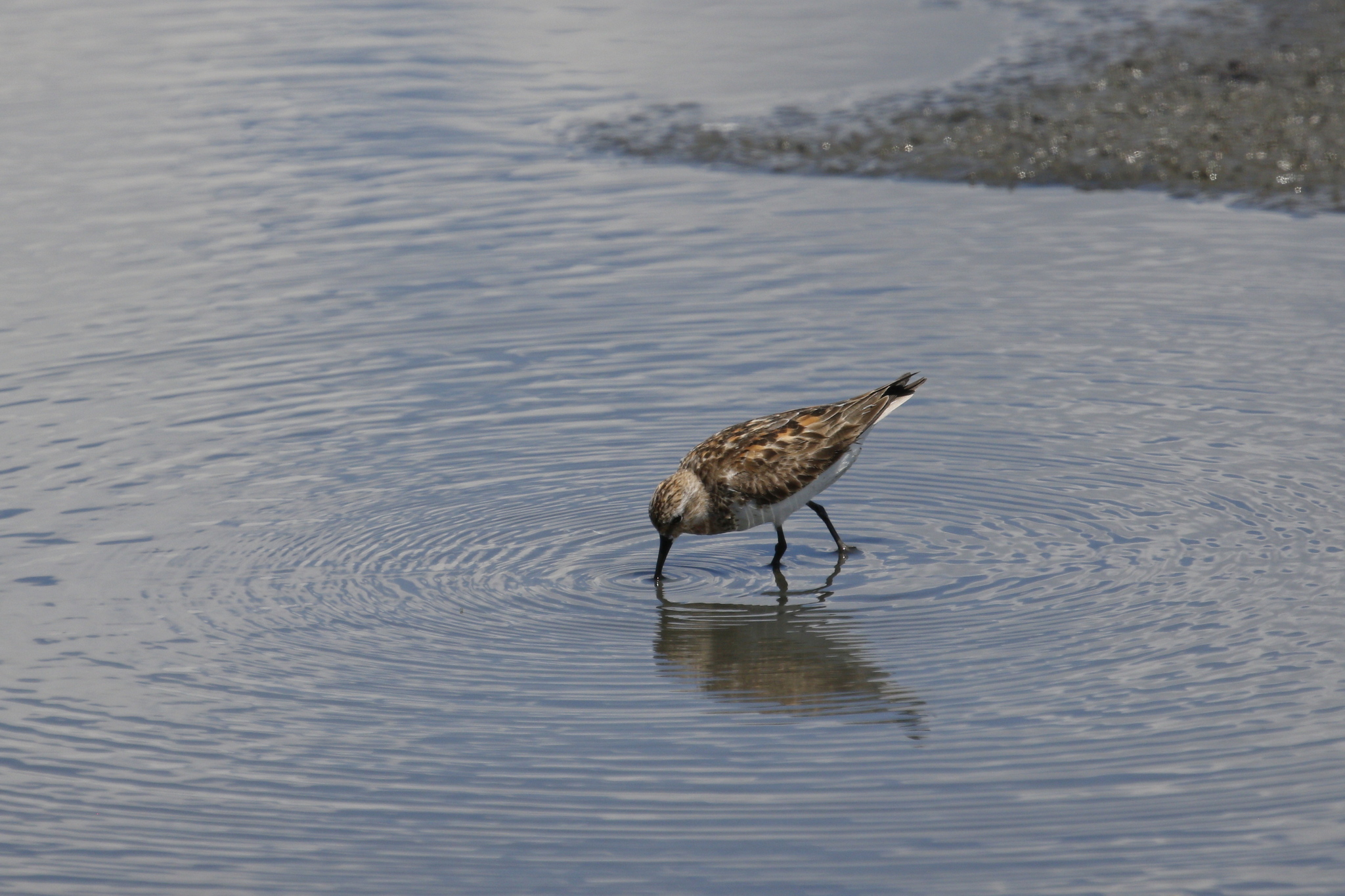
Among the tiniest of waders, this species measures a mere 13-17 cm in length with a wingspan of 28-37 cm and weighs just 21-51 grams. It possesses a fine, dark bill and entirely dark legs that distinguish it from many larger sandpipers. The breeding adult displays an unstreaked orange breast bordered with dark markings below, complemented by a distinctive white V-shaped marking on its back. In winter plumage, the bird becomes much more subdued in coloration, though it can be recognized by its proportionally shorter legs and longer wings compared to similar species. Juveniles show more contrasting mantle plumage with weaker white lines running down the back compared to related stint species.
Identification
Distinguishing this species from other small sandpipers requires careful attention to multiple field marks. Unlike the western sandpiper and semipalmated sandpiper, it possesses a fine-tipped bill and unwebbed toes, along with a notably longer primary projection visible on the folded wing. The combination of its small size, fine dark bill, dark legs, and rapid movements separates it from all other waders except the other dark-legged stints. In winter plumage, identification becomes particularly challenging, though the shorter-legged and longer-winged profile compared to the little stint provides a key distinguishing feature. Juveniles can be separated from little stint juveniles by their more contrasting mantle plumage and weaker white lines along the back. The species gives a distinctive hoarse 'stit' call.
Distribution & Habitat
This strongly migratory species breeds along the Arctic coastal regions of eastern Eurasia, primarily in northeast Russia. Its wintering grounds extend through Southeast Asia to Australasia, reaching as far south as Tasmania and New Zealand. During migration, the species is regularly observed in western Alaska and occasionally appears elsewhere in the Americas as a rare vagrant. Vagrant individuals have also been recorded across western Europe, including Belgium, Denmark, Great Britain, Germany, Ireland, the Netherlands, and Sweden. The species inhabits coastal mudflats, the margins of freshwater lakes, and wet grassland areas during its non-breeding season.
Behavior & Ecology
Highly gregarious outside the breeding season, this species forms loose flocks with other small Calidris waders such as sharp-tailed sandpipers and curlew sandpipers. Breeding occurs on low-altitude tundra, typically in dry raised areas where site fidelity is relatively low. The breeding season begins with egg-laying in June, with the nest constructed as a shallow depression lined with leaves and grass. Clutches of 3-4 eggs are incubated by both parents for 20-22 days, after which the female departs while the male continues caring for the precocial young until they fledge at 16-17 days. Only a single brood is raised annually. Foraging takes place in wet grassland and soft mud, with birds primarily locating food by sight. The diet consists mainly of insects and other small invertebrates found on intertidal mudflats and along the muddy edges of freshwater habitats.
Conservation
The species' population status and conservation assessment are not detailed in available sources.
Culture
No specific cultural significance or folklore associated with this species is documented in available sources.
Source: Wikipedia · CC BY-SA 3.0
Taxonomy
- Order
- Charadriiformes
- Family
- Scolopacidae
- Genus
- Calidris
- eBird Code
- rensti
Distribution
breeds coastal tundra of Taymyr Peninsula eastward to Chukotskiy Peninsula and northern Kamchatka Peninsula (north-central to north-eastern Siberia); breeds coastal northeastern India and Sri Lanka eastward to Philippines, Australasia, and Melanesia
Data Sources
Species description from Wikipedia, licensed under CC BY-SA 3.0.
Bird images and sounds sourced from GBIF, contributed by citizen scientists worldwide under Creative Commons licenses.
Taxonomy data from AviList 2025.