Pectoral Sandpiper
Calidris melanotos
斑胸滨鹬
Introduction
This small, long-distance migratory wader breeds in Arctic regions of North America and Asia, with approximately half the population nesting in the boggy tundra of northern Asia and the remainder across Alaska and central Canada. It inhabits freshwater habitats, grasslands and mudflats during migration and winter. The species forages by sight. Its distinctive feature is a sharply demarcated grey breast band. The population has declined significantly since the 1970s.
Description
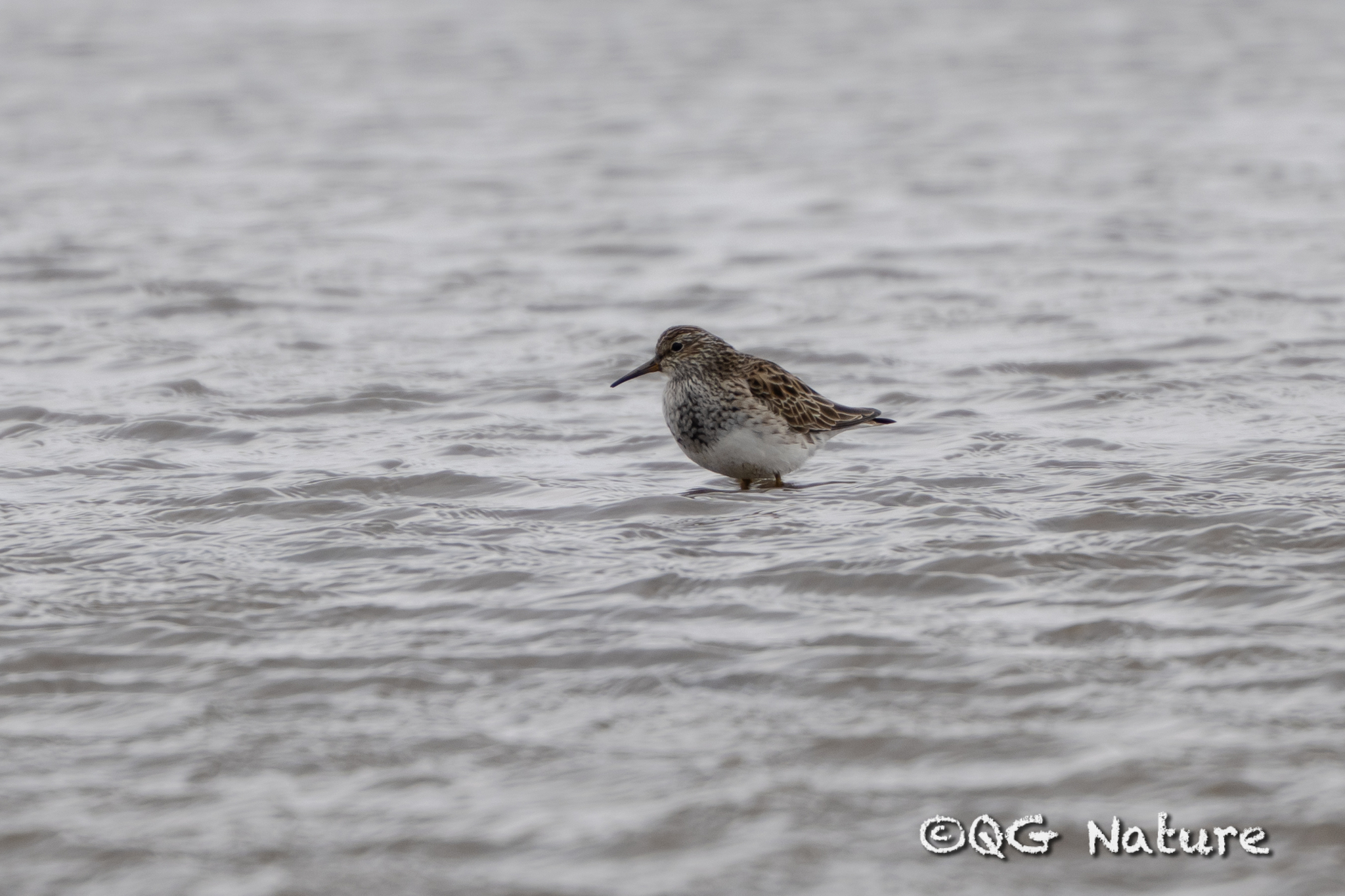
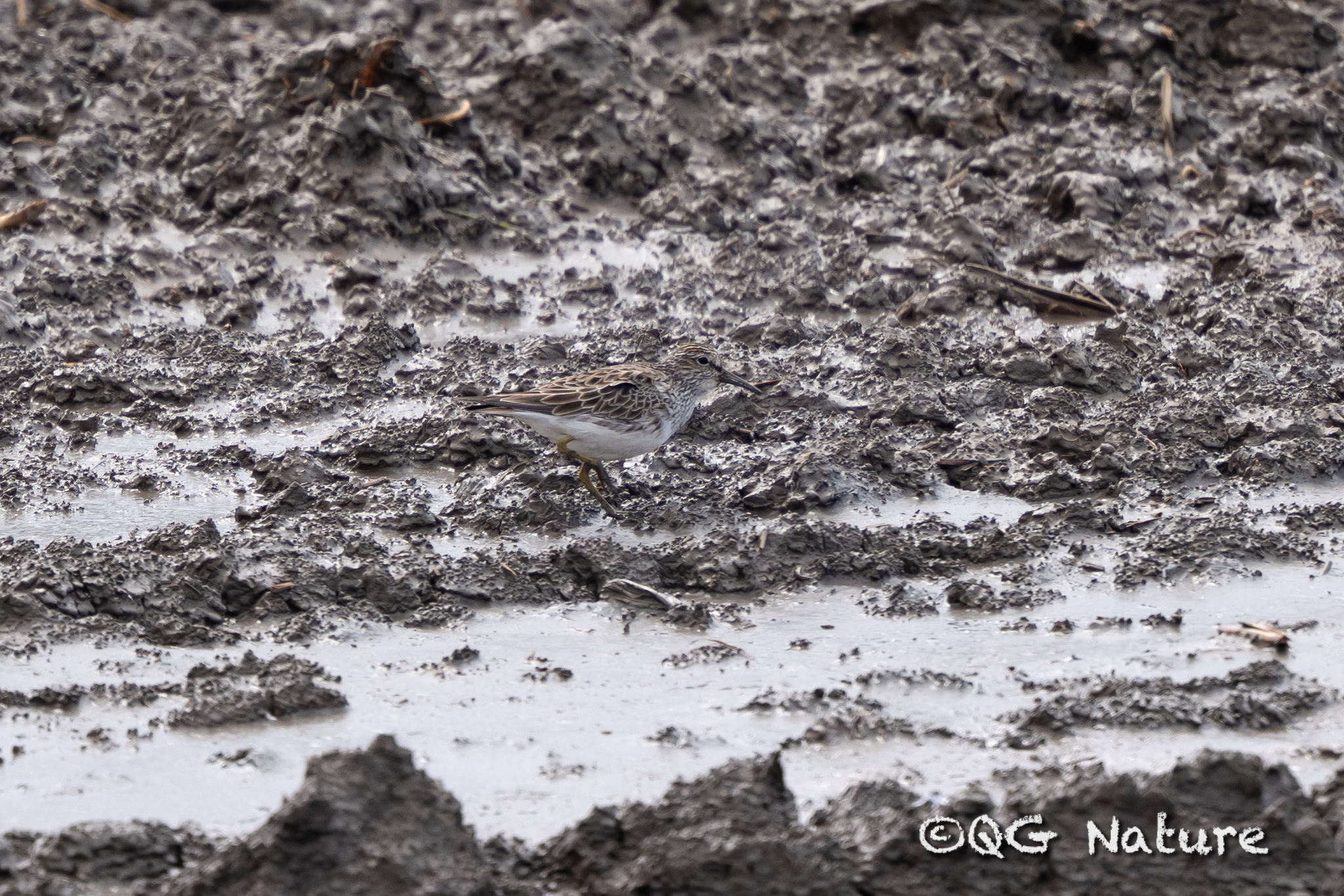
A largish sandpiper measuring 19-23 cm in length with a wingspan of 38-46 cm. The upperparts are grey-brown, appearing brownest in breeding males and paling to grey in winter plumage. The species' most distinctive feature is the grey breast with a sharp lower demarcation, creating a clear dividing line. The yellowish legs and olive-colored bill with a darker tip are characteristic field marks. Males average heavier than females, though there is considerable size overlap between sexes. In breeding plumage, males display a blacker breast with whitish spots. Juveniles are more brightly patterned above with rufous tones and distinctive white mantle stripes.
Identification
This species closely resembles the sympatric sharp-tailed sandpiper but can be distinguished by its strong breast band pattern rather than the more subtle streaking of the sharp-tailed. It has a weaker supercilium and a browner, less rufous crown compared to the sharp-tailed sandpiper. The clear demarcation of the breast band is particularly visible when the bird turns toward the observer, making this the most reliable field mark.
Distribution & Habitat
Breeds across Arctic regions with approximately half the population nesting in the boggy tundra of northern Asia and the remainder from Alaska to central Canada. The species winters primarily in South America, though some Asian breeders migrate to Australia and New Zealand. It is a regular annual migrant to western Europe, particularly Ireland and Great Britain, with some individuals possibly migrating from Asian breeding grounds to Southern Africa. Vagrants occasionally appear in Micronesia and the Hawaiian Islands. Climate change appears to be affecting migration timing, with northward migration now occurring earlier than a century ago.
Behavior & Ecology
Forages actively on grasslands and mudflats, picking up food by sight and sometimes probing in soft substrate. The diet consists primarily of arthropods including flies and their larvae, spiders, and crustaceans, along with other invertebrates and seeds. During breeding season, males perform an elaborate courtship display by puffing up their breast, which contains a specialized fat sac to enhance the performance. The female constructs a steep-sided scrape nest lined with vegetation, deep enough that eggs sit approximately 3 cm below ground level to protect against the cool breezes of high latitudes. Clutch size is four eggs.
Conservation
The population has decreased by approximately 50% since 1974, indicating a significant and ongoing decline. As an Arctic-breeding species, it faces potential threats from climate change affecting its breeding and staging habitats, though specific threats are not detailed in the available information.
Culture
The scientific name derives from Ancient Greek: the genus name kalidris or skalidris was a term used by Aristotle for grey-colored waterside birds, while melanotos comes from melas meaning 'black' and notos meaning 'backed,' referring to the blackish upperparts of breeding males.
Source: Wikipedia · CC BY-SA 3.0
Taxonomy
- Order
- Charadriiformes
- Family
- Scolopacidae
- Genus
- Calidris
- eBird Code
- pecsan
Distribution
breeds wet tundra from Yamal Peninsula eastward to Chukotskiy Peninsula (northwestern to eastern Siberia), including New Siberian and Wrangel islands, also western and northern Alaska eastward through northeastern Canada, including Arctic islands; winters wet grassland and wetland edge mainly to Peru, Bolivia, and southern Brazil southward to Tierra del Fuego; prone to extreme vagrancy
Data Sources
Species description from Wikipedia, licensed under CC BY-SA 3.0.
Bird images and sounds sourced from GBIF, contributed by citizen scientists worldwide under Creative Commons licenses.
Taxonomy data from AviList 2025.