
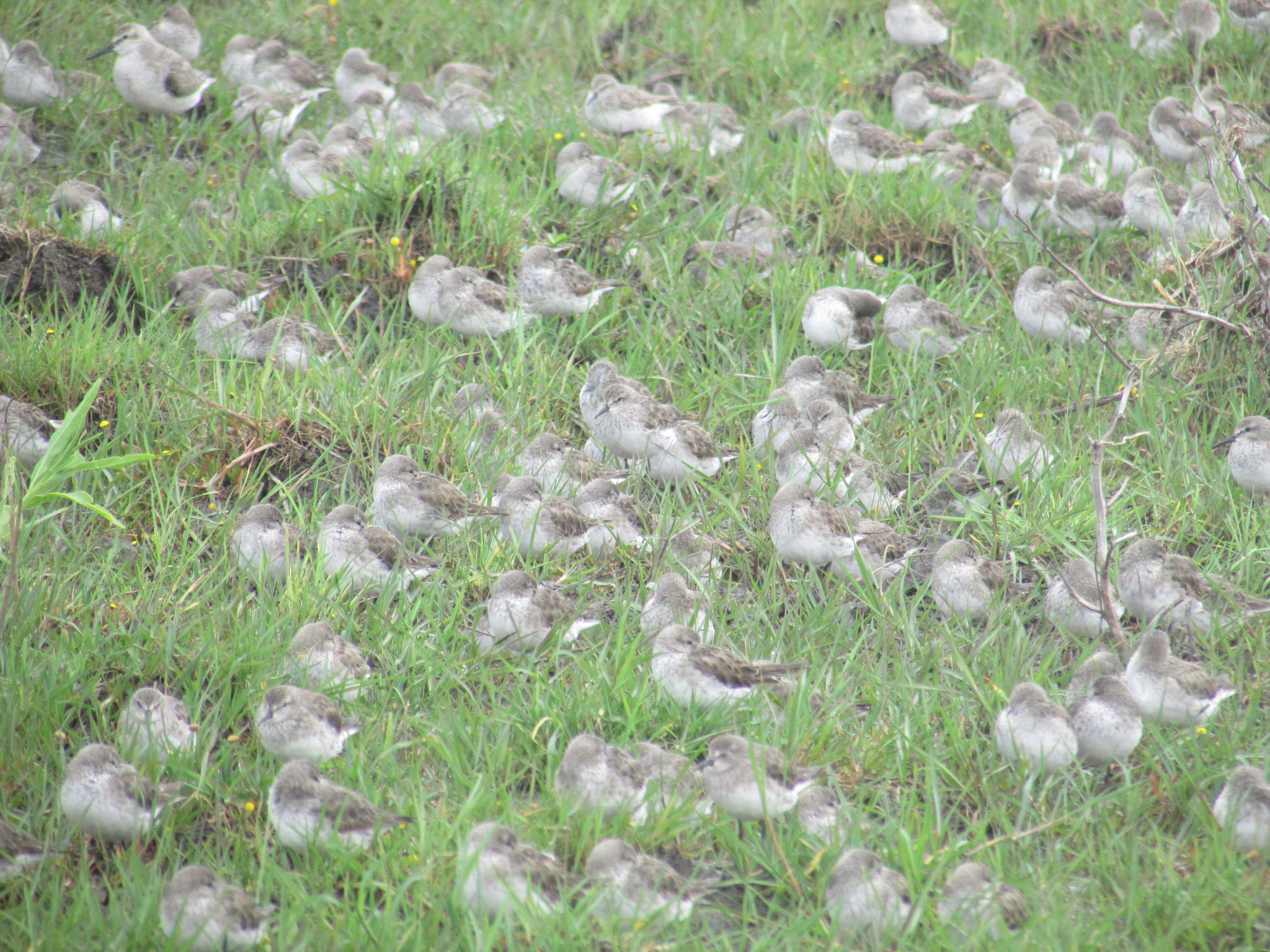
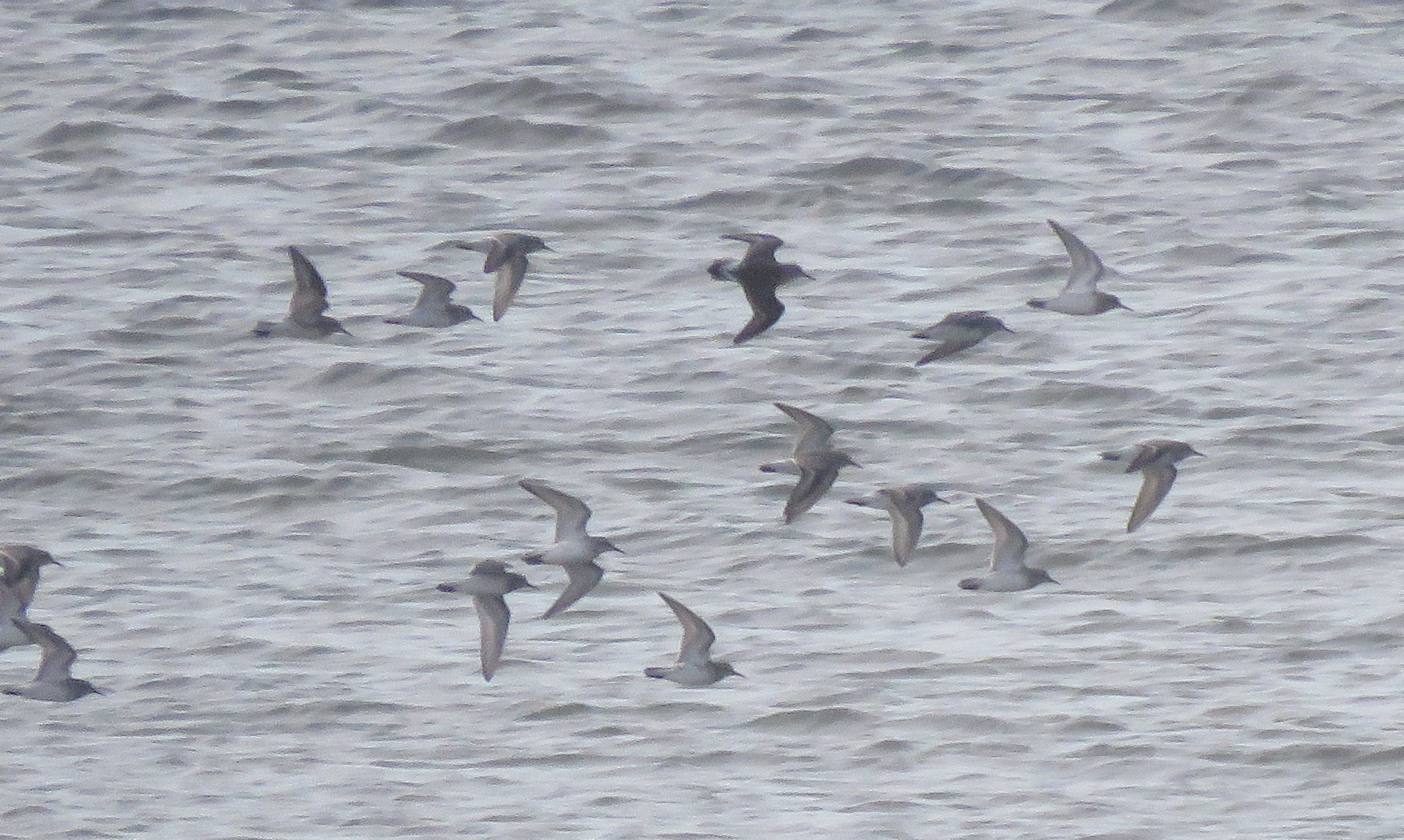
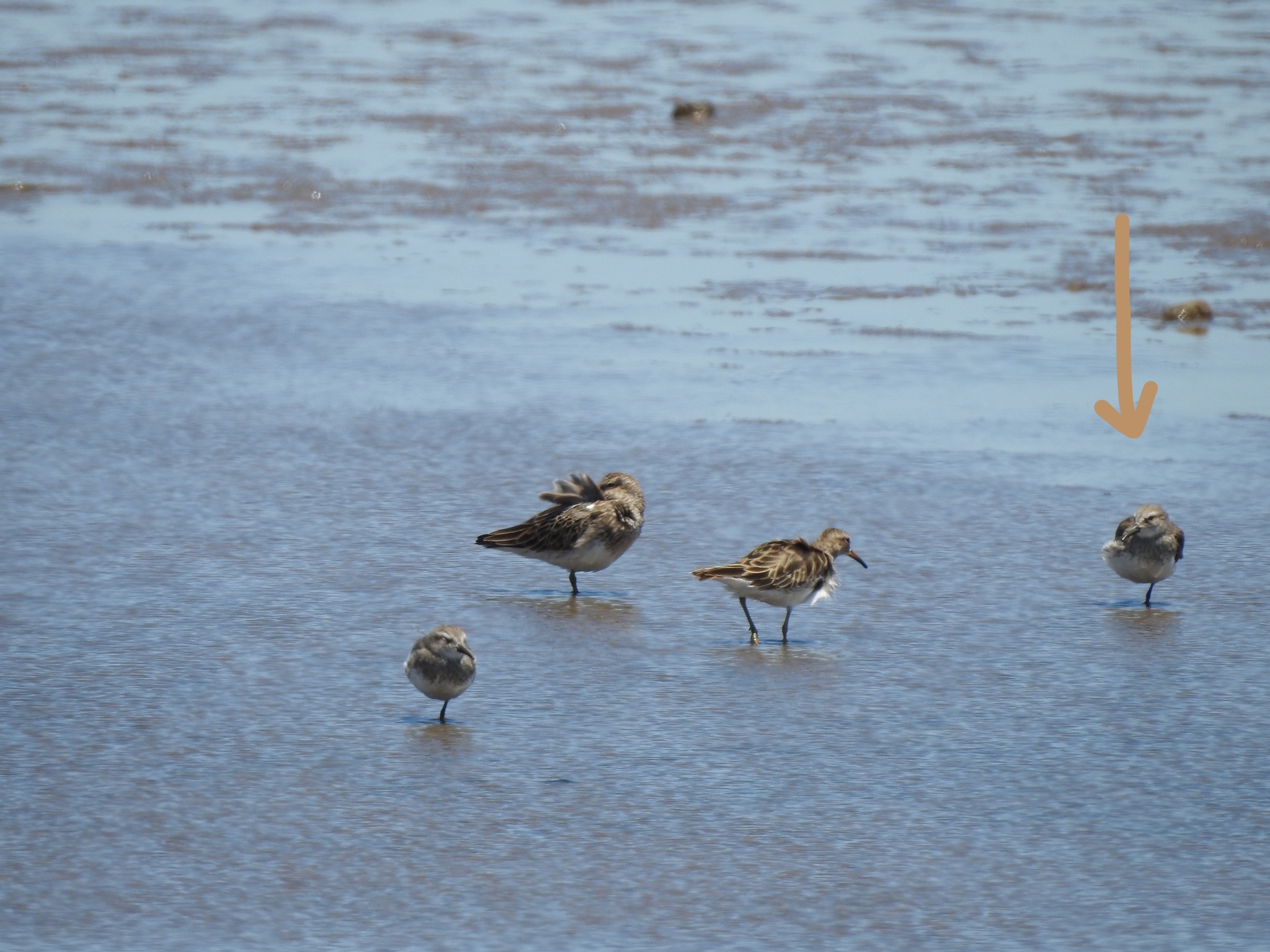
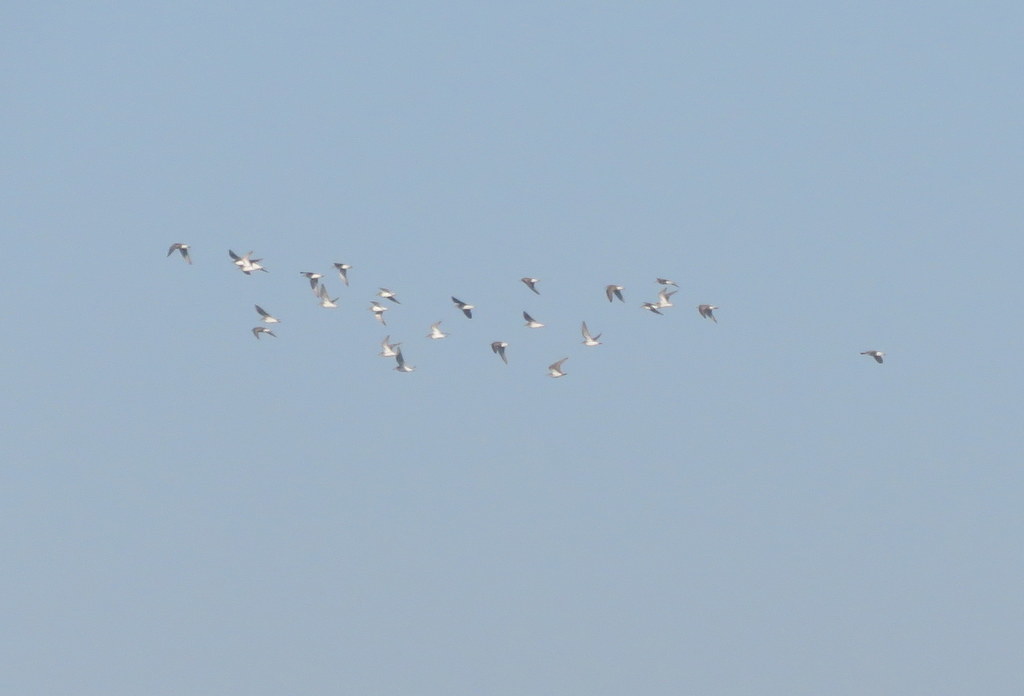

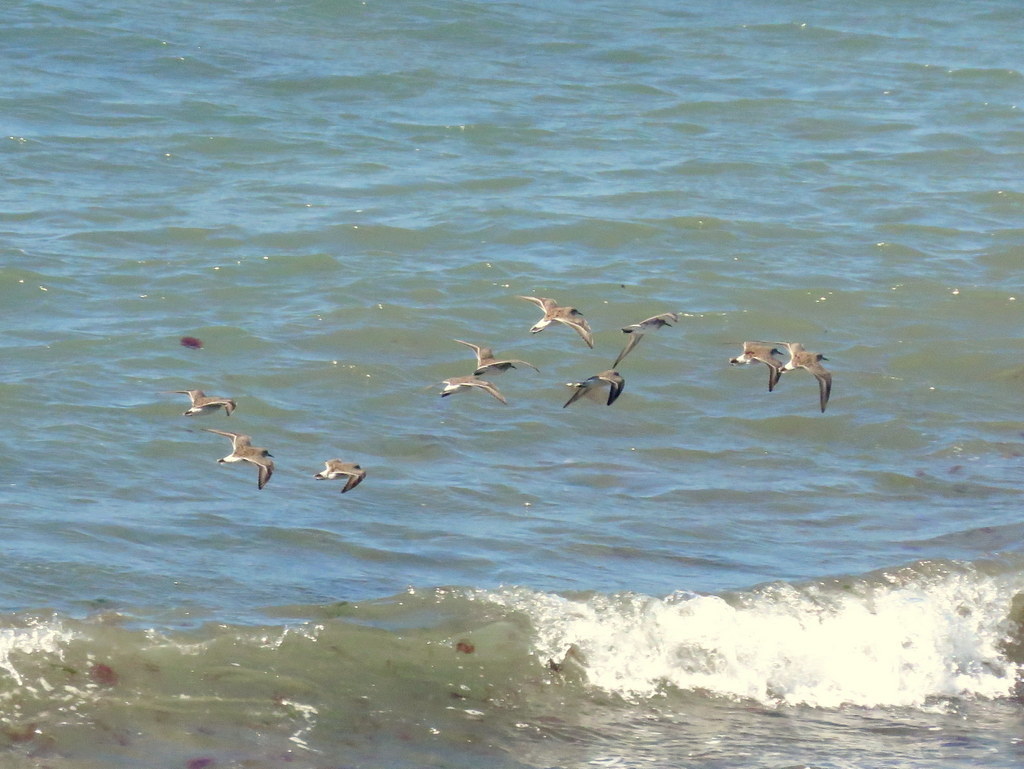
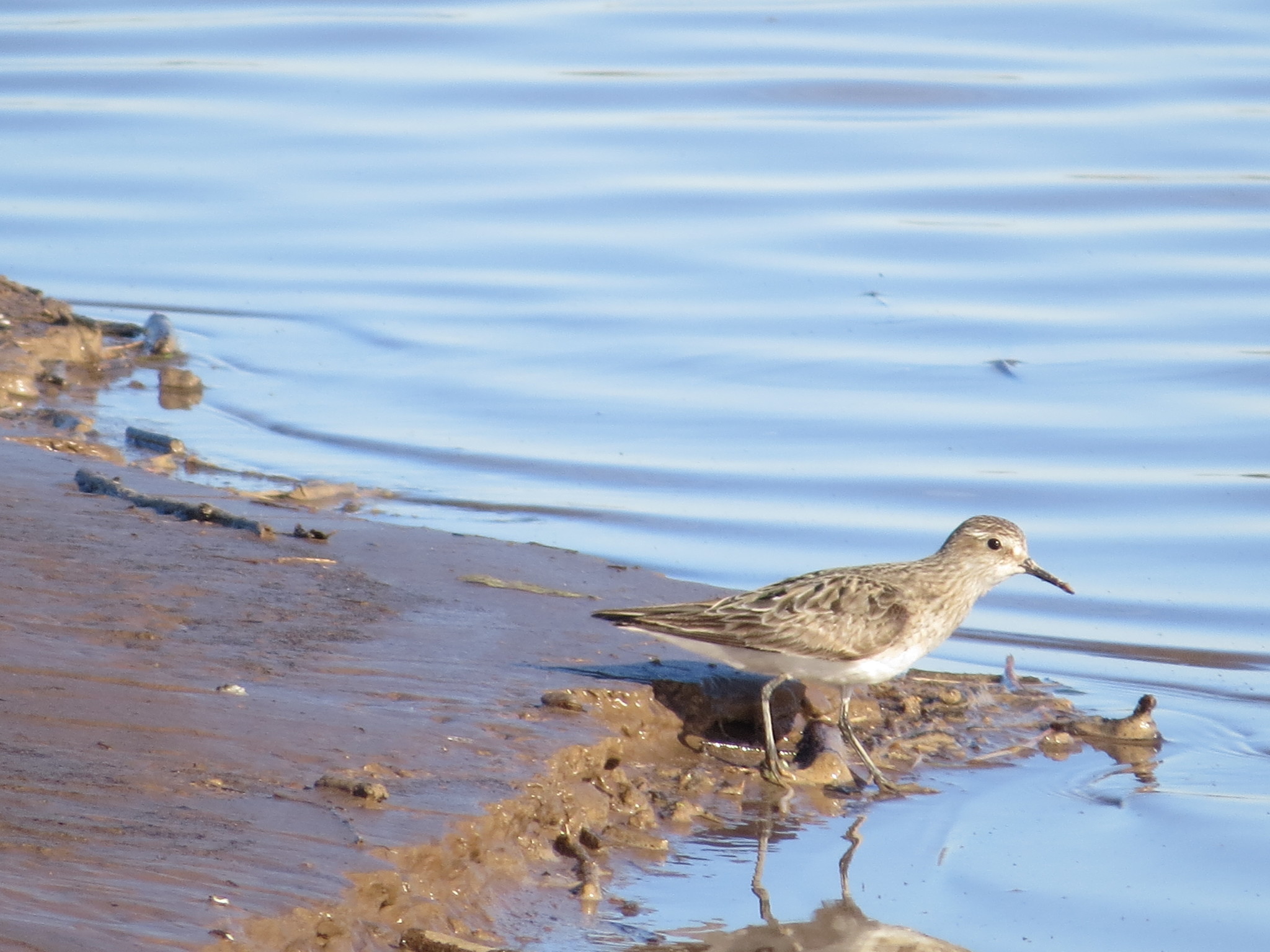
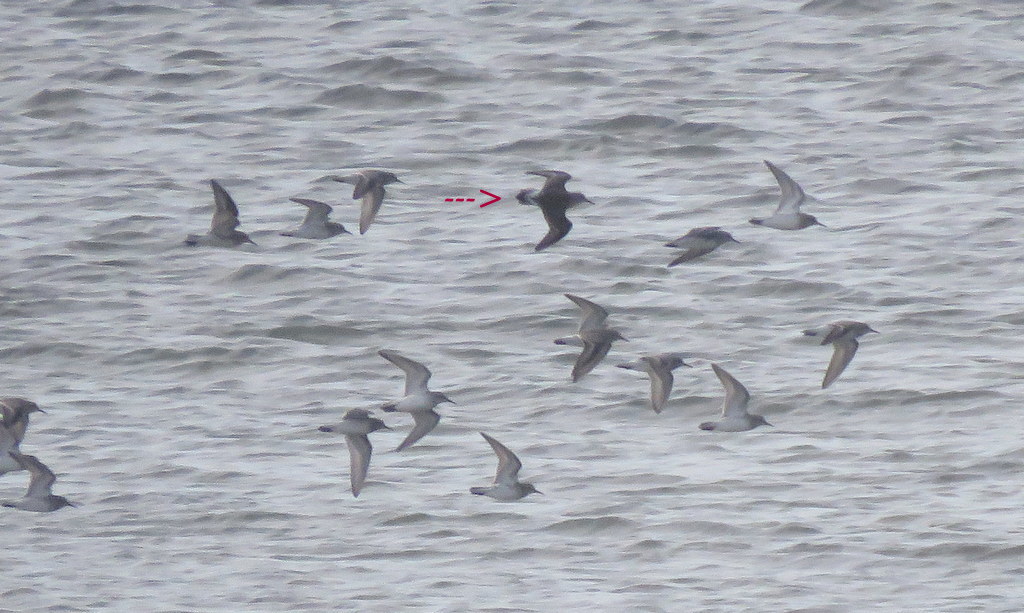
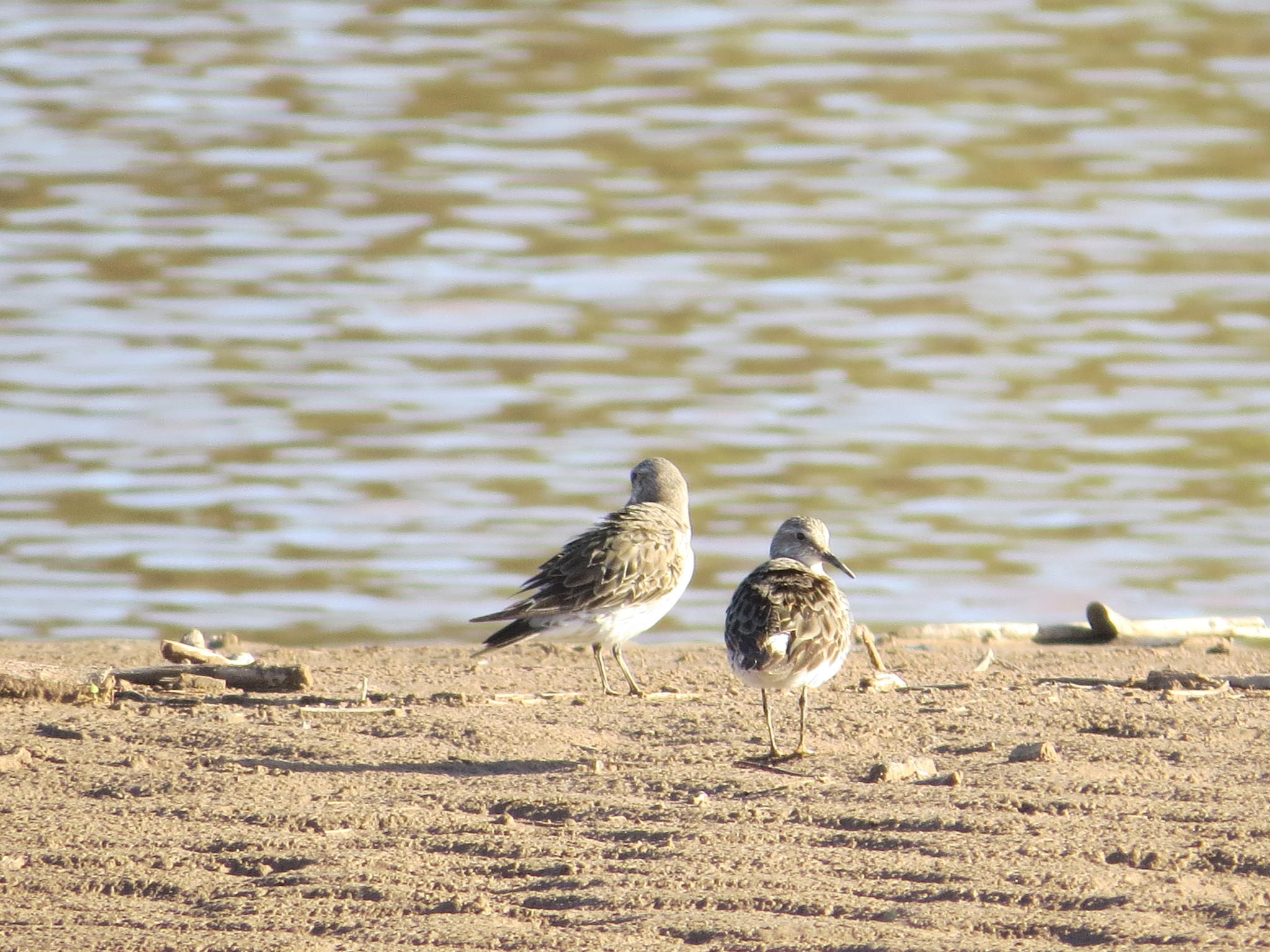
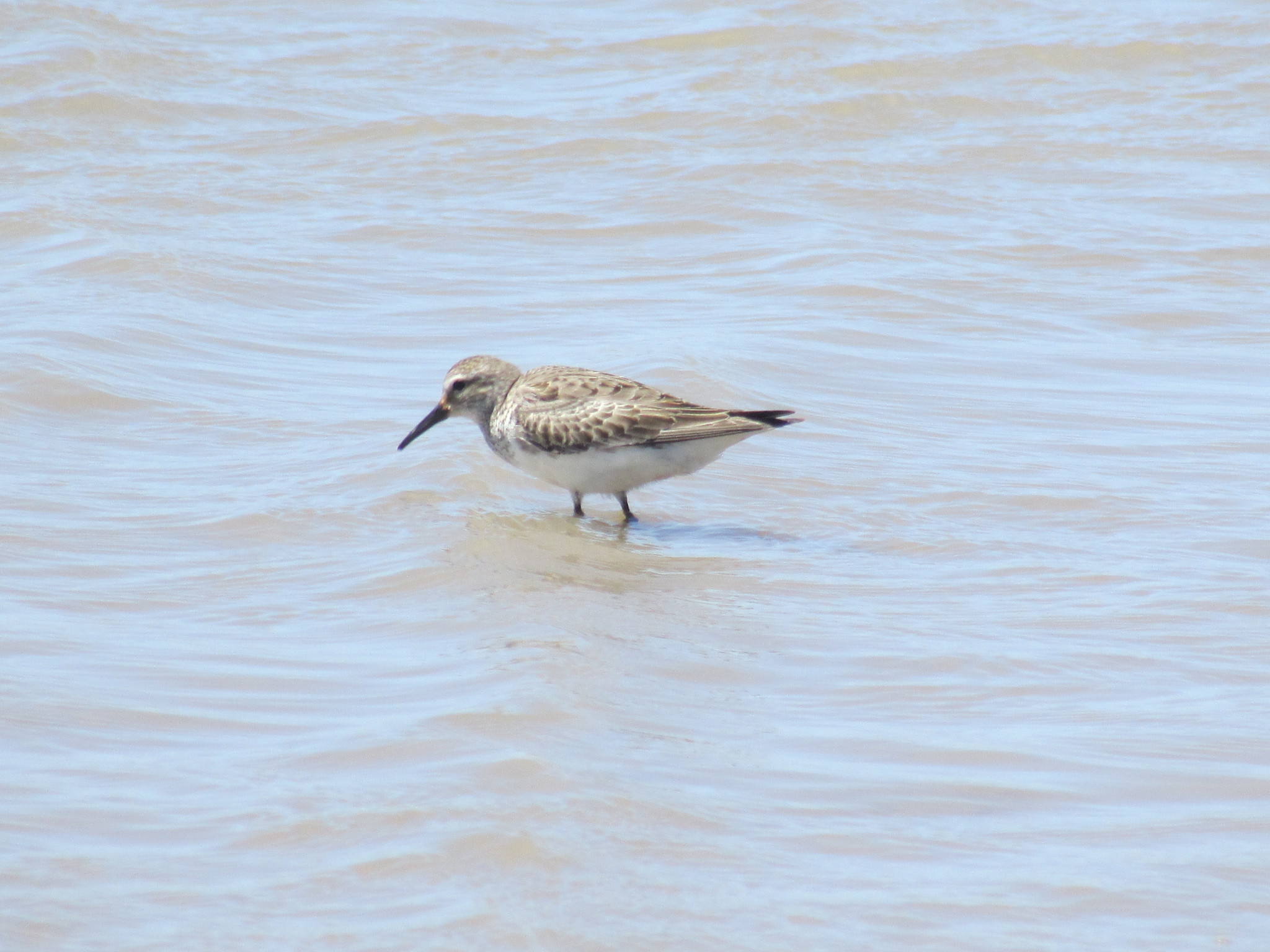
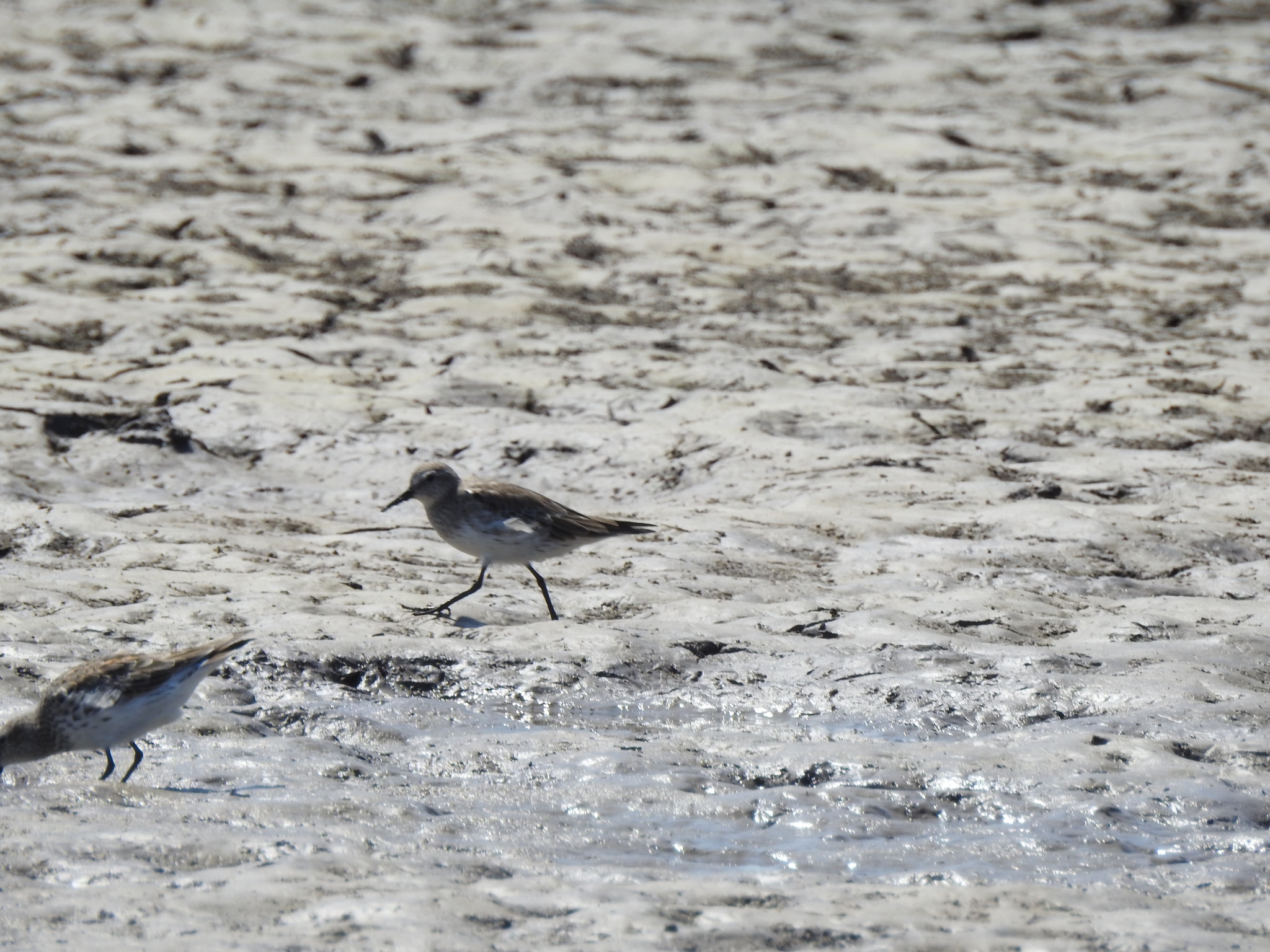
White-rumped Sandpiper
Calidris fuscicollis
白腰滨鹬
Introduction
A small migratory shorebird that breeds in the northern tundra of Canada and Alaska. It winters in southern South America, particularly along the Patagonian coast of Chile and Argentina. Part of the group of small shorebirds known as 'peeps' or 'stints', it can be difficult to distinguish from similar species. It has a white rump, visible in flight. During migration, it concentrates in areas rich in intertidal invertebrates. Some journeys cover thousands of kilometers over the Atlantic Ocean, involving both nonstop and multiple-stop flights. The species has been recorded as a scarce migrant to western Europe and as a rare vagrant to Australia.
Description
This small shorebird measures 15-18 cm in length with a wingspan of 36-38 cm. The upperparts are dull grey-brown with a distinctive white eye stripe. It has a medium-length, thin, dark beak and very dark legs. The sexes are similar in appearance throughout the year. In breeding plumage, the crown and face show a brownish tinge, with a pale supercilium, black feathers on the back, and grey edges on the wing coverts. The breast and flanks are streaked while the underparts are white. Winter plumage features dark grey upperparts with black centers, a dark grey breast, white underparts, white supercilium, and darker crown and eyeline. Juveniles display black-based feathers with brown and white edges, a finely streaked breast, a white 'V' on the back, white underparts and supercilium, a brownish crown, and pale face.
Identification
The two most reliable field marks are the long wings, which extend 5-10 mm beyond the tail, and the conspicuous white rump patch visible in flight. Baird's sandpiper shares the long-winged characteristic but lacks the white rump, providing a key distinguishing feature. Additional identification clues include a thin white stripe on the wing and a row of marks on the flanks below the wings. The distinctive metallic 'tzeep' call, resembling two pebbles scraping together, helps separate this species from other peeps when birdwatching among flocks of shorebirds.
Distribution & Habitat
Breeding occurs in the marshy, heavily vegetated, hummocky arctic tundra of Alaska and Canada. During migration, they utilize various wetland habitats while avoiding sandy beaches and fast-moving water. Wintering grounds include lagoons, estuaries, and marshes in southern South America, particularly the Patagonian coast of Chile and Argentina. Migration routes traverse the Atlantic Ocean, with birds following the northeastern coast of South America before heading inland. The species has been recorded in Venezuela, Suriname, Brazil, and Paraguay during migration, and appears as a scarce but regular migrant to western Europe, with peak counts of 51 in Great Britain in 2019. Climate change is altering the timing and frequency of observations in areas like the South Shetland Islands.
Behavior & Ecology
Vocalizations include a distinctive metallic 'tzeep' note and a repeating 'pip, pip, pip' call. Diet consists primarily of small invertebrates including molluscs, crustaceans, polychaetes, annelids, and insects, with seeds and moss also consumed opportunistically. Foraging involves probing in shallow water and mud on mudflats, while on the tundra they probe deeply into moss and vegetation. Courtship involves paired aerial displays where males and females climb together before hovering and releasing 'poing-zee' notes. Females build cup-shaped nests lined with lichen, leaves, and moss, and are the sole incubators, spending 82.5% of their time on the nest during the approximately 22-day incubation period. The species is polygynous, with males leaving after egg-laying to seek additional mates. Chicks leave the nest within a day of hatching and fledge at 16-17 days.
Conservation
The species is classified as Least Concern by the IUCN, with population numbers currently stable across its extensive range. Major threats include habitat loss and degradation at stopover and wintering sites, as well as potential impacts from climate change on migration patterns and habitat availability. Conservation efforts focus on protecting critical wetland habitats throughout the migratory route and wintering areas.
Culture
No significant cultural or folklore traditions associated with this species were documented in available sources.
Source: Wikipedia · CC BY-SA 3.0
Taxonomy
- Order
- Charadriiformes
- Family
- Scolopacidae
- Genus
- Calidris
- eBird Code
- whrsan
Distribution
breeds wet tundra from North Slope of Alaska eastward in coastal northern Canada to northwestern Hudson Bay, and Banks to Devon and Baffin islands (northeastern Canada); winters to wetlands of southern Chile, southeastern Brazil, northwestern to southeastern Argentina, and Falkland Islands
Vocalizations
Data Sources
Species description from Wikipedia, licensed under CC BY-SA 3.0.
Bird images and sounds sourced from GBIF, contributed by citizen scientists worldwide under Creative Commons licenses.
Taxonomy data from AviList 2025.