

Greater Short-toed Lark
Calandrella brachydactyla
大短趾百灵
Introduction
A small passerine bird in the lark family Alaudidae. It breeds across southern Europe, northwestern Africa, and the Palearctic from Turkey and southern Russia east to Mongolia. During migration it forms large, tight flocks that move in unison; at other times it forms loose flocks. Populations are migratory except some southernmost ones, wintering south to the Sahara edge and India. Classified as Least Concern due to extensive range and large population size. The European breeding population is estimated at 9,460,000-18,100,000 mature individuals.
Description
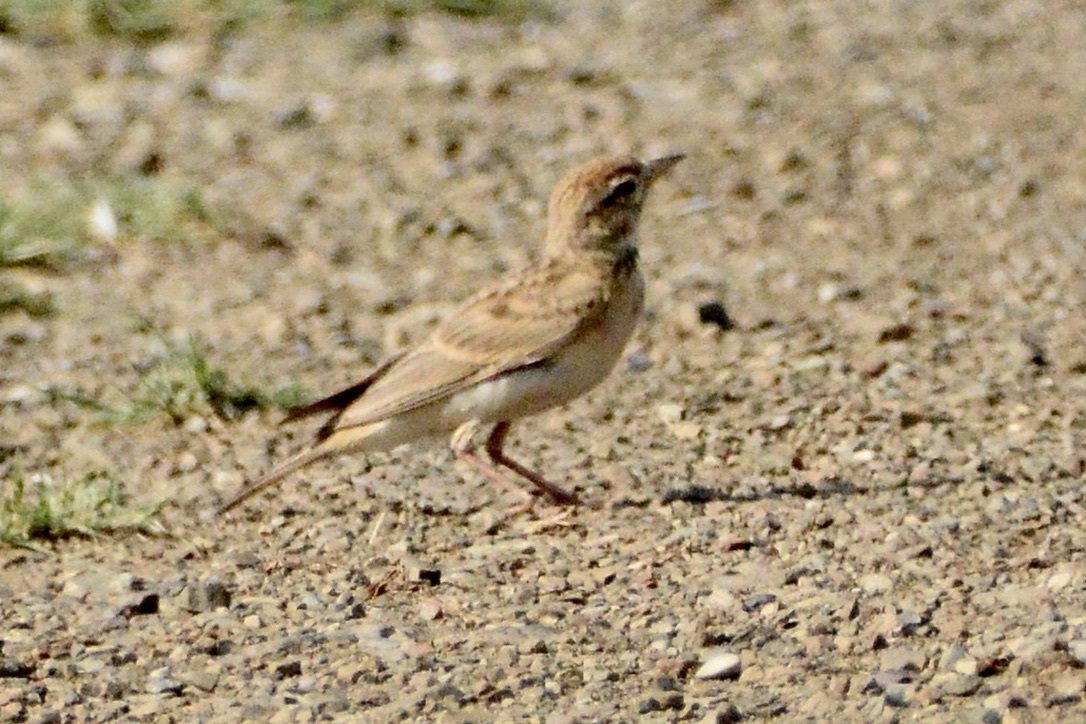
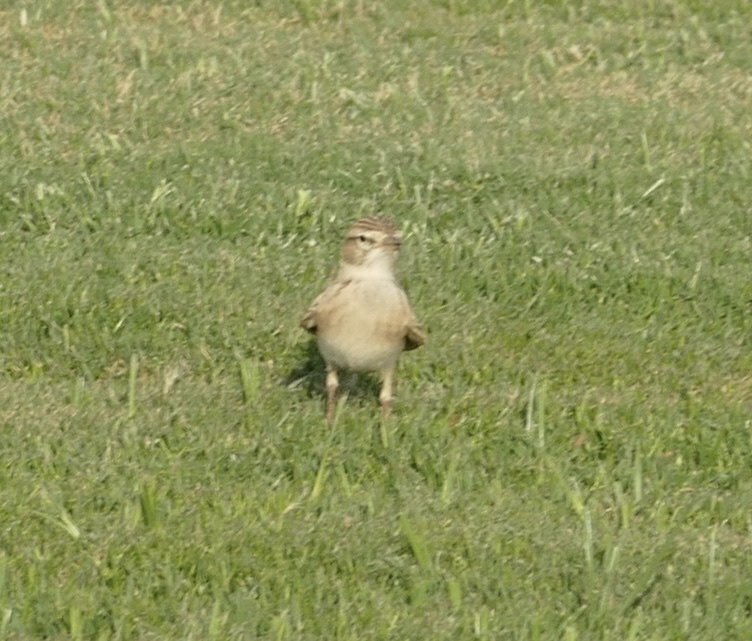
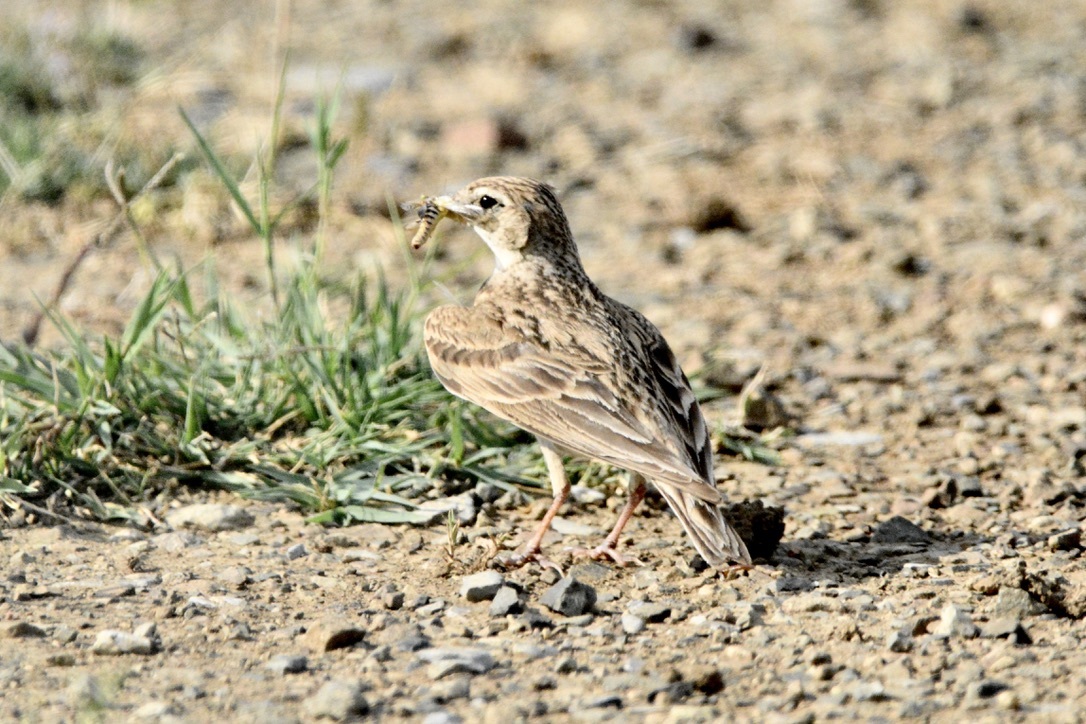
A small pale lark, smaller than the skylark. Upperparts are dark-streaked greyish-brown; underparts are white. It has a strong pointed bill that is pinkish with a grey culmen, a pale supercilium, dark patches on each side of the neck, and a dark tail. Some western birds show a rufous crown. The sexes are similar. It is paler than the Mongolian short-toed lark, which also has a shorter bill.
Identification
Care must be taken to distinguish this species from similar larks, particularly the Mediterranean short-toed lark. It is paler than the Mongolian short-toed lark. In winter, it forms large, compact flocks that swing in synchrony through the air.
Distribution & Habitat
Breeds in southern Europe, northwestern Africa, and across the Palearctic from Turkey and southern Russia to Mongolia. Migratory populations winter south to the Sahara edge and India. A fairly common wanderer to northern and western Europe in spring and autumn. In breeding areas, it prefers dry open country and cultivation. The nominate form breeds in Europe (Iberia, France, Italy, Balkans, Romania) and winters in Africa.
Behavior & Ecology
Diet consists of seeds and insects, the latter especially during the breeding season. The song varies between a dry twittering and a more varied, imitative melody. Flocks fly together to water in the mornings at favorite spots. In the evenings they roost on open ground, each bird squatting in a small depression made in the soil. During migration they form large, tight flocks moving in unison.
Conservation
IUCN Red List classification: Least Concern. This assessment is due to its extensive range and large population size. The European breeding population is estimated at 9,460,000-18,100,000 mature individuals. Although the population trend appears to be decreasing, the rate of decline is not considered sufficiently rapid to warrant a threatened status.
Culture
In colonial India, these birds were hunted for food as ortolans. During winter in South Asia, large flocks are sometimes attracted to short grass areas along aerodromes, creating a bird strike risk to aircraft.
Source: Wikipedia · CC BY-SA 3.0
Taxonomy
- Order
- Passeriformes
- Family
- Alaudidae
- Genus
- Calandrella
- eBird Code
- gstlar1
Subspecies (8)
-
Calandrella brachydactyla artemisiana
Türkiye, Transcaucasia, and northwestern Iran
-
Calandrella brachydactyla brachydactyla
Mediterranean environs and islands
-
Calandrella brachydactyla hermonensis
Sinai Peninsula to far southern Türkiye and eastern Syria
-
Calandrella brachydactyla hungarica
Hungary
-
Calandrella brachydactyla longipennis
breeds Ukraine and southern Russia eastward to south-central Siberia and southern Mongolia; winters to southern Asia
-
Calandrella brachydactyla orientalis
breeds central Siberia, northern Mongolia, and northern China; winters to southern Asia
-
Calandrella brachydactyla rubiginosa
northern Africa (Morocco, Algeria, and Tunisia); Malta
-
Calandrella brachydactyla woltersi
northwestern Syria and adjacent southern Türkiye
Data Sources
Species description from Wikipedia, licensed under CC BY-SA 3.0.
Bird images and sounds sourced from GBIF, contributed by citizen scientists worldwide under Creative Commons licenses.
Taxonomy data from AviList 2025.