White-eyed Buzzard
Butastur teesa
白眼鵟鹰
Introduction
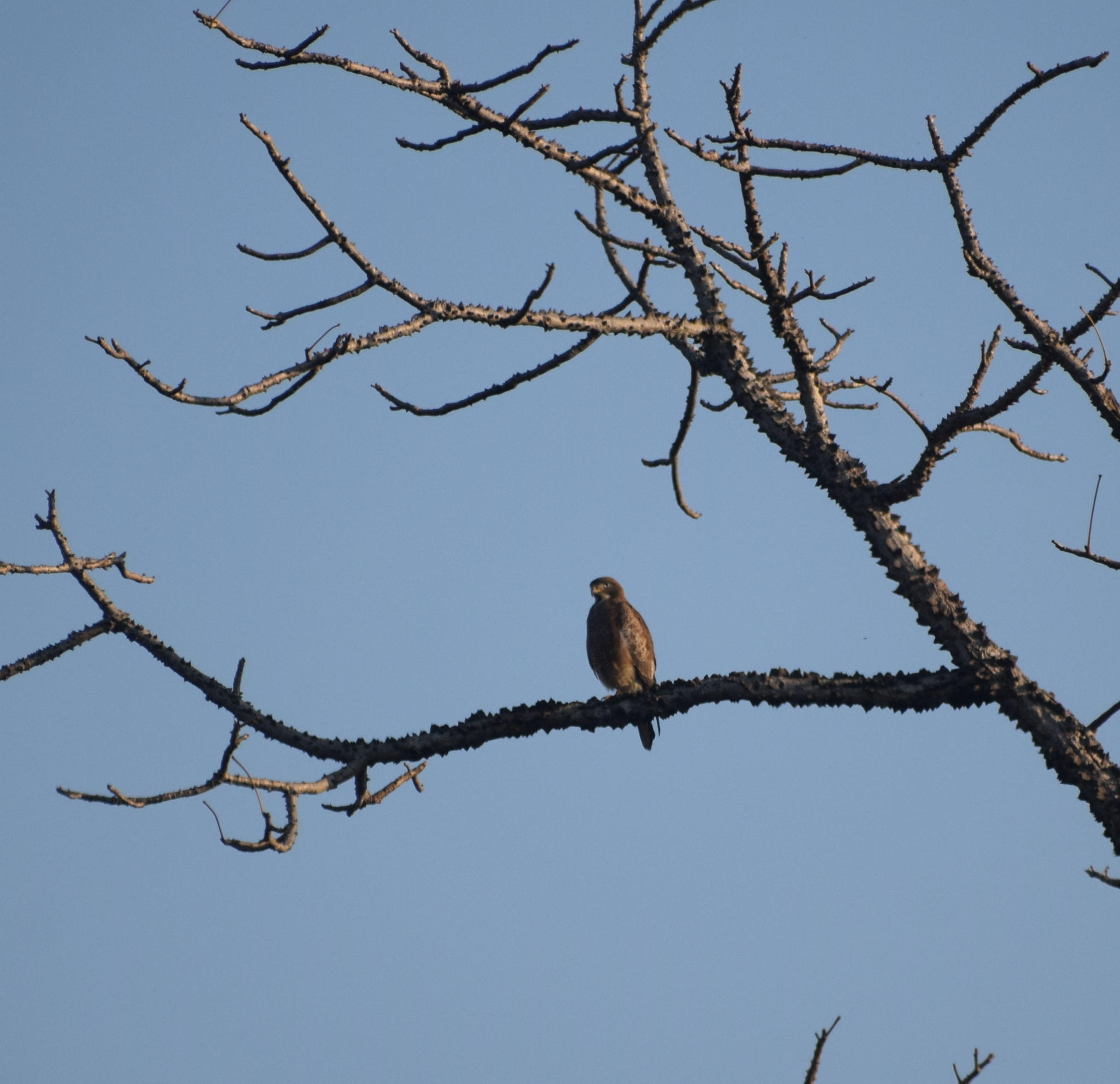
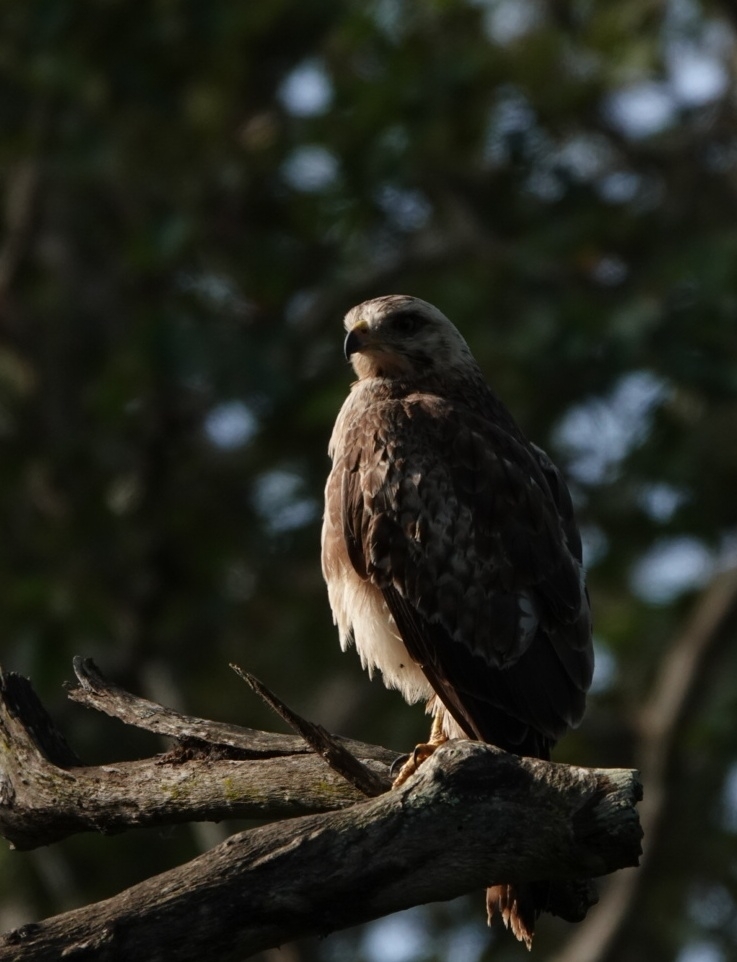
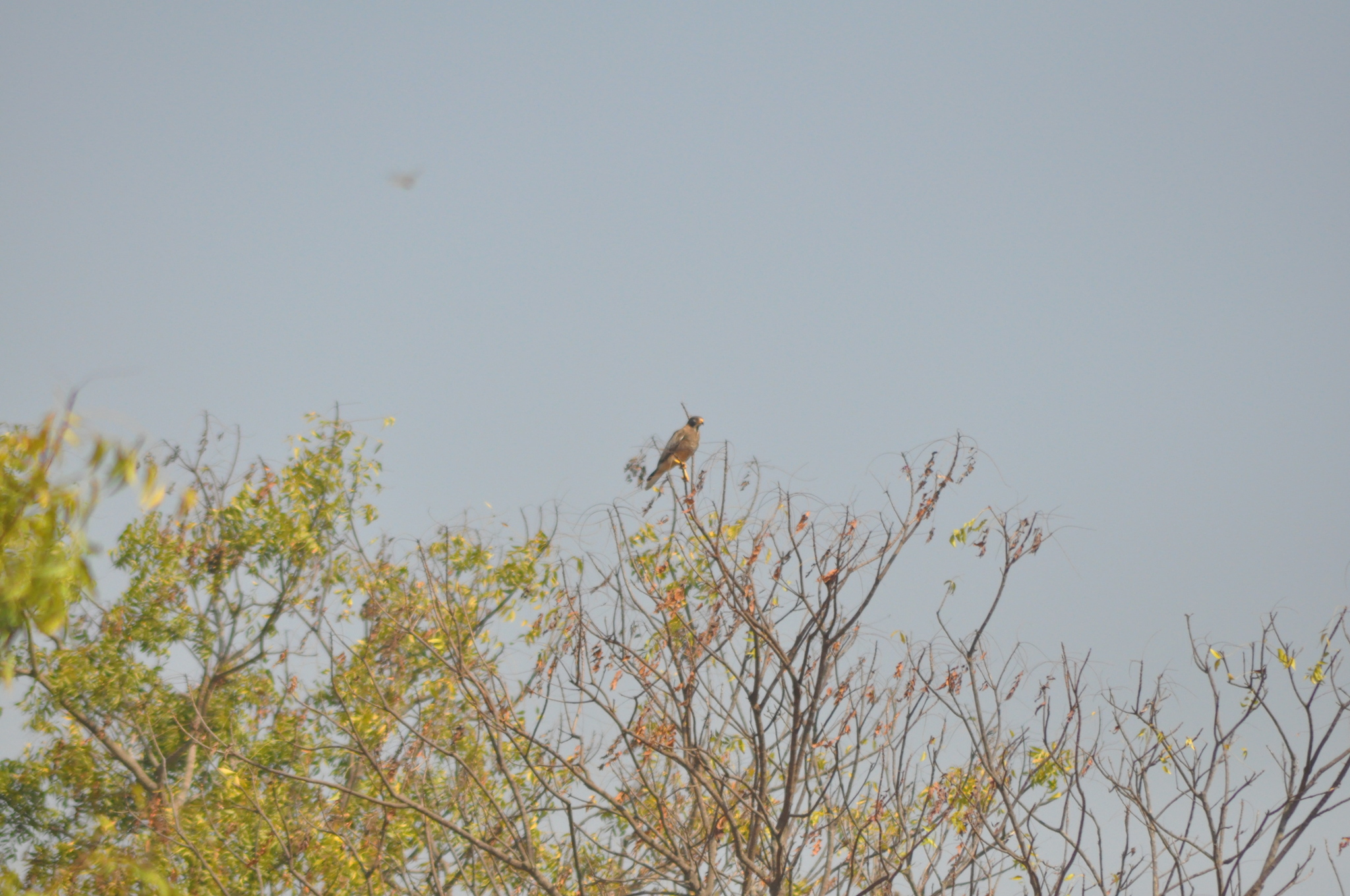
A medium-sized hawk inhabiting dry, open landscapes across South Asia, including dry forests, cultivation, and scrubland. It perches upright on vantage points and flies with slow, deliberate wingbeats. During the breeding season, pairs become vocal, producing mewing calls and falling whistles while soaring together. Individuals are typically seen alone or in pairs, though several may gather during the breeding season.
Description
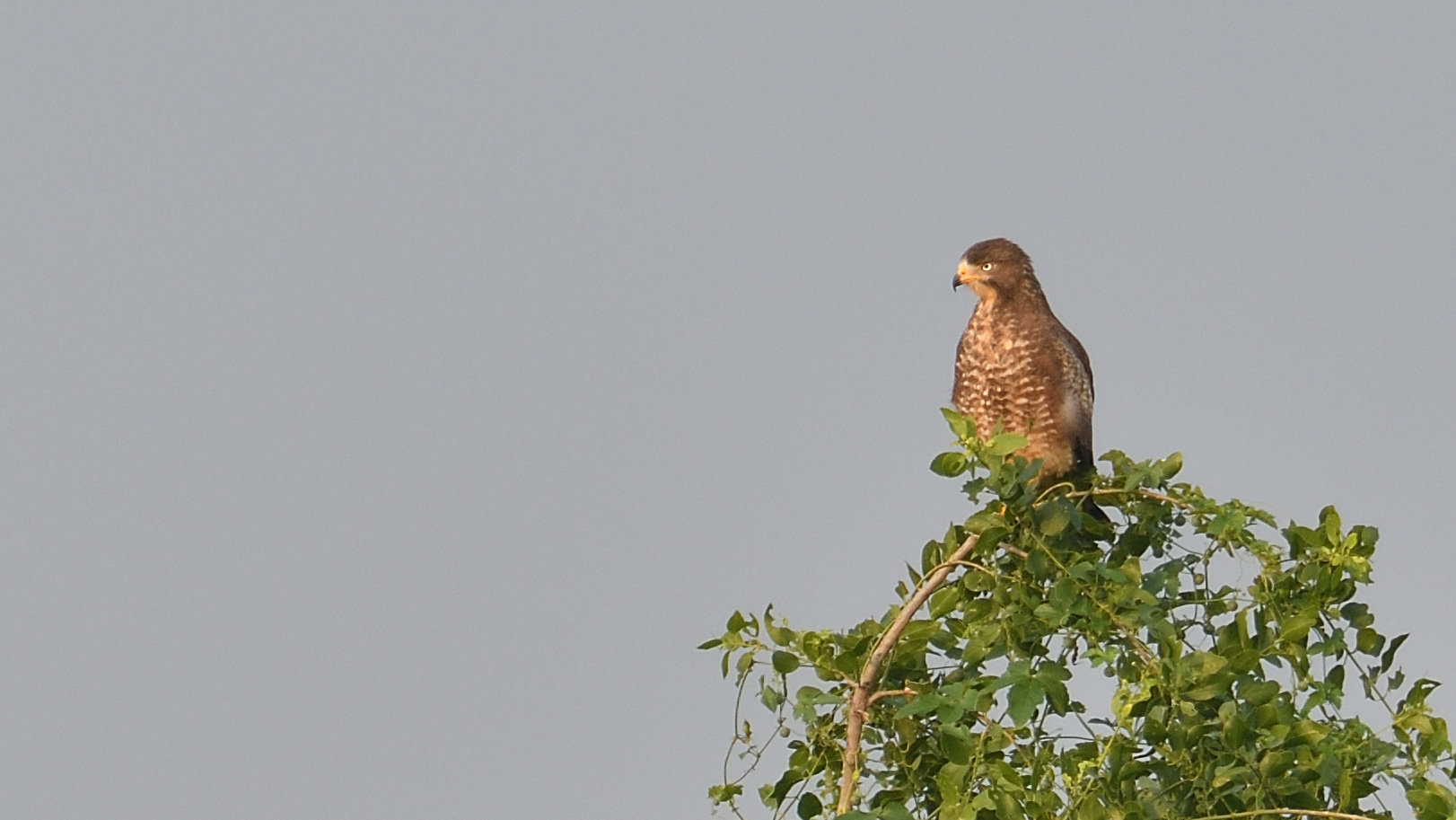
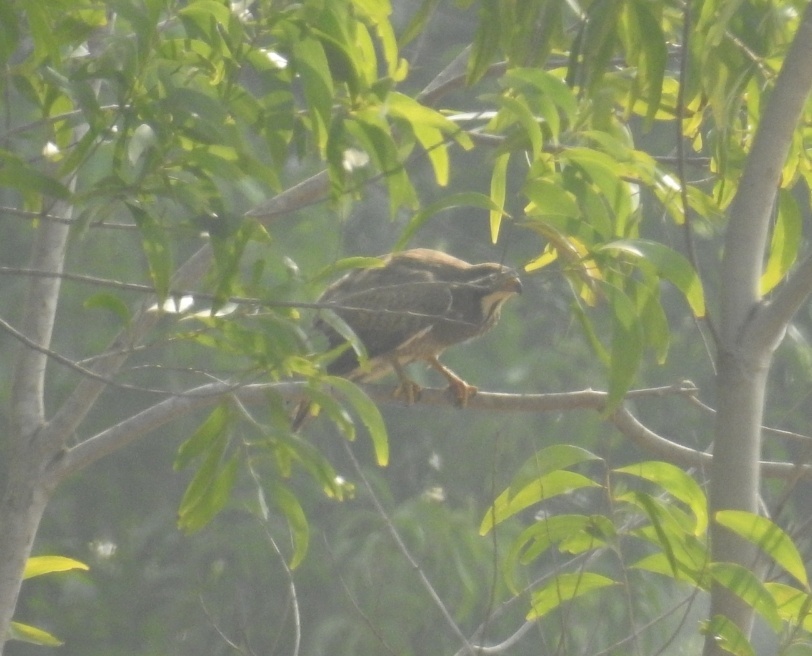
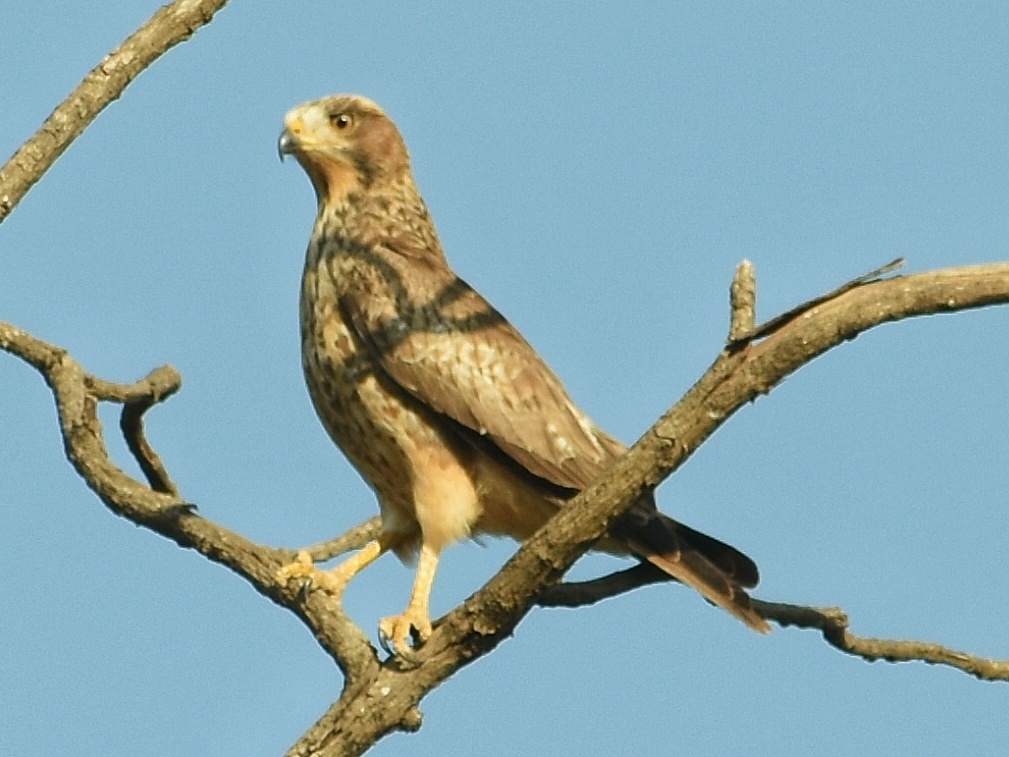
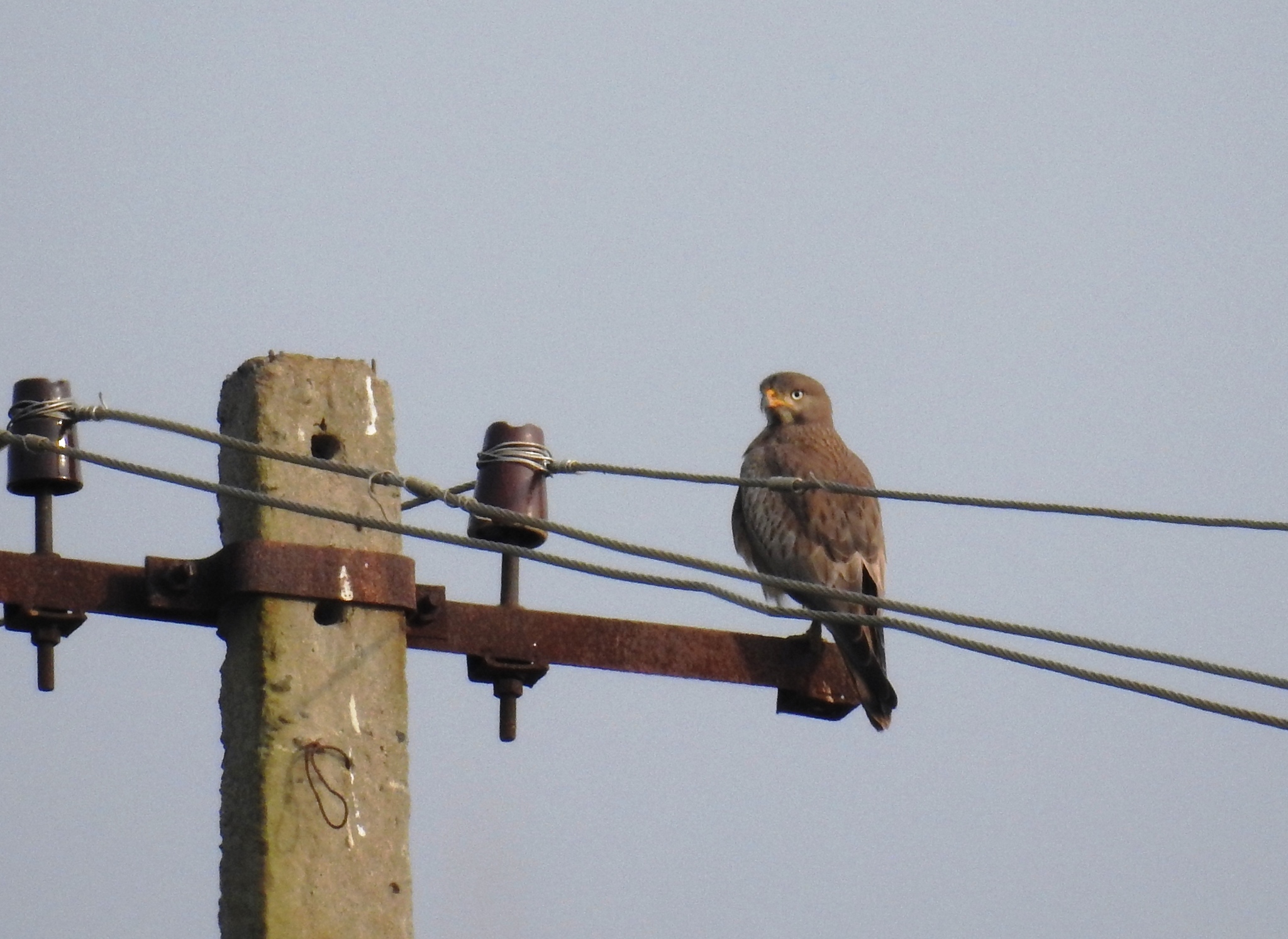
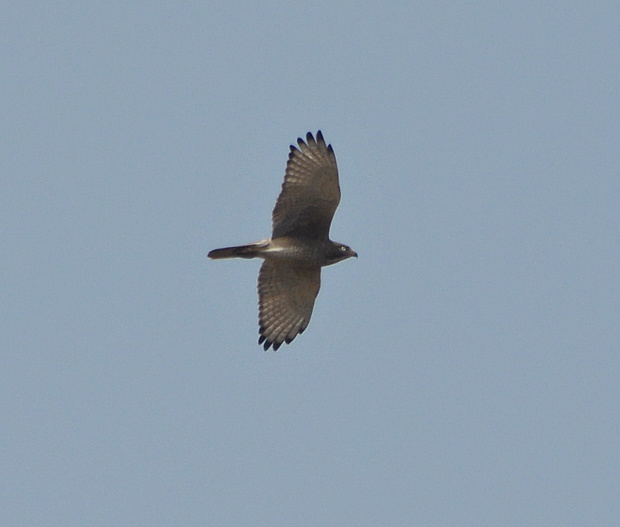
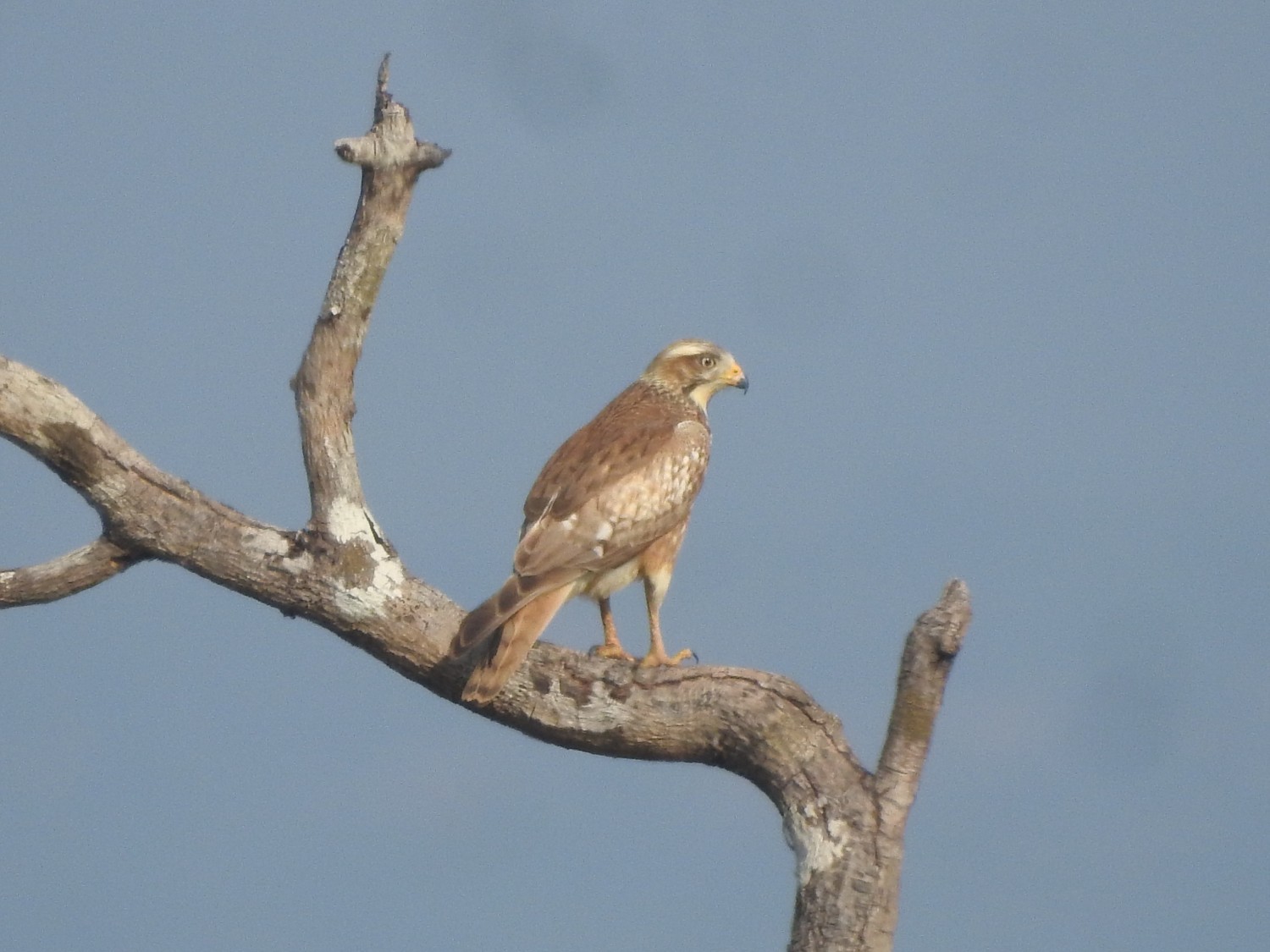
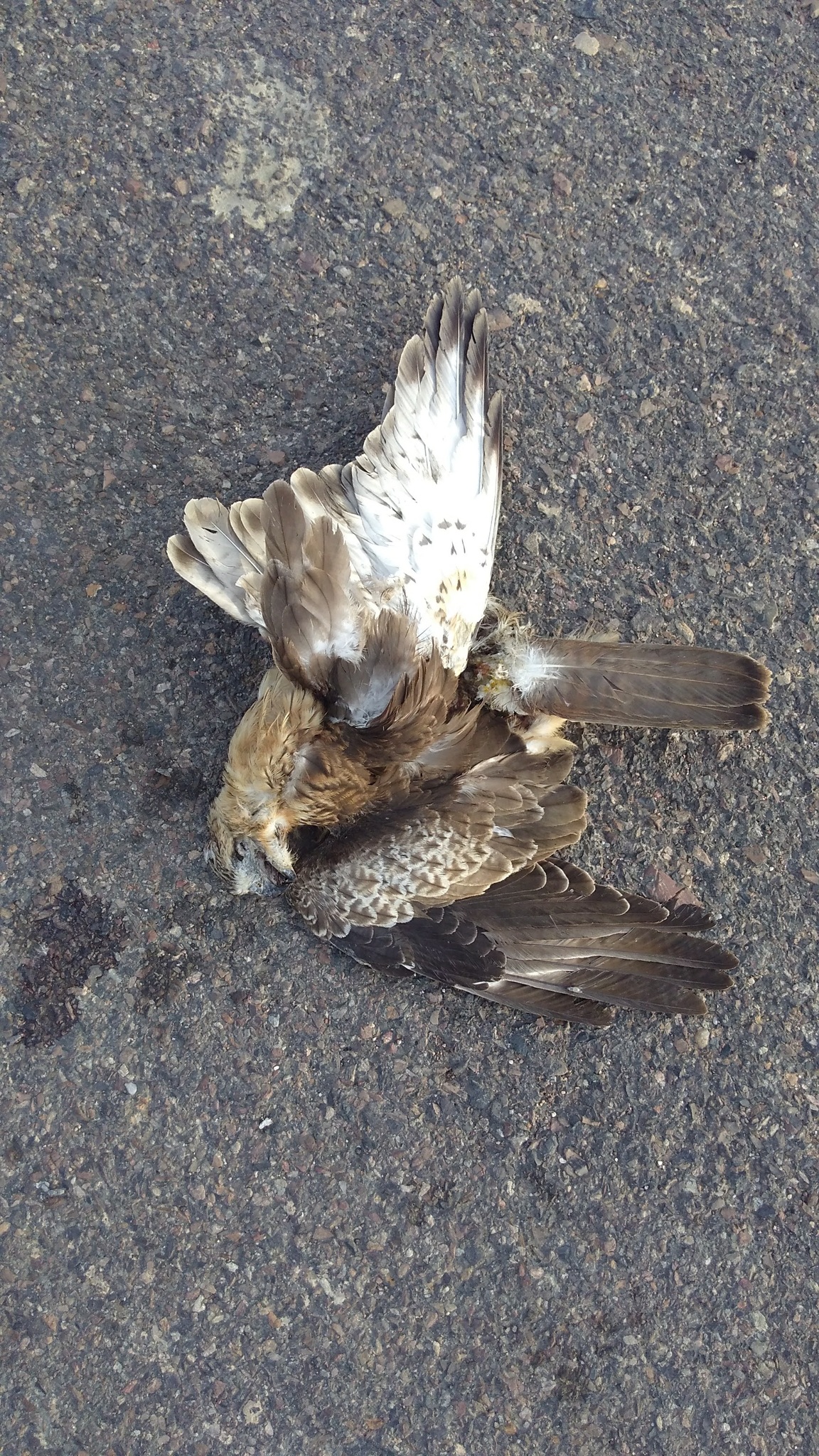
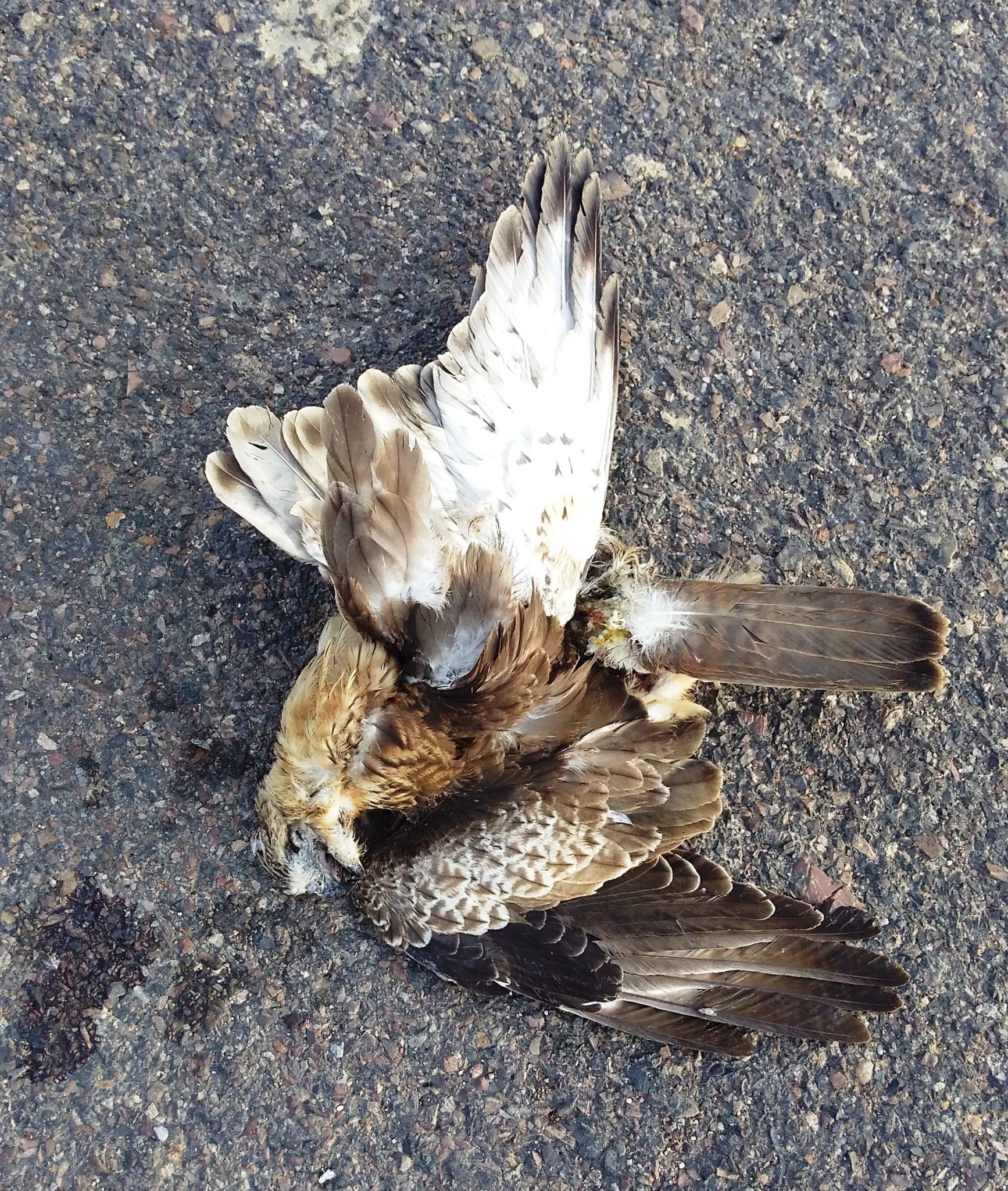
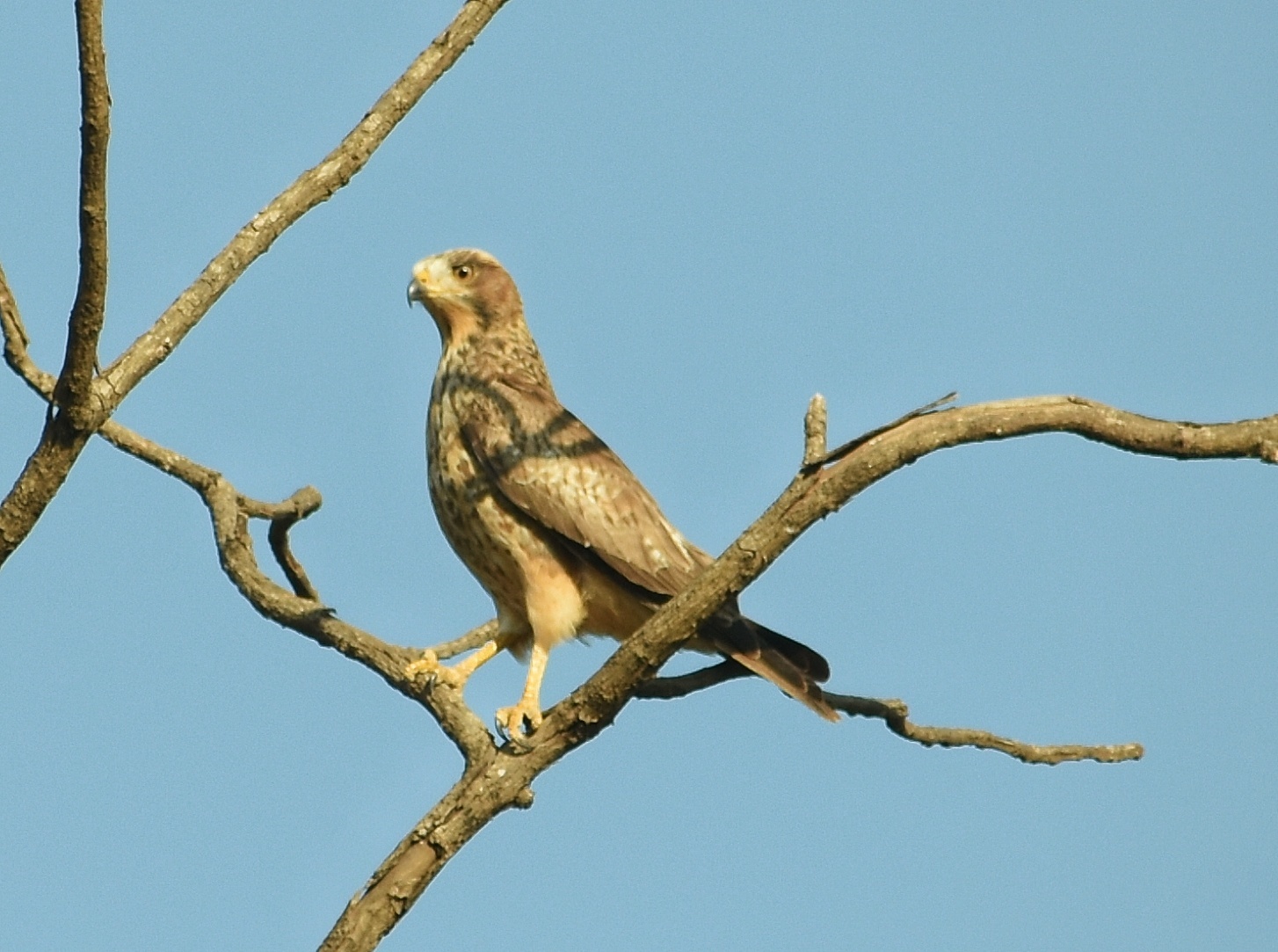
This slim, small hawk measures approximately 38-44 cm in length. The defining feature is the striking white iris, set off by yellow ceres at the base of the hooked bill. The head appears dark brown, contrasting with a white throat bearing a distinctive dark mesial stripe running down its center. A white spot may be visible on the back of the head. When perched, the wing tips extend nearly to the end of the rufous tail, which shows darker barring and a subterminal band. The plumage below is darkly barred. In flight, the narrow wings appear rounded with black-tipped feathers; the wing lining contrasts dark against the flight feathers. Upper wing surfaces show a pale bar across the brown. Juveniles differ with brownish irises, whitish foreheads, and often a broad supercilium. Remarkably, fledglings are reddish brown rather than the white down typical of most raptor chicks.
Identification
The white iris provides the primary identification clue, making this species unmistakable when seen well. The white throat with its central dark stripe is another key mark. In flight, the dark wing lining contrasting with the flight feathers and the pale bar across the upper wing distinguish it from true buzzards, which show characteristic carpal patches. The only potential confusion arises where range overlaps with the grey-faced buzzard, but that species displays a prominent white supercilium that is absent here. The combination of upright perching posture, white eye, and pale wing bar in flight should enable confident identification across its range.
Distribution & Habitat
This species is widely distributed across South Asia, occurring throughout the Indian subcontinent in plains and low hills up to about 1200 meters elevation. It is a resident species in Iran, Pakistan, Nepal, Bangladesh, and Myanmar, with summer populations in northeastern Afghanistan. The species is notably absent from Sri Lanka and the Andaman Islands. An isolated population potentially of this species has been recorded in the Greater Sundas of Indonesia, distinguished by whiter, unmarked thigh feathers, suggesting it may represent an undescribed form. The preferred habitat consists of dry, open forest, scrub, and cultivation. A 1950s survey estimated densities of approximately 0.1 birds per square kilometer in the Delhi region, with numbers appearing to decline in some areas.
Behavior & Ecology
This hawk is typically observed either soaring alone in thermals or perched motionless on a favorite vantage point, where it may remain for extended periods. Pairs or small groups of two to three birds are occasionally seen. The vocalization is a distinctive mewing call or falling whistle, transcribed as pit-weer, which is repeated frequently during the breeding season as pairs soar together. Diet consists primarily of large insects including locusts, grasshoppers, and crickets, supplemented by mice, lizards, frogs, and occasionally crabs from wetlands. Rare reports suggest they may take larger prey such as hares. The breeding season spans February to May. The nest is a loose platform of twigs, crow-like in construction, typically placed in a leafless tree. The usual clutch consists of three unspotted white eggs, with both sexes sharing nest-building and feeding duties while the female alone incubates for approximately 19 days.
Conservation
While specific population data is limited, this species appears to be declining in parts of its range. A 1950s survey estimated roughly 5000 birds in the Delhi region, but density estimates suggest relatively low population numbers across its extensive range. Major threats include electrocution on power lines, with a 2011 study in Rajasthan identifying this species as the second most common raptor killed by electrocution after kestrels. The species is considered numerous in some areas but is likely experiencing localized declines due to habitat degradation and infrastructure hazards. As a widespread but relatively uncommon species, it warrants monitoring to ensure population stability across its range.
Culture
The specific name 'teesa' derives from the Hindi name for this bird, reflecting its long-recognized presence in South Asian cultures and landscapes. The species was first described scientifically based on specimens collected by James Franklin, who initially placed it in the genus Circus alongside harriers before its intermediate characteristics between buzzards and sparrowhawks led to the creation of the genus Butastur. Molecular studies have since confirmed its position as a sister group to the Buteo buzzards within the subfamily Buteoninae, lending scientific context to its distinctive status among diurnal raptors.
Source: Wikipedia · CC BY-SA 3.0
Taxonomy
- Order
- Accipitriformes
- Family
- Accipitridae
- Genus
- Butastur
- eBird Code
- whebuz1
Distribution
woodland and plains of southeastern Iran to India, southern Tibet, and Myanmar
Data Sources
Species description from Wikipedia, licensed under CC BY-SA 3.0.
Bird images and sounds sourced from GBIF, contributed by citizen scientists worldwide under Creative Commons licenses.
Taxonomy data from AviList 2025.