Rufous-winged Buzzard
Butastur liventer
棕翅鵟鹰
Introduction
This compact raptor inhabits the deciduous woodlands and secondary growth of Southeast Asia. It is resident across Indochina, Java, and Sulawesi, where it hunts from perches in the mid-story of forests up to 800 meters elevation. The species shows no pronounced seasonal movements. Its call is a sharp pit-piu, and it displays characteristic flapping flight between perches.
Description
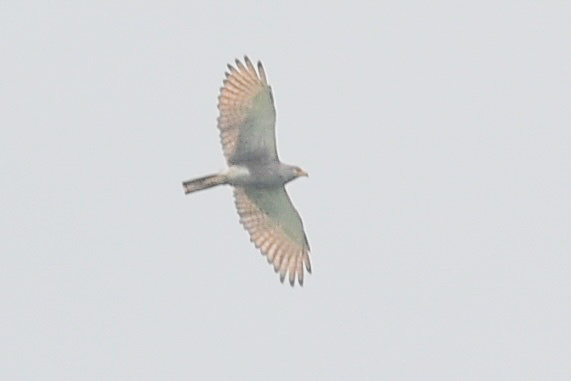
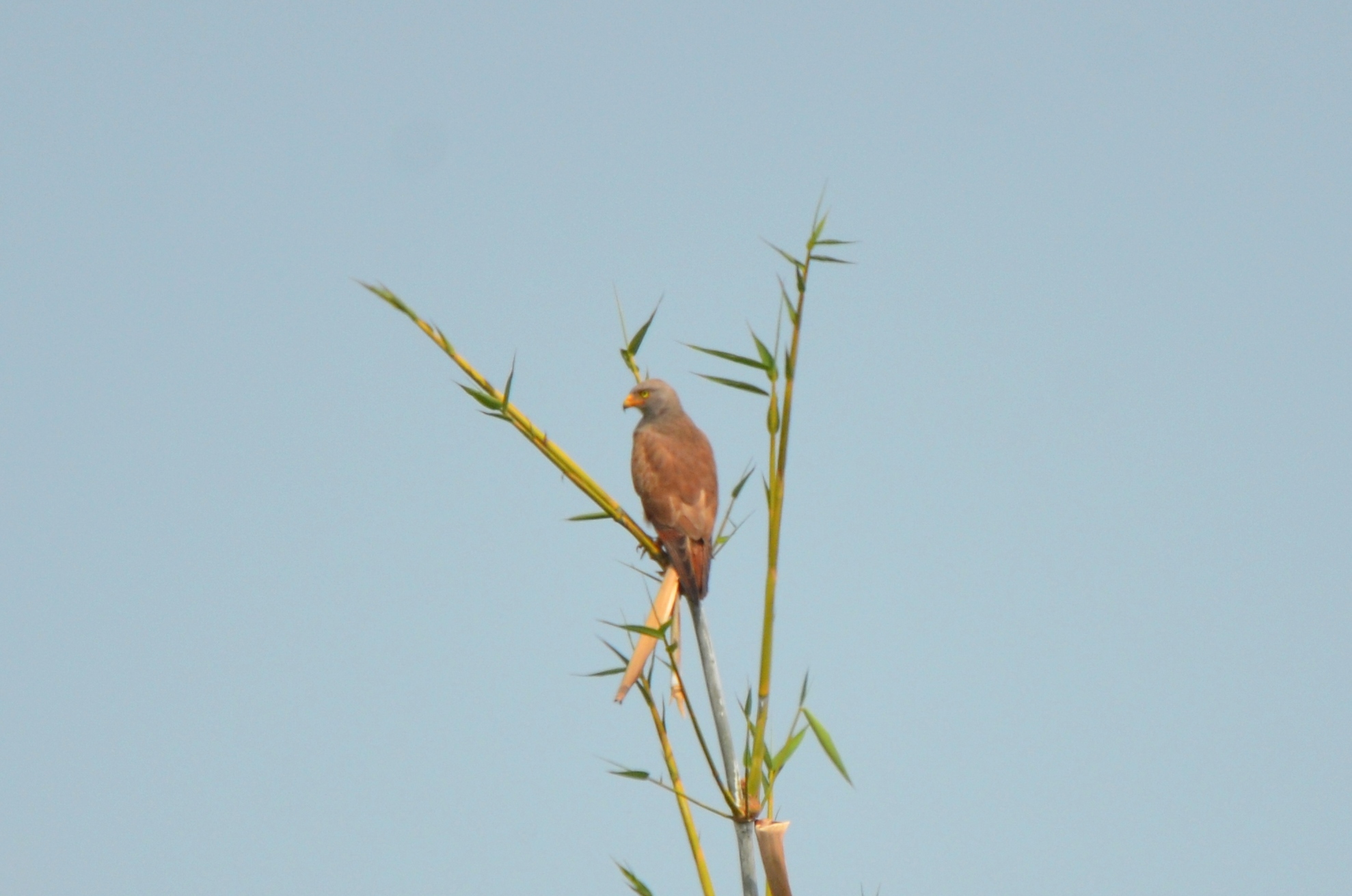
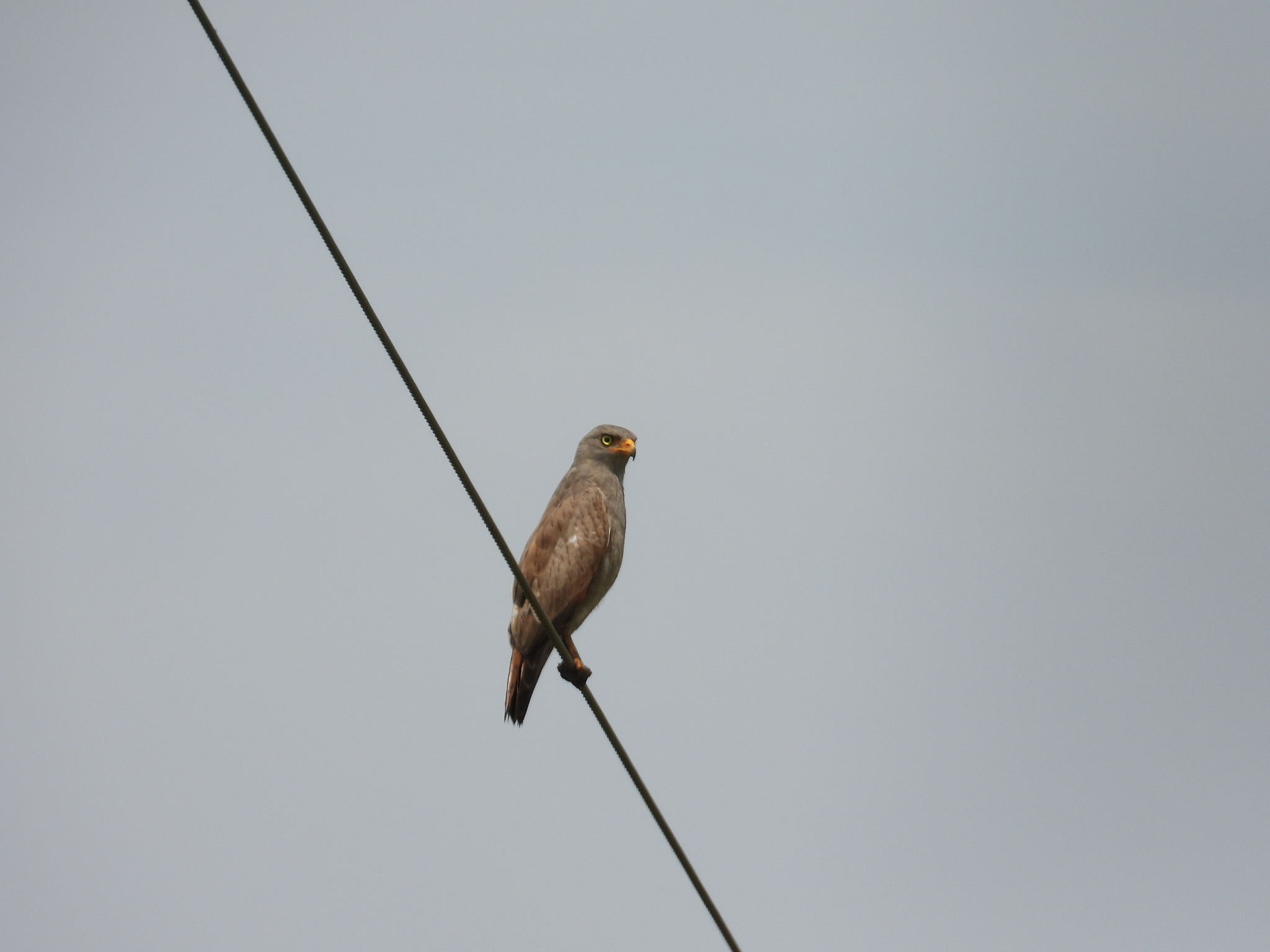
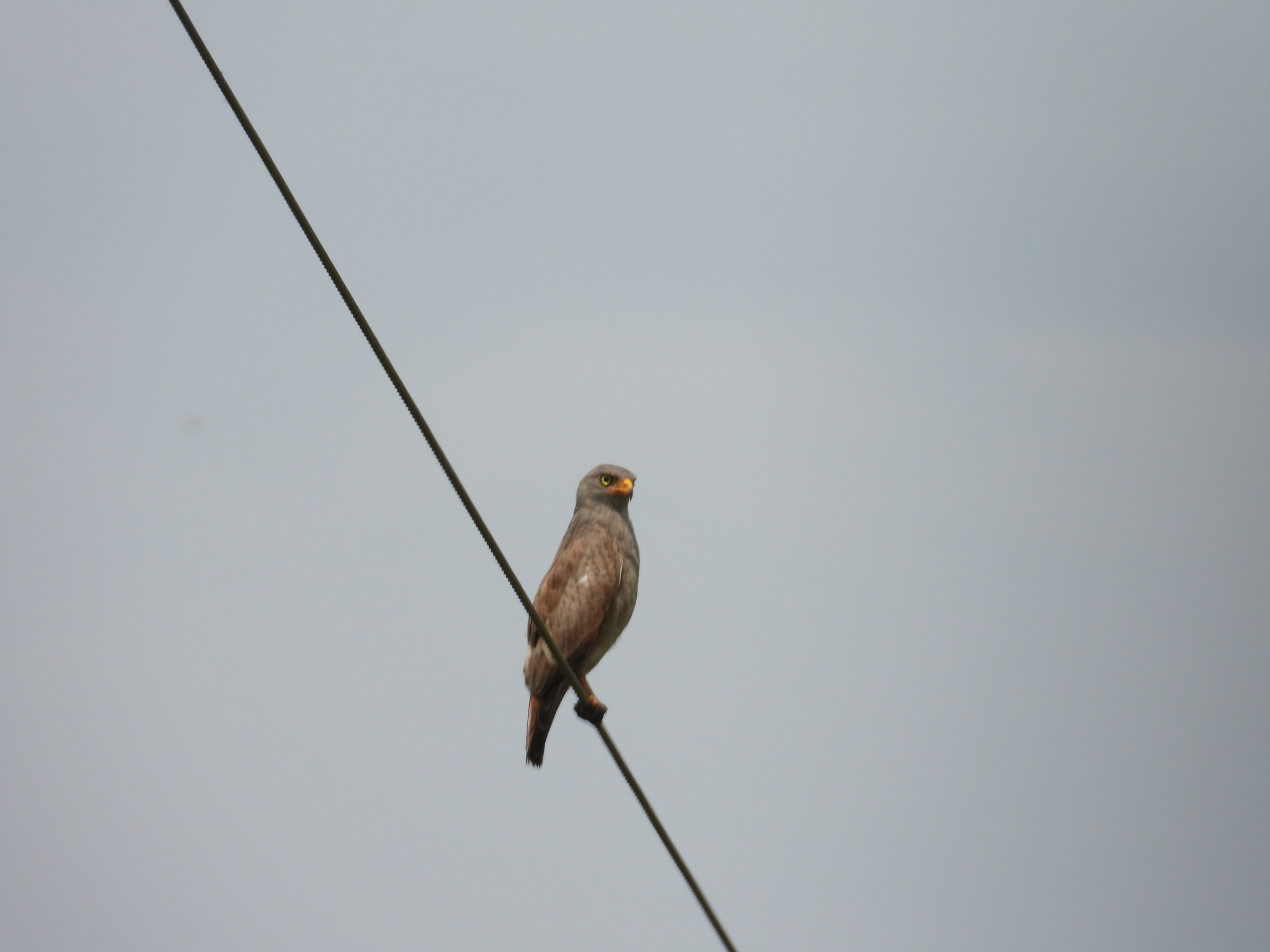
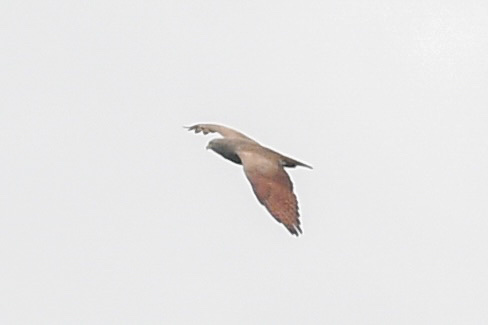
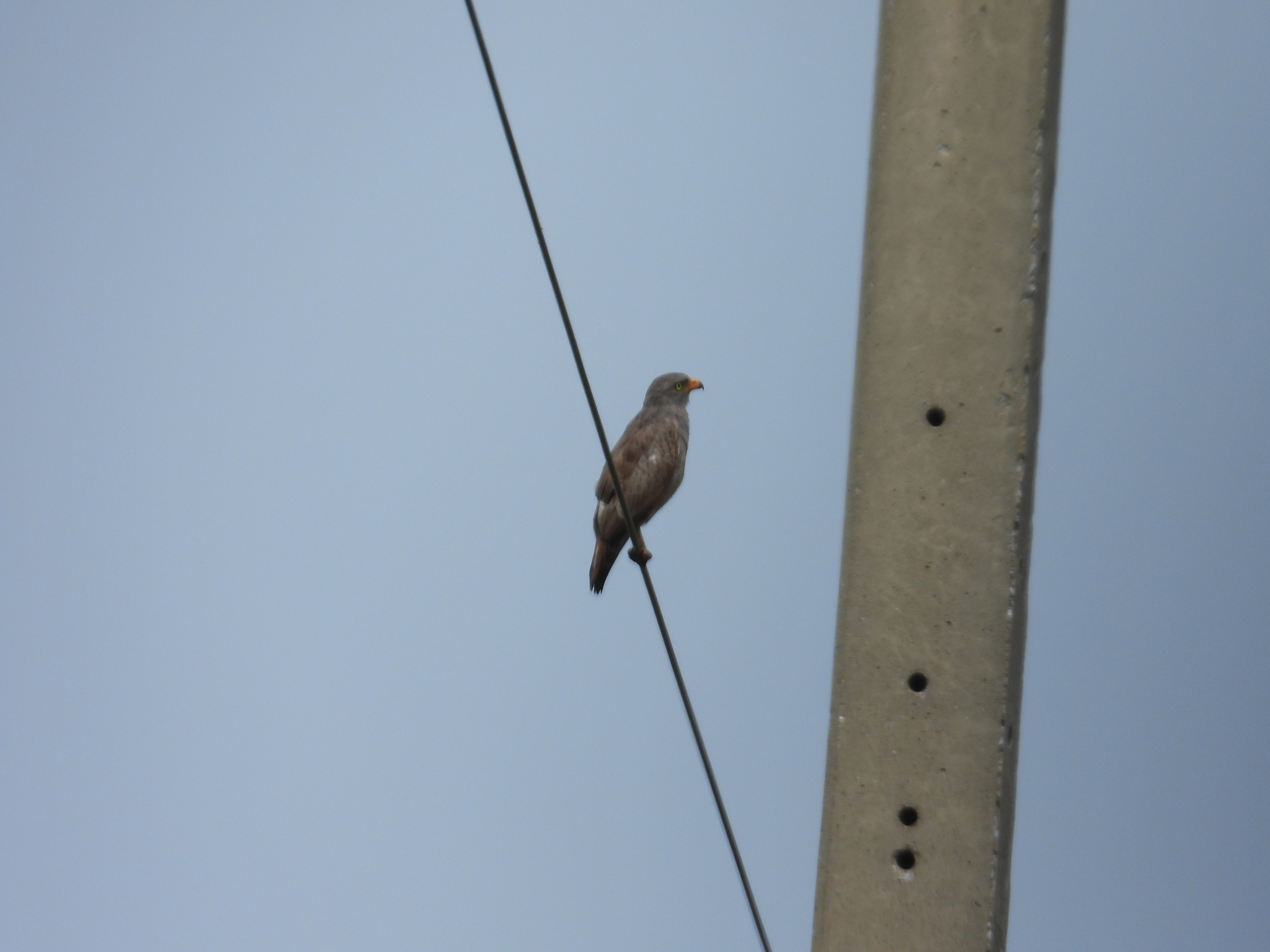
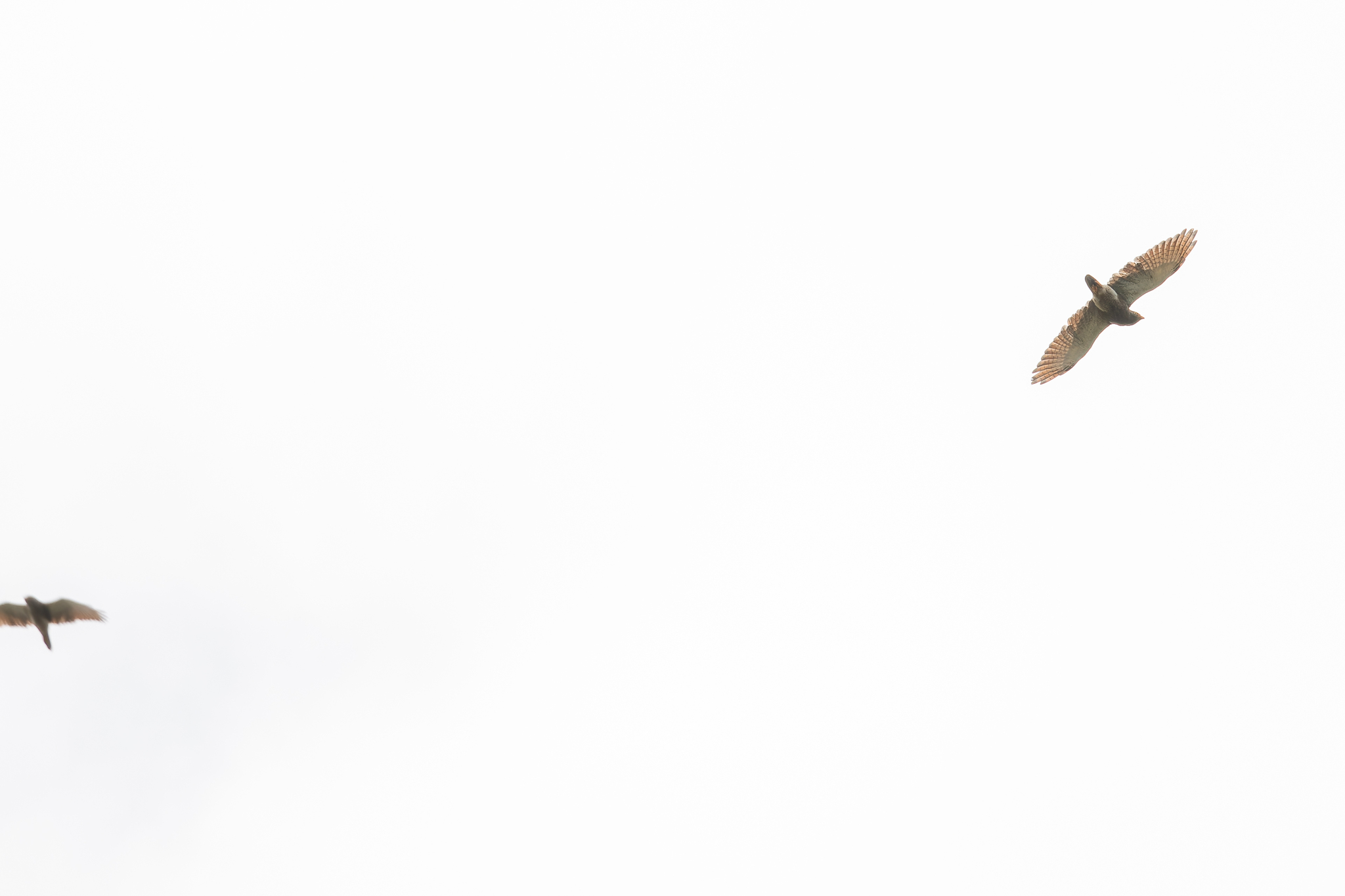
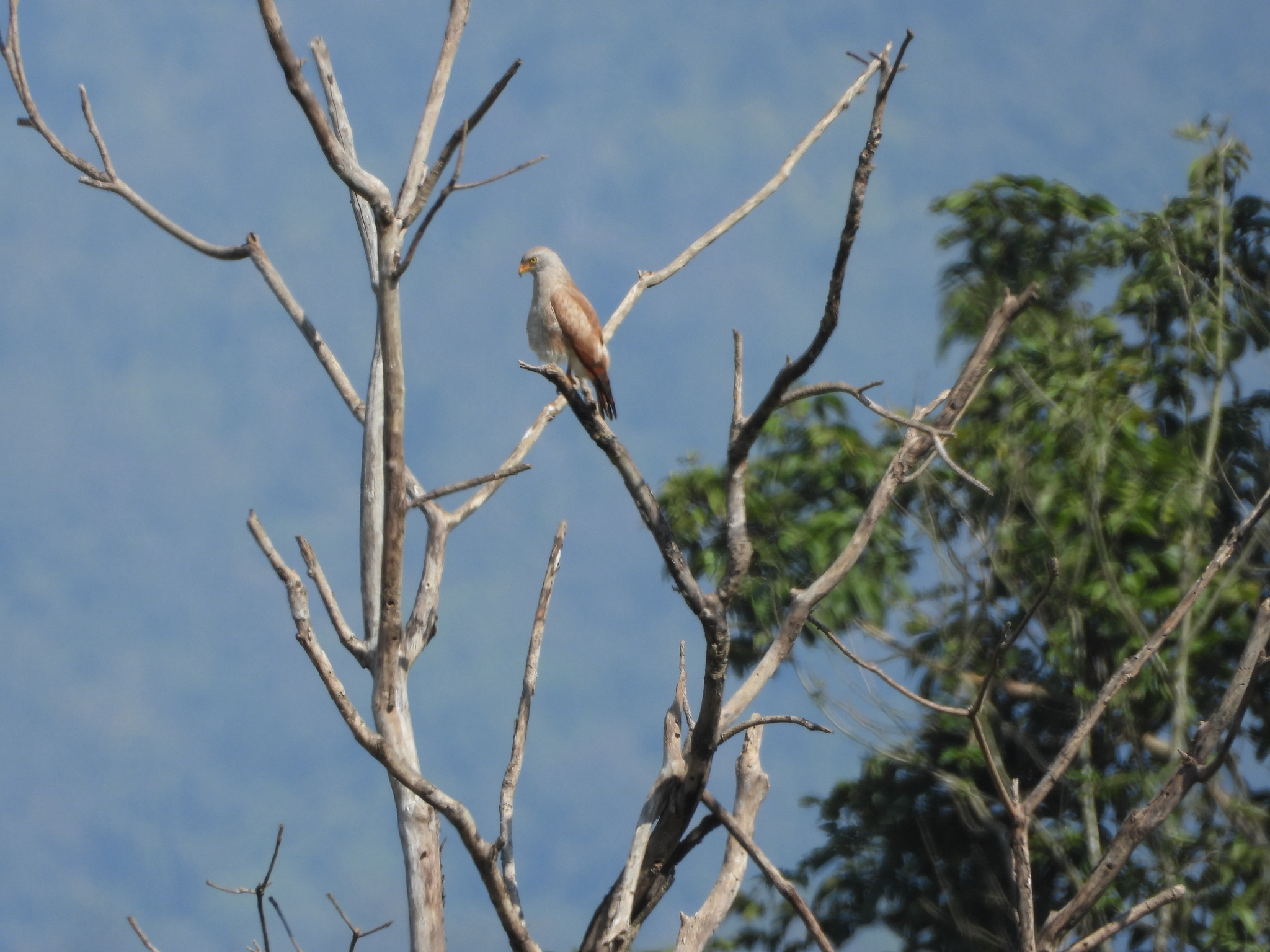
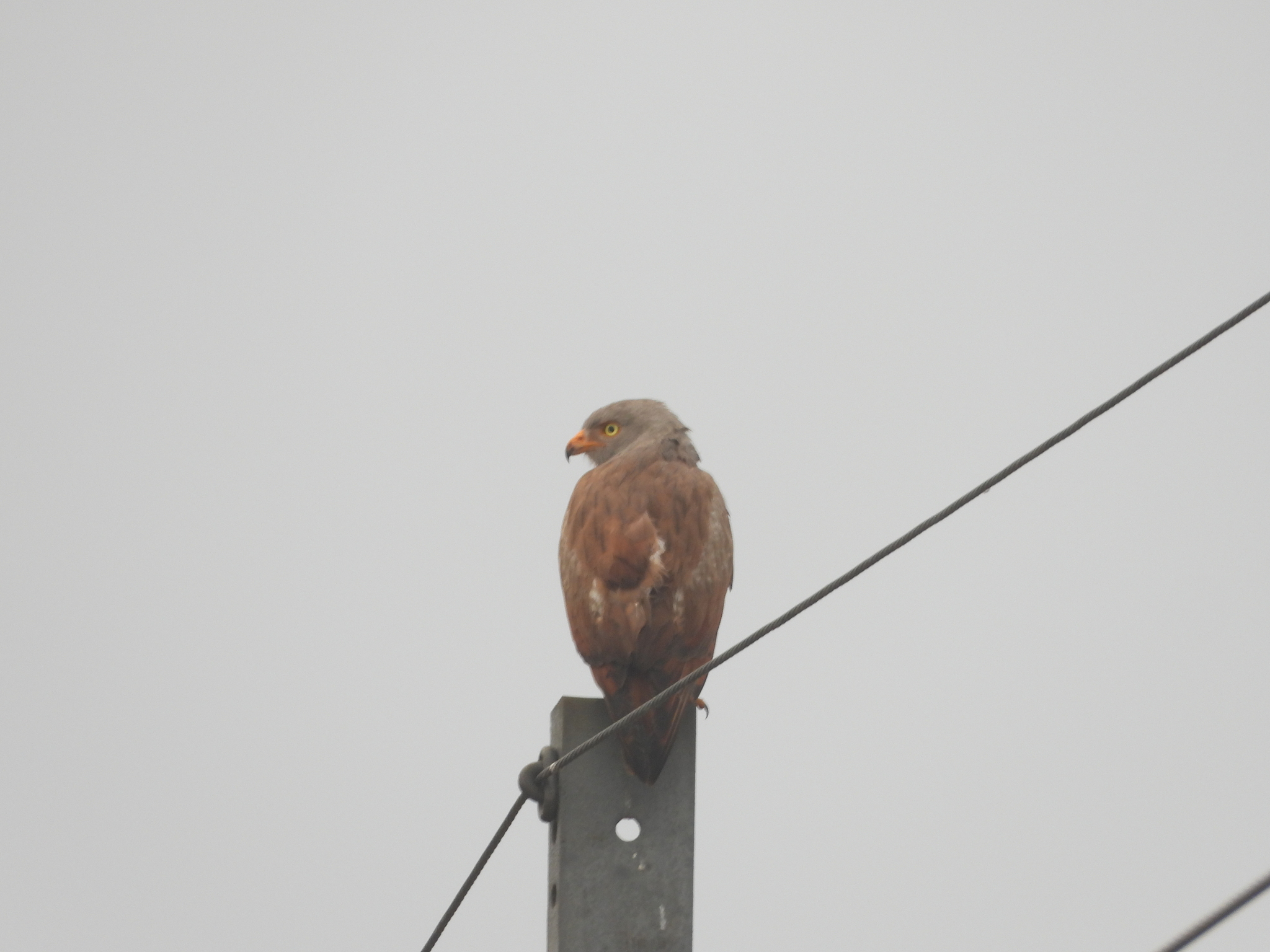
A medium-sized buzzard measuring 38-43 cm in length with a compact, streamlined build. Adults display a grey head and underparts, prominently streaked on the crown, neck, and breast. The upperparts are a distinctive rufous-grey, while the uppertail is bright rufous—a key identifying feature. In flight from above, the rufous-chestnut flight feathers contrast sharply with the rufous tail. From below, the grey body is framed by white underwing coverts and greyish flight feathers and undertail. The species is monomorphic, meaning males and females appear similar. Juveniles are notably duller overall, showing brown-grey coloration on the head and lacking the rich rufous tones, with a prominent white supercilium that helps distinguish them from adults.
Identification
This species closely resembles the grey-faced buzzard in size and general shape, potentially causing confusion for observers. However, several distinguishing features separate them. The grey-faced buzzard displays brown upperparts and tail, a prominent white throat, and a belly with distinctive brown barring—features absent in this species. In flight, the bright rufous uppertail and rufous-chestnut flight feathers of this buzzard are diagnostic when visible. The grey head with streaking on the crown, neck, and breast further separates it from the grey-faced species. Careful attention to underwing pattern—specifically the white coverts contrasting with greyish flight feathers—also aids identification.
Distribution & Habitat
Restricted range across Southeast Asia, including Indochina, Java, and Sulawesi. This species is primarily associated with deciduous forest habitats and second growth areas, where it maintains year-round territories. It occurs at elevations up to 800 meters, favoring the edges and interior of dry deciduous woodlands rather than dense primary rainforest or open grasslands. The distribution is patchy within this range, corresponding to the availability of suitable deciduous forest habitat. No significant seasonal movements have been recorded, as it is considered a resident species throughout its range.
Behavior & Ecology
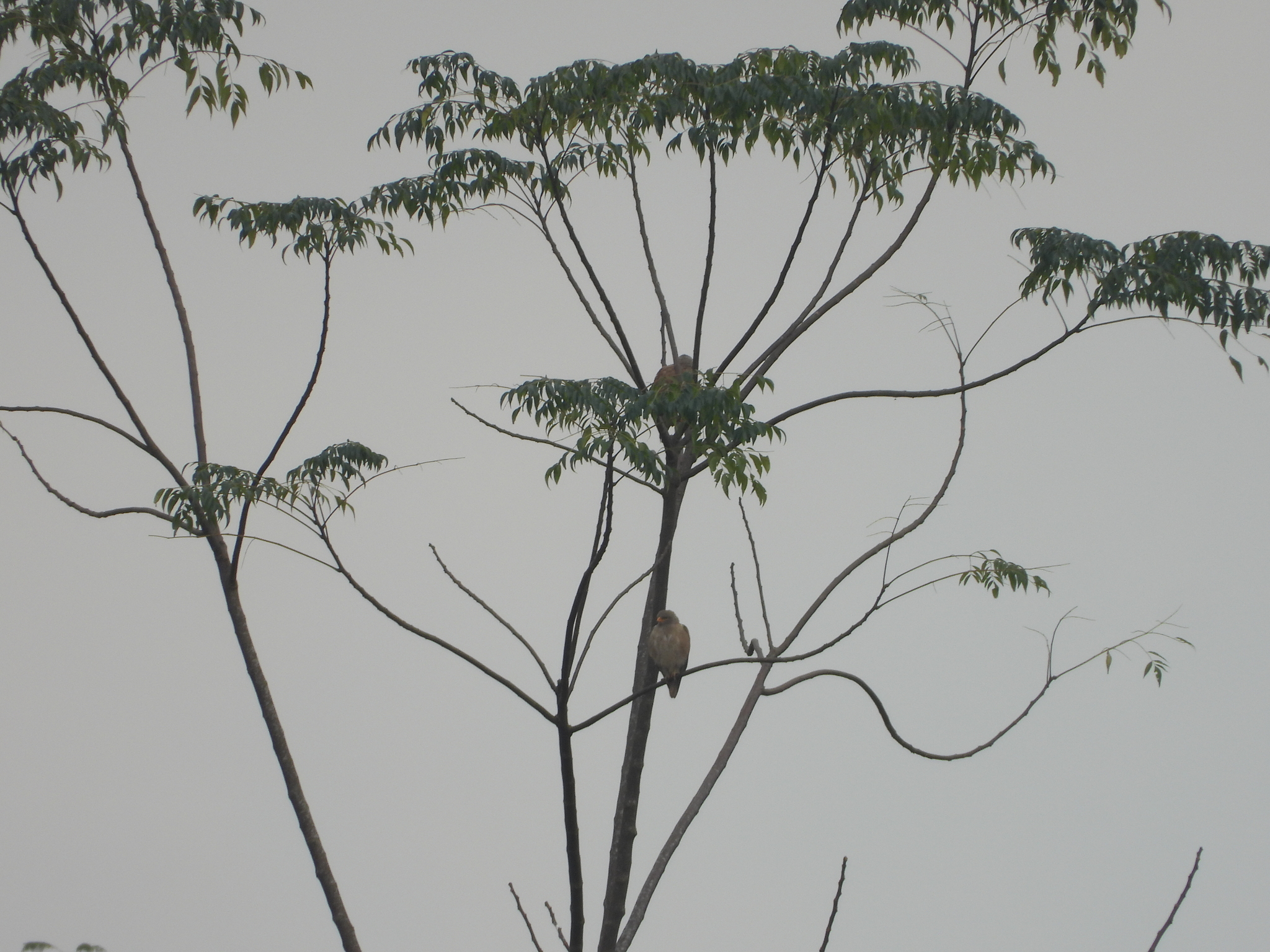
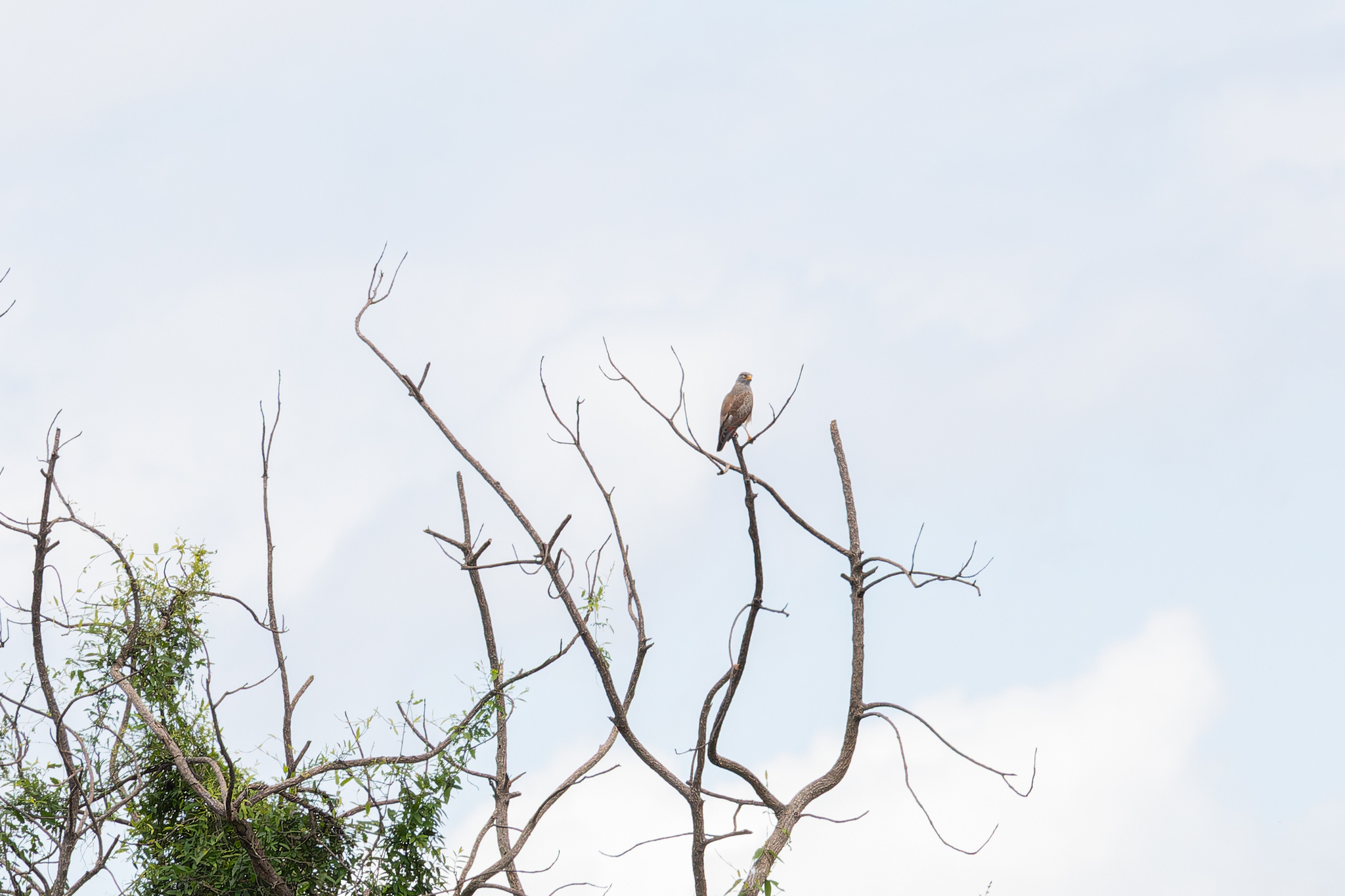
A sit-and-wait predator that hunts from exposed perches in the forest mid-story, dropping down to capture prey on the ground or in vegetation. Its diet consists primarily of lizards, supplemented by small mammals and large insects. Foraging behavior is typical of woodland hawks, with the bird remaining motionless for extended periods before launching a swift attack. The species is generally observed alone or in pairs, reflecting its territorial nature. The vocalization is a distinctive, high-pitched pit-piu, often given in flight or when disturbed at a perch. Breeding biology remains poorly documented, though as a resident species, pairs likely maintain territories year-round.
Conservation
Currently listed as Least Concern by the IUCN, though population trends and exact numbers require further study. The species' dependence on deciduous forest and second growth habitats makes it vulnerable to ongoing deforestation throughout its Southeast Asian range. Agricultural expansion, logging, and urbanization continue to fragment suitable habitat across Indochina, Java, and Sulawesi. While it appears to tolerate some habitat degradation and maintains populations in secondary growth, the long-term outlook depends on the preservation of intact deciduous forest areas within its restricted range.
Culture
No significant cultural or folklore associations have been documented for this species.
Source: Wikipedia · CC BY-SA 3.0
Taxonomy
- Order
- Accipitriformes
- Family
- Accipitridae
- Genus
- Butastur
- eBird Code
- ruwbuz1
Distribution
savanna and woodland of southeastern Asia, Java, and Sulawesi
Vocalizations
Data Sources
Species description from Wikipedia, licensed under CC BY-SA 3.0.
Bird images and sounds sourced from GBIF, contributed by citizen scientists worldwide under Creative Commons licenses.
Taxonomy data from AviList 2025.