Mongolian Finch
Bucanetes mongolicus
蒙古沙雀
Introduction
This high-altitude finch inhabits rugged mountain ranges of Central Asia, from eastern Turkey through the Caucasus to western China and Mongolia. It occupies rocky, arid slopes and stony desert margins year-round. The species occurs in small flocks, feeding on the ground among sparse vegetation and perching on rocky outcrops. Its core distribution centers on the montane zones of Kazakhstan, Kyrgyzstan, Tajikistan, and surrounding nations.
Description
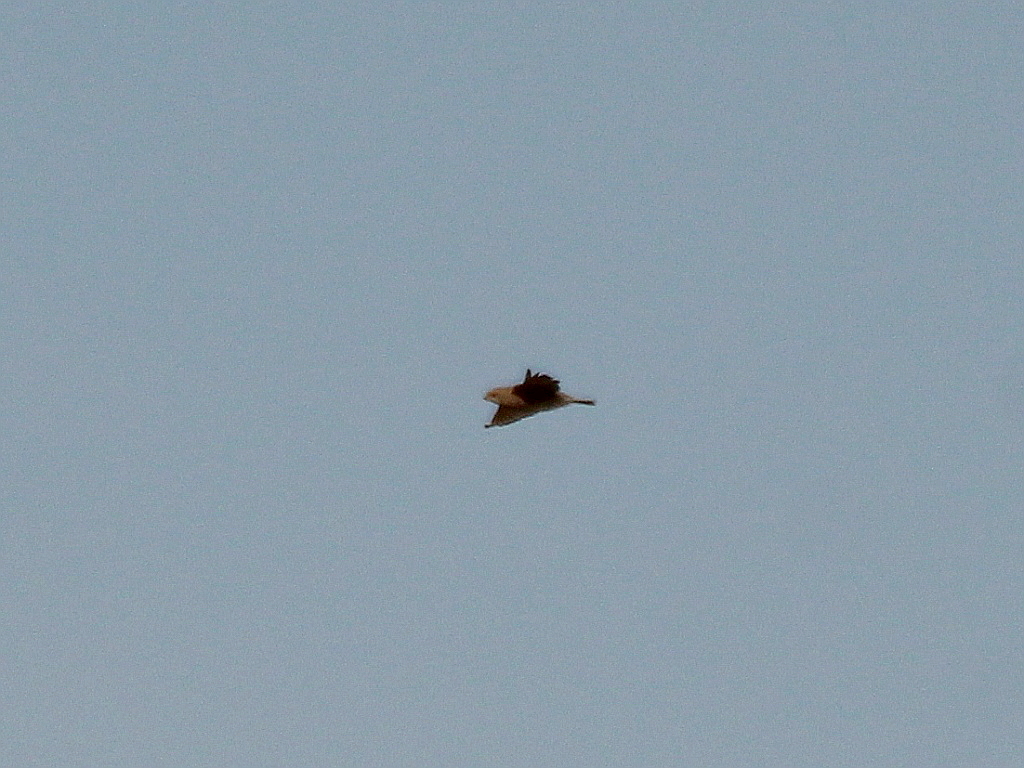
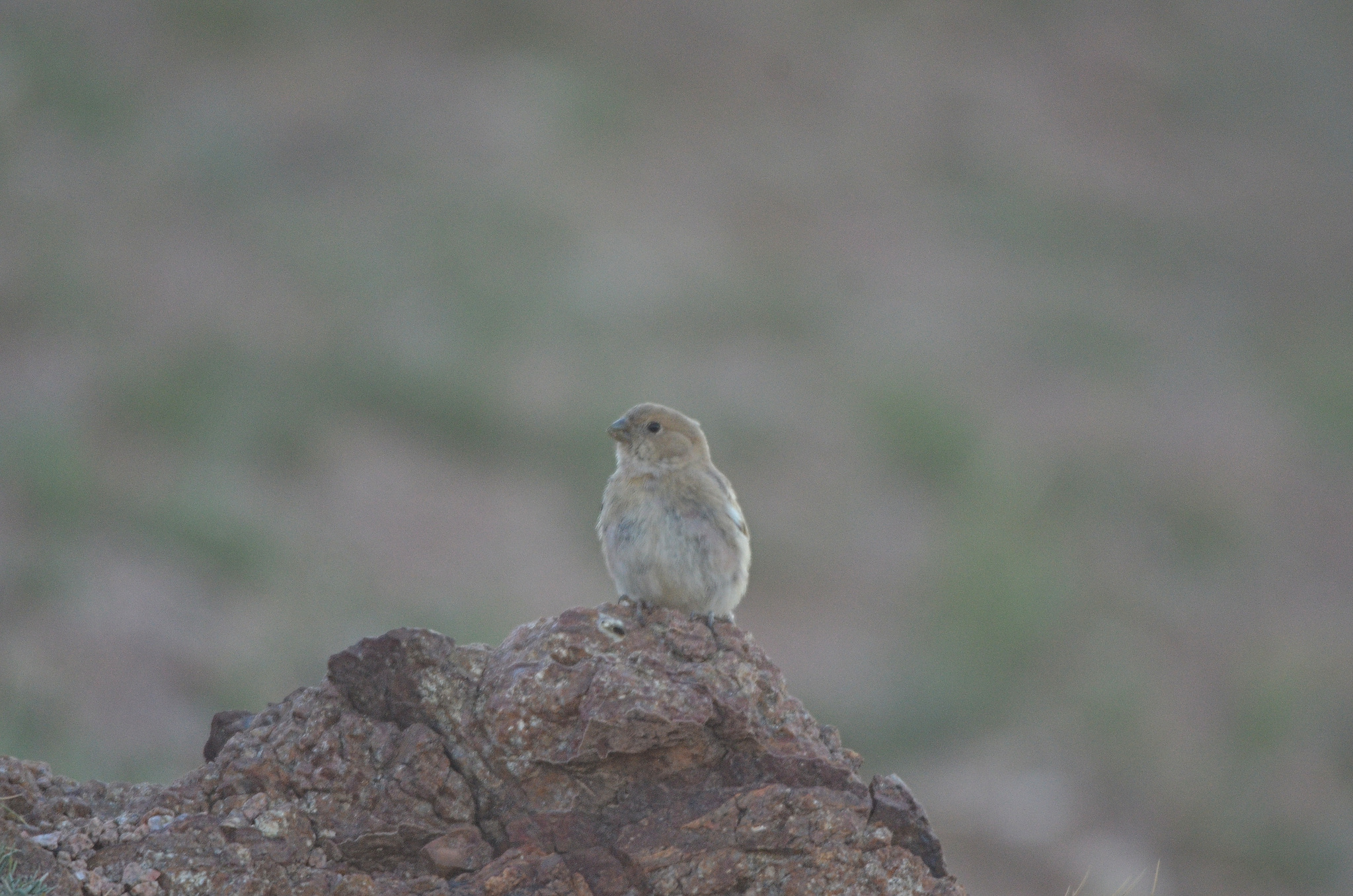
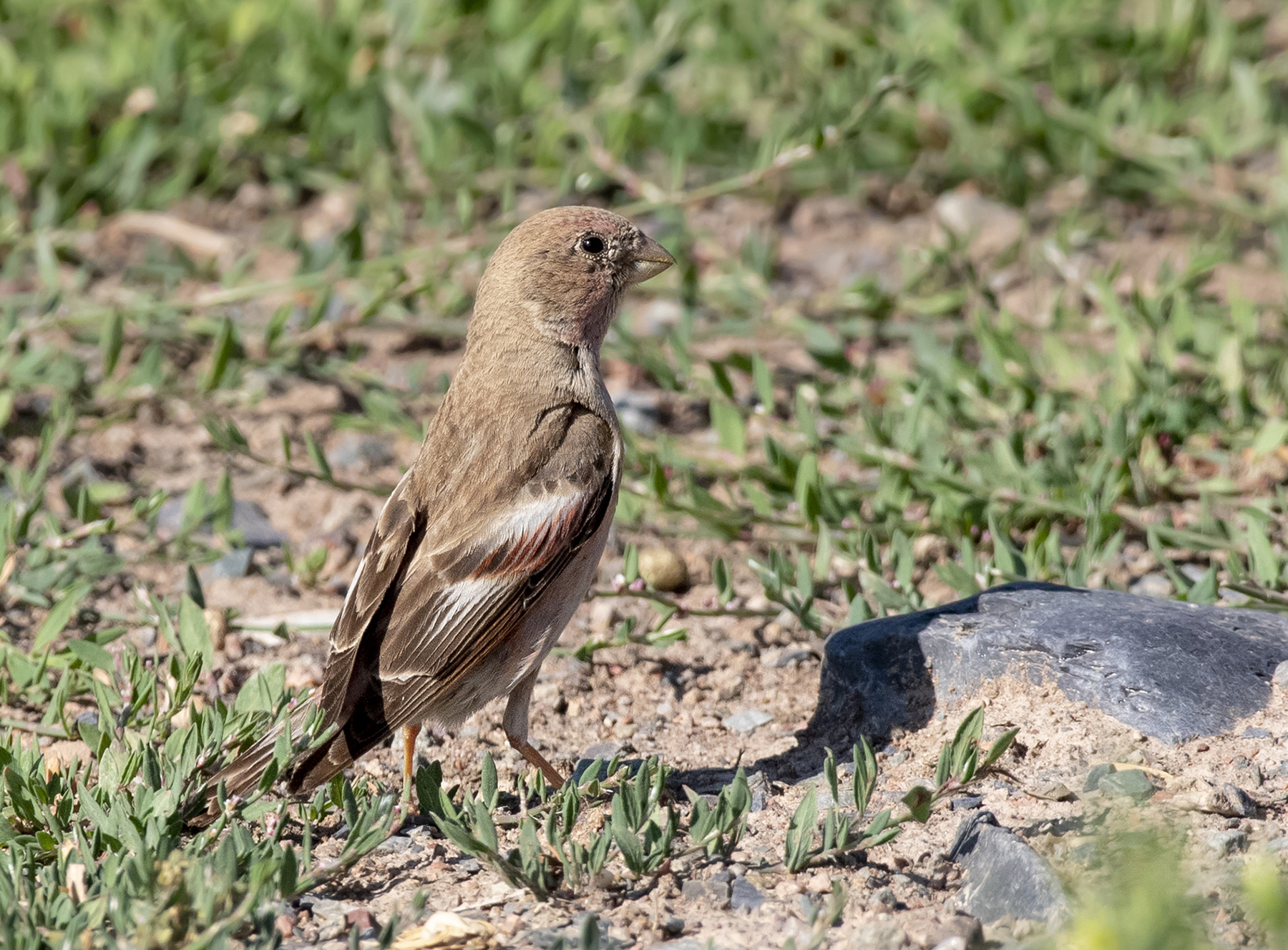
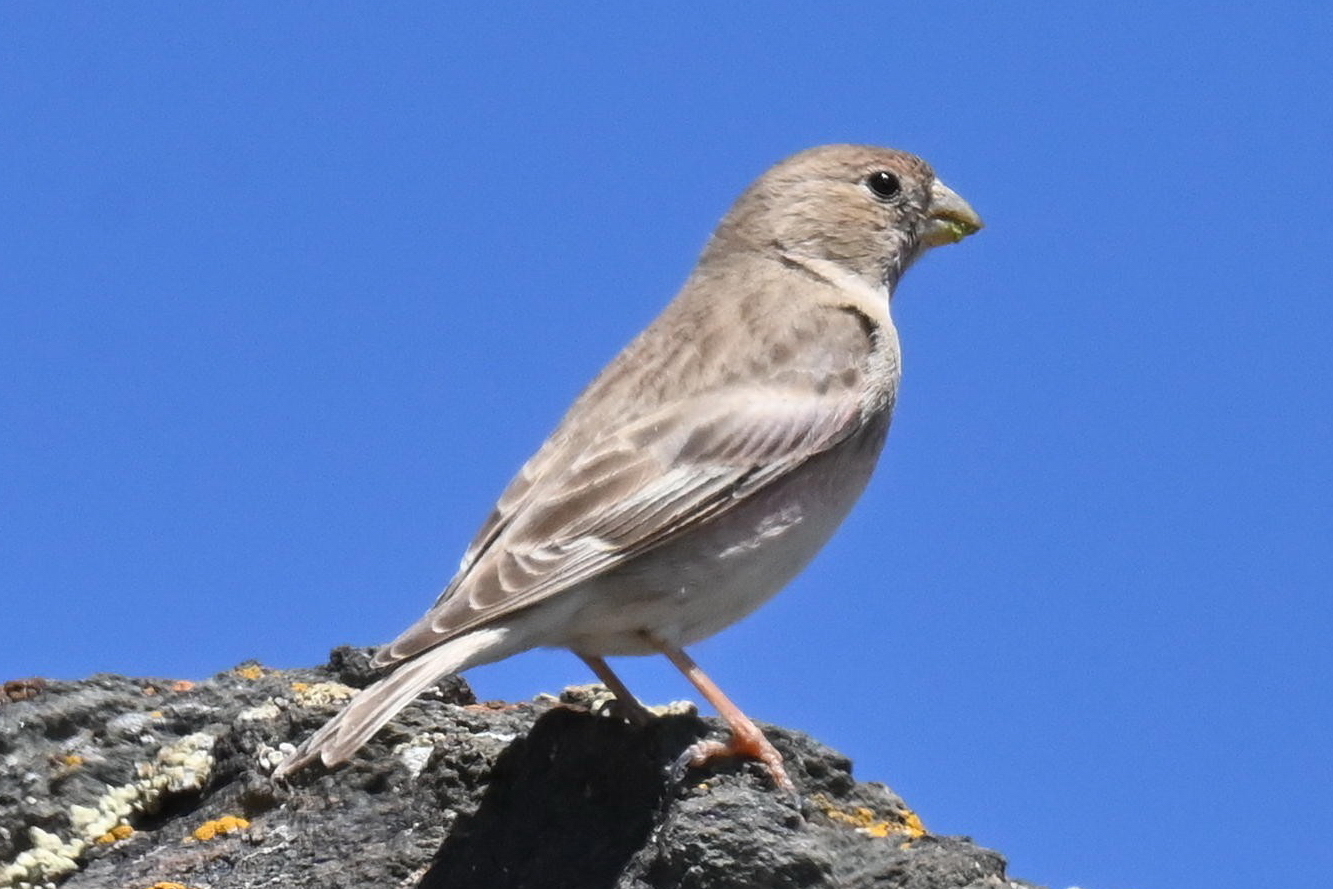
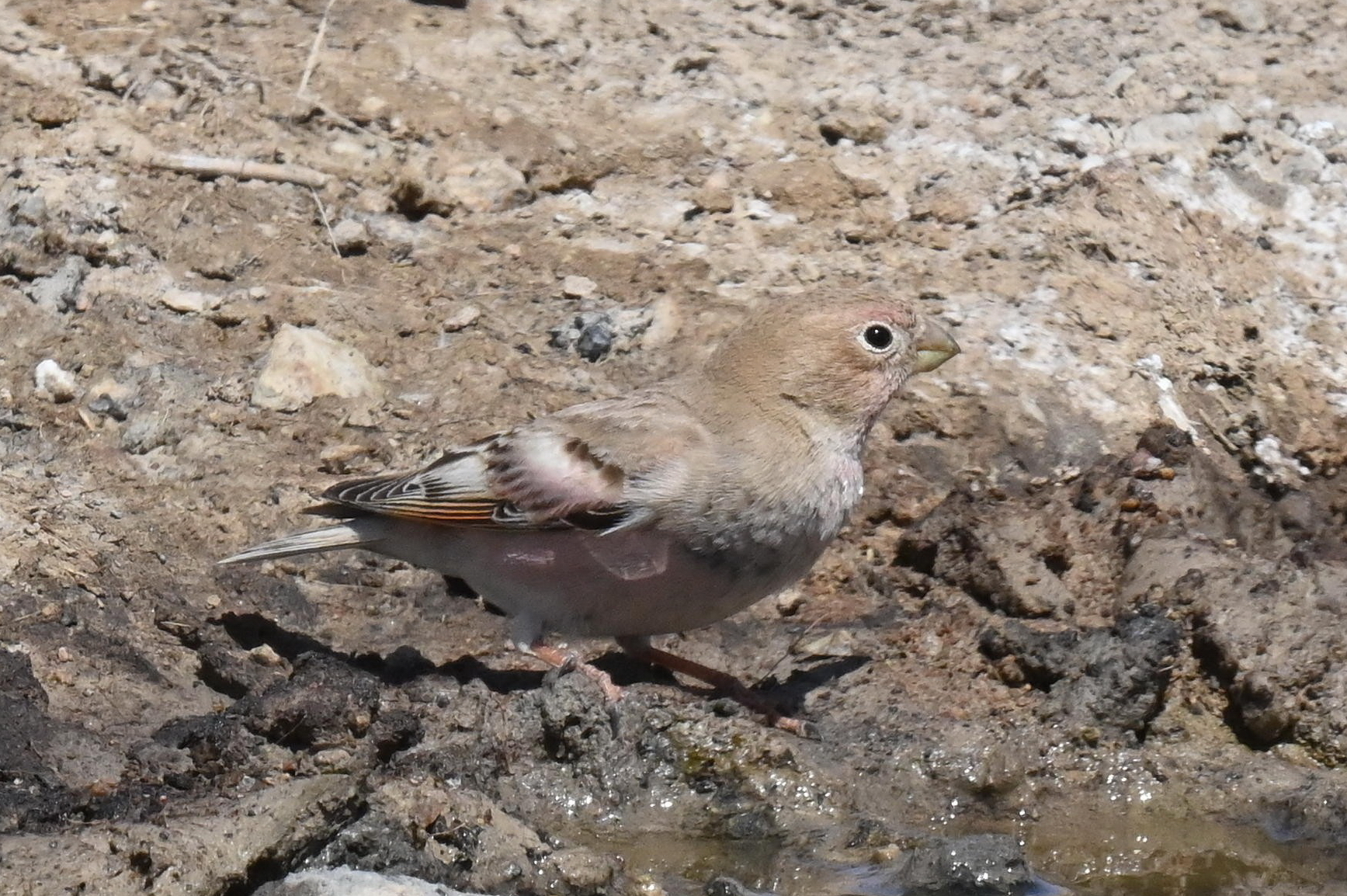
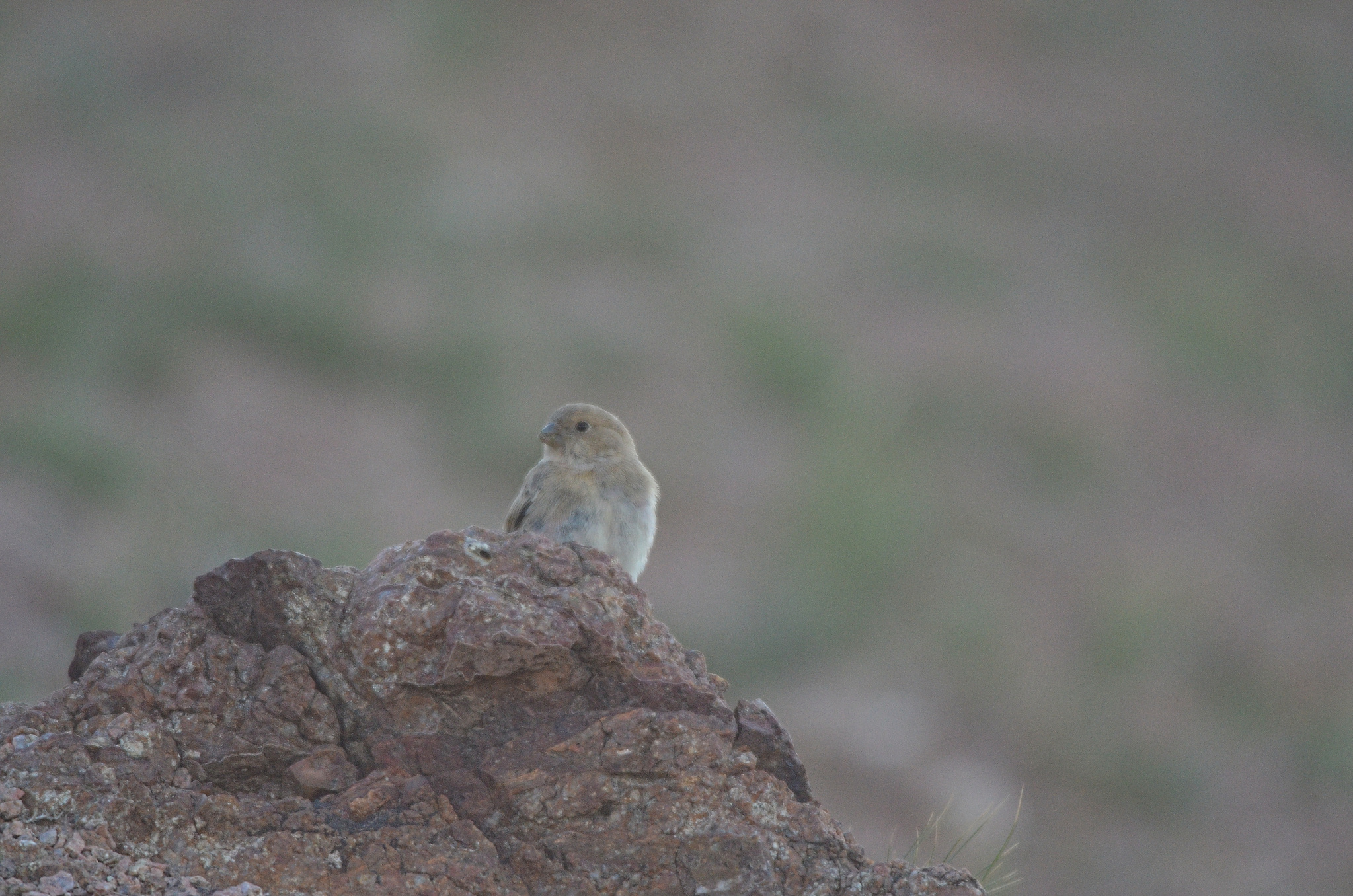
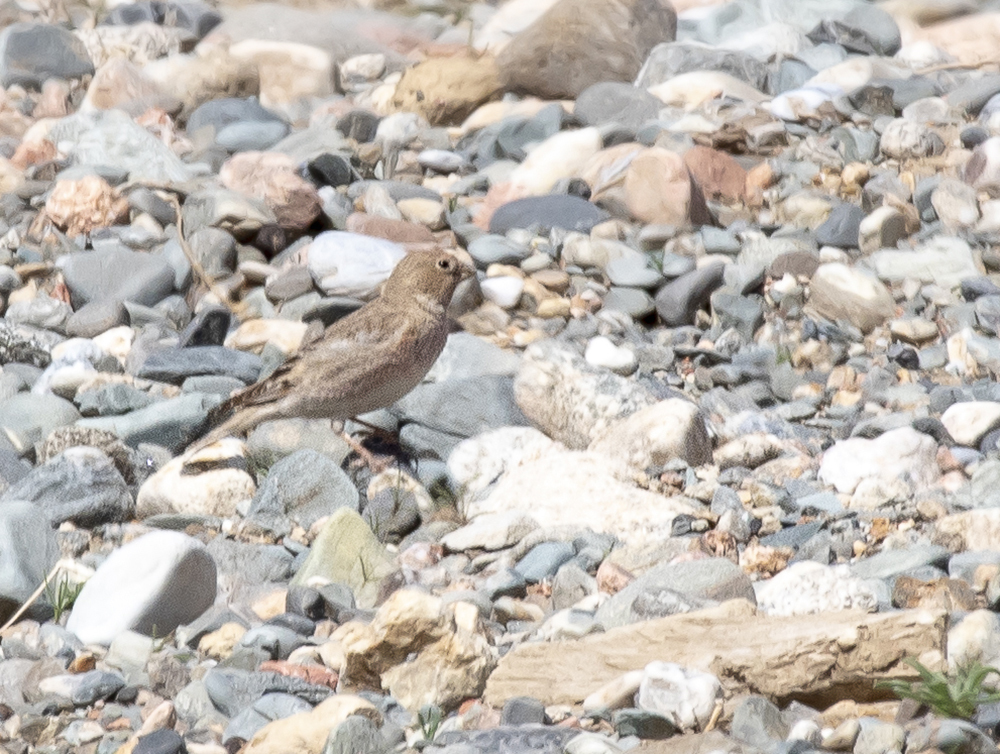
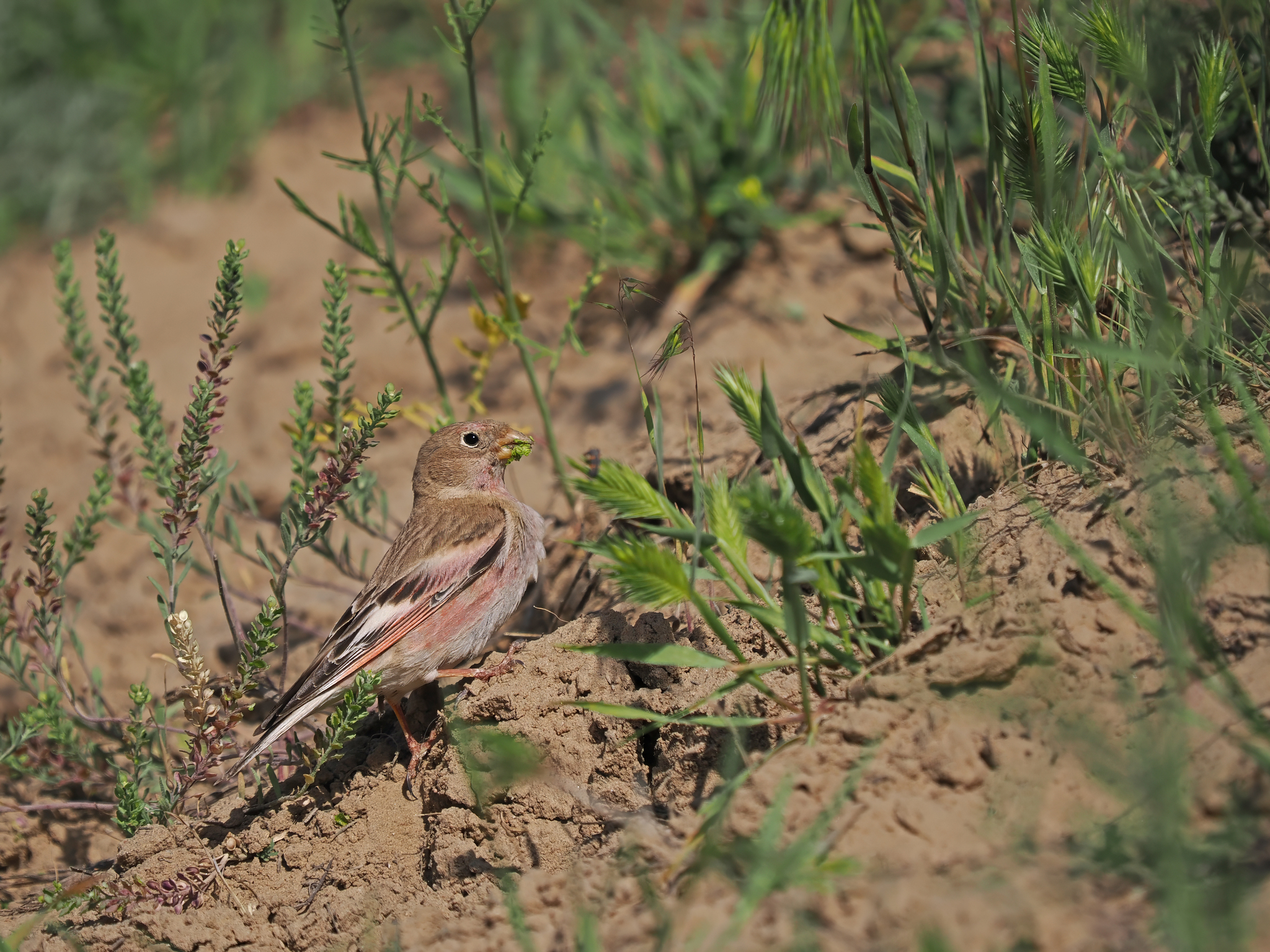
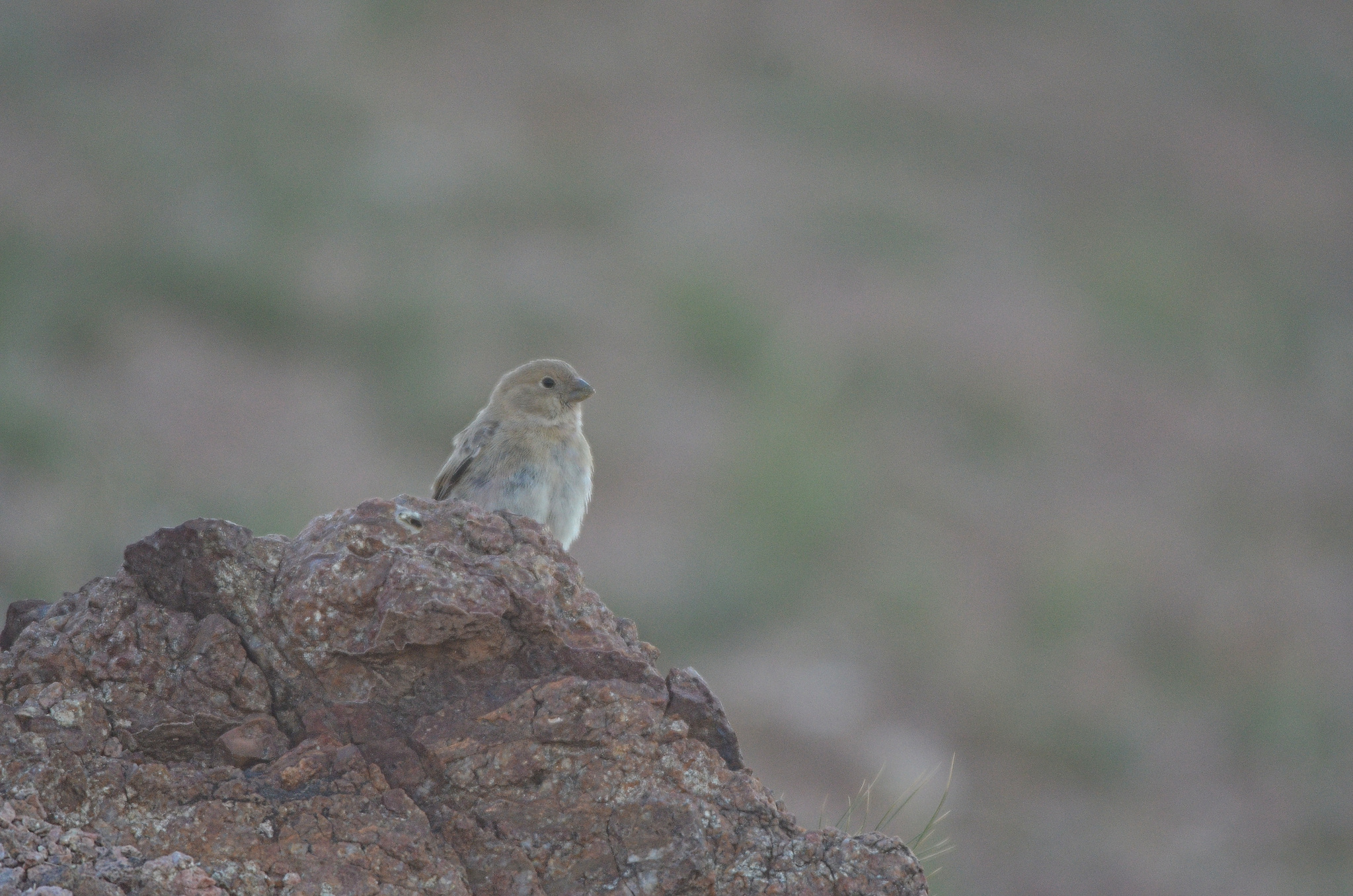
A small, compact finch with notably long wings that extend beyond the tail tip when perched. The head appears large relative to the body, and the bill is short, thick, and greyish-yellow in color. Breeding males display a pink flush on the face and underparts, with extensive white and pink panels in the wings visible during flight. Non-breeding males retain this pattern but with reduced intensity. Females are much plainer, showing only faint, barely perceptible pink tones. The overall coloration is sandy-brown and cryptic, blending effectively with the rocky terrain it inhabits.
Identification
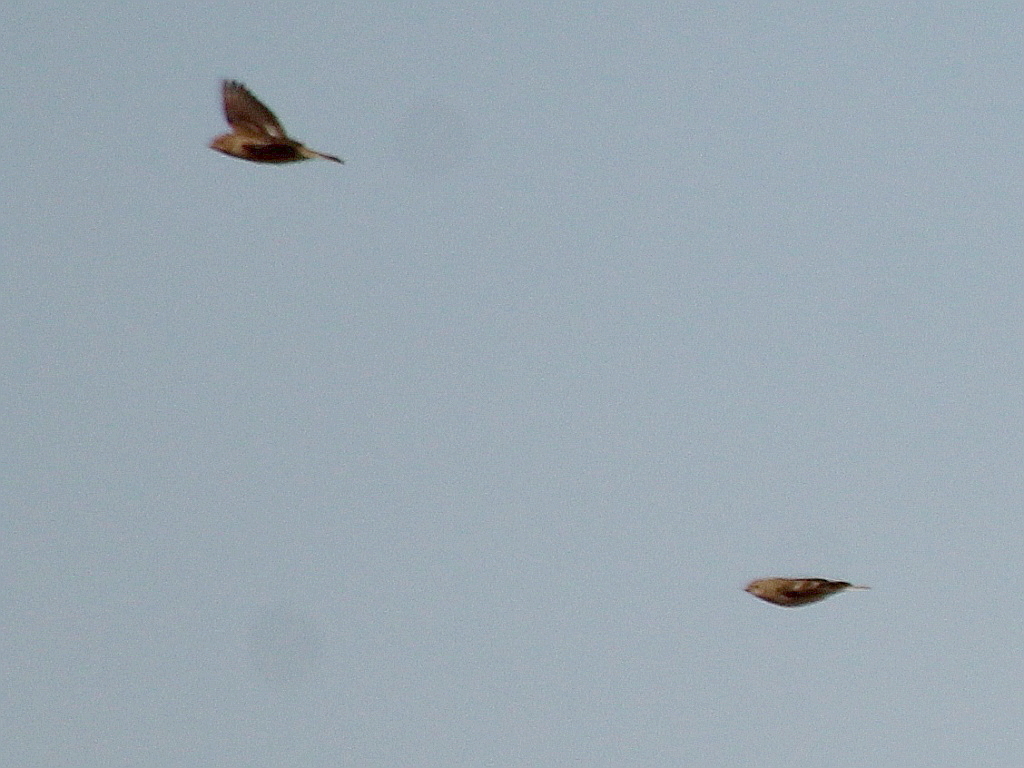
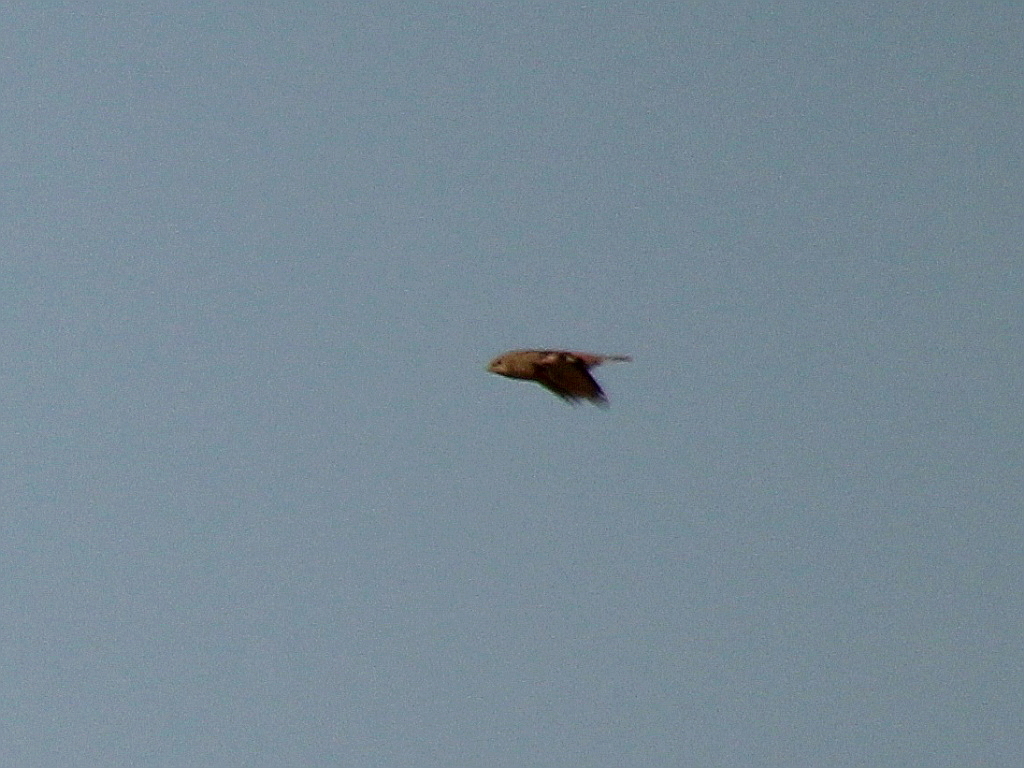
The combination of long wings, large head, and thick greyish-yellow bill distinguishes this species from other desert and mountain finches in its range. The extensive white and pink in the wing feathers is the most reliable field mark, particularly visible when the bird takes flight. Males in breeding plumage are unmistakable with their pink face and underparts. Females and non-breeding males are more challenging, but the long-winged profile and thick bill help separate them from similar species. The desert finch is a potential confusion species but typically shows a different wing pattern and a more slender bill.
Distribution & Habitat
Resident across eastern Turkey, through the Caucasus region, and eastward across Central Asia to western China and Mongolia, with the range extending south into Kashmir. The species inhabits mountainous stony deserts, semi-arid scrub, and rocky slopes, typically at elevations between 1,000 and 3,000 meters. Native to Afghanistan, Armenia, Azerbaijan, China, Pakistan, Iran, Kazakhstan, Kyrgyzstan, Mongolia, India, Nepal, Russia, Tajikistan, Turkey, and Uzbekistan. Considered a vagrant in Bahrain. Records suggest the Turkish range may be more extensive than historically documented, with sightings in the Pontic Mountains and near Lake Tuz.
Behavior & Ecology
Outside the breeding season, this finch is fairly quiet and inconspicuous. Calls consist of various rising nasal notes and chirrups, typically given in flight or when disturbed. The song is an unpatterned, jumbled series of these notes. It forages on the ground among sparse vegetation, likely feeding on seeds and small plant materials typical of its desert and semi-arid habitat. Breeding behavior and nest details are not extensively documented in available sources. The species occurs in small flocks outside the breeding season.
Conservation
The species is currently assessed as Least Concern by the IUCN, indicating it is not considered at immediate risk of population decline. Its remote, inhospitable habitat provides some protection from anthropogenic pressures, though the true population size and trend are not well documented. The vast, sparsely populated mountain ranges it inhabits likely buffer it from significant human disturbance. Specific threats related to climate change, habitat degradation, or other pressures are not well documented in available sources.
Culture
No specific cultural significance, folklore, or mythological associations are documented for this species in available sources. Its remote, rugged habitat in politically complex and often inaccessible regions of Central Asia has limited the development of extensive human cultural connections with the bird. As a relatively recently documented species in parts of its range, such as Armenia, there has been limited opportunity for cultural traditions to develop around it.
Source: Wikipedia · CC BY-SA 3.0
Taxonomy
- Order
- Passeriformes
- Family
- Fringillidae
- Genus
- Bucanetes
- eBird Code
- monfin2
Distribution
sparse montane vegetation of southwestern and central Asia
Data Sources
Species description from Wikipedia, licensed under CC BY-SA 3.0.
Bird images and sounds sourced from GBIF, contributed by citizen scientists worldwide under Creative Commons licenses.
Taxonomy data from AviList 2025.