

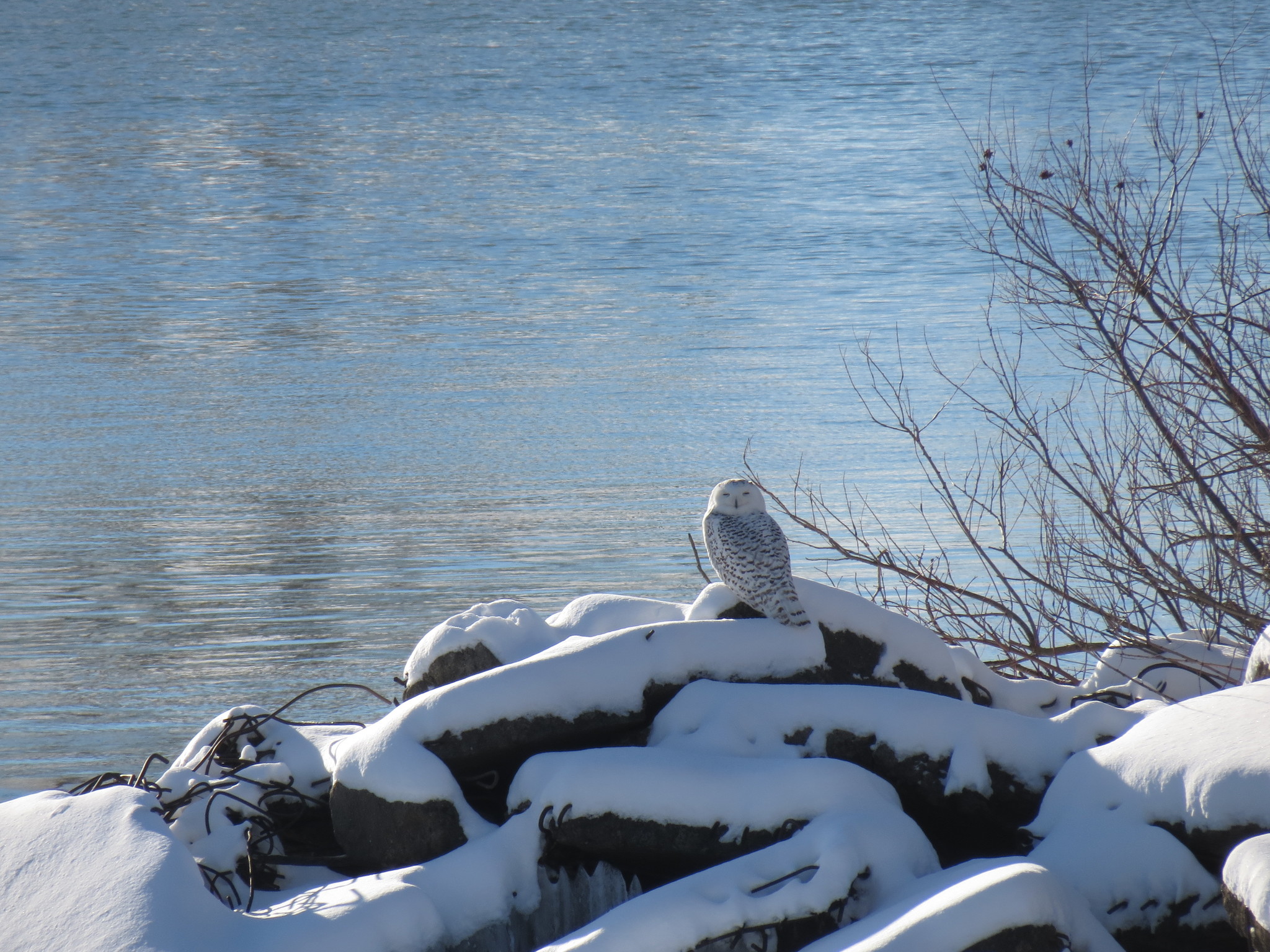





Snowy Owl
Bubo scandiacus
雪鸮
Introduction
The snowy owl is the largest avian predator of the High Arctic tundra and one of the largest owl species worldwide. Unlike most owls, which are strictly nocturnal, snowy owls are often active during the day, particularly in summer. They are nomadic, rarely breeding at the same locations or with the same mates annually and may not breed at all if prey is unavailable. When lemming populations crash, they may skip breeding entirely. These owls wander throughout Arctic regions and sometimes irrupt southward in large numbers following successful breeding seasons. The species is adapted to the extreme Arctic environment, with exceptionally thick feather insulation on their toes and the ability to withstand temperatures as low as minus 62.5 degrees Celsius.
Description
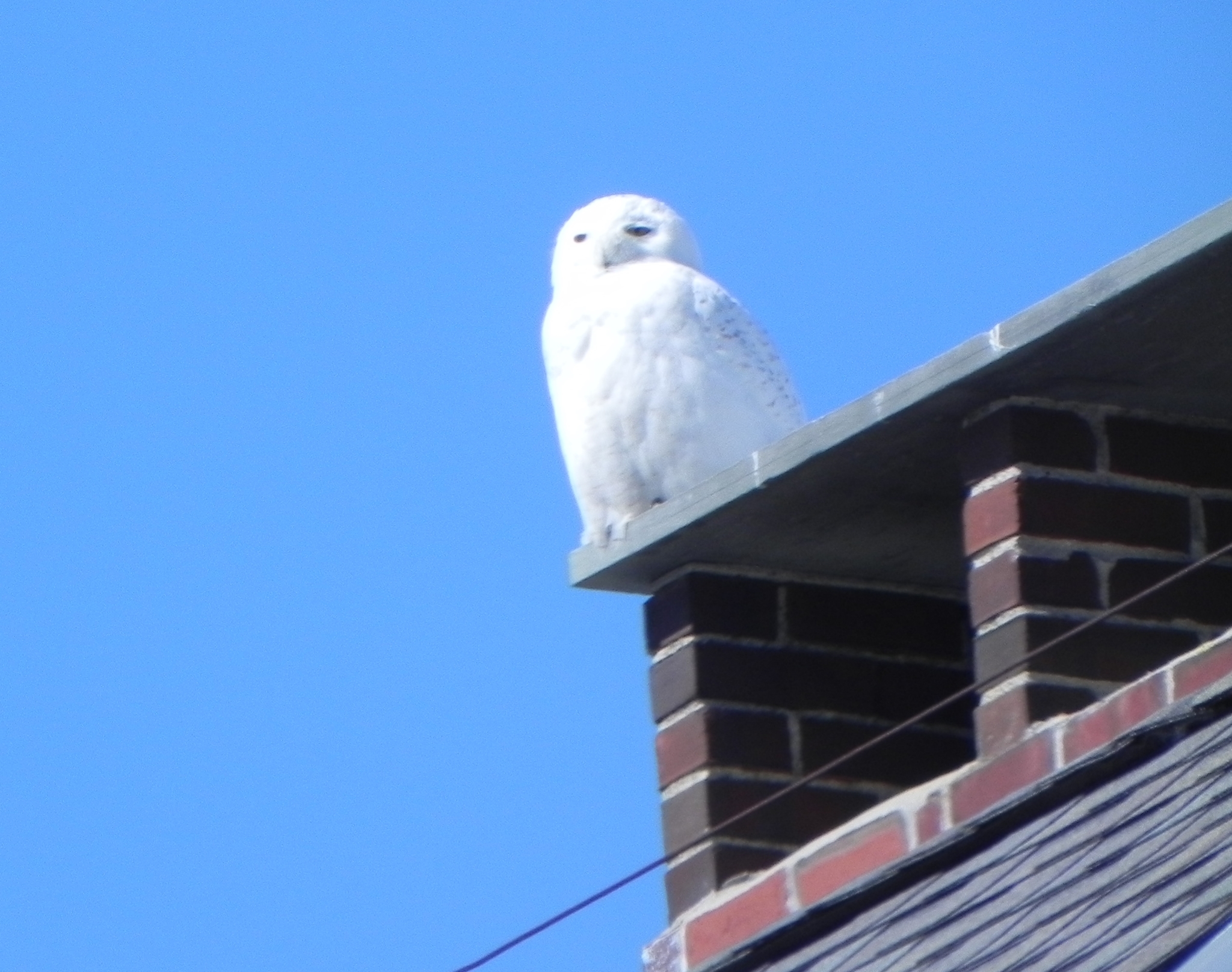
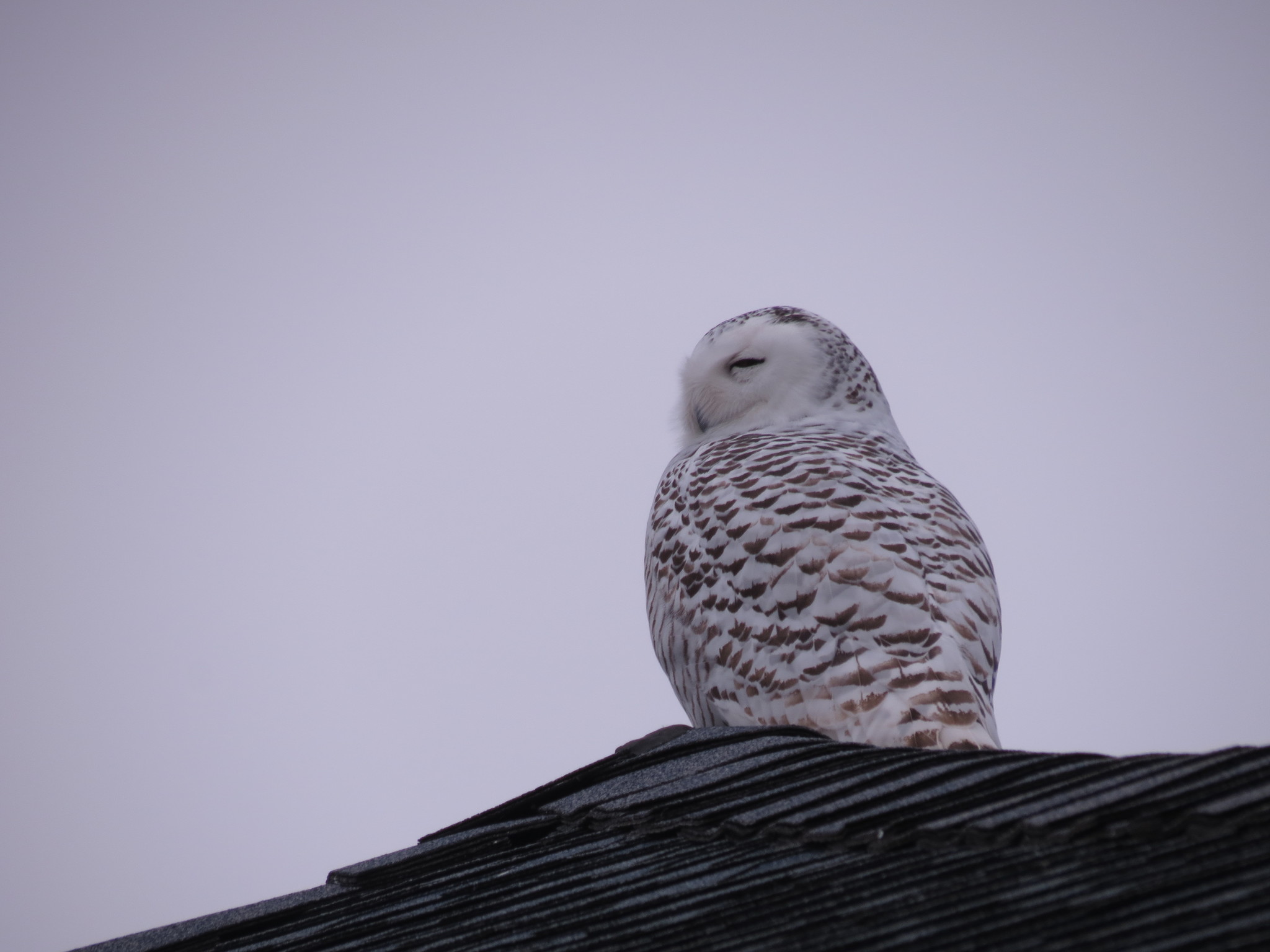
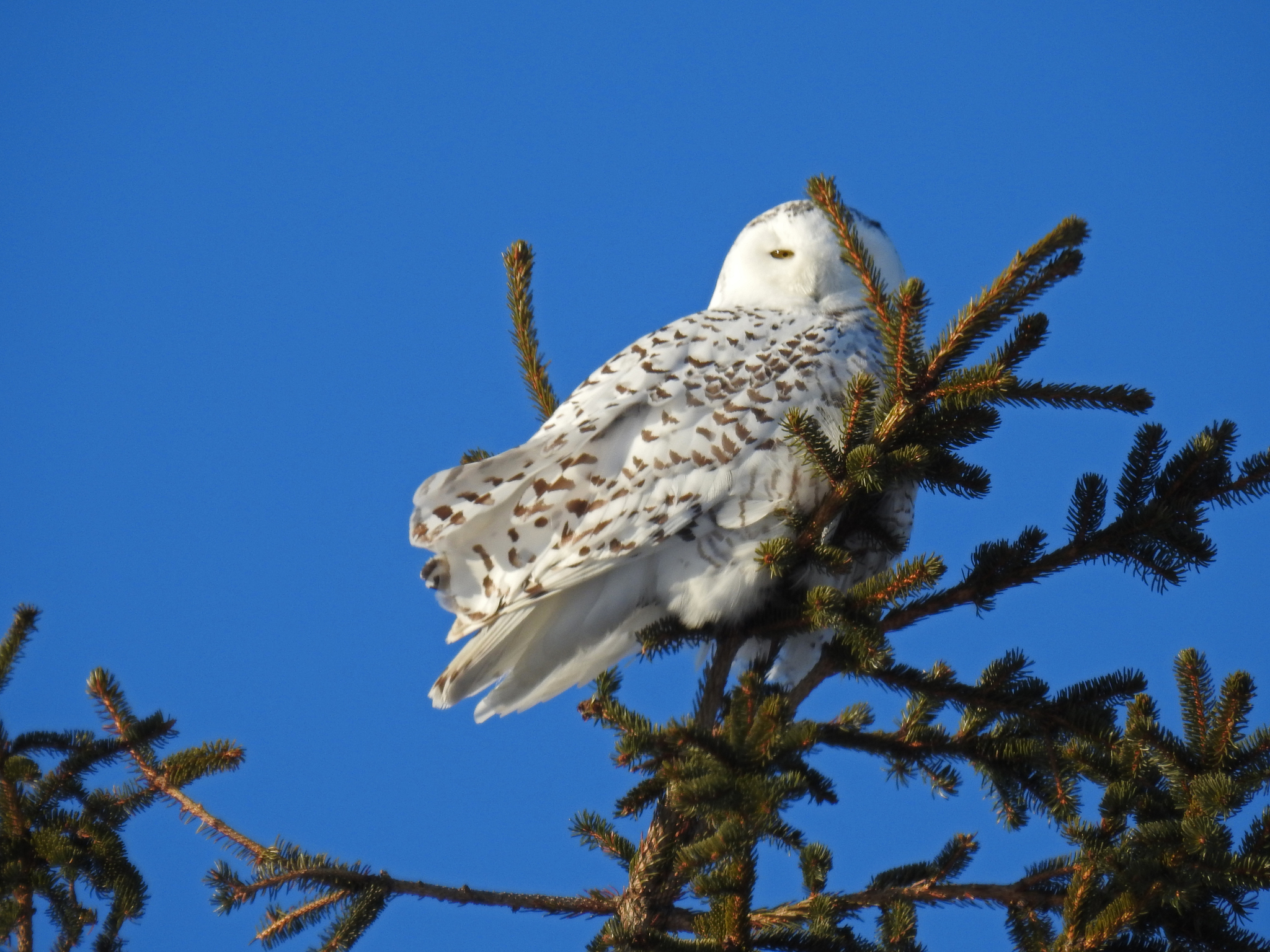
This is a very large owl, being the heaviest and longest-winged owl in North America and among the largest in the world. Males measure 52.5 to 64 cm in length with an average of 58.7 cm, while females are larger at 54 to 71 cm with an average of 63.7 cm. Males weigh 1,300 to 2,500 g with a median of 1,658 g, while females weigh 1,330 to 2,951 g with a median of 2,102 g. The plumage is mostly white, with males being purer white overall and females showing more extensive flecks and bars of dark brown. The wingspan ranges from 116 to 165.6 cm in males and 146 to 183 cm in females. Bright yellow eyes are prominent against the relatively small head, which appears to lack ear tufts though very short vestigial tufts of about 20-25 mm can be erected. The toes are extremely thickly feathered in white, with the longest toe feathers of any owl averaging 33.3 mm, while the claws are black.
Identification
The snowy owl is one of the most unmistakable birds in the world due to its distinctive white plumage stippled with black-brown markings and bright yellow eyes. The only other owl breeding in the High Arctic is the short-eared owl, but this species is much smaller, more tan or straw-colored with brown streaking on the chest, and usually hunts in extended flights. Larger owls such as the Eurasian eagle-owl and great horned owl can appear pale in northern races but are considerably more heavily marked with darker base colors, possess prominent ear tufts, and lack the bicolored appearance of snowy owls. The great horned owl has yellow eyes like the snowy owl, while the Eurasian eagle-owl typically has bright orange eyes. The open terrain habitats used by wintering snowy owls also differ from the edge and rocky habitats preferred by these similar species.
Distribution & Habitat
The snowy owl breeds across the northern circumpolar region, from northern Alaska and northern Canada through northern Eurasia to Greenland, Spitsbergen, and Iceland. The total breeding range covers over 12,000,000 km², though only about 1,300,000 km² has a high probability of breeding. During winter, many owls migrate southward to southern Canada, Iceland, Ireland, Scotland, and across northern Eurasia to southern Scandinavia, the Baltics, central Russia, and occasionally north China. Large winter irruptions can carry them much further south into the continental United States, occasionally reaching states as far south as Georgia, Texas, California, and even Hawaii. They inhabit Arctic tundra, often preferring areas with rising elevation such as hummocks, ridges, and rocky outcrops. Winter habitats include coastal dunes, lakeshores, grasslands, agricultural fields, and airports.
Behavior & Ecology
Snowy owls are cathemeral, being active during both day and night depending on season and prey availability. They are specialized predators tied closely to lemming populations, consuming mostly these rodents during breeding season, but are opportunistic generalists in winter taking almost any available prey including other small mammals, water birds, and carrion. Hunting is typically done from elevated watchsites using sit-and-wait techniques, though they also pursue prey on foot and occasionally hover or perform ground pounces. Nesting occurs on slight rises on the ground, with extremely large clutches of 5 to 11 eggs that hatch asynchronously. Males perform dramatic courtship displays with undulating flight and wingbeats. The main vocalization is a barking sequence of 2-6 rough notes, described as 'krooh krooh krooh krooh', which can carry over 3 km in the thin Arctic air. They are generally solitary but may form loose aggregations of 5-10 owls in winter when prey is concentrated.
Conservation
The snowy owl was uplisted to Vulnerable by the IUCN in 2017 due to severe population declines. Global population estimates have been dramatically revised downward from over 200,000 individuals to only 14,000-28,000 mature breeding pairs. North American populations have declined by an estimated 52% to 64% since the 1960s. The primary driver is believed to be climate change, which affects lemming populations through increased rain-on-snow events and reduced snow cover. In northern Greenland, lemming populations have collapsed to less than one-fifth of historical levels, causing a 98% decline in owl productivity. Additional threats include habitat disturbance, aircraft collisions, persecution, rodenticides, and potential effects of radio-tagging. The species is listed in CITES Appendix II and is considered 'Least Concern' in Europe, though Sweden may soon classify it as extinct there.
Culture
The snowy owl gained tremendous popular recognition through J.K. Rowling's Harry Potter series, where a female snowy owl named Hedwig serves as the titular character's loyal companion. This portrayal generated concern about potential increases in illegal owl trafficking, though evidence of such an increase was limited. The species serves as the official avian symbol of Quebec, representing the province's Arctic heritage. Historically, snowy owls were hunted by Arctic indigenous peoples for food, and their remains have been found in ancient cave deposits across Europe dating back to prehistoric times. The species has also been referenced in various forms of Arctic folklore and continues to captivate birdwatchers and nature enthusiasts worldwide as a symbol of the remote Arctic wilderness.
Source: Wikipedia · CC BY-SA 3.0
Taxonomy
- Order
- Strigiformes
- Family
- Strigidae
- Genus
- Bubo
- eBird Code
- snoowl1
Distribution
Arctic circumpolar; irregular southern post-breeding irruptions
Data Sources
Species description from Wikipedia, licensed under CC BY-SA 3.0.
Bird images and sounds sourced from GBIF, contributed by citizen scientists worldwide under Creative Commons licenses.
Taxonomy data from AviList 2025.