
Red-breasted Goose
Branta ruficollis
红胸黑雁
Introduction
This species is the smallest member of the Branta genus. It breeds in remote Arctic Siberian tundra, primarily on the Taymyr Peninsula. During winter, the majority of the population congregates along the Black Sea coast, particularly in Bulgaria and Romania's Dobrogea region. The species exhibits a distinctive breeding strategy of nesting near birds of prey including snowy owls, peregrine falcons, and rough-legged buzzards, which provides protection from Arctic fox predation. It is classified as Vulnerable due to concentrated winter distributions and habitat threats. Conservation projects using satellite tracking are studying migration patterns.
Description
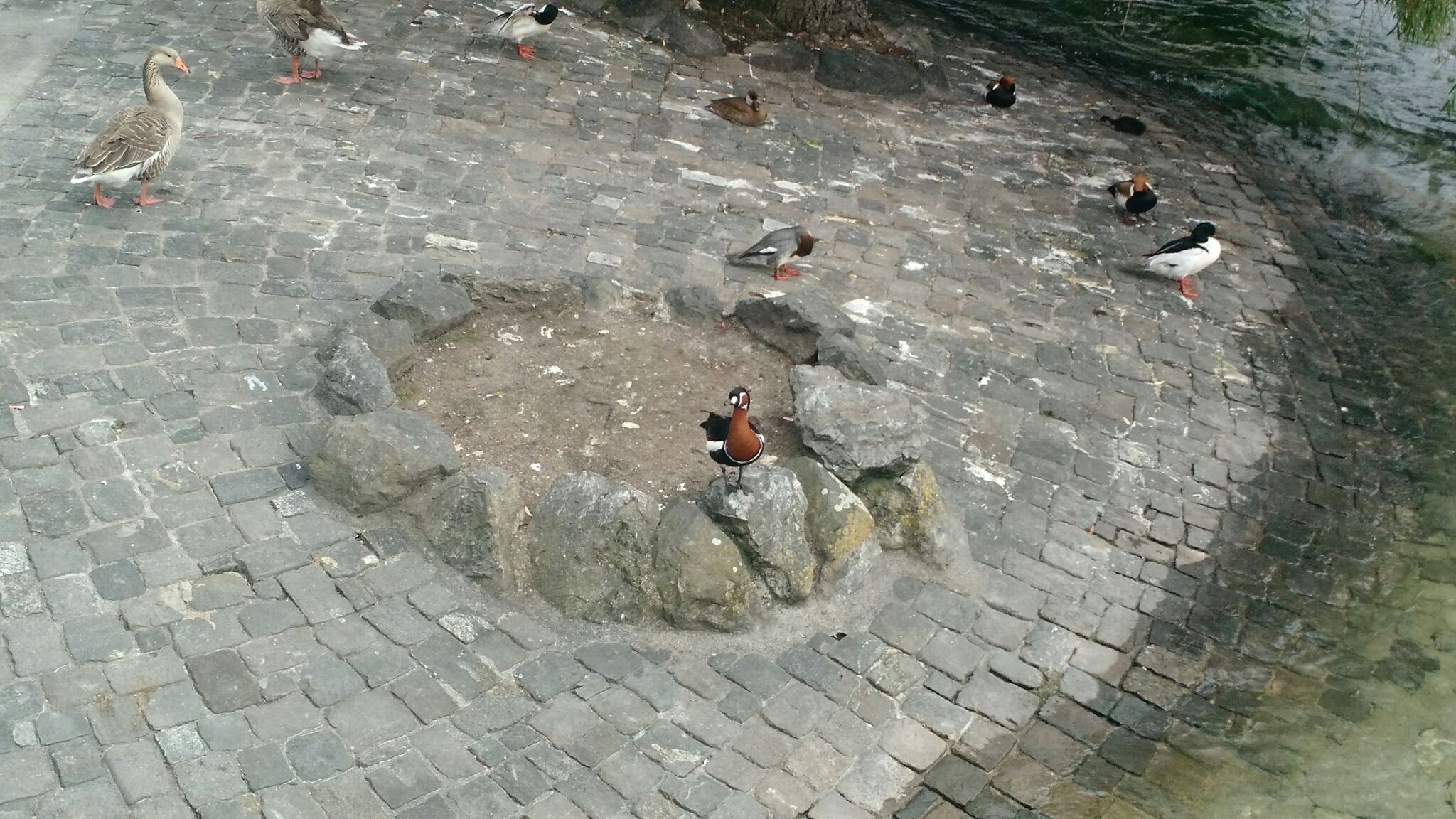
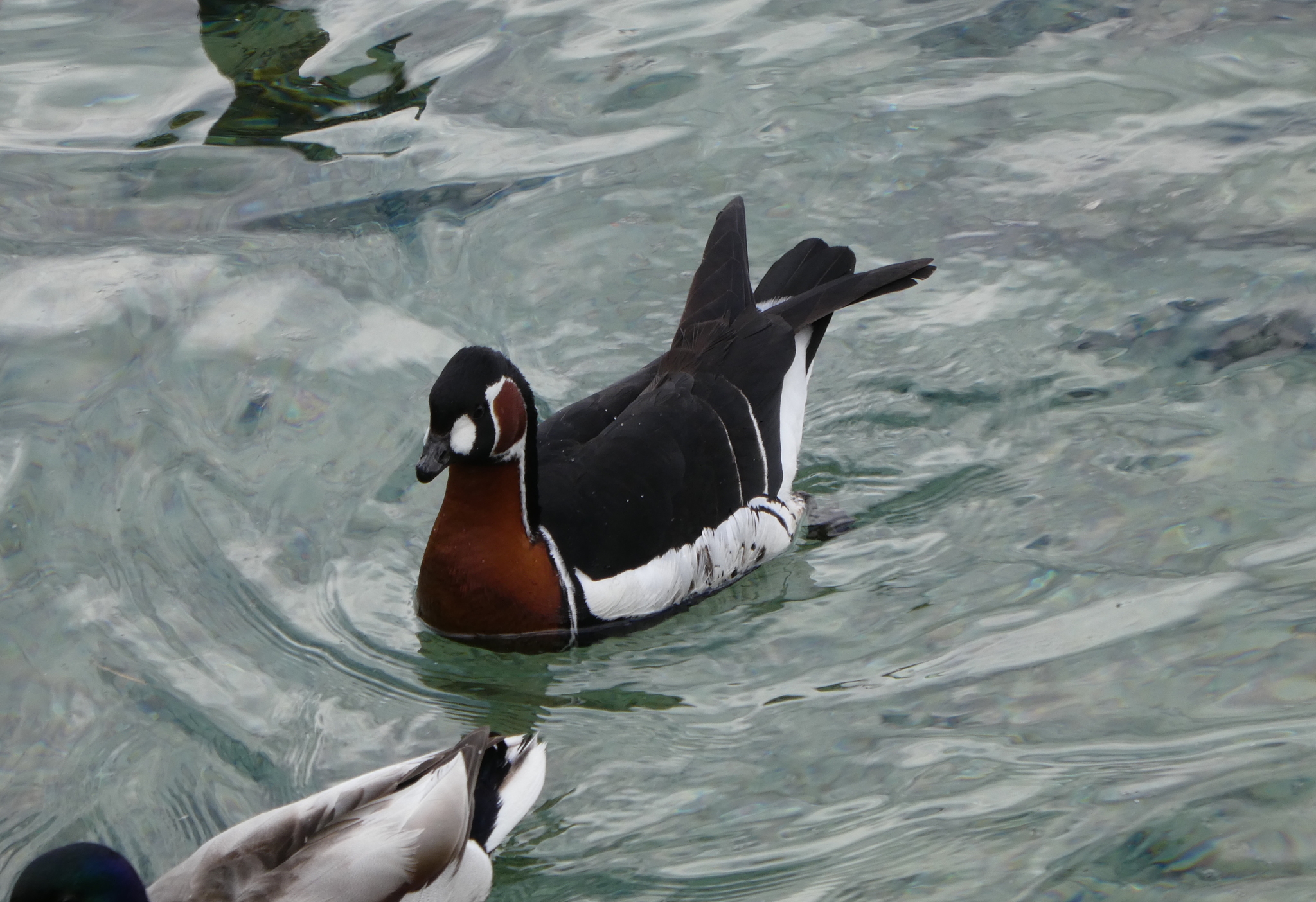
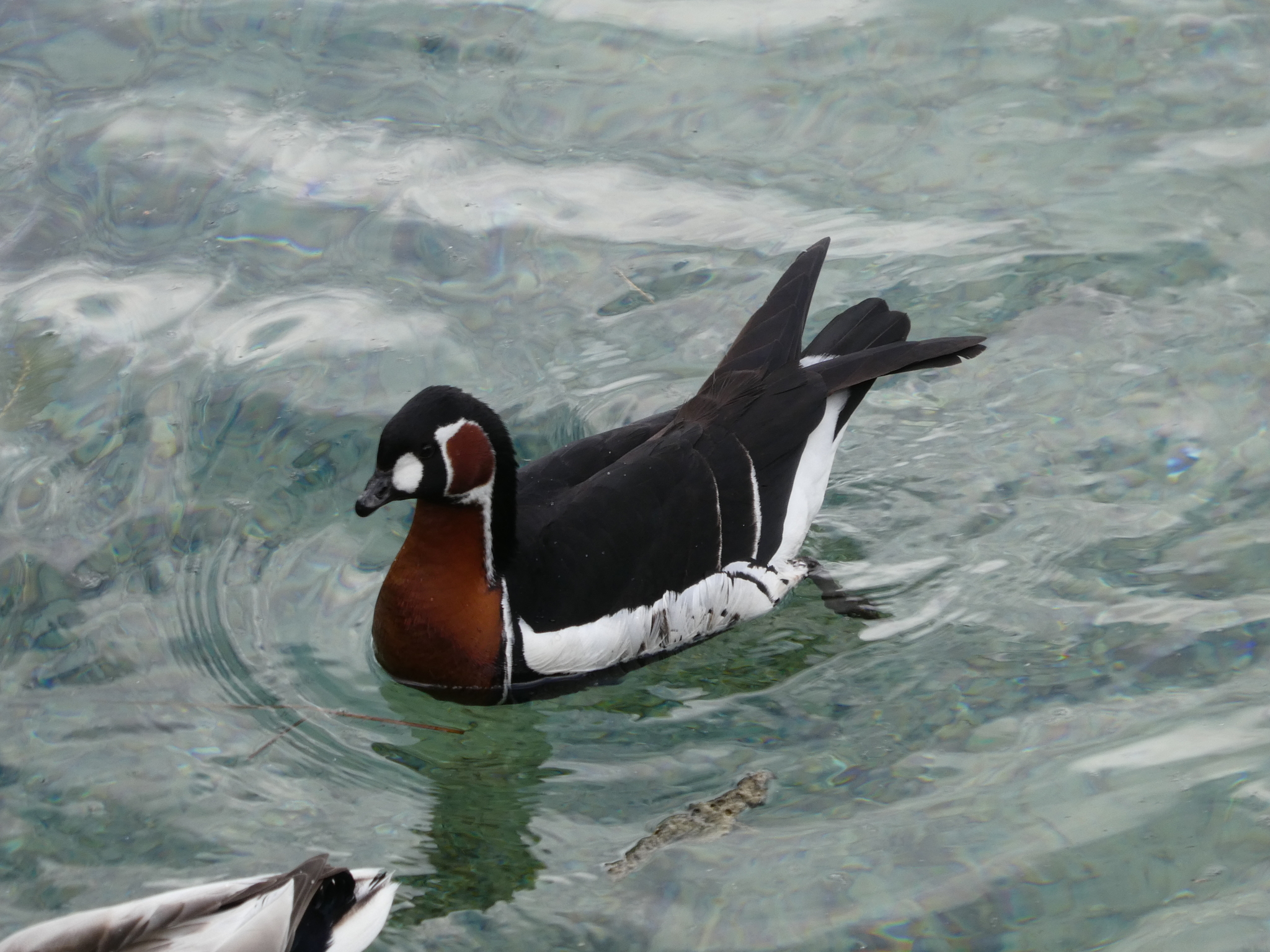
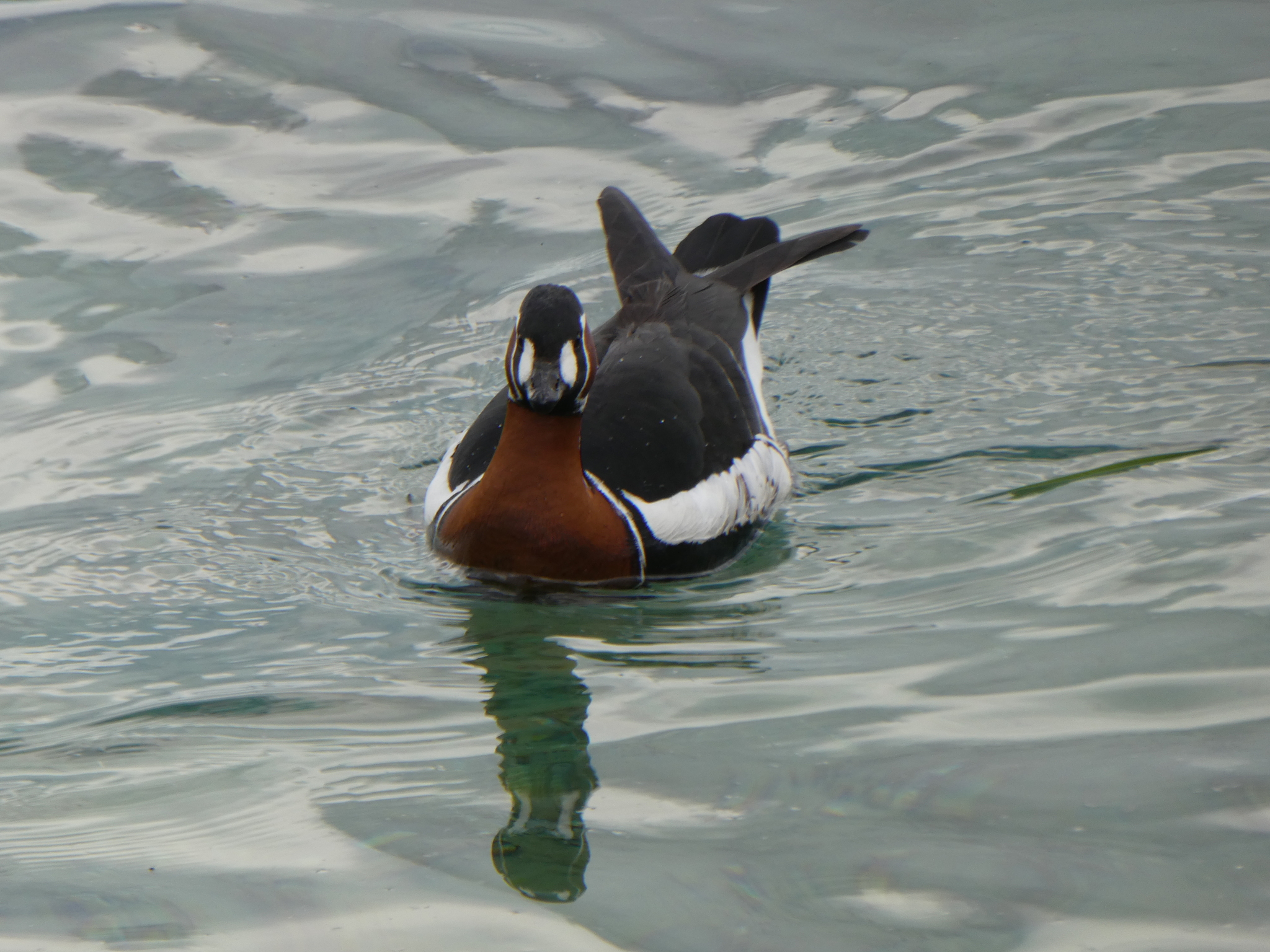
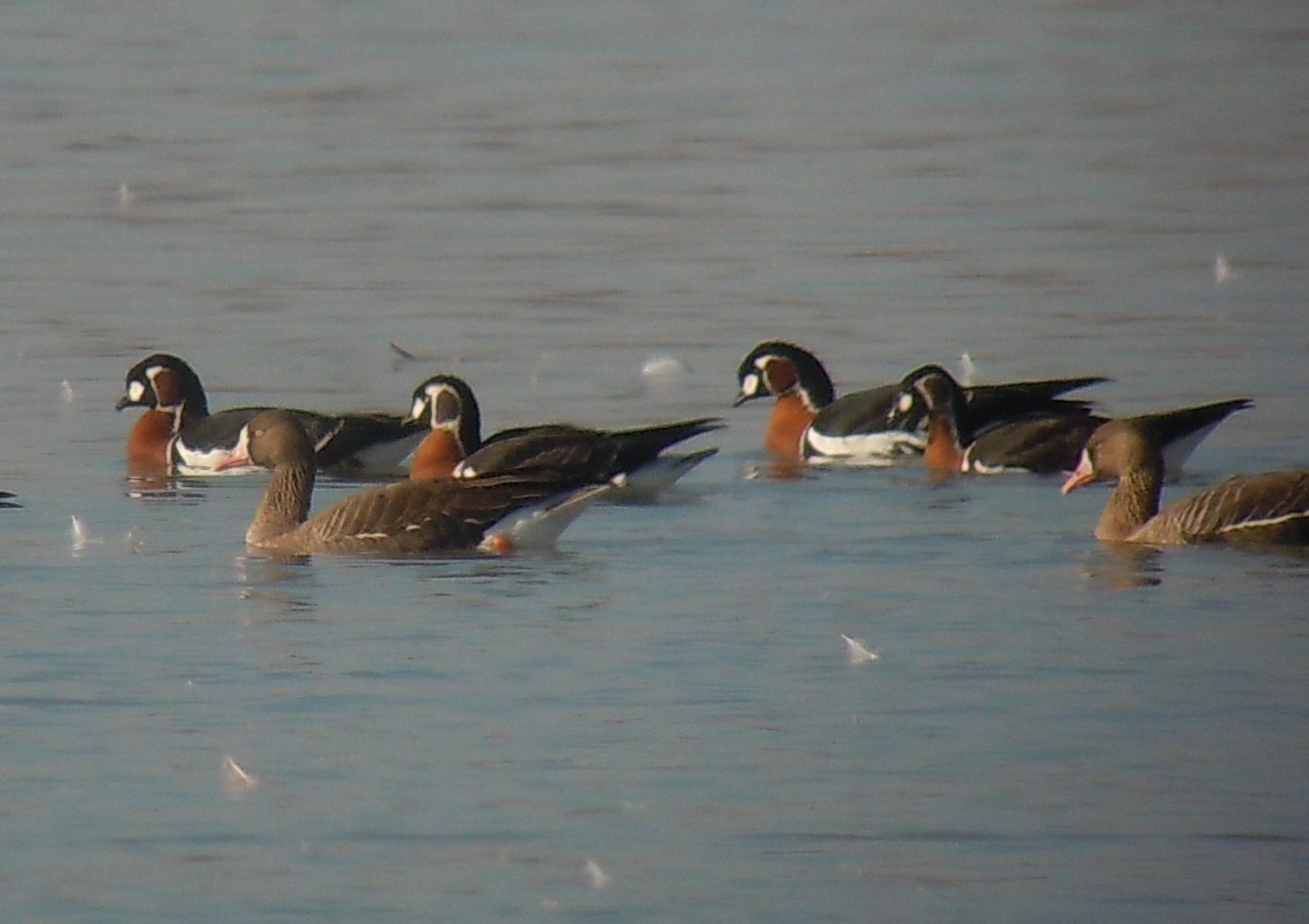
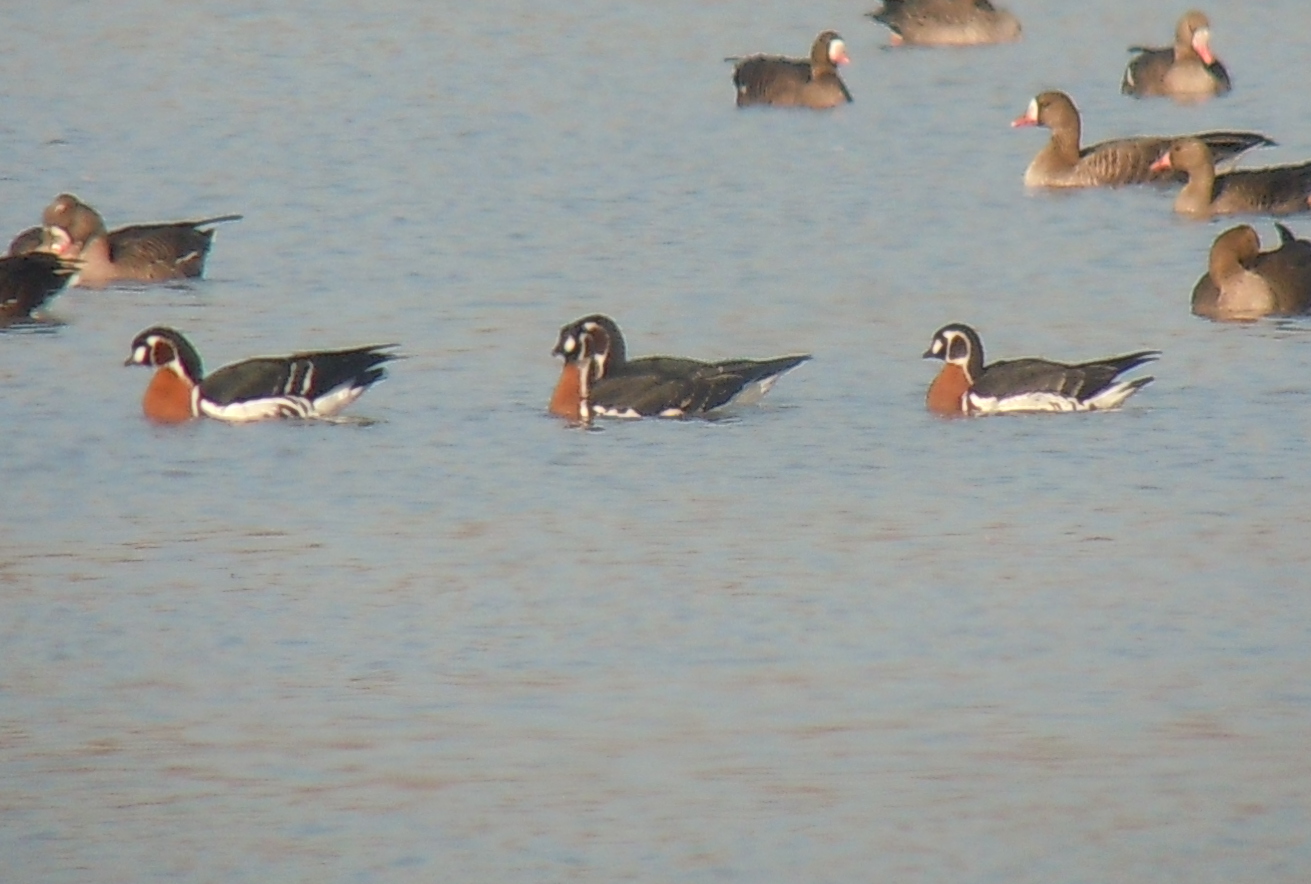
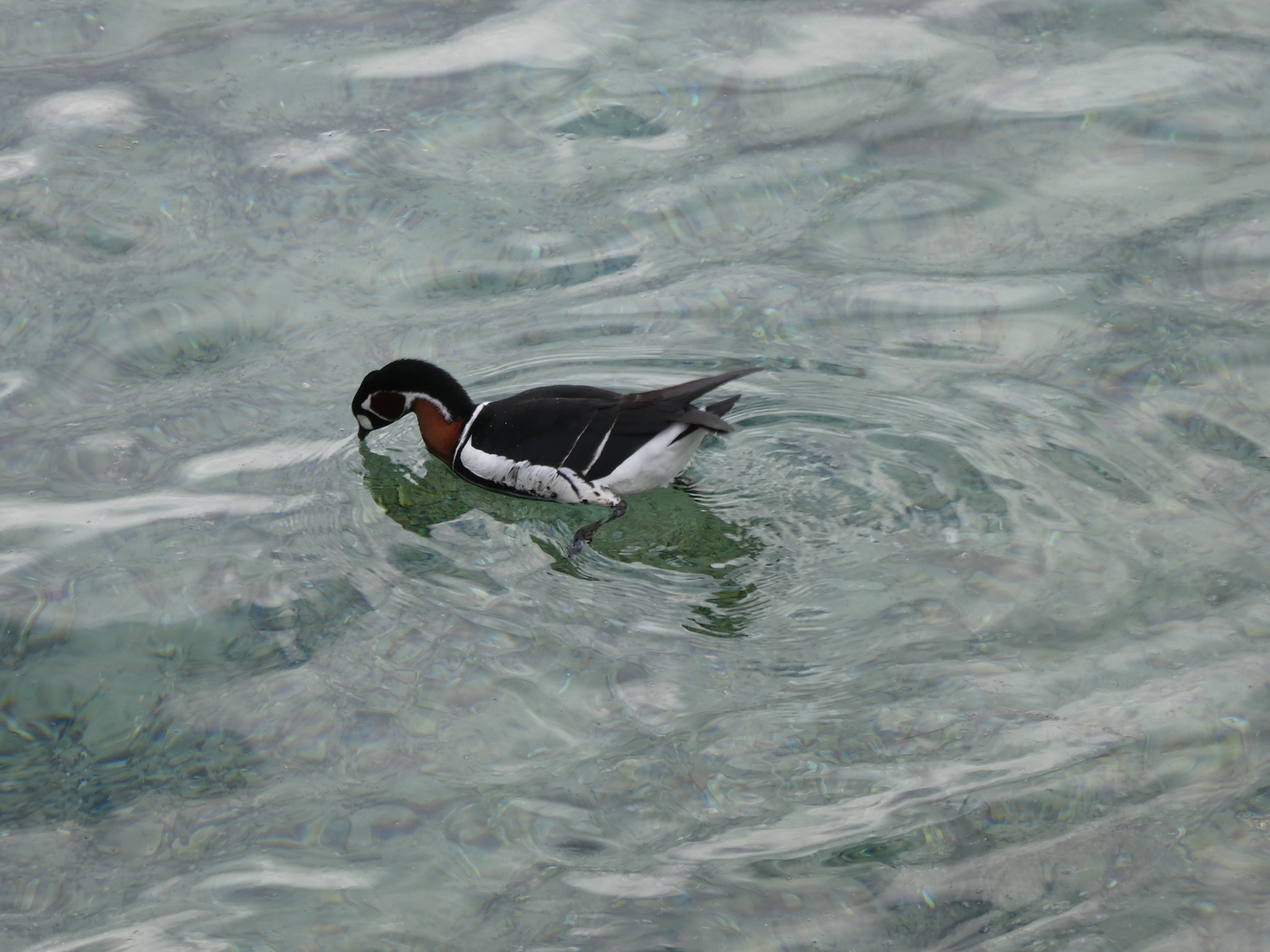
As the smallest member of the Branta genus, this species measures 53-56 cm in length, noticeably more compact than its dark-geese relatives. The plumage is boldly patterned and striking: a dark sooty-brown body is relieved by contrasting white panels on the flanks and belly, while the head displays a black cap and cheek pattern with a distinctive white streak. The namesake feature—the rich chestnut-red breast—gives this goose its common name, though at long distances this vivid coloration can appear as a dark patch, reducing its conspicuousness in the field. The relatively small bill and compact body shape further distinguish it from other Branta species. Despite its bright markings, the overall impression is of a dark goose with bold but not overwhelming contrast, making it surprisingly cryptic when viewed without adequate optics or in poor lighting conditions.
Identification
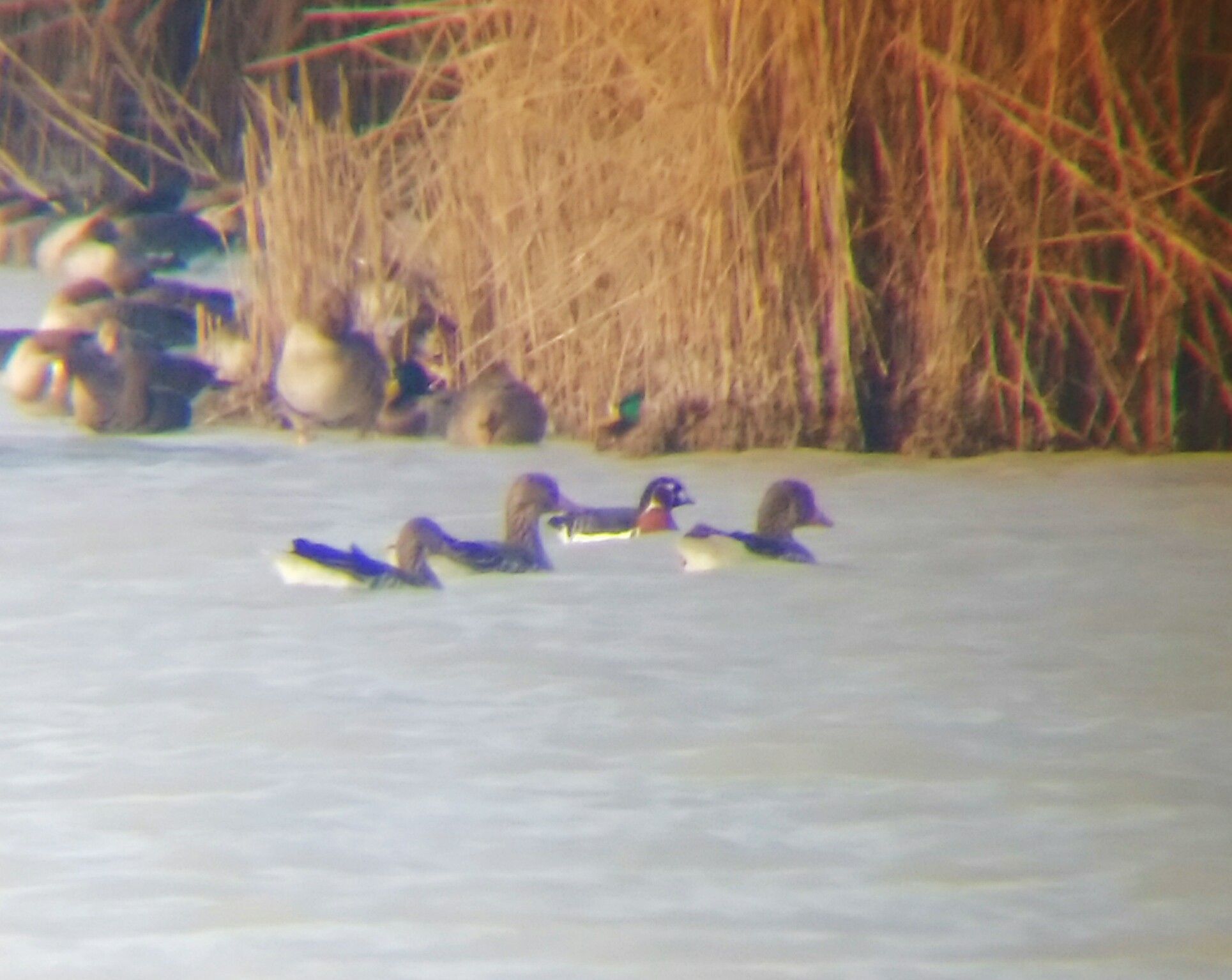
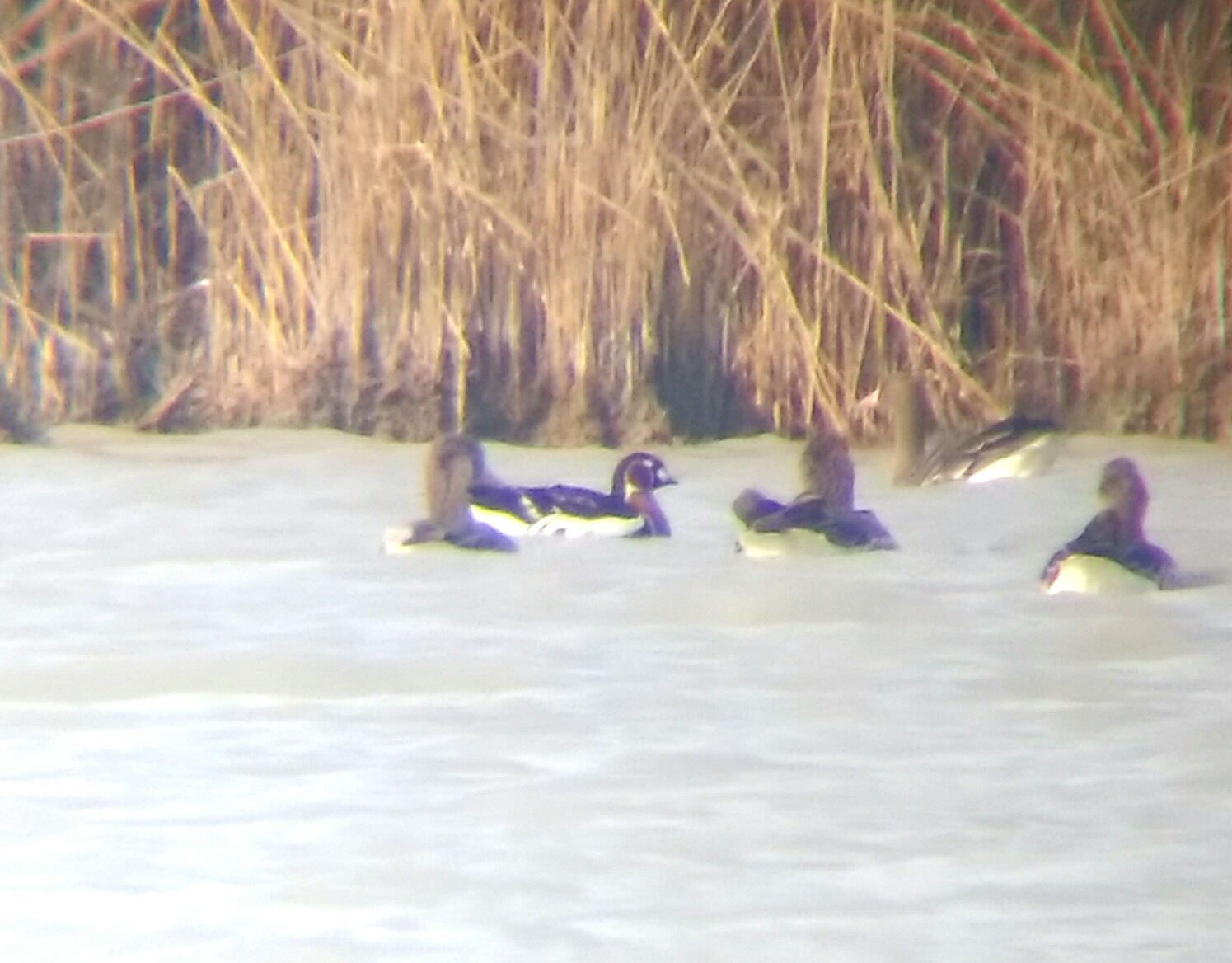
This species is technically unmistakable when seen well, yet it presents real challenges for active birdwatching in the field. Its small size—noticeably smaller than Brent or barnacle geese with which it often associates—provides the first clue. The most reliable field mark is the combination of dark body, white flank panels, and the reddish breast patch, though this breast color fades to dark at distances beyond 100 meters. When scanning mixed goose flocks, watch for a small, dark goose positioned toward the flock's center rather than the edges, and pay attention to any bird that appears darker than expected Brent geese. The compact structure and relatively short neck also help distinguish it from larger grey geese of the Anser genus. Most reliable views occur when flocks flush or when individuals are viewed against snow or water, which reveals the white flank markings more clearly.
Distribution & Habitat
The breeding range centers on the high Arctic tundra of Siberia, with the Taymyr Peninsula holding the majority of nesting populations and smaller colonies on the Gyda and Yamal peninsulas. Winter distribution has shifted significantly since the 1960s, when large numbers used traditional sites along the Caspian Sea's western shore, particularly Kirov Bay. Agricultural changes rendering those areas unsuitable forced the species to relocate, and today over 80% of the global population winters at just five key sites in Bulgaria and Romania's Dobrogea region, with smaller numbers in Ukraine and occasionally Greece or Azerbaijan. The species is a rare but annual vagrant to Ireland and western Europe, though some western records may involve escapees from wildfowl collections. Wintering birds are highly concentrated, making them vulnerable to localized habitat disturbance.
Behavior & Ecology
This species exhibits one of the most unusual breeding strategies among waterfowl, nesting in remarkably close proximity to birds of prey including snowy owls, peregrine falcons, and rough-legged buzzards. The proximity to eyries provides effective protection from Arctic fox predation, with nests positioned closer to raptor nests experiencing higher reproductive success. Colonial sizes are typically small, around four breeding pairs, influenced by nest site availability, food resources, and local raptor density. The geese create cryptic nests hidden far better than the conspicuous raptor nests, with females remaining on the nest during incubation while males guard from a distance. Main predators of eggs and goslings include Taimyr Gulls, particularly at island nest sites. During winter, the diet consists of grasses, leaves, and seeds. Vocalizations are distinctive—sharp, shrill calls described as ki-kui or ki-yik delivered in staccato rhythm, often given as alarm notes or during flock movements.
Conservation
The IUCN currently classifies this species as Vulnerable, representing a concerning but improved status from its previous Endangered listing in 2007. Population estimates suggest significant decline from approximately 88,000 individuals in autumn 1997 to around 70,000 during winter counts, though some of this apparent decrease may reflect undiscovered wintering sites. The species benefits from AEWA (Agreement on the Conservation of African-Eurasian Migratory Waterbird) protection and receives legal safeguarding across its range, though illegal hunting continues in some areas. Conservation concerns are acute because over 80% of the global population winters at just five sites, making them vulnerable to habitat loss from agricultural changes, wind energy development, and human disturbance. A 2005-2008 Life-funded project in Romania improved habitat quality at a key wintering site, while ongoing satellite tracking projects using GPS transmitters on branded individuals aim to refine conservation planning. Recent counts suggesting population increases offer cautious optimism.
Culture
This species holds surprising historical significance beyond its modern conservation status. Late Pleistocene fossil remains indicate the species historically occurred much farther west, with Bulgarian sites yielding subfossil evidence of former range expansion. Perhaps most remarkably, the species appears prominently in ancient Egyptian art, including the famous Meidum Geese painting—one of the most detailed and scientifically interesting depictions of birds from antiquity. These artistic representations confirm the species was familiar to ancient Egyptian civilization, though whether as a regular visitor or through trade and symbolism remains debated. The combination of ancient artistic documentation and paleontological evidence suggests this goose held cultural importance in early human societies across its historic range, linking modern conservation efforts to thousands of years of human observation and appreciation.
Source: Wikipedia · CC BY-SA 3.0
Taxonomy
- Order
- Anseriformes
- Family
- Anatidae
- Genus
- Branta
- eBird Code
- rebgoo1
Distribution
breeds low Arctic tundra of Yamal, Gydan, and Taymyr peninsulas (northwestern Siberia); winters to western and southern Black Sea and southern Caspian Sea; prone to vagrancy elsewhere in Eurasia
Data Sources
Species description from Wikipedia, licensed under CC BY-SA 3.0.
Bird images and sounds sourced from GBIF, contributed by citizen scientists worldwide under Creative Commons licenses.
Taxonomy data from AviList 2025.