Brant Goose
Branta bernicla
黑雁
Introduction
Small goose (genus Branta) with three subspecies. Breeds on high-Arctic tundra and winters along temperate-zone sea-coasts. Distinguished by the shortest tail of any goose and pure white under-tail. Originally strictly coastal, feeding primarily on eelgrass and sea lettuce; has recently expanded to agricultural land. Global population of approximately 400,000-500,000 individuals. Classified as Least Concern by IUCN and protected under AEWA.
Description
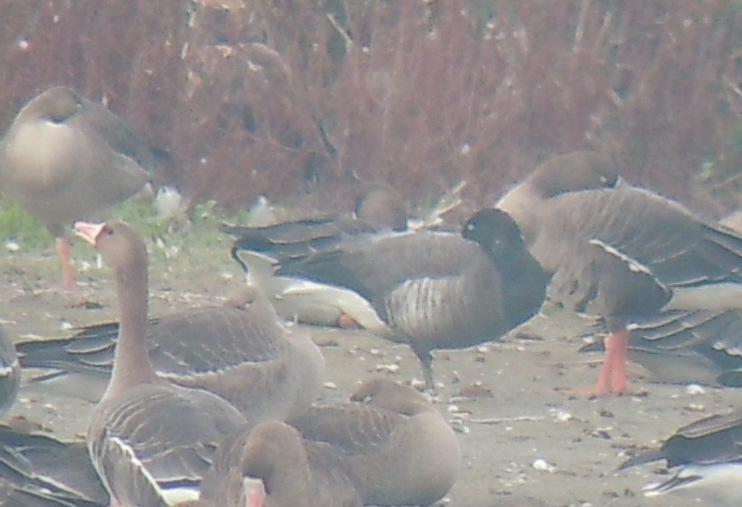
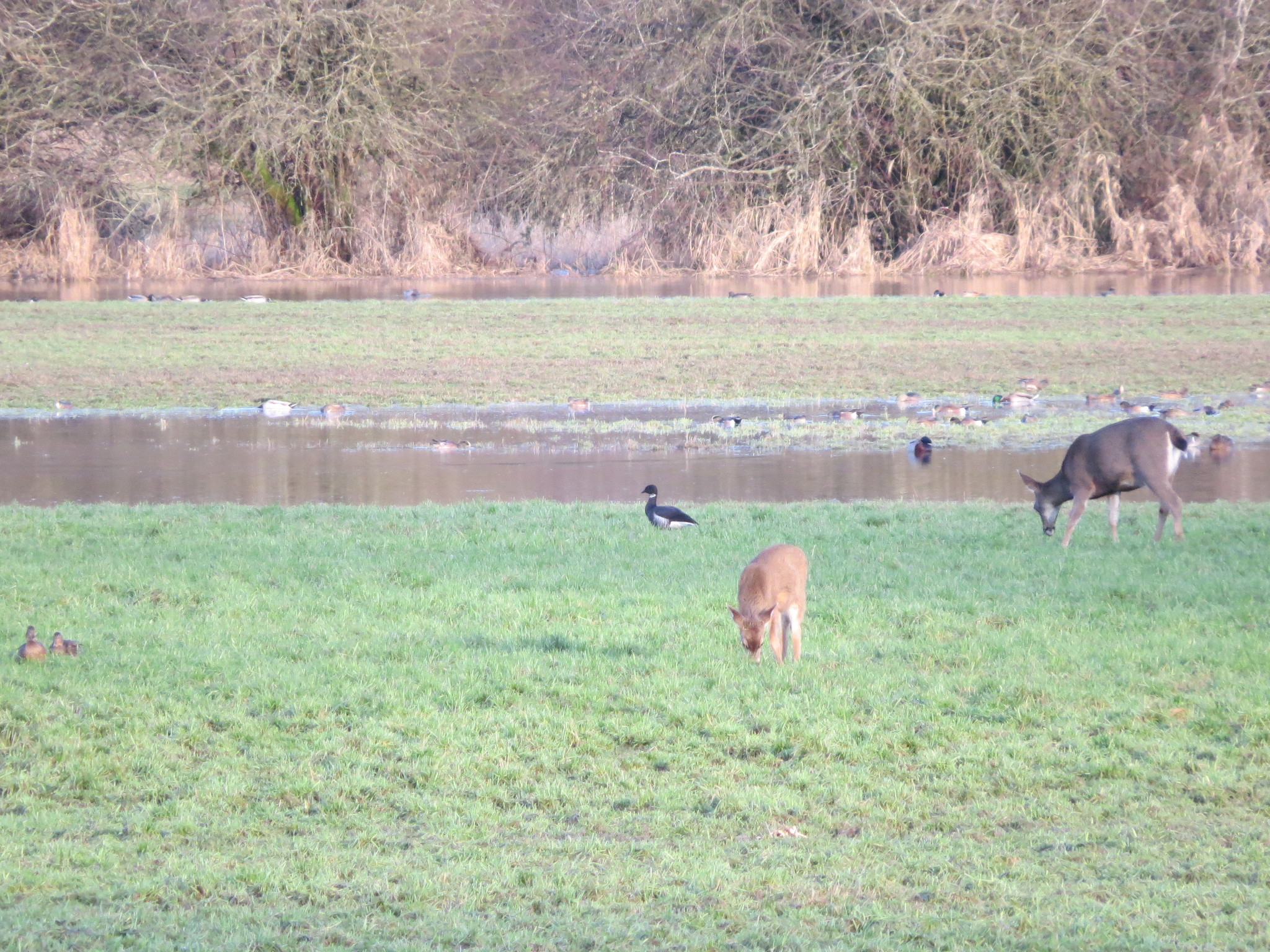
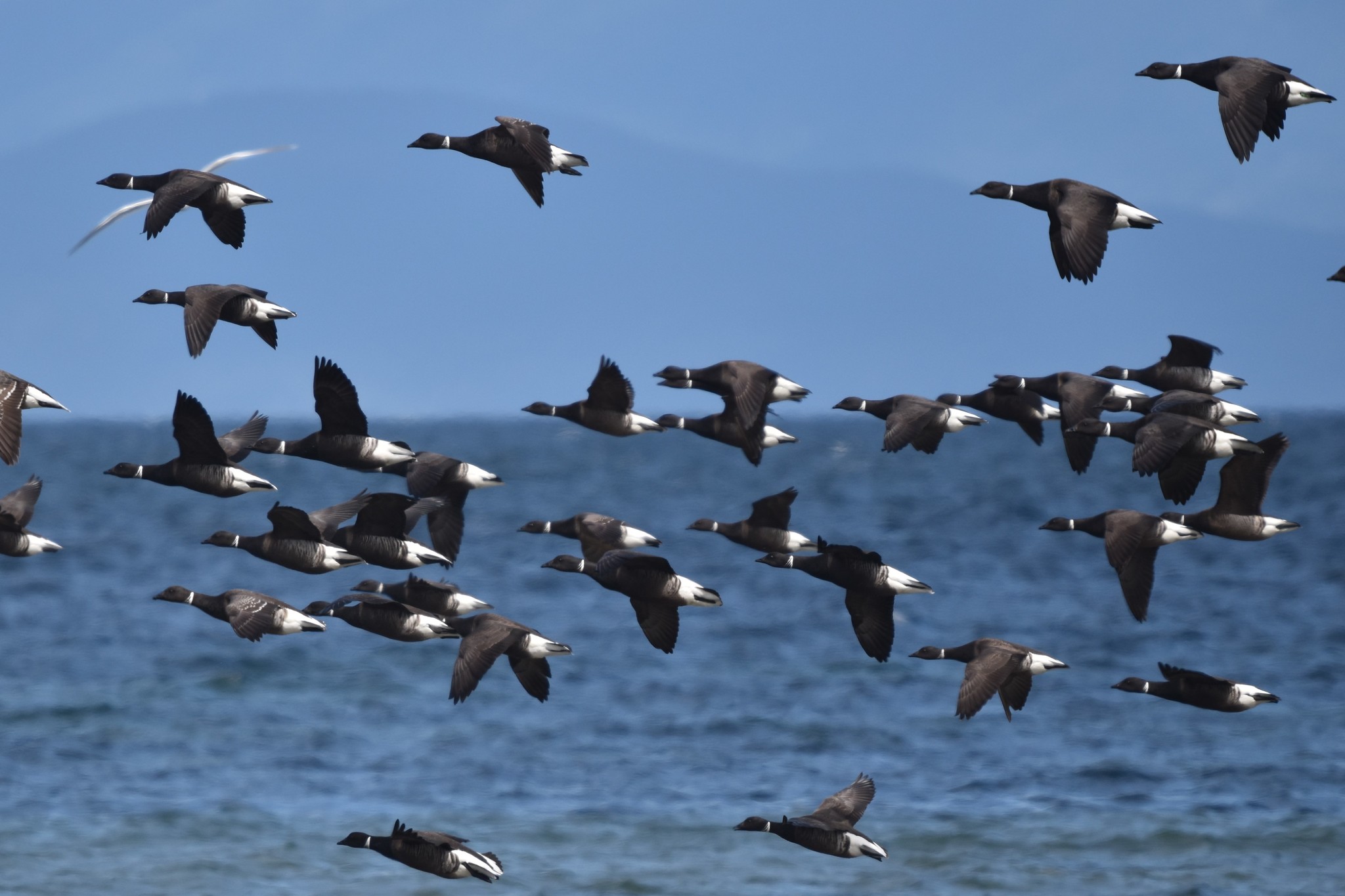
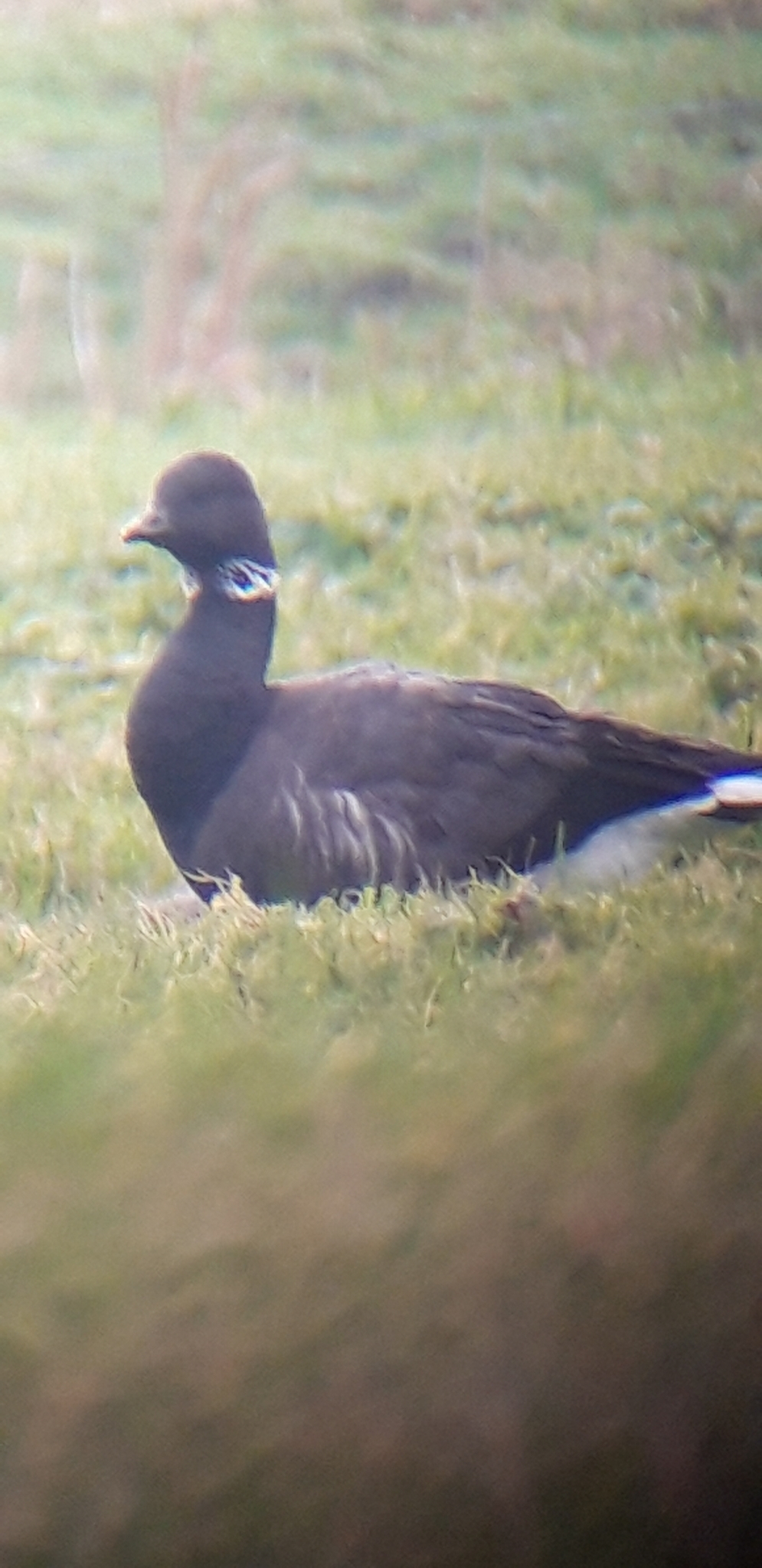
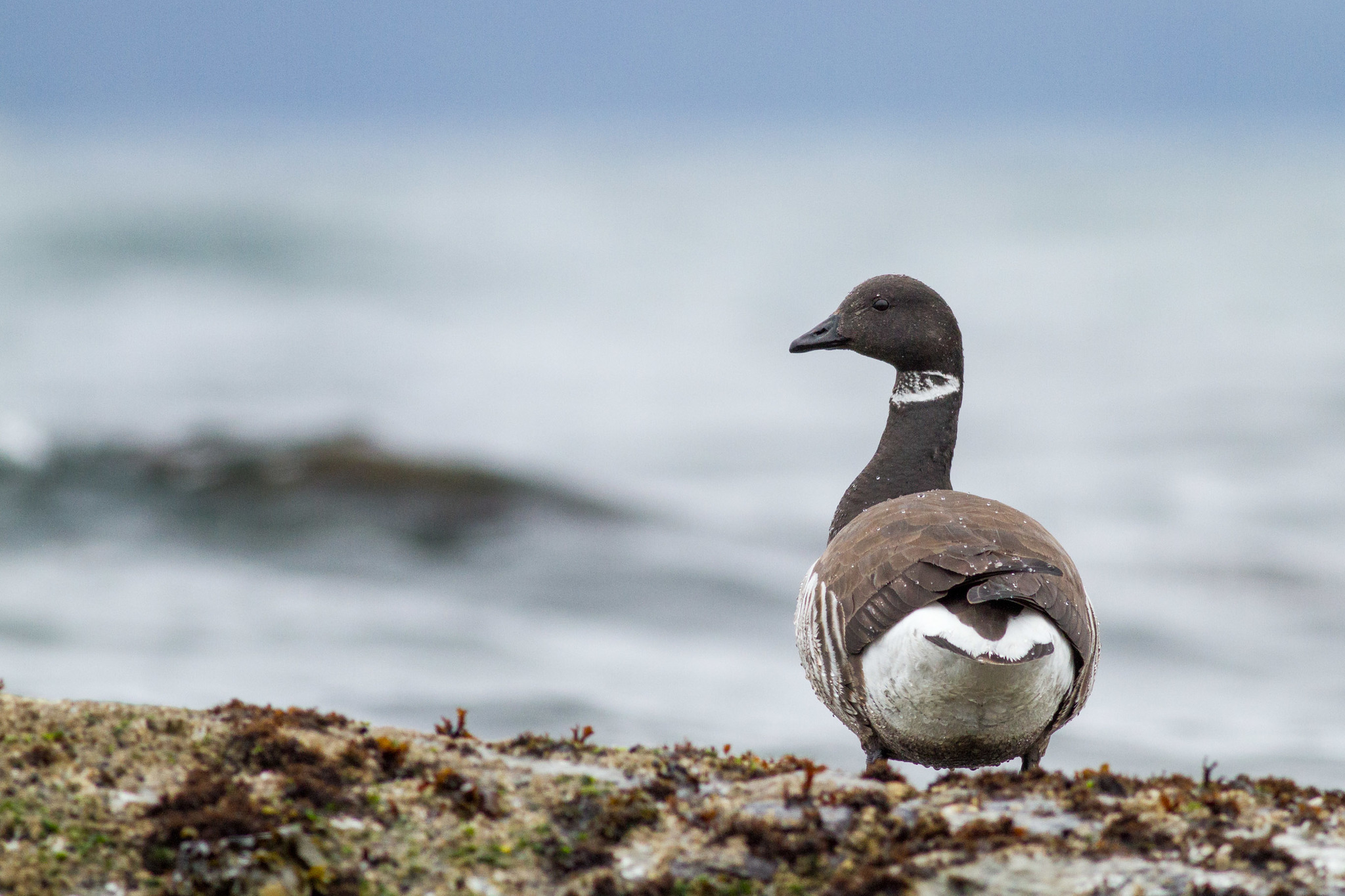
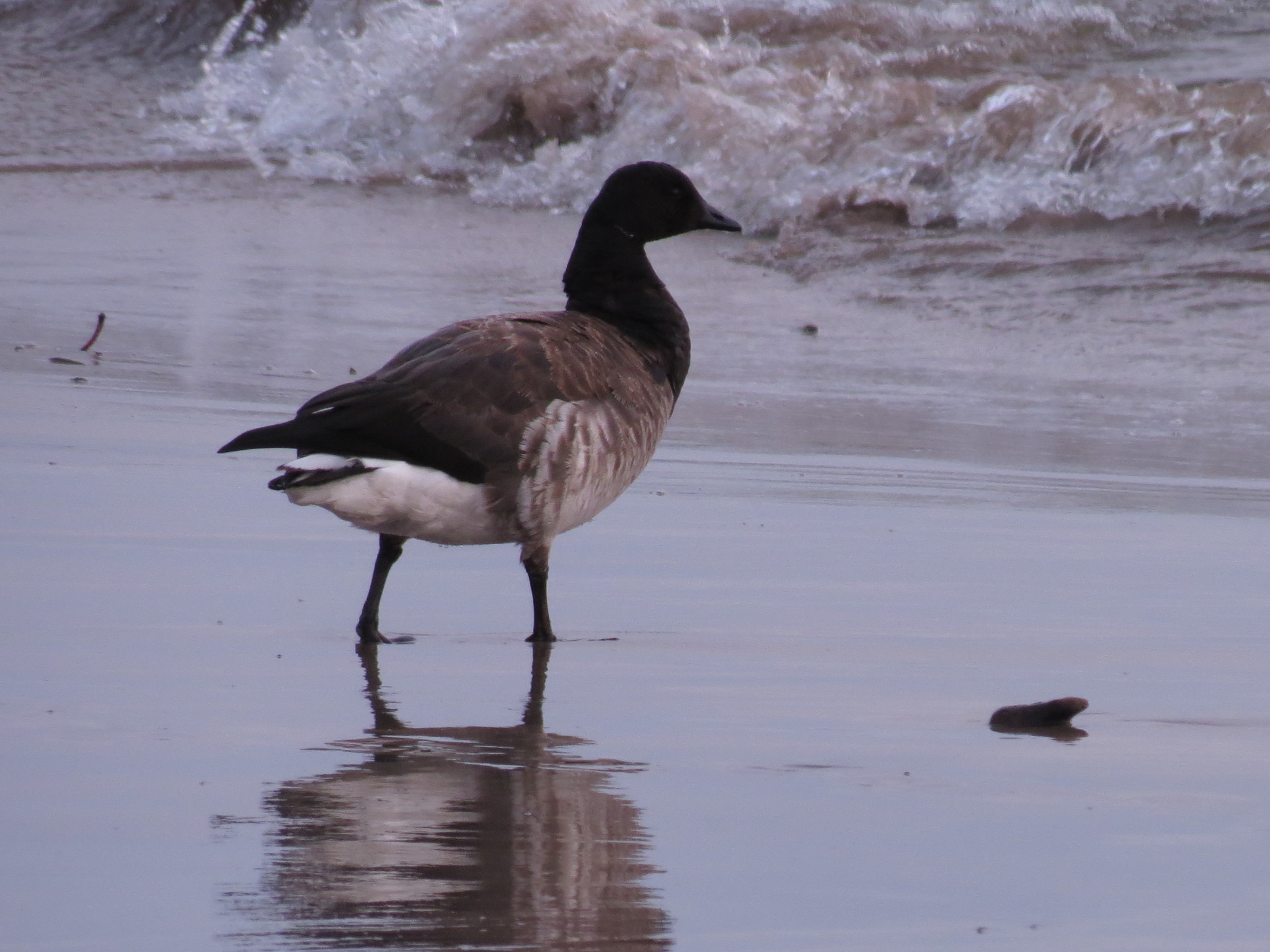
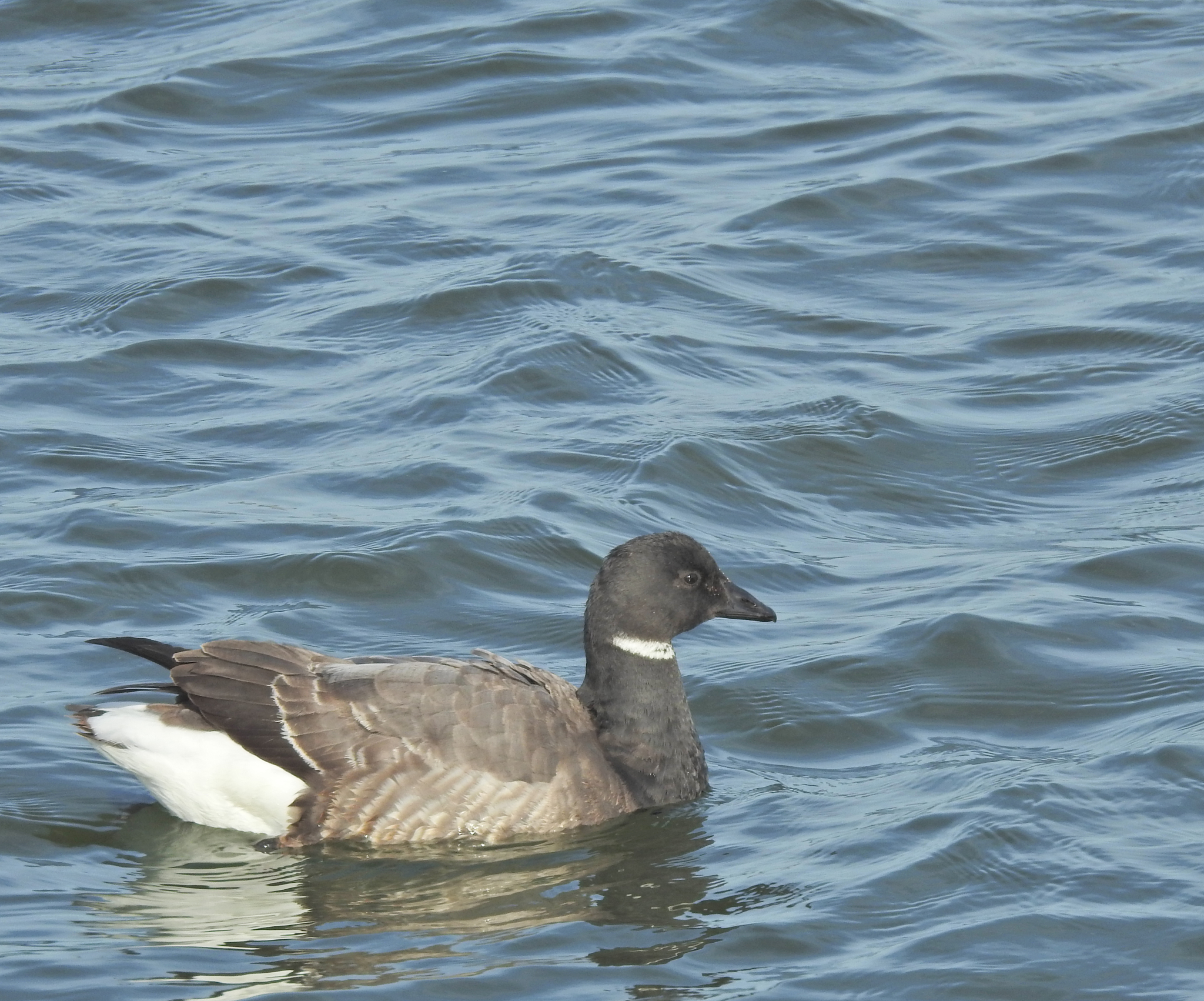
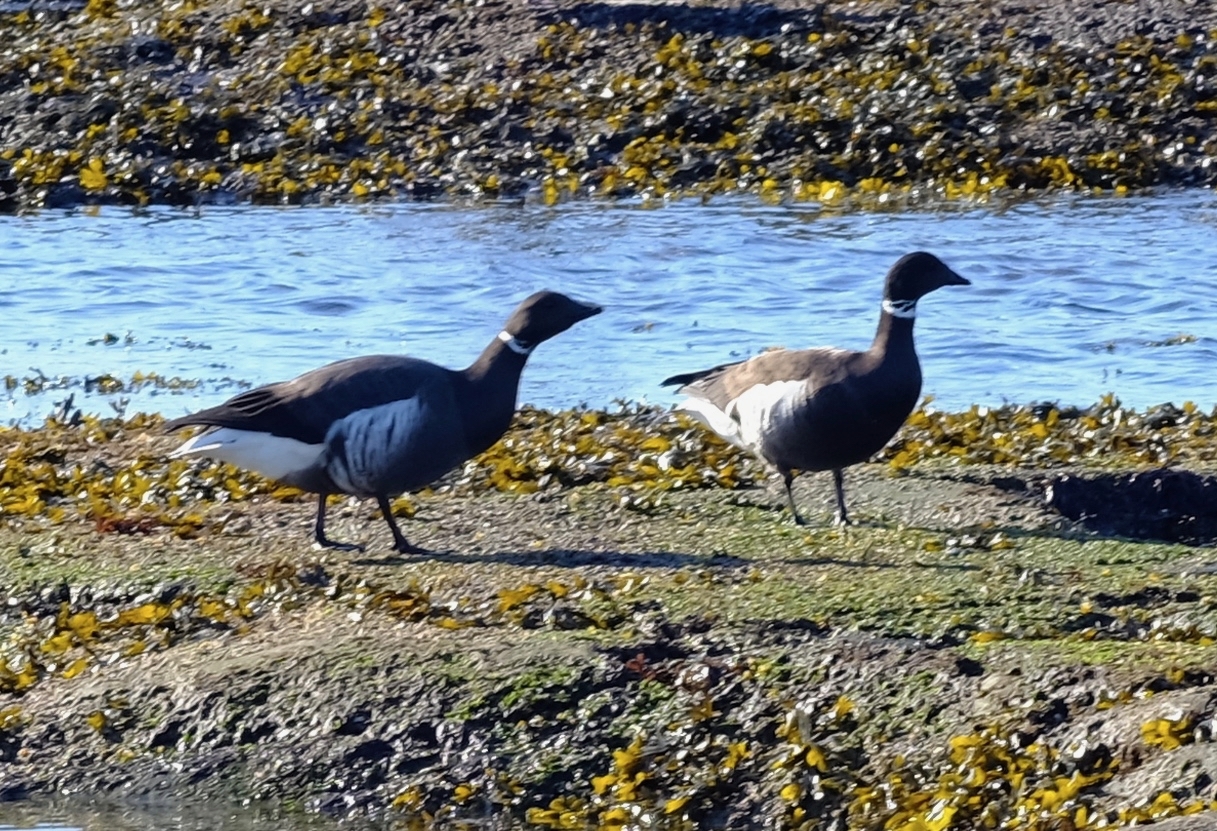
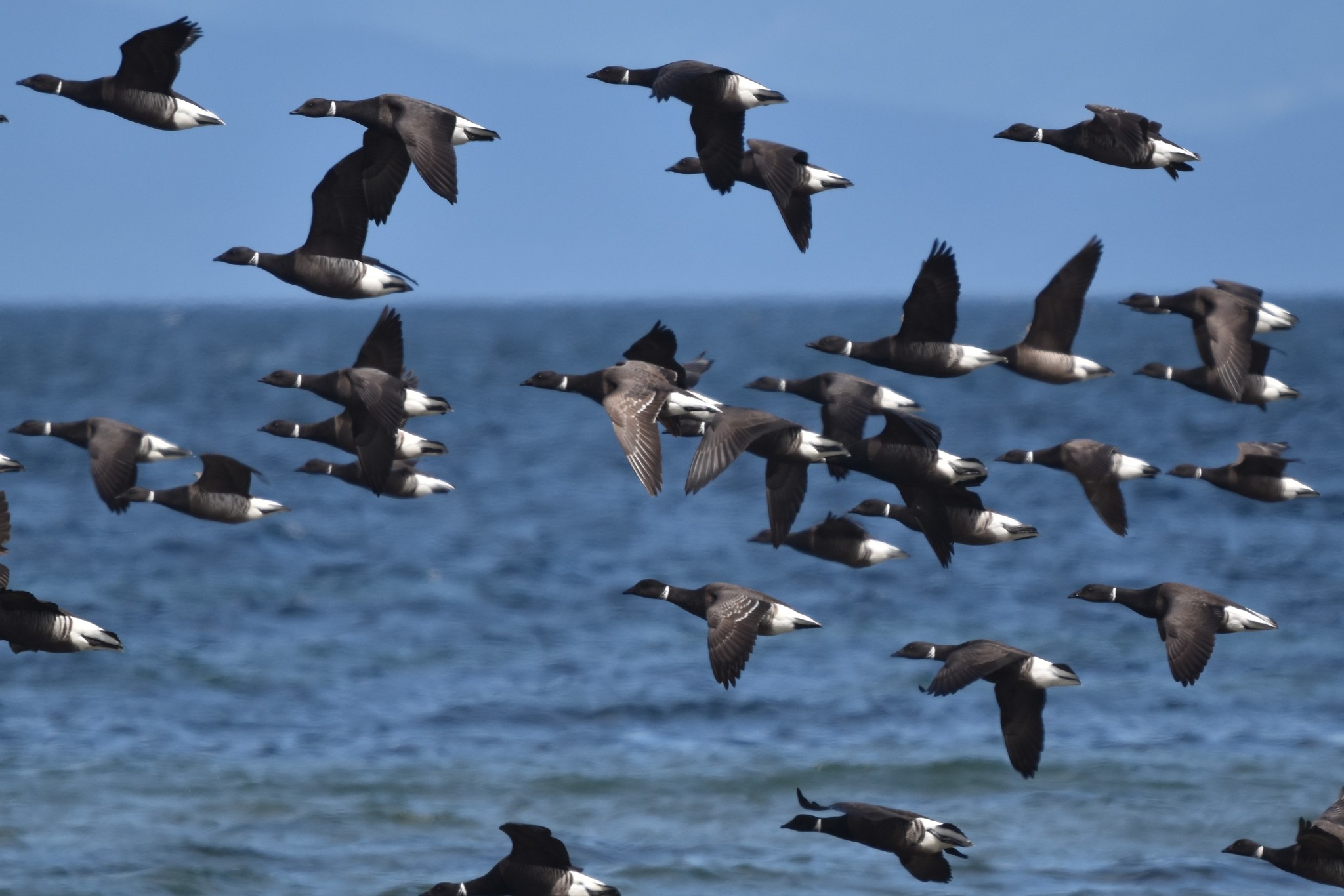
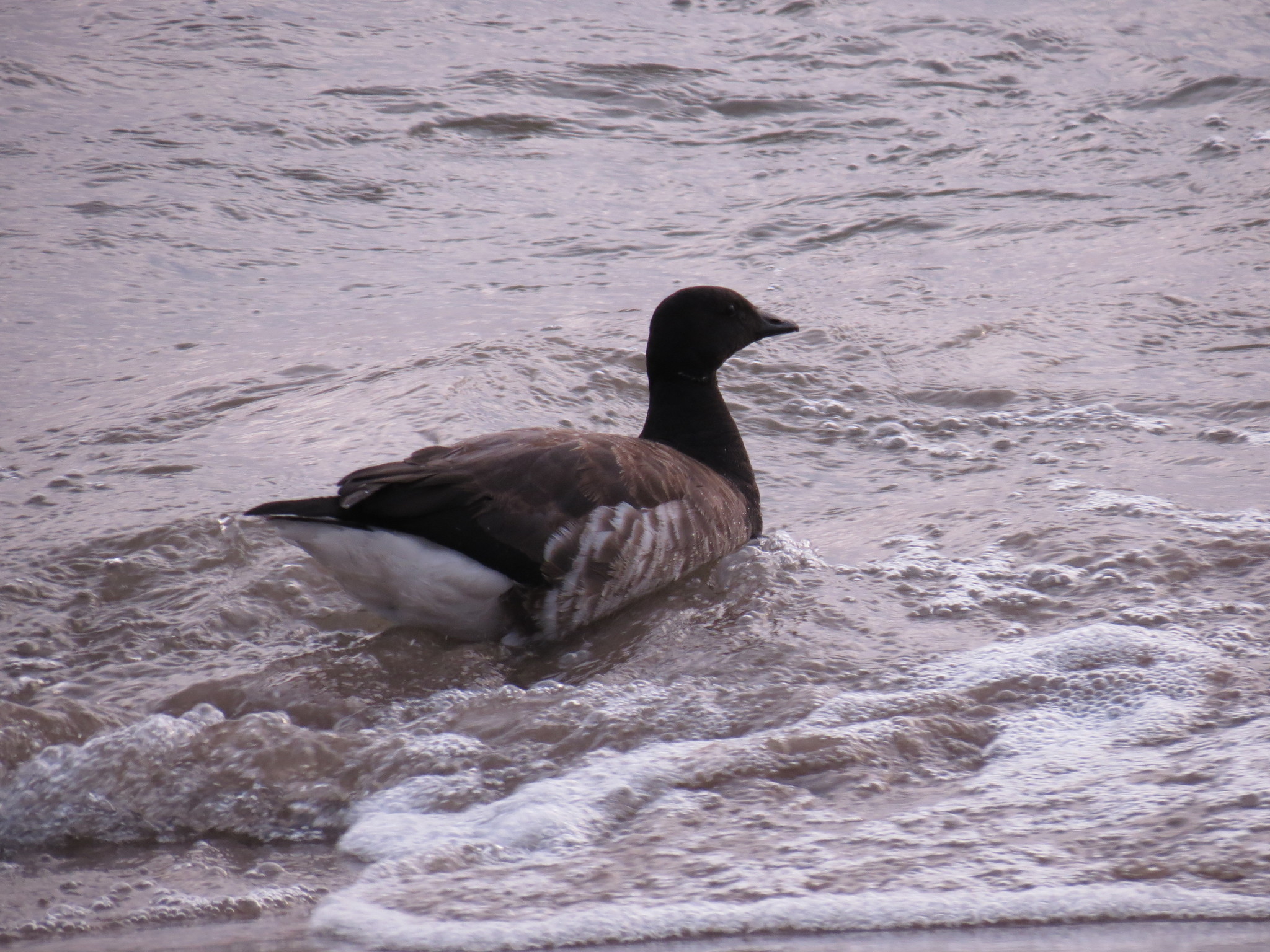
A small goose with a short, stubby bill. Measures 55-66 cm in length with a wingspan of 106-121 cm, weighing 0.88-2.2 kg. The tail is black and extremely short—the shortest of any goose species. The under-tail is pure white. Three subspecies exhibit different colorations: the dark-bellied form has uniformly dark grey-brown plumage with small white neck patches; the pale-bellied form shows contrasting pale flanks and belly with dark brown upperparts and small neck patches; the black form appears contrastingly black and white with a dark sooty-brown back, prominent white flank patch, and larger white neck patches forming a near-complete collar.
Distribution & Habitat
Breeds across high-Arctic regions of Siberia, Canada, Alaska, Greenland, and Svalbard. Winters along temperate coastal areas: dark-bellied subspecies in western Europe (primarily southern England); pale-bellied subspecies along Atlantic coast of U.S. from Maine to Georgia, and in Ireland, Denmark, and northern France; black subspecies along Pacific coast from Alaska to California, with some in east Asia (Japan, Korea, China). A proposed gray-bellied form breeds in central Arctic Canada and winters in Puget Sound region.
Behavior & Ecology
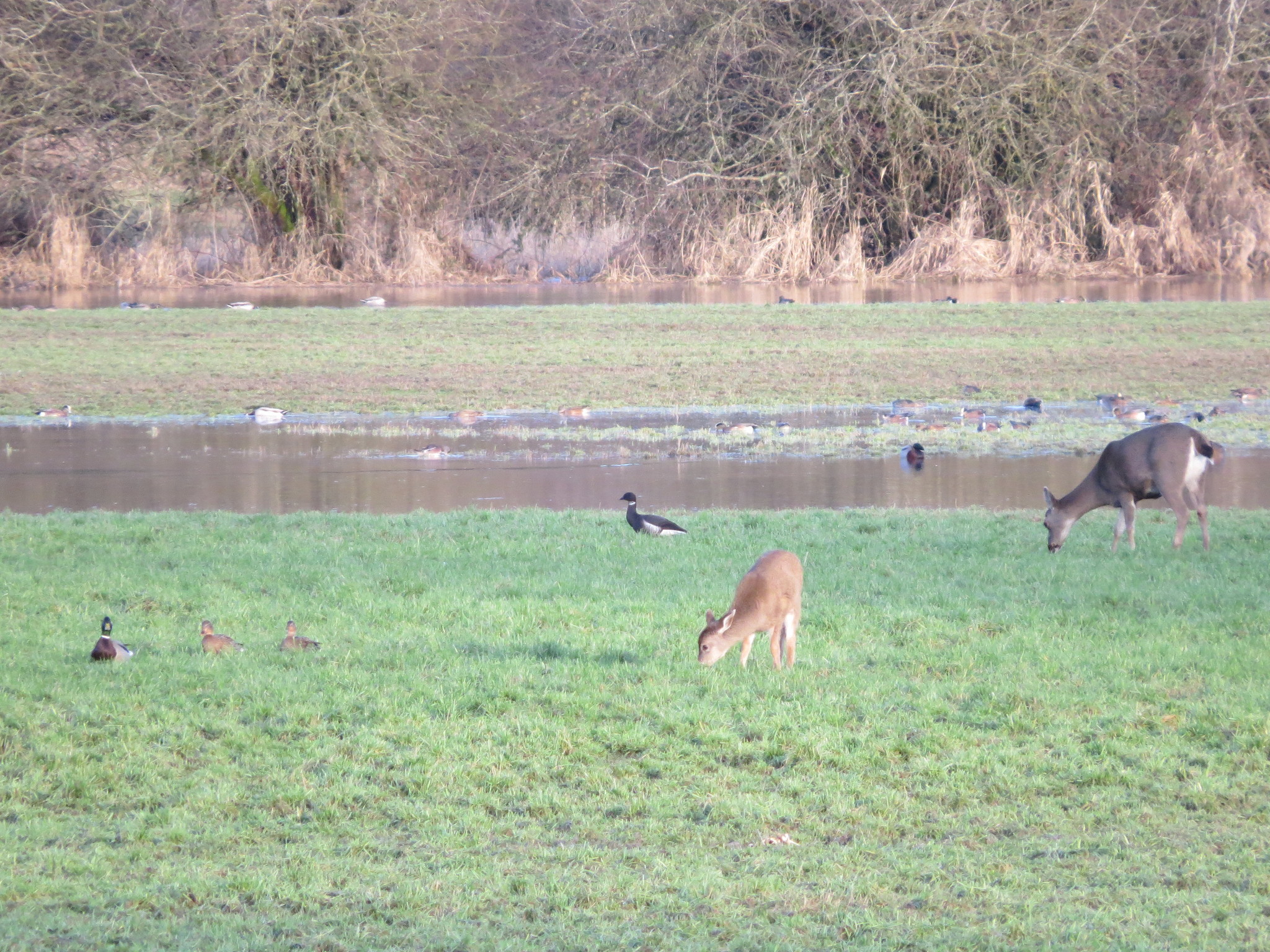
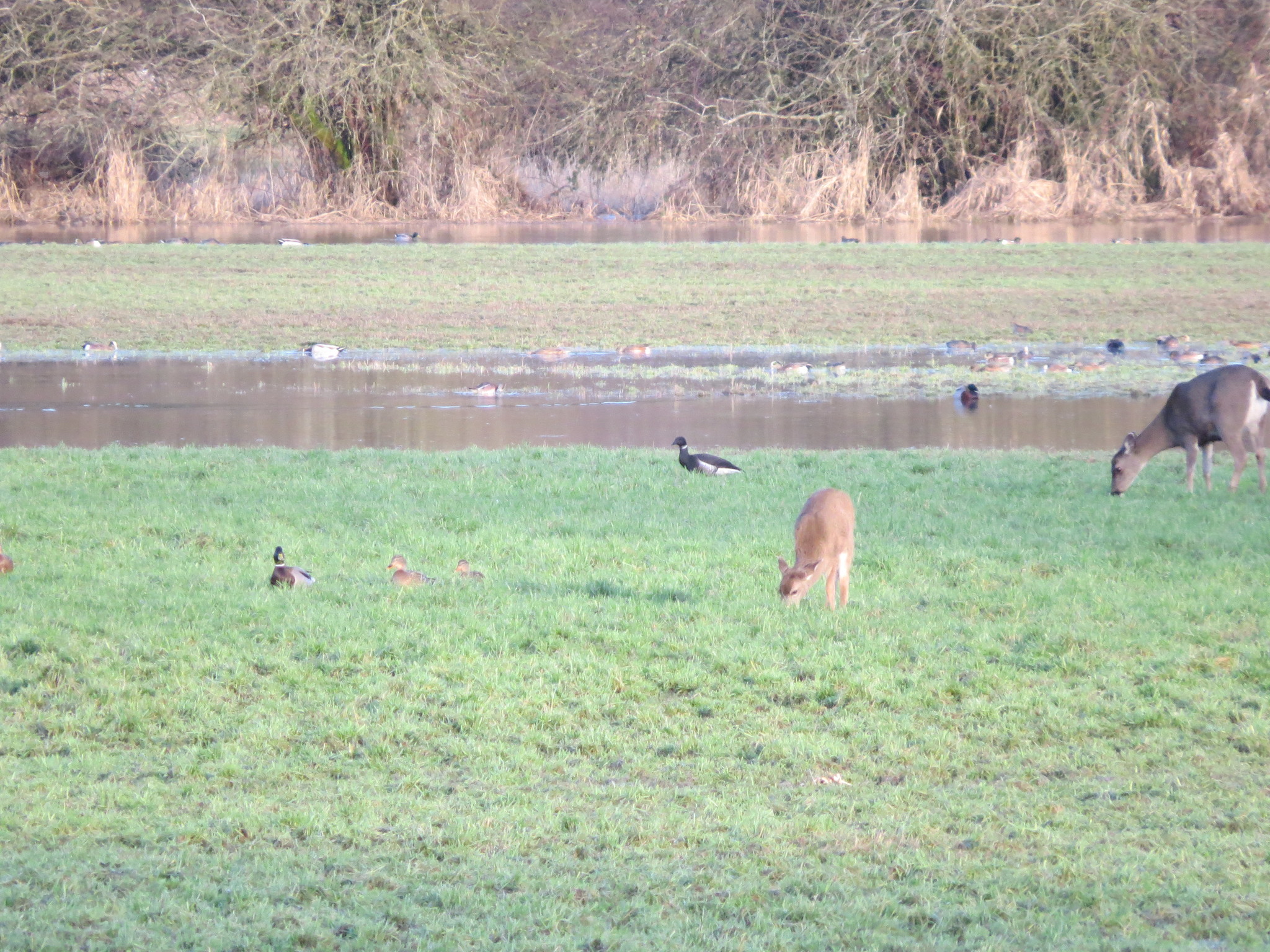
Feeds primarily on aquatic vegetation including eelgrass and sea lettuce in coastal estuaries. Since the 1930s, has expanded diet to include sea lettuce and agricultural crops (grass, winter-sown cereals). Nests on the ground in elevated locations near small ponds, constructing bowl-shaped nests lined with grass and down. Outside breeding season, remains in loose family groups with others of the same subspecies. Some subspecies overlap occurs in wintering areas, and hybridization between forms has been documented.
Conservation
Listed as Least Concern by IUCN. World population recovered from near-extirpation in 1930s following eelgrass blight to 400,000-500,000 by mid-1980s. Current populations: approximately 250,000 dark-bellied, 250,000 pale-bellied, and 125,000 black brant. Black brant populations have fluctuated between 100,000 and 200,000. Threats include potential food resource limitations as populations may be approaching carrying capacity of estuarine habitats. Protected under AEWA agreement.
Culture
Medieval Europeans believed these geese, along with barnacle geese, emerged from driftwood or shellfish rather than from eggs, since nesting birds were never observed. This myth persisted until the late 18th century. In County Kerry, Ireland, Catholics could eat this bird on Fridays as it was classified as 'fish' rather than meat due to its supposedly non-avian origin. The Brent oilfield was named after the species.
Source: Wikipedia · CC BY-SA 3.0
Taxonomy
- Order
- Anseriformes
- Family
- Anatidae
- Genus
- Branta
- eBird Code
- brant
Subspecies (3)
-
Branta bernicla bernicla
breeds north-central Siberia; winters coastal England and northwestern Europe
-
Branta bernicla hrota
breeds in eastern Arctic Canada, northern Greenland, Spitsbergen, and Franz Josef Land; winters in coastal eastern North America, Ireland, Great Britain, and Denmark
-
Branta bernicla nigricans
breeds northeastern Siberia, western and northern Alaska, and northwestern Canada; winters from from Japan to Korea and northeastern China, and from Alaska to northwestern Mexico
Data Sources
Species description from Wikipedia, licensed under CC BY-SA 3.0.
Bird images and sounds sourced from GBIF, contributed by citizen scientists worldwide under Creative Commons licenses.
Taxonomy data from AviList 2025.