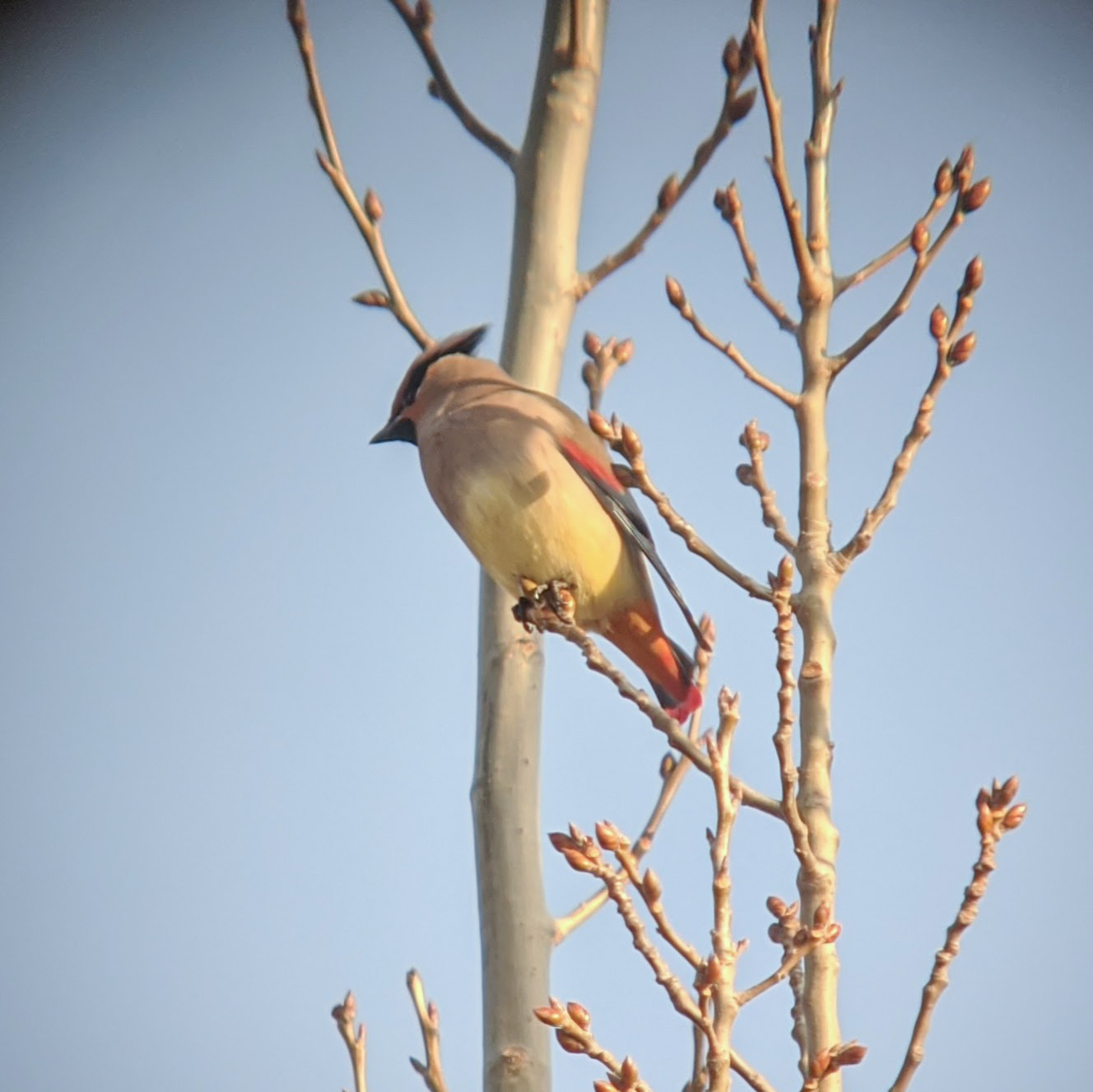
Japanese Waxwing
Bombycilla japonica
小太平鸟
Introduction
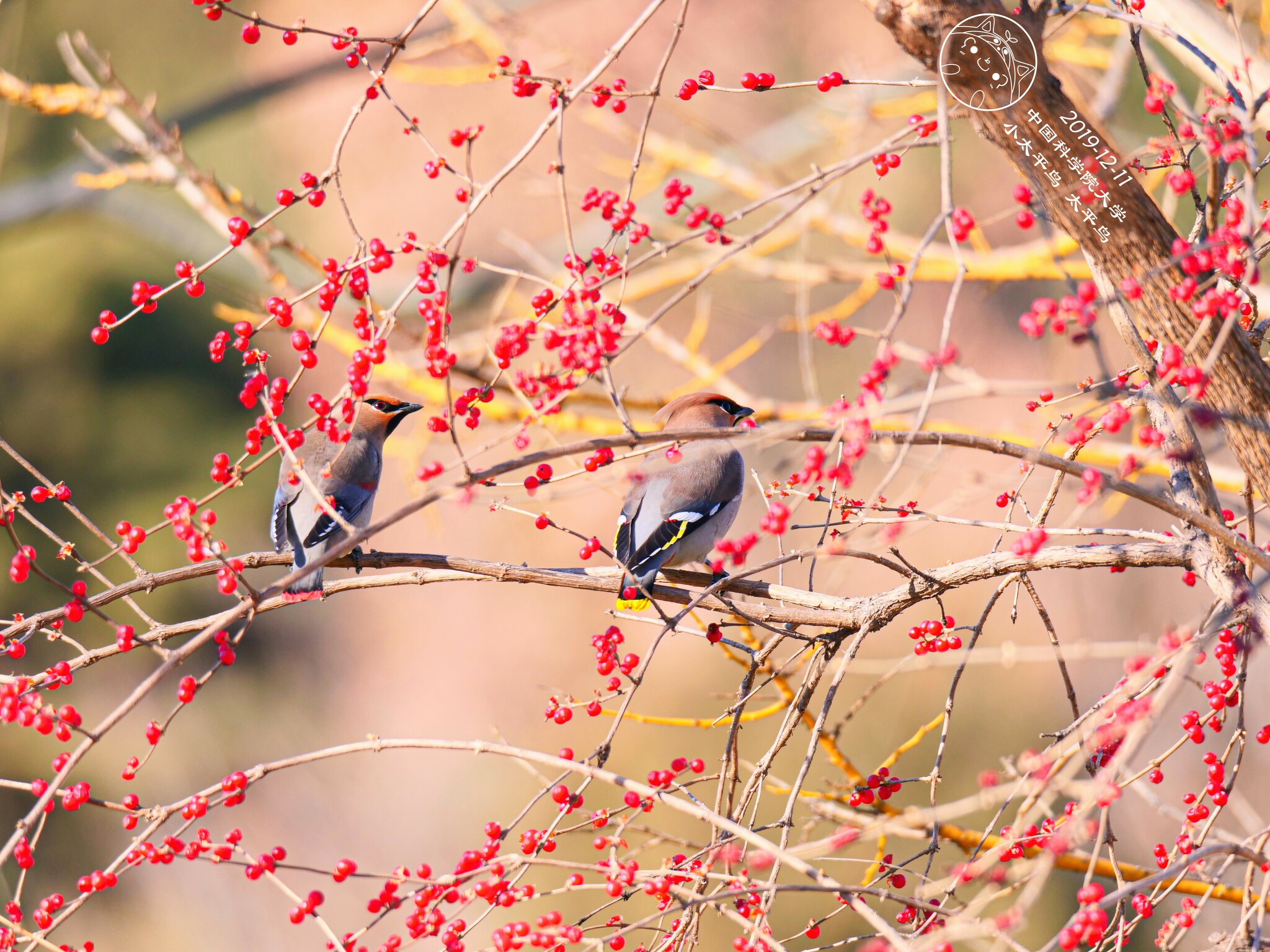
Passerine bird of the waxwing family. Breeds in remote forests of the Russian Far East and northeastern China, dispersing southward to East Asia for winter, including Japan. Distinguished by a prominent crest and red tips on wing feathers in males, from which the common name derives. Occurs in flocks; movements are erratic and tied to berry availability. May be absent in some years and abundant in others. In Japan, it regularly outnumbers the Bohemian waxwing in southwestern regions during winter.
Description
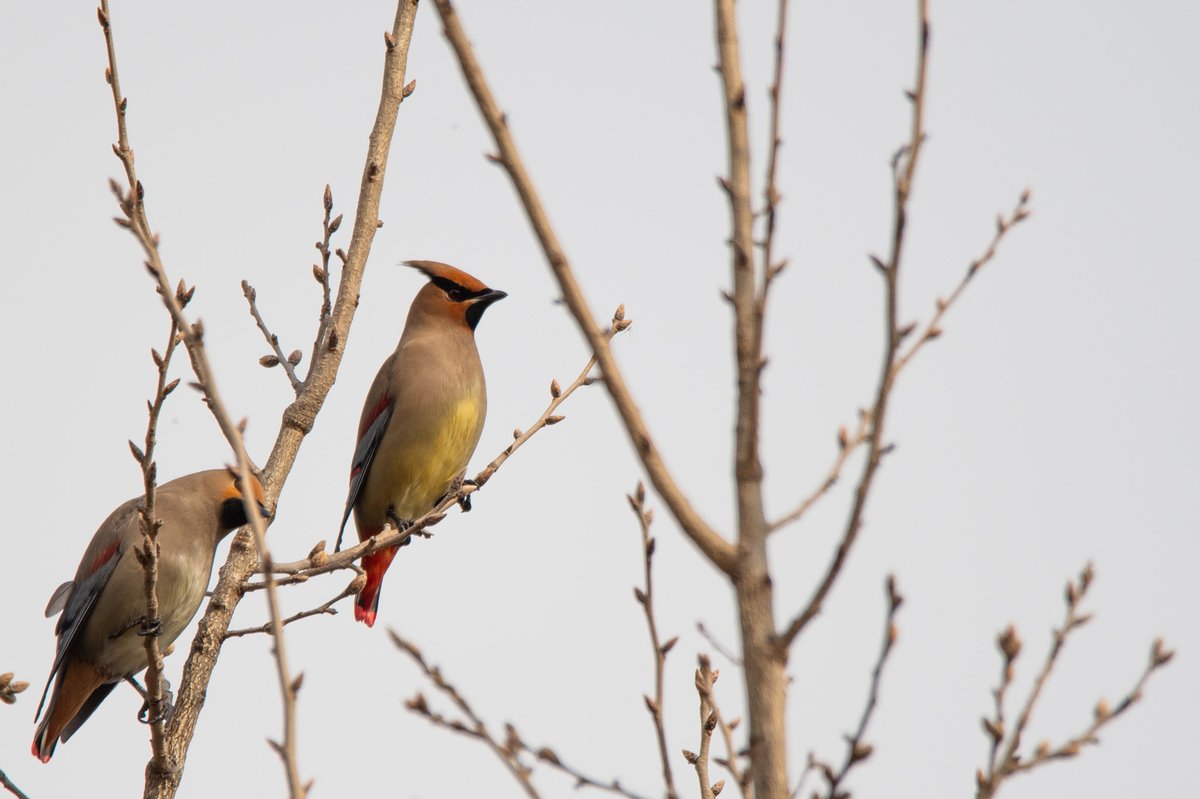
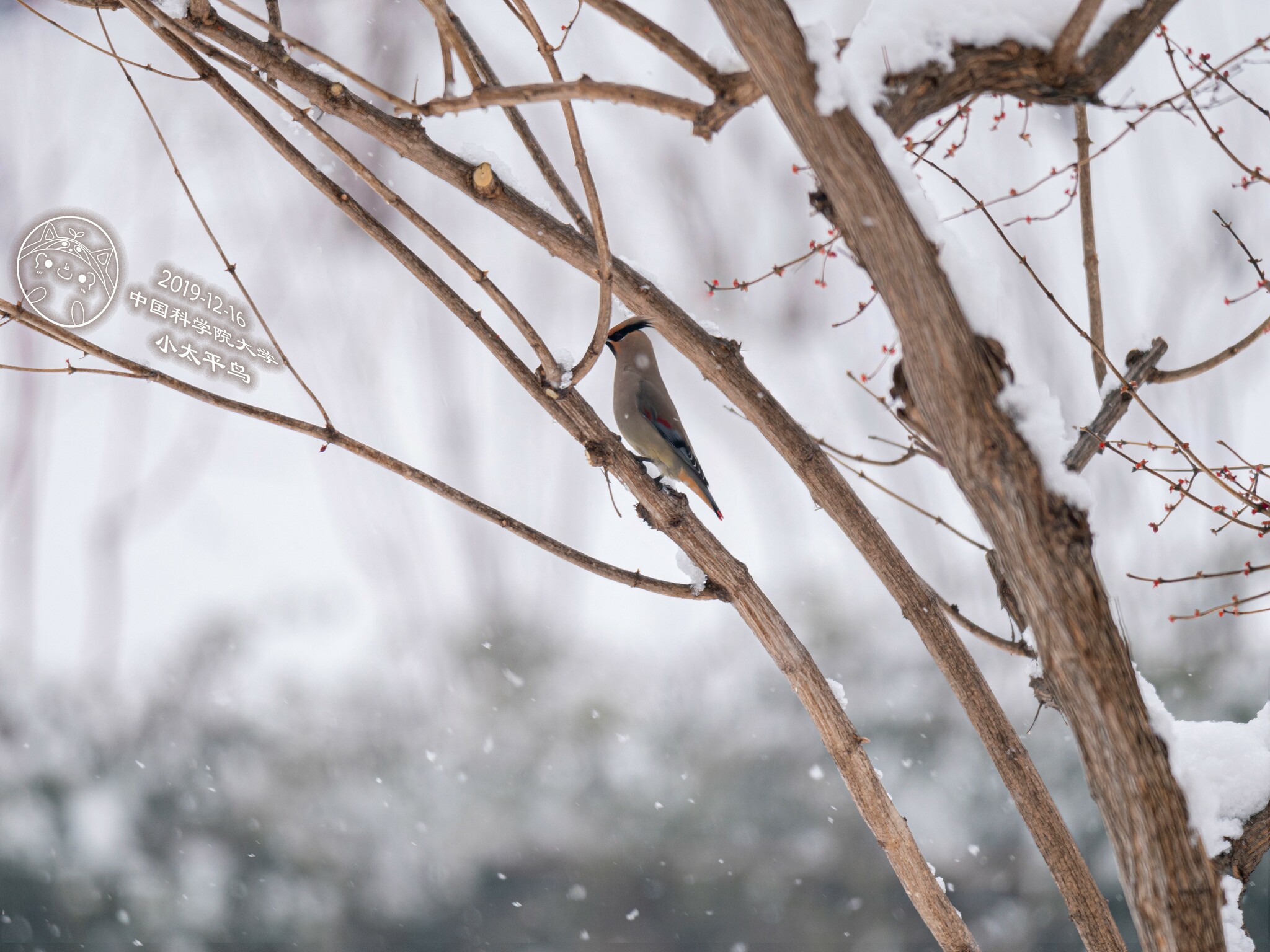
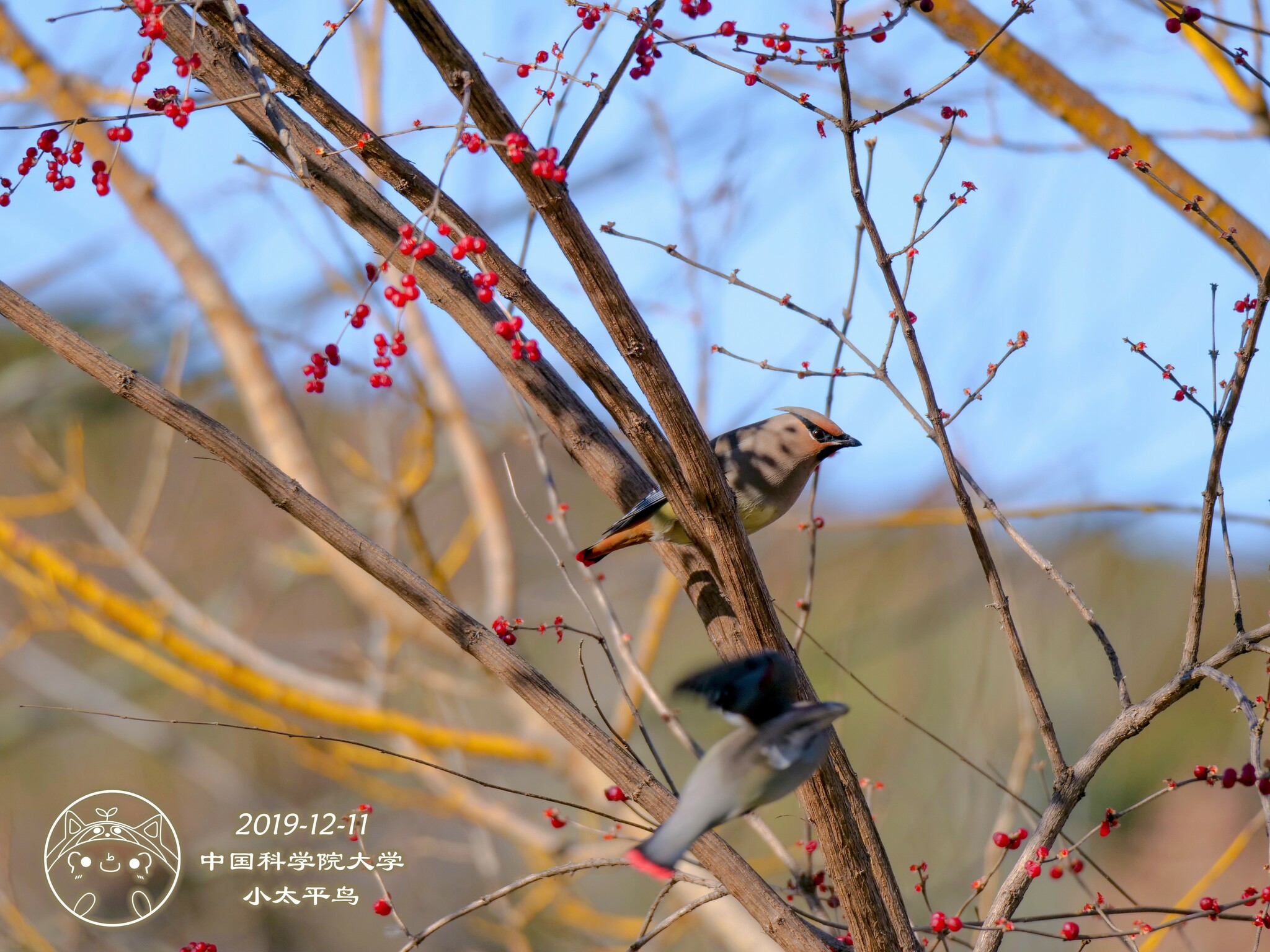
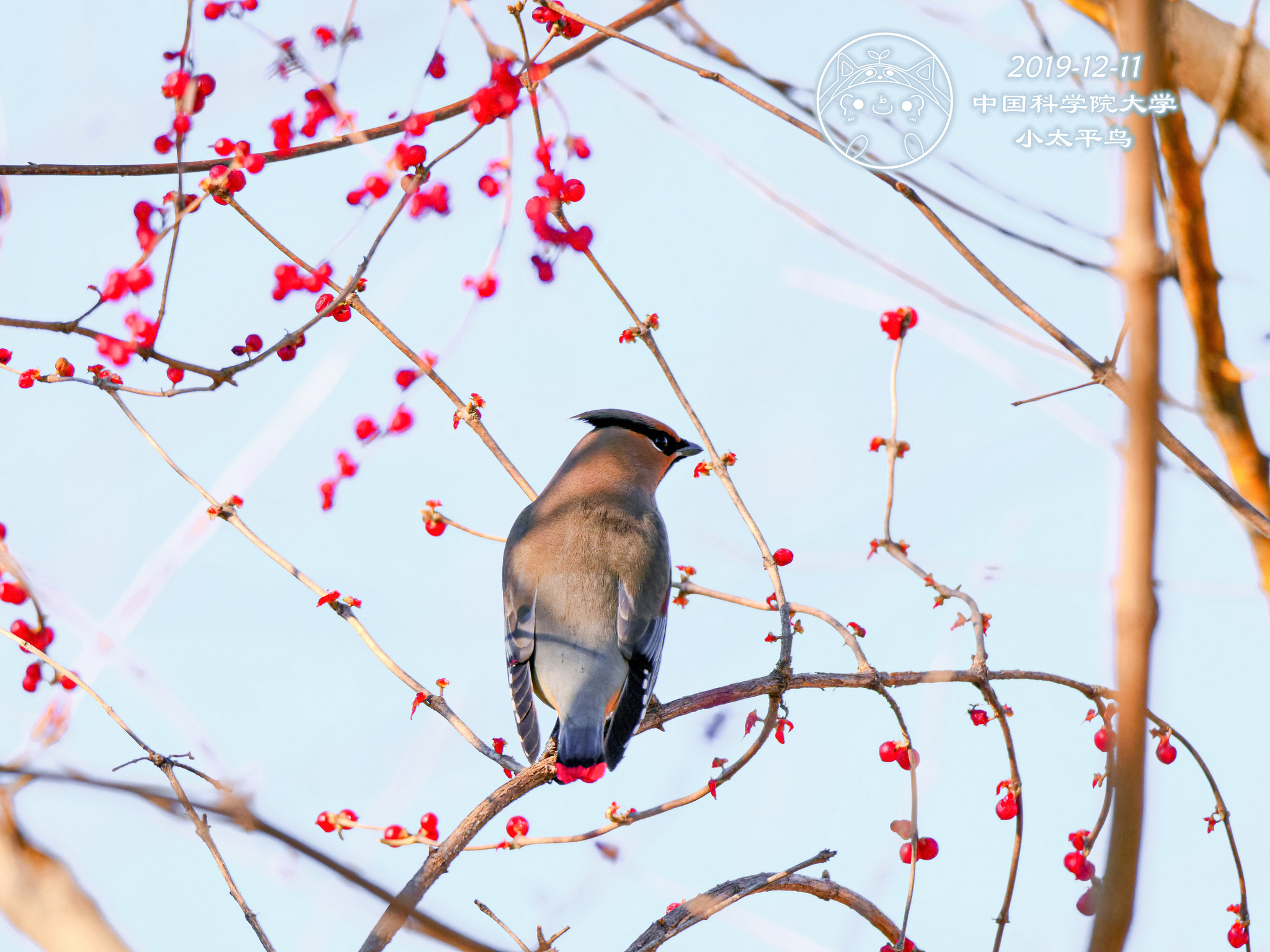
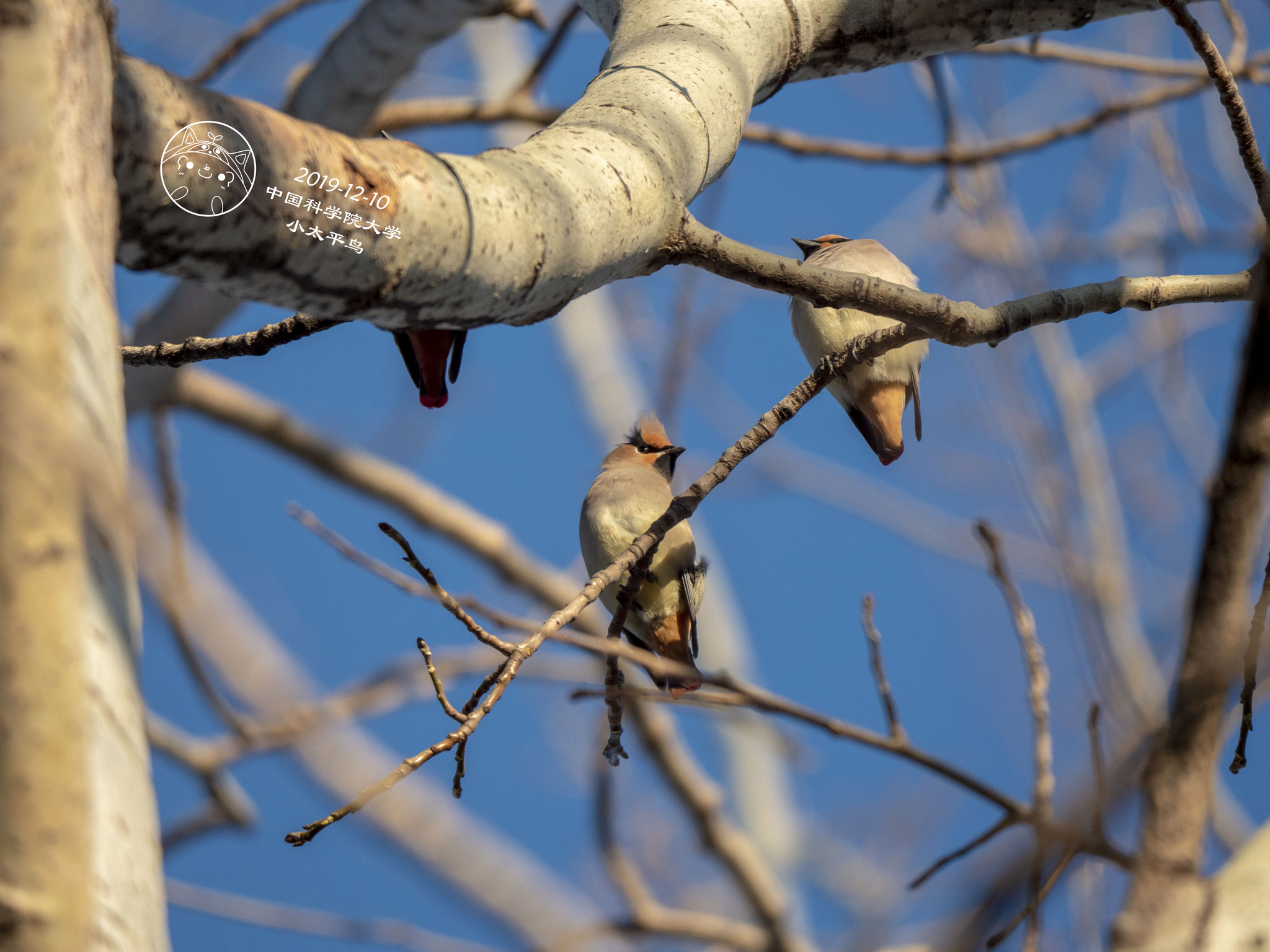
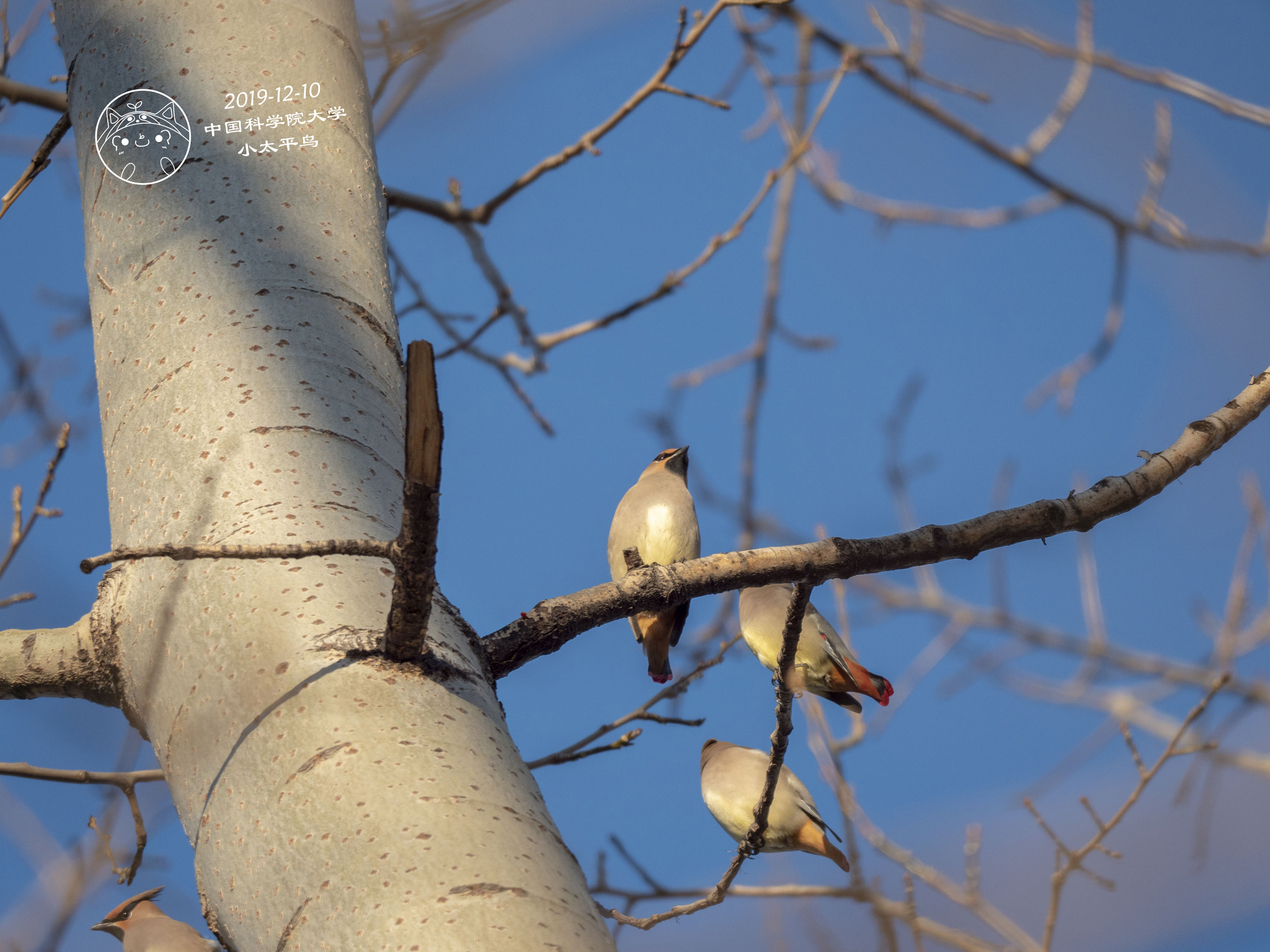
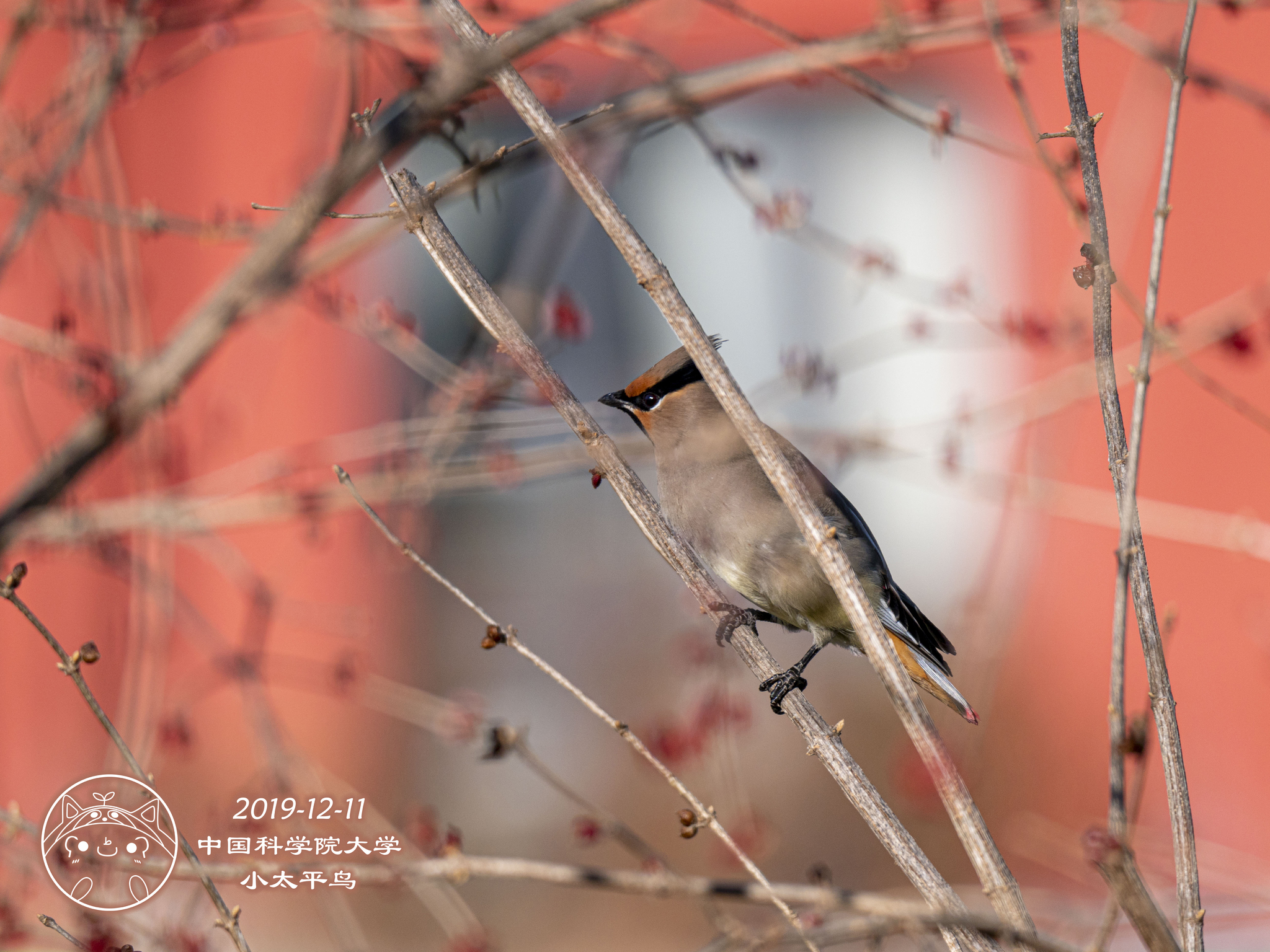
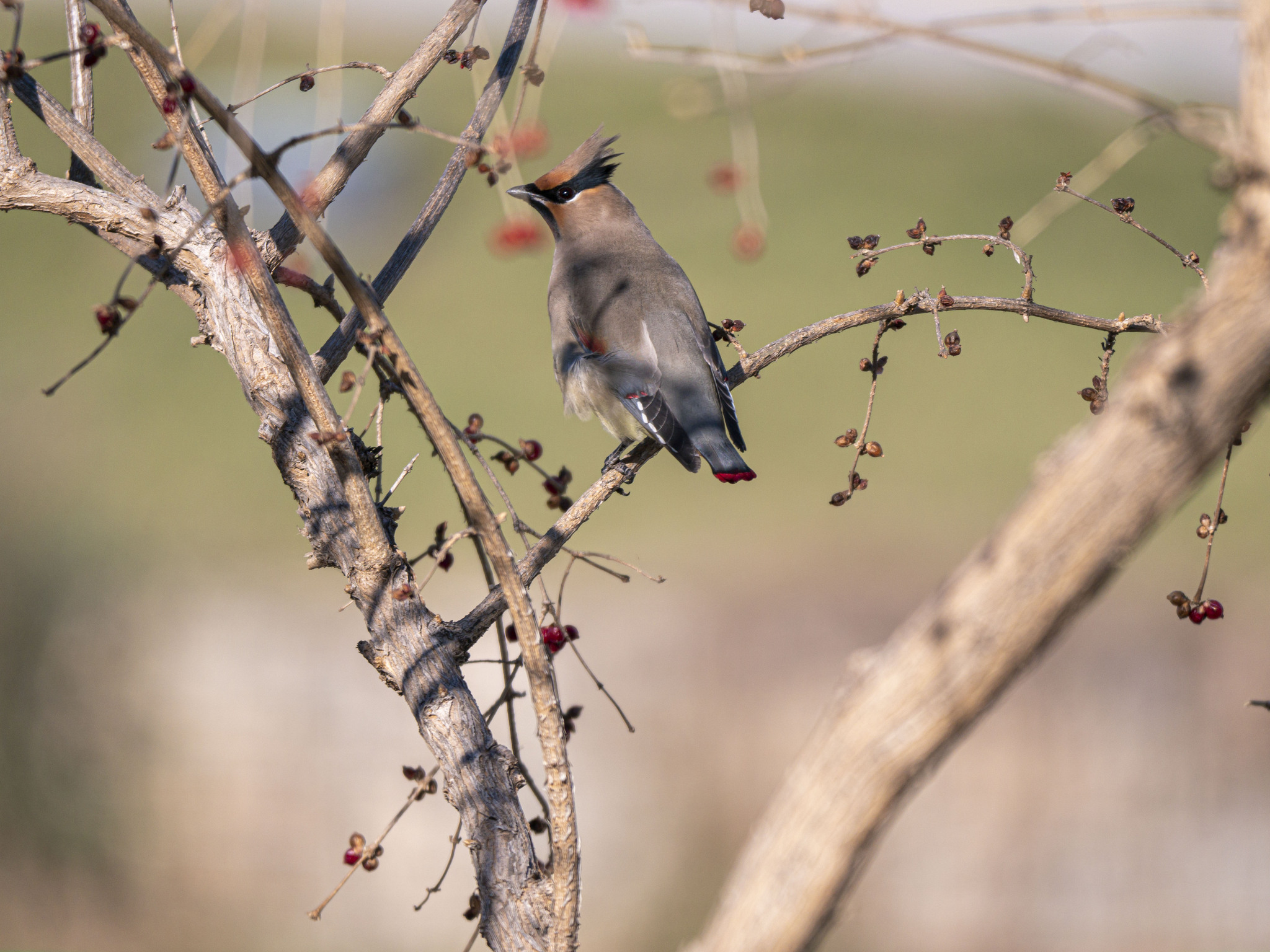
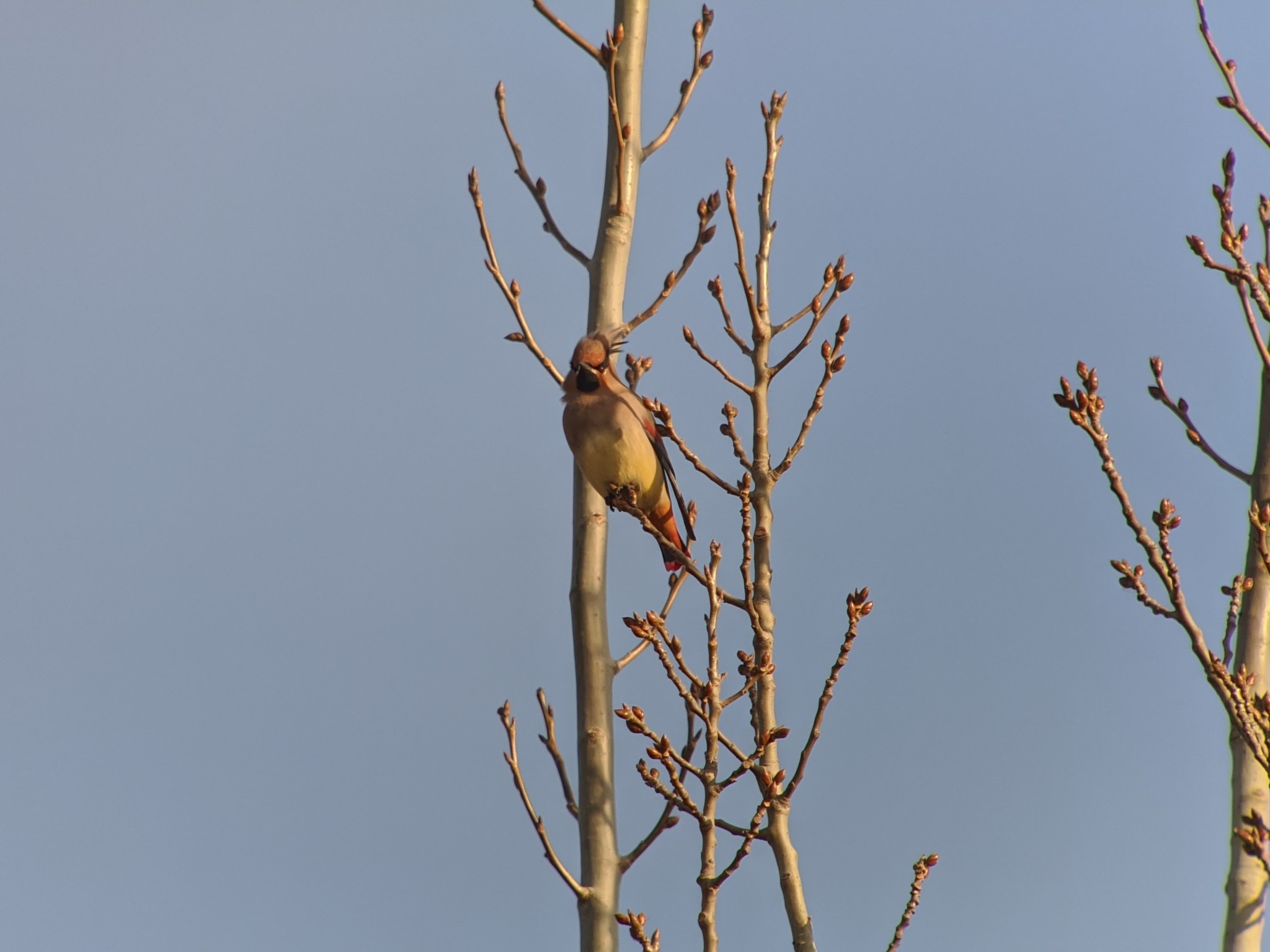
A compact bird measuring 15-18 centimeters in length and weighing 54-64 grams, this species presents a soft, pinkish-brown plumage overall. The head features a distinctive pointed crest, bold black throat, and a striking black stripe running through the eye. The underparts show a pale yellow wash at the center of the belly, while the undertail coverts display rusty-red coloration. The grey rump contrasts with the dark grey tail, which terminates in a black-bordered red tip. Wings exhibit a complex pattern of black, grey, and white feathers, accented by a diffuse reddish-brown bar across the greater covert feathers. Notably, this species lacks the prominent waxy wing tips found in its close relative.
Identification
The most reliable distinguishing feature from the Bohemian waxwing involves the wing pattern: this species displays a diffuse reddish-brown bar on the greater coverts that the Bohemian lacks. Additionally, the red waxy tips on the secondary feathers appear only in males, whereas both sexes of Bohemian waxwing possess them. This species also lacks the characteristic 'teardrop' shape of its relative. When comparing size, the Bohemian waxwing runs slightly larger overall. Other identifying features include this species' yellow belly center (versus the greyish belly center of the Bohemian) and the absence of the yellow tail-tip found in the other species. Mixed flocks occur regularly, so careful attention to these field marks proves essential.
Distribution & Habitat
The breeding range encompasses the dense coniferous forests of the Russian Far East, including the Amur basin, northern Primorsky Krai, and Sakhalin Island, extending into northeastern China in Manchuria and Heilongjiang province. The winter distribution spans Japan, the Korean Peninsula, eastern China, and Taiwan, though distribution remains highly irregular and movements depend heavily on berry crops. In Japan, birds typically arrive in November and depart by April, with few wintering on Hokkaido but becoming common in southwestern regions including Kyūshū, Shikoku, and southern Honshu. Taiwan receives irregular winter flocks, with notable eruptions such as the hundreds recorded in March 2020. Winter habitats include open woodland, lowland farmland, and lower mountain ranges, with birds frequently visiting parks and gardens laden with berries. Vagrant records exist from Hong Kong and central China.
Behavior & Ecology
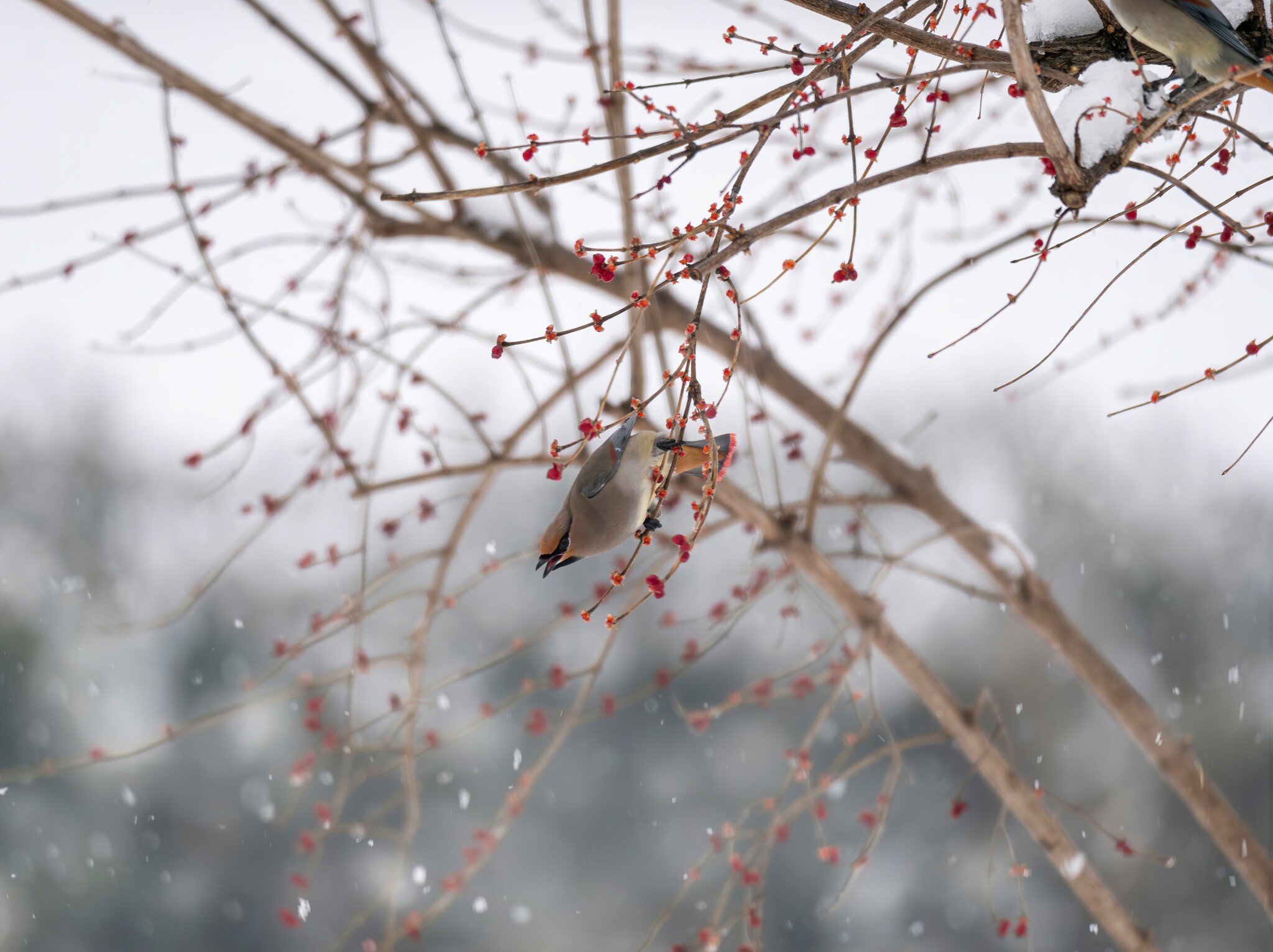
Fruit and berries constitute the primary diet throughout the year, with insects supplementing this during summer months. The species forages actively in flocks, moving through trees and shrubs in search of ripe berries. The breeding nest takes the form of a cup constructed from twigs and lined with grass and moss, positioned in a tree. Social behavior centers on flock formation, both during winter dispersal and during breeding season when pairs maintain territories. Vocalizations consist of a high-pitched trill, though notably the species possesses no true song. The erratic winter movements directly correlate with berry availability, leading to significant year-to-year variation in local abundance.
Conservation
The IUCN Red List classifies this species as Near Threatened, reflecting genuine concerns about its long-term survival prospects. The primary threat stems from ongoing loss and degradation of its preferred forest habitats across the breeding and wintering ranges. Logging, agricultural expansion, and urban development continue to fragment the mature coniferous forests this species requires for breeding. While population estimates remain difficult to establish given the species' remote breeding areas and erratic movements, the combination of habitat loss and potential climate impacts on berry availability suggests a concerning trajectory. Conservation efforts focus on protecting key forested areas throughout its range.
Culture
The scientific name Bombycilla derives from Louis Pierre Vieillot's 1808 Latin construction combining bombyx (silk) with his interpretation of cilla (tail), translating to 'silktail' from the German Seidenschwänze. The specific epithet japonica simply indicates the species' association with Japan in the scientific understanding of the era. Beyond nomenclature, the species holds appeal among birdwatchers in East Asia who actively seek it out during winter months, particularly in Japan where it represents a special seasonal treat. The dramatic winter irruptions, such as the 2019-2020 flock of hundreds in Taiwan, attract significant attention from local birding communities and nature photographers.
Source: Wikipedia · CC BY-SA 3.0
Taxonomy
- Order
- Passeriformes
- Family
- Bombycillidae
- Genus
- Bombycilla
- eBird Code
- japwax1
Distribution
breeds southeastern Siberia and northern Manchuria; winters to southern China and Ryukyu Islands (southern Japan)
Data Sources
Species description from Wikipedia, licensed under CC BY-SA 3.0.
Bird images and sounds sourced from GBIF, contributed by citizen scientists worldwide under Creative Commons licenses.
Taxonomy data from AviList 2025.