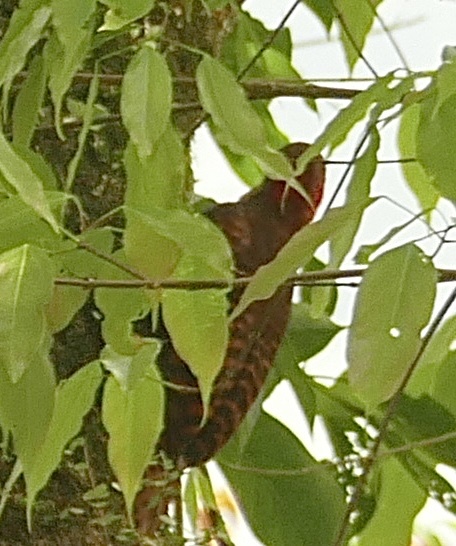
Bay Woodpecker
Blythipicus pyrrhotis
黄嘴栗啄木鸟
Introduction
Medium-sized woodpecker inhabiting dense evergreen and mixed deciduous woodlands of South and Southeast Asia. Occurs in heavily wooded ravines and slopes from lowland areas to submontane elevations. Range extends from the eastern Himalayas through mainland Southeast Asia to southern China and Hainan, where five recognized subspecies occupy different portions of this distribution. Relies on decaying timber for both foraging and nesting, making it an indicator of healthy, undisturbed forest ecosystems. Not considered rare throughout its extensive range but occurs at generally low densities.
Description
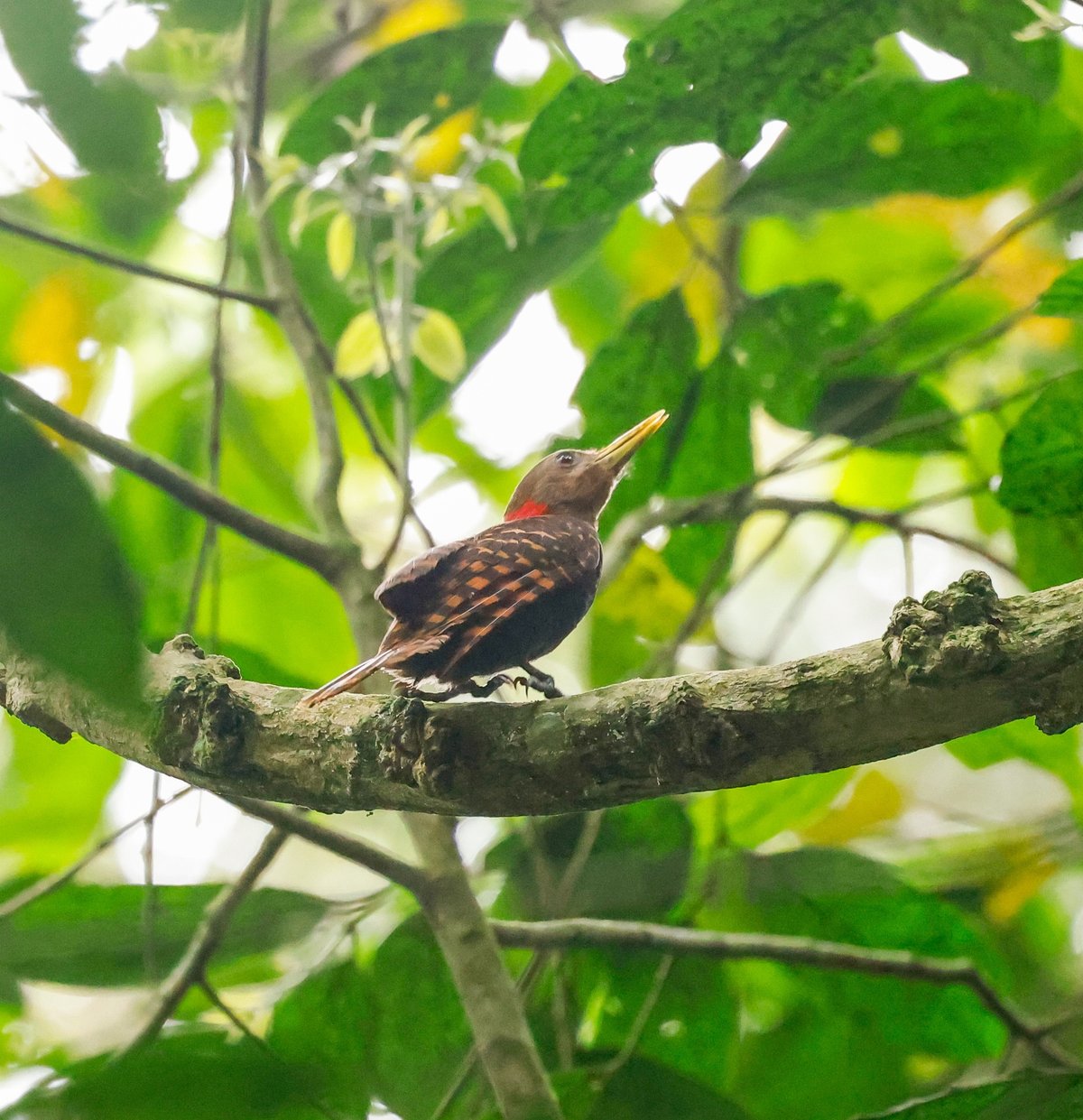
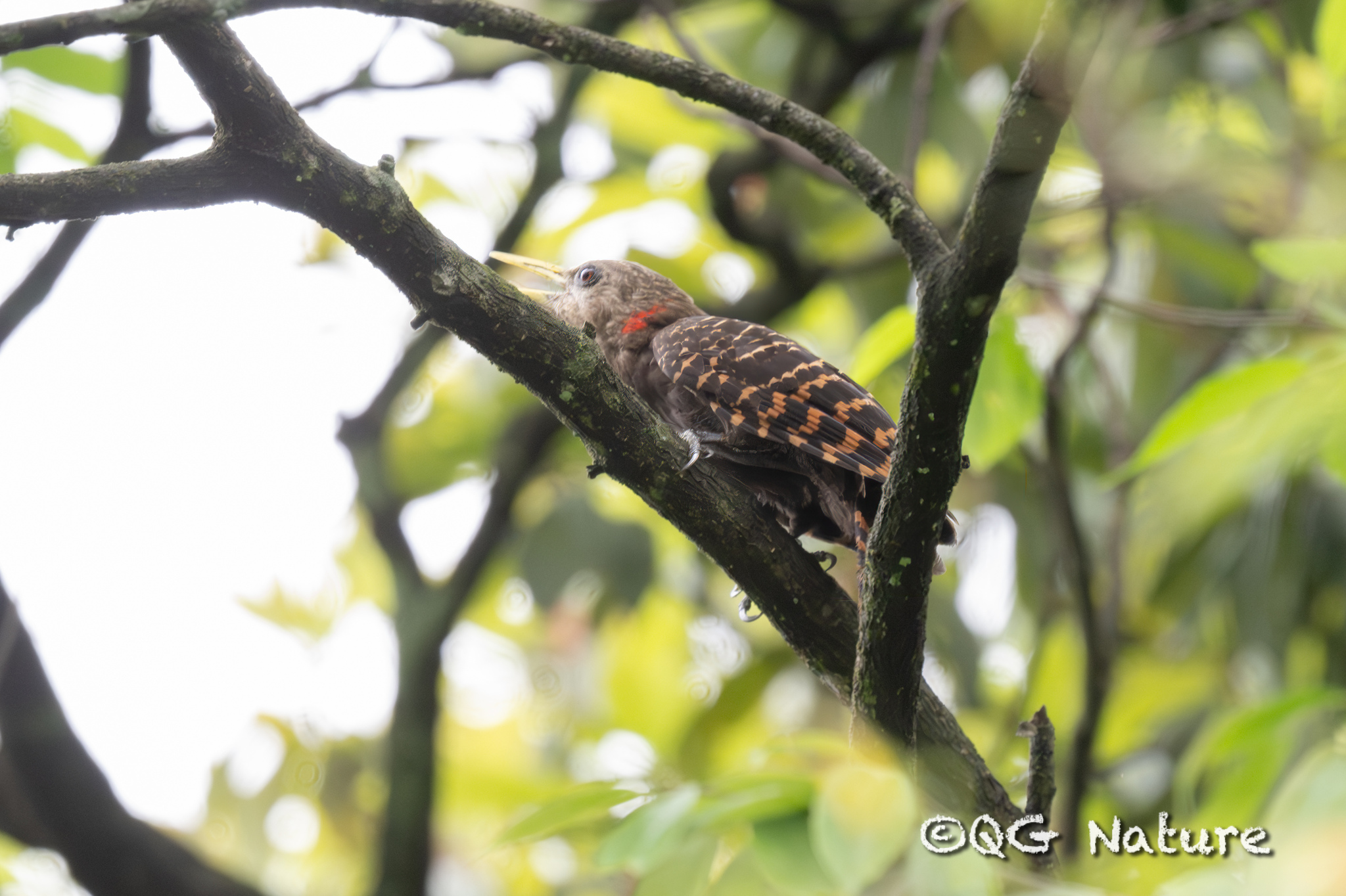
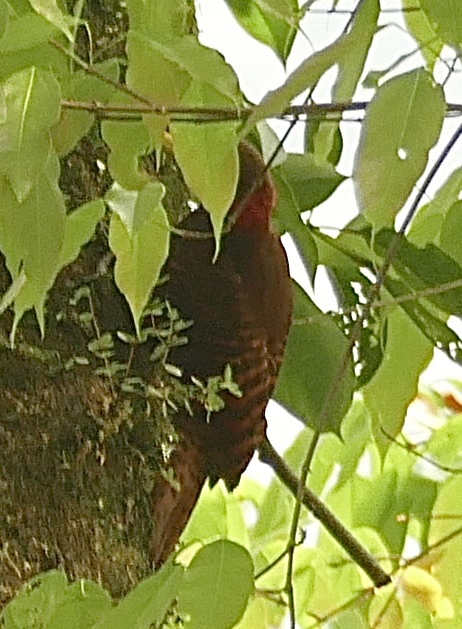
This mid-sized woodpecker measures 26.5-30 cm in length and weighs 126-170 g. The overall impression is of a brownish, relatively plain woodpecker without the striking patterns found in many relatives. Adults show warm brown upperparts and paler underparts with subtle streaking. The head appears relatively pale in females, while males display a brown crown with streaking on a short crest and nape, plus a pale brown forehead. Notably, females possess a shorter bill than males. The species belongs to the Picidae family, which includes piculets, wrynecks, and sapsuckers, though this particular genus is distinguished by its relatively plain plumage and specific foraging habits.
Identification
In the field, this species appears as a fairly plain brown woodpecker working at low-to-mid heights on tree trunks and large branches. The combination of warm brown plumage, relatively unmarked head on females, and preference for forested ravines helps distinguish it from similar species. Males can be recognized by their brown streaked crown and crest, lacking the red found on many male woodpeckers. The species typically works methodically on rotting wood, probing and gleaning rather than the more active drilling behavior seen in some larger woodpeckers.
Distribution & Habitat
This species occupies a extensive range across South and Southeast Asia, including Bangladesh, Bhutan, Cambodia, China, Hong Kong, India, Laos, Malaysia, Myanmar, Nepal, Thailand, and Vietnam. It inhabits subtropical and tropical moist lowland and montane forests, showing particular preference for evergreen and mixed deciduous woodlands with dense understory and heavily wooded ravines. The species occurs across a broad elevational gradient from lowlands around 50 meters up to approximately 2750 meters. Five subspecies are recognized, with distinct distributions: the nominate race from eastern Nepal to south-central China, Laos, and northern Vietnam; sinensis in southeastern China; annamensis in the southern Vietnamese highlands; hainanus on Hainan Island; and cameroni in Peninsular Malaysia. No migration is documented, indicating the species is largely resident throughout its range.
Behavior & Ecology
This woodpecker feeds primarily on insects including ants, termites, and wood-boring beetles, occasionally supplementing its diet with berries. Foraging occurs mostly 3-4 meters above ground level on trunks, rotting snags, logs, and ascending through saplings, vines, and bamboo clumps. The species exhibits a somewhat solitary foraging strategy, not tolering other individuals at feeding sites while maintaining loose contact with mates through vocalizations. The call consists of a long, dry rattle used between partners and serves as a territorial announcement audible over considerable distances. During breeding season, courtship displays include crest-raising and wing-flicking. Both sexes participate in excavating nest cavities at low heights of 1-4 meters in either live or dead wood, and both parents share incubation and chick-rearing duties.
Conservation
The species is classified as Least Concern by the IUCN, indicating it does not currently meet thresholds for threatened categories. However, populations are declining throughout its range due to ongoing habitat loss from logging, forest conversion, and degradation. While not globally threatened, the species is generally uncommon and requires intact mature forest habitat. The global population size remains unknown, though the Chinese population—one of its primary strongholds—is estimated at 10,000-100,000 breeding pairs. The species' dependence on decaying wood for foraging and nesting makes it particularly vulnerable to forest management practices that remove dead timber.
Source: Wikipedia · CC BY-SA 3.0
Taxonomy
- Order
- Piciformes
- Family
- Picidae
- Genus
- Blythipicus
- eBird Code
- baywoo1
Subspecies (5)
-
Blythipicus pyrrhotis annamensis
highlands of southern Vietnam
-
Blythipicus pyrrhotis cameroni
highlands of Malay Peninsula
-
Blythipicus pyrrhotis hainanus
mountains of Hainan (southern China)
-
Blythipicus pyrrhotis pyrrhotis
Nepal to southern China (Sichuan and Yunnan), Laos, and northern Vietnam
-
Blythipicus pyrrhotis sinensis
southeastern China (Guizhou and Guangxi to Fujian)
Data Sources
Species description from Wikipedia, licensed under CC BY-SA 3.0.
Bird images and sounds sourced from GBIF, contributed by citizen scientists worldwide under Creative Commons licenses.
Taxonomy data from AviList 2025.