Hodgson's Frogmouth
Batrachostomus hodgsoni
黑顶蛙口夜鹰
Introduction
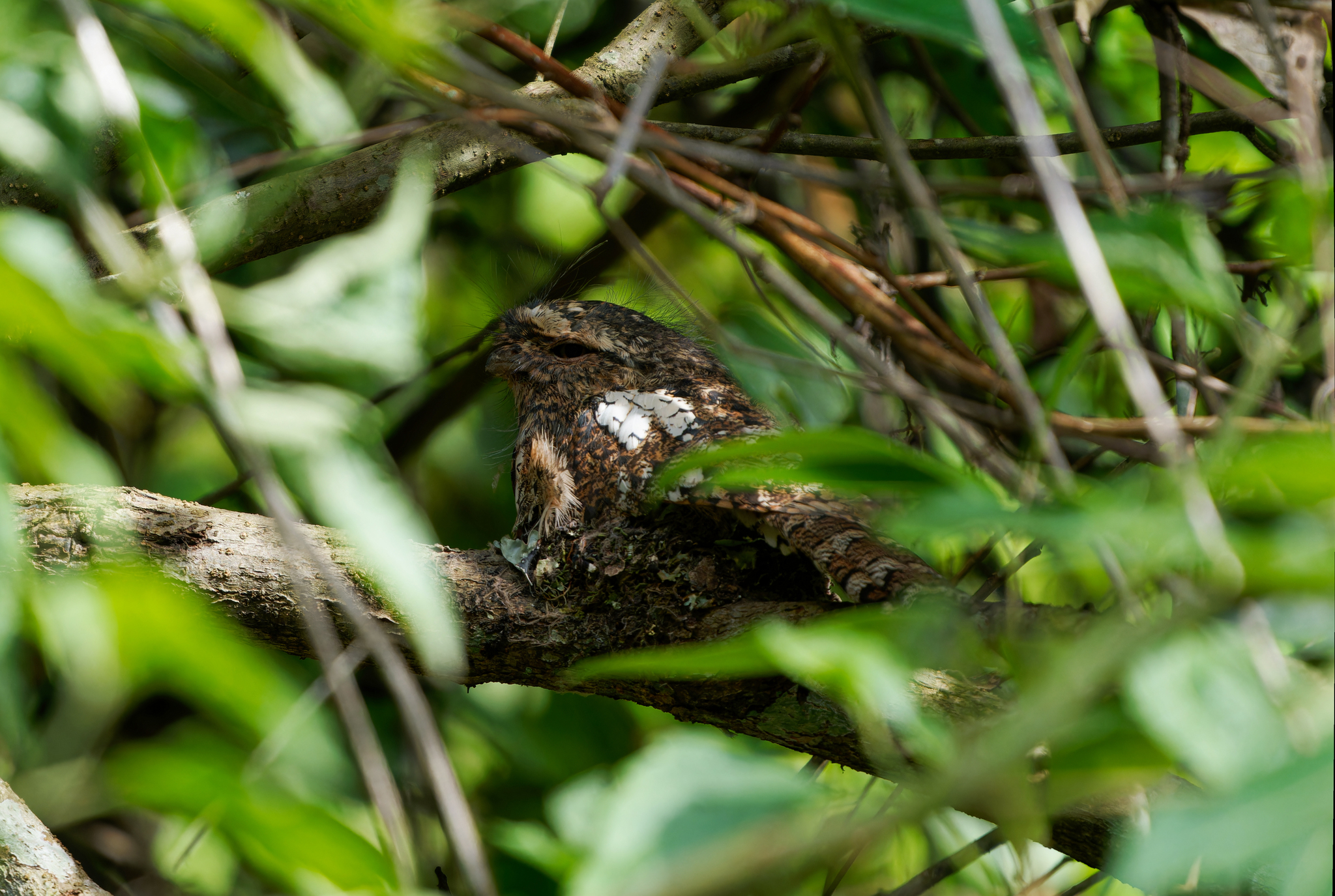
This species belongs to the Podargidae family. It occurs in Asian tropical forests. It measures 24.5 to 27.5 centimeters in length. It exhibits strong sexual dichromatism, with females displaying rufous plumage and males showing more subdued brown tones. During daylight hours, it remains motionless on tree branches. It is nocturnal, hunting insects from perches after sunset by sallying to snatch prey from foliage or probing into tree crevices with its bill.
Description
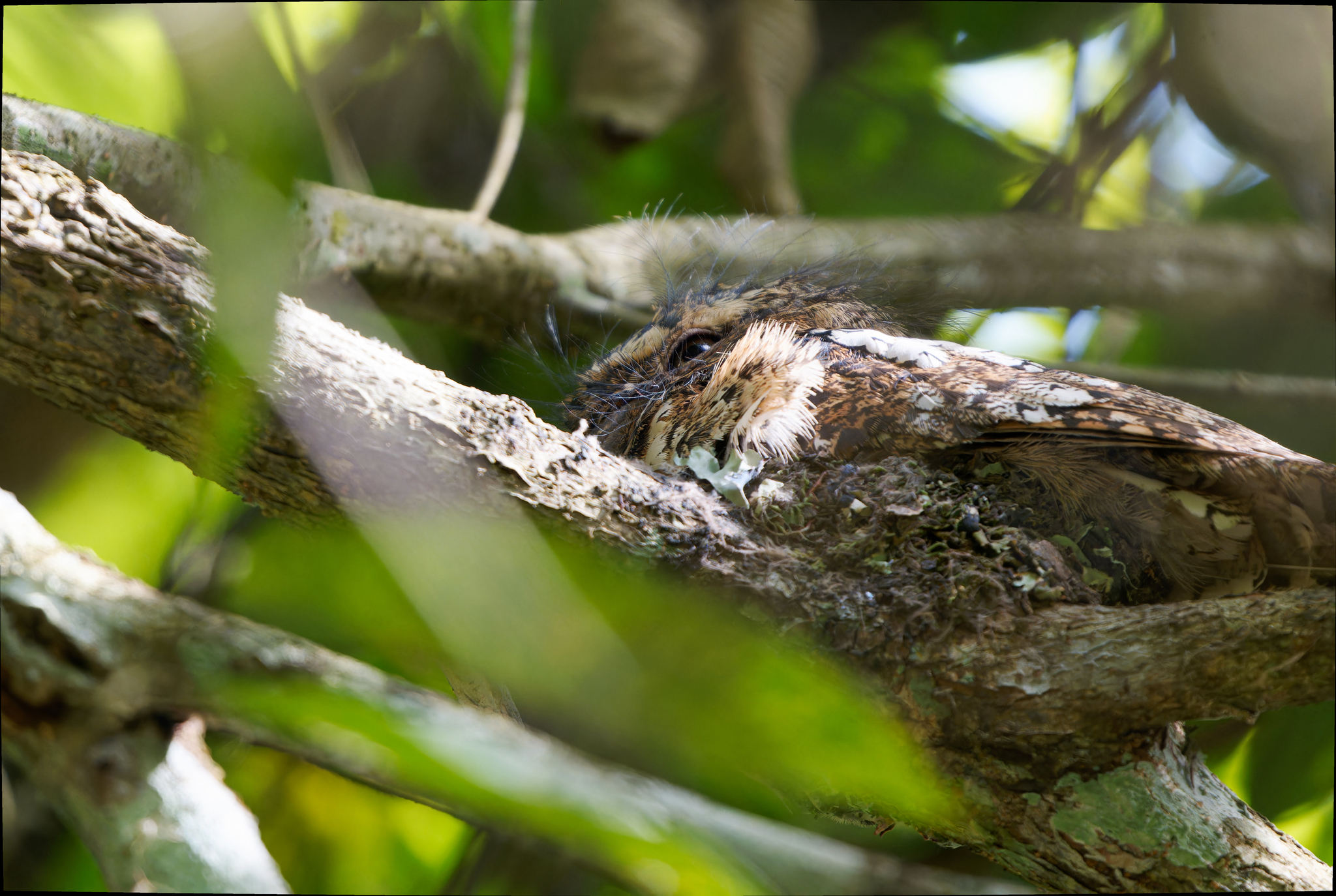
A compact, small-bodied frogmouth measuring 24.5-27.5 centimeters in length and weighing approximately 50 grams. The plumage exhibits a soft, mottled brown and gray coloration that remarkably mimics tree bark, providing exceptional camouflage. The species shows pronounced sexual dimorphism: males display rufous-brown upperparts heavily marked with black, featuring bold whitish markings on the scapulars and upper mantle that form a distinctive white collar, while the underparts show heavy black, white, and rufous barring. Females present a more uniform rufous appearance with irregular black-tipped white spots on the mantle, scapulars, and underparts. Both sexes possess a disproportionately large head dominated by a thick, powerful bill covered with rictal bristles at the base, large yellow-rounded eyes, and short rounded wings and tail. The legs and feet are notably small relative to body size.
Identification
This species can be distinguished from other frogmouths by its smaller size, more compact build, and particularly by its heavy black breast marking combined with the absence of rufous on the breast—features unique among its relatives. The pronounced sexual dimorphism is another key identifier, as no other frogmouth shows such dramatic color differences between sexes. However, because overall silhouette and coloration closely match other frogmouth species, the most reliable identification method is vocalization. The breeding call consists of soft wheezy whistles and harsh tremulous rattles, with a distinctive song featuring slightly trilled rising whistles like 'whaaee,' 'whaaow,' and 'wheeow-a,' sometimes accompanied by soft chuckling 'whooo' notes.
Distribution & Habitat
This species inhabits tropical forest regions across South and Southeast Asia, including Bangladesh, Bhutan, China, India, Laos, Myanmar, Thailand, Cambodia, and Vietnam. It occupies broadleaf evergreen and mixed coniferous tropical rainforests, typically found in the middle and lower forest storeys at elevations ranging from 300 to 1,900 meters. Two subspecies are recognized: B. h. hodgsoni in Myanmar, India, and Bangladesh, and B. h. indochinae in Thailand, Laos, and Vietnam. As a non-migratory species, individuals maintain territories year-round, with social interactions limited to the breeding season from April through June in the Indian region.
Behavior & Ecology
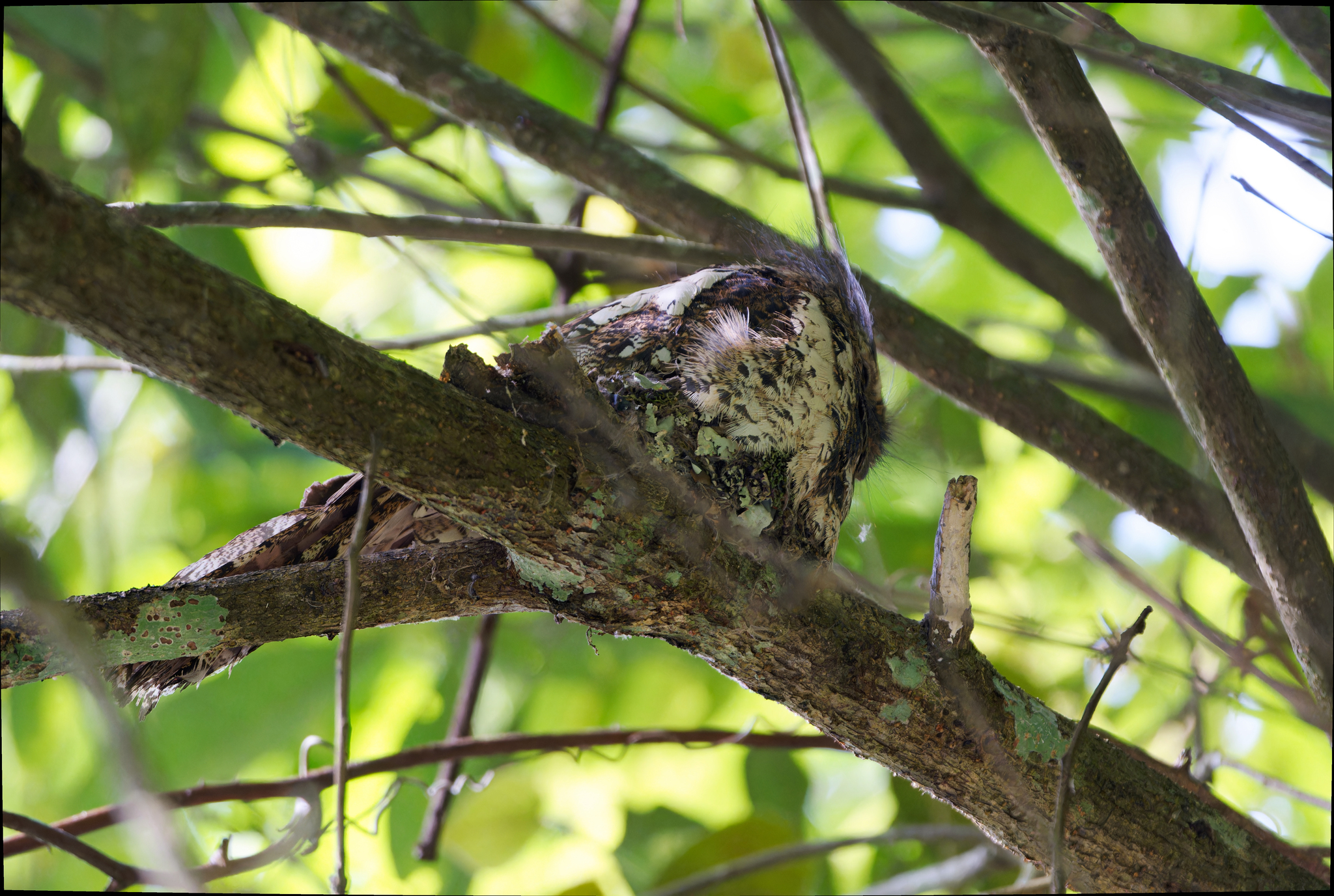
This nocturnal insectivore primarily feeds on moths, beetles, and other large insects. It employs a perch-hunting strategy, making short flights from elevated perches to snatch prey from foliage or probing into tree trunks and branches with its strong, bristle-equipped bill. During daylight hours, it remains motionless on branches, relying on exceptional camouflage—the mottled plumage resembles bark so closely that predators pass by unnoticed. If threatened, it adopts a 'broken branch' posture, pointing its bill upward to blend perfectly with surrounding vegetation. The breeding season spans April to June in India, with nest building beginning in late February or early March in Annam. Unlike the bulkier nests built by larger Podargus species, this bird constructs a small cup-shaped nest lined with down on horizontal branches. Both parents share incubation duties for the 2-4 white eggs over roughly 30 days, and both feed the young through regurgitation.
Conservation
The species is currently evaluated as Least Concern by the IUCN. While two Batrachostomus species have experienced population declines due to habitat fragmentation and loss of lowland rainforest, this species' very extensive range across multiple countries provides sufficient habitat to avoid approaching vulnerability thresholds. Although population size remains unquantified, it is not believed to meet criteria for decline greater than 30% over ten years or three generations. The primary conservation concern centers on ongoing deforestation throughout its Southeast Asian range, though populations currently remain stable enough to not warrant more serious classification.
Culture
The species is named after British naturalist Brian Houghton Hodgson, who conducted extensive natural history work in the Himalayan region during the 19th century. Beyond this taxonomic designation, the article does not provide information on cultural significance, folklore, or traditional uses associated with this bird.
Source: Wikipedia · CC BY-SA 3.0
Taxonomy
- Order
- Podargiformes
- Family
- Podargidae
- Genus
- Batrachostomus
- eBird Code
- hodfro1
Subspecies (2)
-
Batrachostomus hodgsoni hodgsoni
northeastern India (Sikkim, Assam, and Arunachal Pradesh southward to Manipur and Tripura), Bhutan, northern Bangladesh, and northern and western Myanmar
-
Batrachostomus hodgsoni indochinae
eastern Myanmar and adjacent southern China (southwestern Yunnan), northern Thailand, Laos, and central Vietnam
Data Sources
Species description from Wikipedia, licensed under CC BY-SA 3.0.
Bird images and sounds sourced from GBIF, contributed by citizen scientists worldwide under Creative Commons licenses.
Taxonomy data from AviList 2025.