Mountain Bamboo Partridge
Bambusicola fytchii
棕胸竹鸡
Introduction
This ground-dwelling partridge inhabits the dense understory of bamboo forests and grasslands in hilly terrain across South and Southeast Asia. Its range includes Bangladesh, Tibet, India, Laos, Myanmar, Thailand, and Vietnam. The species occurs at elevations from sea level to 2,000 meters in areas with thick cover, particularly near water sources where bamboo scrub, tall grasses, and degraded forest with bamboo groves occur. It is active during early morning and late evening hours. When disturbed, the bird runs through dense cover and flies only as a last resort. Population declines have been recorded due to habitat loss from agricultural conversion.
Description
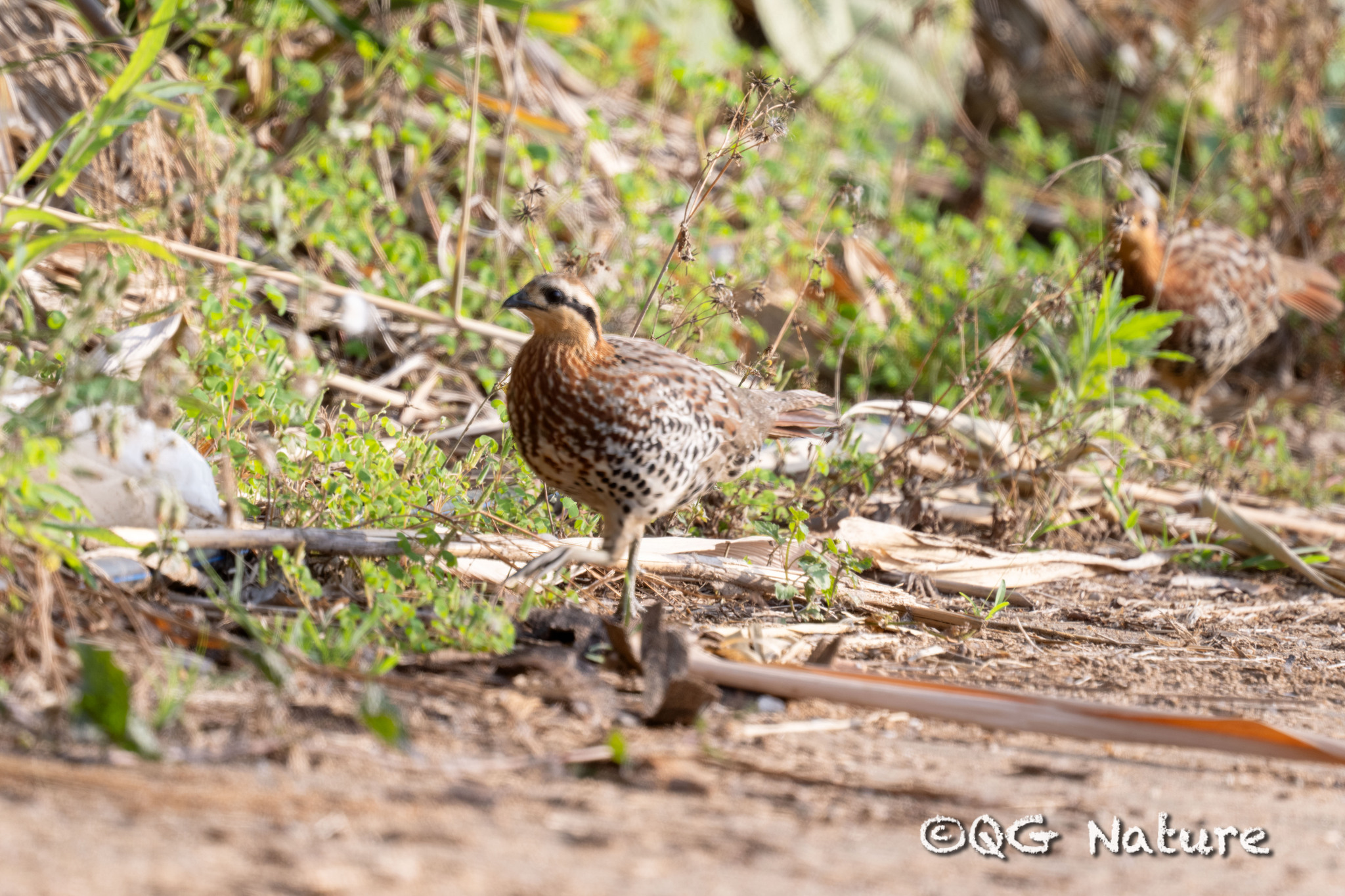
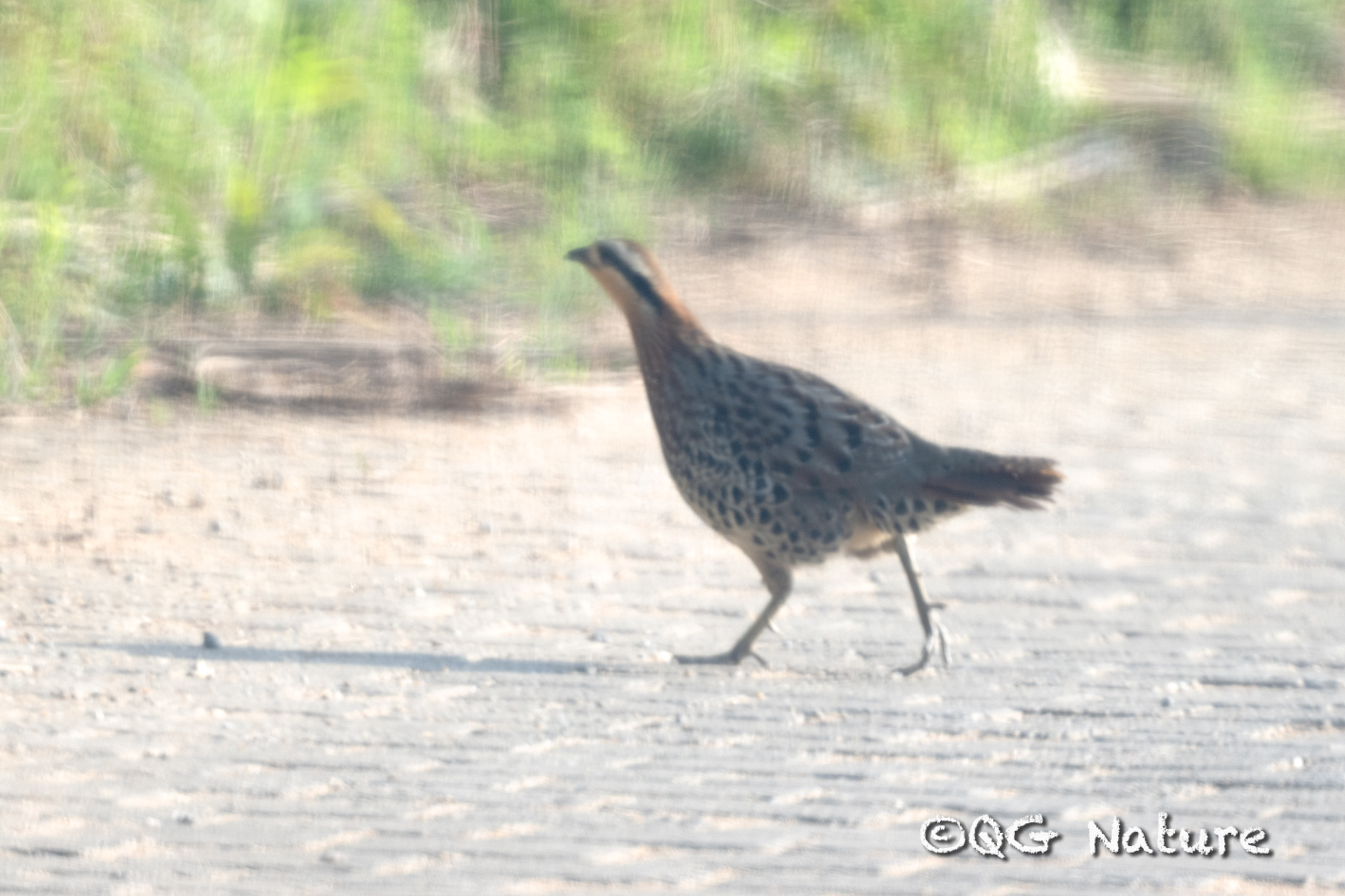
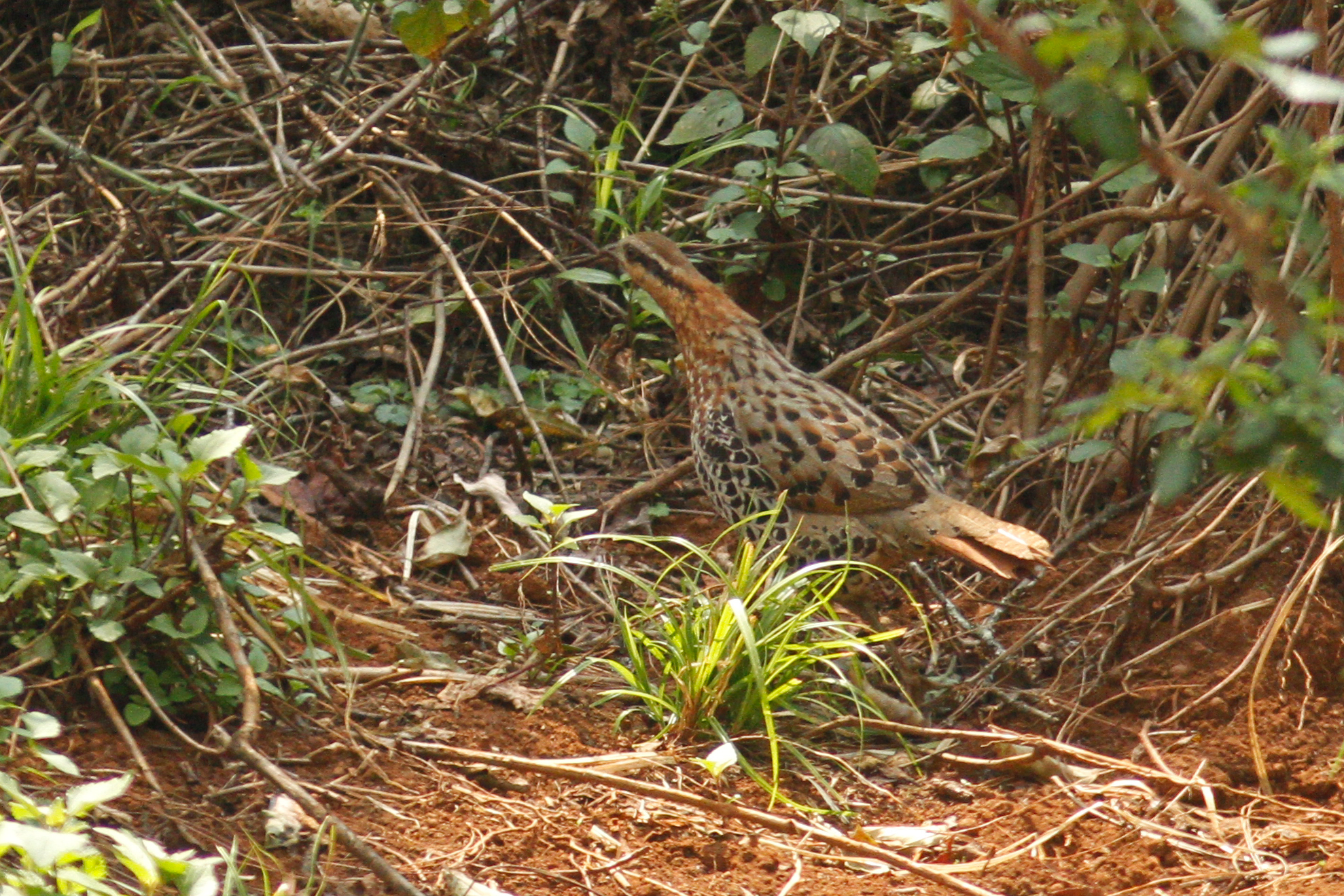
This medium-sized partridge displays a camouflaged plumage combining browns, cream, and grey tones that blend seamlessly with its bamboo forest habitat. The face features distinctive black and white stripes around the eyes, creating a bold facial pattern that contrasts with the otherwise cryptic plumage. The breast and abdomen are pale, marked with brown speckles that provide additional camouflage against the forest floor. The overall appearance reflects its ground-dwelling lifestyle, with a compact body shape suited to moving through dense understory vegetation.
Identification
The black and white eye stripes provide the most reliable field mark for identifying this species, as these contrasting facial markings stand out against the otherwise brownish plumage. The combination of pale, speckled underparts and the bamboo forest habitat also helps distinguish it from similar partridge species in its range. The bird's habit of remaining concealed in dense cover until dawn and dusk means observation opportunities are typically brief, with observers most likely to spot individuals moving between cover patches during these low-light periods.
Distribution & Habitat
The species occurs across a fragmented range in South and Southeast Asia, including Bangladesh, Tibet, India, Laos, Myanmar, Thailand, and Vietnam. It inhabits bamboo scrub forest, tall grassland, and degraded forest areas with bamboo groves, always remaining close to water sources. The bird favors hilly terrain with dense understory cover where it can remain concealed during daylight hours. No regular migration patterns have been documented, though individuals may make local movements in response to habitat conditions or seasonal changes.
Behavior & Ecology
Primarily active during the cooler hours of early morning and late evening, this bird emerges from dense cover to feed on tender bamboo shoots, young foliage, seeds, berries, and invertebrates. During the heat of day, it remains concealed beneath shrub cover, relying on its camouflage for protection. The breeding season spans from March to September, with the female creating a simple ground scrape lined with grass for incubation. She incubates the eggs for 18 to 19 days while the male remains nearby, feeding her during this period and helping raise the chicks after hatching. When threatened, the bird runs through dense cover rather than flying, taking flight only as a last resort before quickly returning to the protection of vegetation.
Conservation
The species is currently listed as Fairly Common throughout its range, though population numbers appear to be declining across much of its distribution. The primary threat comes from habitat loss as bamboo forests and grasslands are cleared for agricultural expansion. Despite this pressure, individuals have been observed adapting to cultivated land where suitable cover remains available. Evidence of hunting has been documented in parts of the species' range, adding additional pressure to already declining populations. Conservation efforts focused on protecting bamboo forest habitats would benefit this species across its geographic range.
Source: Wikipedia · CC BY-SA 3.0
Taxonomy
- Order
- Galliformes
- Family
- Phasianidae
- Genus
- Bambusicola
- eBird Code
- mobpar1
Subspecies (2)
-
Bambusicola fytchii fytchii
southwestern China (Sichuan and Yunnan) to Myanmar and northern Vietnam
-
Bambusicola fytchii hopkinsoni
northeastern India to Bangladesh and northern Myanmar
Data Sources
Species description from Wikipedia, licensed under CC BY-SA 3.0.
Bird images and sounds sourced from GBIF, contributed by citizen scientists worldwide under Creative Commons licenses.
Taxonomy data from AviList 2025.