Spotted Owlet
Athene brama
横斑腹小鸮
Introduction
Occurs across tropical Asia from Pakistan through the Indian subcontinent to Southeast Asia. Inhabits human-modified landscapes including farmland, villages, and urban areas, occupying building cavities, hollow trees, and rock crevices. Roosts in small groups. Emerges at dusk to hunt. Frequently encountered during daylight when mobbed by small birds. Exhibits geographic variation in size and plumage tone, with drier-region populations appearing paler. Forms a superspecies complex with the little owl, though both are now treated as distinct. Vocalizations consist of churring notes followed by sharper chirwak notes.
Description
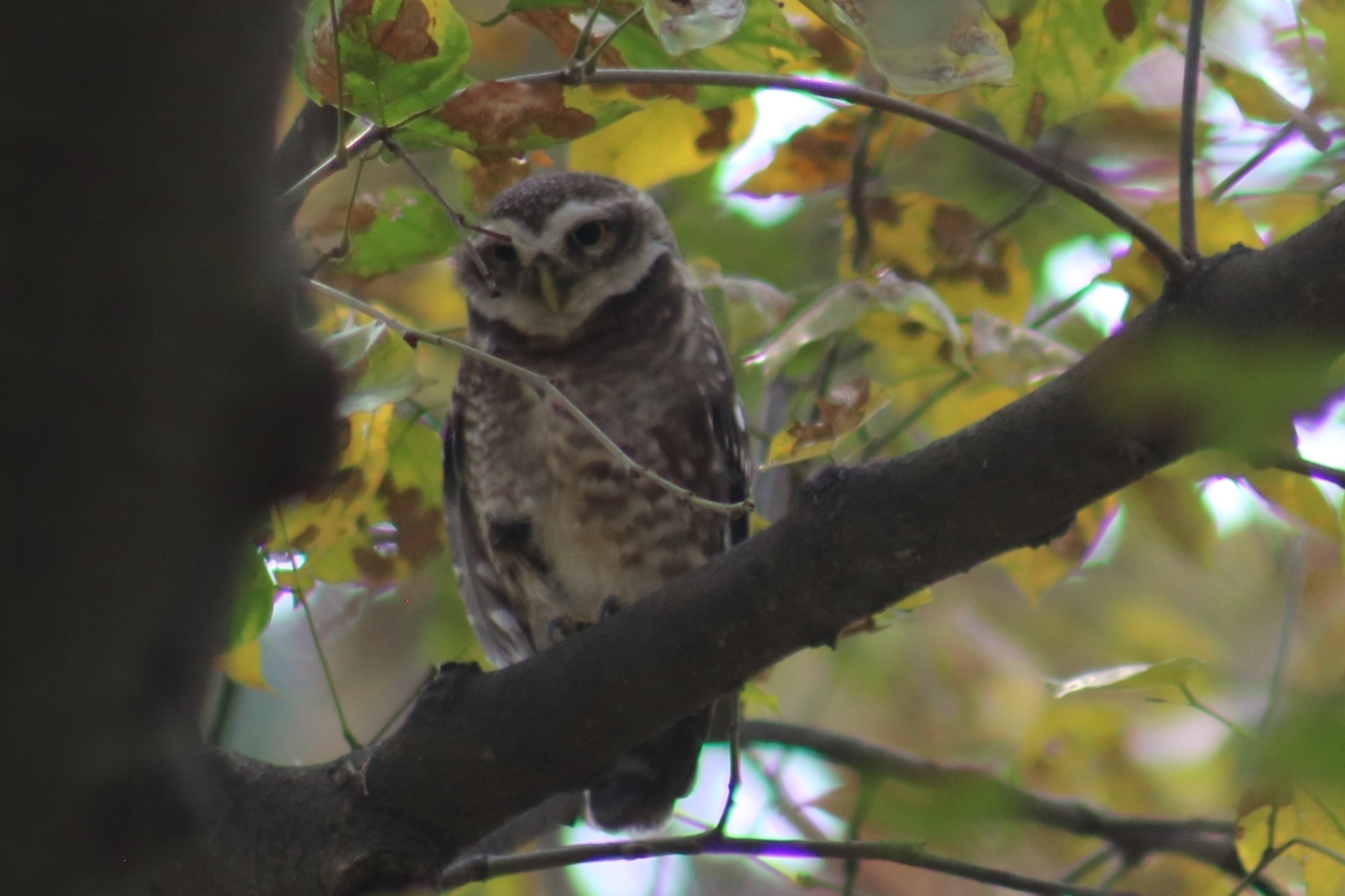
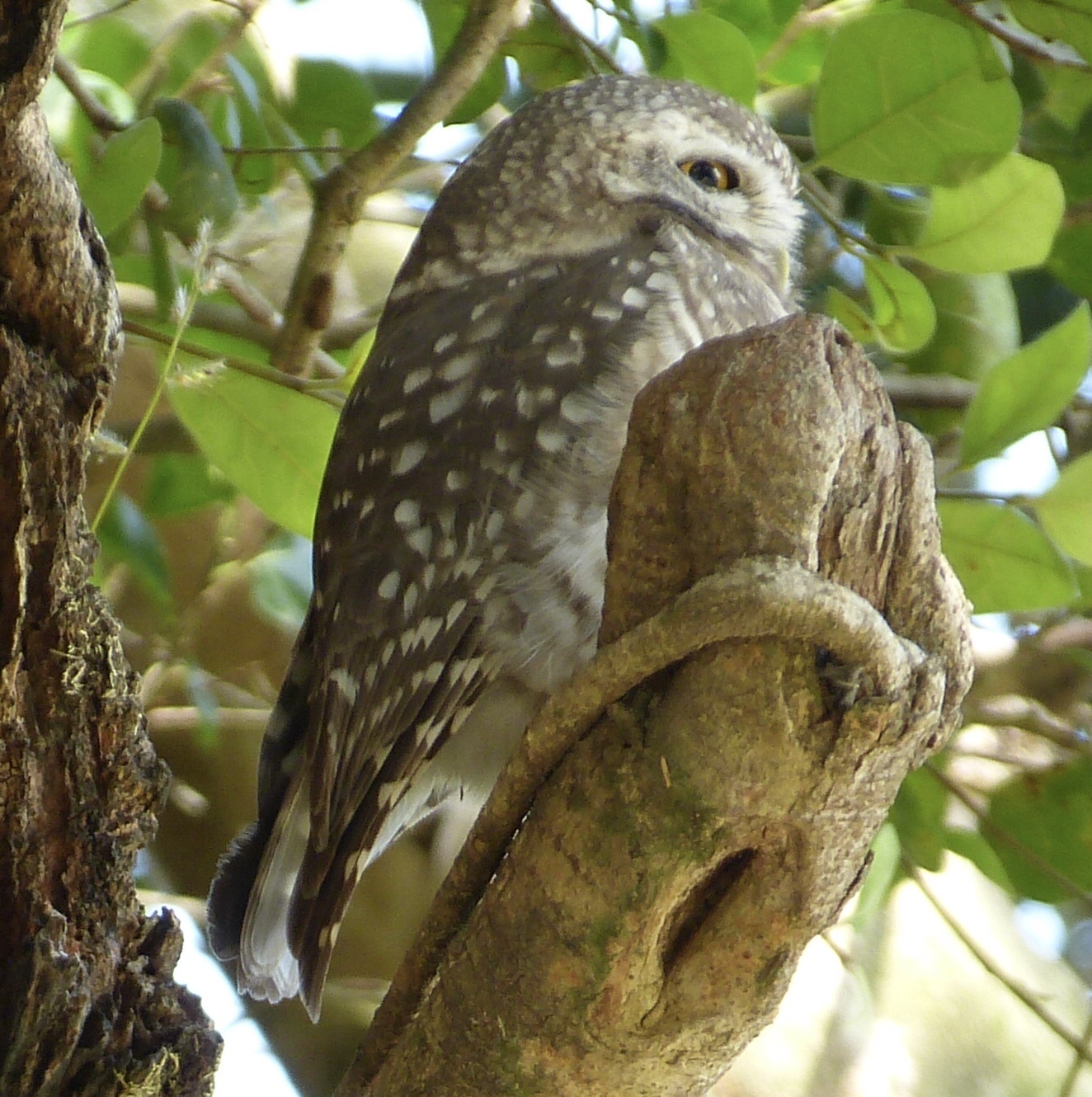
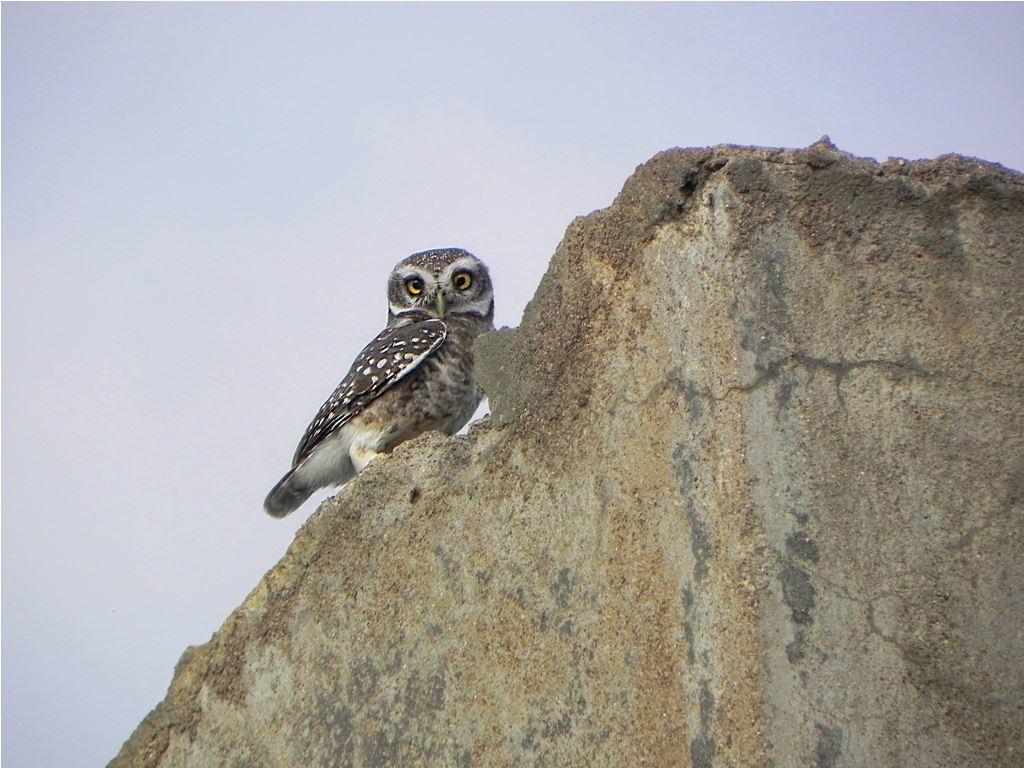
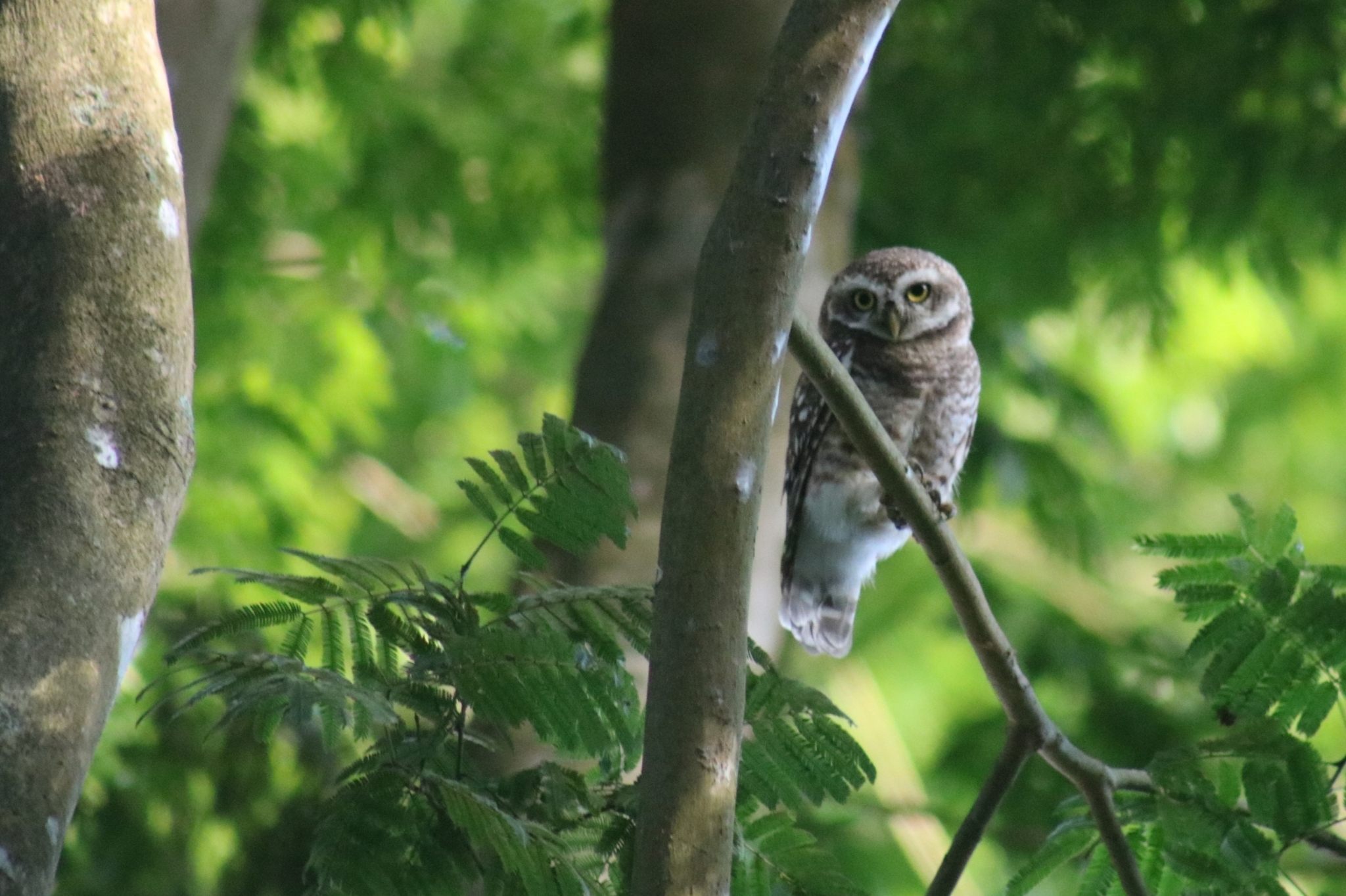
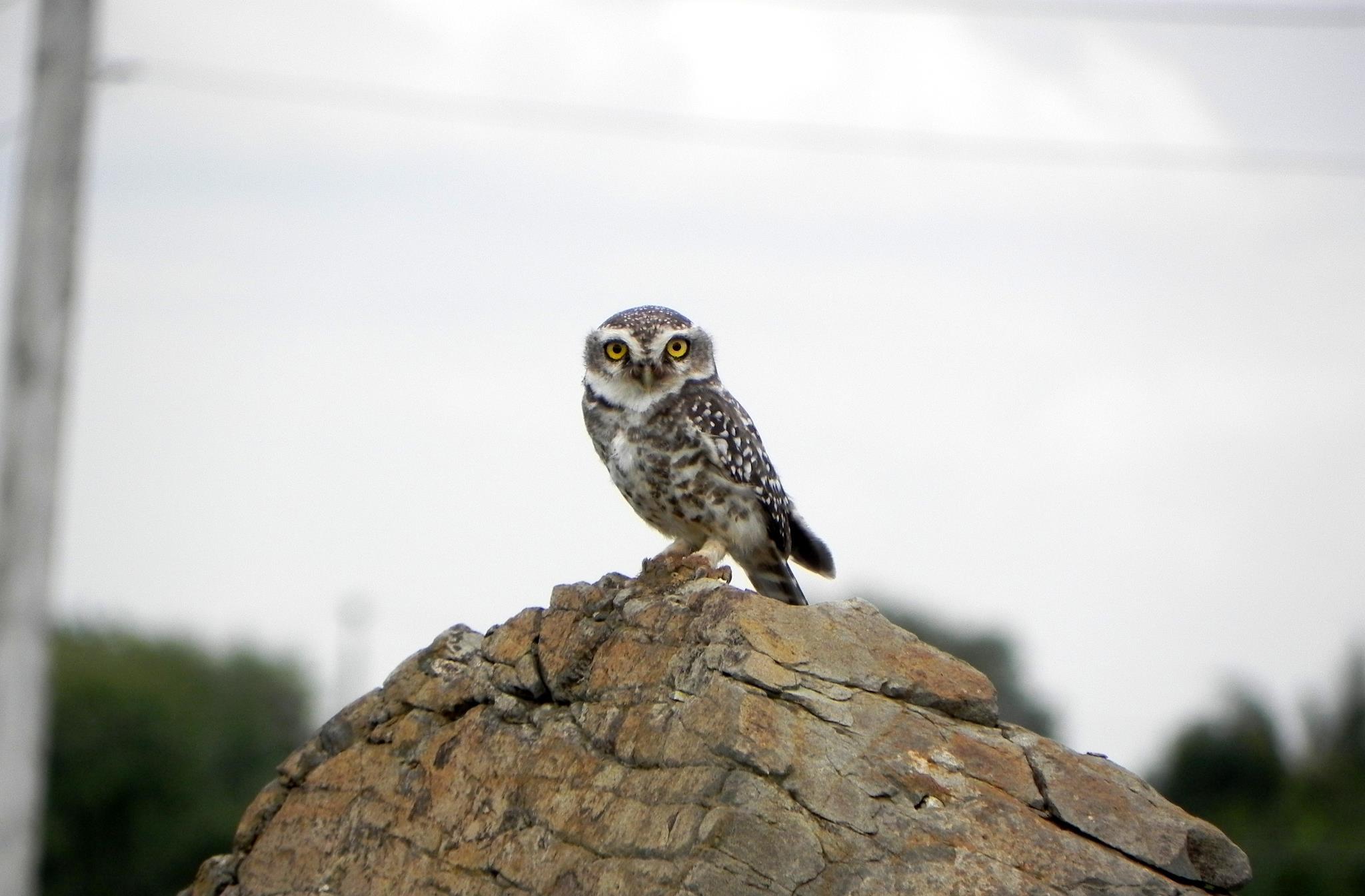
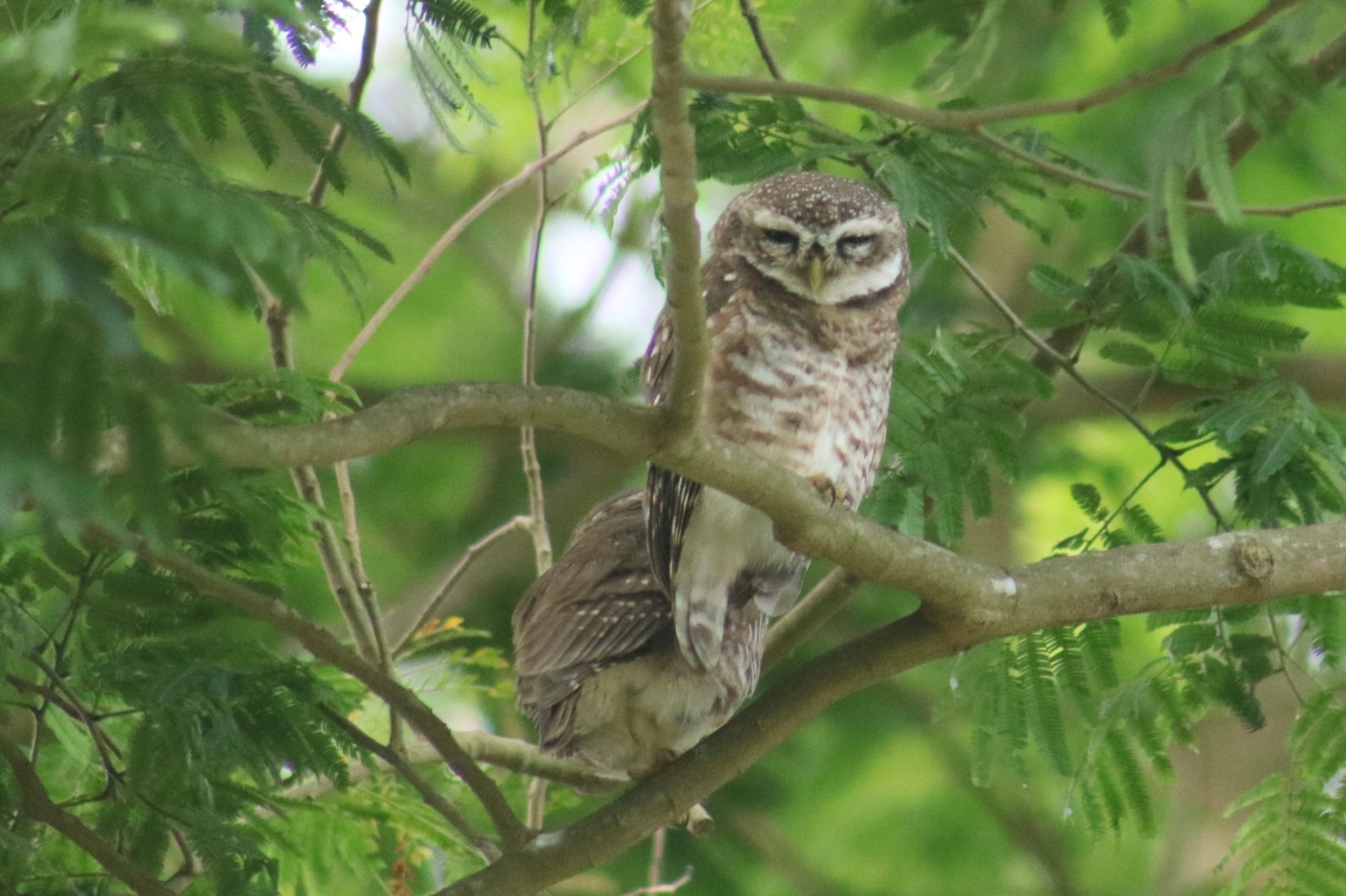
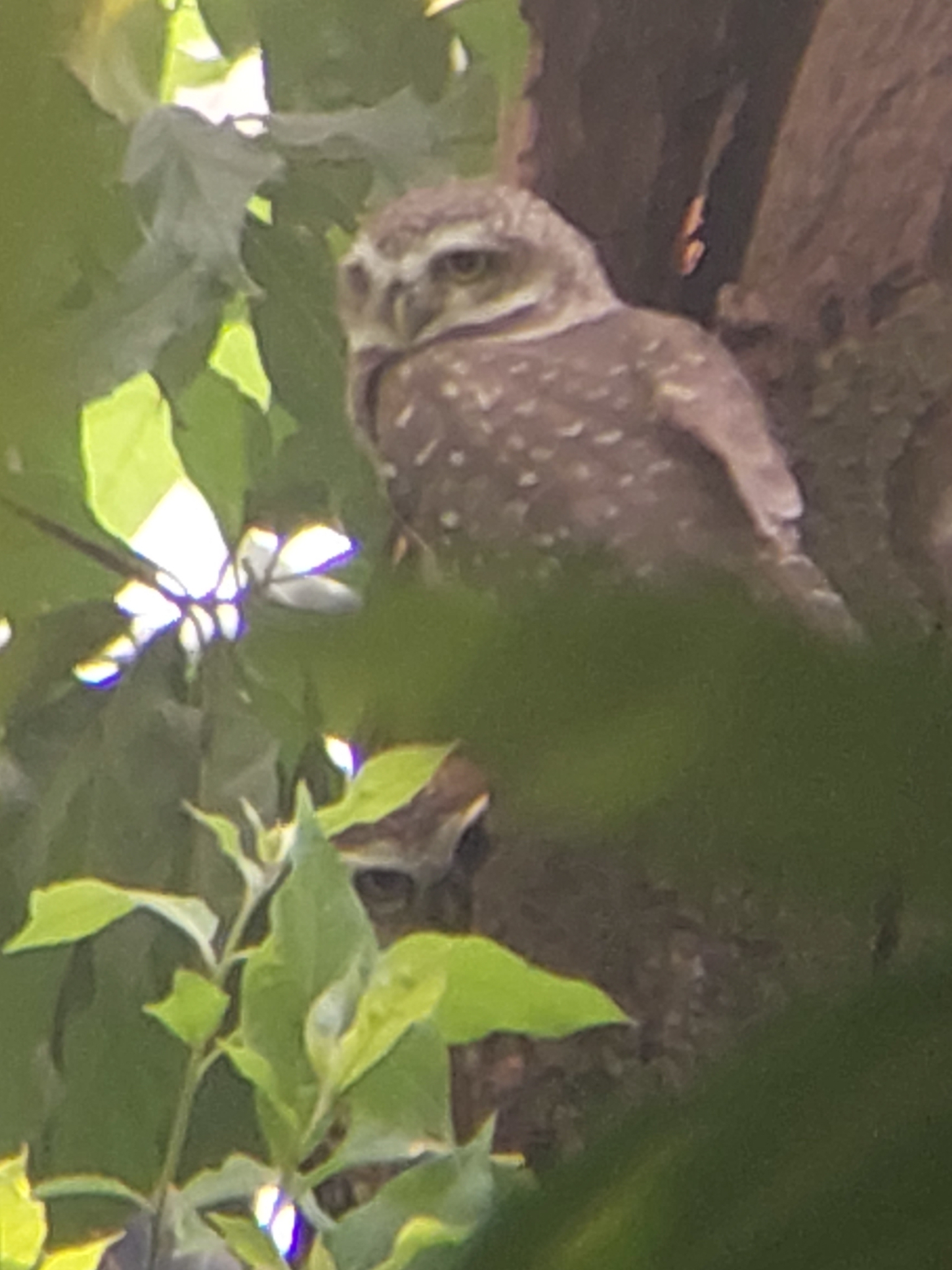
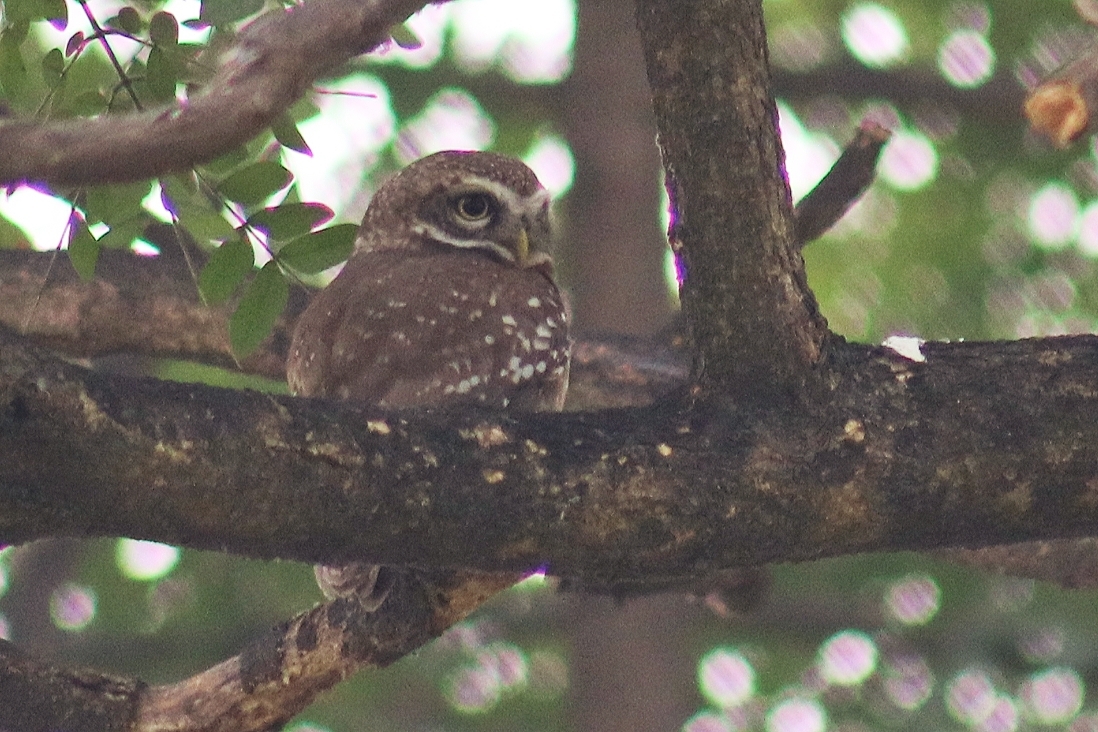
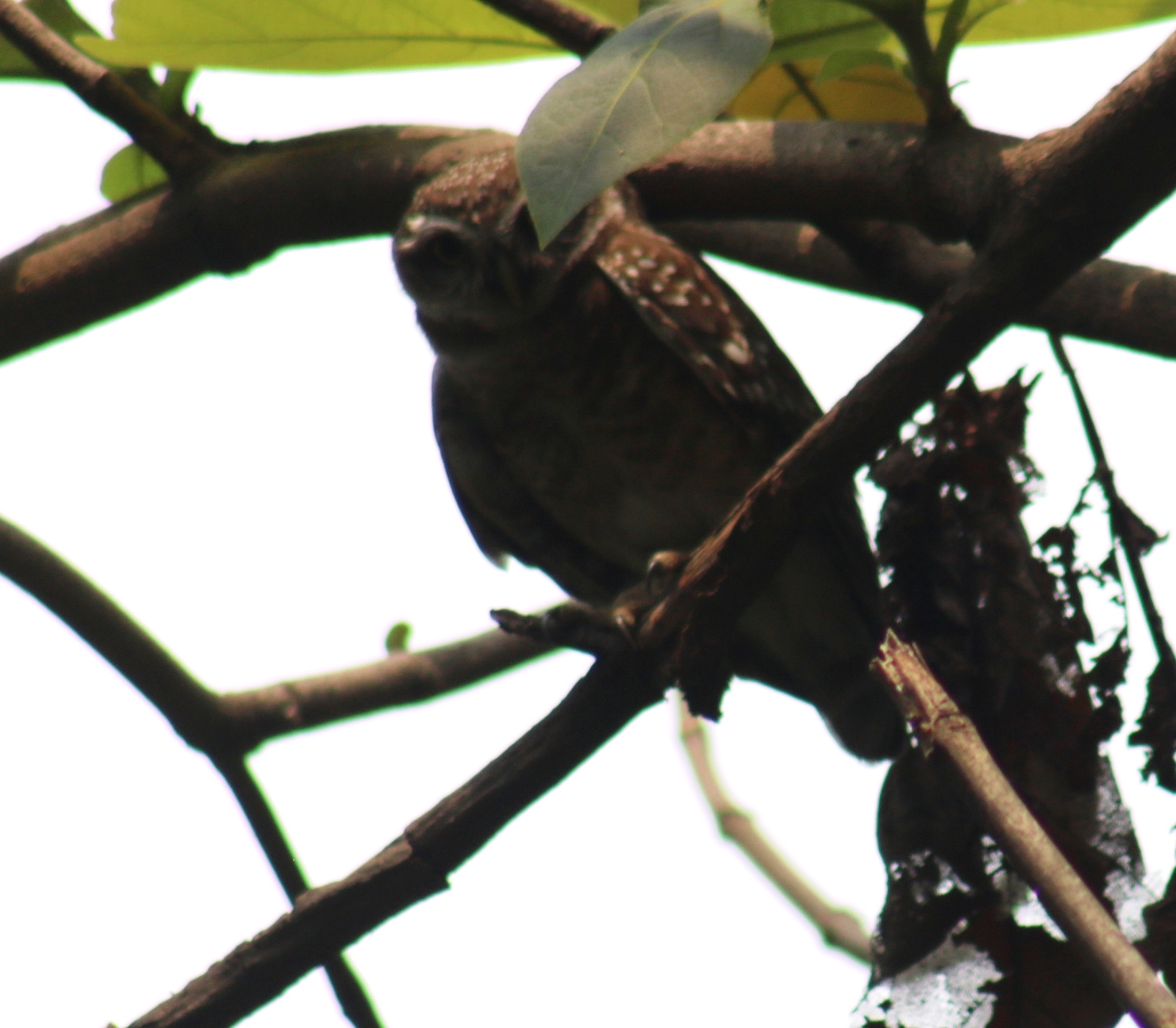
A compact, round-headed owl measuring just 21 centimeters in length, this species has a distinctly stocky build. The upperparts are grey-brown and conspicuously marked with white spots, while the underparts are white with brown streaking. The pale facial disc surrounds bright yellow eyes, and distinctive white markings include a neckband and a prominent supercilium above each eye. The sexes appear identical, with females showing slightly larger measurements. When flying, it displays a characteristic deeply undulating pattern. Geographic variation is pronounced, with the southern nominate form being darker overall than the paler northern subspecies found in drier regions.
Identification
The combination of small size, heavily spotted upperparts, yellow eyes, and white neckband helps distinguish this species from similar owls in its range. Unlike many owls, it is frequently active during daylight and often seen exposed on perches. When disturbed, it bobs its head and stares fixedly at intruders—a distinctive behavior that aids identification. Small birds mobbing a perched owl during daytime often reveal its location. It closely resembles the little owl, but ranges overlap only marginally, and the spotted owlet has more extensive white spotting on the mantle and a different call. The pale facial disc separates it from darker-eyed owl species.
Distribution & Habitat
This resident species breeds across tropical Asia from Pakistan and Iran through the Indian subcontinent to Southeast Asia, including Myanmar, Thailand, Cambodia, and Vietnam. It is absent from Sri Lanka and does not occur in the Himalayan foothills. The species occupies open habitats including farmland, scrubland, and urban areas, showing particular tolerance for human habitation. It has adapted well to cities, utilizing buildings and trees in parks and gardens. Five subspecies are recognized, with size generally decreasing from northern to southern populations. Northern and southern Indian populations intergrade without clear boundaries. It is largely sedentary, with only local movements reported.
Behavior & Ecology
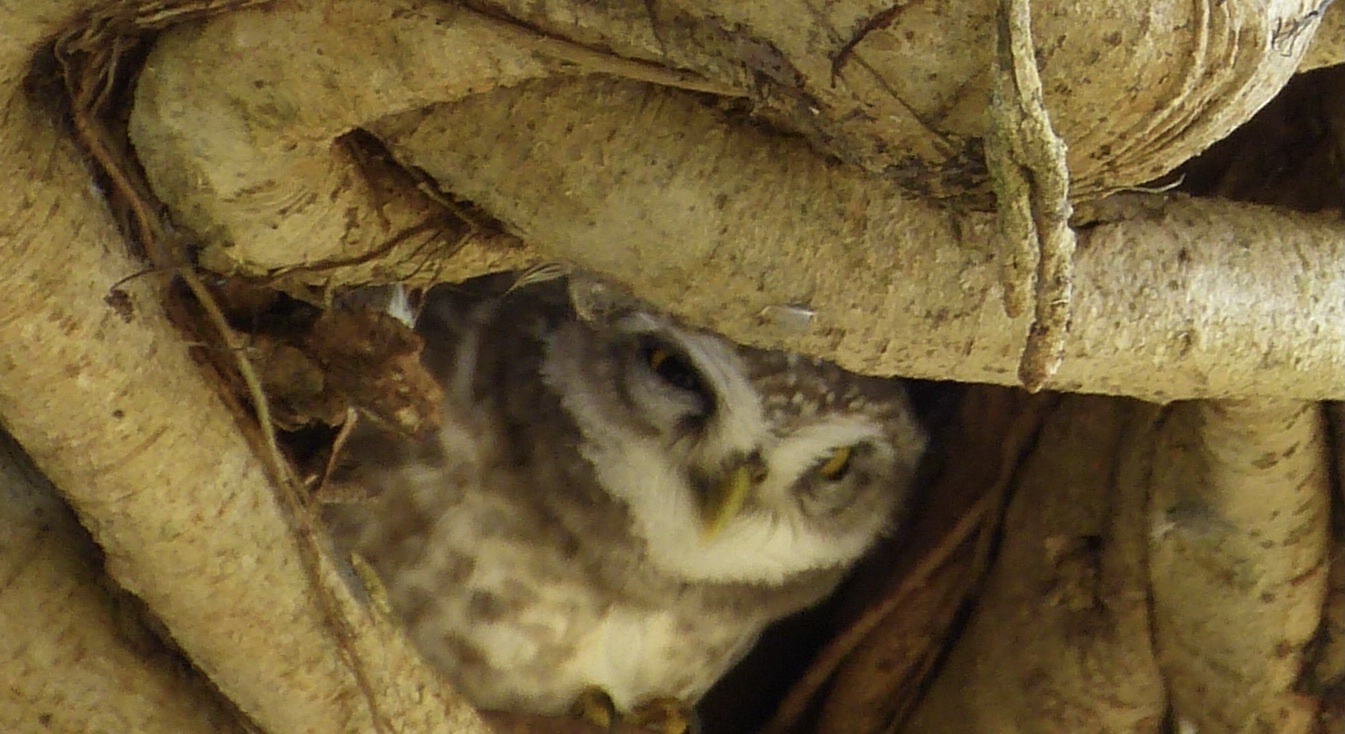
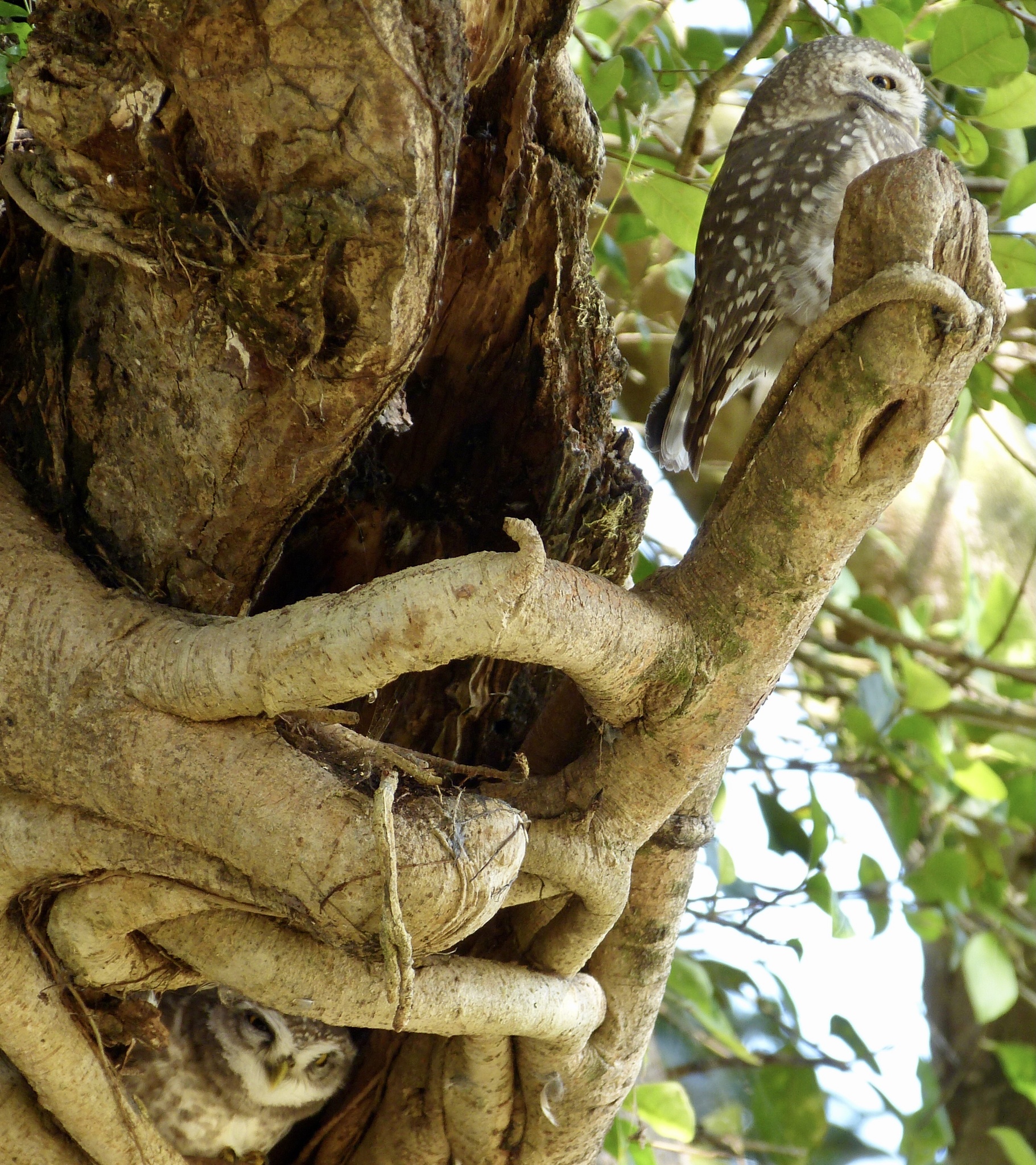
Though primarily nocturnal, this owl is often encountered during the day, particularly at dusk and dawn when calling is most frequent. The vocalization is a harsh, loud churring series chirurr-chirurr-chirurr that concludes with sharper chirwak notes. It hunts a varied diet including insects, rodents, bats, small snakes, toads, scorpions, and molluscs. In arid regions, rodents of the genus Mus are preferred prey. The breeding season spans November to April. Courtship involves bill grasping, mutual preening, and ritual feeding. Nests are placed in tree cavities, building holes, or earthen embankments, often competing with other hole-nesting birds. Clutches contain three to four spherical white eggs, and chicks fledge after approximately one month.
Conservation
This species remains common and widespread throughout much of its extensive range, benefiting from its adaptability to human-modified landscapes. It is not currently considered threatened, as urban and agricultural environments provide abundant habitat and food resources. No significant population declines have been documented, though local populations may face pressure from pesticide use affecting prey species and competition for nesting sites with invasive species. The species is evaluated as Least Concern by international conservation authorities.
Culture
This familiar owl has long been associated with superstitions and bad omens in parts of its range, particularly due to its loud nighttime calls and eerie appearance. Its presence near human dwellings often provokes strong reactions, with some communities considering it an ill omen. Despite this reputation, the species continues to live in close association with humans, occupying buildings and gardens throughout towns and villages. The species' French name and scientific epithet brama indirectly reference the Hindu supreme spirit Brahma, reflecting the bird's cultural significance in South Asia.
Source: Wikipedia · CC BY-SA 3.0
Taxonomy
- Order
- Strigiformes
- Family
- Strigidae
- Genus
- Athene
- eBird Code
- spoowl1
Vocalizations
Subspecies (5)
-
Athene brama brama
southern India
-
Athene brama indica
southern Iran and from southern Pakistan east across northern and central India (except for the northeast) to Nepal, Bhutan, and Bangladesh
-
Athene brama mayri
northern and eastern Myanmar, Thailand (except far south), southern Laos, Cambodia, and southern Vietnam
-
Athene brama pulchra
central and southern Myanmar
-
Athene brama ultra
northeastern India (Arunachal Pradesh and east Assam)
Data Sources
Species description from Wikipedia, licensed under CC BY-SA 3.0.
Bird images and sounds sourced from GBIF, contributed by citizen scientists worldwide under Creative Commons licenses.
Taxonomy data from AviList 2025.