Thick-billed Warbler
Arundinax aedon
厚嘴苇莺
Introduction
The species breeds across the temperate eastern Palearctic from southern Siberia through western Mongolia. It migrates to winter in tropical South and Southeast Asia. Vagrant individuals occur occasionally in western Europe. This species inhabits dense reedbeds, thickets, and tangled undergrowth where it forages for insects and other invertebrates. Taxonomic revisions based on phylogenetic evidence placed this species in the genus Arundinax after previous placements in other genera.
Description
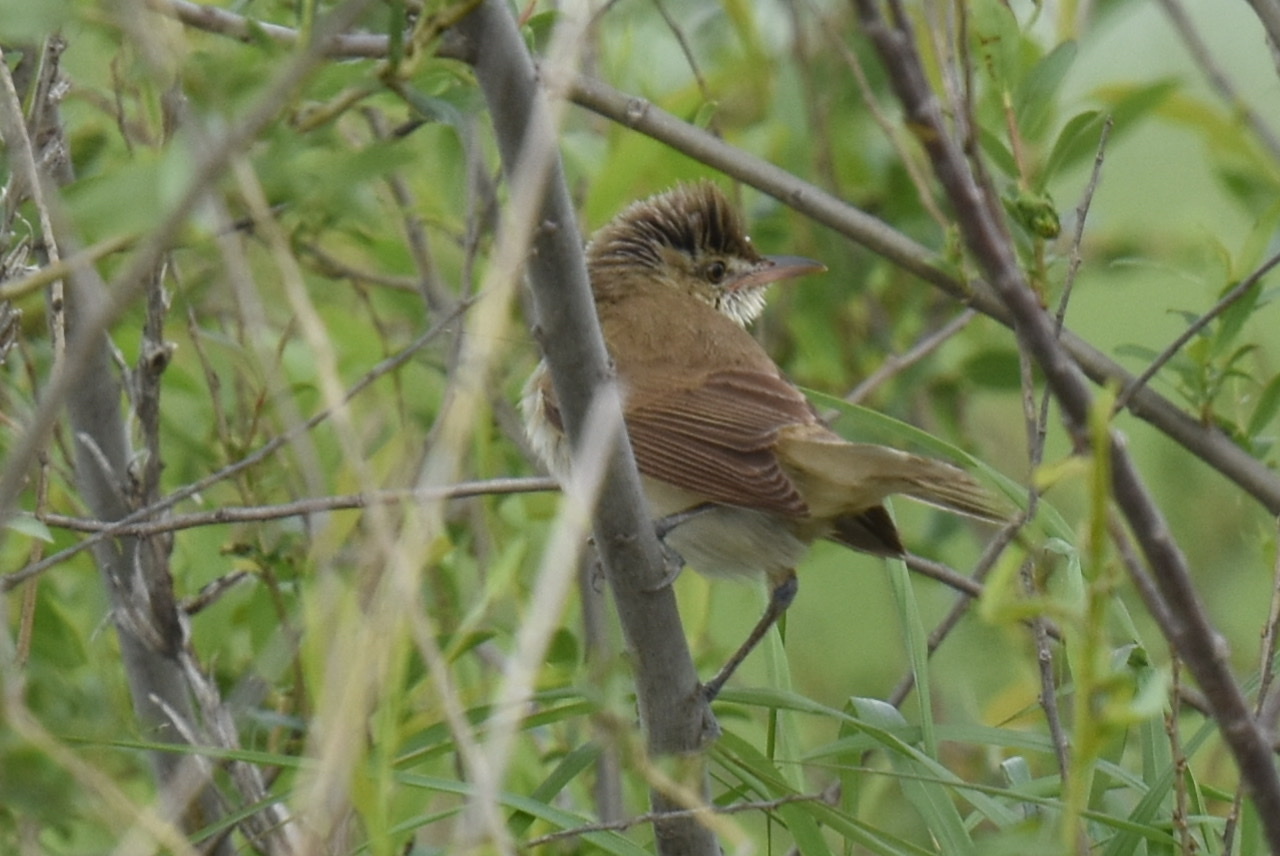
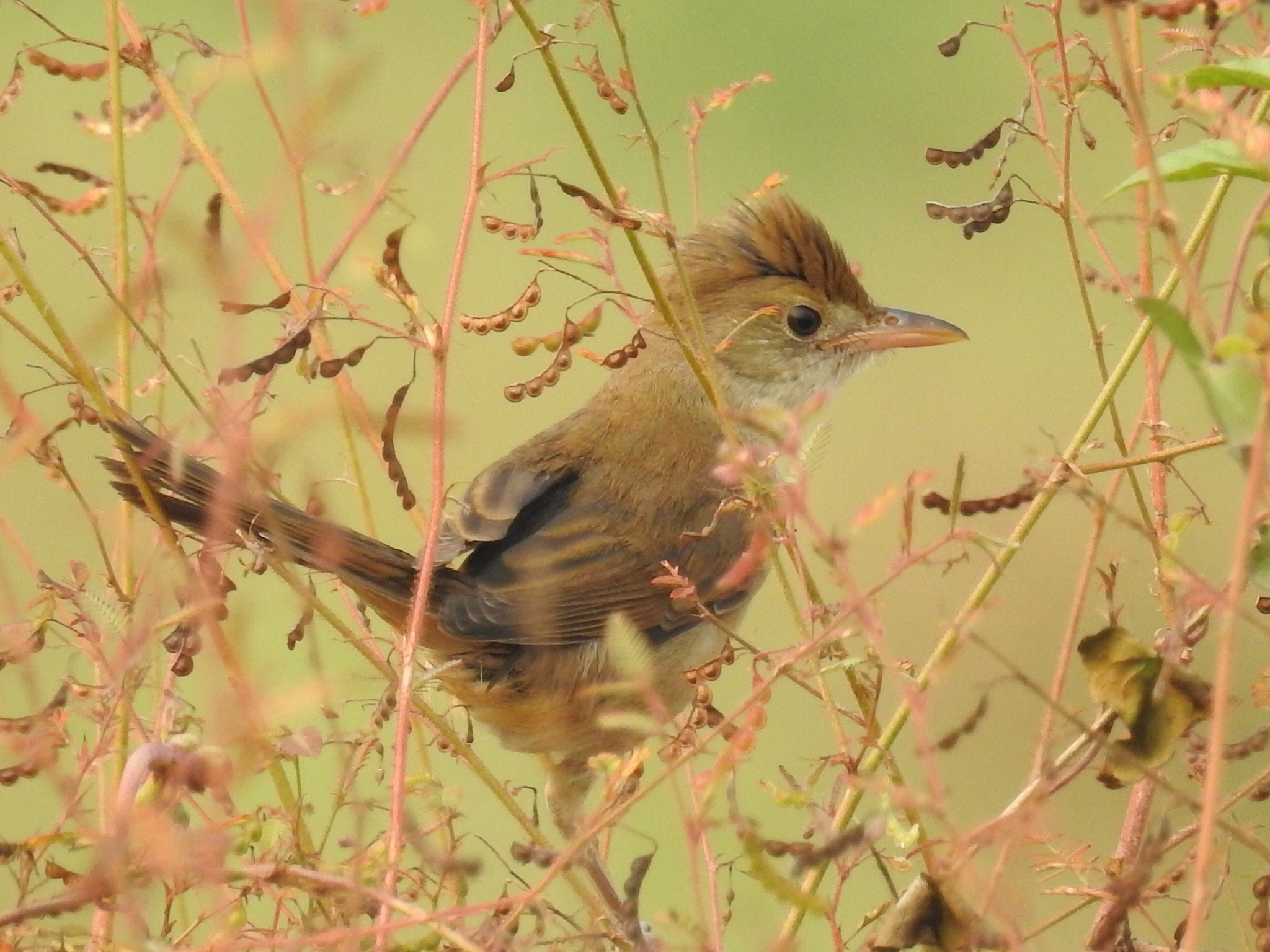
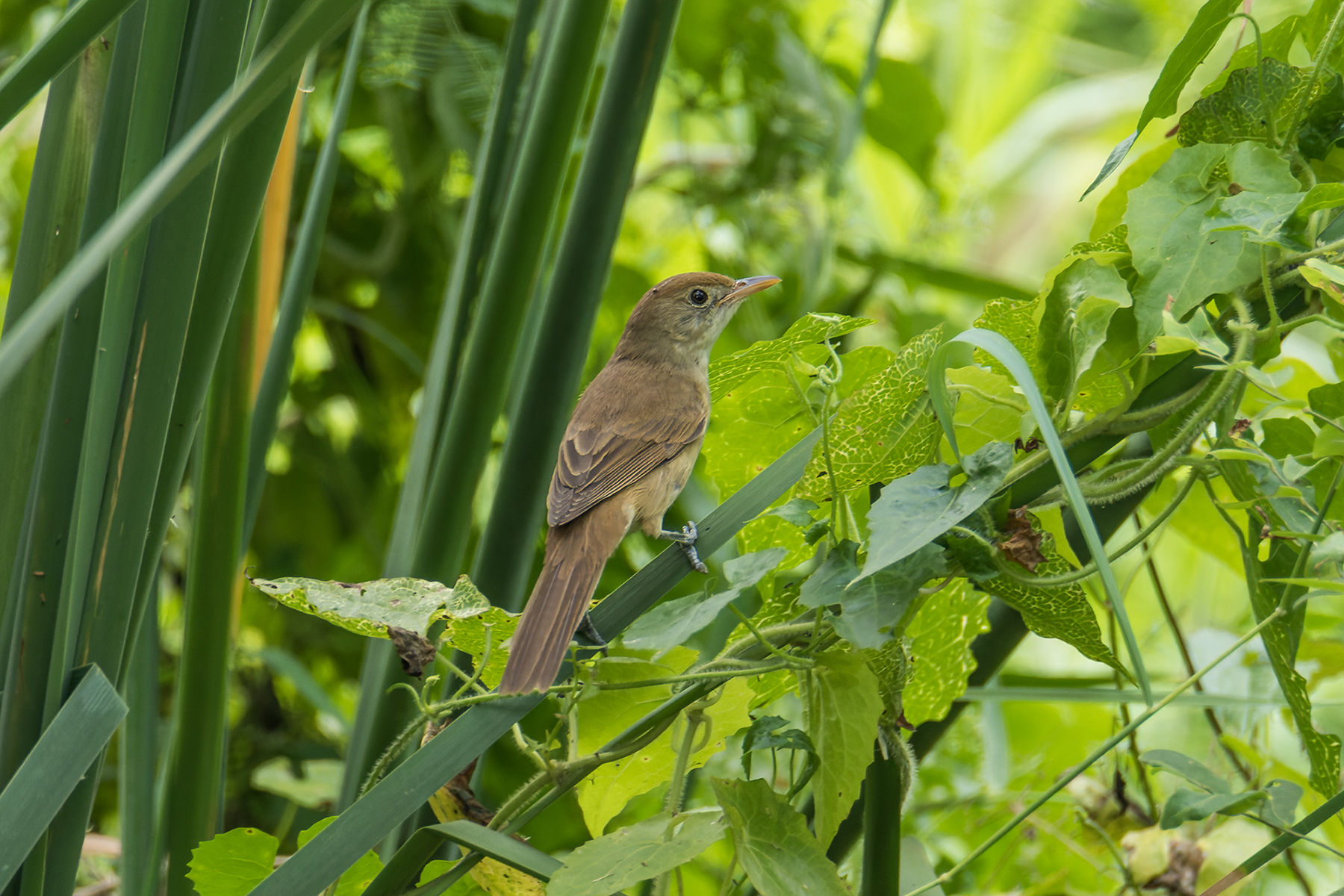
This is a large warbler, measuring 16-17.5 cm (6.3-6.9 inches) in length, making it one of the bigger members of its family and nearly matching the size of a great reed warbler. The adult has an unstreaked brown upperparts and buff-colored underparts, with relatively few distinctive plumage features that immediately set it apart from other warblers. The head shape is notable for its rounded forehead, and the bill is short and pointed. As is typical for most warbler species, the sexes appear identical in the field. However, young birds can be distinguished by their richer, more pronounced buff coloration on the underparts. Overall, this is a robust-looking warbler that conveys a sense of substance compared to its smaller relatives.
Identification
Field identification relies on a combination of structural features and size. The large size for a warbler is often the first clue, particularly when seen alongside other warbler species. The rounded forehead and short, pointed bill create a distinctive head profile. The unstreaked brown upperparts and buff underparts, while not particularly striking, help separate it from streaked or more colorful warbler species. The rich buff underparts of juvenile birds can be a useful识别特征. Given its preference for dense vegetation, sightings are often brief, making the combination of size, structure, and habitat preference key to confident identification.
Distribution & Habitat
The breeding range extends across the temperate east Palearctic region, from southern Siberia west to Mongolia. This is a long-distance migratory species, spending the winter months in tropical South Asia and Southeast Asia. The migration routes take it through appropriate habitat corridors, and it favors dense vegetation including reeds, bushes, and thick undergrowth throughout its range. While primarily an Asian species, it has occurred as a very rare vagrant in western Europe, where any sighting generates significant interest among the birdwatching community. The species occupies different habitat types during breeding and wintering periods but remains tied to dense vegetation cover in both.
Behavior & Ecology
Like most warblers, this species is primarily insectivorous, feeding on insects and their larvae within its dense habitat. However, it will also take other small prey items when available, demonstrating some dietary flexibility. The breeding season involves the construction of a nest situated in a low tree, where the female lays a clutch of five or six eggs. The song is notably fast and loud, delivered with energy and purpose. It shares similarities with the marsh warbler's song but is distinguished by frequent mimicry of other species and the incorporation of typical acrocephaline whistles. The complex, mimetic quality of the song adds richness to the soundscape of its breeding habitat.
Conservation
No conservation information is provided in the source article.
Culture
The scientific name carries interesting cultural significance. The genus name Arundinax derives from Latin arundo (reed) and Greek anax (master), referencing the bird's association with reed habitats and its status as a substantial representative of its group. The specific epithet aedon comes from the Greek word for nightingale, honoring Queen Aëdon from Greek mythology. According to legend, Aëdon was transformed into a nightingale after accidentally killing her own son Itylus while attempting to murder one of the sons of her sister-in-law Niobe. This mythological connection links the species to ancient stories of tragedy and metamorphosis, though these etymological origins relate to scholarly naming rather than cultural significance in the bird's range countries.
Source: Wikipedia · CC BY-SA 3.0
Taxonomy
- Order
- Passeriformes
- Family
- Acrocephalidae
- Genus
- Arundinax
- eBird Code
- thbwar1
Vocalizations
Subspecies (2)
-
Arundinax aedon aedon
breeds southern Siberia to western Mongolia; winters to Myanmar, Thailand, and Indonesia
-
Arundinax aedon rufescens
breeds eastern Siberia to Mongolia; winters to southeastern China, Thailand, and Indochina
Data Sources
Species description from Wikipedia, licensed under CC BY-SA 3.0.
Bird images and sounds sourced from GBIF, contributed by citizen scientists worldwide under Creative Commons licenses.
Taxonomy data from AviList 2025.