Ashy Woodswallow
Artamus fuscus
灰燕鵙
Introduction
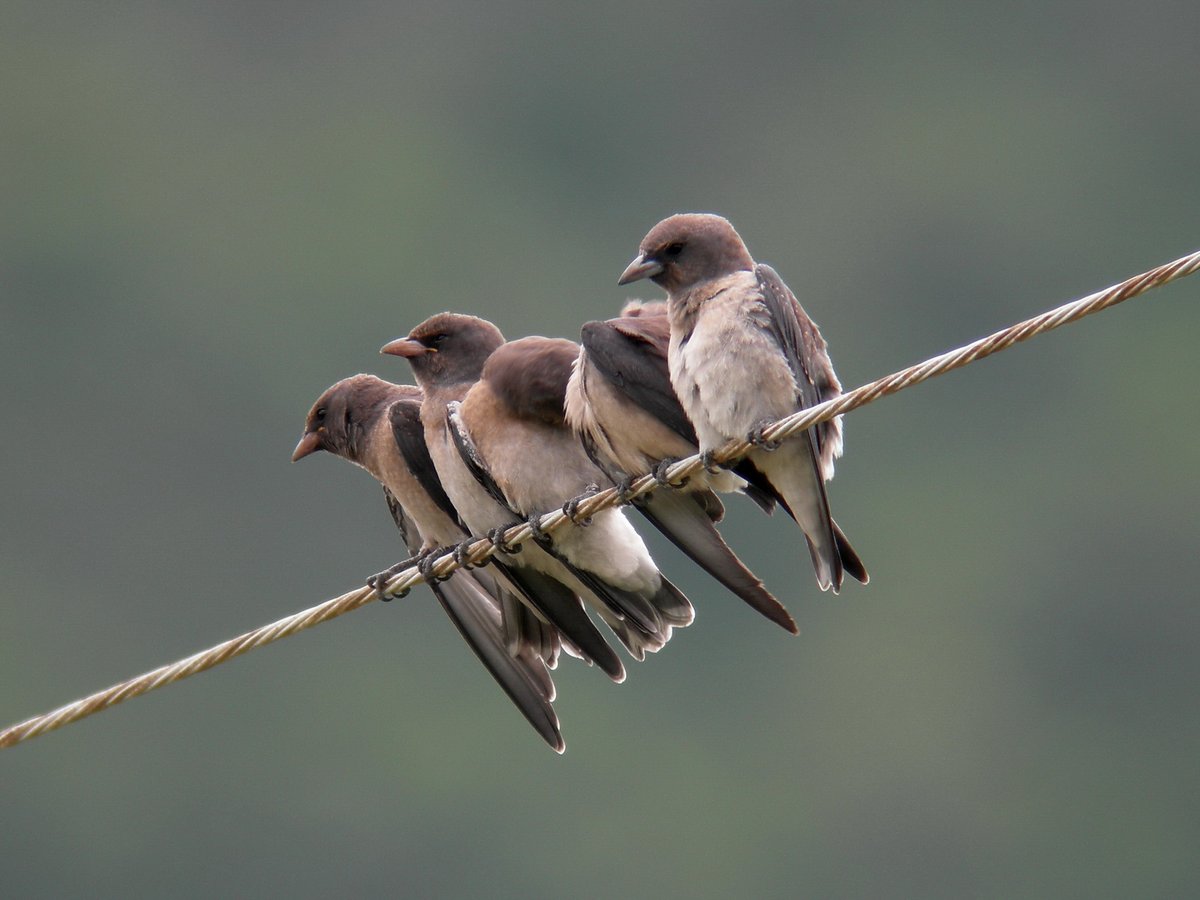
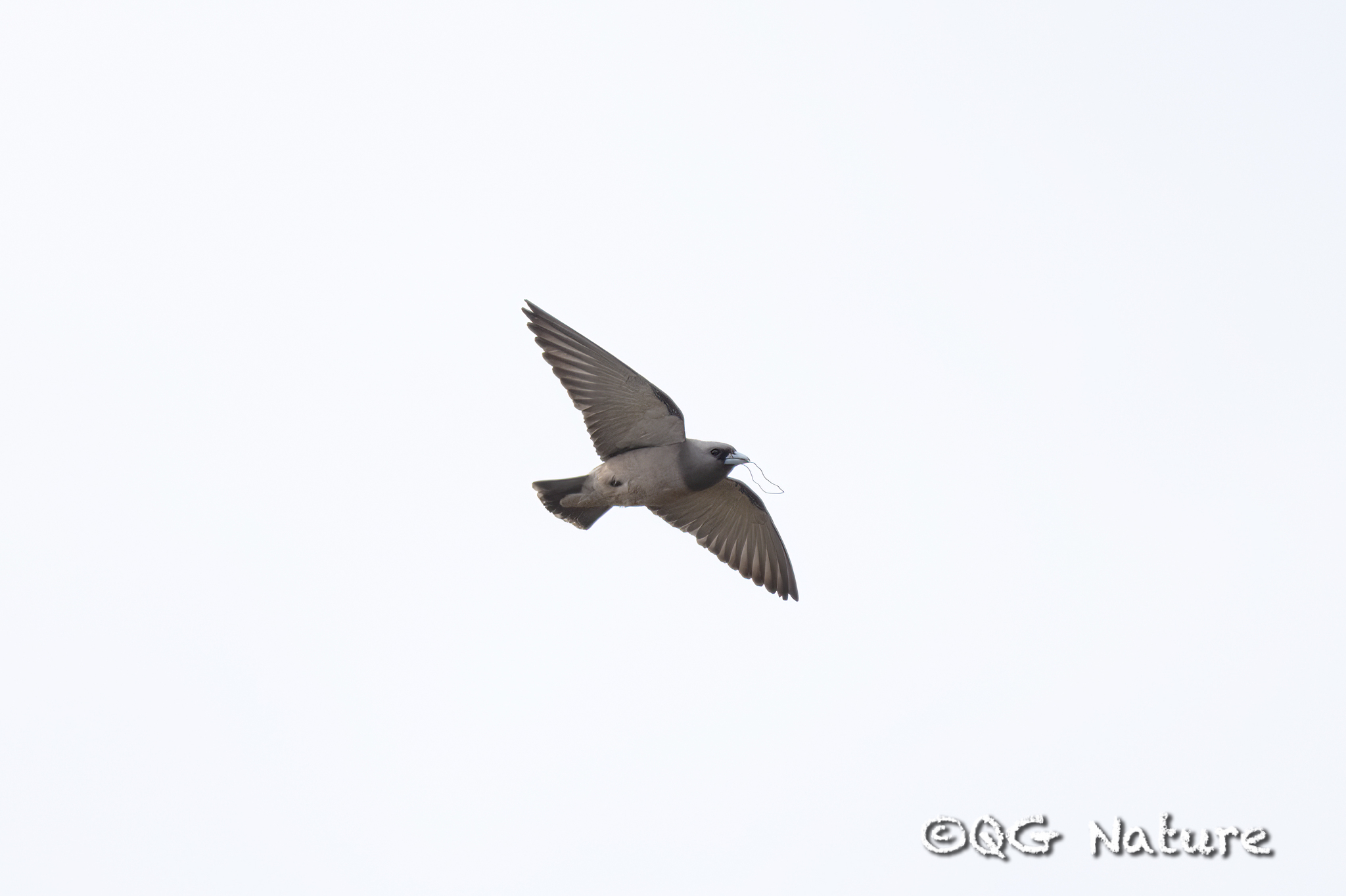
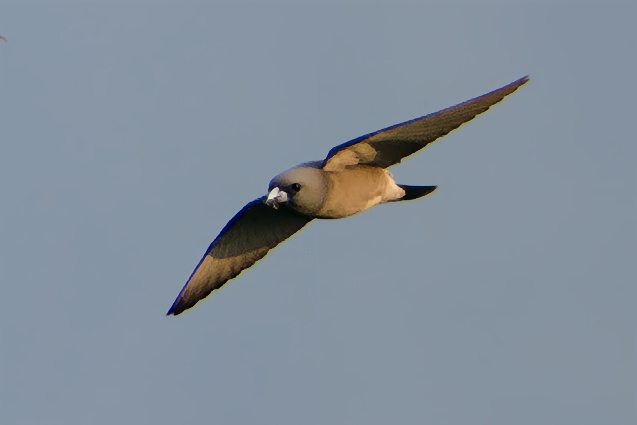
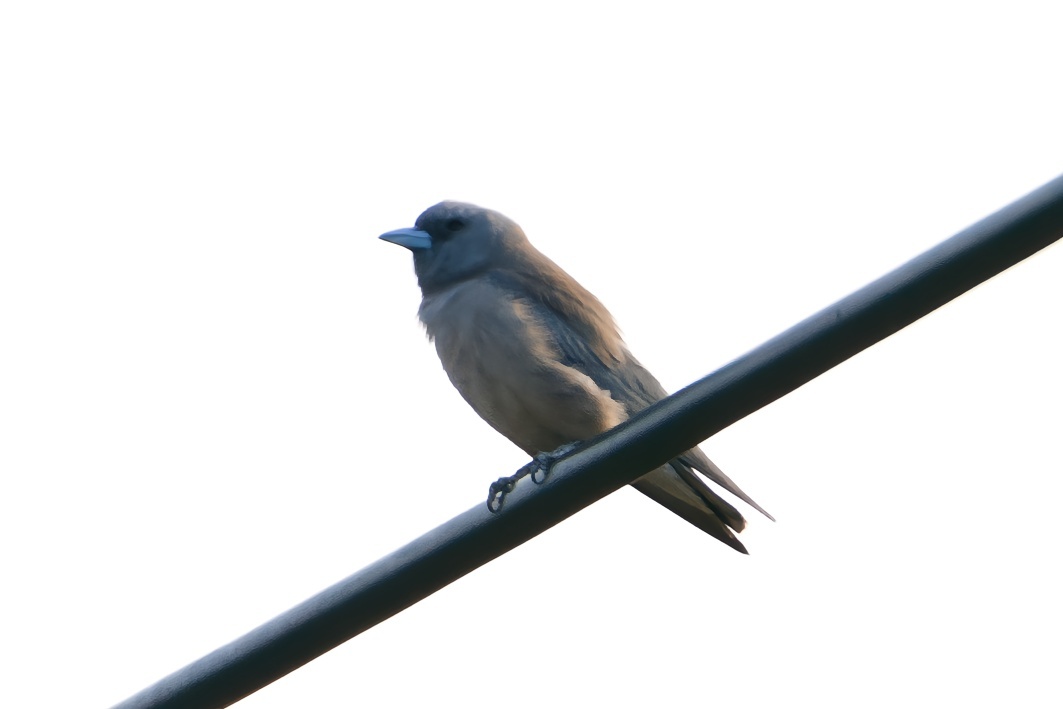
This woodswallow occurs across South Asia in areas with tall palm trees and human settlements. It has a short square tail, curved finch-like bill, and long wings that create a triangular profile in flight. The species occurs in small groups, perching on bare branches of tall trees or on powerlines and pylons. It launches aerial attacks on passing insects from high vantage points. Powder down feathers are present, an unusual feature among perching birds. No geographic variation exists across its range, and males and females are identical in plumage. The species inhabits both urban and rural landscapes throughout the Indian subcontinent and Southeast Asia.
Description
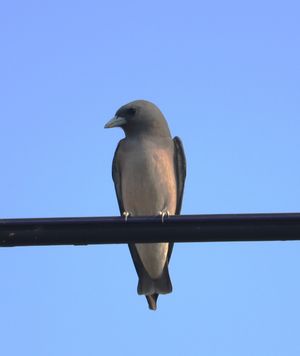
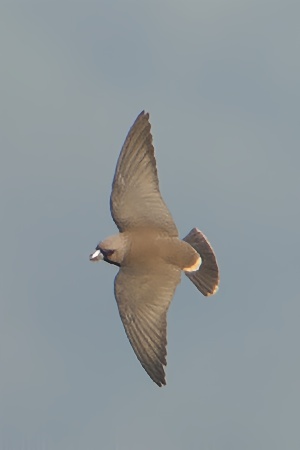
A medium-sized passerine with a compact, stocky build. The upperparts are ashy grey, darker on the head, with a distinctive narrow pale band across the rump. The underparts show a pinkish-grey wash. The short tail is slaty black with conspicuous white tips. The bill is finch-like and silvery in colour. In flight, the long wings are very broad at the base, creating a pronounced triangular outline. The first primary feather is notably short. Legs are short and adapted for perching rather than ground movement. Young birds are distinctively barred on the underside.
Identification
This species is most readily identified by its stocky build, triangular wing shape in flight, and habit of perching in groups on high exposed locations. The white-tipped black tail is diagnostic when viewed from below. The ashy grey upperparts combined with pinkish-grey underparts separate it from other woodswallows in its range. The combination of silvery bill and dark head helps distinguish it from similarly sized aerial insectivores. It is typically seen in small groups rather than singly, which helps separate it from solitary species.
Distribution & Habitat
Widely distributed across Bangladesh, India, Nepal, Sri Lanka, Thailand, Myanmar, Laos, Malaysia and China. Inhabits plains and foothills up to 2000 metres elevation, including cultivated areas, forest clearings and areas with tall palm trees. Absent from the very arid regions of western India. Has been recorded on the Maldives islands. Makes seasonal movements possibly linked to rainfall patterns.
Behavior & Ecology
Highly social, usually found in small groups that may huddle together on bare branches, sometimes preening each other. Feeds primarily on insects caught in aerial sallies from high perches, but also takes nectar from trees such as Erythrina. Notably, it consumes toxic butterflies of the family Danaiidae that other birds avoid. The breeding season in India runs from March to June. Nests are shallow cups placed at height, such as at the base of palm fronds or inside street lighting posts. Clutch size is 2-3 greenish-white eggs with brown spots. Both parents share all nesting duties. The song consists of varied wheezy notes that may include imitations of other birds. The common call is a shrill nasal chewk. Will mob crows and birds of prey near the nest.
Conservation
No specific conservation assessment information provided in source text.
Source: Wikipedia · CC BY-SA 3.0
Taxonomy
- Order
- Passeriformes
- Family
- Artamidae
- Genus
- Artamus
- eBird Code
- ashwoo2
Distribution
India and Sri Lanka to Myanmar, southern China, and southeastern Asia
Vocalizations
Data Sources
Species description from Wikipedia, licensed under CC BY-SA 3.0.
Bird images and sounds sourced from GBIF, contributed by citizen scientists worldwide under Creative Commons licenses.
Taxonomy data from AviList 2025.