Indian Pond Heron
Ardeola grayii
印度池鹭
Introduction
The Little Egret occurs from southern Iran east through the Indian subcontinent to Burma and Sri Lanka. It inhabits the edges of ponds, lakes, and marshes, as well as cultivated fields and urban areas. The species stands motionless for extended periods while stalking prey. It forages in natural wetlands and urban environments, roosting in trees. Body length is approximately 55-65 cm with a wingspan of 88-106 cm.
Description
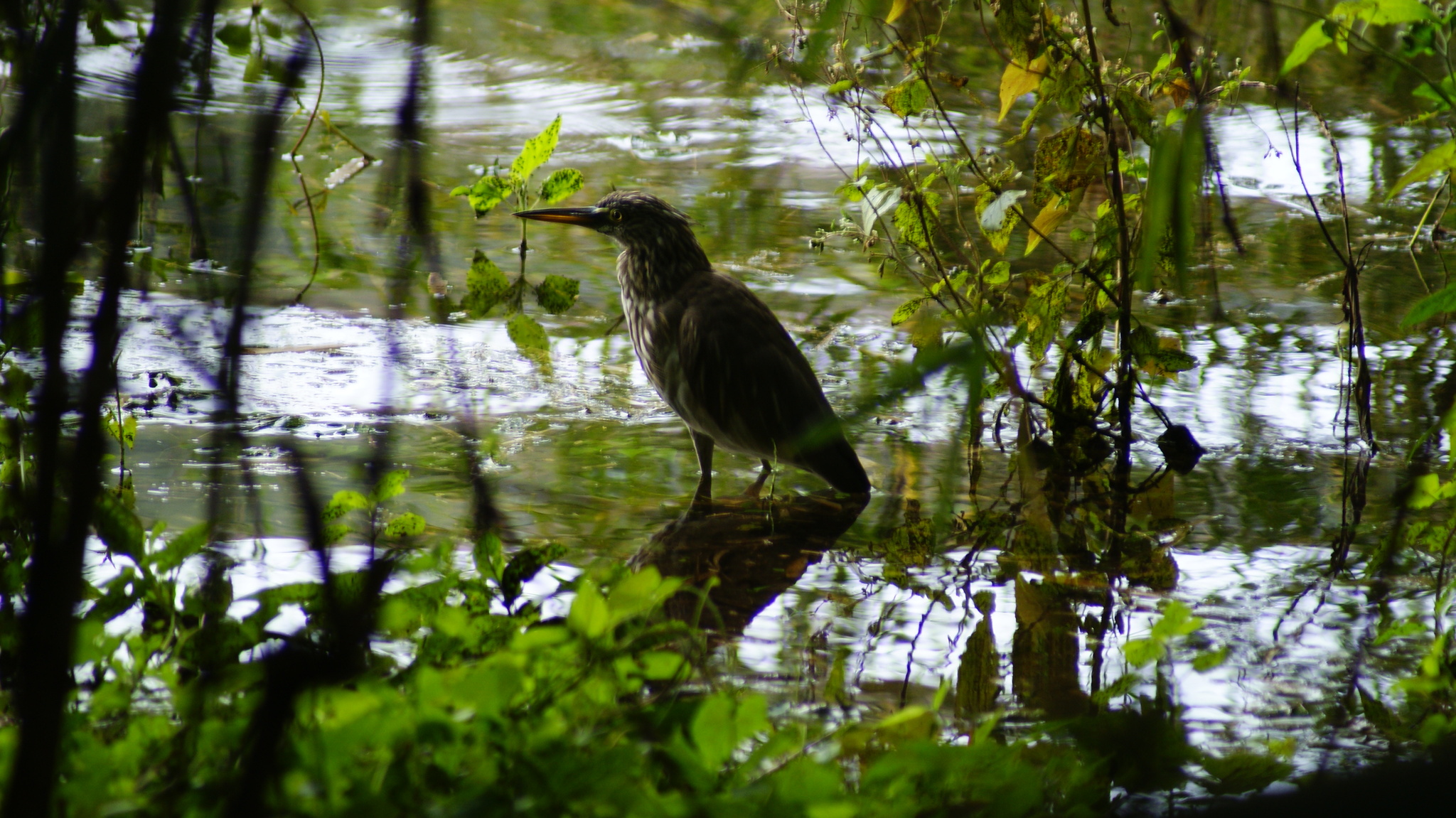
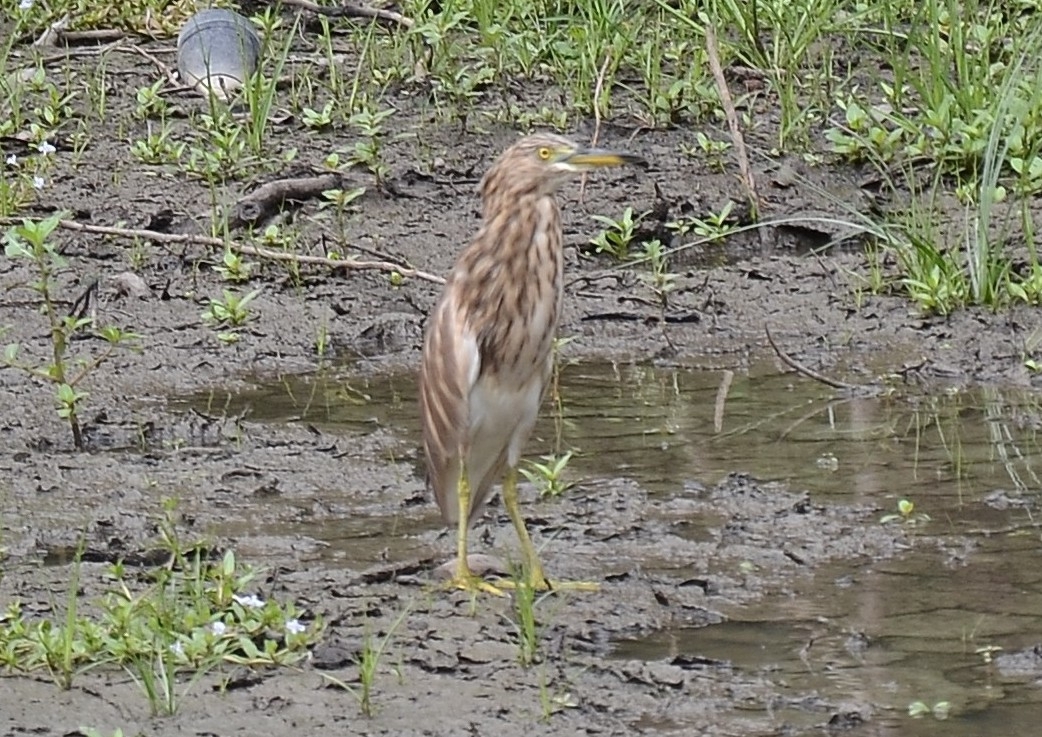
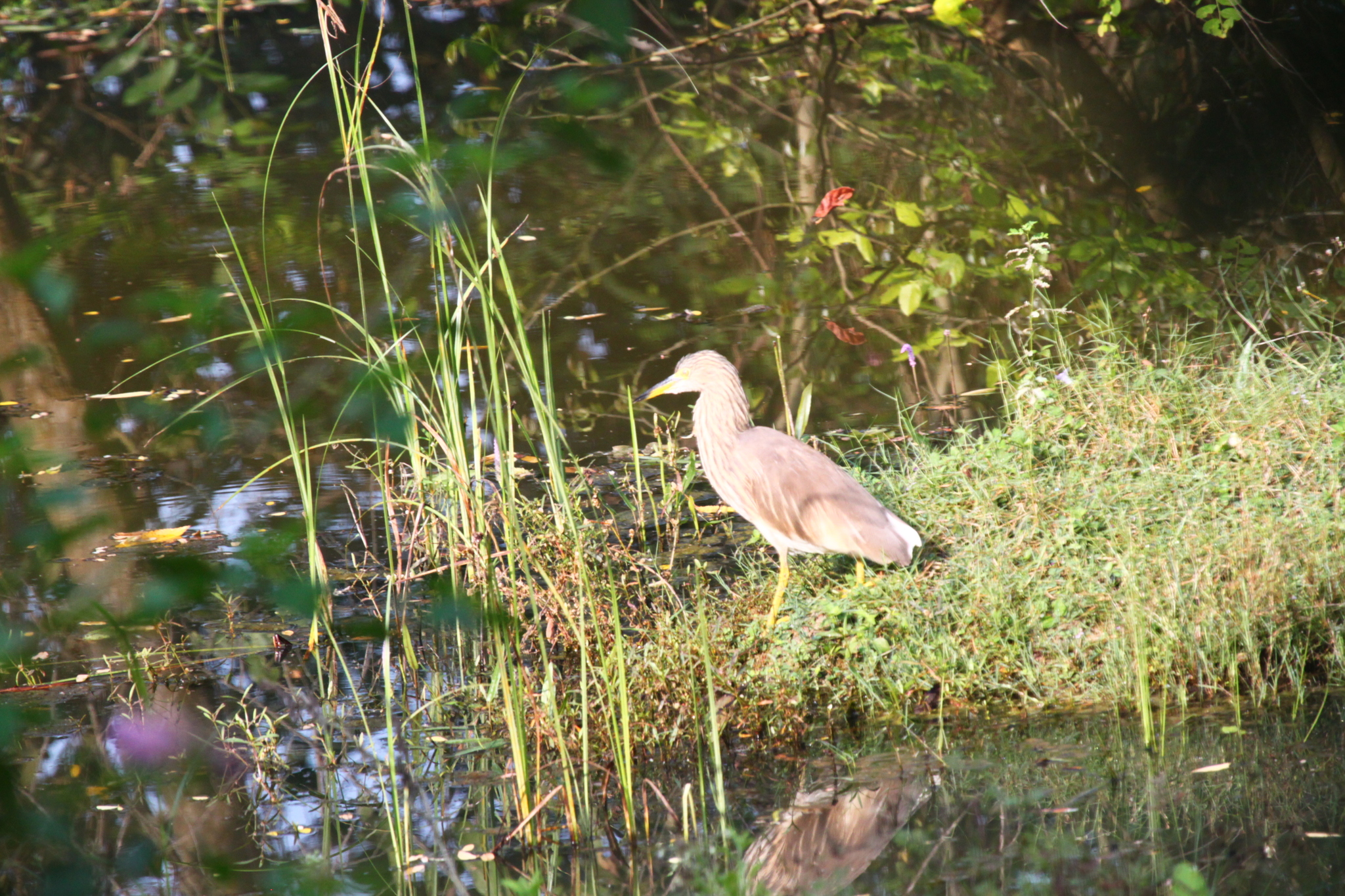
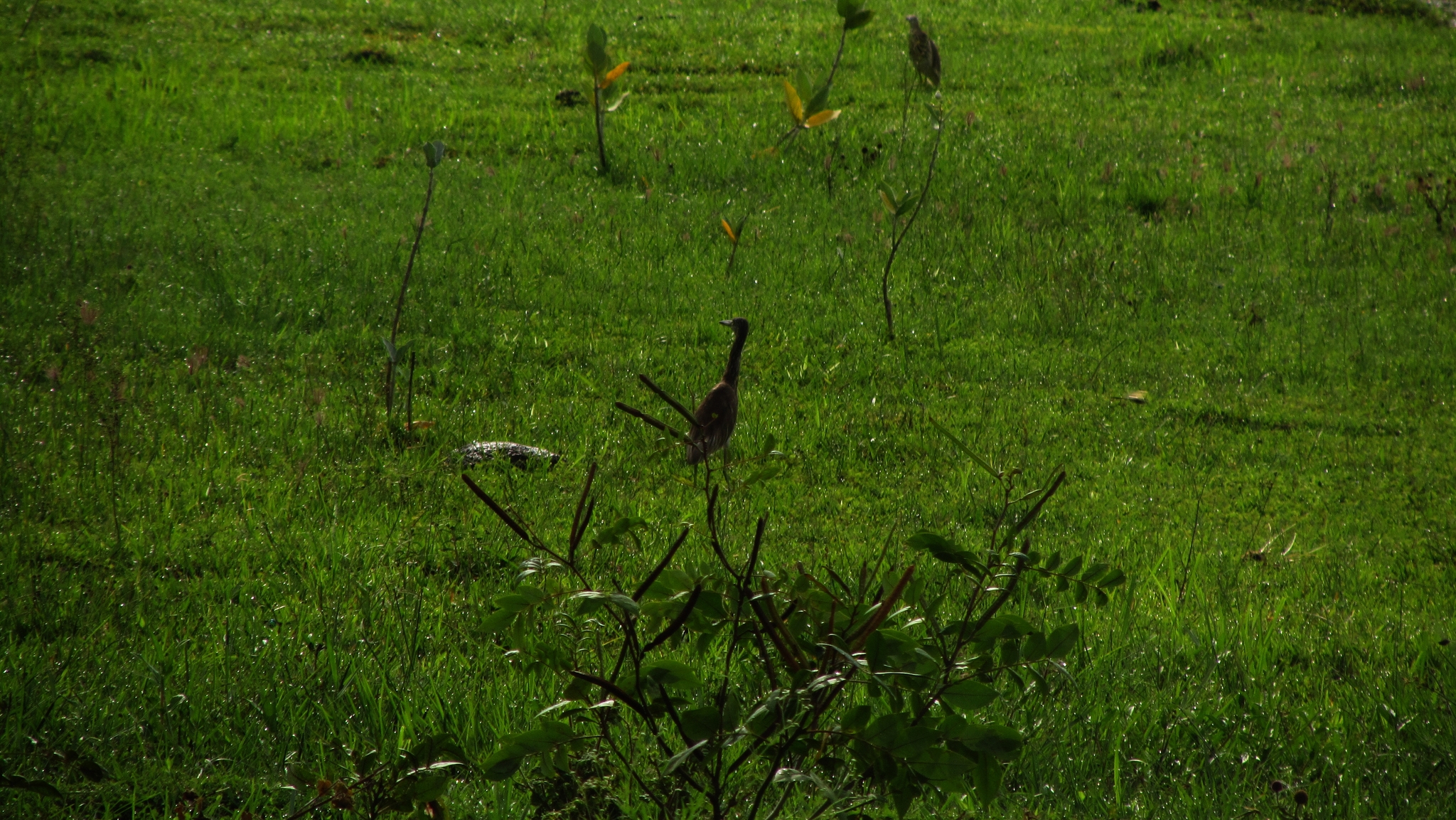
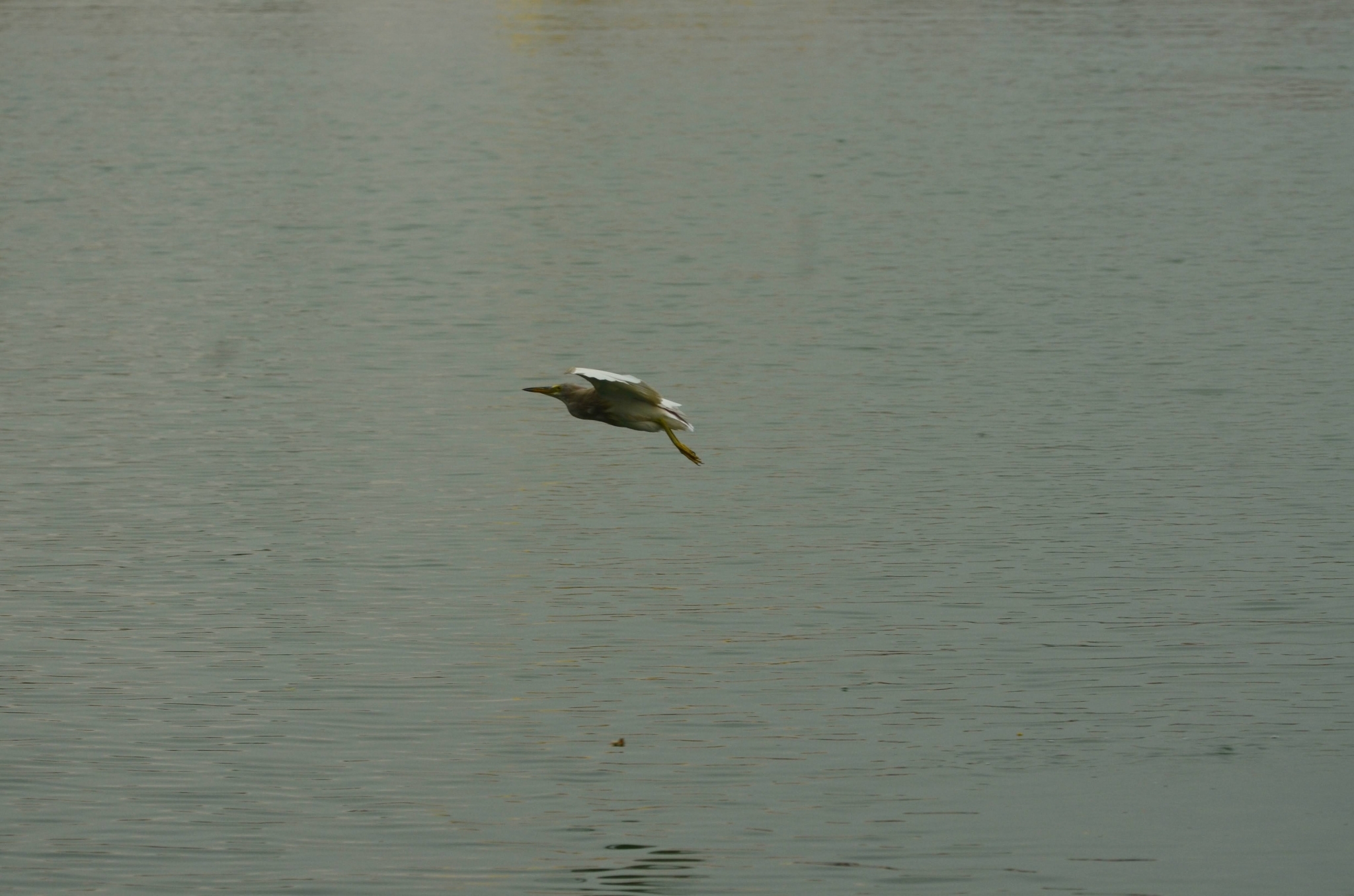
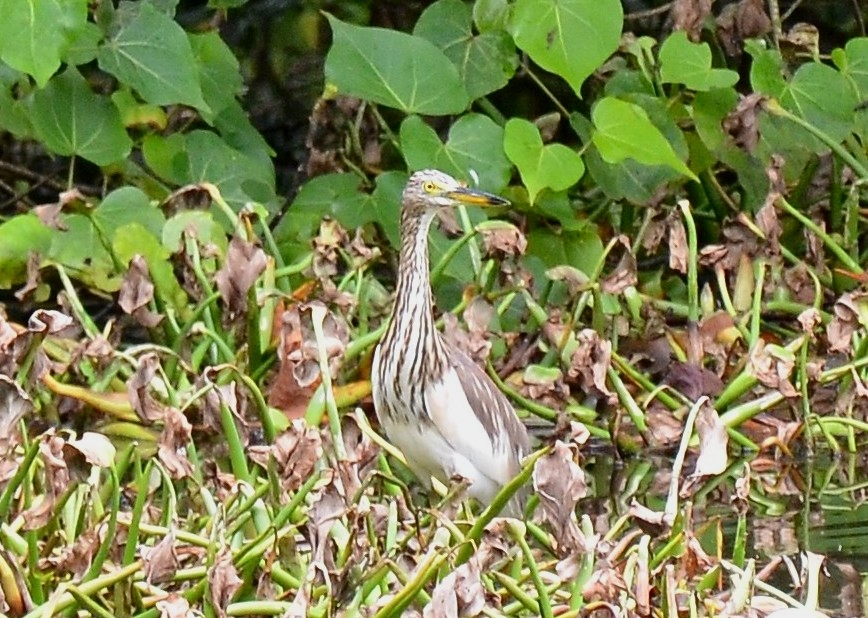
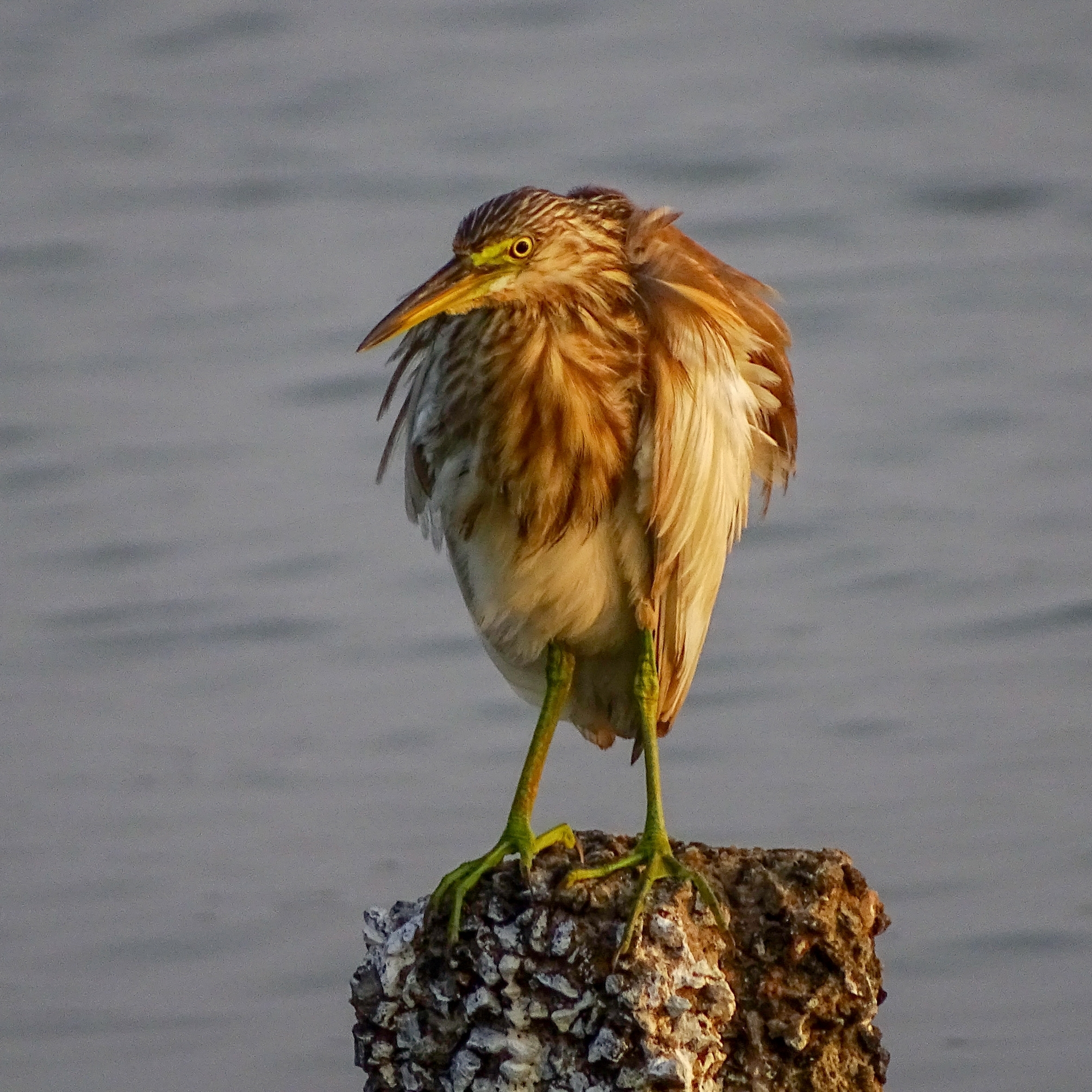
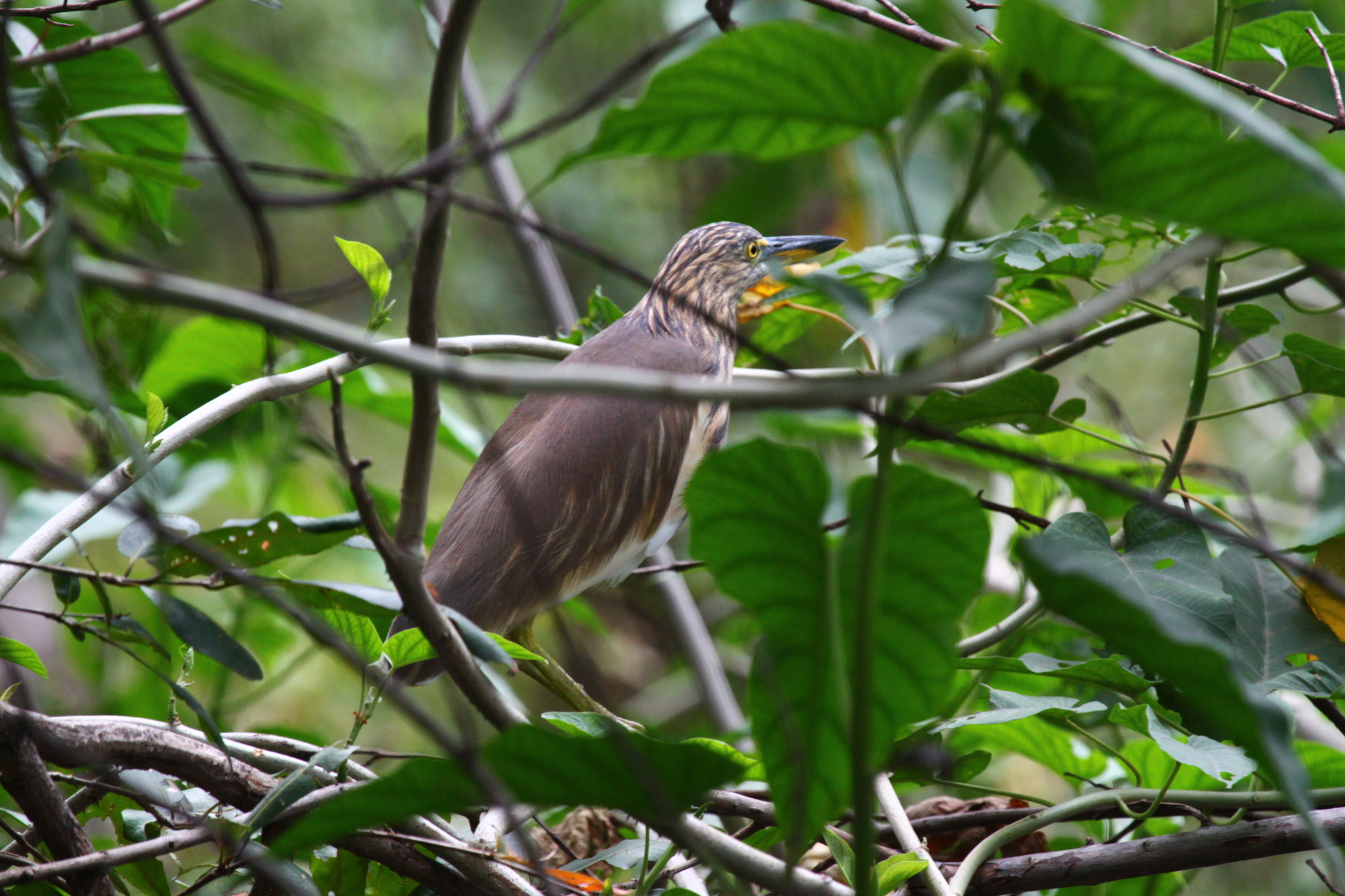
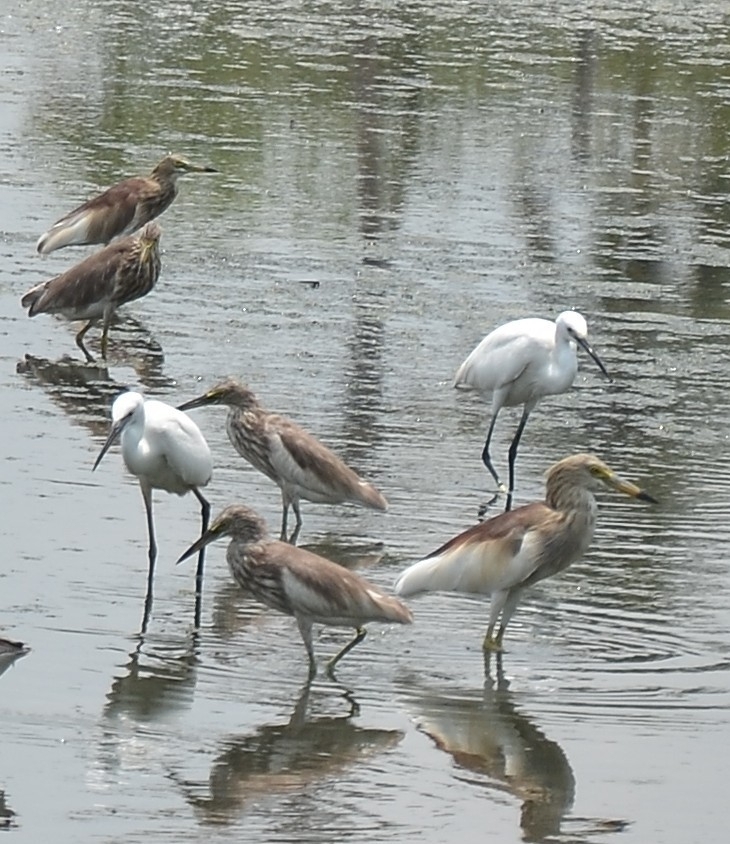
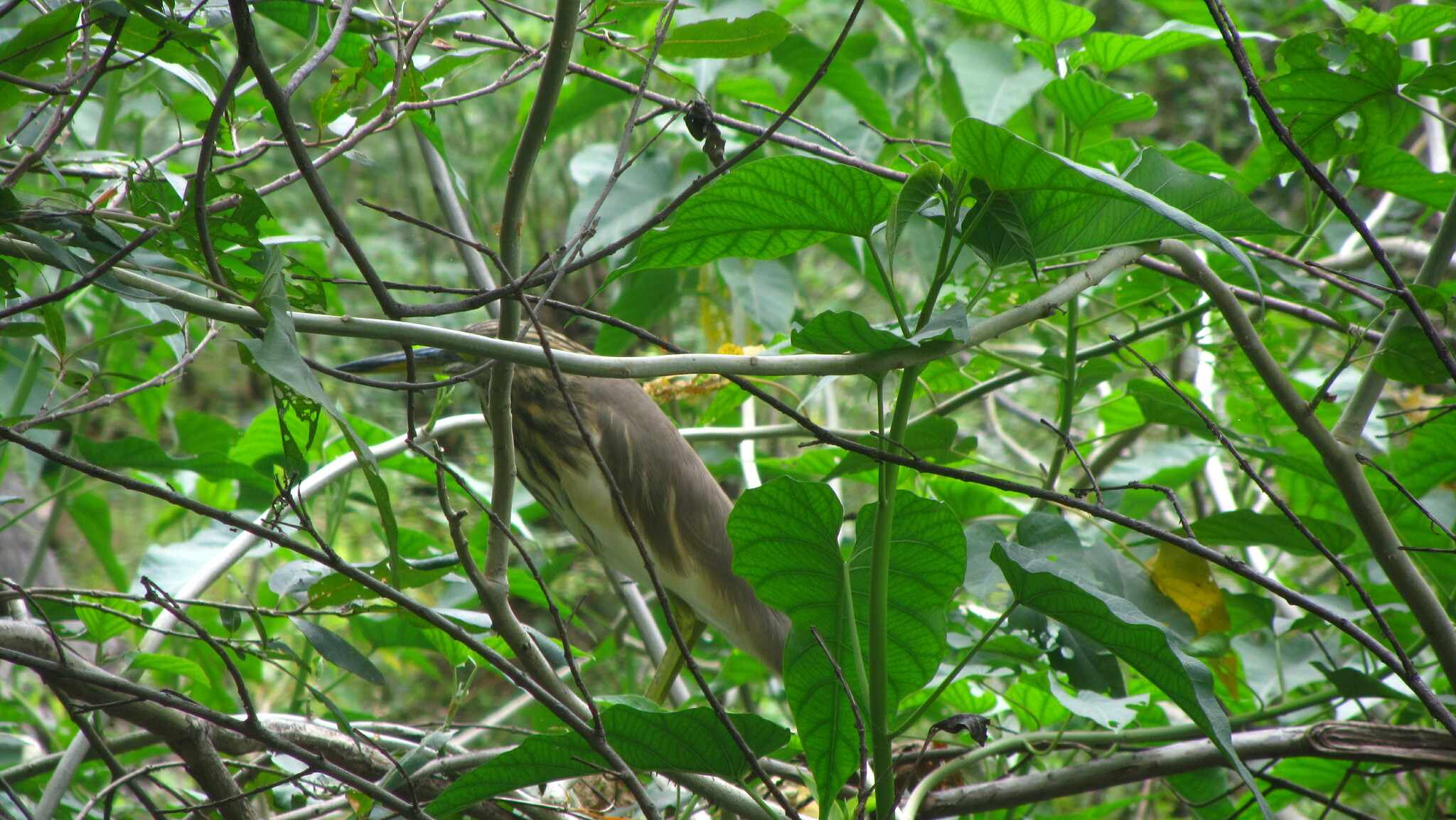
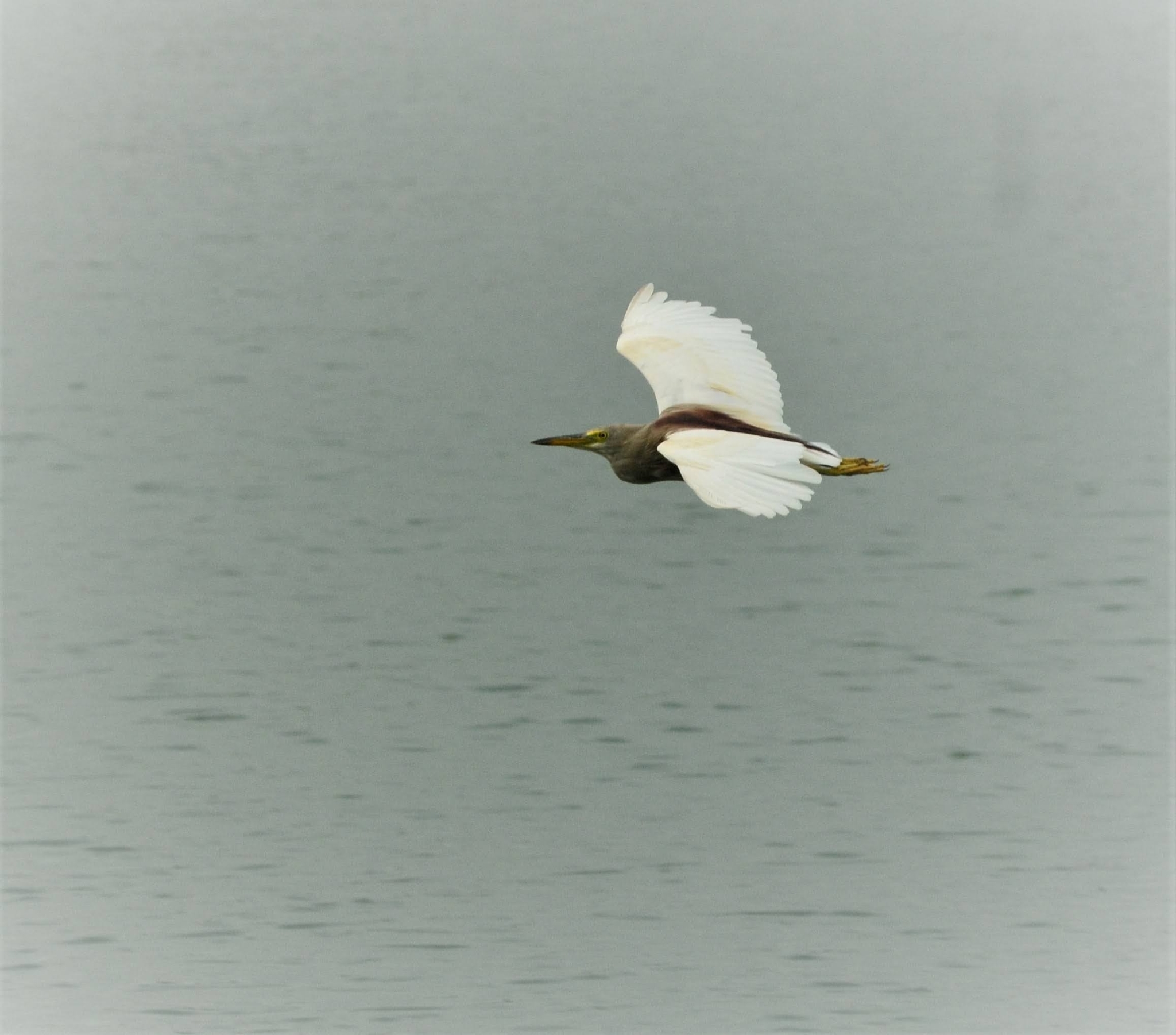
This compact heron has a stocky build with a short, thick neck and a relatively short, stout bill. The upperparts are buff-brown with streaked patterning that provides excellent camouflage among marginal vegetation. During the breeding season, adults develop elongated feathers on the neck. The plumage appears uniformly dull and cryptic when the bird is at rest, but flight reveals striking white wings and tail coverts that contrast sharply with the darker body. The legs are typically yellowish-green, though some individuals have shown red legs during the breeding season, possibly representing genetic variants. A dark-backed race from the Maldives has been described as phillipsi. This species shares its genus with several very similar counterparts across Asia and Africa.
Identification
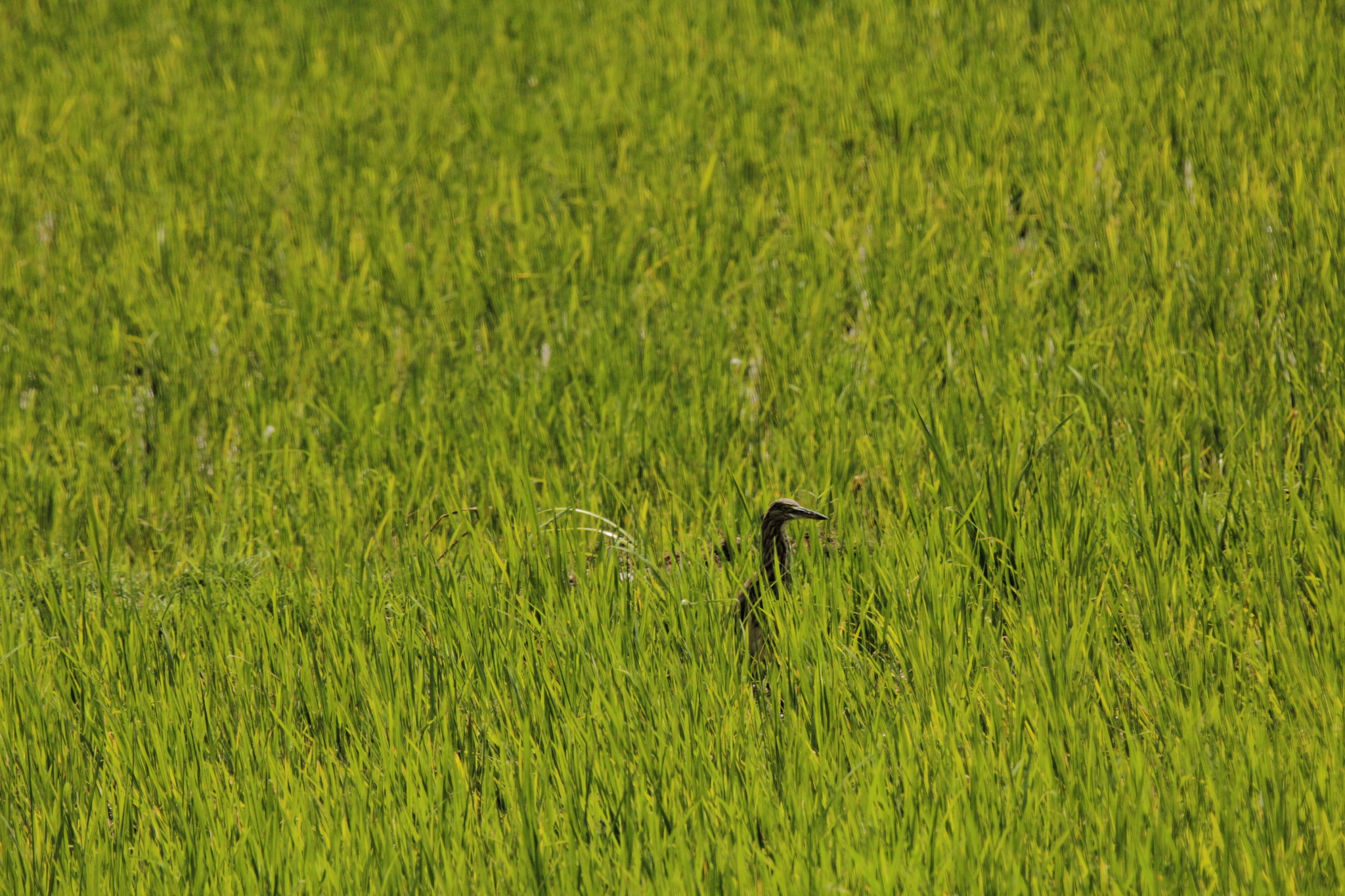
In flight, this species is unmistakable due to the brilliant white wings that contrast markedly with its otherwise cryptic appearance. At rest, it can be distinguished from the similar squacco heron by its darker, more uniformly brown back rather than the warmer, more rufous tones of its relative. The Chinese pond heron replaces it in eastern portions of Asia and shows more contrasting breeding plumage with a dark slaty back and white neck. When approaching this heron in the field, observers should note its characteristic hunting posture—hunched and patient—before the explosive white-winged takeoff that often startles nearby observers who failed to notice the camouflaged bird initially.
Distribution & Habitat
This heron breeds across a vast range extending from southern Iran eastward through the Indian subcontinent, including Pakistan, India, Bangladesh, Sri Lanka, and Burma. It is resident throughout most of its range, though some movements may occur in response to water availability. Habitat preferences include the margins of small water bodies such as ponds, lakes, and marshes, as well as irrigation channels, rice fields, and coastal wetlands. It readily adapts to human-modified landscapes and can be found foraging in urban areas, agricultural land, and even garbage dumps when water is scarce.
Behavior & Ecology
Typically a solitary forager, this heron becomes more gregarious during dry seasons when shrinking water bodies concentrate prey. It employs a patient hunting strategy, standing motionless at the water's edge before launching a swift strike at fish, amphibians, crustaceans, and aquatic insects. More inventive feeding behaviors include dropping bread crumbs on the water surface to attract fish and flying low over water to drive prey toward shore. The breeding season coincides with monsoon rains, with colonies forming in trees where both parents construct stick platforms and raise three to five young. They are usually silent but emit a harsh croak when disturbed near nests. Communal roosts form in trees, including those in busy urban areas.
Conservation
This species is listed as Least Concern by the IUCN, reflecting its extensive range and large population that appears stable. As a common and adaptable bird, it faces relatively few conservation pressures compared to more specialized wetland species. However, individuals show elevated heavy metal concentrations in their tail feathers due to feeding in polluted waters, and they have tested positive for antibodies to Japanese encephalitis and West Nile virus. Habitat degradation and pollution in urban wetlands may pose localized concerns, though the species' flexibility in using artificial water bodies and modified landscapes provides some resilience against environmental changes.
Culture
This bird's characteristic behavior of standing perfectly still and flushing only at close range has spawned widespread folk beliefs across its range that it is semi-blind or short-sighted. In Sri Lanka, the Sinhala name 'kana koka' translates as 'half-blind heron.' The Hindustani phrase 'bagla bhagat' describes a hypocrite or 'wolf in sheep's clothing,' referencing the bird's unassuming appearance. It appears in the Hitopadesha, where one story features the bird saving a king through self-sacrifice. Anglo-Indian naturalists noted the remarkable color transformation from dull gray to bright white in flight. Historically consumed as food in India and hunted for its feathers during the plume trade, it remains a familiar figure in the cultural imagination of the region.
Source: Wikipedia · CC BY-SA 3.0
Taxonomy
- Order
- Pelecaniformes
- Family
- Ardeidae
- Genus
- Ardeola
- eBird Code
- inpher1
Distribution
Persian Gulf to India, Myanmar, and Andaman and Nicobar islands
Data Sources
Species description from Wikipedia, licensed under CC BY-SA 3.0.
Bird images and sounds sourced from GBIF, contributed by citizen scientists worldwide under Creative Commons licenses.
Taxonomy data from AviList 2025.