Wedge-tailed Shearwater
Ardenna pacifica
楔尾鹱
Introduction
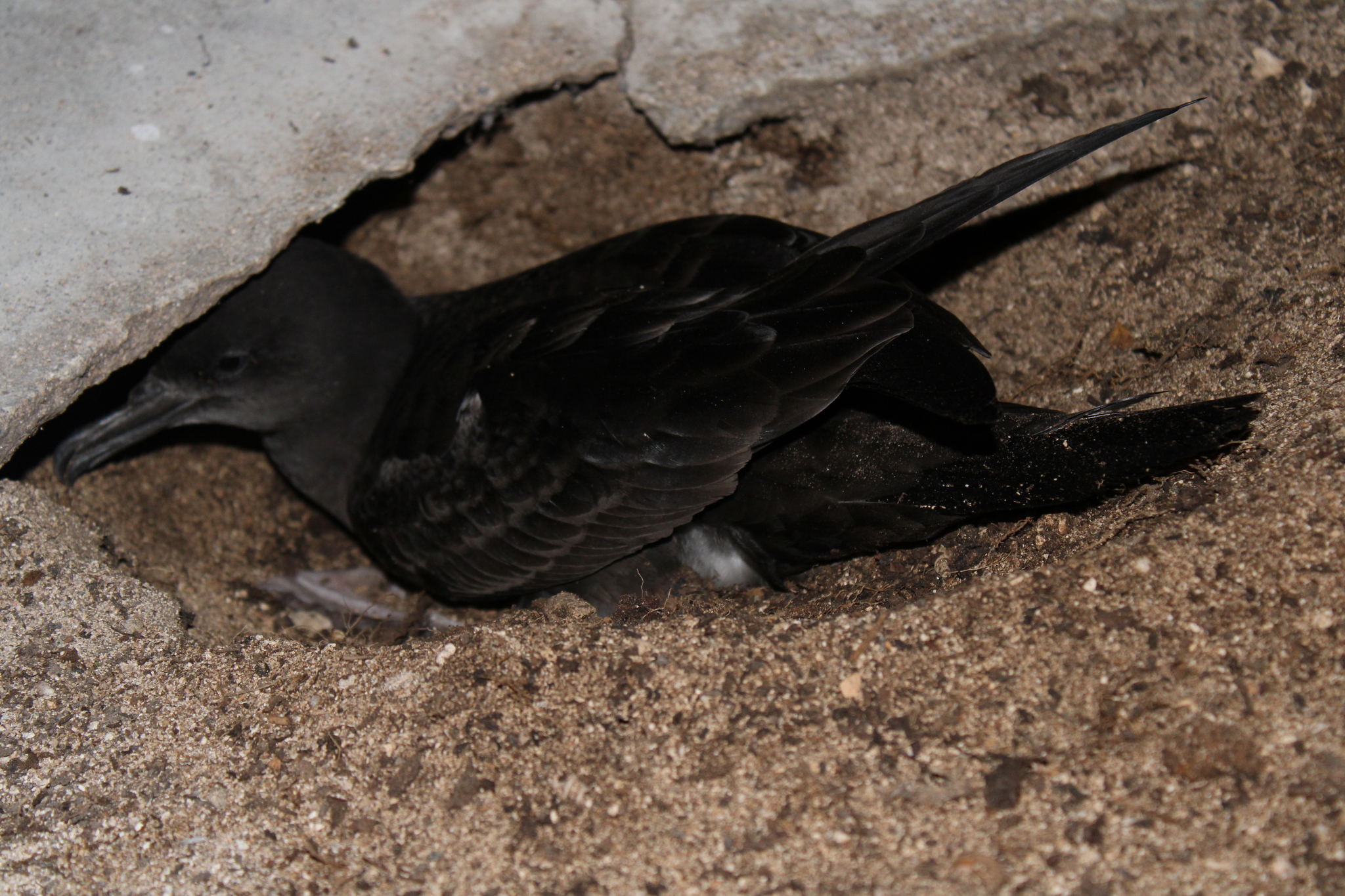
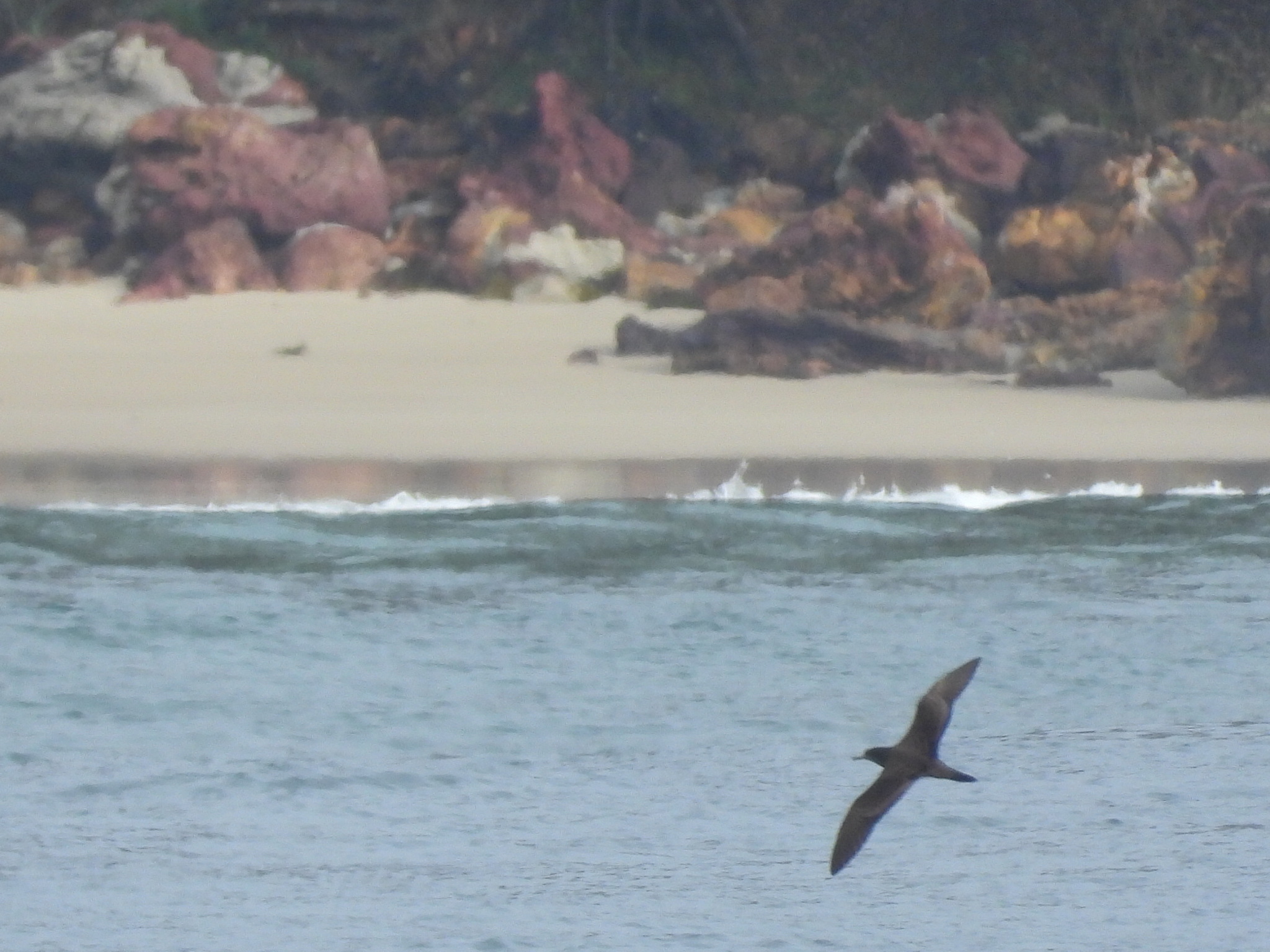
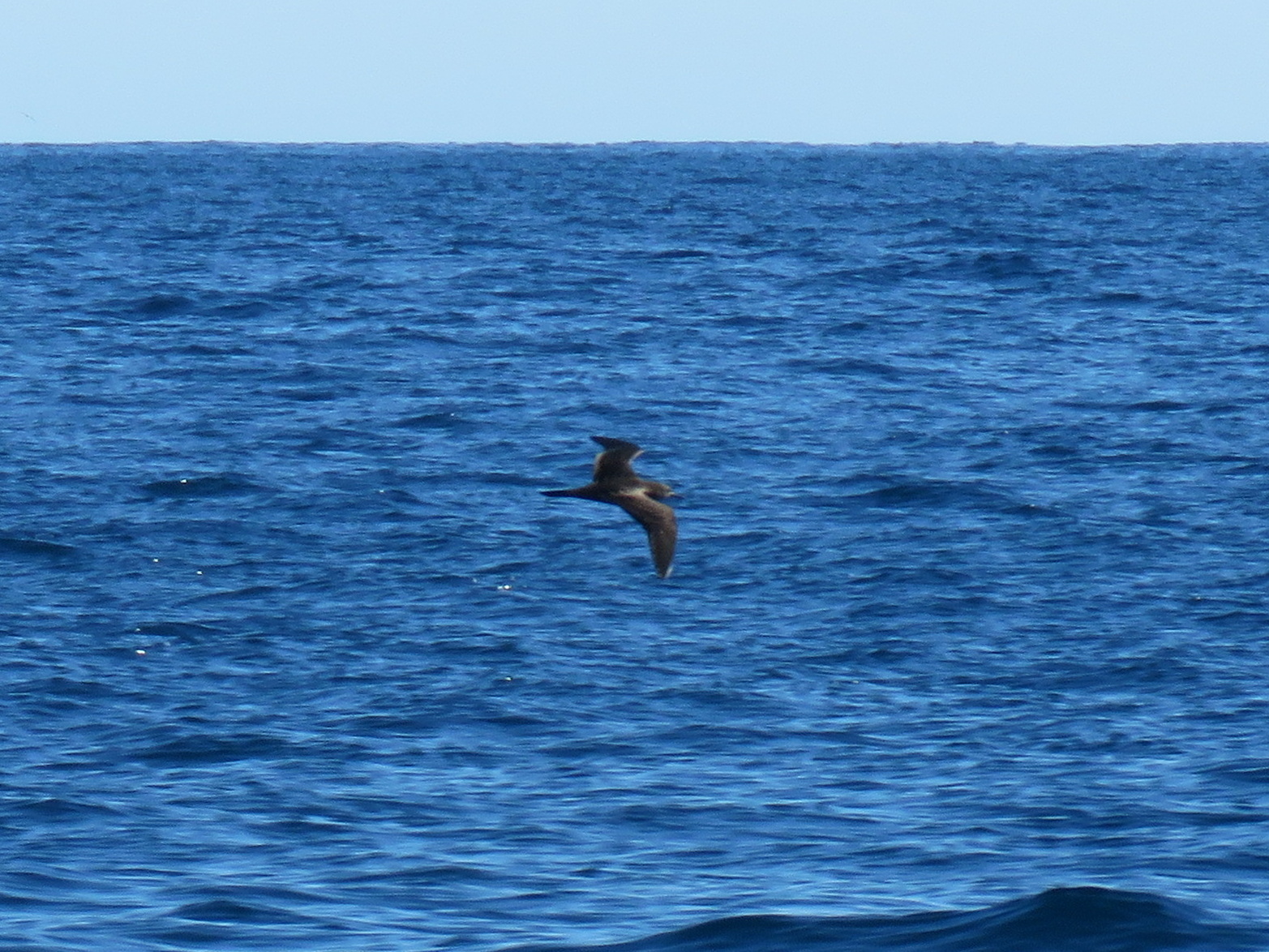
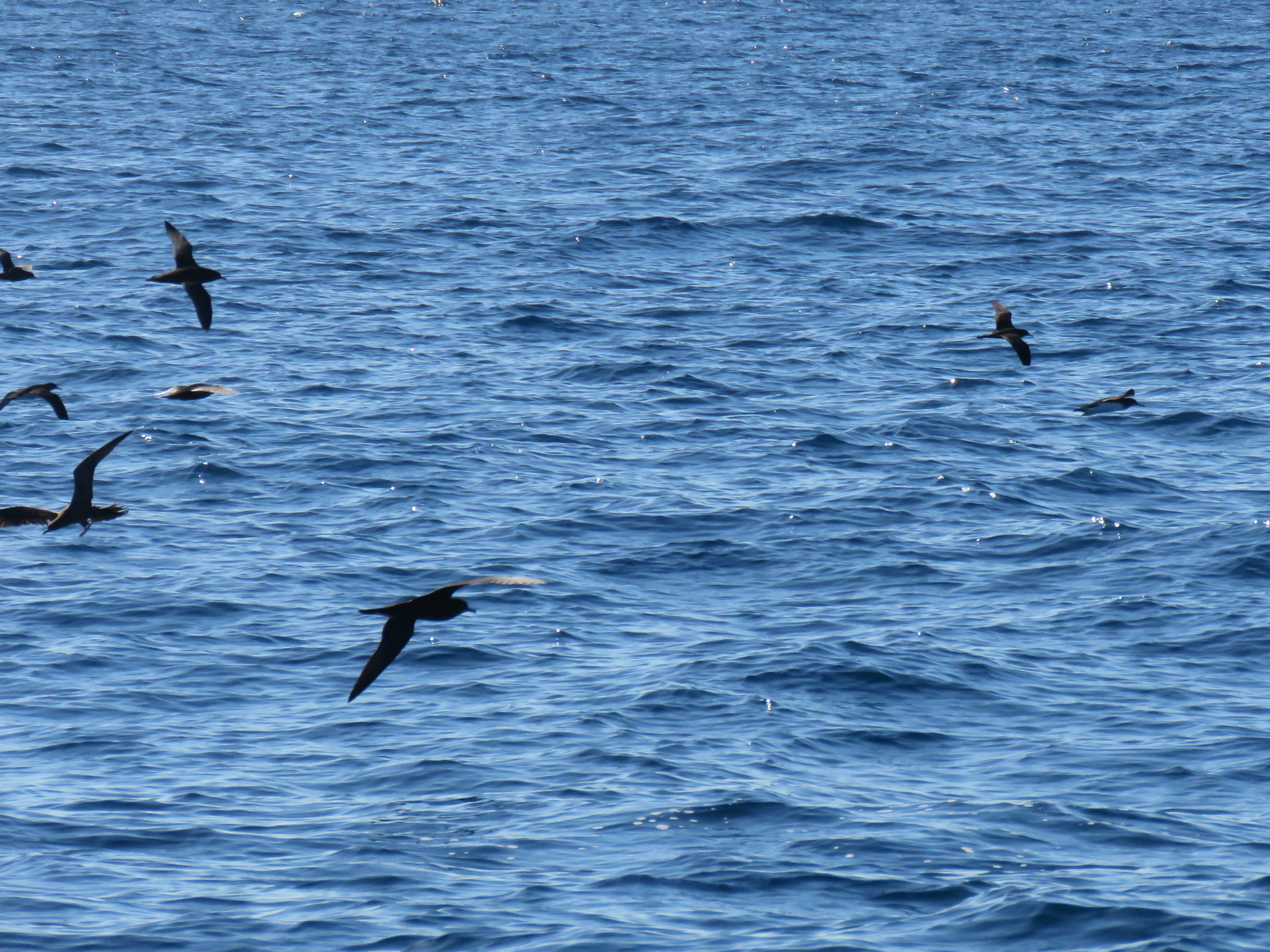
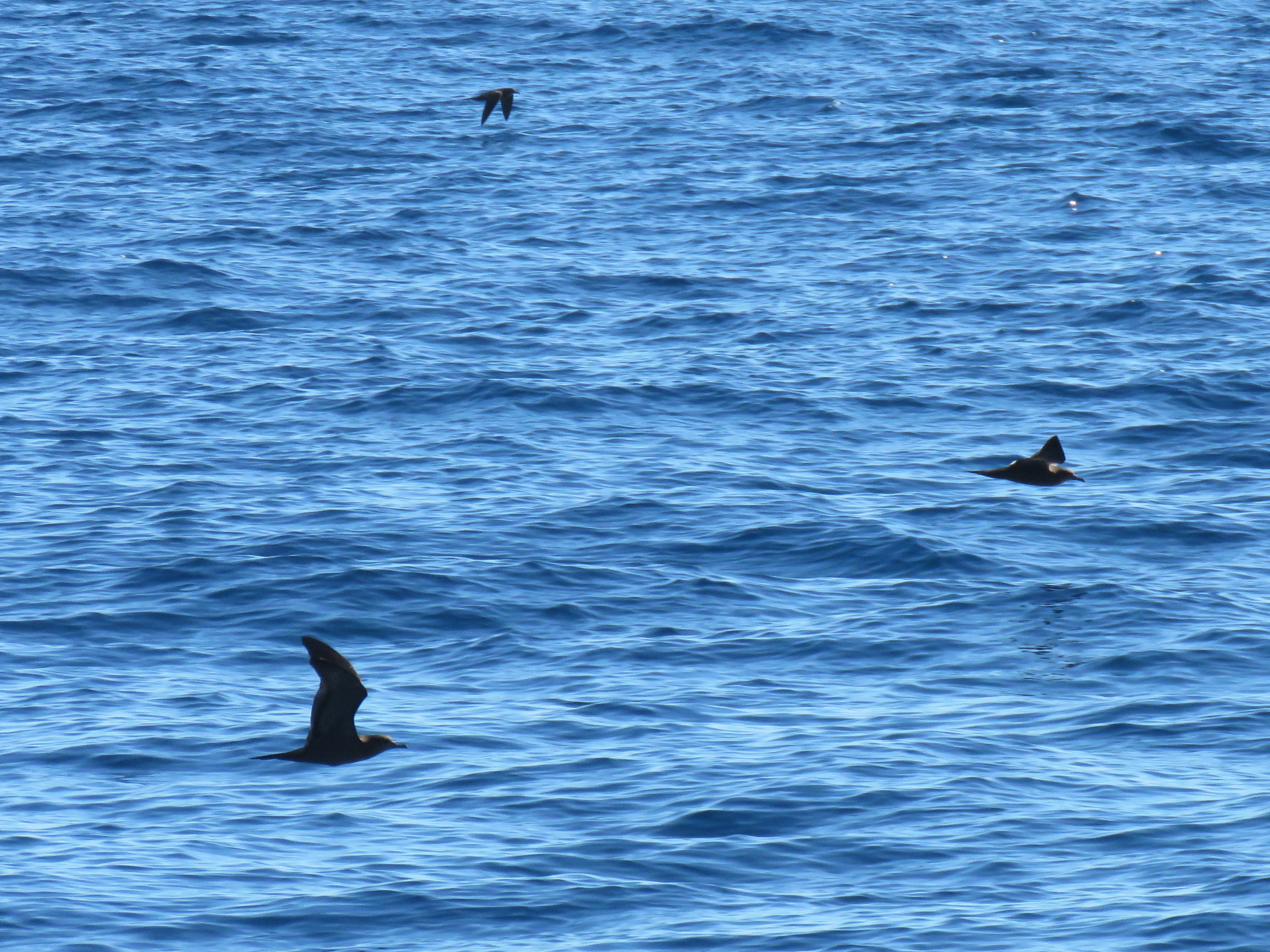
A medium-large seabird found throughout the Pacific and Indian Oceans. It is highly pelagic, spending most of its time at sea and coming ashore only to breed. This species breeds on small tropical islands, nesting in burrows and visiting colonies nocturnally to avoid predators. Its most distinctive field mark is its large, wedge-shaped tail. Breeding colonies produce long moaning calls at night. While populations are locally abundant, they face threats from habitat disturbance, predation by introduced mammals, and at-sea hazards.
Description
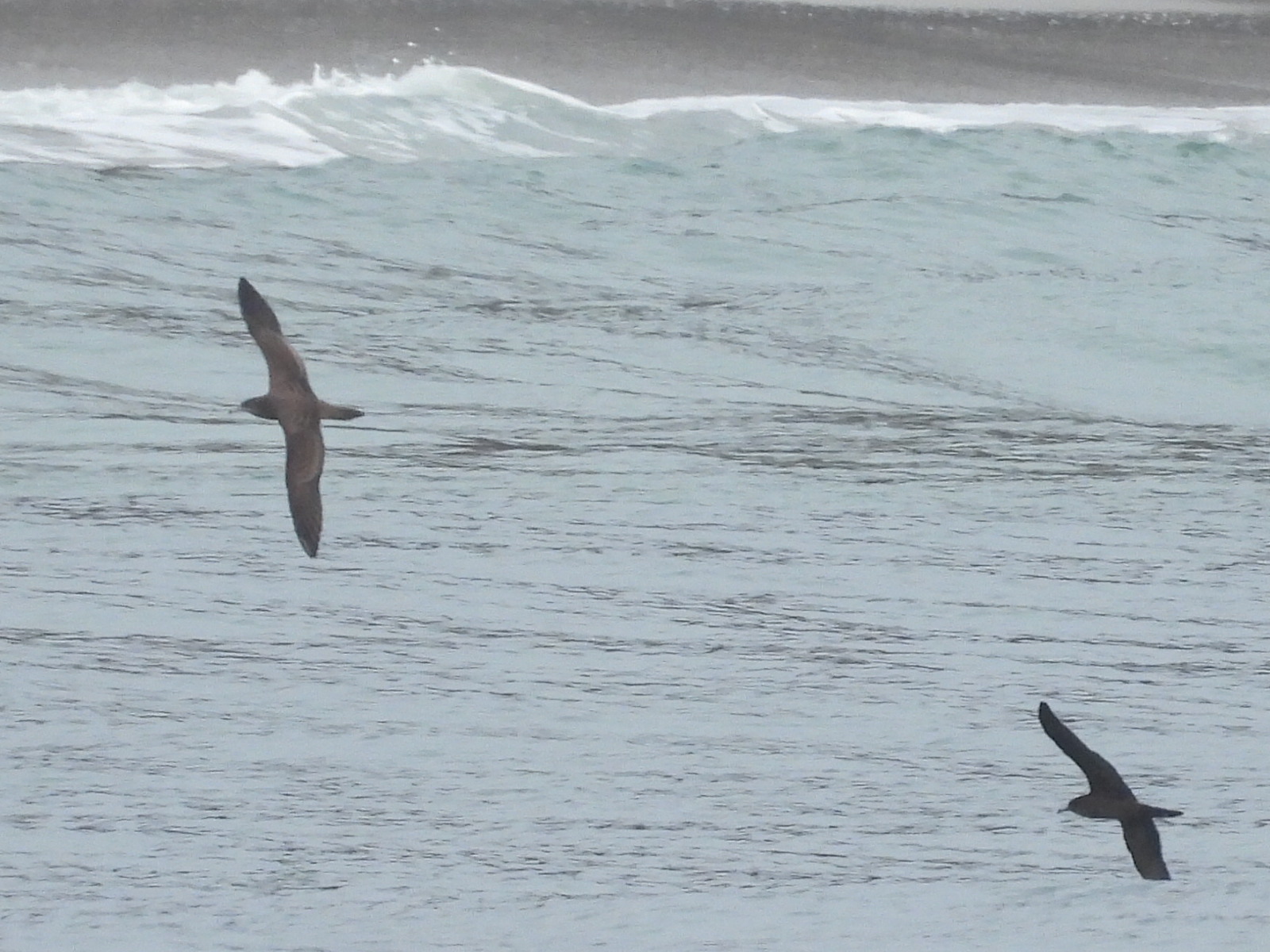
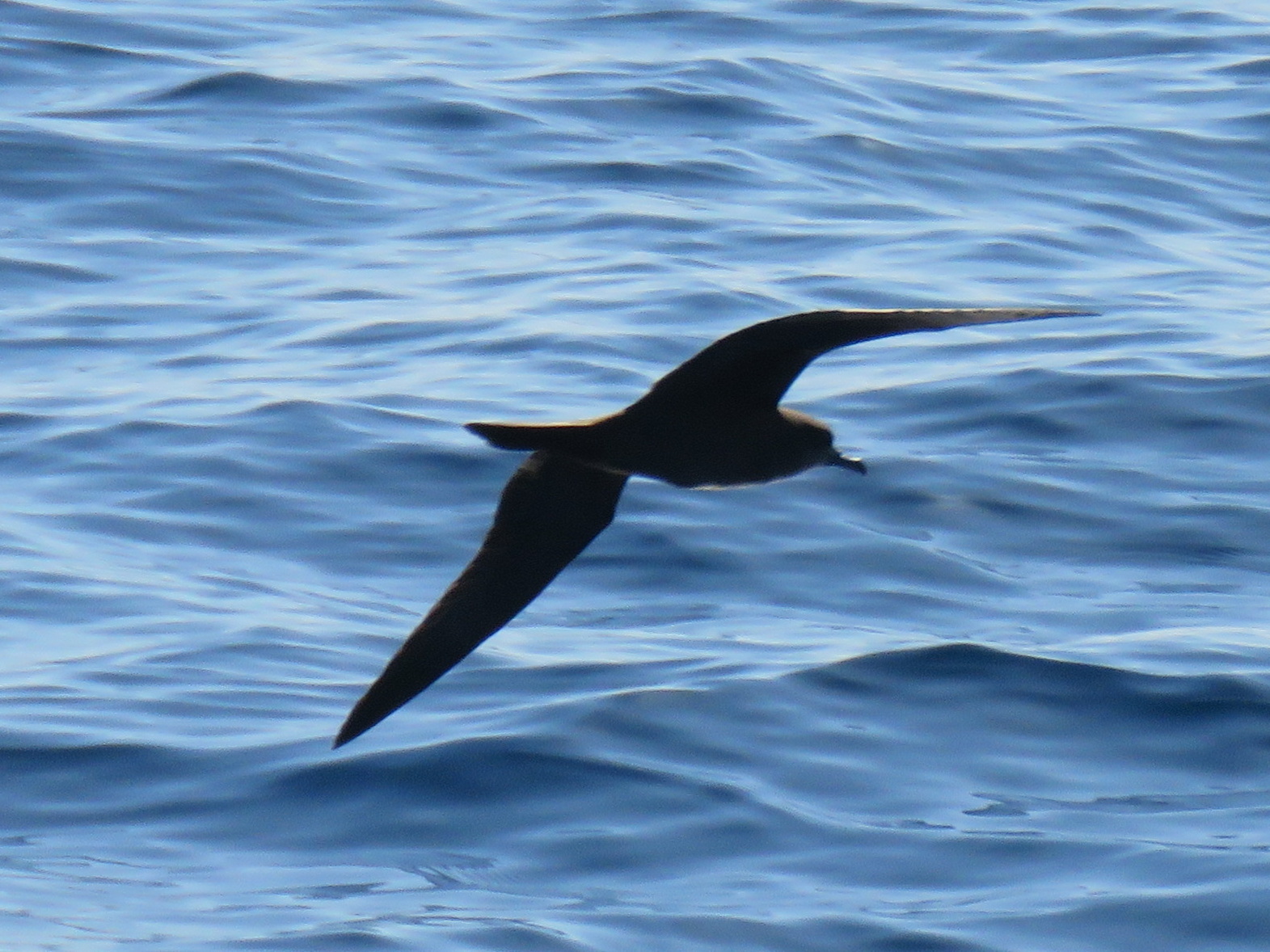
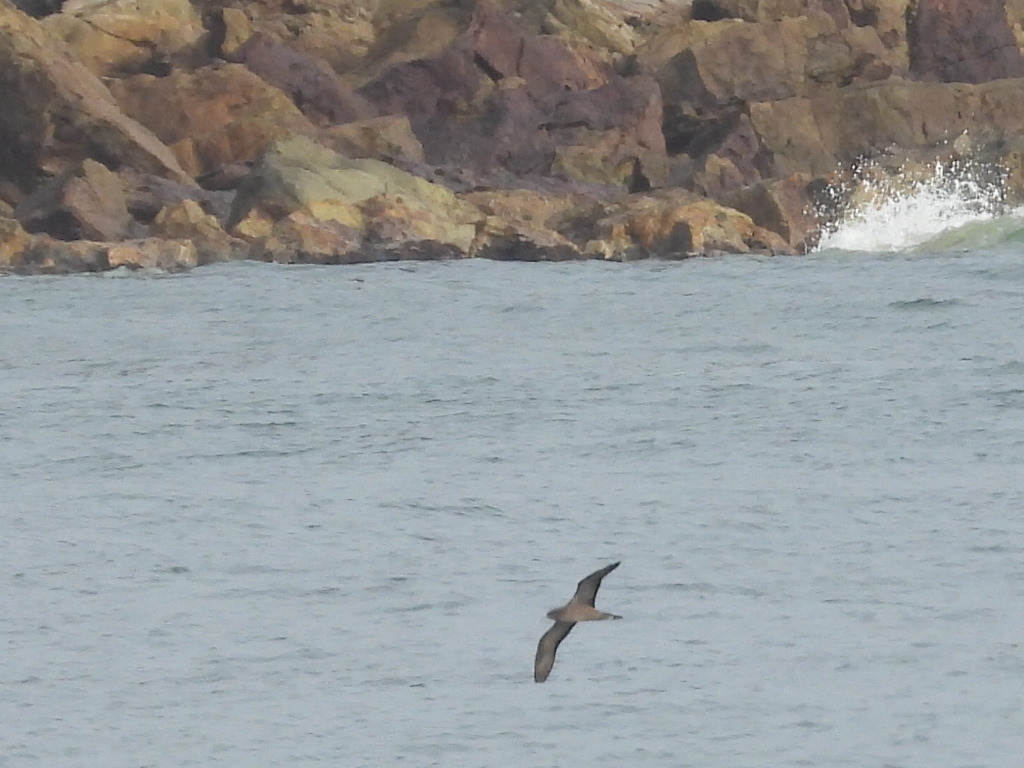
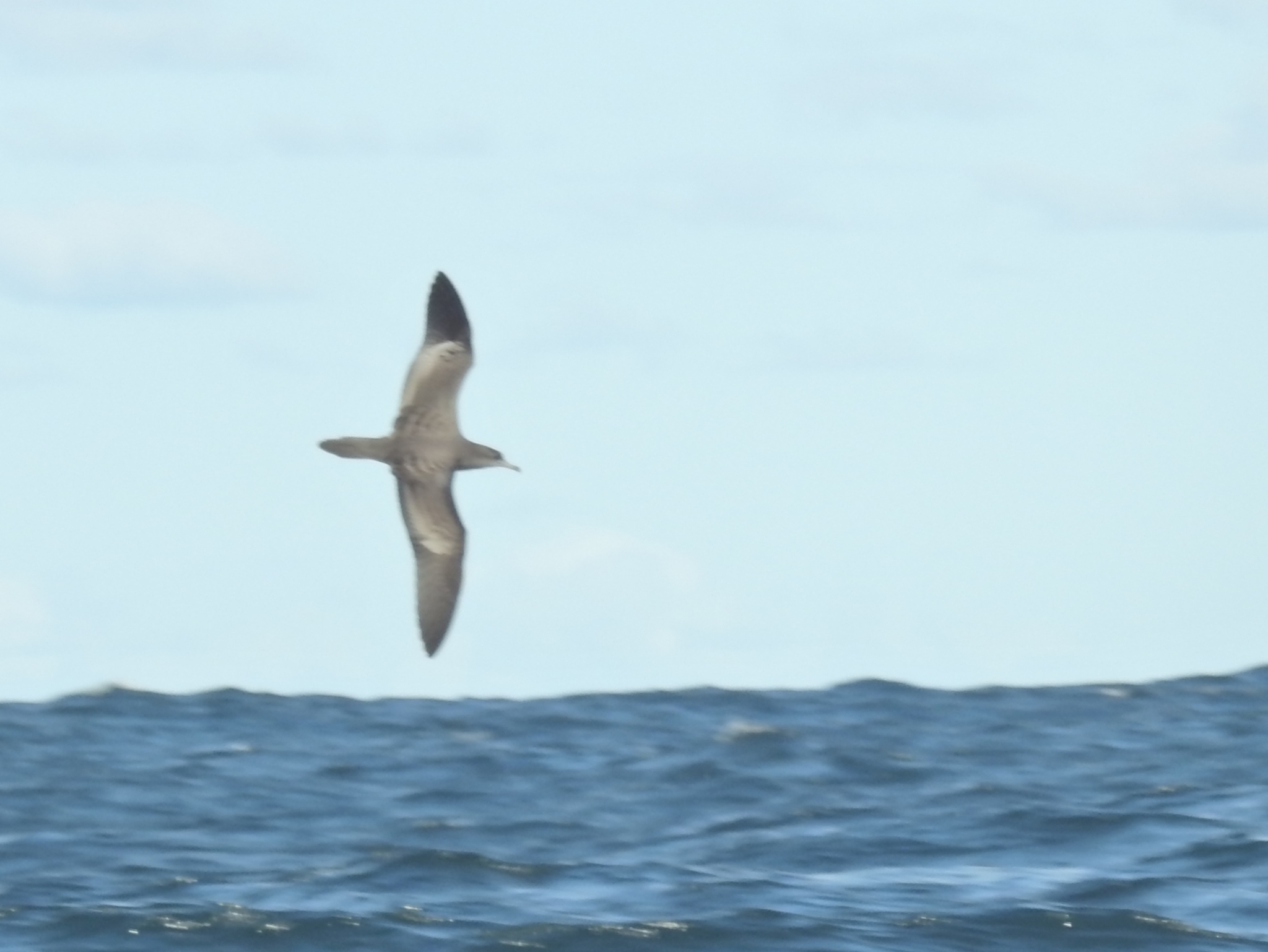
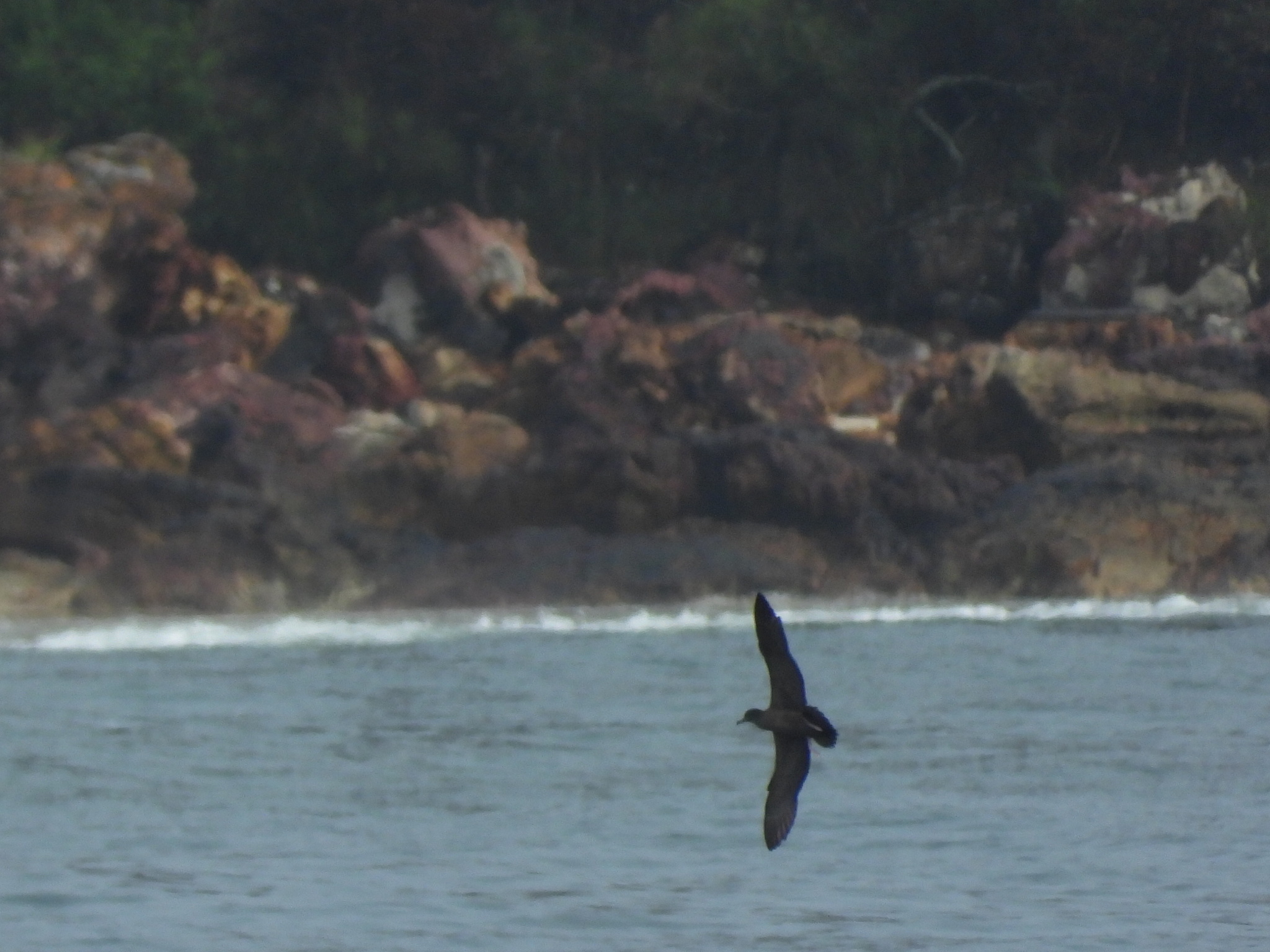
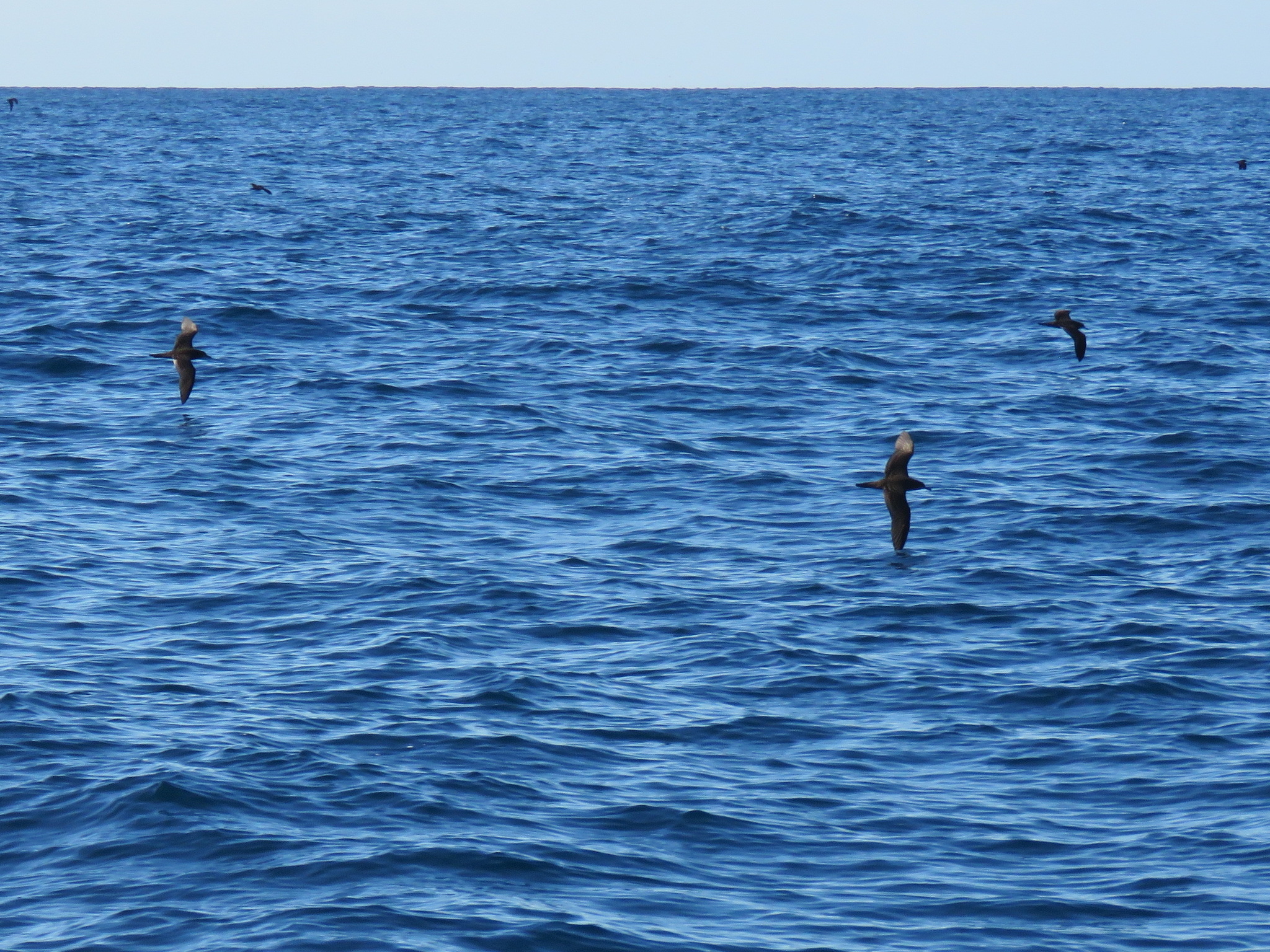
As the largest tropical shearwater species, this bird exhibits sexual dimorphism in form but not colour, with males and females appearing identical. Two distinct colour morphs occur throughout its range: the pale morph features grey-brown plumage on the back, head, and upper wing surfaces, contrasting with whiter underparts, while the dark morph displays the same dark grey-brown coloration across the entire body. Both morphs appear in all populations regardless of sex or breeding condition. The species derives its common name from its prominent wedge-shaped tail, which aids in gliding flight. Adults possess a dark bill and salmon-pink legs positioned far back on the body—an adaptation for swimming rather than walking. The species is closely related to Buller's shearwater, sharing the wedge-shaped tail and thin black bill structure.
Identification
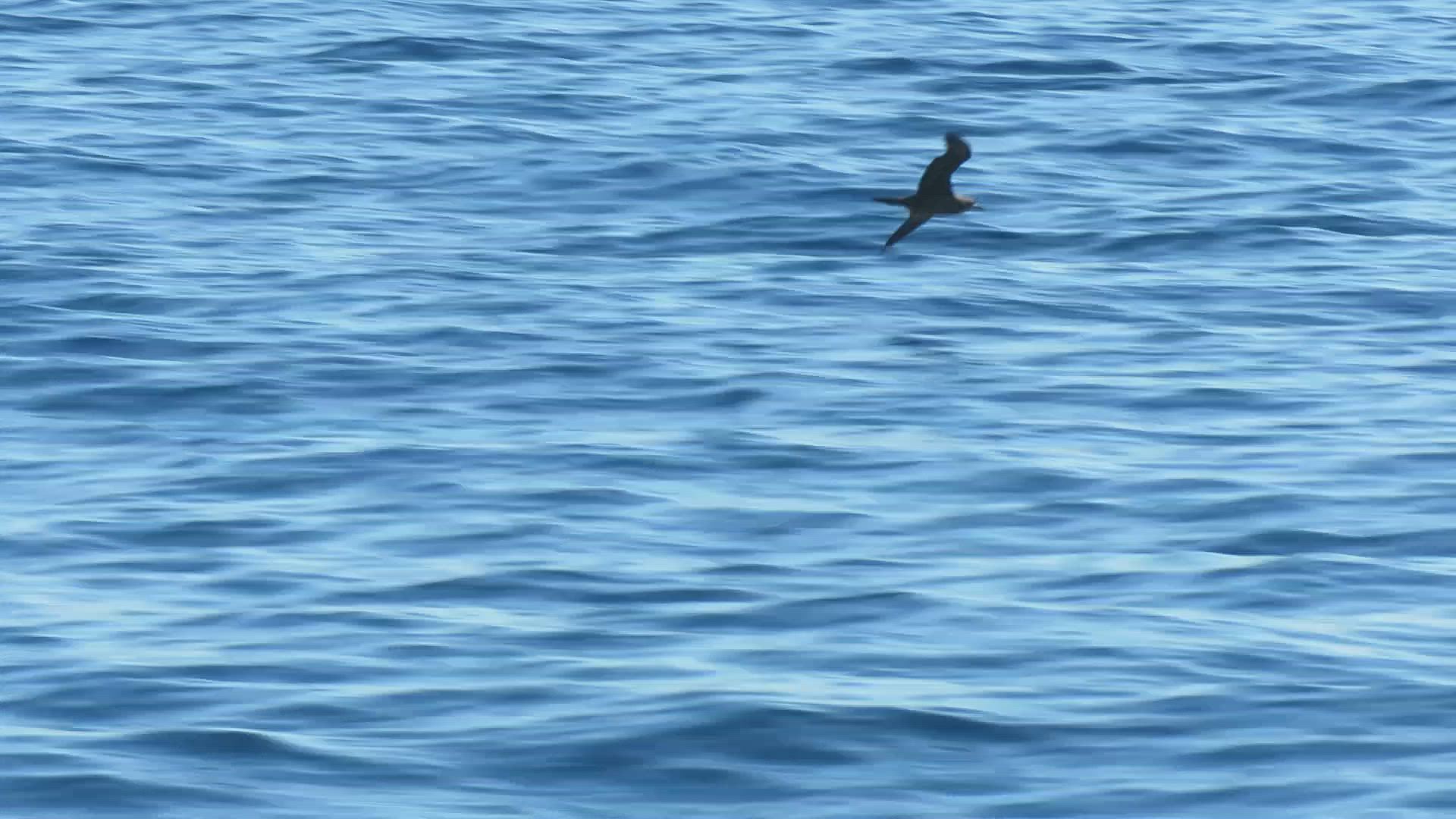
The wedge-shaped tail serves as the primary field mark distinguishing this species from other tropical shearwaters. Unlike the more uniformly dark Buller's shearwater, this species occurs in both pale and dark morphs throughout its range. In flight, birdwatchers should note the dark, shallowly forked or wedge-shaped tail visible as the bird banks and glides. The salmon-pink legs are typically hidden during flight but may be visible during landing. Compared to similar-sized shearwaters, this species shows a more robust build and more pronounced tail wedge. The combination of colour morphs, tail shape, and range within tropical waters typically allows confident identification for experienced observers.
Distribution & Habitat
This shearwater inhabits tropical waters throughout the Pacific and Indian Oceans, with its range extending approximately between 35 degrees north and 35 degrees south latitude. Breeding occurs on islands across this vast area, including colonies off Japan, the Hawaiian Islands, the Revillagigedo Islands, the Northern Mariana Islands, the Seychelles, and both Eastern and Western Australia. Within island groups, breeding colonies are established on small offshore islands, often with limited predator presence. The species is non-migratory in the strict sense, though individuals disperse widely outside the breeding season. Northern and Southern Hemisphere populations breed asynchronously, with northern birds initiating breeding around February and southern birds around September, likely an adaptation to seasonal productivity patterns.
Behavior & Ecology
Diet consists primarily of fish (approximately 66%), with goatfish representing the most commonly taken prey, supplemented by squid and crustaceans. Feeding strategies include surface seizing, contact-dipping just above the water surface, and deep diving—the latter documented in 83% of foraging trips, with mean maximum depths of 14 metres and recorded depths reaching 66 metres. Breeding occurs in colonies on small tropical islands, with birds showing strong natal philopatry by returning to their birth colony to breed at age four. The species is monogamous, maintaining pair bonds across multiple years unless breeding attempts fail. Both parents share incubation duties in shifts lasting up to 13 days over an approximately 50-day period. A single egg is laid per season. Chicks receive initial meals of energy-rich stomach oil before progressing to solid prey, growing larger than adults before fledging after 103-115 days. The characteristic call is a long, moaning sound with inhaling and exhaling components.
Conservation
The wedge-tailed shearwater faces ongoing population pressures from multiple threats despite its current broad distribution. Key threats include habitat degradation on breeding islands, predation by introduced mammals such as rats, cats, and pigs, human disturbance at breeding colonies, and marine pollution including plastic ingestion. Light pollution near colonies can disorient fledglings, leading to mortality. Climate change poses emerging threats through sea level rise affecting low-lying nesting islands and shifts in prey fish distribution. Conservation actions focus on invasive species eradication on breeding islands, establishing protected marine areas, and restricting human access to critical colony sites during breeding season.
Culture
In Hawaiian culture, this species holds particular significance, known locally as 'ua'u kani, which translates to 'moaning petrel' in reference to its distinctive haunting calls that echo across breeding colonies at night. These sounds have become synonymous with the nocturnal atmosphere of Hawaiian islands for generations. The species is one of several shearwater species referred to as 'muttonbirds' in various cultural contexts, a term reflecting historical practices of harvesting shearwater chicks for food in parts of the Pacific. While not currently harvested in most areas, traditional knowledge of seabird ecology remains important to Pacific Islander communities. Conservation efforts in Hawaii increasingly incorporate traditional ecological knowledge and emphasize the cultural value of maintaining healthy seabird populations as indicators of marine ecosystem health.
Source: Wikipedia · CC BY-SA 3.0
Taxonomy
- Order
- Procellariiformes
- Family
- Procellariidae
- Genus
- Ardenna
- eBird Code
- wetshe
Distribution
widespread in tropical and subtropical Pacific and Indian oceans, breeding on islets from Seychelles and Mascarenes eastward through Ogasawara and Iwo islands (southern Japan) and northern Australia, thence to Hawaii and Revillagigedo Islands (off central Mexico); ranges from northeastern Africa and Malagasy region eastward to southern Baja California and southward to Panama
Vocalizations
Data Sources
Species description from Wikipedia, licensed under CC BY-SA 3.0.
Bird images and sounds sourced from GBIF, contributed by citizen scientists worldwide under Creative Commons licenses.
Taxonomy data from AviList 2025.