Sooty Shearwater
Ardenna grisea
灰鹱
Introduction
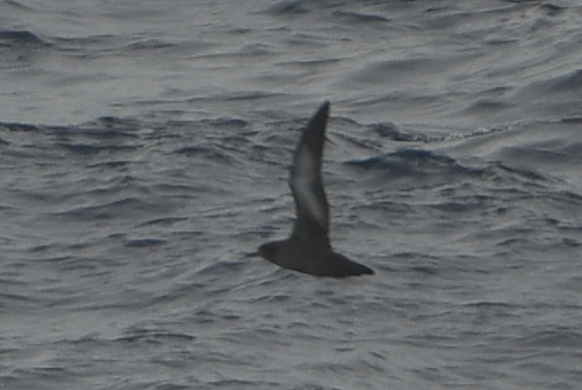
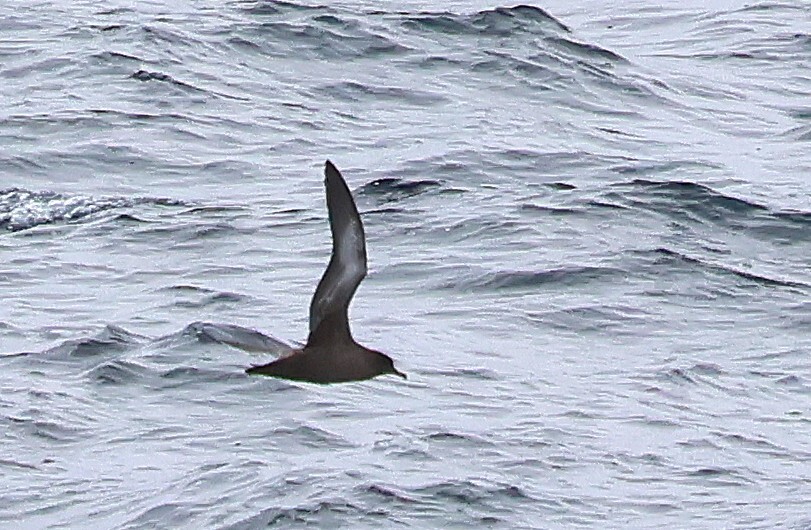
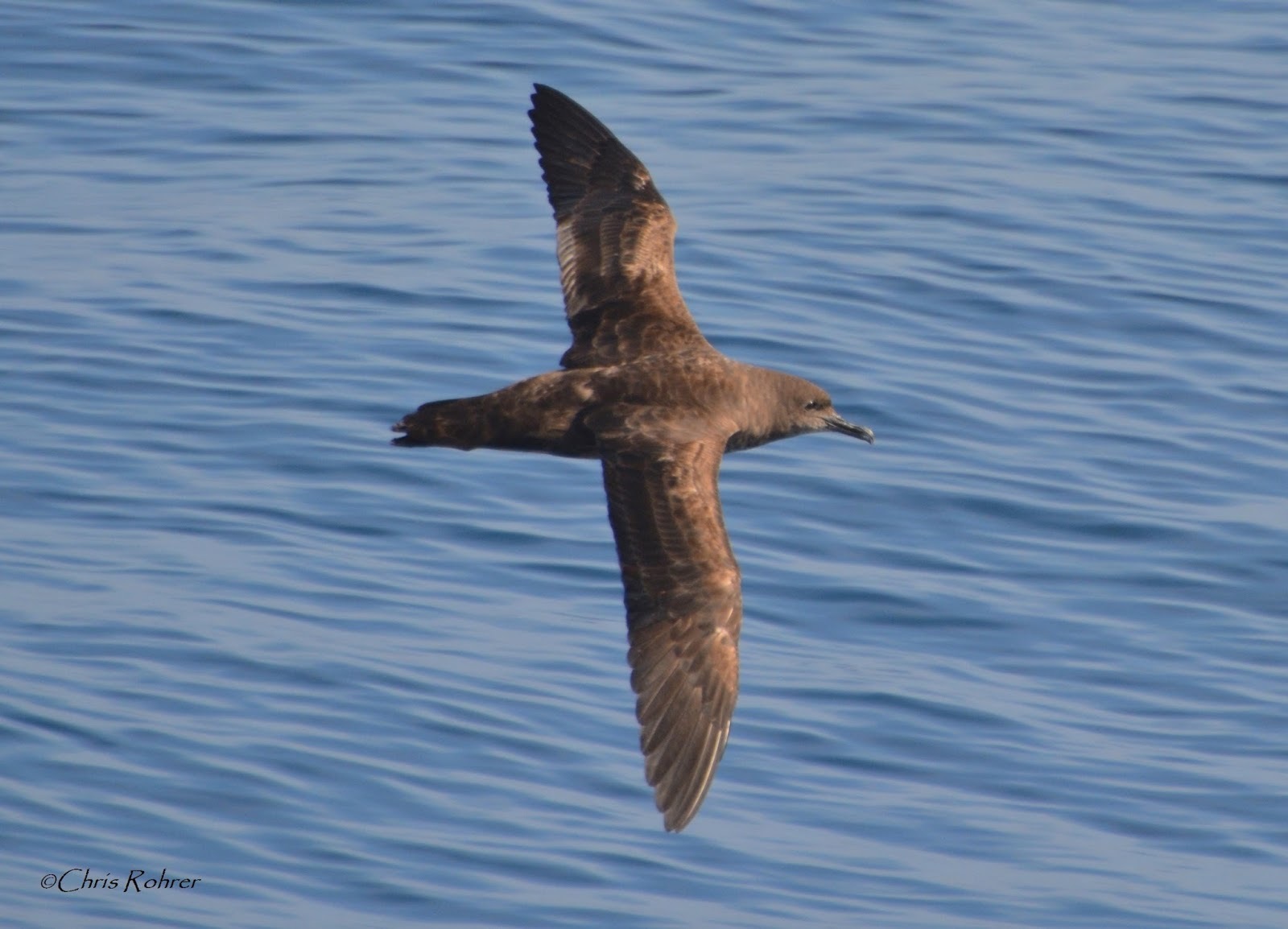
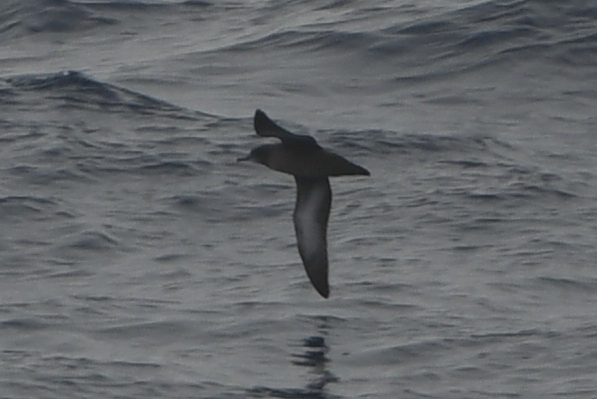
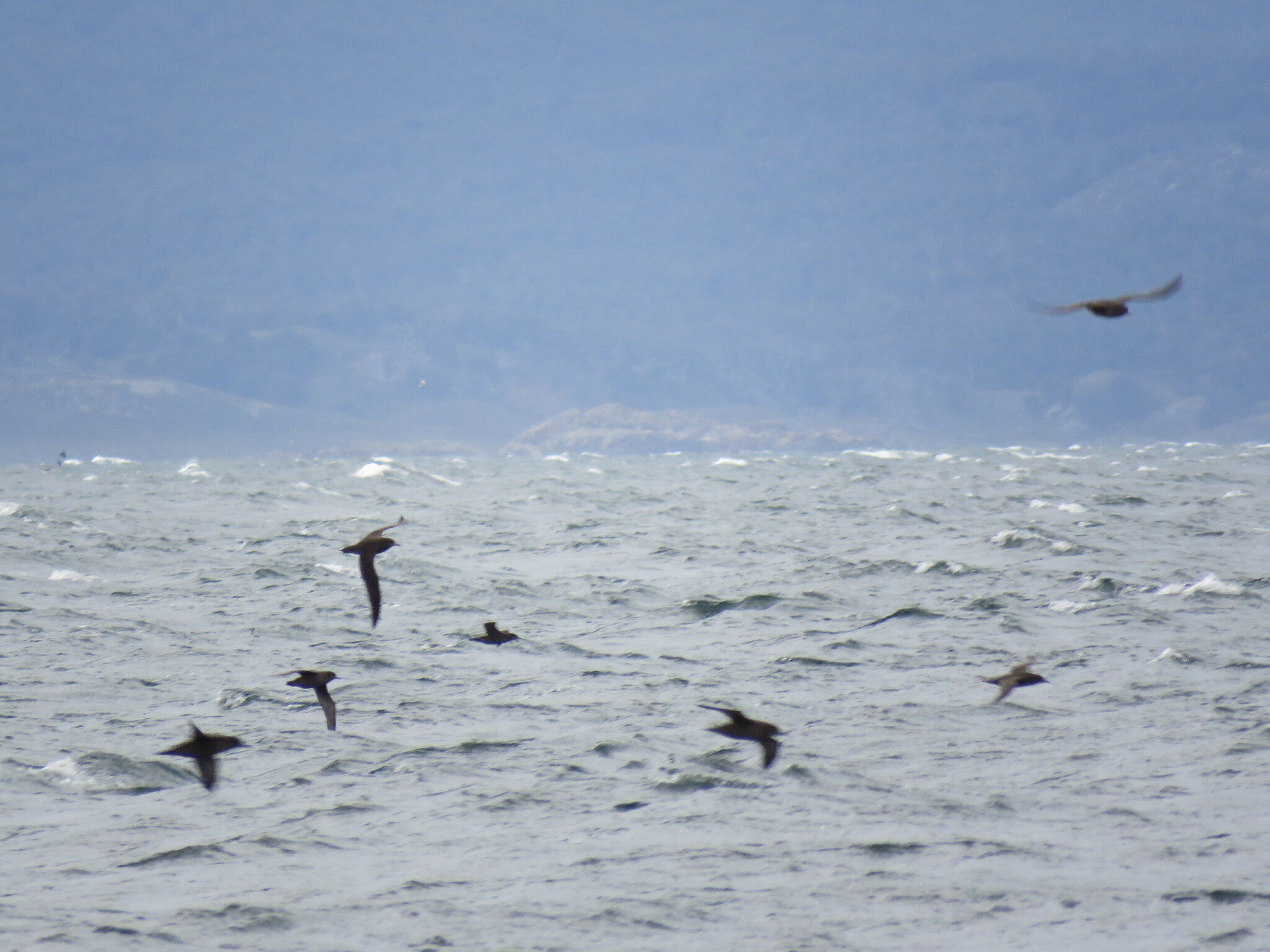
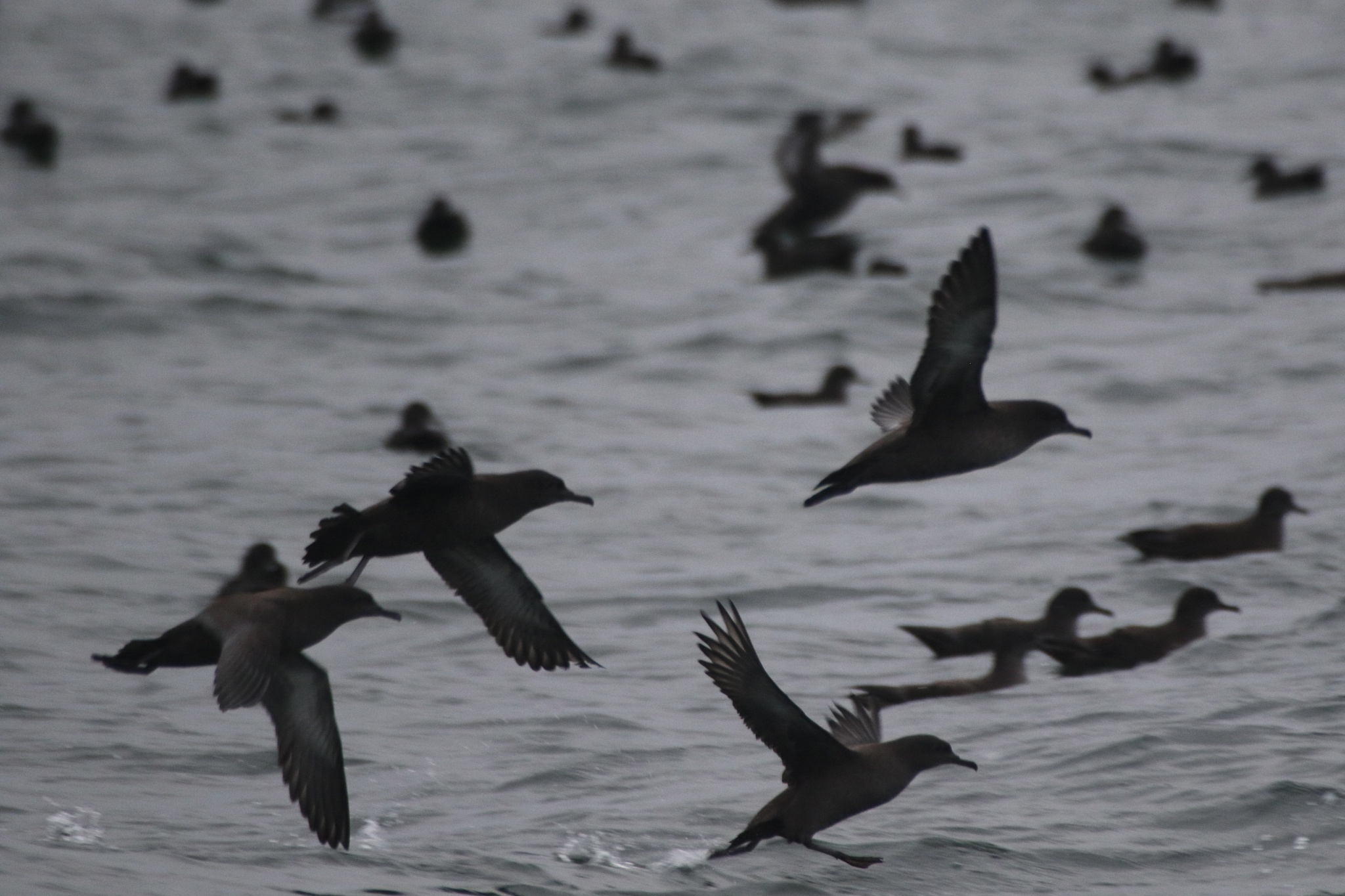
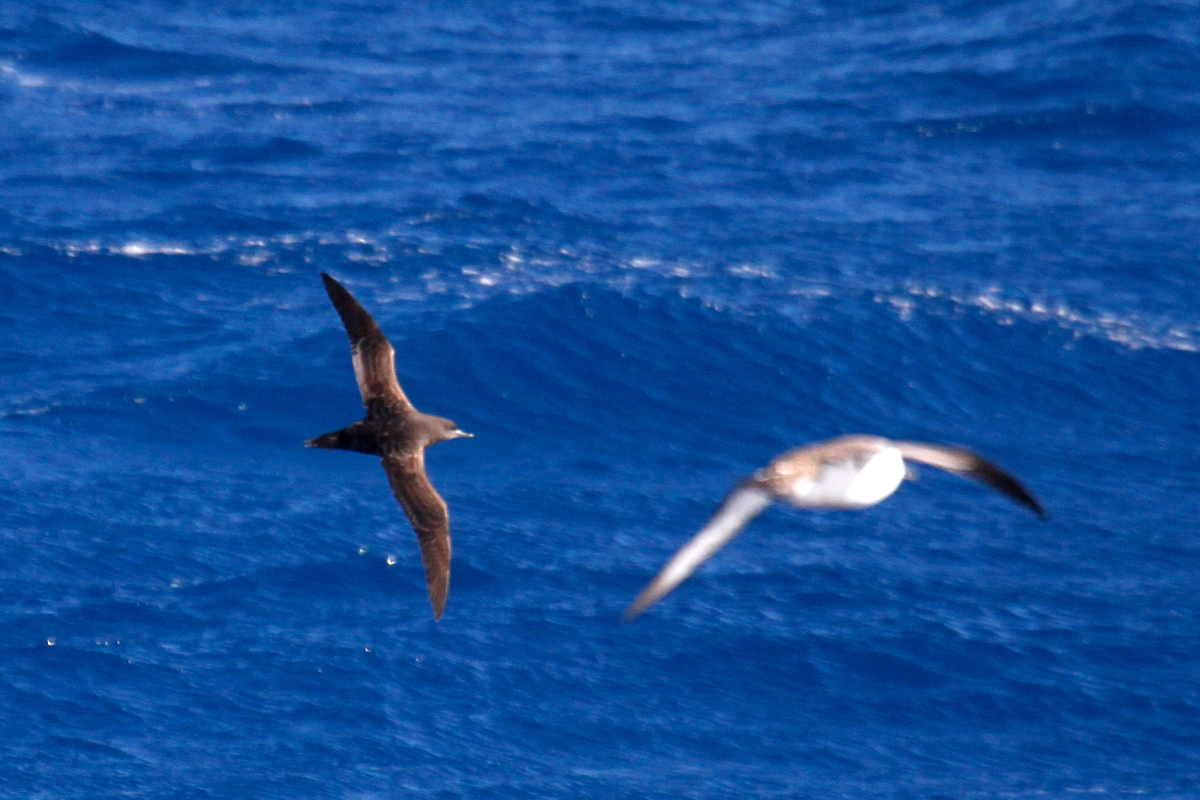
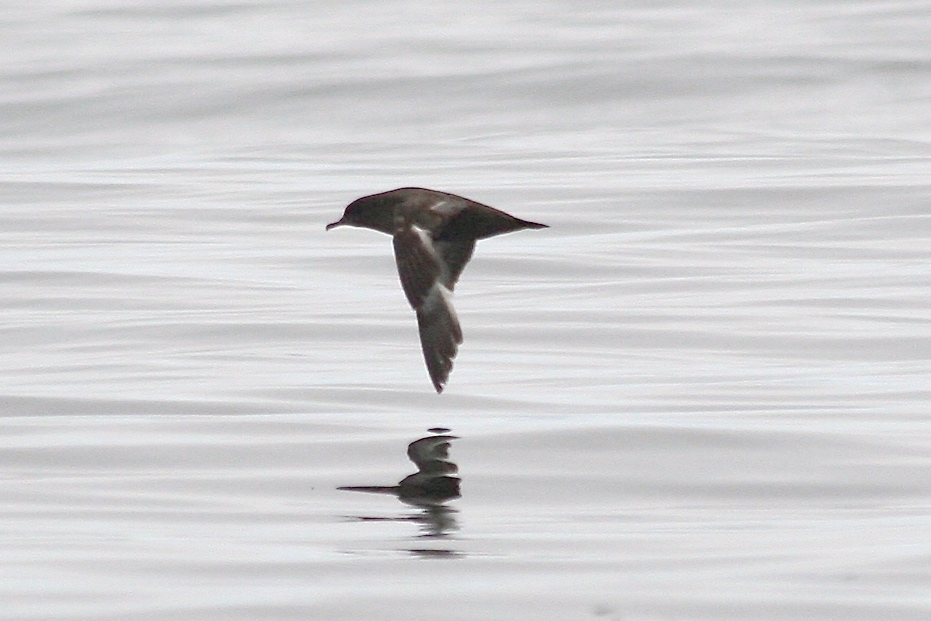
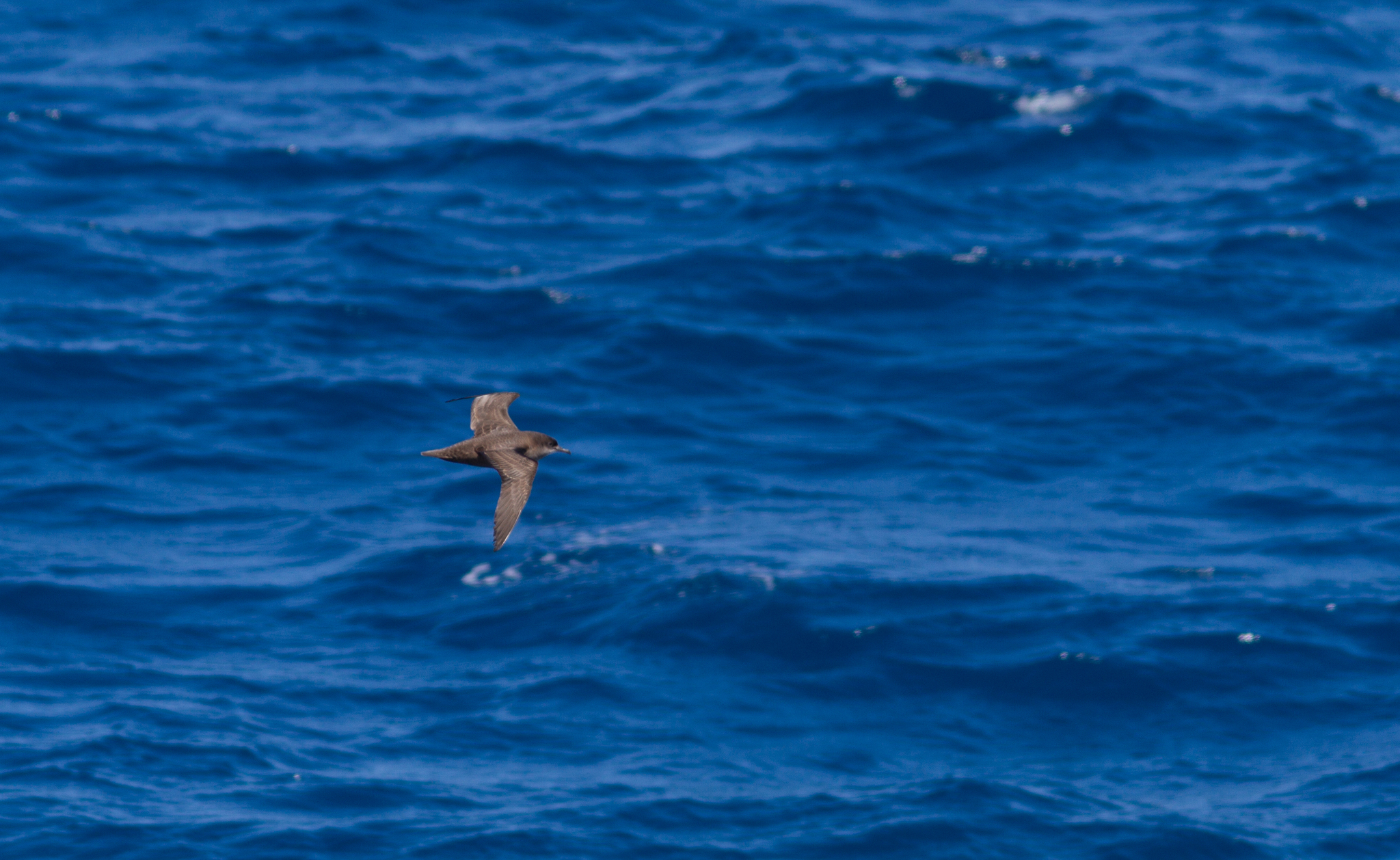
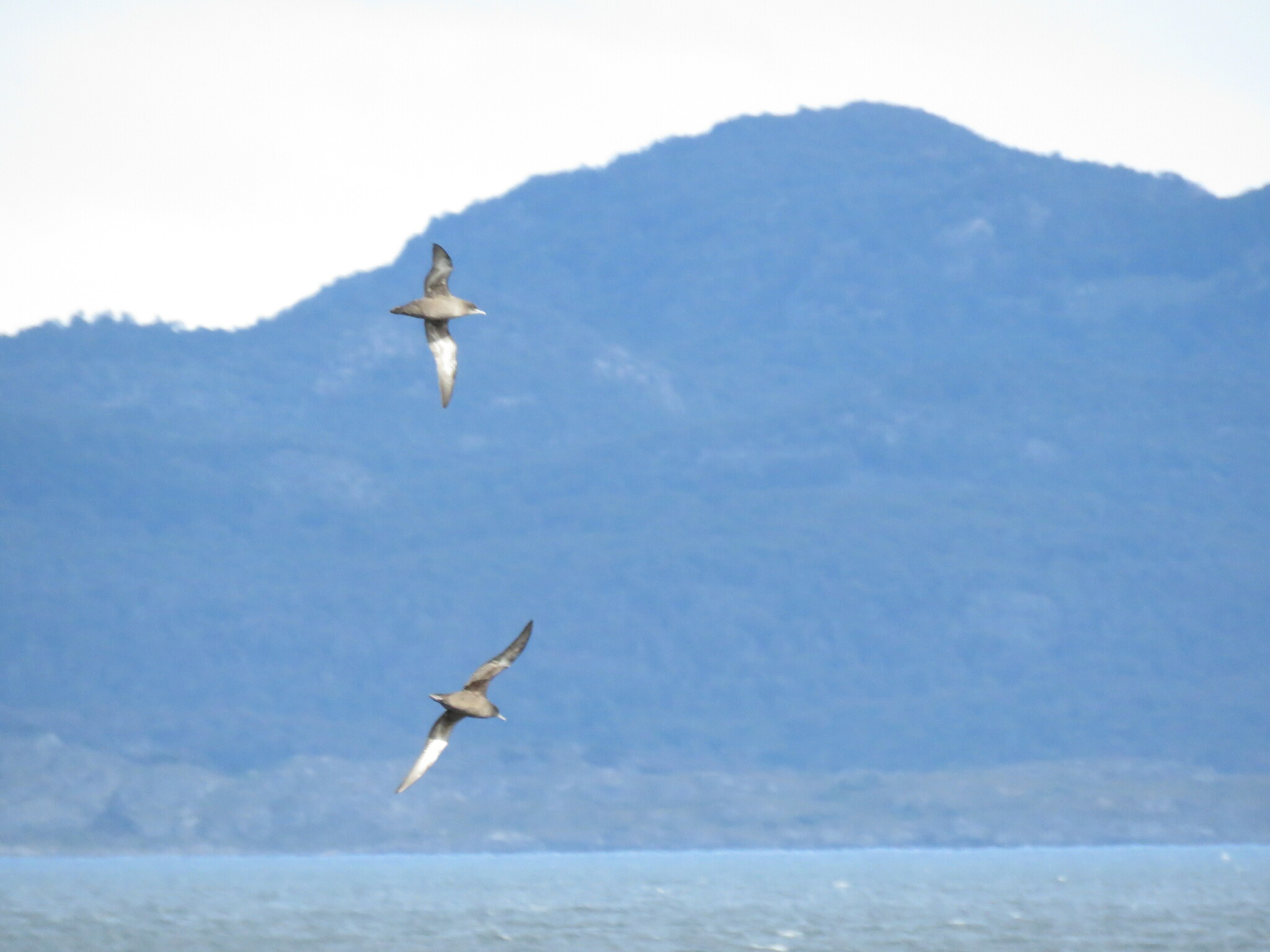
A medium-large seabird and one of the most widely distributed shearwaters, undertaking one of the longest annual migrations of any animal. Dark chocolate-brown plumage overall, with a diagnostic silvery stripe along the center of the underwing; appears black at distance. Characterized by a distinctive shearing flight, gliding on stiff wings with minimal wingbeats while tilting side to side. Often associates with whales and fishing vessels, following them to feed on disturbed fish. Range and specific conservation status require further field data.
Description
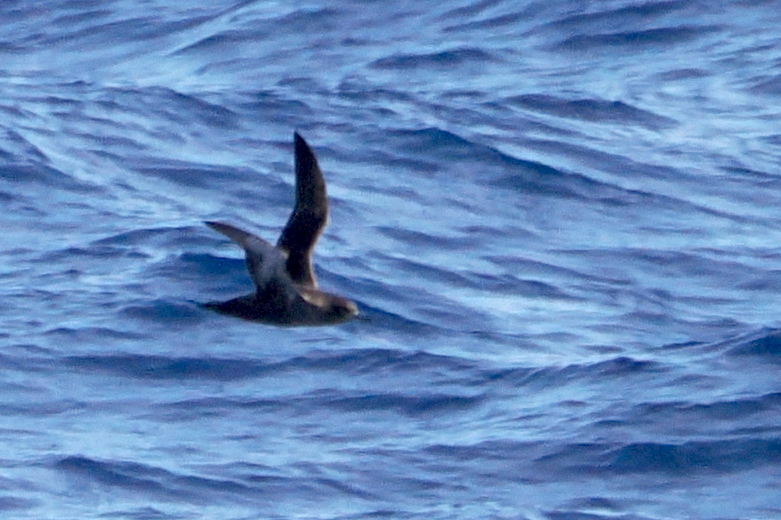
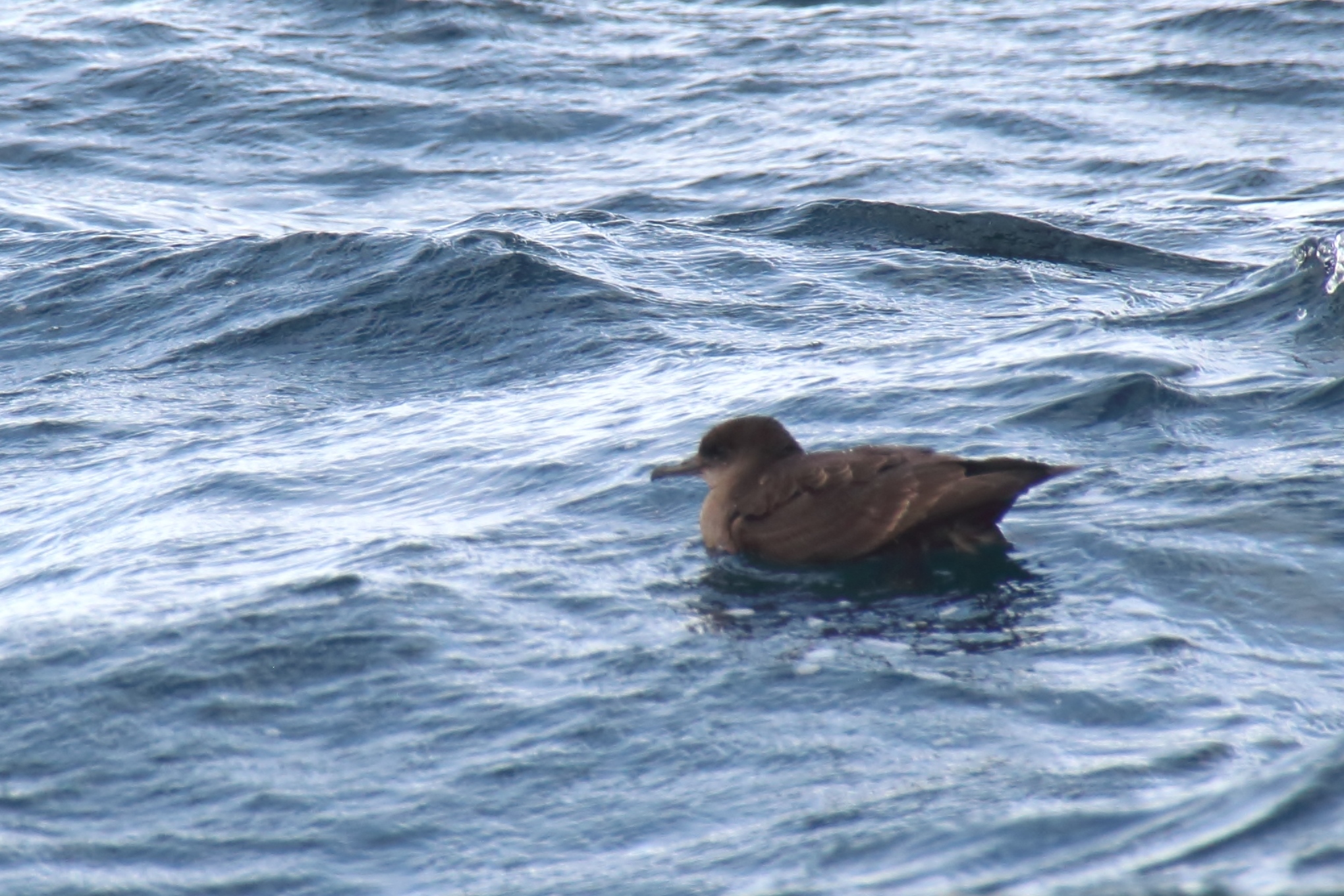
This seabird measures 40–51 cm in length with a substantial wingspan of 94–110 cm. It possesses the characteristic shearwater flight silhouette: long, stiff wings held straight and rigid while the bird performs dynamic banking maneuvers, dipping from side to side with only occasional wingbeats. The plumage is uniformly dark, appearing entirely black in challenging viewing conditions, but reveals itself as rich dark chocolate-brown when seen clearly. The underwing displays a diagnostic silvery-white stripe running centrally, visible at close range in good light. The bill is black and relatively stout compared to smaller shearwaters. The overall impression in flight evokes a miniature albatross, owing to the wing shape and fluid, powerful gliding style.
Identification
In Atlantic waters, this is the only all-dark large shearwater species, making identification relatively straightforward with reasonable views. The smaller Balearic shearwater can cause confusion at extreme range but typically appears somewhat paler and lacks the distinctive pale underwing stripe. The Pacific portion of its range presents greater challenges, as the short-tailed shearwater is virtually indistinguishable at distance, with even experienced seabird researchers relying on subtle biometric differences for certain identification. At sea, the species is typically silent, though it may utter harsh calls when competing for food in large concentrations. On breeding grounds, it becomes vocal at night, producing loud coos and croaks as birds return to their colonies.
Distribution & Habitat
Breeding occurs on small islands in two geographically separated populations. The South Pacific population breeds around southeast Australia, New Zealand, the Auckland Islands, and Phillip Island off Norfolk Island. The South Atlantic population occupies the Falkland Islands, Tierra del Fuego, and Tristan da Cunha. The migration circuit is spectacular: birds travel north along the western margins of the Pacific and Atlantic Oceans from March through May, reach subarctic waters by June and July, cross eastward, then return south down the eastern sides of the oceans from September through October, arriving back at colonies in November. Pacific breeders may travel 74,000 km annually, reaching Japan, Alaska, and California. In the North Atlantic, individuals reach 60–70°N off Norway. Flocks of hundreds of thousands have been recorded migrating through Monterey Bay.
Behavior & Ecology
Feeding strategy centers on fish and squid, with birds capable of diving to 68 m depth, though surface feeding is more common. A distinctive behavior involves following whales to capture fish disturbed by their movements, and trailing fishing vessels to collect discarded scraps. Breeding occurs in enormous colonies where females lay a single white egg measuring approximately 48 mm by 77.5 mm. Nesting takes place in burrows lined with plant material, constructed in soil under tussac grass where possible. Both parents share incubation duties over roughly 54 days, then raise the chick for 86 to 109 days. Burrow architecture varies between colonies based on competition for space and substrate type. Adults visit nests only at night to avoid predation by large gulls and skuas.
Conservation
The species is currently classified as Near Threatened by the IUCN, with numbers declining in recent decades. In New Zealand, approximately 250,000 chicks are harvested annually by Māori communities for muttonbird, a traditional practice that has continued for generations. Climate change is emerging as a threat, with evidence suggesting impacts on the cultural harvest practices of Ngāi Tahu in 2022. The long-term sustainability of harvest levels and the effects of shifting oceanic conditions on food availability remain concerns for population management.
Culture
This species played an unexpected role in cinematic history. On August 18, 1961, thousands of disoriented birds were observed in Monterey Bay, California, regurgitating anchovies, colliding with objects, and dying on local streets. The incident was reported in the Santa Cruz Sentinel and caught the attention of filmmaker Alfred Hitchcock, who was then developing a project based on a Daphne du Maurier story. This real-life event, combined with du Maurier's work, helped inspire Hitchcock's 1963 thriller 'The Birds.' Scientific analysis of marine samples from the area later revealed toxic algae in 79% of plankton, leading researchers to conclude the birds were poisoned, possibly by nutrient runoff from leaky septic systems during a housing boom, which fed the toxic algal blooms.
Source: Wikipedia · CC BY-SA 3.0
Taxonomy
- Order
- Procellariiformes
- Family
- Procellariidae
- Genus
- Ardenna
- eBird Code
- sooshe
Distribution
breeds southeastern Australia (including Macquarie Island), New Zealand including associated subantarctic island groups, far southern South America (including the Falkland Islands), and Tristan da Cunha (south Atlantic Ocean); winters northward in North Atlantic to Greenland and northwestern Europe, and in northern Pacific to Gulf of Alaska and western USA
Data Sources
Species description from Wikipedia, licensed under CC BY-SA 3.0.
Bird images and sounds sourced from GBIF, contributed by citizen scientists worldwide under Creative Commons licenses.
Taxonomy data from AviList 2025.