White-bellied Heron
Ardea insignis
白腹鹭
Introduction
The white-bellied heron (Ardea insignis) is the second largest heron species globally, with a body length of 127 cm. It inhabits river systems and wetlands in the eastern Himalayan foothills of northeast India, Bhutan, and northern Myanmar. The global population comprises fewer than 250 mature individuals, distributed across fragmented habitat in protected areas including Kaziranga National Park, Namdapha National Park, and the Punakha River basin. The species is classified as Critically Endangered on the IUCN Red List. It occupies remote, undisturbed freshwater habitats near rivers and wetlands. The species is solitary and secretive. Breeding occurs from December to March, with platform nests constructed in tall trees near water sources.
Description
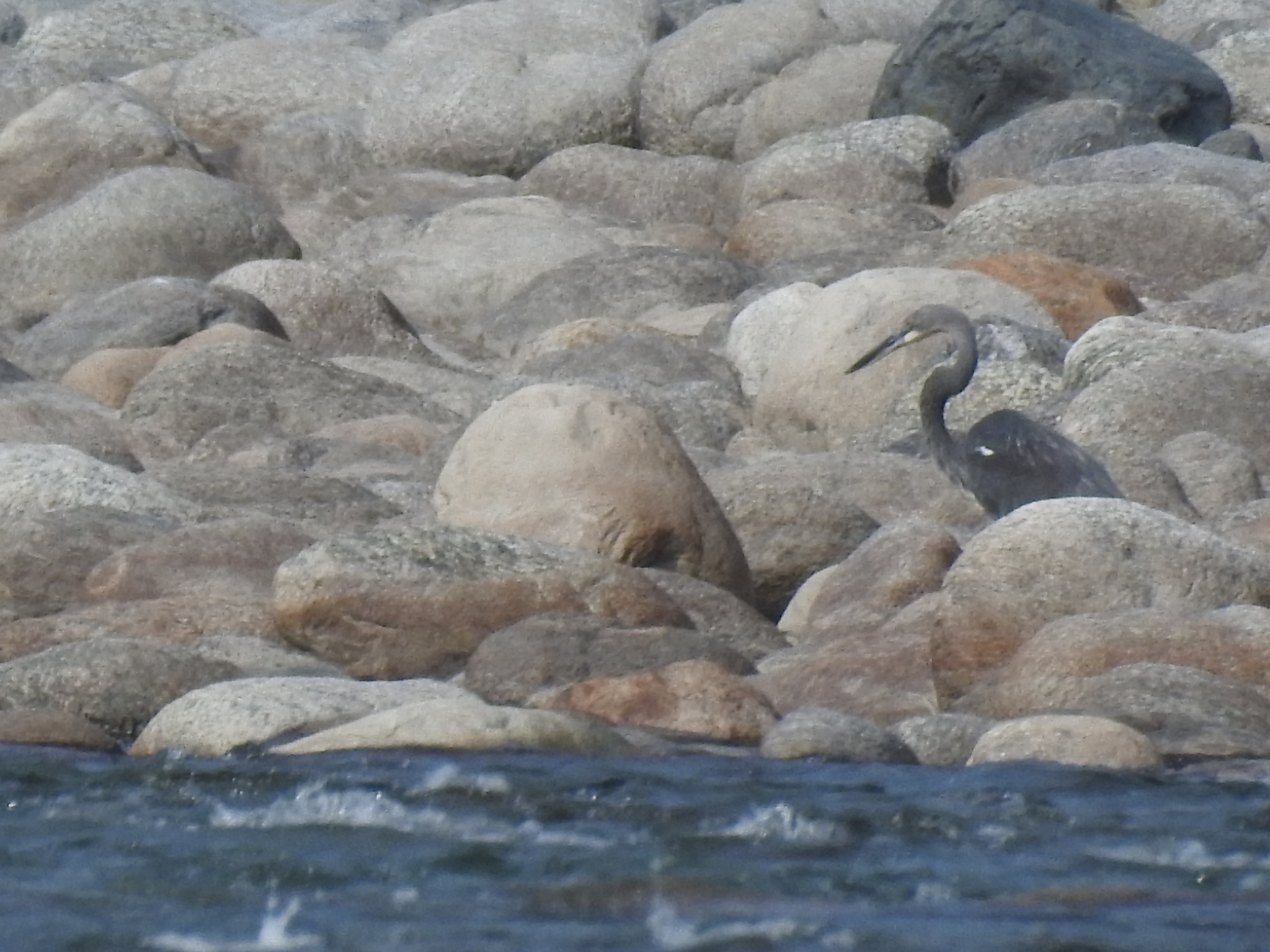
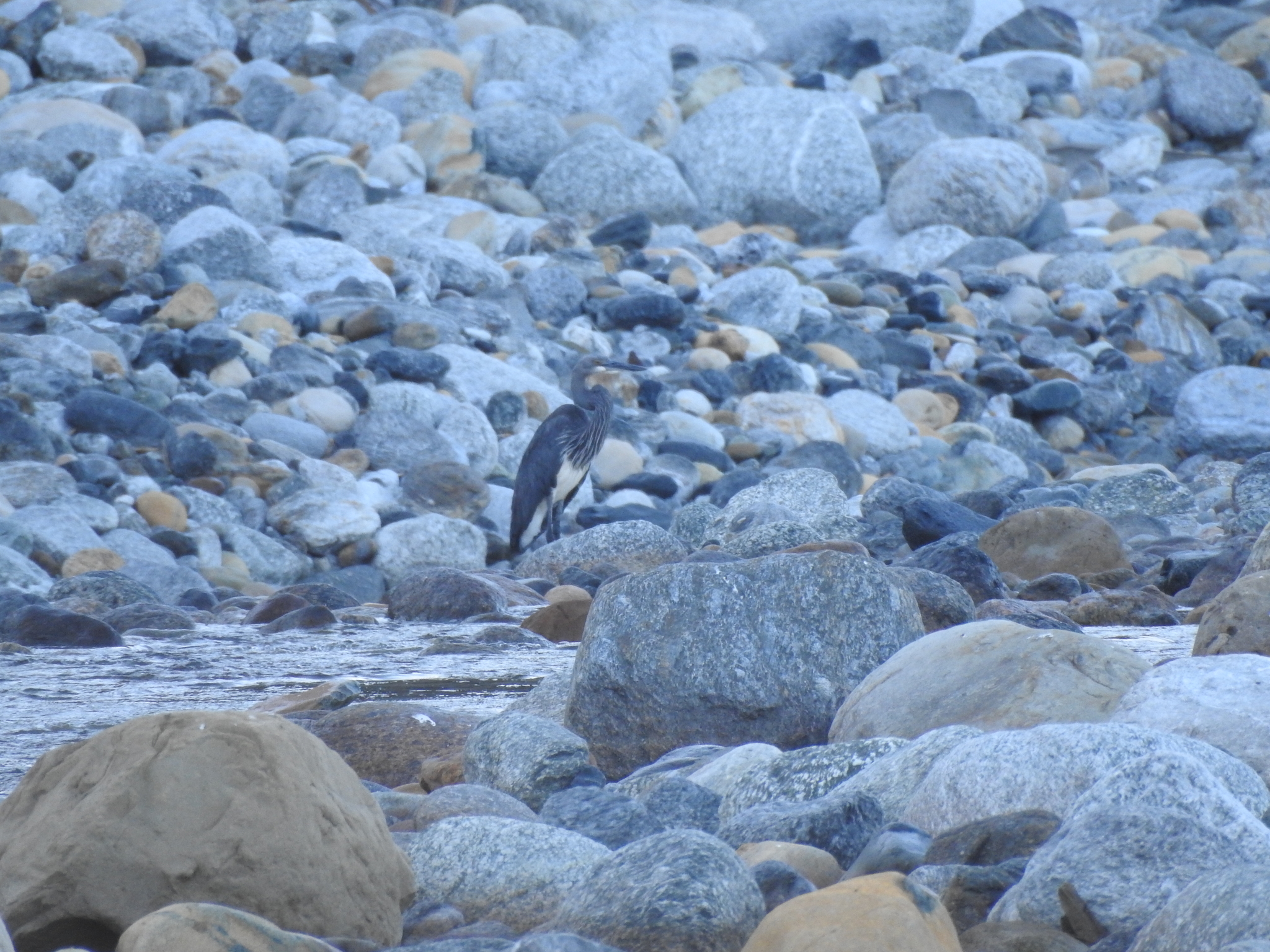
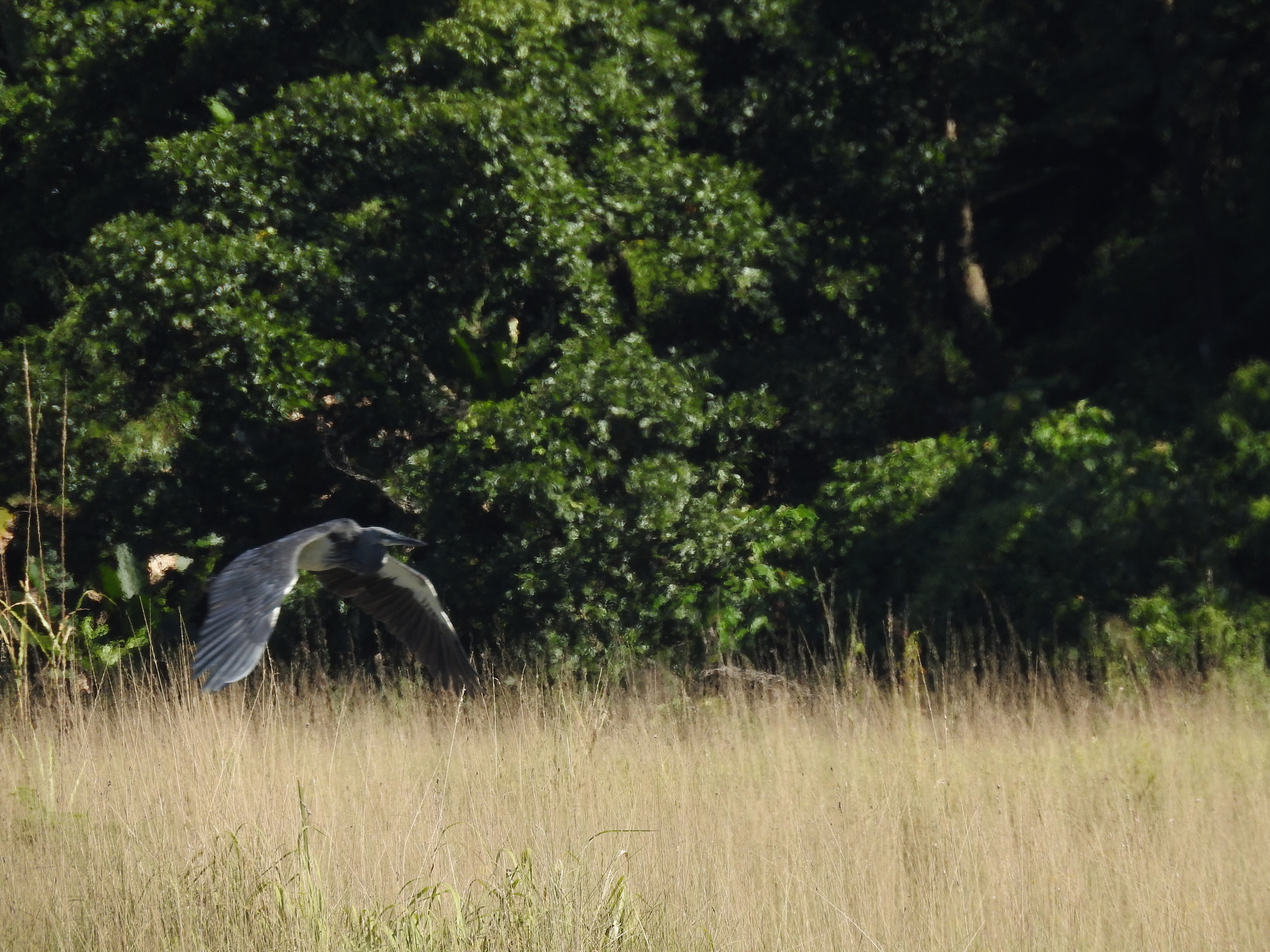
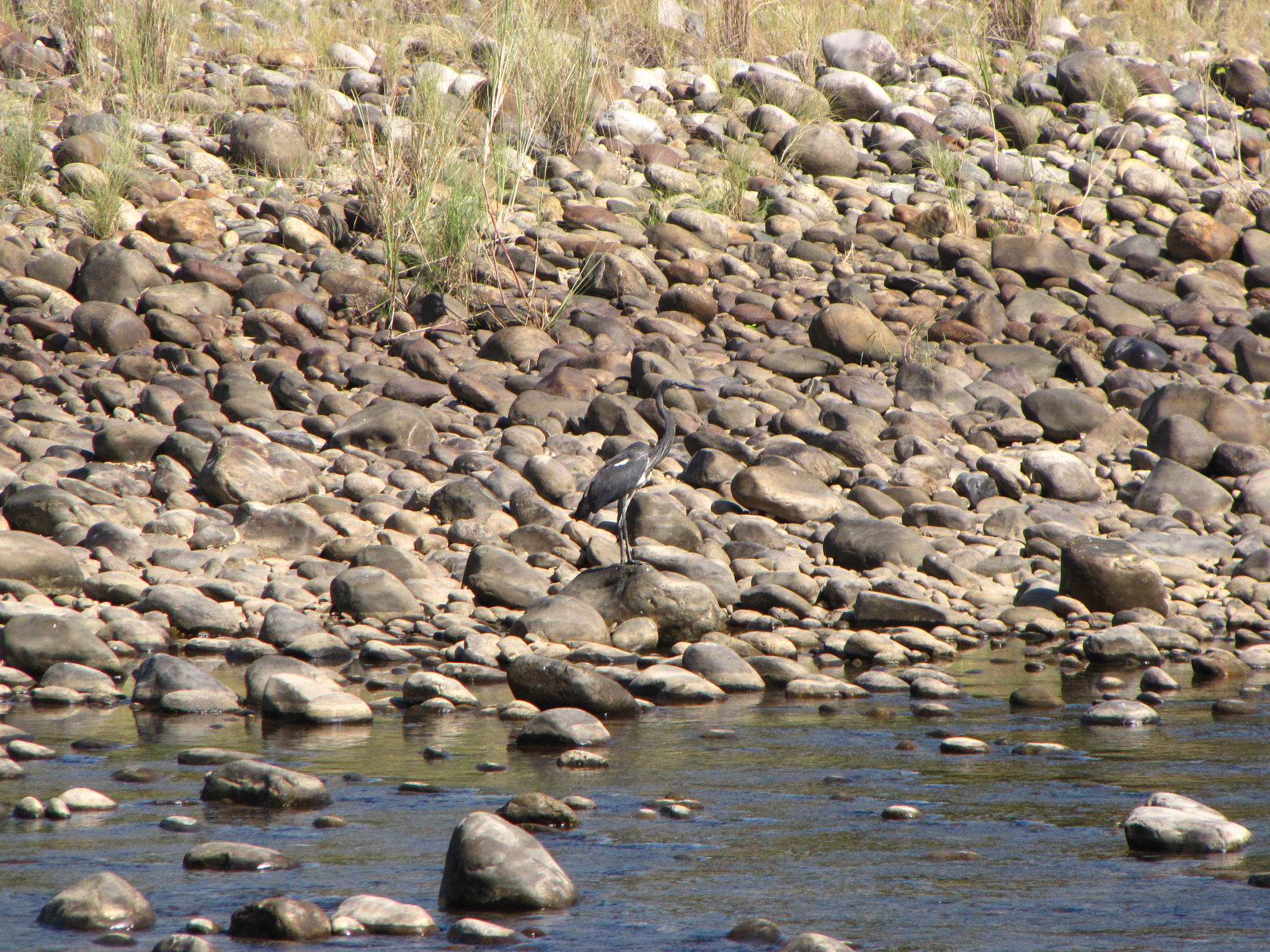
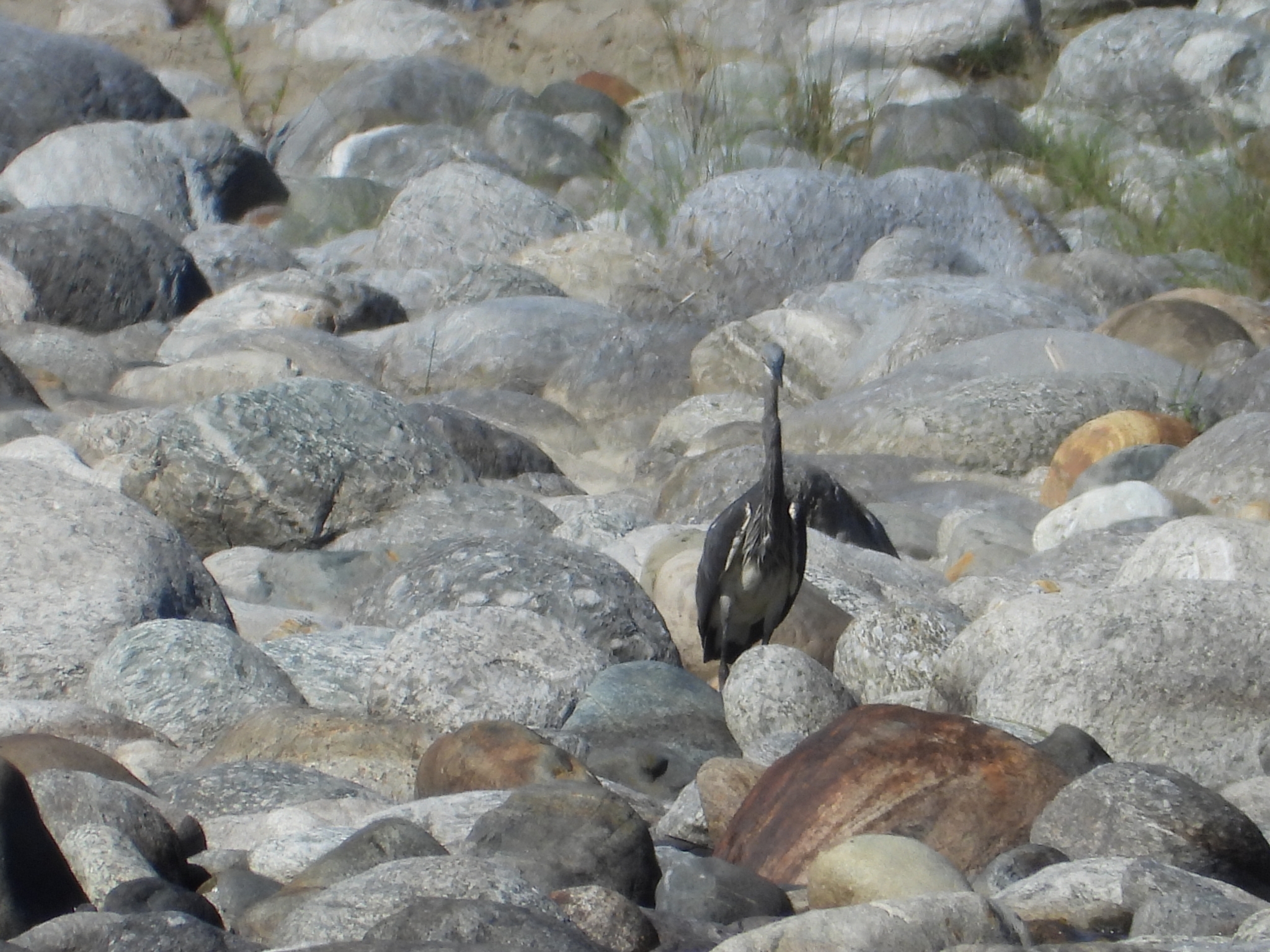
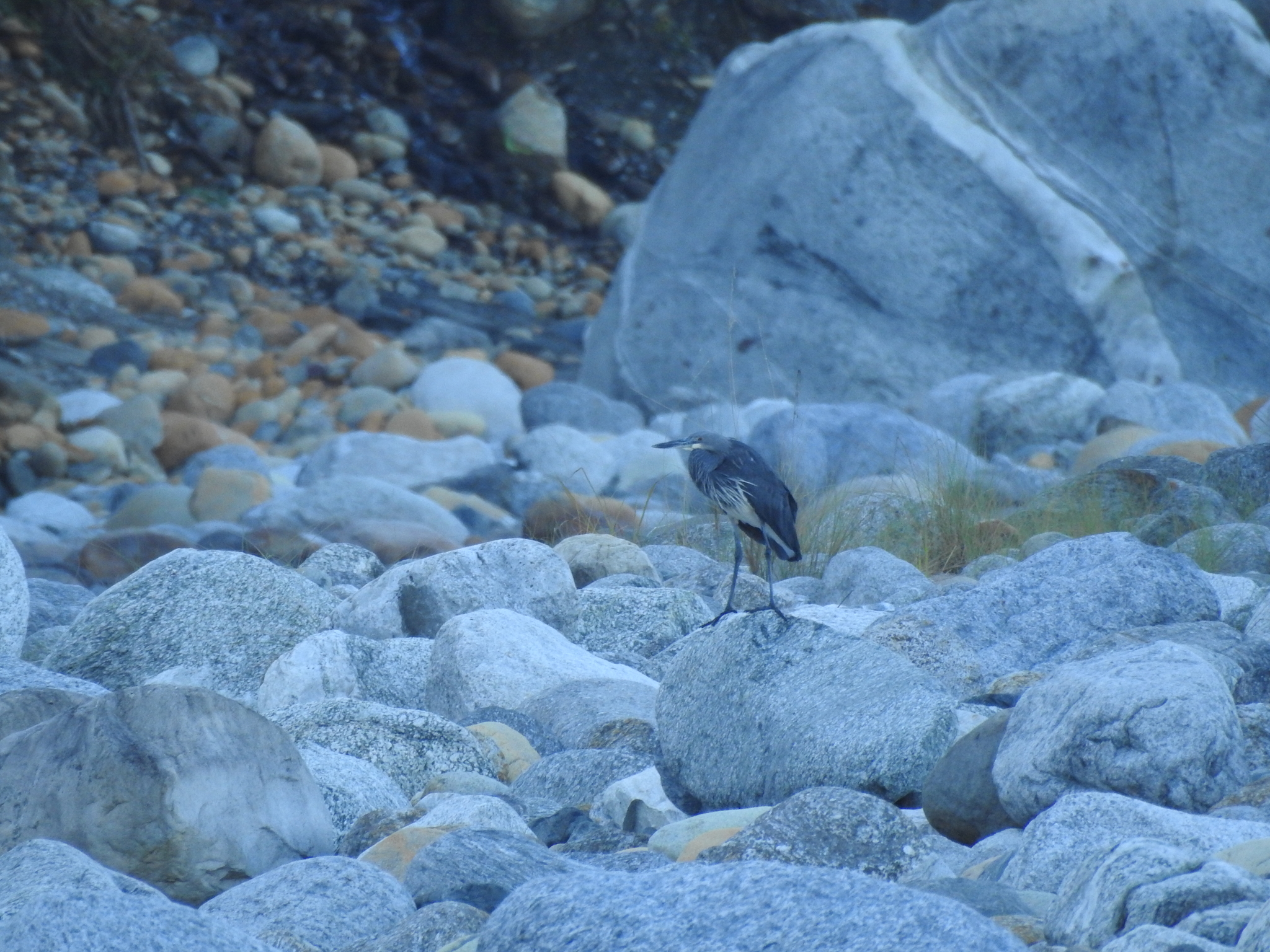
This is a strikingly large heron with a uniform dark grey plumage that contrasts sharply with its white throat, chin, and belly. The most distinctive features are the long, silvery-white plumes that adorn the rear crown and lower foreneck, giving the bird an elegant appearance. In breeding plumage, these plumes become more pronounced, and the bird develops elongated grey breast feathers with white centers along with a greyish-white nape plume. The face shows a greenish-grey coloration, while the substantial bill measures 15.2 to 17.6 cm in length and is mostly black with greenish tones near the base and tip. The eyes are yellow to ochre, and the legs and feet are a dull grey. Juveniles are browner above and have noticeably paler bills and legs. In flight, the upperwings appear uniformly dark grey while the underwing covert feathers are white, creating a striking contrast with the dark grey flight feathers. The rump appears pale grey. This species reaches 127 cm in height and weighs an estimated 3.2 to 3.4 kg.
Identification
This large heron can be identified by its combination of dark grey body, white underparts, and the diagnostic silvery plumes on the crown and neck. It is most likely to be confused with the great-billed heron, which is also dark grey but lacks the prominent white belly and extensive silvery plumage. The great-billed heron has a bulkier appearance and a heavier bill. In flight, the white underwing coverts distinguish this species from other large grey herons. Its substantial size—127 cm tall—makes it the second largest heron species, smaller only than the Goliath Heron. The combination of habitat preference for remote river systems in Himalayan foothill regions and the white belly visible at distance are key field marks.
Distribution & Habitat
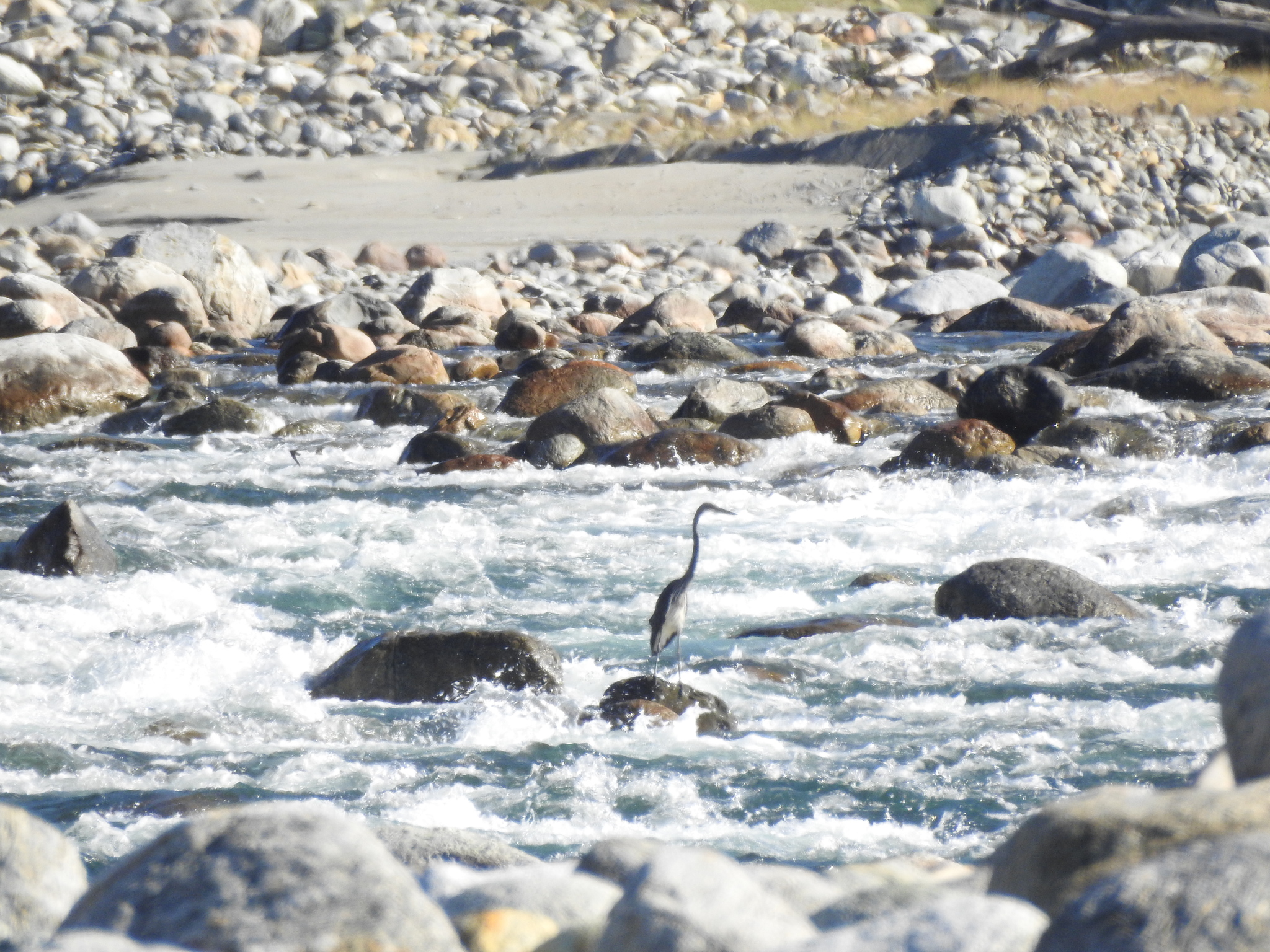
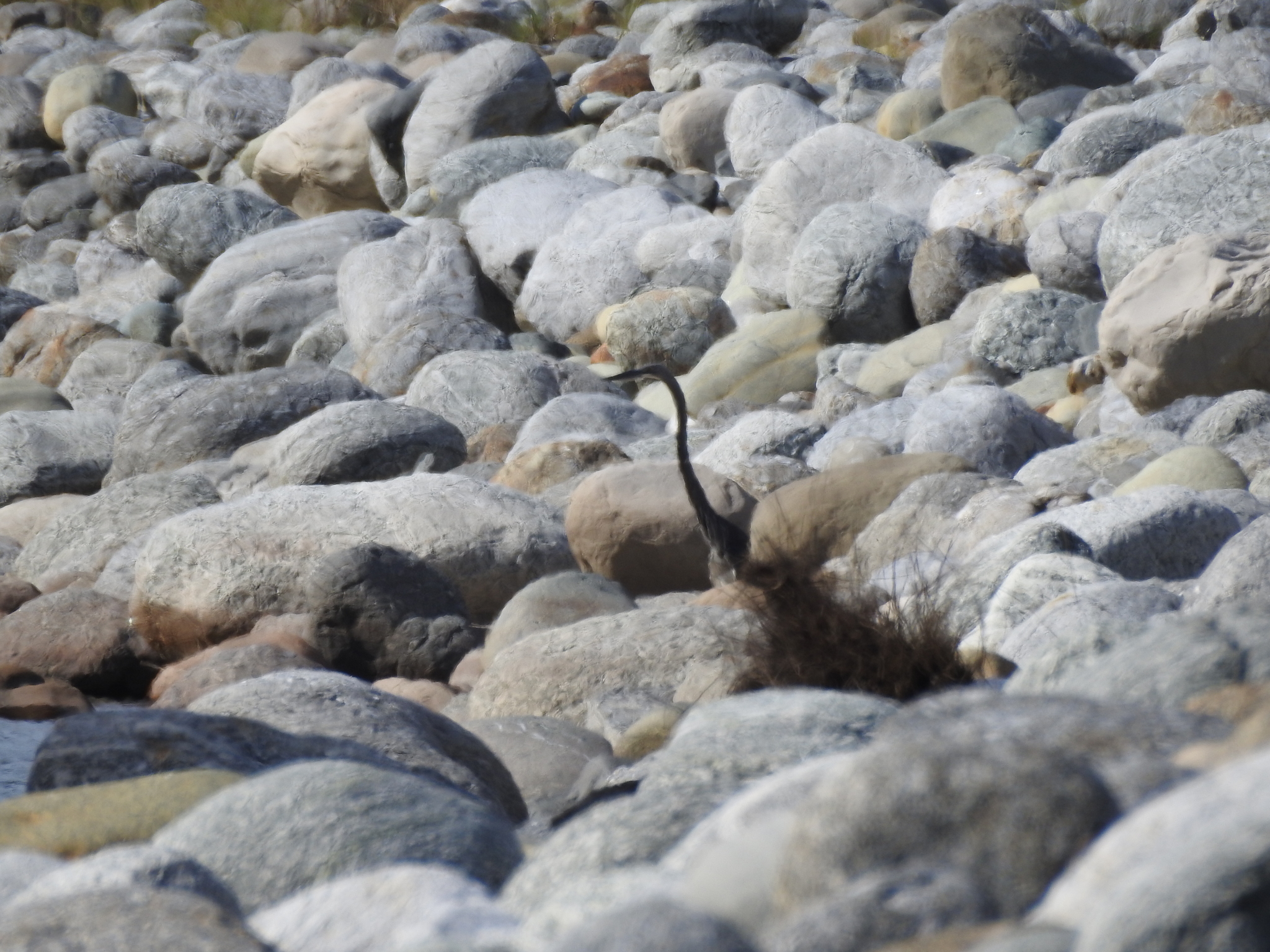
This species inhabits the wetlands of tropical and subtropical forests in the foothills of the eastern Himalayas. Its range extends through northeast India and Bhutan to northern Myanmar. In Bhutan, it occurs in low elevation riparian environments below 1,700 meters, particularly in the basin of the Sankosh River and its tributaries below 1,500 meters. Breeding populations have been documented in the Sankosh and Mangdechhu river basins, with nests found in chir pine, champak, and bayur trees at elevations between 400 and 1,430 meters. In India, regular sightings occur in Kazirangal National Park and Pobitora Wildlife Sanctuary in Assam, while Arunachal Pradesh hosts important populations along the Namdapha and Noa Dihing Rivers. In northern Myanmar, it has been observed in the Hkakabo Razi landscape. The species is locally extinct in Nepal and possibly Bangladesh.
Behavior & Ecology
This heron feeds primarily on Schizothorax carps throughout the year, supplemented by brown trout in spring and Garra fish species during summer. It prefers foraging in shallow river sections with multiple channels around 200 meters wide, as well as shallow ponds and pools within river islands. Feeding bouts last between 5 and 58 minutes. When disturbed, it produces a deep croaking call described as 'ock ock ock ock urrrrrr.' During the breeding season, calling peaks in early morning hours, especially just before sunrise, with frequent calls in late night hours but rare daytime calling. By day, it roosts for long periods up to six hours on sandy patches, rocks, logs, or trees, sometimes lying on its sternum. At night, it sleeps with the head pressed against the breast and one leg grasping the perch while the other is tucked up. Adults roost alone while juveniles roost in pairs.
Conservation
This species has been listed as Critically Endangered on the IUCN Red List since 2007 due to its extremely small global population of fewer than 250 mature individuals and ongoing rapid decline. Primary threats include habitat loss, degradation, and human disturbance from agricultural conversion, settlement expansion, wetland resource harvesting, and poaching. In Bhutan, four large hydropower projects and gravel and sand mining operations threaten critical habitat along river systems. Nesting sites have been negatively affected by forest fires. Legal protection includes Schedule 1 of India's Wild Life Protection Act, 1972, and the highest level of protection in Myanmar since 1994. A captive breeding success was achieved in Bhutan in May 2011, with a chick released in September 2011 in Punakha District.
Culture
No specific cultural significance or folklore is documented for this species in the available sources.
Source: Wikipedia · CC BY-SA 3.0
Taxonomy
- Order
- Pelecaniformes
- Family
- Ardeidae
- Genus
- Ardea
- eBird Code
- whbher2
Distribution
Himalayan foothills (Nepal to northeastern India and Myanmar)
Data Sources
Species description from Wikipedia, licensed under CC BY-SA 3.0.
Bird images and sounds sourced from GBIF, contributed by citizen scientists worldwide under Creative Commons licenses.
Taxonomy data from AviList 2025.