Rufous-throated Partridge
Arborophila rufogularis
红喉山鹧鸪
Introduction
Inhabits montane forests of the Himalayas and Southeast Asia. Member of the Arborophila genus. Characterized by secretive habits and distinctive whistled calls. Maintains stable populations across its extensive range. Typically detected by sound before visual sighting.
Description
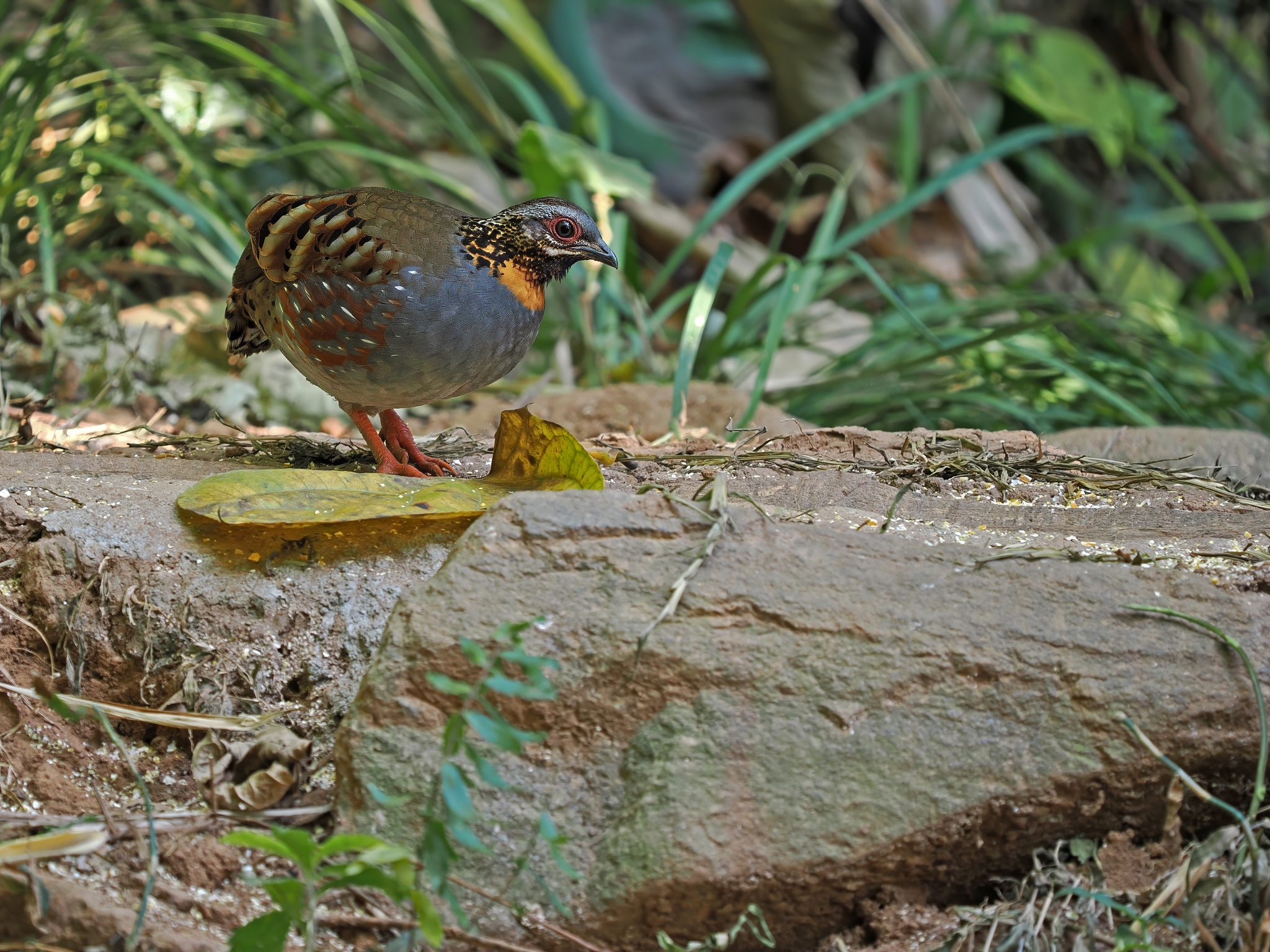
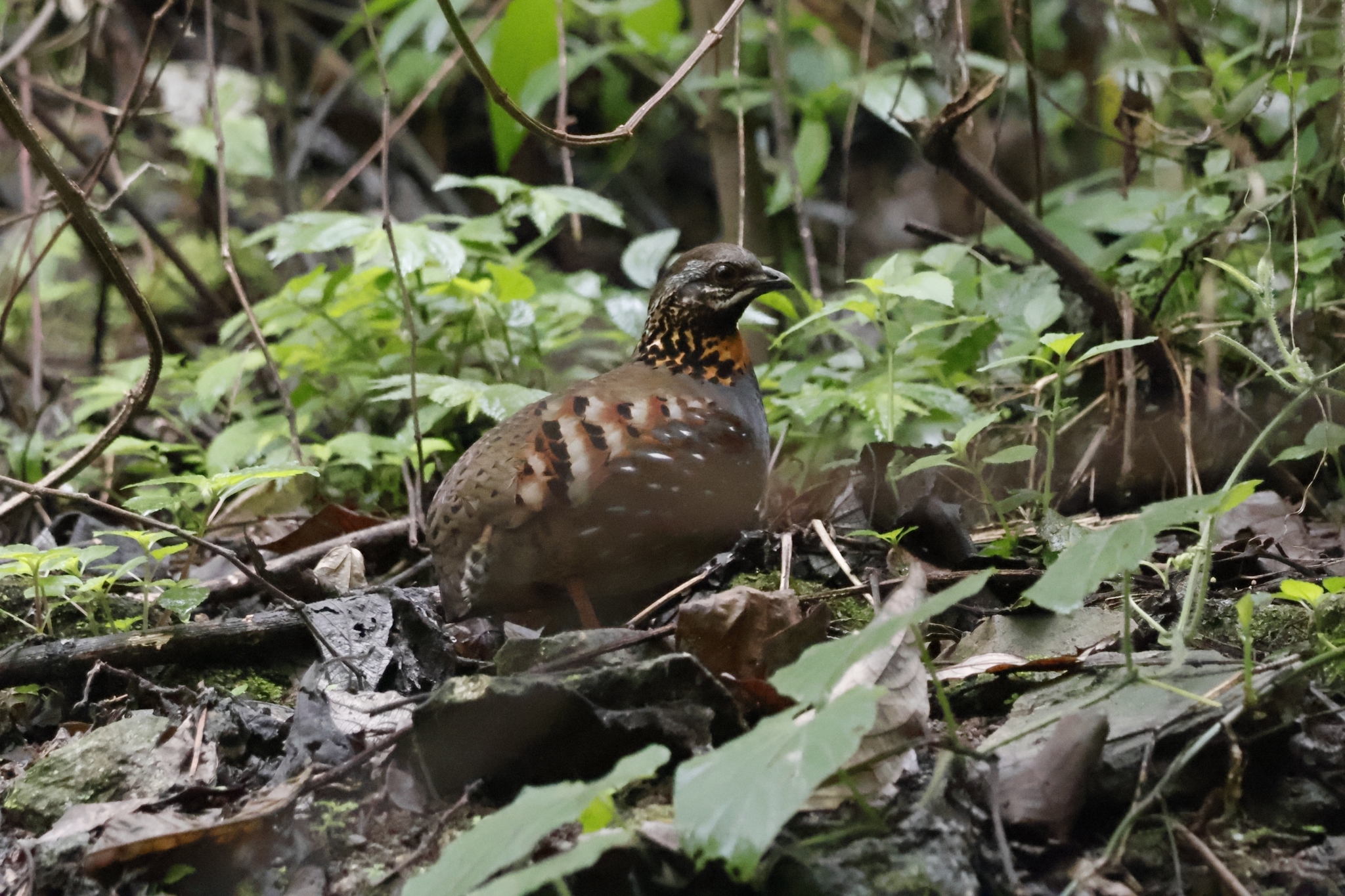
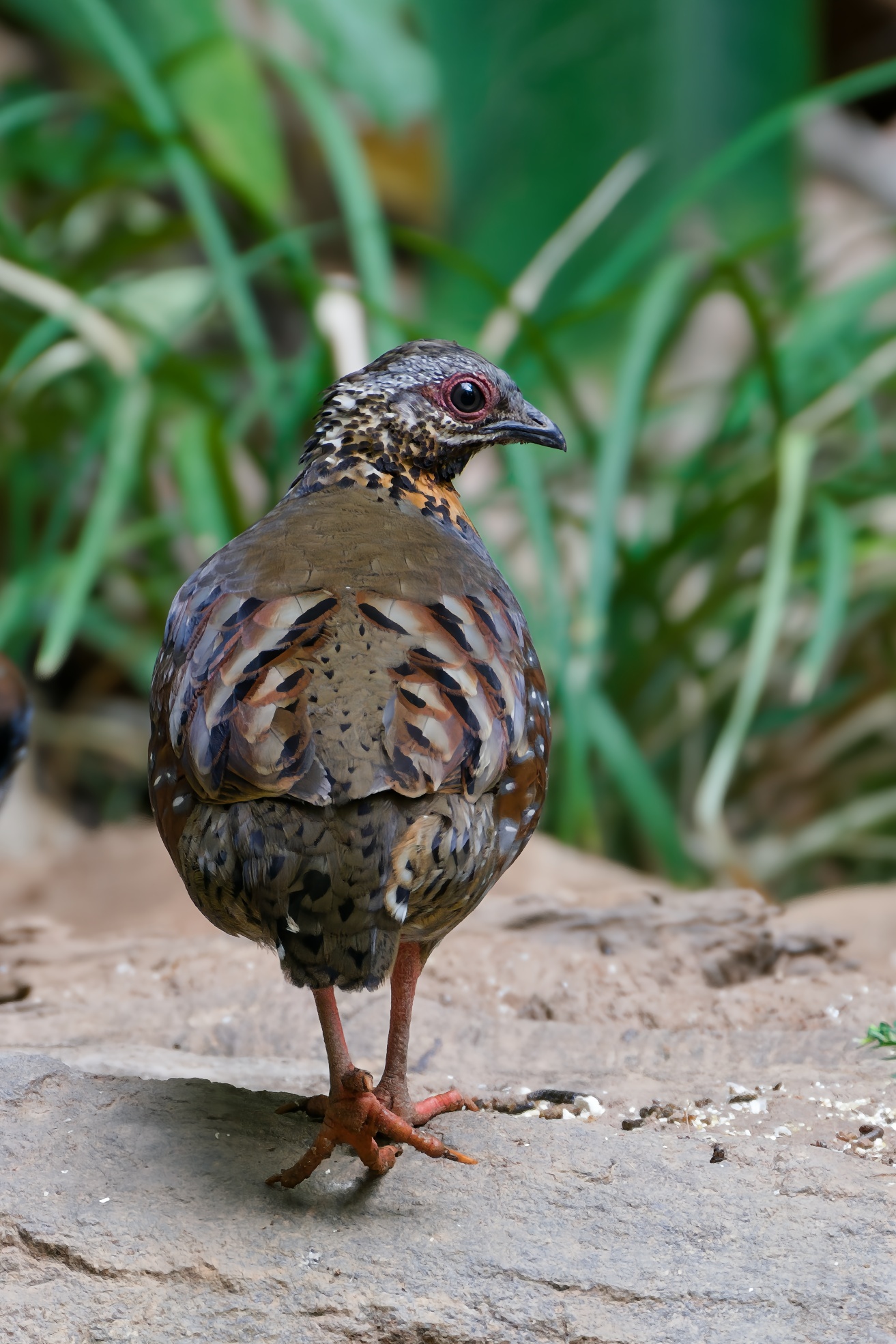
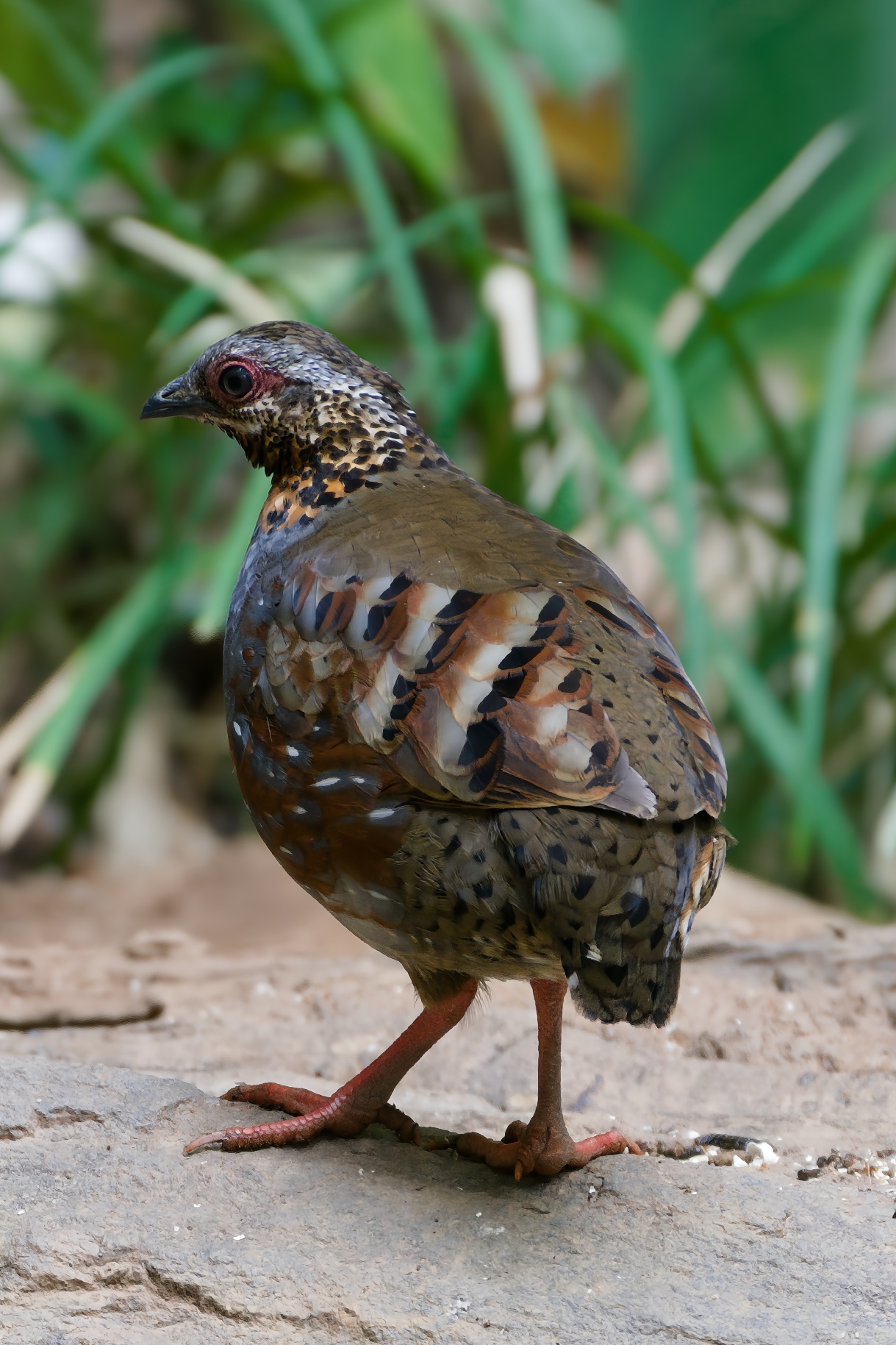
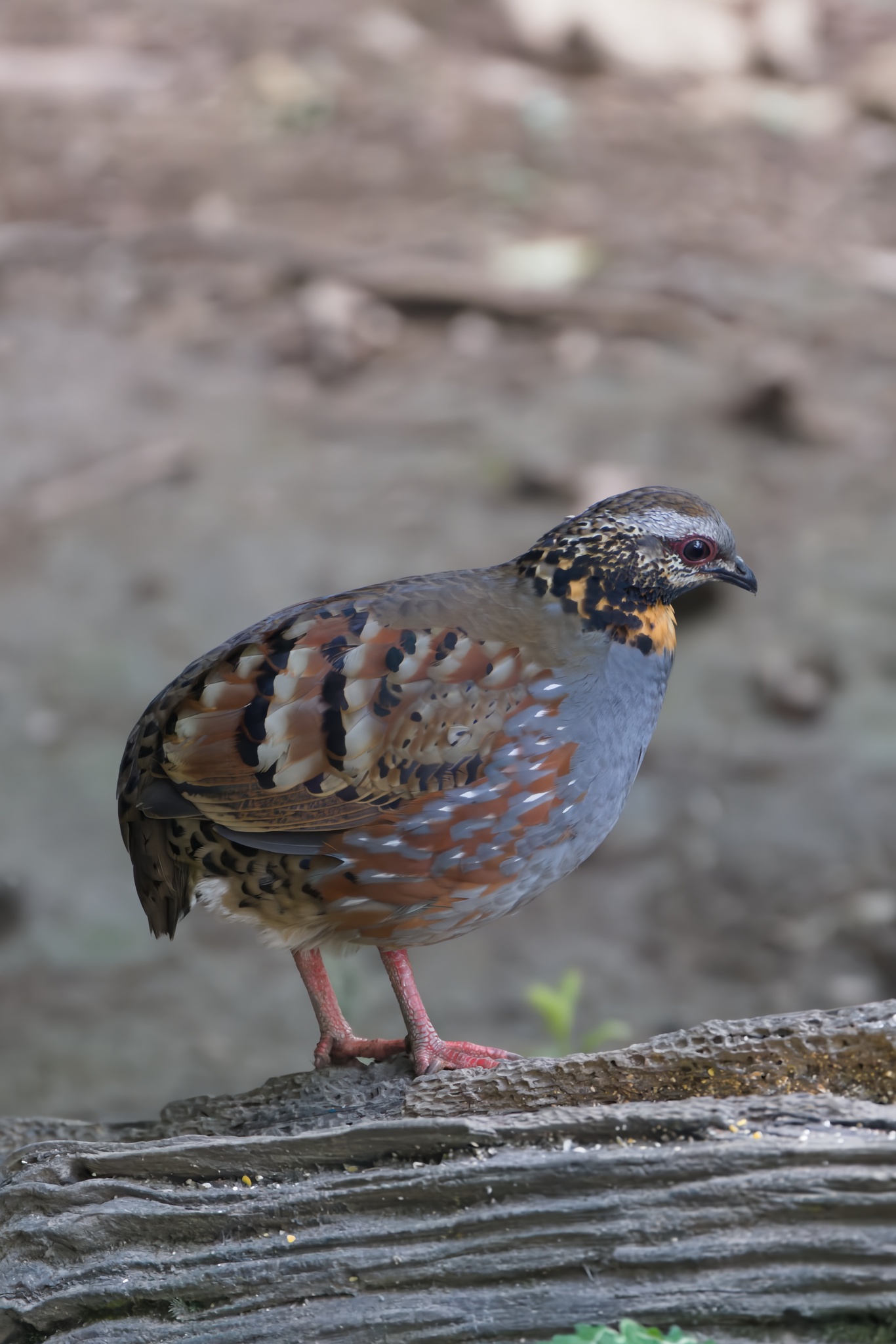
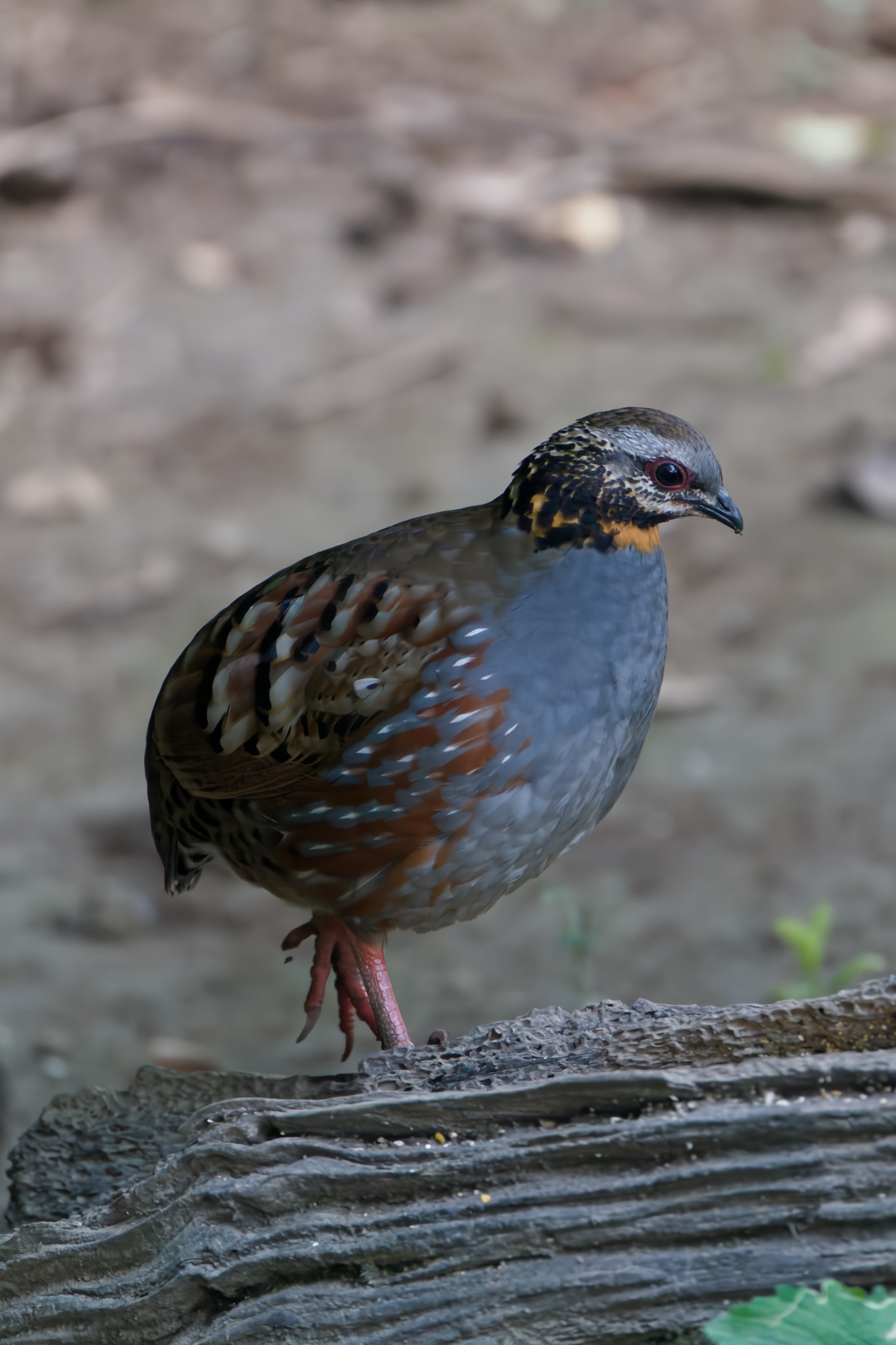
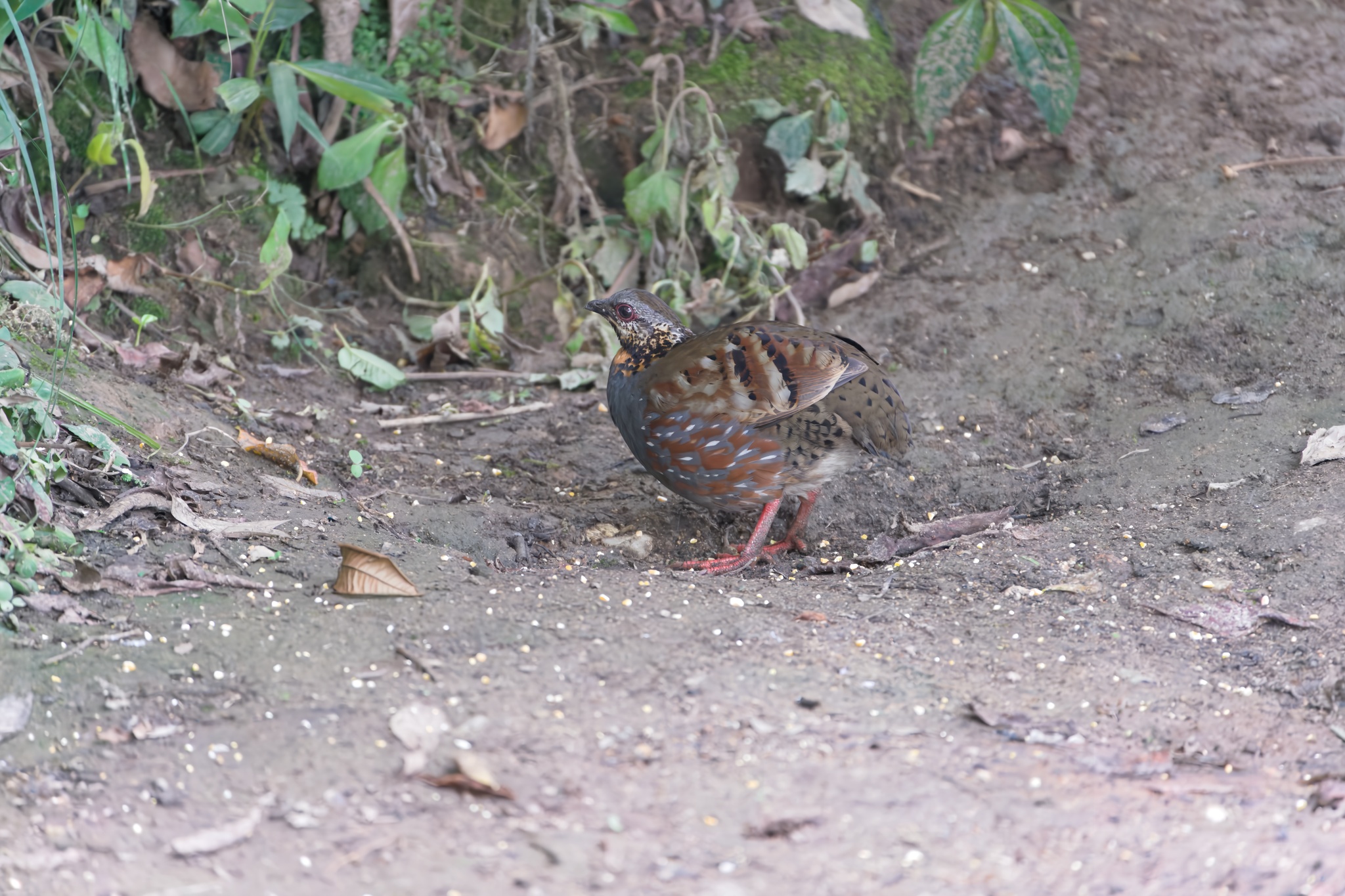
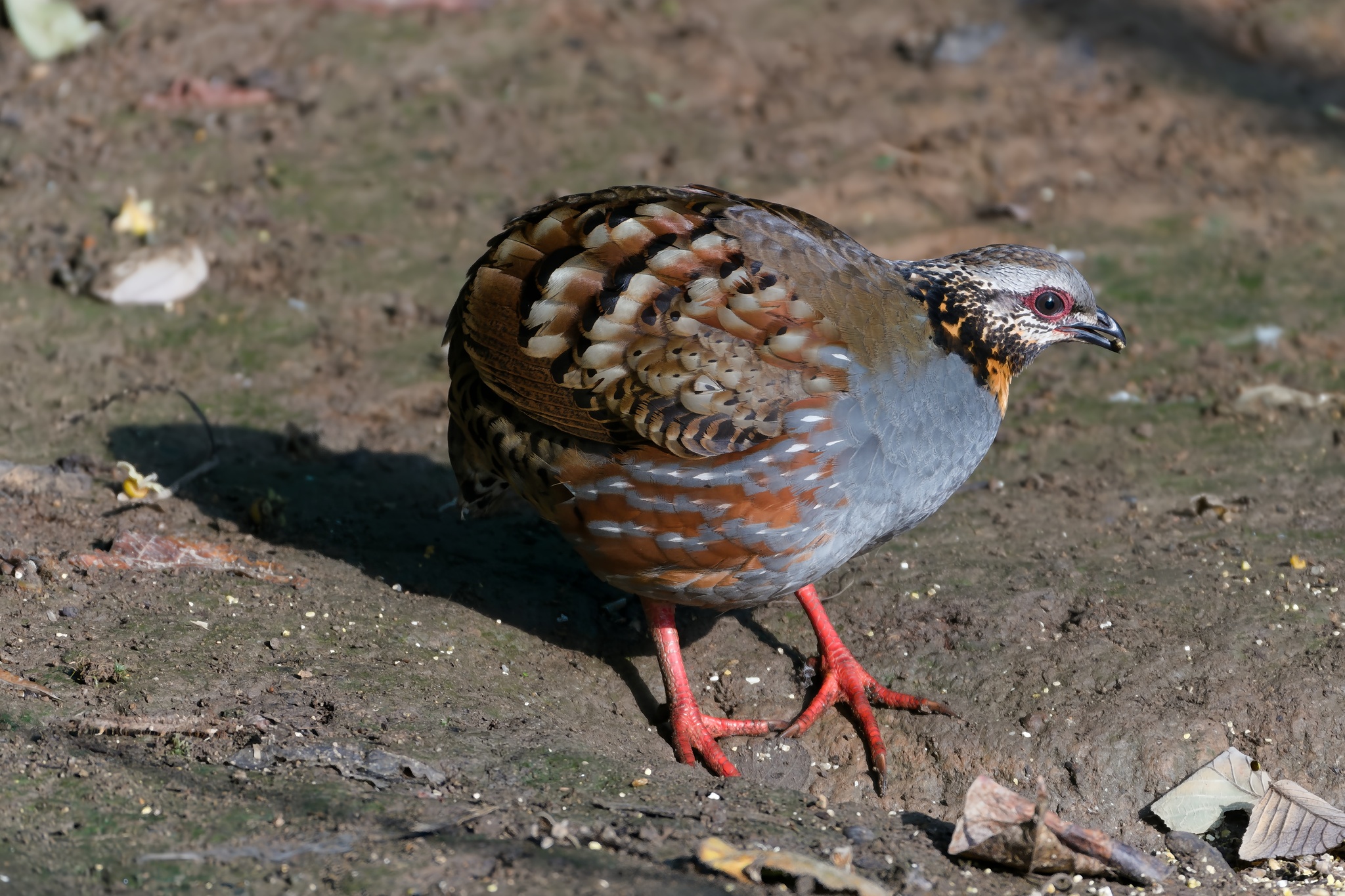
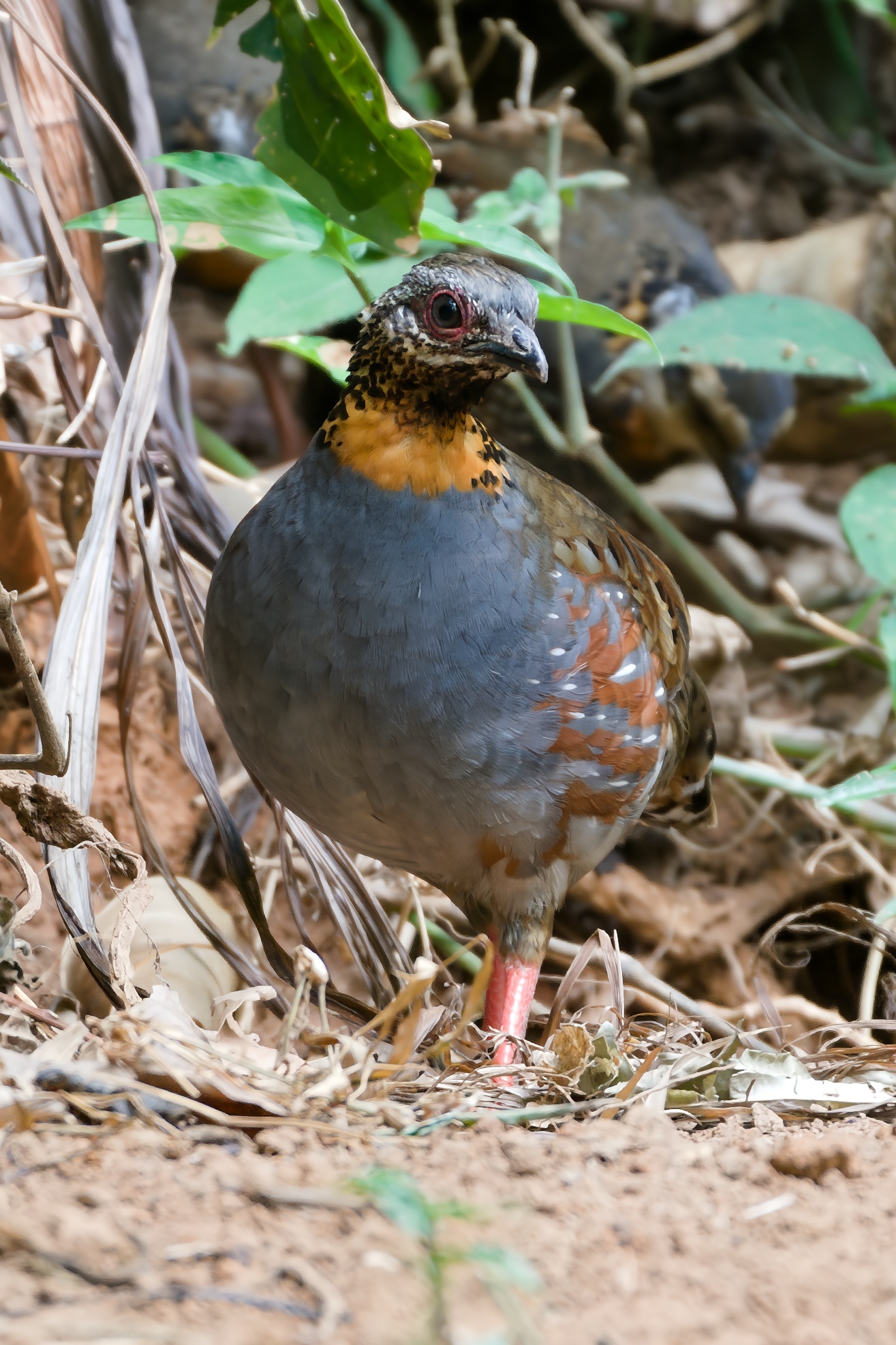
This medium-sized partridge measures 26-29 cm in length. Males weigh 325-430 g while females are slightly smaller at 261-386 g. The male displays a grey forehead contrasting with an olive-brown crown and nape marked by black mottles. Prominent white supercilium and moustachial stripes frame the face. The namesake feature is the orange-rufous throat and neck-sides speckled with black. The breast and upper belly are blue-grey, with the central belly appearing whitish and the vent buffy-brown. The upperparts are olive-brown, with scapulars and wing coverts showing chestnut, black and greyish banding. The beak is dusky-brown to blackish, and legs are pinkish or crimson. Females resemble males. Juveniles are duller below with vermiculated patterning on the crown and flanks.
Identification
The combination of orange-rufous throat with black speckles, grey breast, and white facial stripes distinguishes this species from similar partridges in its range. The white supercilium and moustachial curves create a distinctive facial pattern. Subspecies can be distinguished by throat pattern variations across different geographic populations. The blue-grey breast and flanks separate it from species with more rufous or brown underparts.
Distribution & Habitat
This species occurs across Bangladesh, Bhutan, China, India, Laos, Myanmar, Nepal, Thailand and Vietnam. It is exclusively a montane forest specialist, typically found between 1,800 and 3,000 meters elevation. Prime habitat consists of oak forests containing laurels and rhododendrons, where it inhabits dense understory and bamboo thickets. The species maintains resident populations throughout its range without documented migratory movements.
Behavior & Ecology
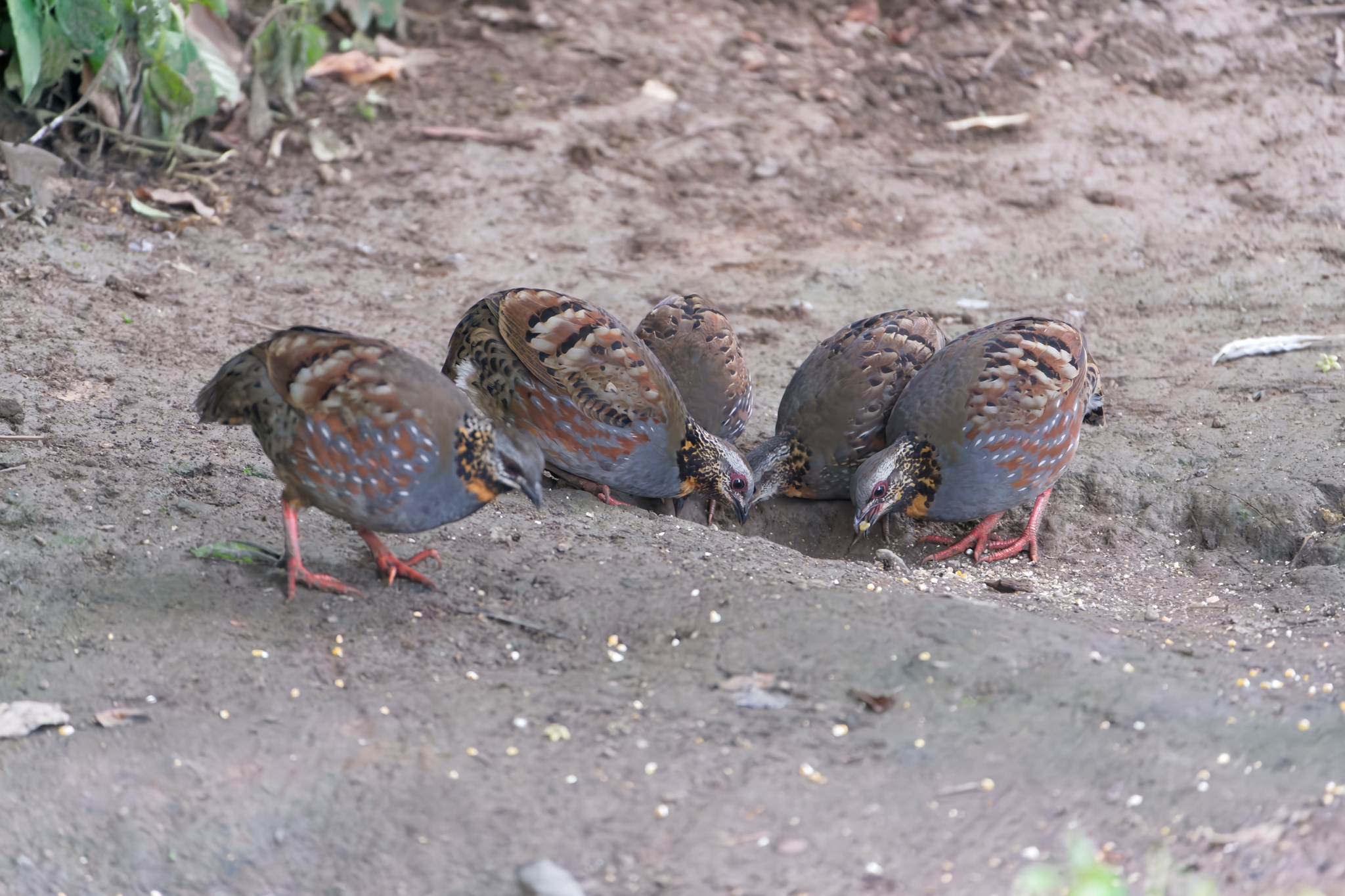
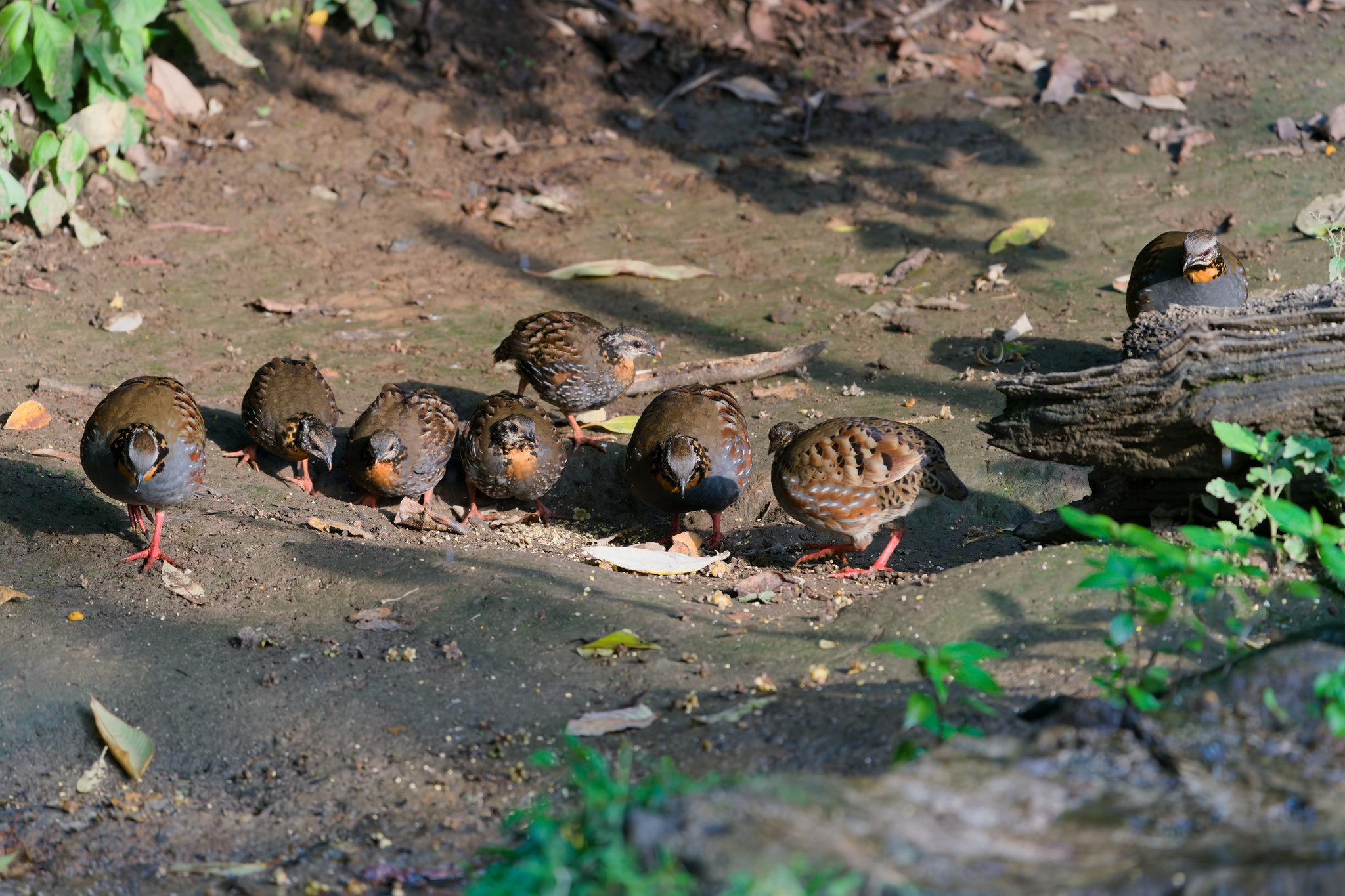
Birds feed in coveys of five to ten individuals, consuming seeds, plant shoots, berries, insects and snails. When disturbed, they run swiftly or burst into flight, sometimes perching on branches like thrushes. Roosting occurs in trees where covey members huddle together. The breeding season spans April to July in India and February to May in China. Males construct ground scrapes lined with grass in bamboo, forest undergrowth or near water, where three to five white eggs are laid. The advertising call is a rising series of hu-hu whistles, with duets featuring kew-kew-kew responses.
Conservation
The IUCN Red List categorizes this species as Least Concern despite ongoing population declines. Habitat destruction from logging and agricultural expansion represents the primary threat, compounded by unsustainable hunting pressure throughout its range. While the rate of decline is not considered rapid and the species occupies a large geographic area, continued monitoring of population trends is advisable given ongoing forest degradation in Southeast Asian montane regions.
Culture
No specific cultural or folklore significance is documented for this species.
Source: Wikipedia · CC BY-SA 3.0
Taxonomy
- Order
- Galliformes
- Family
- Phasianidae
- Genus
- Arborophila
- eBird Code
- rutpar1
Vocalizations
Subspecies (6)
-
Arborophila rufogularis annamensis
southern Vietnam (Langbian Plateau region)
-
Arborophila rufogularis euroa
southern China (southeastern Yunnan) to northern Laos
-
Arborophila rufogularis guttata
central Vietnam and northern Laos
-
Arborophila rufogularis intermedia
northeastern India to Myanmar and far northwestern Yunnan
-
Arborophila rufogularis rufogularis
northern India (Uttar Pradesh to Assam) and Nepal
-
Arborophila rufogularis tickelli
eastern Myanmar to Thailand and southwestern Laos
Data Sources
Species description from Wikipedia, licensed under CC BY-SA 3.0.
Bird images and sounds sourced from GBIF, contributed by citizen scientists worldwide under Creative Commons licenses.
Taxonomy data from AviList 2025.