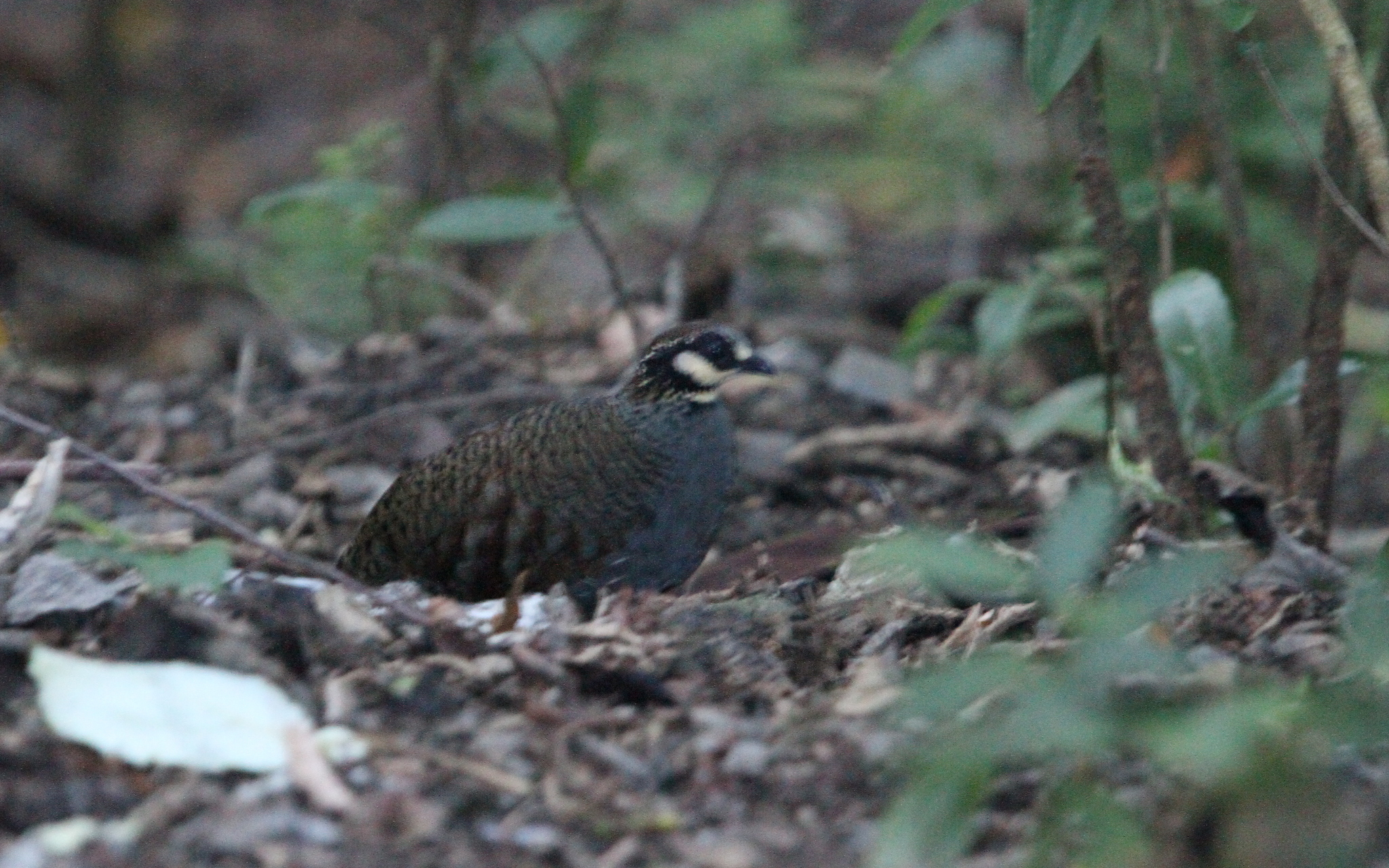
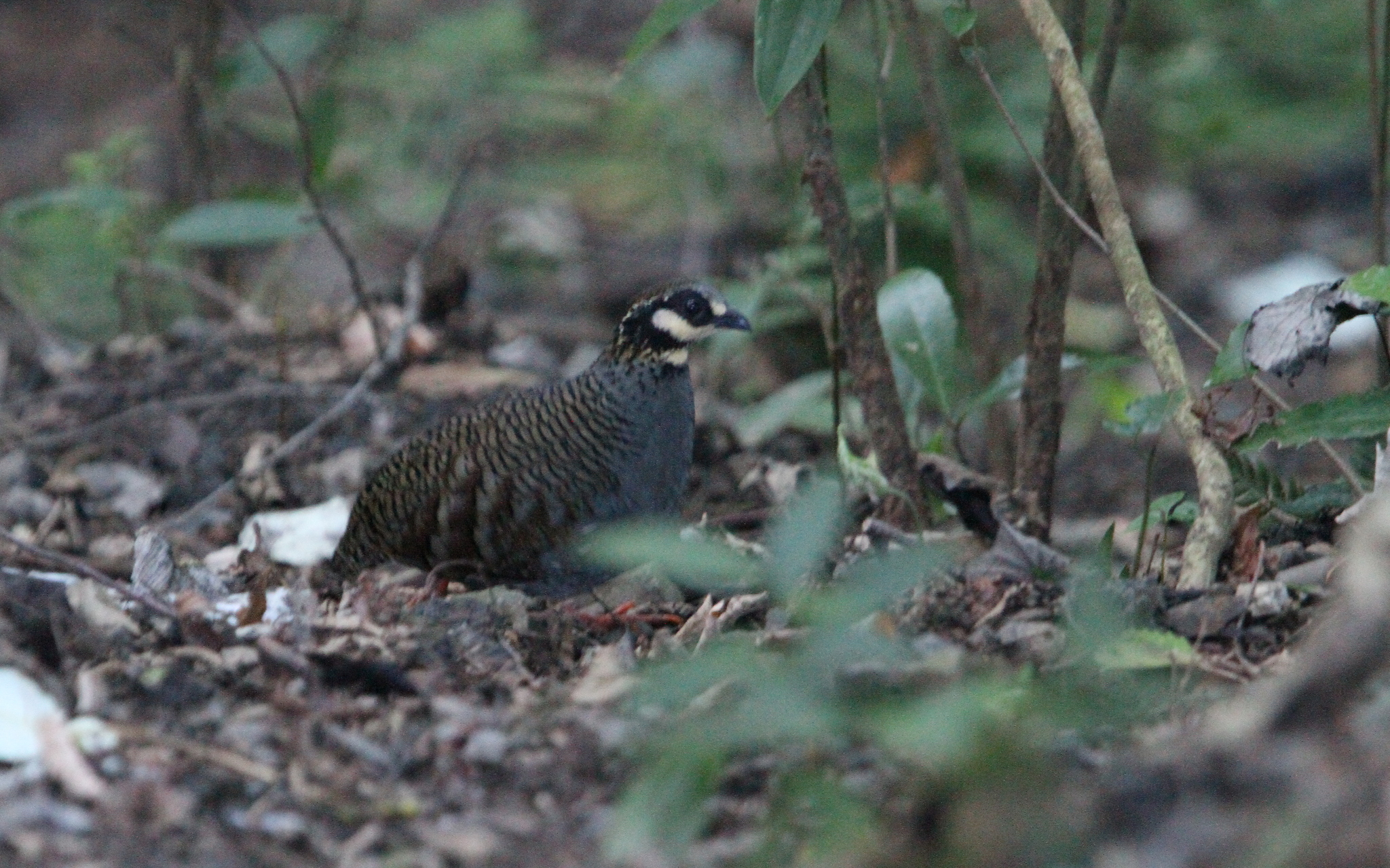
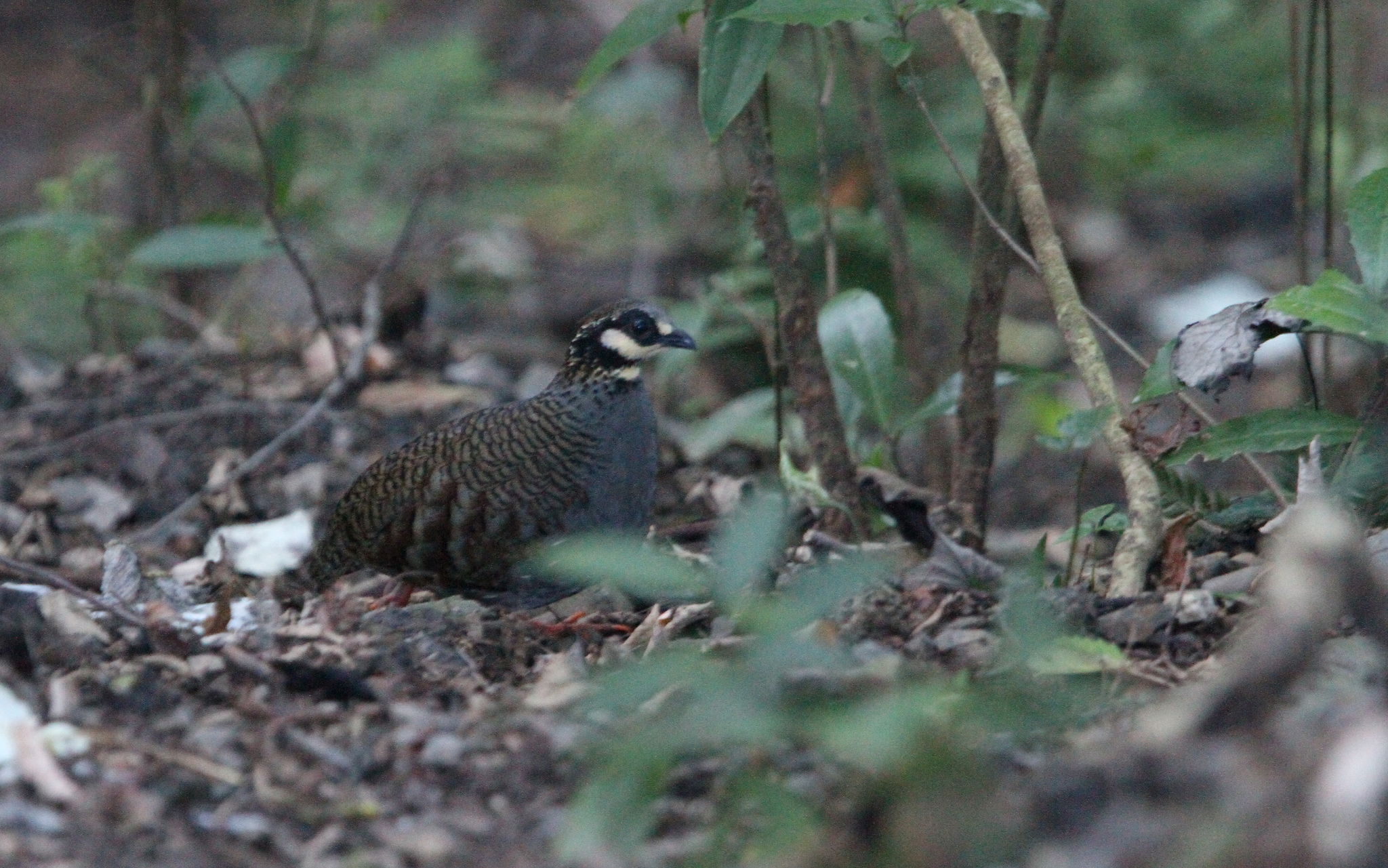
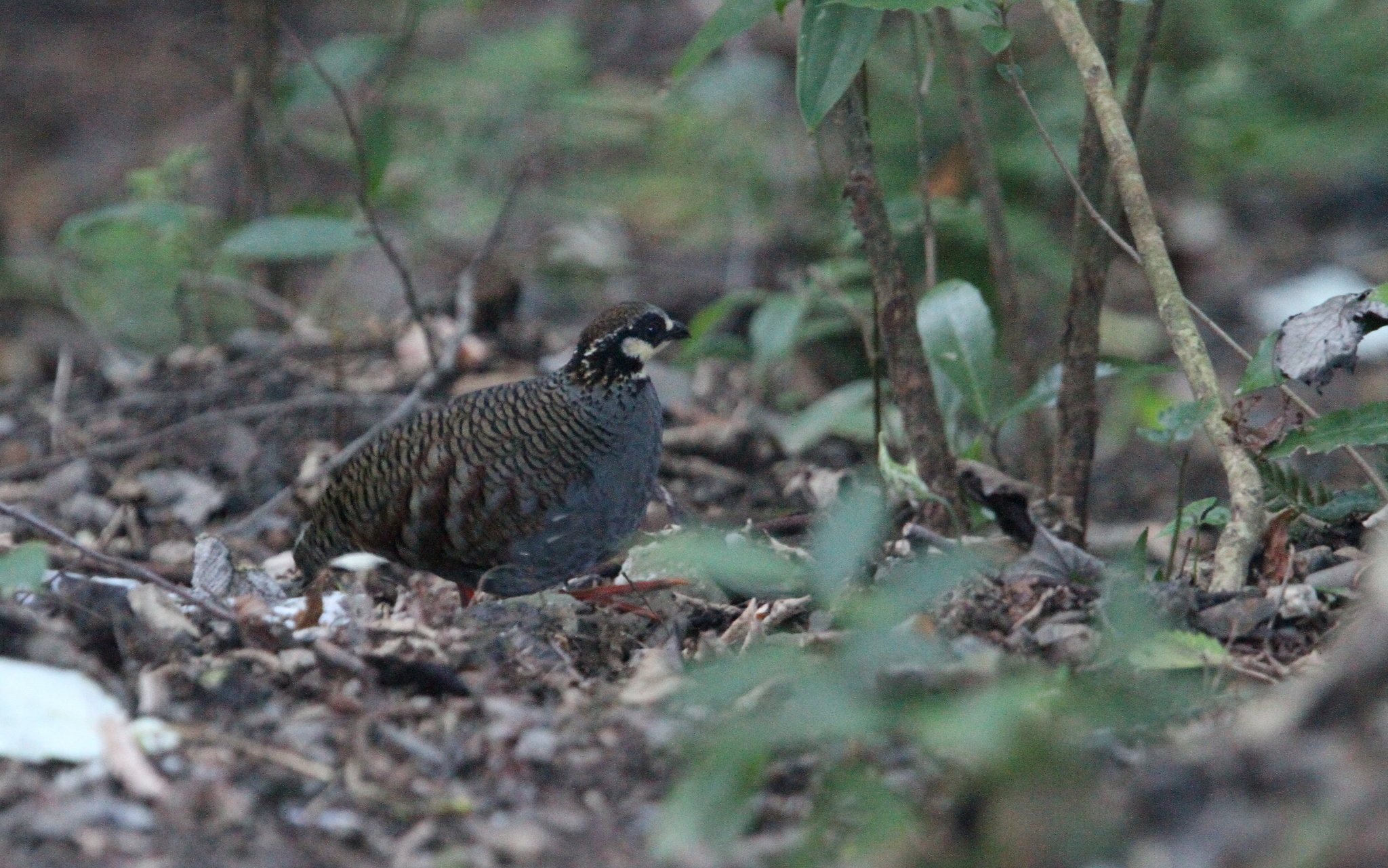
Taiwan Partridge
Arborophila crudigularis
台湾山鹧鸪
Introduction
Taiwan's endemic gamebird, occurring only in central and eastern mountain ranges. Inhabits broadleaf forests with dense thickets and understory vegetation at elevations between 700 and 3,000 meters. Vocalizations consist of rising and falling gurru calls, frequently occurring as duets or group choruses. First described by Robert Swinhoe in 1864; he initially attributed the red throat patch to injury before recognizing it as a natural, possibly seasonal breeding feature. Monotypic species within the genus Arborophila. Genetic studies indicate closest relatives in Southeast Asia rather than mainland China, suggesting ancient colonization routes across exposed continental shelves during glacial periods. Relatively common within its specialized mountain habitat. Benefits from protection in several national parks and nature reserves, though deforestation poses concerns outside protected areas.
Description
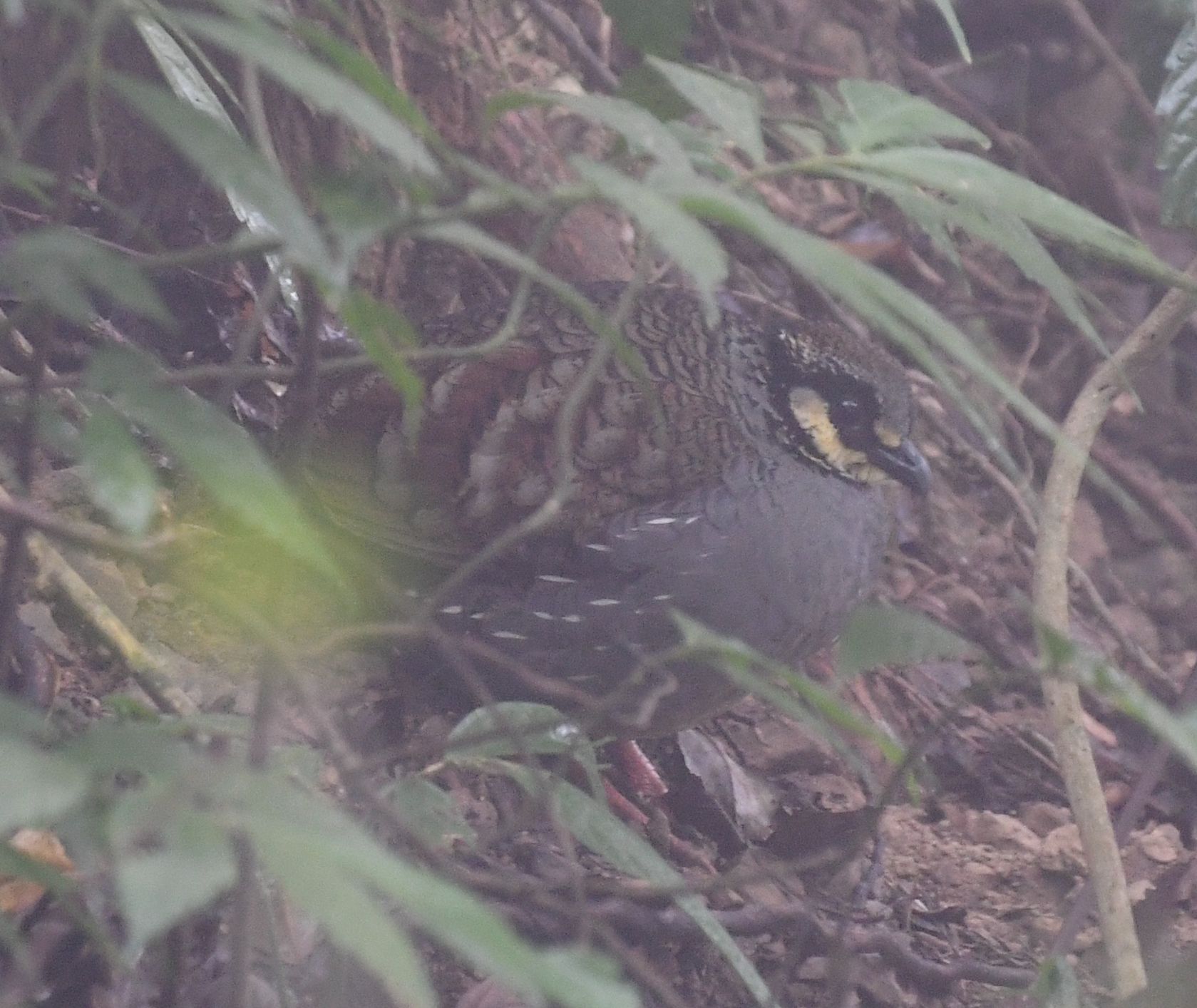
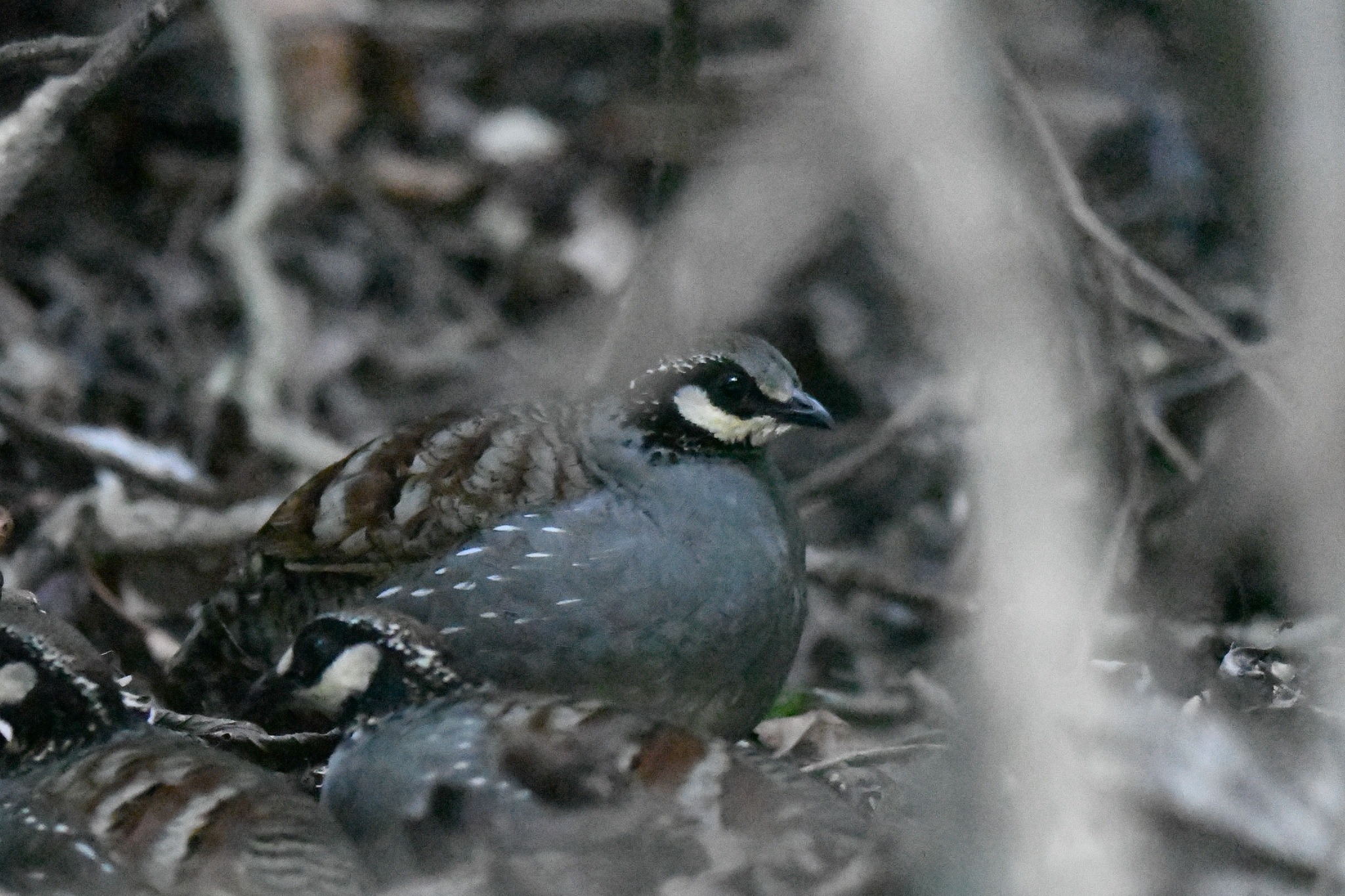
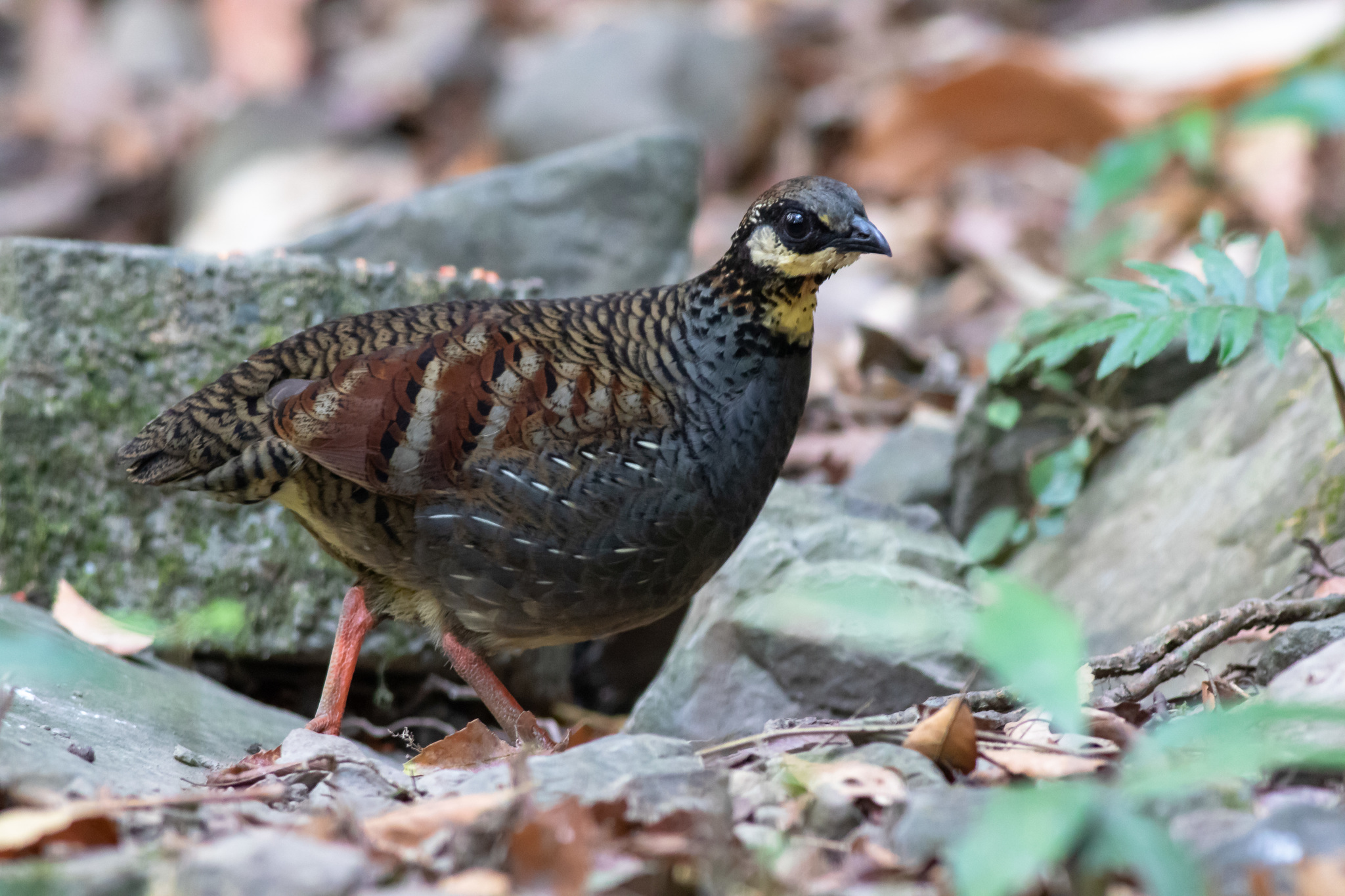
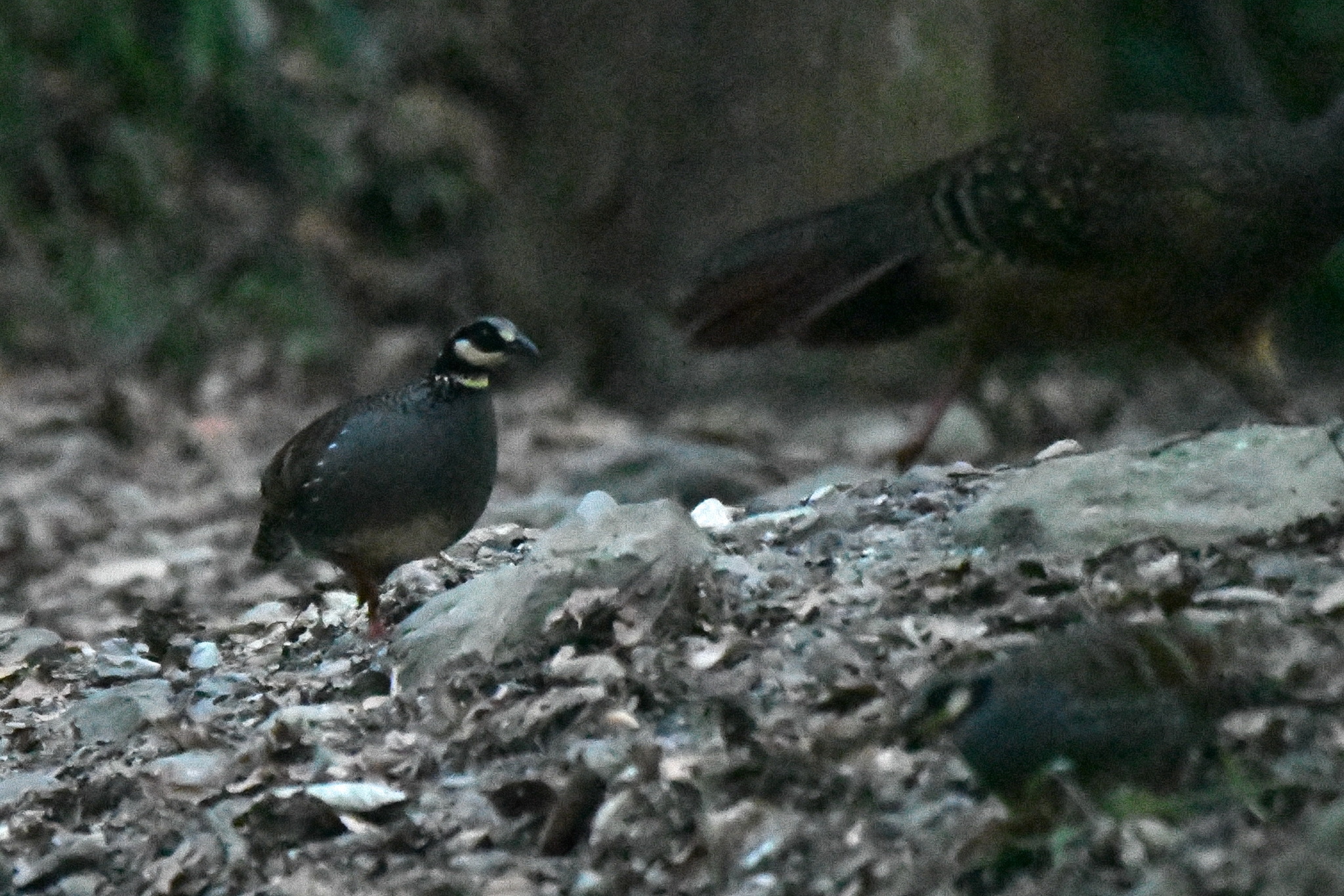
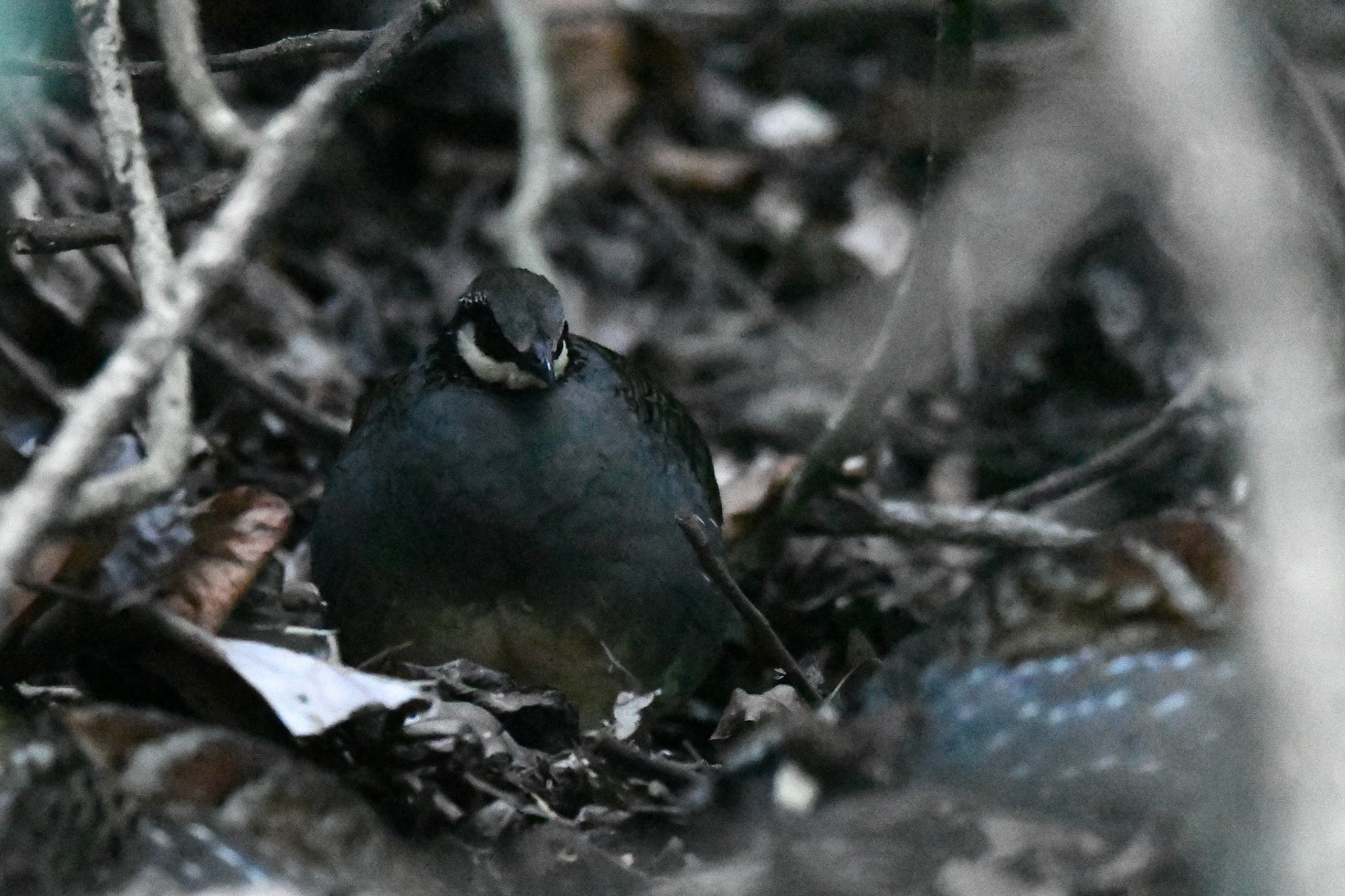
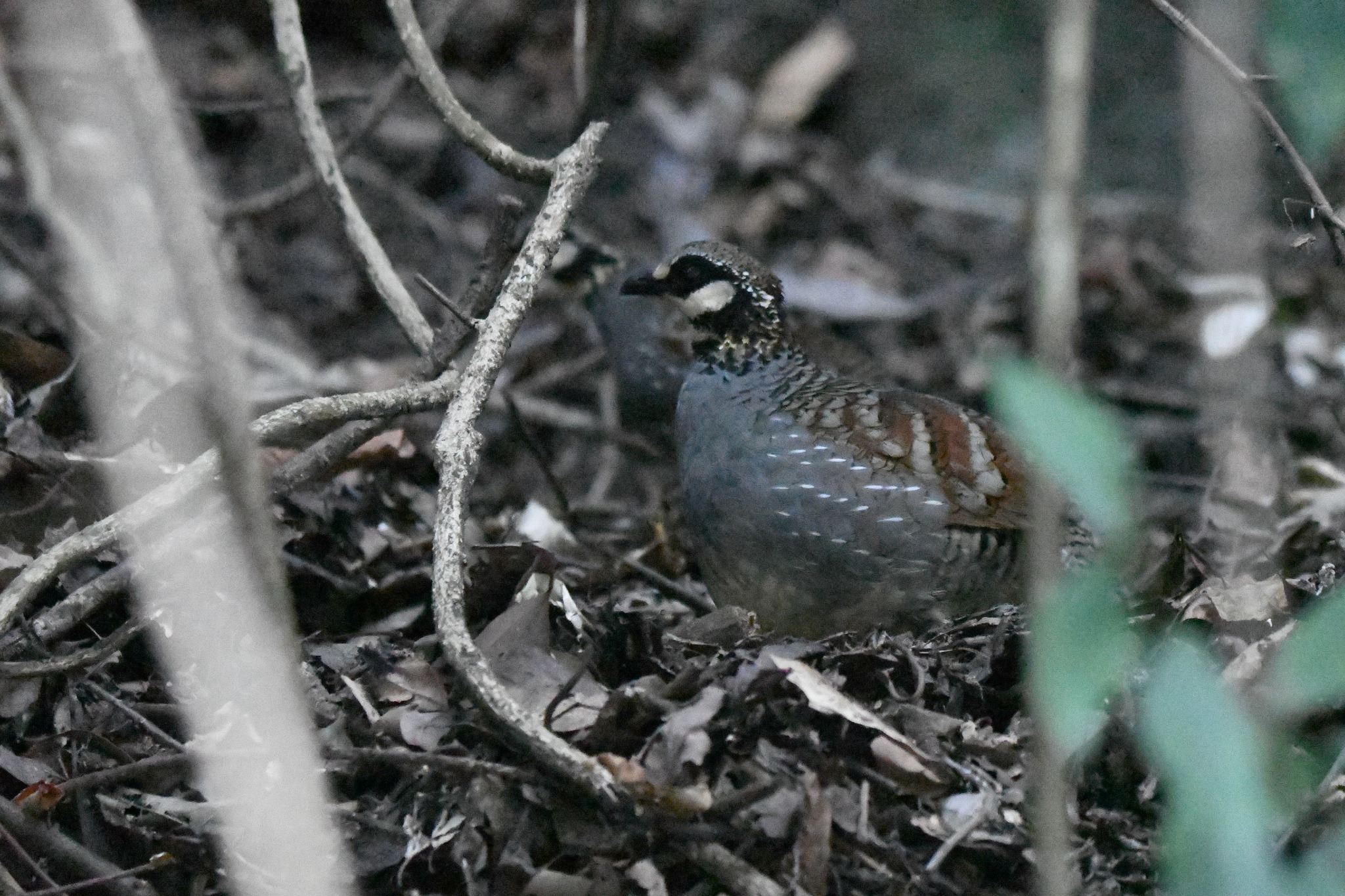
This compact partridge measures approximately 28 centimeters in length, with marked sexual size dimorphism—males weighing around 311 grams while females are notably smaller at about 212 grams. The crown displays a grey coloration, contrasting with the black-sided head featuring a prominent white eyebrow, chin, and a distinctive patch below the eye. The white throat is framed by a black half collar. Upperparts show olive-grey plumage overlaid with black barring, while the rounded wings exhibit three grey bars against a rufous background. The short, rounded tail rounds out the upper profile. Underparts appear blue-grey with white streaking along the flanks. The eye is black surrounded by a narrow red orbital ring, the beak is blue-grey, and the legs are orange-red. Females resemble males but exhibit fewer throat streaks and more pronounced flank streaking.
Identification
The primary identification clue lies in its vocalizations—the characteristic rising and falling gurru calls, often delivered as duets or communal choruses. Single notes closely resemble those of the black-necklaced scimitar babbler, potentially causing confusion for birders relying solely on auditory cues. In visual identification, the combination of grey crown, black head sides with white supercilium and subocular patch, white throat with black half collar, and orange-red legs distinguishes this species from similar forest-dwelling gamebirds. The seasonal red throat patch, when present during breeding season, provides an additional distinguishing feature.
Distribution & Habitat
This species is endemic to Taiwan, confined to the central and eastern mountain ranges. Its preferred habitat consists of broadleaf forests with dense thickets and understory vegetation. It occupies elevations from 700 to 3,000 meters above sea level, with greatest abundance between 1,500 and 2,000 meters. The species is considered resident within its range, with no documented migratory movements.
Behavior & Ecology
Foraging occurs in small groups of two to three individuals, primarily on the forest floor where they search for earthworms, berries, seeds, seedlings, and insects. The breeding season spans from March to August, with timing varying by elevation. Nests are situated in ground crevices or beneath tree roots, where females lay clutches of three to four white eggs. Incubation lasts approximately 24 days. The species is renowned for its vocal nature, with pairs and family groups frequently engaging in coordinated calling sessions.
Conservation
The IUCN currently categorizes this species as Least Concern, following a 2014 downlisting based on revised population and range estimates exceeding previous assessments. The global population is estimated at more than 10,000 mature individuals, though numbers probably decline outside protected areas due to ongoing deforestation. The species occurs within several national parks and nature reserves, providing some habitat security for remaining populations. Habitat loss from forest clearance for agriculture and development represents the primary ongoing threat.
Culture
No significant cultural, folklore, or mythological references to this species were documented in available sources.
Source: Wikipedia · CC BY-SA 3.0
Taxonomy
- Order
- Galliformes
- Family
- Phasianidae
- Genus
- Arborophila
- eBird Code
- taipar1
Distribution
montane forest of Taiwan
Vocalizations
Data Sources
Species description from Wikipedia, licensed under CC BY-SA 3.0.
Bird images and sounds sourced from GBIF, contributed by citizen scientists worldwide under Creative Commons licenses.
Taxonomy data from AviList 2025.