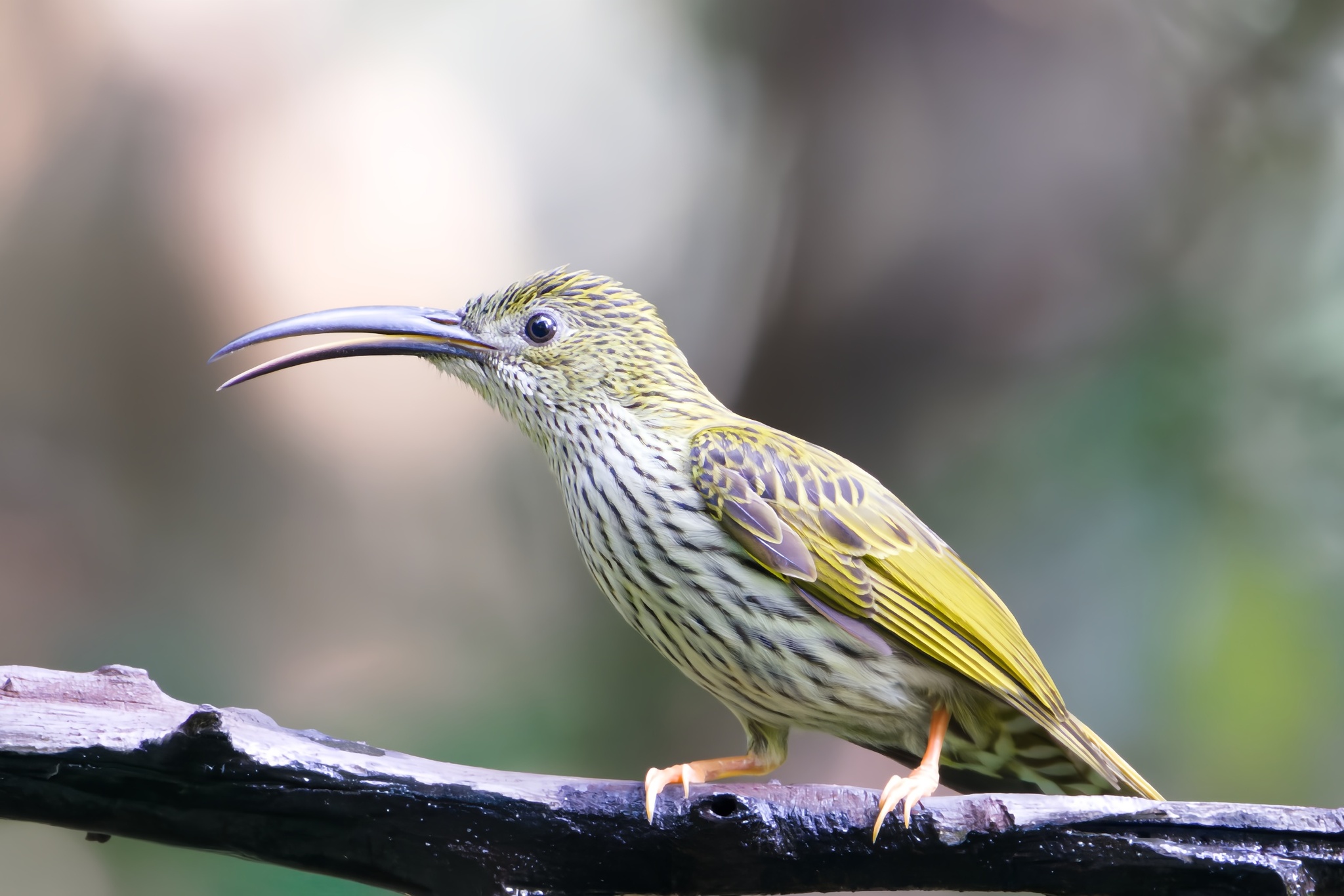
Streaked Spiderhunter
Arachnothera magna
纹背捕蛛鸟
Introduction
The streaked spiderhunter (family Nectariniidae) inhabits forests of Southeast Asia and the eastern Himalayas. It occupies dense forest understories, edge habitats, montane and lowland forests, and is associated with wild banana groves and other large-flowered plants. It forages for insects and nectar among vegetation and will visit secondary growth and well-wooded gardens. The species is resident throughout its range but may make elevational movements in response to seasonal flowering patterns.
Description
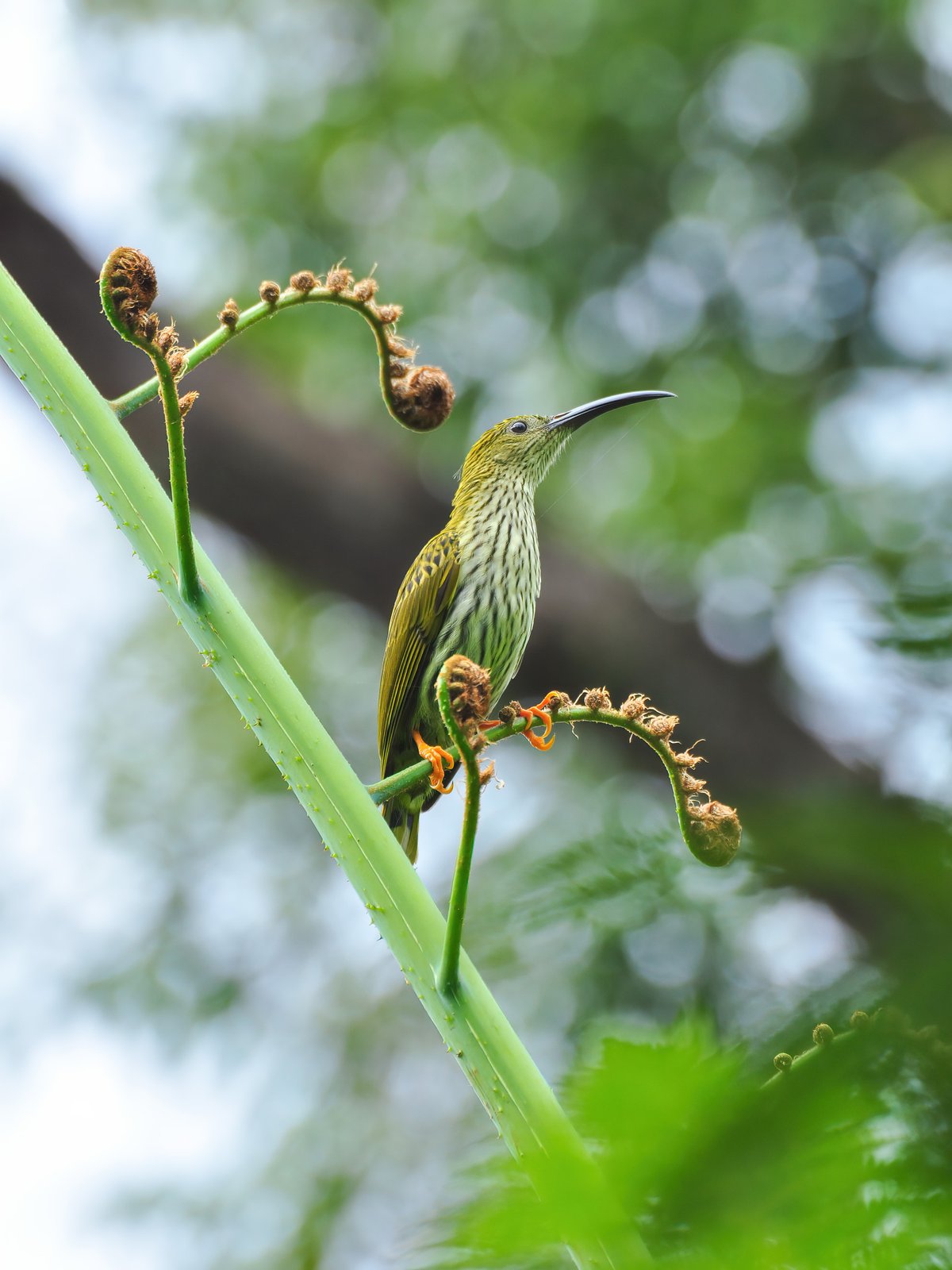
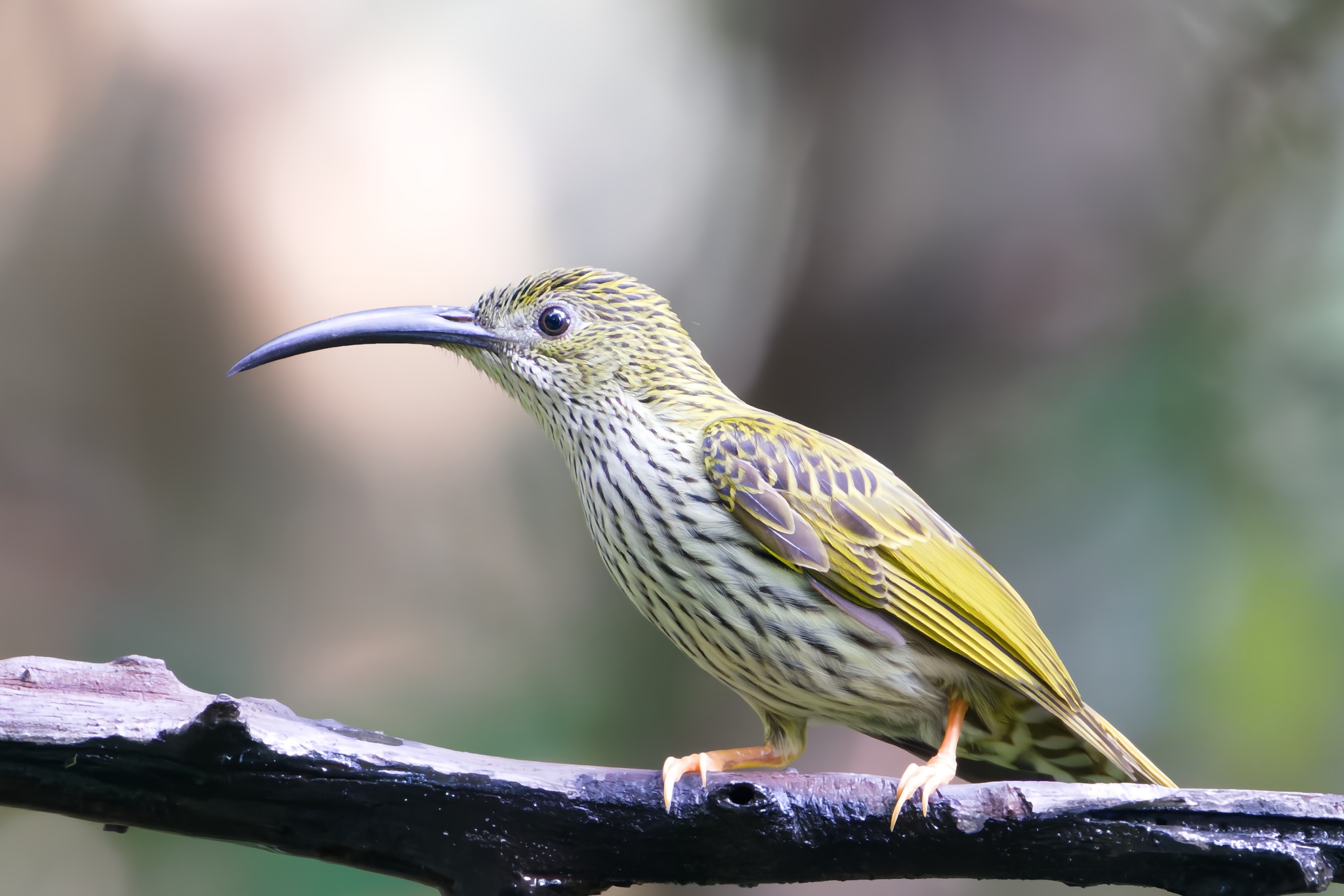
This species is sparrow-sized, measuring approximately 16-18 centimeters in length. The plumage is predominantly olive-yellow overall, with pronounced darker streaking across the upperparts and underparts. The underparts appear pale yellow with distinctive black streaking. The most striking feature is the long, curved black beak, which is specially adapted for extracting nectar from deep flowers. Yellow legs complete the distinctive appearance. Both sexes appear similar, though juveniles may show reduced streaking. The combination of olive-yellow coloration, heavy streaking, and curved bill separates it from other forest birds in its range.
Identification
The combination of olive-yellow plumage with heavy streaking and a long curved black bill is distinctive within its range. It differs from sunbirds by its larger size, less iridescent plumage, and more pronounced streaking. The pale yellow underparts with black streaks separate it from the little spiderhunter, which has an orange-yellow breast patch. The curved bill distinguishes it from similarly sized warblers and babblers that inhabit the same understory. In flight, the yellow outer tail feathers may be visible. Voice is a sharp, metallic 'chik' call given during feeding or when disturbed.
Distribution & Habitat
The species ranges across Bangladesh, Bhutan, Cambodia, China, India, Laos, Malaysia, Myanmar, Nepal, Thailand, and Vietnam. In India, it occurs throughout the Eastern states including West Bengal, Assam, and neighboring regions. Its habitat consists of subtropical and tropical moist lowland forest up to approximately 2,000 meters elevation, as well as montane forest. It prefers dense forest understories and is often found near streams or watercourses where flowering plants grow abundantly. The species is largely resident throughout its range, though some seasonal movements may occur in response to flowering cycles.
Behavior & Ecology
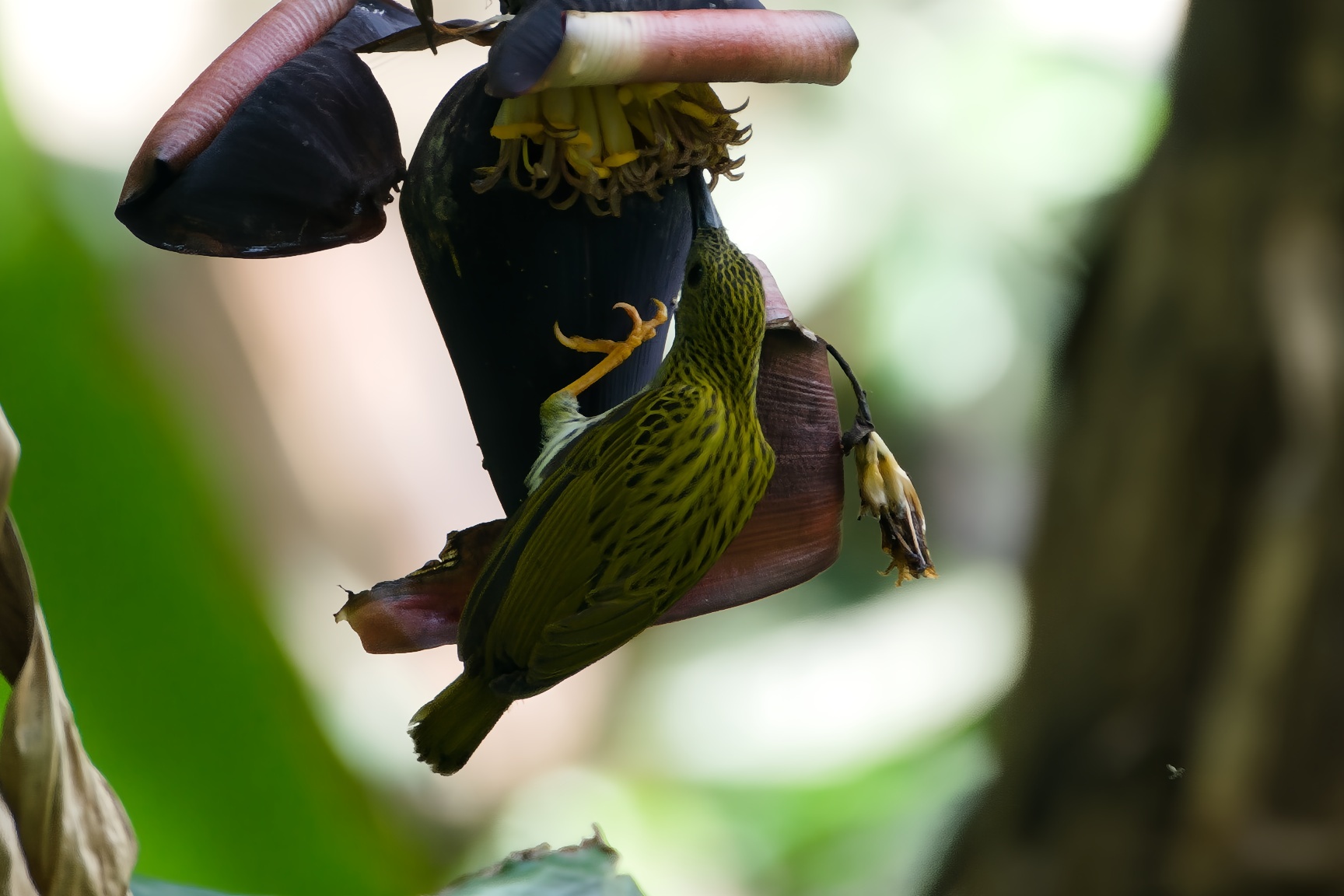
This bird is typically encountered alone or in pairs, though small family groups may form outside the breeding season. It is most active during early morning and late afternoon when feeding activity peaks. The diet consists primarily of nectar from flowers, particularly wild banana blossoms and other large-flowered plants, supplemented by insects. The breeding season extends from March to July. The nest is a remarkable structure constructed from large leaves bound together with cobwebs, suspended from the underside of a single leaf. This architectural technique provides protection from predators and the elements. The species is monogamous during the breeding season.
Conservation
The streaked spiderhunter is currently listed as Least Concern by the IUCN, reflecting its relatively large range and stable population. However, habitat loss through deforestation poses an ongoing threat, particularly in lowland forest areas undergoing agricultural conversion. Protection of intact forest habitats is essential for maintaining populations across its range.
Culture
No significant cultural or folklore associations were documented in available sources.
Source: Wikipedia · CC BY-SA 3.0
Taxonomy
- Order
- Passeriformes
- Family
- Nectariniidae
- Genus
- Arachnothera
- eBird Code
- strspi1
Vocalizations
Subspecies (5)
-
Arachnothera magna aurata
eastern and central Myanmar
-
Arachnothera magna magna
Himalayas (Garhwal to northern Myanmar and southwestern China and Malay Peninsula)
-
Arachnothera magna musarum
southeastern Myanmar (Southern Shan State) to northern Thailand and northern Laos
-
Arachnothera magna pagodarum
southern Myanmar and southwestern Thailand
-
Arachnothera magna remota
southern Vietnam
Data Sources
Species description from Wikipedia, licensed under CC BY-SA 3.0.
Bird images and sounds sourced from GBIF, contributed by citizen scientists worldwide under Creative Commons licenses.
Taxonomy data from AviList 2025.